Vue lecture

A Russian soldier kept a Ukrainian woman in a basement and raped her for two months – Ukrainian court sentences him to 12 years
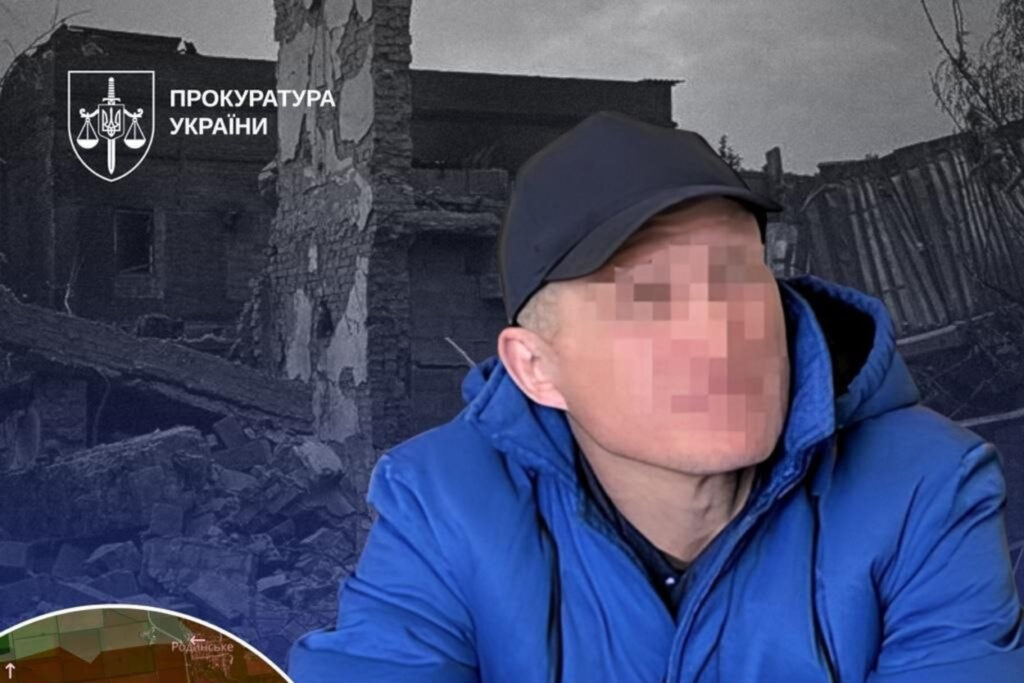
A Russian soldier was sentenced to 12 years for repeatedly raping a Ukrainian civilian woman in occupied Donetsk Oblast. Ukraine's Prosecutor General’s Office

A Ukrainian court has sentenced a Russian soldier to 12 years in prison for repeatedly raping a 57-year-old civilian woman for about two months in an occupied village in Donetsk Oblast, Ukraine’s Prosecutor General’s Office said on 14 August.

Ukrainian authorities and international monitors have documented hundreds of cases of conflict-related sexual violence by Russian forces in Ukraine, while warning that the true number is likely higher because many cases go unreported, particularly in occupied territories.

Woman was trapped with Russian soldiers

The 50-year-old Russian serviceman entered a village in the Pokrovsk district in September 2025 as part of a small infantry group, according to prosecutors. He and two other Russian soldiers occupied the basement of a private home where two local civilians were sheltering from Russian attacks.

During one of the attacks, the civilian man was killed. The woman was then left in the basement with the three armed Russian soldiers.

In early October, one of the soldiers began sexually assaulting her. The court found that the abuse became systematic and continued for about two months.

The soldier threatened to kill the woman if she refused. Two other Russian servicemen were present during this period, while the woman was effectively unable to leave the basement or protect herself.

The abuse ended in December, when Ukrainian forces captured the Russian soldier during fighting. The woman was freed.

Convicted Russian soldier had spent 32 years in prison

The convicted man is a resident of Russia’s Sverdlovsk Oblast who had spent a total of 32 years in prison for robbery and armed robbery before joining the Russian military.

He signed a contract with the Russian army while serving his sentence and was later deployed as a rifleman with the 114th Separate Motor Rifle Brigade of Russia’s 51st Combined Arms Army.

The defendant denied committing the crime in court. Prosecutors presented evidence that the court found sufficient to establish his guilt in the cruel treatment of a civilian.

He was sentenced to 12 years in prison, the maximum punishment under the provision of Ukraine’s Criminal Code used in the case.

Sexual violence as a weapon of Russia’s war

Ukraine’s Prosecutor General’s Office had recorded 401 cases of sexual violence against civilians allegedly committed by Russian military personnel since the start of the full-scale invasion as of June 2026.

The victims included 250 women and 151 men, including 23 girls and one boy.

Donetsk Oblast had the second-highest number of documented cases, with 92, behind Kherson Oblast’s 124. Ukrainian prosecutors had sent 64 indictments involving 81 people to court, while Ukrainian courts had issued 19 verdicts against 26 individuals. All those convicted received prison sentences.

The documented figures do not capture the full scale of the abuse. The Prosecutor General’s Office has noted that the actual number may be higher because these are cases victims have been able to report.

  •  

A stray goat named Borka has become the Spartan Brigade’s mascot after 18 months on the front lines in Donetsk Oblast

stray goat named Borka

Borka arrived as a kid about a year and a half ago, carried in by one of the men and left at the door of the unit's house in Donetsk Oblast, the battalion's chief sergeant, who uses the callsign Sheva, told ArmyInform, the Ukrainian defense ministry's information agency. Someone suggested keeping him, someone else joked about meat, and no one followed through. He has stayed ever since, through several redeployments and near-daily Russian drone activity. On one occasion, a Russian FPV drone exploded near the position. The soldiers relocated in a hurry, then realized they had left Borka behind and went back for him, Sheva recalled.

Borka is one of many animals Ukrainian troops have taken in and pulled out of front-line areas during Russia's war against Ukraine. Sheva casts the care as a deliberate contrast. "They are our lesser brethren. We are responsible for those we have tamed. We are not like the Russians," he said, adding that comrades have evacuated dogs, cats, and once even a cow from wrecked settlements.

stray goat named Borka
Photo: Daria Moskalets / ArmyInform.

Sheva, who volunteered with friends at the start of Russia's full-scale invasion and has fought on the Zaporizhzhia, Kharkiv, and Donetsk fronts, says Borka is no easy houseguest. Whoever feeds him is his favorite, and whoever is late feeding him, Sheva included, risks a headbutt. He once snapped his tether and walked straight into the house where the soldiers were resting, to their general shock. To burn off his energy, the unit built him a training station out of a stump with an old helmet hung on it, and in winter they put up a small insulated shelter that he keeps demolishing, and they keep repairing. They trade chocolate bars for hay and straw, and tell his story to people who then pitch in with food.

The plan is, eventually, to find Borka a permanent home in good hands. "No one is going to send Borka for meat," Sheva said. On the front, he added, any small distraction has value: a cat purring on your lap settles you, and Borka does something different. "He's the kind of guy who keeps us all on our toes."

  •  

Russia drops eight FAB-250 bombs on Kramatorsk, killing one and injuring 18

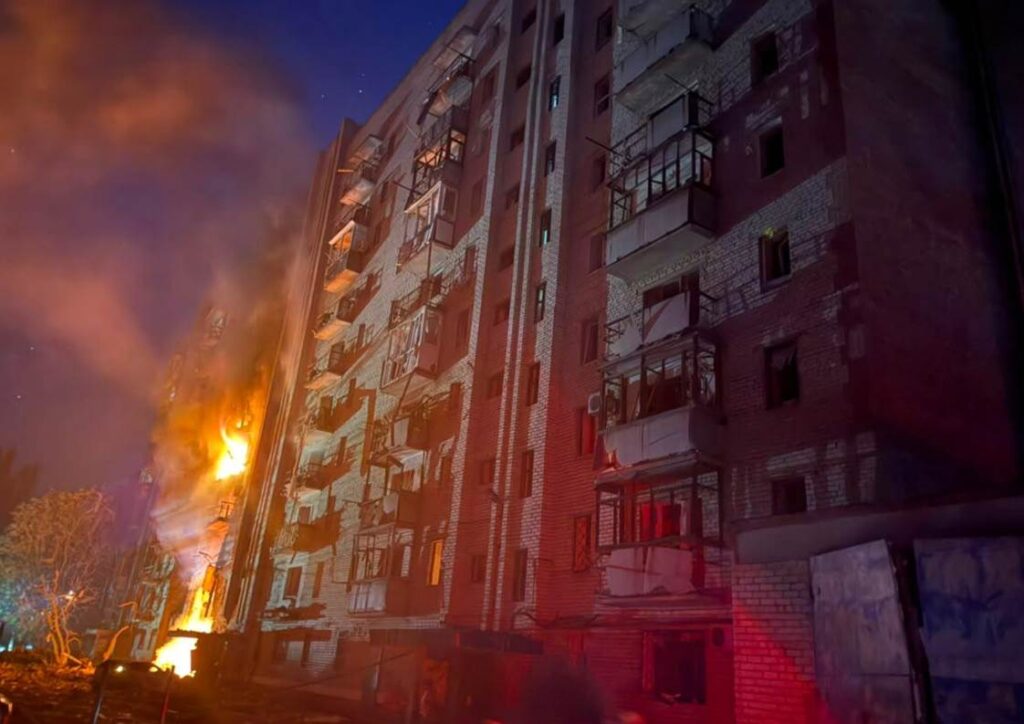
An apartment building hit in a Russian strike on Kostiantynivka on the evening of 13 August, 2026. Photo: Donetsk Region Prosecutor's Office

Russia's glide-bomb strike on Kramatorsk killed one person and wounded 18, the head of the Donetsk Oblast Military Administration, Vadym Filashkin, reported on the morning of 14 August. The Donetsk Oblast Prosecutor's Office has opened a war-crimes investigation into the attack.

Russian forces dropped eight FAB-250 aerial bombs fitted with universal glide and correction modules (UMPK) on the city on the evening of 13 August, hitting residential areas including apartment buildings, the prosecutor's office reported. An apartment building and a car were damaged. Filashkin said the strikes also hit the nearby settlement of Bilenke.

The strike on the residential area was another instance of Russian forces using guided aerial munitions against civilian areas. Under international humanitarian law, civilian objects may not be deliberately targeted.

The toll rose overnight. Filashkin first reported at least one killed and 15 wounded on the evening of 13 August. By the next morning, the prosecutor's office had documented 17 of the wounded — seven men and 10 women aged between 47 and 85 — with blast and traumatic brain injuries, shrapnel wounds, cuts to the head, arms and legs, and abrasions and bruises. Filashkin's later update put the number of wounded at 18.

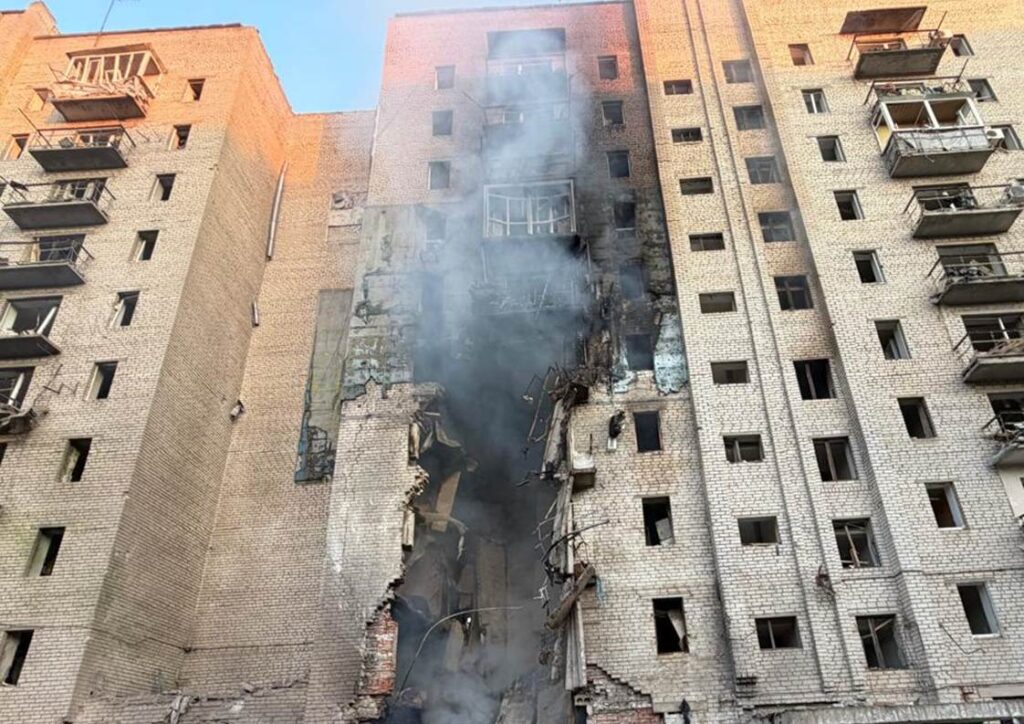
An apartment building hit in a Russian strike on Kramatorsk on the evening of 13 August, 2026. Photo: Donetsk Region Prosecutor's Office

"Russia again turned an ordinary evening in the city into deadly danger. This is not an accident or a mistake — this is how the enemy wages war against our people," Filashkin said.

Deliberately directing attacks against civilian objects may constitute a war crime under international humanitarian law. The prosecutor's office has opened a pre-trial investigation under Part 2 of Article 438 of Ukraine's Criminal Code.

"In total, over the past day, Russians shelled populated areas of Donetsk Oblast 37 times. 624 people, including 90 children, have been evacuated from the front line," Filashkin reports.

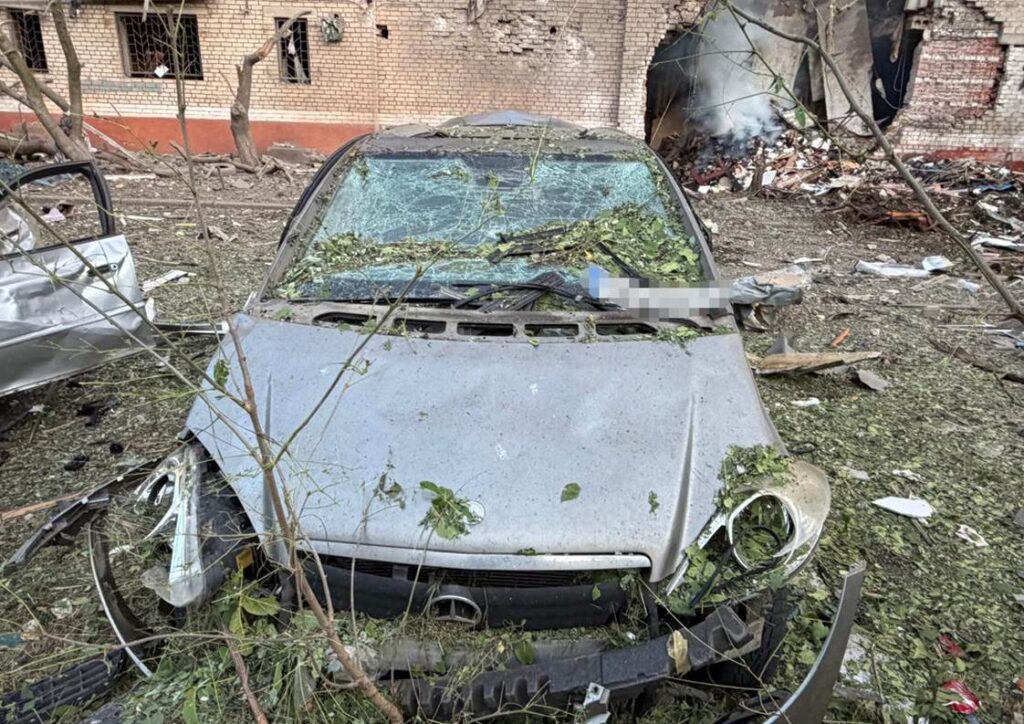
A car hit in a Russian strike on Kramatorsk on the evening of 13 August, 2026. Photo: Donetsk Region Prosecutor's Office

Repeated pattern of glide-bomb strikes on Donetsk Oblast

Russian forces regularly use FAB-250 bombs equipped with UMPK to strike populated areas in Donetsk Oblast and other frontline regions.

On 11 August 2025, Russian aircraft dropped FAB-250 bombs equipped with UMPK on a residential quarter in Bilozerske, Donetsk Oblast. Two civilians were killed, a 43-year-old man and a 34-year-old woman, while seven others were injured, including a 16-year-old boy. Eight apartment buildings and six vehicles were damaged. A pre-trial investigation was opened under Part 2 of Article 438 of Ukraine's Criminal Code.

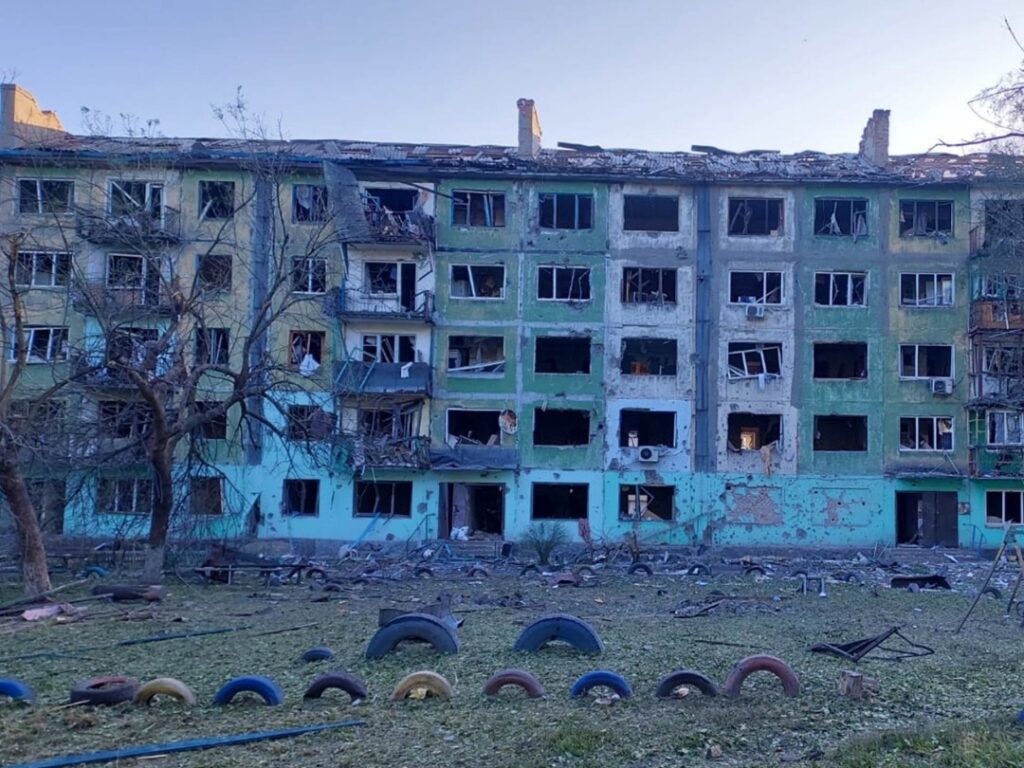
An apartment building hit in a Russian strike on Bilozerske on 11 August, 2025. Photo: Donetsk Region Prosecutor's Office

On 18 September 2025, Russian forces struck civilians with a FAB-250 bomb equipped with UMPK in Kostiantynivka, Donetsk Oblast. Five residents aged between 62 and 74 were killed; three men and two women were outside at the time of the strike. The facades of four apartment buildings were damaged.

On 25 June 2026, Russian forces dropped three FAB-250 bombs equipped with UMPK on Druzhkivka, Donetsk Oblast. A 56-year-old woman was killed, and four others were injured: a 68-year-old man and three women aged 51, 58, and 67, sustaining blast injuries and shrapnel wounds.

  •  
❌