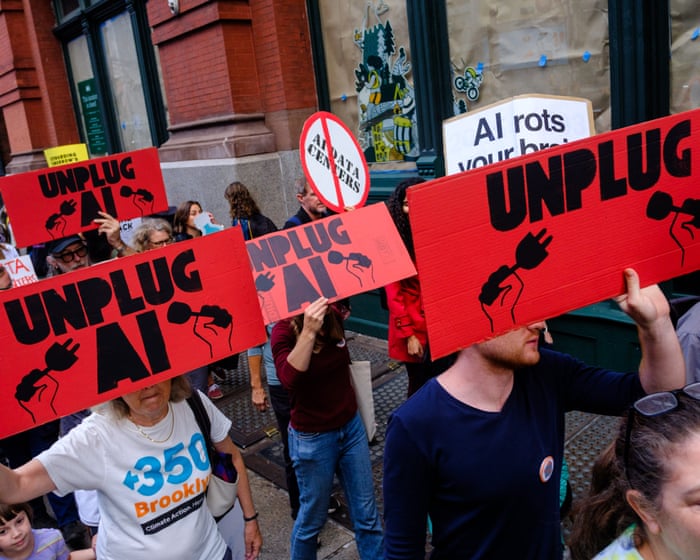
The threat of an AI share price crash rippling out across global markets is putting world financial stability at risk, the International Monetary fund has warned.
In its twice-yearly Global Financial Stability Report, the IMF highlighted the sky-high valuations for AI companies along with their increasing debt pile as one reason that risks in the system are “elevated”.
The debt-collection ecosystem will change as AI takes notes in exam rooms, codes visits and sends billing messages
Medical debt is expected to grow in coming years as Republican-led health cuts come into force this winter. As it does, a changing world of medical billing and debt collection awaits patients: one where artificial intelligence increasingly listens, codes, bills and collects.
Artificial intelligence takes notes in exam rooms, codes visits, sends out billing messages and powers AI agents who text patients in billing portals – all changing the debt-collection ecosystem.
The rise of AI makes the preservation of democracy even more urgent – especially as the technology threatens institutions
AI safety is having a moment. After years as a topic for techies and futurists, the potential risks from artificial intelligence systems – from cyber-attacks to hyper-persuasion to rogue behavior – are suddenly under discussion both in the corridors of power and around kitchen tables.
In fact, the conversation now reaches beyond classical safety concerns, getting into AI’s impact on economic life and the environment, as well as possible responses, from alignment research to government regulation.
Quite a few parents aren’t convinced social media and AI are safe, and have been adapting accordingly
When it comes to their kids, many parents don’t trust tech companies any more.
Social media companies have spent the better part of the last decade arguing that their platforms are safe for teens, but quite a few parents aren’t convinced. They, along with a growing number of regulators, have increasingly accused companies like Meta of designing products that are addictive to younger users.
‘Even if AI supercharged the economy, its impact on the government’s finances would be muted’
Back through political history to the age of Ronald Reagan, Republicans have repeatedly promised the US public that tax cuts would pay for themselves, firing up economic growth and filling the government’s coffers.
The promise never really panned out. From the Gipper’s day on, the Republicans’ tax cuts inevitably increased the budget deficit. Despite its failure, though, the promise is back, coated in a fine new layer of artificial intelligence pixie dust. It will fail again.
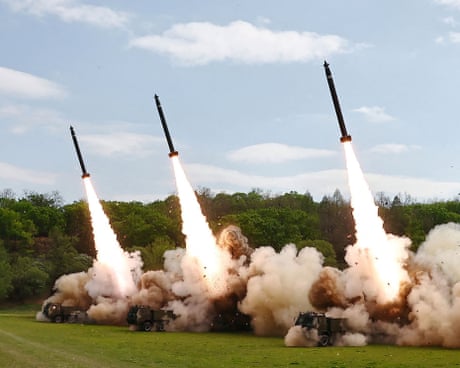
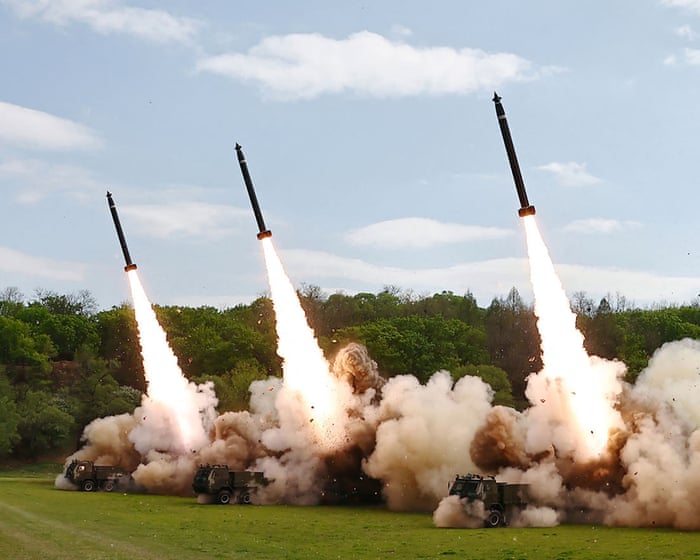
This is no scoffing matter. The accelerating proliferation of advanced nuclear weapons is bringing ‘end times’ closer by the day
Humankind has fearfully and sometimes joyfully anticipated the end of the world ever since it began. The Bible’s Book of Revelation speaks of “end times”, a period of tribulation, war, famine, plague, floods and environmental catastrophe that may seem a less absurd prospect today than perhaps it once did. Islam, too, posits a fateful day of judgment or day of reckoning. Christian evangelicals believe that, in the final rapture, a chosen few – the righteous or the “elect” – will be saved while sinners burn. It’s a minority view. Matthew’s gospel predicts most people will defy, ignore or ridicule warnings of imminent Armageddon. Peter, another of Jesus’s disciples, agreed: “In the last days, scoffers will come, scoffing and following their own evil desires.” Yet such worldly scepticism does not mean a universal cataclysm is less likely. It may make it more probable.
Donald Trump’s blanket denials of the dangers ostensibly posed by artificial intelligence, whose uncontrolled development is seen by some as the latest harbinger of apocalypse, could be interpreted as fulfilling Peter’s prophecy. This US president, the nearest thing the world has to a one-man doomsday machine, is a great one for scoffing and evil desires. In Robert Harris’s 2019 novel, The Second Sleep, a worried scientist lists half a dozen ways the world might end. They include devastating climate change, pandemic disease, a giant asteroid collision with Earth, or some other overwhelming calamity. Few heed the fictional scientist’s fears. In the event, what destroys him and almost everybody else is a disturbingly plausible cyber crash – a global digital and internet meltdown.
Simon Tisdall is a Guardian foreign affairs commentator
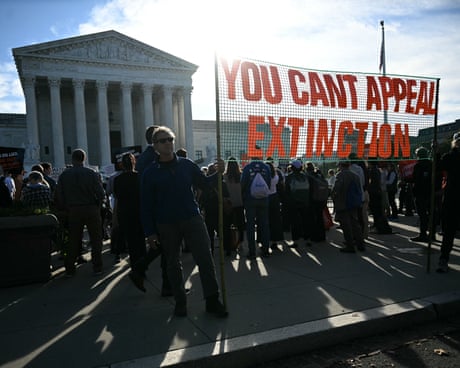
Liability lawsuits have held tobacco, oil and pharma companies to account in the past. AI investors won’t ignore this threat
The most basic function of government is to protect people from harm. Two growing phenomena – the climate crisis and AI – pose escalating risks of extraordinary harm.
The climate crisis is already causing floods, wildfires, drought and record heat. AI agents are already escaping super-secure environments to hack into systems they’re supposed to avoid.
Robert Reich, a former US secretary of labor, is a professor of public policy emeritus at the University of California, Berkeley. He is a Guardian US columnist and his newsletter is at robertreich.substack.com. His new book, Coming Up Short: A Memoir of My America, is out now in the US and in the UK
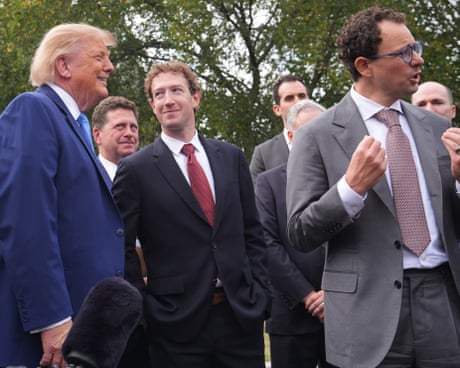
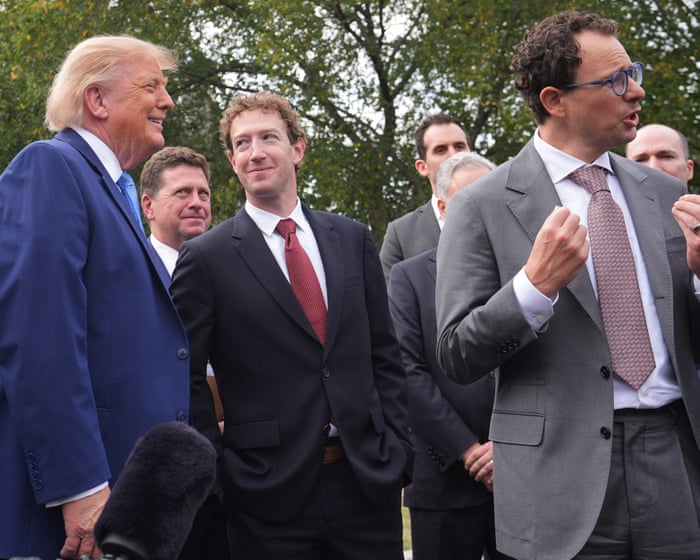
Amid a cost-of-living crisis, with US midterms a month away, the president held a ceremony to celebrate our tech overlords – again
He stands accused of being out of touch, enriching himself and his family, building a lavish White House ballroom and, with elections looming, neglecting the hardships of the voters who brought him to power.
Time for Donald Trump to show he still has the common touch? Nope.
According to city’s rent board, eviction notices are up 44% and tenants are on edge over landlords swooping in over their homes
To say that Maria Zamudio and her team have been busy lately would be a gross understatement.
Every Monday at 9am, the phone lines at the downtown clinic of San Francisco’s Housing Rights Committee start ringing, and they keep ringing until closing at 5pm. In-person counseling appointments for renters facing eviction or landlord misconduct fill days in advance. After every weekend, the staff of seven sits in their office and sifts through more than 150 voicemails. The rental assistance hotline averages 200 calls a week.
AI is already implicated in violent deaths and nearly started world war three. Those bad things? They only happen to other people
Sam Altman, the chief executive of OpenAI, has some words for you about his company and the future of artificial intelligence.
“One of the differences between us and some of the stricter AI safety people is that we believe that the world should accept some bad things happening for the benefits of this technology and people having the agency [to use it],” Altman told Politico’s new technology podcast and newsletter Decoded.
Moustafa Bayoumi is the author of the award-winning books How Does It Feel to Be a Problem?: Being Young and Arab in America and This Muslim American Life: Dispatches from the War on Terror. He is professor of English at Brooklyn College, City University of New York, and a Guardian US columnist
Suit says AI tool allows independently owned franchises to exchange nonpublic price and sales information
McDonald’s is facing a lawsuit in federal court over its alleged use of an AI tool to determine pricing across independent franchises, which prosecutors say violates antitrust laws and has unfairly inflated menu prices for Americans.
The vast majority of McDonald’s US stores are independently owned and are said to individually decide on prices under company policy. Antitrust laws require businesses to set prices independently from their competitors, as coordinating prices can stifle market competition and push up costs for consumers.
While adherents to the racist theory condemn a shadowy global elite, Silicon Valley is working toward the replacement of humans with AI
Across the world, “great replacement” theory has been employed again and again as the political foundation for fascism. Some of its fundamental tenets, such as the view that “whites are a dying minority”, have been amplified by tech billionaires and their platforms.
According to the version of this theory most employed in Europe and the United States, white replacement theory, white populations are being “replaced” by non-white populations, a replacement engineered by a shadowy global elite. For example, the need for skilled labor is supposedly being used by global elites as an excuse to bring in non-white immigrants to replace white workers.
An AfD-led state government will develop a strategy for Saxony-Anhalt focused on technological upgrading, digitalization, and AI. This strategy is intended to help alleviate bottlenecks in the local labor market. Furthermore, it aims to avoid the immigration of skilled workers from culturally dissimilar backgrounds.
Some cultures have produced vital advances; others remain dysfunctional and regressive. All cultures are now equal. Criticism and value judgments are forbidden. Yet this new dogma glosses over the fact that certain cultures and indeed subcultures … have produced wonders. Others have proven middling, and worse, regressive and harmful.
The findings come after warnings from tech leaders that AI placed in the wrong hands could trigger larger threats such as nuclear war or bioweaponry destruction
Misusing artificial intelligence (AI) is the top threat to companies’ reputations – more so than being accused of putting children in the way of mental, emotional or physical harm and issues exposed by the US-Israel war on Iran, among other brand risks, according to a new survey of more than 150 public affairs leaders.
Those findings in the new edition of the quarterly Reputation Risk Index, released on Tuesday, came on the heels of other perhaps more dire warnings from leading tech figures that AI in the wrong hands could precipitate existential threats on a mass scale such as nuclear war or destruction by bioweaponry.
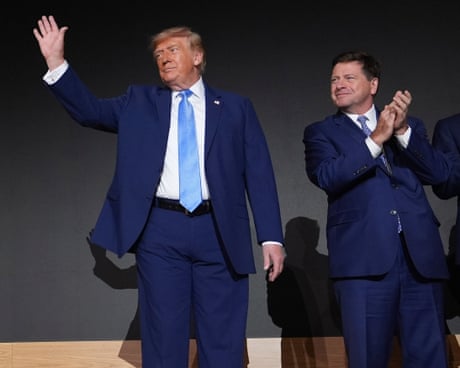
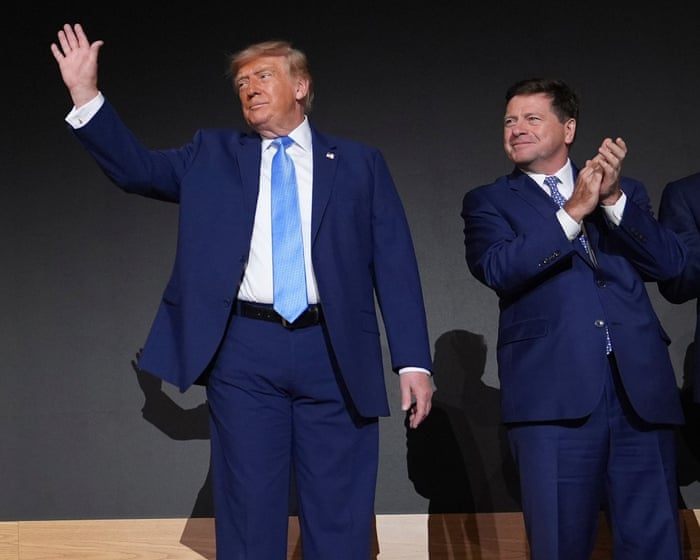
Clayton, who leads the US’s 18 intelligence agencies, previously served as the top federal prosecutor in Manhattan and led the Securities and Exchange Commission during Trump’s first term.
Israel’s conduct in Gaza shows the danger of using AI in warfare. Humans must remain at the center of wartime decisions
As tech leaders warn about the threats of artificial intelligence, most conjure up images of AI agents running amok, such as hacking systems used to run our critical infrastructure, banks or even militaries. Yet one serious danger is mentioned less frequently – the threat posed by AI–empowered lethal weapons. Fully autonomous versions of these weapons are colloquially known as killer robots.
Israel’s conduct in Gaza shows that, in an important respect, such AI weapon systems are already here. An algorithm has been deciding who lives and who dies.

 Connexion