❌

Vue lecture

Kyiv’s supermarkets are the new front line as Russia hunts civilian life before winter
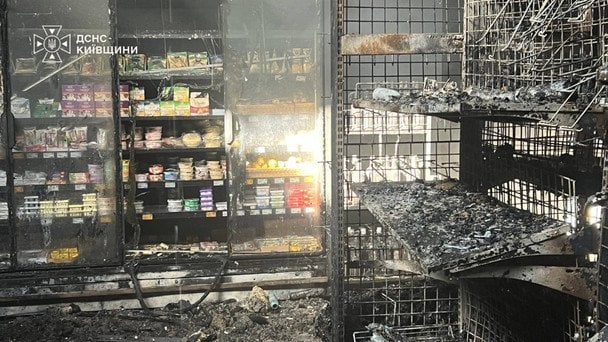
Aftermath of the Russian strike on a store in Kyiv Oblast, September 30, 2026.

Russia is preparing to make daily life in Kyiv harder before winter, aiming at the ordinary places civilians use rather than at military sites, The Economist reported. Ukrainian officials say the push blends bombing, sabotage, and disinformation, and expect it to peak in November.

Every winter of its full-scale invasion, Russia has tried to freeze Ukrainians into surrender, and each year the strikes reach deeper into ordinary life. The civilian casualties recorded in 2026 have already passed the whole of last year, the UN says.

From the power grid to the grocery store

Russia has already turned its drones on Kyiv's supermarkets, food warehouses, and data centers this year. On 28 September, a Russian jet drone struck the National Academy of Sciences in central Kyiv. The strike killed two people, the Academy said. Survivors climbed from the windows of the burning building. A senior Ukrainian official told The Economist the Kremlin now wants shoppers too afraid to enter a store. Russia is also keeping its winter routine, hitting electricity, water, and sewage systems.

Cheaper jet drones that stream live to their pilots

Most of the damage now comes from Russia's cheap jet drones, The Economist said. Pilots guide them onto targets and watch a live video feed. They are hard to stop, and Russia's ballistic missiles are deadlier still as Ukraine's supply of Patriot interceptors dwindles. Ukrainian President Volodymyr Zelenskyy said Kyiv had agreed a new Patriot interceptor package, but it remains short of interceptors of its own. A security official told The Economist that Russia has thousands of drones stockpiled and plans to use its entire ballistic missile stock within two months.
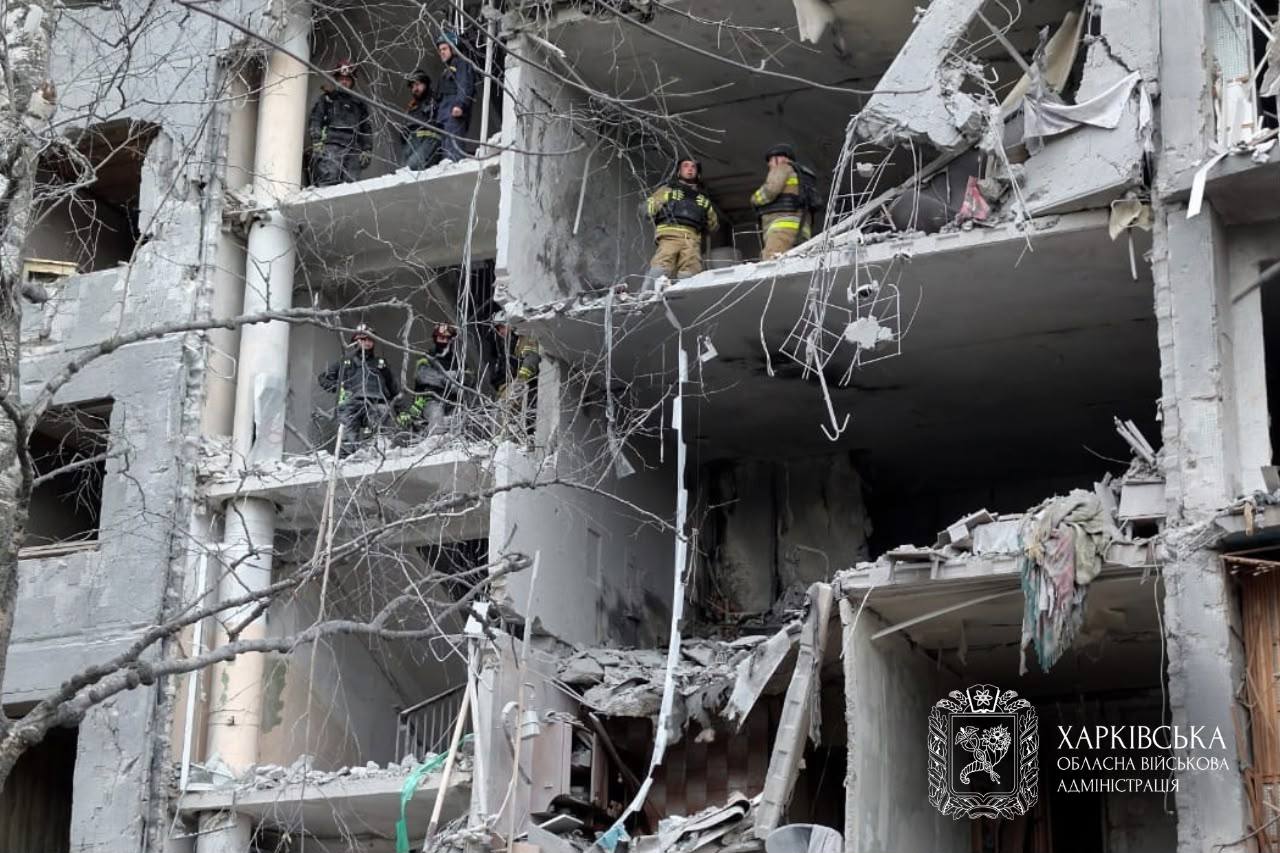
russia hits kharkiv high-rise overnight injuring 43 people strikes central kyiv dnipro broad daylight · post rescuers destroyed floors apartment building hit ukraine 28 2026 synehubov5319173733626879672 news ukrainian reports
Explore further

War is costing Ukraine $155 billion per year. With Western aid running late, Kyiv is freezing everything but army, pensions, and public wages

Sabotage, chaos, and a city that won't switch off

Ukraine's counter-intelligence services say they foil seven or eight Russian plots a week, and officials believe some sleeper cells remain. The campaign's third element, disinformation, targets war fatigue and corruption scandals. Russia runs the same plan every year, hoping its bot farms will push Ukrainians onto the streets to demand surrender, said Andrii Kovalenko, who heads the Center for Countering Disinformation at the National Security and Defense Council.

"It's nonsense," he told The Economist, adding that someone is feeding the idea to Putin so they can steal more money.

Kyiv is also far harder to shut down than Moscow assumes, Kovalenko said. The city's internet is too decentralized for a handful of strikes to knock out, The Economist noted. Energy expert Olha Babii said the test is how fast crews restore power, not whether it can be destroyed. The capital is emptying, its population down from about 3.7 million to 3.3 million by The Economist's count.
  •  

“Killing Ukraine’s internet would take nuclear or chemical weapons”—MiroHost founder whose data center Russia just destroyed

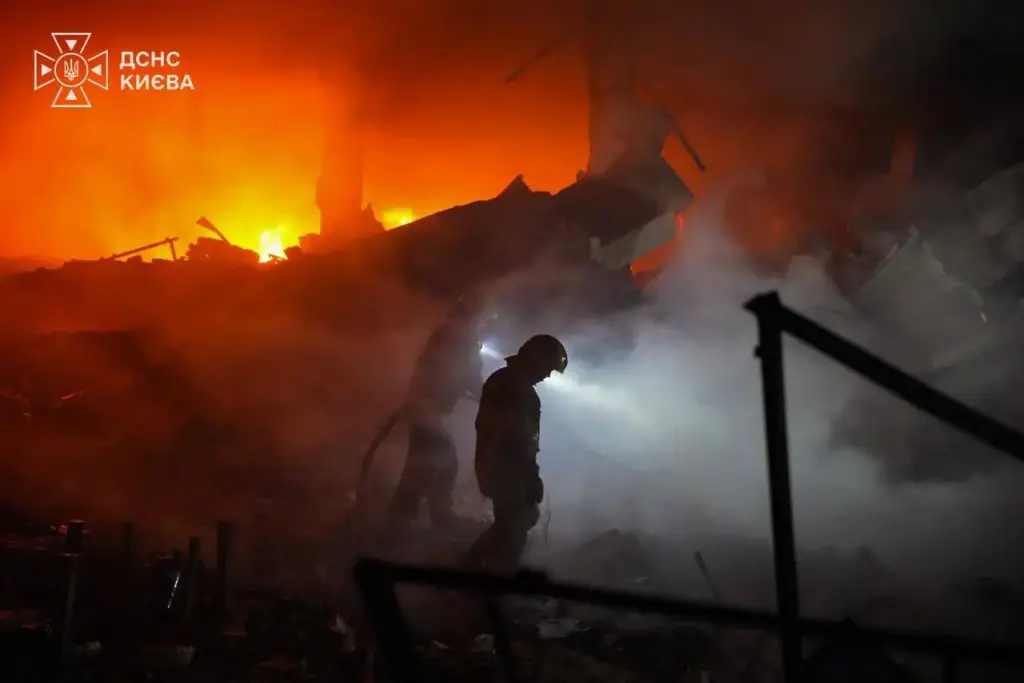
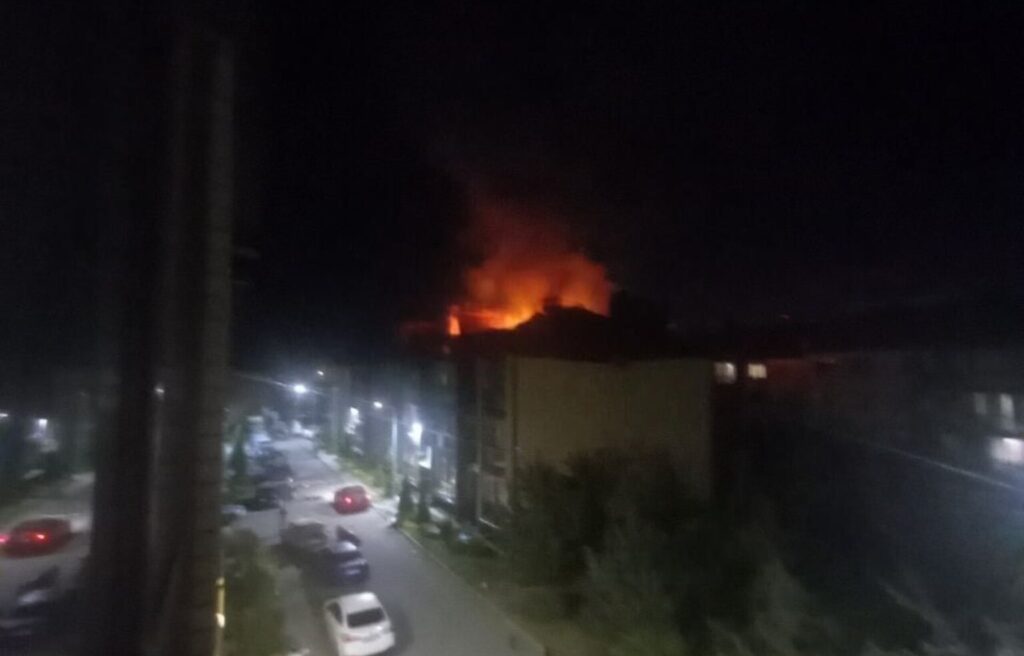
kyiv strike

Russian drones and missiles struck Kyiv data centers over 23–24 September, knocking out internet and hosting providers. The Digital Transformation Ministry said about 100,000 subscribers lost service, NV Business reported.

Russia has widened its air campaign from power plants and warehouses to railways, fuel stations, and now digital infrastructure as it tries to grind down the country's ability to function before another war winter.

"You'd have to destroy 70-80% of Kyiv's buildings"

MiroHost founder and Internet Invest Group head Oleksandr Olshanskyi told NV Business the attack destroyed his own data center.

"Most critically important data and systems have been moved abroad or to the cloud," Olshanskyi said. "If an online store stops working, that's unpleasant but not a tragedy."

He called rumors about a full internet blackout or sharp service price hikes baseless.

"Destroying all internet in a simple way is impossible—you'd have to use nuclear or chemical weapons or destroy 70-80% of buildings in Kyiv," he said.

What Russia hit

The strikes damaged a Kyiv data center housing UTELS switching equipment on 23 September. Overnight into 24 September, Russia destroyed equipment of hosting provider CityHost.UA and the data center housing MiroHost. About 95% of MiroHost's clients operate outside Ukraine and were unaffected, he said. Russia also struck the Pavutyna network's data center. Crazy Network said a missile struck Kyiv's central traffic exchange hub, cutting service for its subscribers in Vinnytsia, Kyiv, and Khmelnytskyi Oblast.

Providers KIEVNET, Domonet, FAUST, and Etherlink also reported disruptions. Ukraine's telecom regulator NKEK said on 24 September that providers were completing emergency restoration, and Domonet estimated service would return by 21:00 that evening.

The 23 September strikes killed two people and injured more than 40, and hit a college building in Kyiv while students were on campus, Ukrainian Foreign Minister Andrii Sybiha wrote that evening. Russia targeted major Ukrainian data centers "seeking to disrupt the flow of information," he said. "This is critical civilian infrastructure that ensures people can access life-saving information. It is not a military target."

"More sanctions pressure, more missile interceptors are the only way to stop this terror," Sybiha wrote. "These attacks must not become the new normal."

Panic, not military gain

Olshanskyi said Russia uses these strikes to spread fear, not achieve lasting results.

"The enemy's goal is to cause damage, inflame panic, and heighten nervousness," he said.

His data center's destruction "will not affect the situation at the front in any way," he said.

  •  

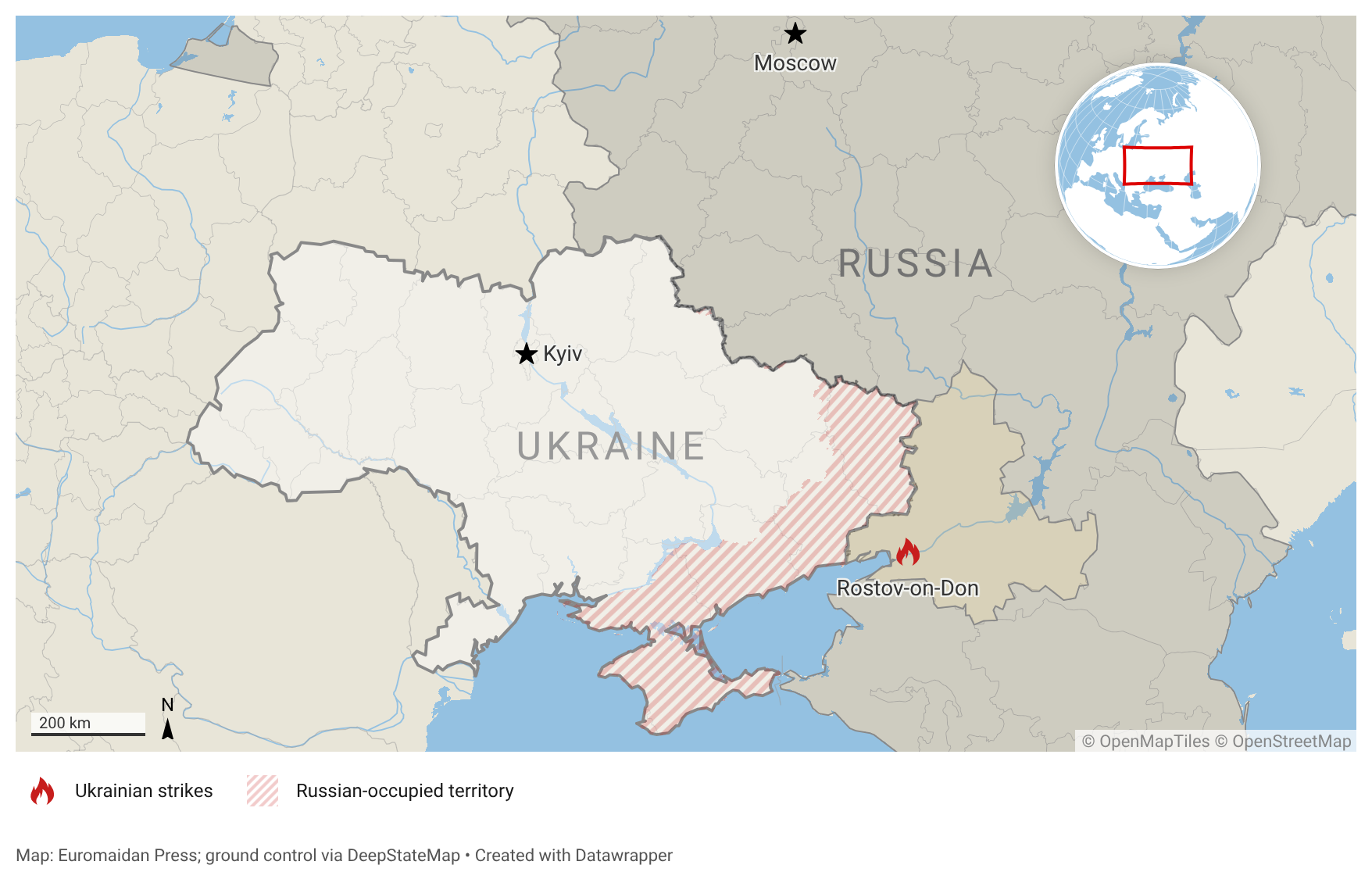
Drones hit Rostov-on-Don for the second straight night—OSINT monitors say the military airbase was likely the target again

drones hit rostov-on-don second straight night—osint monitors say military airbase likely target again · post fire over after ukrainian drone attack 18 2026 пожежа у російському ростові унаслідок атаки українських

Ukrainian drones struck Rostov-on-Don for the second consecutive night, with OSINT channels reporting the military airbase was likely targeted again, Militarnyi reported on 18 September. The previous night's strike hit the same installation, and Ukrainian President Volodymyr Zelenskyy reported the destruction of three military aircraft and three helicopters there.

Russia's full-scale war against Ukraine grinds through its fifth year with Russian military airfields serving as launch pads for guided-bomb strikes on Ukrainian cities and front-line positions. Ukraine's drone campaign against these bases and against the defense-industrial plants that supply them aims to destroy the aircraft, radars, and production lines Russia needs to sustain the war.

Second consecutive overnight strike

The attack began around midnight, Russian news Telegram channel Astra reported. Rostov-on-Don city mayor Aleksandr Skryabin stated around 02:00 that air defenses were active and urged people to take cover indoors.

Rostov Oblast governor Yurii Slyusar claimed more than 50 drones were downed overnight over Rostov-on-Don, Taganrog, Bataysk, and five other districts. He listed damage to private houses, apartment buildings, cars, and gas pipes but made no mention of the airbase.

Ukrainian OSINT channel Supernova+ suggested the airbase was the target again. Krymsky Veter reported a fire near the airfield. However, Astra noted the published footage had not been verified by its OSINT expert, and the results of the repeat strike on the base remain unverified.

Residents told Astra they heard no air-raid sirens and did not know where shelters were located. The Moscow Times reported locals described "deafening bangs" from around 00:30.

drones hit rostov-on-don second straight night—osint monitors say military airbase likely target again · post fire over after ukrainian drone attack 18 2026 пожежа у російському ростові унаслідок атаки українських
Explore further

Drones hit Rostov-on-Don for the second straight night—OSINT monitors say the military airbase was likely the target again

Russia's Defense Ministry claimed 629 Ukrainian drones downed overnight across all regions.

Ukraine's General Staff did not mention the airbase

Ukraine's General Staff reported verified results from several earlier strikes, including a hit on Kombinat Kamensky, a solid-rocket-fuel factory in Kamensk-Shakhtinsky, also in Rostov Oblast. The batch did not mention the Rostov-on-Don airbase. That does not necessarily mean the second attack did not take place—the General Staff can report strike results on the same day or days later, once damage is assessed.

Previous night: reported aircraft kills

The previous strike hit the Rostov-on-Don Central military airfield overnight on 17 September. Zelenskyy reported hits on a military transport An-12, two An-26 aircraft, and three helicopters. The SBU said a fire erupted on the aircraft parking area and secondary detonation of ammunition followed, with local residents reporting a large-scale blaze visible across the city. There is no independent verification of these figures.

drones hit rostov-on-don second straight night—osint monitors say military airbase likely target again · post fire over after ukrainian drone attack 18 2026 пожежа у російському ростові унаслідок атаки українських
Explore further

Drones hit Rostov-on-Don for the second straight night—OSINT monitors say the military airbase was likely the target again

Ukraine's General Staff had earlier reported strikes on the same airfield on 6 September. Ukrainian forces also reported destroying a Podlyot radar and two Pantsir-S1 air defense systems at the base, though no imagery was released.

Ukraine has been systematically targeting Russian military airfields and their air defenses with drones across the front, from occupied Crimea to Rostov Oblast. In August, a combined strike also hit a Rostov Oblast airfield alongside a major refinery.

  •  

Russian e-commerce will lose $4.8 billion to the drone campaign against its warehouses, analysts estimate

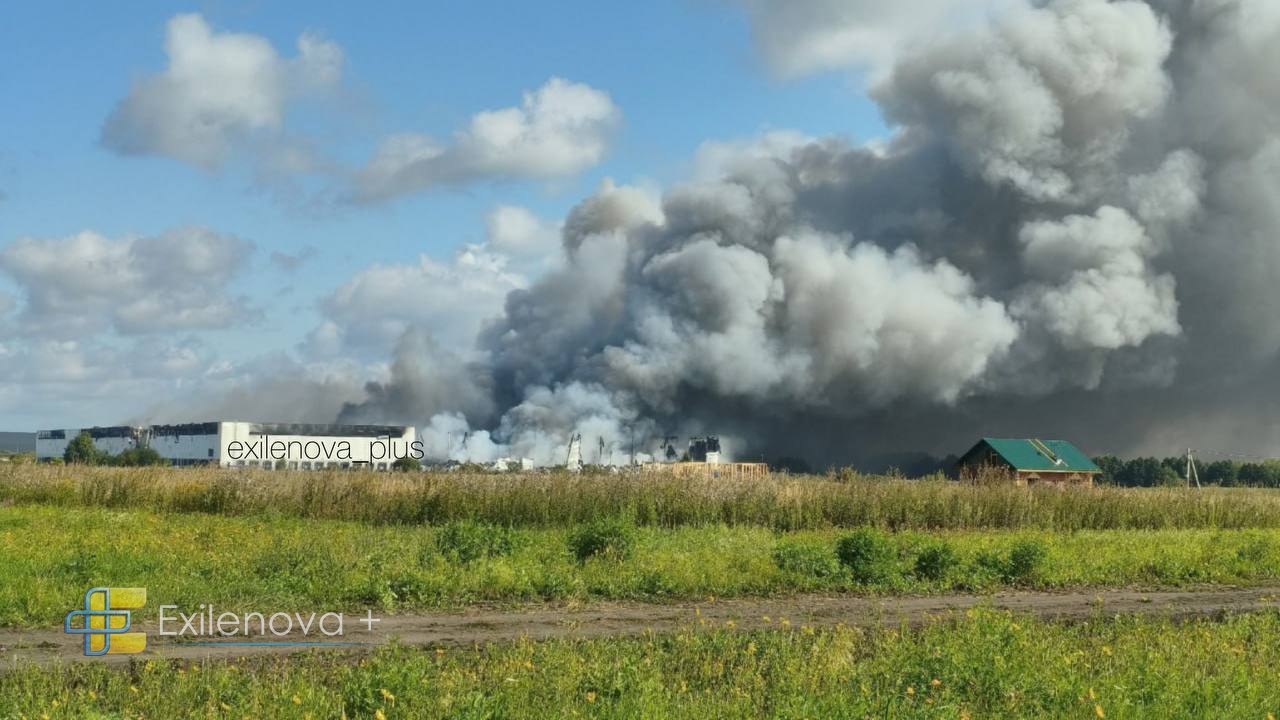
warehouse built hold 54 million items fire tambov oblast russia · post helicopter carrying water bucket above burning wildberries logistics center kotovsk 26 2026 exilenova+ ukraine news ukrainian reports

Ukrainian drone strikes on the warehouses of Russia's biggest online marketplaces will cost the country's e-commerce 400 million orders and 400 billion rubles ($4.8 billion) in revenue this year, the research firm Data Insight estimates, The Moscow Times reported. It prices what the campaign has done to a whole consumer market, not only to the companies whose warehouses burned. Sellers are cutting back on the platform at the center of it, and Wildberries' payout delays are pushing some of them out.

Ukraine's long-range drone campaign has widened from military targets to the infrastructure that funds and equips the war, and the country's biggest online marketplaces sit inside that logic: Russians bought $300 million in body armor, thermal sights, and drone components on Ozon in the twelve months to July.

The forecast, cut by a fifth

Data Insight lowered its growth forecast for Russian online retail by 20%, founder Fyodor Virin said. The market will now grow to 9.6 billion orders this year instead of 10 billion, and to 15 trillion rubles ($178 billion) in sales instead of 15.4 trillion.

That is exclusively the effect of the Ukrainian strikes on marketplace warehouses, Virin said, and most of the loss falls on Wildberries. The bombardment of the depots cut sales because goods were unavailable in a given city or entirely, and because delivery times grew as parcels had to travel further.

All of it lands in the second half of the year. Strikes on Wildberries warehouses began on 18 July and on Ozon's on 25 August, according to Virin. Euromaidan Press reported the first strike on an Ozon warehouse on 22 August.

About 30% of the orders that got stuck or disappeared from sale were cancelled outright, Virin estimates. The rest of the unmet demand went mostly to other online platforms and, to a lesser degree, to physical retail. Payout delays that began in mid-August have pushed some sellers to pull their stock, and Wildberries blamed the first missed round on a DDoS attack.

warehouse built hold 54 million items fire tambov oblast russia · post burned-out buildings wildberries logistics center kotovsk 26 2026 exilenova+ ukraine news ukrainian reports
Explore further

A warehouse built to hold up to 54 million items burned down in Tambov Oblast, Russia

What the companies lost

Damage to RWB, the company that runs Wildberries, from the loss of warehouses and infrastructure may reach 147 to 280 billion rubles ($1.7–3.3 billion), while sellers have provisionally lost 445 to 507 billion rubles ($5.3–6 billion), Data Insight's lead analyst Sergei Semko estimated. All of the marketplace's key logistics complexes have been hit, and it could lose a fifth of its network and over half its main hubs at once.

Much of what the sellers lost will not come back. On 22 July, Wildberries' founder said the warehouses were insured but that standard policies do not cover drone-strike risk, and Ozon has told sellers that losses from military action are an entrepreneurial risk neither it nor insurers will compensate.

Total losses for Ozon and its sellers are far lower, at around 100 billion rubles ($1.2 billion). Ozon has a much more branched warehouse network and rents most of its large complexes, Alfa-Bank analysts said. Its shares still fell as much as 29% in a single August session on a day when the Moscow exchange lost 2.9%.

  •  

A fifth of Russian refining sits idle, and the sector’s earnings still grew

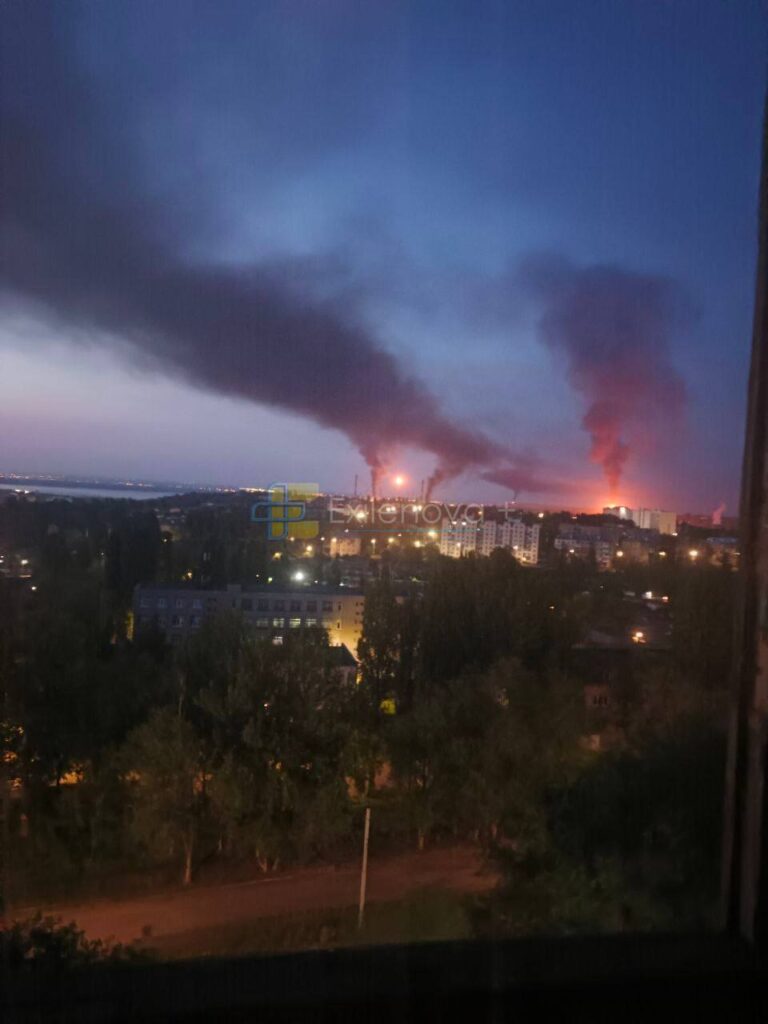
refinery saratov two tatarstan pumping station bashkortostan — one night's russian oil target list · post smoke fire rise over russia after ukrainian drone strike 8 2026 saratov5075776523918314508 ukraine news

Russian oil refineries earned more in the first half of this year than in the same period a year earlier, even as Ukrainian drone strikes kept a fifth of the country's refining capacity out of action, The Moscow Times reported. Record wholesale prices and fast-growing payments from the federal budget have more than covered what the attacks and the repairs cost. Russian consumers are covering the rest at the pump.

Refineries turn Russian crude into the two things the war needs: fuel for the army, and billions in export earnings and taxes that help pay for it. That is why That is why Ukraine keeps hitting them with long-range drones, and why what those strikes do to Russian oil earnings matters more than how many plants are burning.

Where the profits come from

Russian refineries earned 938 billion rubles ($11.1 billion) in the first half of 2026, 16.2% more than a year earlier, according to the state statistics service Rosstat. Ukrainian drone strikes have put a fifth of the country's refining capacity out of action.

Two things produced that result, according to Promsvyazbank analyst Yekaterina Krylova: high wholesale prices on the SPIMEX commodity exchange, and a sharp increase in state fuel subsidies.

Wholesale prices took off in March, after the war in the Middle East began: light petroleum products have risen 37% since late February and diesel by a third, with July bringing record exchange prices of 82,600 rubles ($982) per tonne of AI-95 gasoline. Crude got cheaper for the refiners over the same stretch, as the ruble price of Urals oil peaked in spring and fell through the summer while the products made from it kept getting dearer.

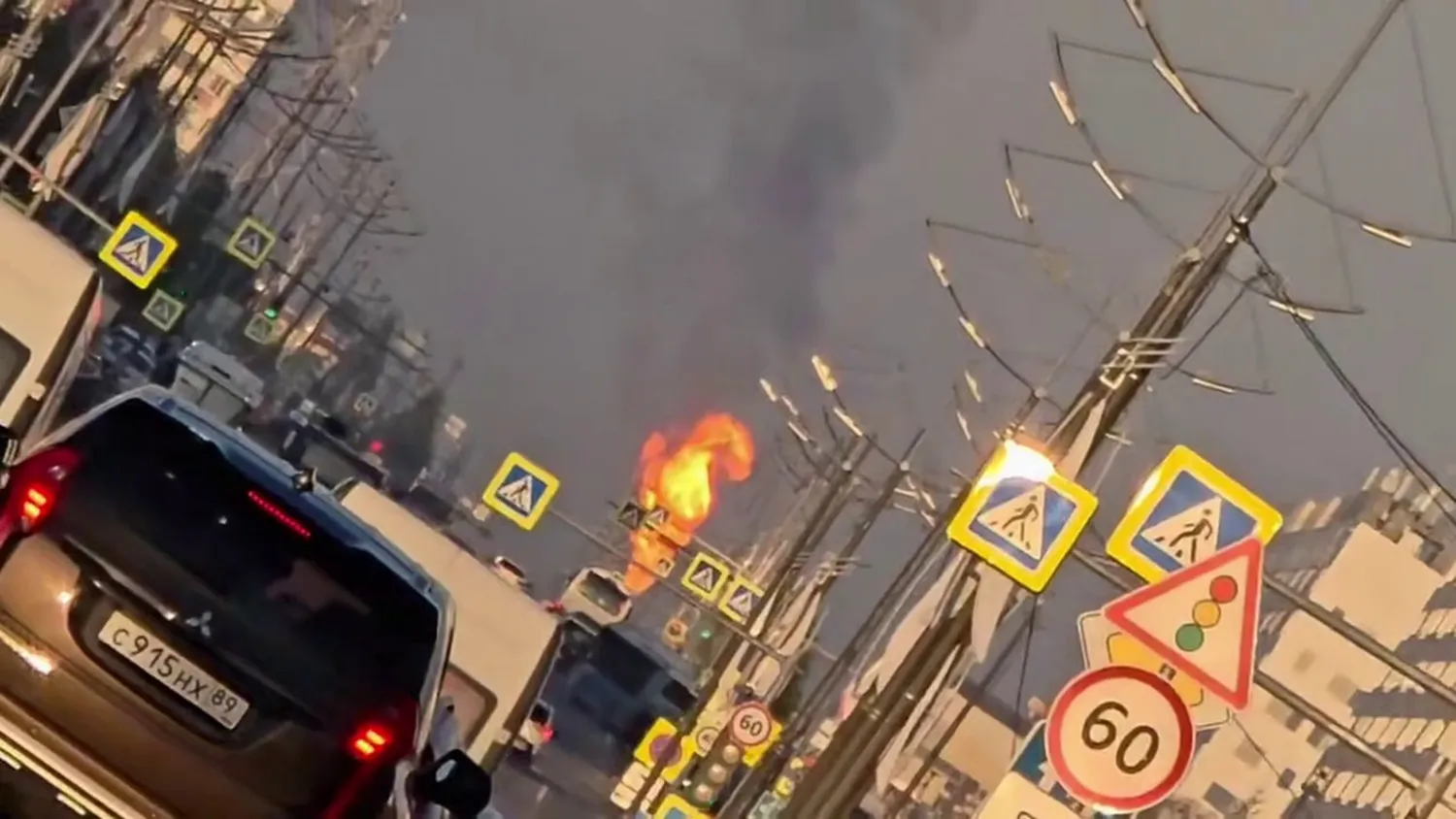
A tall flame rises above an industrial facility in Novy Urengoy at night.
Explore further

Ukraine says drones hit Russia’s gas heartland over 3,000 km from its border—a wartime record

The budget pays the difference, the country pays the bill

Russia's damper mechanism compensates oil companies for selling fuel cheaply at home rather than exporting it, and the payments grow as the gap between domestic and world prices widens.

The Finance Ministry paid out close to 350 billion rubles ($4.2 billion) a month in the second quarter, and 500 billion rubles ($5.9 billion) for July and August together. Krylova expects the subsidies and the prices together to widen net margins by 45% in the third quarter, to 35,000 rubles ($416) per tonne of gasoline.

Russia's retail prices tell the other half of the story. Gasoline has risen 21.2% since January and diesel 18.4%, well above Russian inflation. Budget money lets the majors, which own both the refineries and the filling-station chains, hold their own forecourt prices near inflation. Independent chains have no such cushion: they buy at the higher wholesale prices and sell dearer, which is how Russia has been squeezing them out of the market. For drivers, the crisis has been physical as well as financial, with rationing and dry pumps spreading across dozens of regions.

Kazakh President Kassym-Jomart Tokayev and Russian President Vladimir Putin walk past an honor guard in Astana, Kazakhstan, on 27 November 2024.
Explore further

Kazakh refinery deal could ease Russia’s front-line fuel pressure—but it covers just 0.3% of demand

What the strikes have cost

Ukrainian drones have been hitting Russian refineries since 2024, and the campaign escalated sharply from August 2025, when strikes deep inside Russia became systematic. Russian refineries disclose none of their losses from it.

Ukraine's General Staff estimated the total damage to the Russian oil industry since August 2025 at $13.5 billion, in a count published in early July. The insurance broker Mains put direct losses to the oil and gas sector from drone strikes last year at more than 100 billion rubles ($1.2 billion), and above a trillion rubles once lost profit and indirect damage are counted.

  •  
❌