❌

Vue lecture

Ukrainian soldiers solve drone-delivery problem US military has chased for three decades
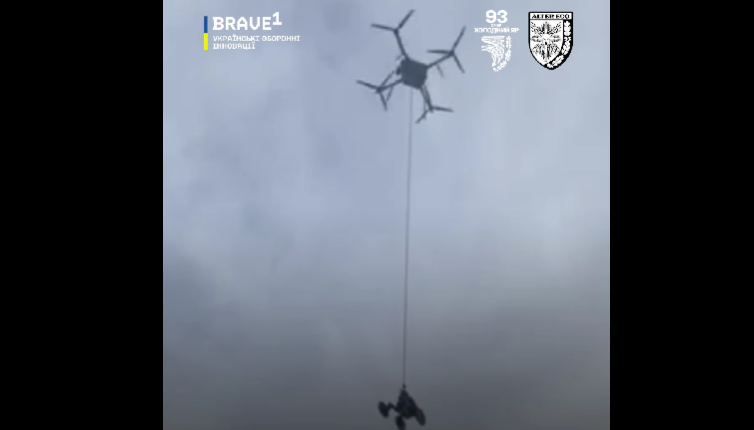
The purpose-built robot Desantnyk. Source: Brave1

Ukrainian soldiers have built a drone that carries a combat ground robot into battle and drops it where needed, a trick the US has pursued but never fielded. The Alter Ego battalion of the 93rd Mechanized Brigade has paired a bomber drone with a purpose-built robot, the Desantnyk, and took it from idea to combat in 10 days, the Brave1 defense cluster said.

The system answers a problem that has long hobbled ground robots: getting them to the fight over mined, cratered terrain they cannot cross on their own.

A drone carries the robot dozens of kilometers behind the lines and drops it precisely, in a pairing engineers call a "marsupial", one carrier delivering another. The US worked on such systems for more than 30 years, Brave1 said.

And it is not alone: the 3rd Army Corps has been air-dropping robots behind Russian lines in its Vivaldi offensive.

A drone carries the robot in

The Desantnyk is a compact wheeled platform. Alter Ego built a way to release it accurately from a heavy bomber drone, dropping it well beyond the range a ground robot could reach on its own. It lands deep in the enemy rear and drives on to its target. The point is to spare the robot the most dangerous, exposed leg of the journey.

Confirmed kills follow fast

According to Brave1, just 10 days passed from the idea to its first combat use, and the Desantnyk has already carried out confirmed strikes: the unit used it to destroy Russian shelters and troops. Only a handful of Ukrainian units have mastered the tactic so far.

Brave1 moves it to production

The defense cluster, a state platform for scaling battlefield inventions, said it took notice of the Desantnyk and helped the battalion find a manufacturer to move it from prototypes to serial production and out to other units.

  •  

A century ago, bright red trousers made soldiers easy targets. Ukraine’s ex-army chief says the West is wearing them again

Zaluzhnyi ambassador Ukraine

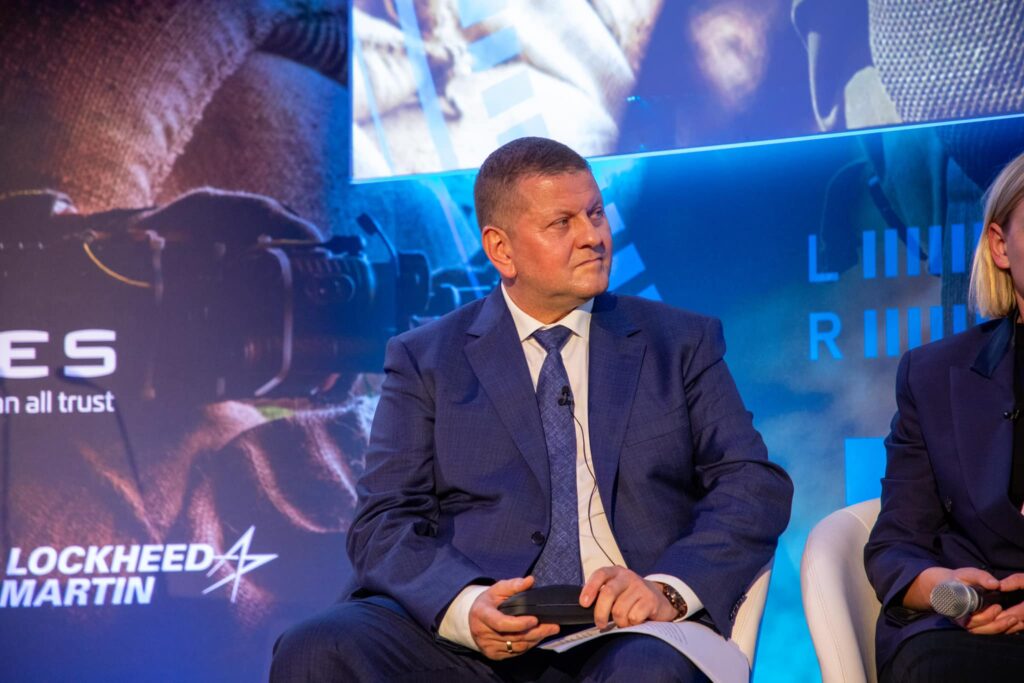
Ukraine's former top commander has a warning for anyone betting that new gadgets will win the war, he wrote in a column for Ukrainska Pravda. Valerii Zaluzhnyi, the country's Commander-in-Chief until 2024 and now its ambassador to the UK, argues 2026 is a war of technologies and, no less, of the strategies and doctrines that must keep pace with them. Bolting modern tech onto an old Soviet playbook, he says, drove mobilization into a dead end.

A year ago, Zaluzhnyi warned that Ukraine would need thousands of counter-drone systems and mass drone production to cope with the growing role of UAVs in war. A year later, those capabilities still aren't there at the scale he called for, mobilization has hit the dead end he now describes, and the four measures he proposed have not kept pace with how quickly drones are spreading.

Drones are already cheap, widespread, and shaping the war, and the front has gone static, Zaluzhnyi writes, while Russian strikes keep reaching railways and fuel stations far behind it.

This is no longer a drone war

The drones filling headlines no longer exist on their own, Zaluzhnyi writes. They have evolved into more familiar weapon types, cheaper and more effective—anyone still treating drones as a stand-alone class is about three years behind. Fixating on individual gadgets, he argues, misses the real contest: strategy and doctrine.

He reaches back to World War I for the danger he sees, running the line from Verdun and the Somme to Robotyne and Bakhmut. Before that war, soldiers in one army marched in bright red trousers that were supposed to help against repeating rifles, machine guns, and long-range artillery, and later against tanks and aircraft.

Today's faith in old security guarantees, he warns, is that same proud symbol worn onto a modern battlefield.

"The red trousers taught them nothing," he writes of those still moving tanks and artillery toward the fight by yesterday's logic.

New weapons, old strategy

The war has surrendered itself to marketers and wheeler-dealers, Zaluzhnyi writes—people who, without understanding or strategy, stoke it for quick profit while flaunting the pace of technological progress. Trying to retake land with Soviet methods and new weapons drove mobilization into a dead end, and fewer and fewer people were willing to take the one chance it offered.

"Damn marketing that kills," he adds.

The way out, he argues, is to treat technology as a new weapon, build tactics around it, and only then reshape the force.

That is what he calls doctrine, built through resource and technological alliances into a strategy for victory. Ukraine and Russia, he writes, have become real-time testing grounds.

What he warned a year ago

In September 2025, Zaluzhnyi named the four fights Ukraine had to win to survive mass drone warfare: counter-drone systems at scale, state-level drone production, integrated battlefield networks, and channeling tech talent into defense industries.

The counter-drone systems he put first are still short of the scale he warned Ukraine would need. Mobilization, he writes, has hit a dead end, and marketers—not the doctrine he calls for—are setting the pace.

  •  
❌