Vue lecture

Ukraine’s Third Army Corps won’t just hold Donetsk fortress cities. It’s building mission to pull civilians out of them

The Ukrainian soldiers simultaneously perform defensive, logistical, and humanitarian functions. Ukraine’s Third Army Corps is launching a separate AB3.HUMANITARIAN initiative to evacuate civilians from frontline settlements. This means saving families, elderly people, children, people with disabilities, from Russian attacks, and those who often have no way to leave on their own.

Recently, the 3rd Army Corps, led by Andrii Biletskyi, the Azov founder, has been tasked with stabilizing the Donetsk front, where Russia is battering the fortress cities that have held since 2014. As that fighting grinds toward towns like Sloviansk and Kramatorsk, the civilians still living in them have to be moved, often under fire.

Robots and boats reach cut-off towns

The corps says its soldiers already regularly pull residents out of settlements near the front. The hard part is the routes: roads watched by Russian drones, approaches too dangerous for a bus or an ambulance. To work them, the evacuation teams use ground robots, armored vehicles, motorboats, and whatever else the terrain demands, reaching places that an ordinary rescue cannot.

Unmanned ground vehicles have become a fixture of Ukrainian evacuations, part of a wider shift in which the military ran more than 100,000 robot logistics and evacuation missions in the first eight months of 2026.

A fund pays for more trips

Making it a formal mission is also about money. The corps' own Staff Fund is opening financing for the vehicles and equipment that the evacuation teams need. The corps expects this dedicated support to enable it to run more trips, into more places, more often, than volunteer improvisation allowed.

The corps urges people to leave early

The appeal underneath the announcement is blunt.

"Take care of yourselves and your loved ones, and leave in good time, because the lives of our people are the most precious thing," the corps wrote.

The plea matters because many who remain on the front line are the least able to move on short notice, and the window to reach them narrows every time the front creeps closer, while roads get more dangerous.

  •  

“Its task is not cargo. Its task is people”: After Russian FPV drone hit their house, K-2 brigade sent ground robot to carry casualties out

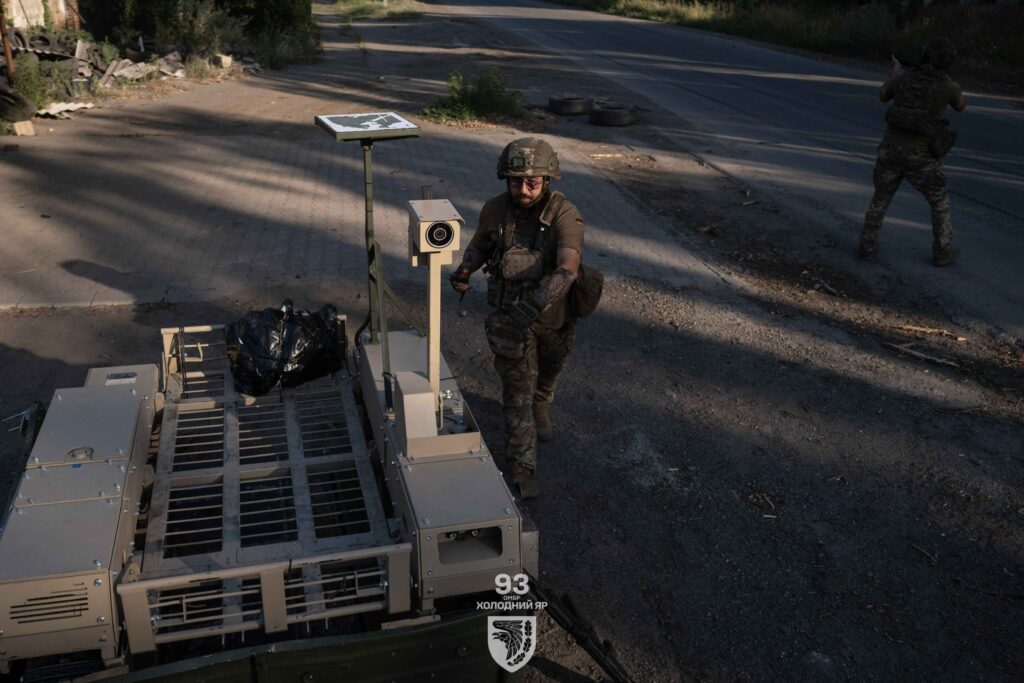
An armed ground robot. Photo: 93rd Brigade

A Ukrainian ground robot that usually hauls ammunition and supplies to the front carried a different load out of it this time: wounded civilians. The 20th "K-2" Unmanned Systems Brigade sent the unmanned vehicle to evacuate people hurt when a Russian FPV drone struck their house, and its soldiers walked the entire route to shield them from more drones.

On a front where Russian FPV drones hunt anything that moves, Ukraine has handed its ground robots the jobs that get soldiers killed: hauling ammunition, clearing mines, and dragging out the wounded. Its units ran more than 100,000 such robot missions in the first eight months of 2026, and Zelenskyy has pushed to contract at least 50,000 more of the machines.

A Ukrainian civilian home took a direct Russia's FPV hit, and the wounded had nowhere safe to run

Ukrainian troops sent in a ground robot to pull them out, with no human driver risking their lives. Usually, such machines haul ammo or supplies
🎥 "K-2" Brigade pic.twitter.com/NTFE93sLFS

— Euromaidan Press (@EuromaidanPress) September 11, 2026

The robot carries people, not cargo

An FPV drone hit the civilian house and left casualties who had to be moved out of the danger zone, K-2 explained, and an ordinary evacuation would have been too risky, so the unit used an unmanned ground vehicle instead.

"Its task is not cargo. Its task is people," the brigade said.

Soldiers guard the whole route

The robot did not go alone. As the footage shows, K-2 soldiers escorted the vehicle along its entire path so they could protect the wounded from Russian drones if the machine came under attack.

That risk is real: Ukraine's evacuation robots have themselves become targets, with Russian forces striking anything that moves on a front where the drone kill zone can stretch a dozen kilometers back from the line.

Near Kupiansk, a robot that once ran a dozen missions now survives three or four before it is destroyed, according to a robot-unit commander.

Earlier, Tetiana Chornovov, the commander of a platoon of anti-tank guided missile systems, said that Ukraine still didn't have a proper system for getting its wounded off the battlefield. Chornovol believes that creating separate staffed evacuation units within brigades is the most necessary reform now, each with an autonomous team and special transport.

  •  

Kyiv couple marries after Russian strike ruins their home

kyiv couple marries after russian strike ruins home · post liudmyla leonid ryzhak married 8 2026 hours hit warehouse across street blast wave left apartment uninhabitable ap video ukraine news

A Russian strike hit a warehouse across the street from Liudmyla and Leonid Ryzhak's Kyiv apartment overnight into 8 September, sending a blast wave through their home hours before they were due to get married, the Associated Press reported. Leonid, 43, a soldier on leave from the front, had come back for the wedding.

Ukrainians keep marrying and rebuilding through a war that keeps interrupting both. More than 79,000 couples registered their marriages in the first half of 2026, 16% more than in the same period last year, nearly 40% of them online, according to Ukraine's Ministry of Justice figures. In July alone, the UN counted 437 civilians killed across the country, the deadliest month since May 2022.

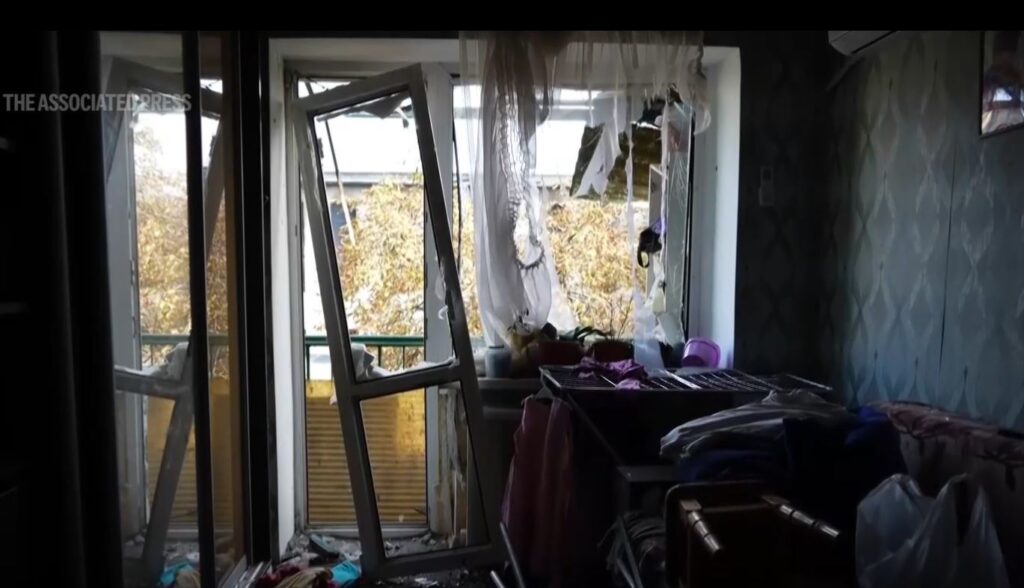
The explosion blew out the windows, scattered furniture, and left the apartment uninhabitable. The couple fled to a shelter with Liudmyla's 6-year-old daughter and two guinea pigs. Their cat hid and could not be found. A second strike hit after they reached the shelter.

Liudmyla and Leonid Ryzhak's Kyiv apartment on 8 September 2026, its windows blown out by the blast wave from a Russian strike on a warehouse across the street. Screenshot from AP video

Neighbors clearing debris stopped to congratulate them.

We should all be celebrated, that we survived,” Liudmyla replied.

They dug their wedding clothes out of the debris. Liudmyla, 33, shook broken glass from her white tulle skirt, which had small holes. Leonid could not find his dress trousers, so he wore army trousers with his embroidered shirt and sneakers.

kyiv couple marries after russian strike ruins home · post liudmyla leonid ryzhak married 8 2026 hours hit warehouse across street blast wave left apartment uninhabitable ap video bride inside
Liudmyla and Leonid Ryzhak married in Kyiv on 8 September 2026, hours after a Russian strike hit a warehouse across the street and a blast wave left their apartment uninhabitable. Screenshot from AP video

The strike was part of a mass Russian attack on Kyiv that came once US peace envoys left the capital, ending a lull that had held for three days. Russia launched 166 drones and 32 cruise missiles at Ukraine overnight, along with ballistic and anti-ship missiles, and air defenses downed 142 drones, 31 cruise missiles, and two ballistic missiles, the Air Force said. Three people were killed in Kyiv, Kyiv Mayor Vitalii Klitschko said.

The couple arrived at the registry office on time, at 10:40, but another air-raid siren sounded soon after and the office closed. They waited in the courtyard for almost three hours as explosions hit the surrounding districts.

Eventually, the alert ended, and the couple went inside.

"If God gave me a continuation of life, then why should I put it off?" Liudmyla said. "At least for now, I have the right to be happy," she added.

They got married.

  •  

Mines and unexploded munitions have harmed 1,688 civilians since Russia’s full-scale invasion, Ukraine says

mines

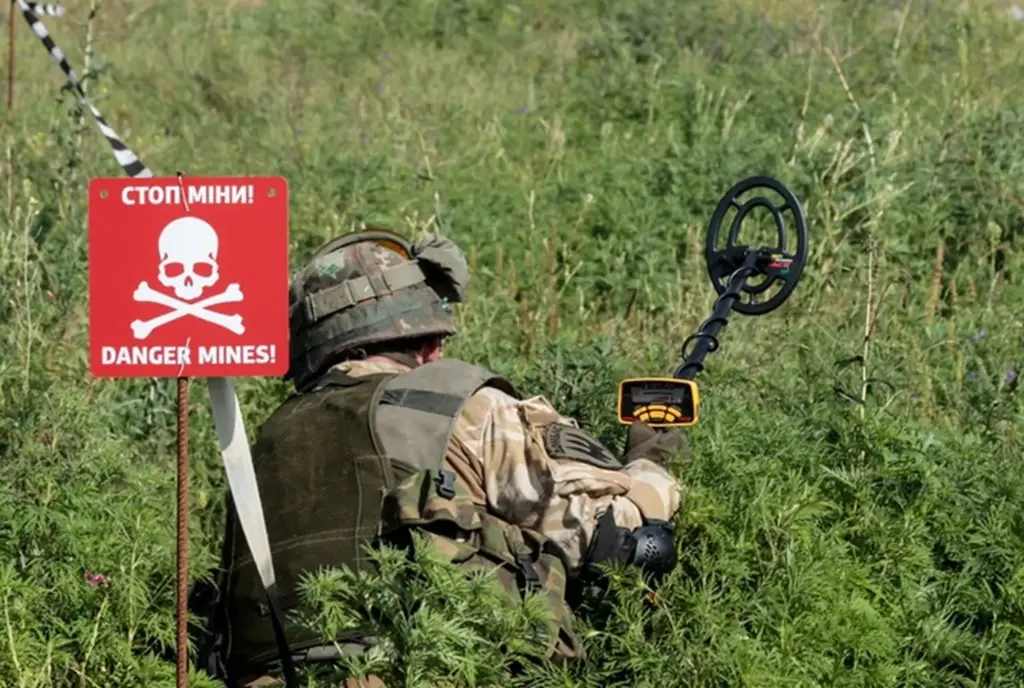
As of 1 September, Russian mines and unexploded ordnance (UXO) had harmed 1,688 civilians since the start of the full-scale invasion, Ukraine's Main Directorate of Mine Action, Civil Protection and Environmental Safety said. The figure breaks down into 1,515 adults and 173 children, with farmers the worst-hit occupational group at 296.

More than 20% of Ukraine's territory—139,000 km²—was suspected of contamination as of mid-2025, according to the UN Mine Action Service (UNMAS). The contamination poses a long-term civilian hazard because mines and unexploded ordnance can remain dangerous long after fighting has moved on. UNMAS has described Ukraine as the most heavily contaminated country since the end of the Second World War.

Ukrainian law enforcement opens criminal proceedings after each civilian detonation on a Russian mine as part of investigations into Russia's violations of the laws and customs of war, the directorate said. The data is collected under Protocols II and V of the Convention on Certain Conventional Weapons, Ukrinform reported.

Beyond farmers, the occupational groups most affected were the unemployed (238), pensioners (166), schoolchildren (165), critical infrastructure workers (164), and drivers (108), the directorate said.

UN human rights monitors recorded 51 civilian casualties from mines and explosive remnants of war in June, including seven killed and 44 injured.

The danger also extends to the people clearing contaminated areas: a Russian strike killed two Norwegian People's Aid deminers and wounded four in Kherson Oblast the same month. Russian forces had hit a clearance team before, killing two Danish Refugee Council workers near Chernihiv in September 2025.

The annual economic losses from contaminated land are estimated at around $11 billion, largely from lost exports and local tax revenue, according to the deputy minister coordinating Ukraine's demining.

  •  

A Russian drone chose its own target and killed three. The code that told it what to look for was readable

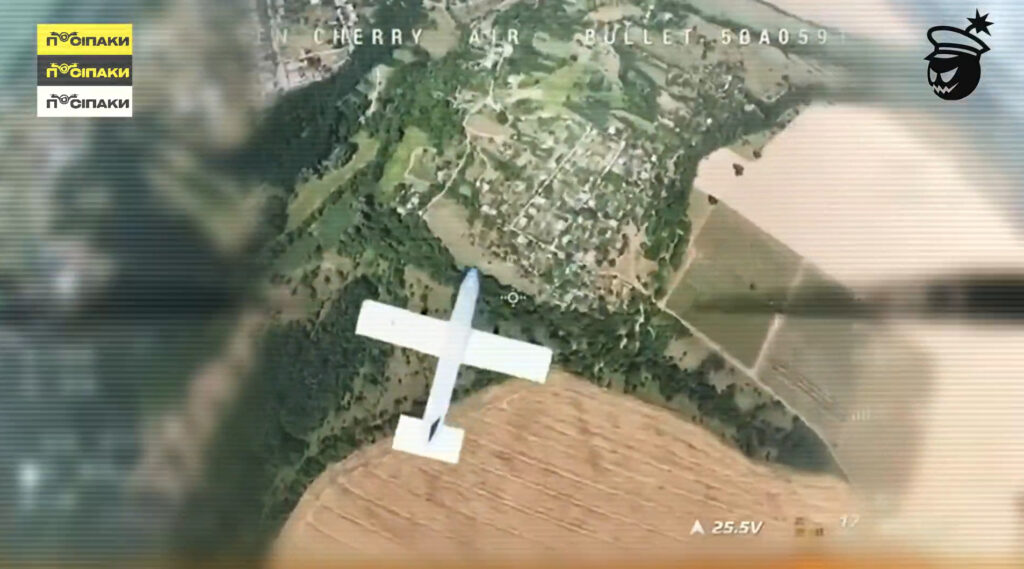
russian drone chose its own target killed three code told what look readable · post molniya general cherry video equipped artificial intelligence shot down over zaporizhzhia ukraine news ukrainian reports

Ukrainian investigators recovered an unencrypted American AI module from a Russian Molniya drone that killed three civilians near a Zaporizhzhia gas station on 6 July, and read the code that guided its targeting, the New York Times reported. No human operator made the final call.

Commercially sold AI boards have been turning up inside Russian strike weapons for more than a year, and autonomy is the direction both armies are moving in. What changed is the evidence rather than the technology. Until now, autonomy had to be inferred from what a wreck lacked—an antenna, a radio trace.

Tetiana Bubynets, a 19-year-old accounting student at Zaporizhzhia National University, was declared dead at a hospital, one of her professors said. Oleksii Svirin, 41, and Roman Karpii, 48, later died of their injuries. The drone had attempted to navigate around an apartment building toward the gas station's propane tanks but struck a wall and detonated near people sheltering there.

What investigators found in the wreckage

The wreckage contained an Nvidia Jetson Orin minicomputer, an off-the-shelf AI module that costs a few hundred dollars. The chip was not encrypted. Ukrainian officials said they could read the terrain imagery loaded for visual navigation and the object-detection code that defined what the drone was trained to target, NYT reported. The drone carried no radio antennas and was flying in a wave of approximately six, none of them transmitting. A missing antenna alone would not prove self-targeting—a drone flying a preprogrammed route needs no antenna either, but it would have no use for an Nvidia chip.

Human operators had programmed the drone to fly toward the gas station and set the general target area before launch. Once near the site, the onboard system identified and selected the specific object—most likely propane tanks it had been trained to recognize—on its own, drone experts and military officials said. Vadym Kushnikov, a drone expert at the Kharkiv Aviation Institute, described the drone as "a preprogrammed tool trained in virtual reality to track specific objects," NYT reported.

russian drone chose its own target killed three code told what look readable · post molniya kamikaze photos sources militarnyi ukraine news ukrainian reports
Russian Molniya kamikaze drones. Photos from Russian sources via Militarnyi

Where else the Nvidia module has turned up

Kateryna Bondar, a senior fellow at the Wadhwani AI Center at the Center for Strategic and International Studies in Washington, told NYT that no earlier Russian strike by a self-targeting drone has been documented killing civilians, which would make 6 July the first such case on record. She called the Nvidia module "the best proof" that Russia was experimenting with autonomous AI.

The Jetson Orin is not new to the battlefield. The module is made by the American chipmaker Nvidia. Ukraine's sanctions on Russia's AI drone supply networks, imposed in August 2025, hit Russian, Chinese, and Belarusian drone developers and component suppliers—not Nvidia.

Ukrainian intelligence first identified the module in the V2U autonomous strike drone in June 2025, mounted in a Chinese Leetop A203 minicomputer. It has since reported Jetson-based AI modules in Russia's Lancet and Klin drones—the Klin an older Jetson TX2—and, most recently, in the S-71 Monokhrom cruise missile.

In those cases, the finding was the hardware, and what Ukrainian intelligence inferred from it. This time, the code itself was legible.

Nvidia confirmed to NYT that the photographed board was a Jetson Orin. The company said the minicomputer is a consumer-grade product "sold to students, developers and start-ups for a wide range of beneficial applications," that it does not sell the computer in Russia, and that it is widely available through resellers.

Zaporizhzhia as testing ground

Russia began test flights of AI-guided Molniya drones in May, and had begun testing self-targeting systems in the V2U several months earlier, some of those for last-mile guidance only, Ukrainian air defense experts told NYT. Local air defense officials said Russia has been aiming at civilian objects—pumps and propane tanks at gas stations—along with military recruitment centers while trying out autonomous drones in Zaporizhzhia. Why those targets were chosen for the tests is not clear.

Gas stations have been under sustained attack independently of the AI trials. Russia has destroyed approximately 200 across Ukraine since spring, around 50 in June alone, by UNITED24 Media's count.

In Zaporizhzhia, gas stations now prop plastic sheeting at odd angles around propane tanks to confuse the drones' image recognition, and Ukraine has turned to shooting down drones that electronic warfare cannot jam.

  •  
❌