Vue lecture

Kosova is no precedent for Russia’s annexation of Crimea—Ukraine should say so
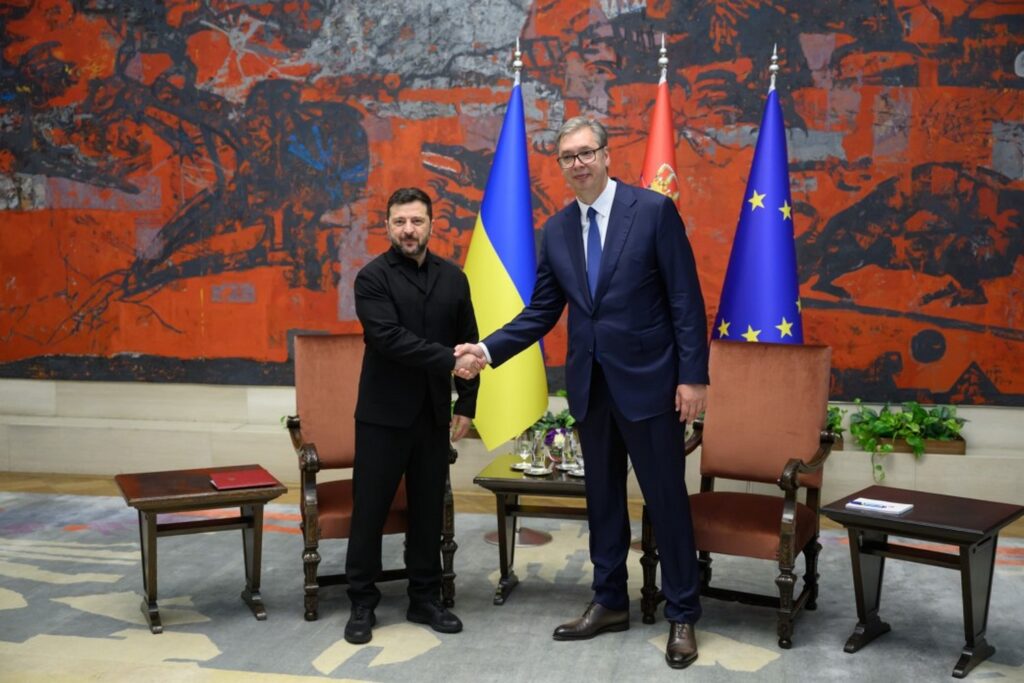
During President Volodymyr Zelenskyy’s recent visit to Serbia, he was asked whether Belgrade could continue to count on Ukraine’s position on Kosova. Zelenskyy reaffirmed that position, saying that Ukraine respects Serbia’s territorial integrity and international law and that its stance on Kosova’s “unilateral declaration of independence” remains unchanged.

Explore further

Zelenskyy’s Kosovo comments in Belgrade prompt flag removal in Prishtina

For many Kosovars, who have stood firmly with Ukraine since Russia’s full-scale invasion, this is difficult to understand. There is particular pain in hearing President Zelenskyy appear to dismiss what Kosovars endured—when it is precisely that memory of war, displacement, and atrocities that made Kosova one of Ukraine’s most instinctive supporters.

Kosova emerged from an international process designed to resolve a conflict; Russia manufactured “independence” as an instrument of conquest.

The danger of “unilateral”

There is a big problem with the way Kosova is being discussed by President Zelenskyy. Describing its independence simply as a “unilateral declaration” removes everything that matters about how Kosova actually became independent.

It also plays directly into an argument Vladimir Putin has been making for years: if the West accepted Kosova, why should it reject what Russia has done in Crimea, Donetsk, or Luhansk?

Ukraine should be dismantling that argument, not inadvertently reinforcing it. Kosova’s declaration was unilateral in one narrow sense: Serbia did not consent. But Ukrainians should understand the problem with treating the aggressor’s consent as the decisive test.

Imagine telling a community in Ukraine devastated by Russian forces that Moscow must retain a permanent veto over the political settlement that determines its future.

Kosova’s path to independence

Kosova did not simply decide one day in 2008 to break away from Serbia. The declaration came at the end of a process that had lasted years. Kosova’s path to statehood came through the violent dissolution of Yugoslavia, a federation that ultimately fragmented into seven independent states, and after years of systematic repression of Kosova’s overwhelmingly Albanian population. The culmination was the 1998–99 Kosova war.

Serbian and Yugoslav forces conducted a campaign of violence and forced displacement against Kosovar Albanians. Nearly 800,000 people were expelled from Kosova in a matter of months because of a violent ethnic cleansing campaign of the Serbian army against Kosovars.

Hundreds of thousands more were internally displaced. Thousands of civilians were killed, cities and villages burned, homes destroyed, and women subjected to sexual violence.
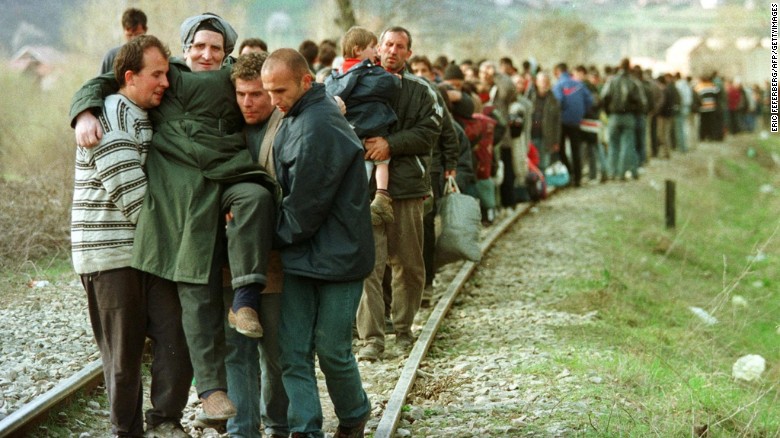
kosovo
Kosovar refugees fleeing their homeland. 01 March 1999, Blace area, the former Yugoslav Republic of Macedonia. Photograph: UN Photo

When the war ended in 1999, Kosova did not declare independence. Nor did Albania invade Kosova and annex it. Instead, Kosova was placed under UN Security Council Resolution 1244. For almost nine years, its institutions developed under international administration while its final status remained unresolved.

And then there were negotiations. UN Secretary-General Kofi Annan appointed former Finnish President Martti Ahtisaari to lead talks between Belgrade and Pristina over Kosova’s final status. After those negotiations failed to produce an agreement, Ahtisaari concluded that returning Kosova to Serbian rule was no longer a viable option and recommended internationally supervised independence.

This matters because Kosova’s declaration in February 2008 did not reject that international process. It embraced it. The declaration committed Kosova to implementing the Ahtisaari settlement and invited continued international involvement, including an EU rule-of-law mission and NATO’s security presence.

Call the final declaration unilateral if you wish. The process that produced it was anything but.

What the ICJ found

Even after independence, the issue was subjected to further international scrutiny. At Serbia’s initiative, the UN General Assembly asked the International Court of Justice to examine the declaration. In 2010, the court concluded that Kosova’s declaration “did not violate international law.” It also found that it did not violate UN Security Council Resolution 1244.

None of this means Kosova’s path to independence was simple or uncontested. Clearly, it was not. But reducing this history to the word “unilateral” creates precisely the opening Russia needs to manufacture a parallel with Ukraine.

Crimea breaks the comparison

Putin has used Kosova for years to claim that the West created a precedent Russia merely followed: Kosova separated from Serbia without Belgrade’s consent, so why should Crimea be different? Because that is clearly where the similarity ends.

Crimea, Donetsk, and Luhansk were annexed following a Russian invasion. Moscow occupied Ukrainian territory, installed or backed proxy authorities, staged referendums under military occupation, and ultimately claimed Ukrainian land as its own.

Kosova emerged from an international process designed to resolve a conflict; Russia manufactured “independence” as an instrument of conquest. Ukraine should insist on that distinction every time Moscow invokes Kosova.

Russians support Putin putinism war in Ukraine
People gather for a concert marking the eight anniversary of Russia's annexation of Crimea at the Luzhniki stadium in Moscow on 18 March 2022. - The banner bearing the letter "Z" in the colours of the ribbon of Saint George, which has become a symbol of support for Russian military action in Ukraine, reads "For Putin!" (Photo by Pavel BEDNYAKOV / various sources / AFP)

Ukraine understandably approaches Kosova cautiously. A country fighting for its territorial integrity is wary of anything that might appear to weaken that principle. But acknowledging the exceptional circumstances of Kosova does not weaken Ukraine’s argument. Treating Kosova and Crimea as comparable cases does.

Russia wants Kosova to be its precedent. Ukraine does not have to accept the premise. Ukraine, in fact, has a particular interest in explaining the difference, because Ukrainians know better than almost anyone what Russian-manufactured "self-determination” actually looks like. That is not Kosova’s story.

Kosova chose Ukraine first

There is also an irony here that is difficult for Kosovars to ignore. Kosova has stood with Ukraine since the beginning of Russia’s full-scale invasion. It imposed sanctions against Russia and Belarus, provided assistance to Ukraine, and offered refuge to Ukrainian journalists.

It did all of this without being recognized by Kyiv—Kosovars did not need recognition to know which side they were on.

Ukraine’s experience resonates deeply in Kosova. We know what it means to live through war and displacement. We also know what it means when a larger neighbor invokes history to argue that it has the right to determine your future.

That does not make the two cases identical—but it should make Ukrainians skeptical when Russia tries to turn Kosova into a justification for its own imperial project.

removal of the ukrainian flag from public display in pristina, kosovo
The Ukrainian flag is removed from a public display in Pristina after President Volodymyr Zelenskyy reaffirmed Ukraine’s support for Serbia’s territorial integrity. Video still: Përparim Rama/Facebook.

Kosovars did not expect President Zelenskyy to arrive in Belgrade and announce that Ukraine had suddenly changed its position on Kosova. But it is reasonable to expect Kyiv to revisit its approach to Kosova and to recognize the process by which Kosova came to be, a process that Ukraine’s closest allies today understood, supported, and ultimately recognized.

That requires abandoning a framing that reduces Kosova’s history to a “unilateral declaration” and inadvertently gives credibility to the parallel Russia has spent years trying to construct. For Kosovars, the hope is that a more honest understanding of that history will eventually lead Ukraine to reconsider recognition, too.

Not as a reward for Kosova’s support for Ukraine, but as the natural outcome of seeing Kosova on its own terms rather than through the precedent Moscow wants it to be.

Putin has spent years trying to make Kosova his precedent. Ukraine should take that argument away from him. Doing so would bring Kyiv closer to the position of the allies standing beside it today—and perhaps, in time, recognition would follow.

Nezir Sinani
Nezir Sinani is executive director of the B4Ukraine Coalition, an alliance of more than 100 civil society organizations pressing companies and financial institutions to stop enabling Russia’s war against Ukraine. A longtime Kosovar activist, his work is rooted in Kosova’s own experience of war and displacement.

Editor's note. The opinions expressed in our Opinion section belong to their authors. Euromaidan Press' editorial team may or may not share them.

Submit an opinion to Euromaidan Press
  •  

L’ère de l’hyperpolitique, une conversation avec Anton Jäger

L’un des penseurs les plus brillants de la nouvelle génération a inventé un concept qui semble capturer parfaitement la séquence que nous traversons. Comment vivre à l’âge d’une politisation extrême, de plus en plus radicale — mais sans les cadres de la politique ? Anton Jäger présente la thèse de son dernier livre : l’hyperpolitique.
Permalien
  •  

Est-ce que ça sert encore de se mobiliser ? - Les idées larges avec Anton Jäger - Regarder l’émission complète

Dans son dernier livre, Anton Jäger, historien des idées politiques, tente de comprendre ce paradoxe : alors qu’il n’a jamais été aussi facile, grâce aux réseaux sociaux, de se mobiliser en masse, les mouvements sociaux ne semblent jamais arracher de vraies conquêtes. Comment la culture politique s’est-elle transformée ? Pourquoi nous sentons-nous aussi impuissants ?
Permalien
  •  

Risks vs. Harms: Youth & Social Media

Risks vs. Harms: Youth & Social Media

Since the “social media is bad for teens” myth will not die, I keep having intense conversations with colleagues, journalists, and friends over what the research says and what it doesn’t. (Alice Marwick et. al put together a great little primer in light of the legislative moves.) Along the way, I’ve also started to recognize how slipperiness between two terms creates confusion — and political openings — and so I wanted to call them out in case this is helpful for others thinking about these issues.

In short, “Does social media harm teenagers?” is not the same question as “Can social media be risky for teenagers?”

The language of “harm” in this question is causal in nature. It is also legalistic. Lawyers look for “harms” to place blame on or otherwise regulate actants. By and large, in legal contexts, we talk about PersonA harming PersonB. As such, PersonA is to be held accountable. But when we get into product safety discussions, we also talk about how faulty design creates the conditions for people to be harmed due to intentional, malfeasant actions by the product designer. Making a product liability claim is much harder because it requires proving the link of harm and the intentionality to harm.

Risk is a different matter. Getting out of bed introduces risks into your life. Risk is something to identify and manage. Some environments introduce more potential risks and some actions reduce the risks. Risk management is a skill to develop. And while regulation can be used to reduce certain risks, it cannot eliminate them. And it can also backfire and create more risks. (This is the problem that María Angel and I have with techno-legal solutionism.)

Let’s unpack this a bit by shifting contexts and thinking about how we approach risks more generally.

Skiing is Risky.

Skiing is understood to be a risky sport. As we approach skiing season out here in the Rockies, I’m bracing myself for the uptick in crutches, knee wheelies, and people under 40 using the wheelchair services at the Denver airport. There is also a great deal of effort being put into trying to reduce the risk that someone will leave the slopes in this state. I’m fascinated by the care ski instructors take in trying to ensure that people who come to the mountains learn how to take care. There’s a whole program here for youngins designed to teach them a safety-first approach to skiing.

And there’s a whole host of messaging that will go out each day letting potential skiers know about the conditions. We will also get fear-mongering messages out here, with local news reporting on skiers doing stupid things and warnings of avalanches that too many folks will ignore. And there will be posters at the resorts telling people to not speed on the mountains because they might kill a kid. (I think these posters are more effective as scaring kids than convincing skiers to slow down.)

No matter what messaging goes out, people will still get hurt this season like they do every season. And so there are patrollers whose job it is to look for people in high-risk situations and medics who will be on hand to help people who have been injured. And there’s a whole apparatus structured to get them of the mountain and into long-term care.

Unless you’re off your rocker, you don’t just watch a few YouTube videos and throw yourself down a mountain on skis. People take care to learn how to manage the risks of skiing. Or they’re like me and take one look at that insanity and dream of a warm place by a fire or sitting in a hot tub instead of spending stupid amounts of money to introduce that kind of risk into their lives.

Crossing the Street is Risky.

The stark reality is that every social environment has risks. And one of the key parts of being socialized through childhood into adulthood is learning to assess and respond to risks.

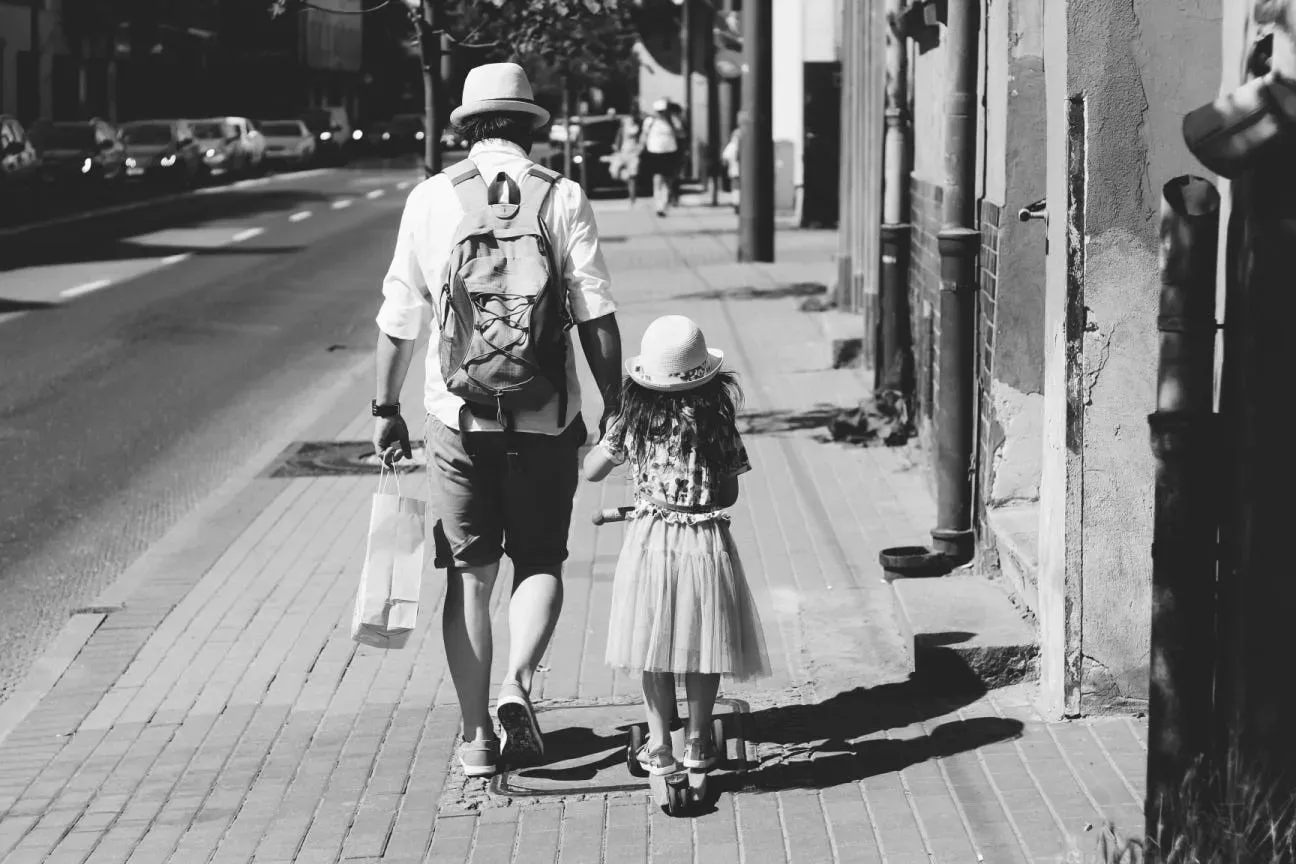
Consider walking down the street in a busy city. As any NYC parent knows, there are countless near-heart attacks that occur when trying to teach a 2-year-old to stop at the corner of the sidewalk. But eventually they learn to stop. And eventually they learn to not bowl people over while riding their scooter down that sidewalk. And then the next stage begins — helping young people learn to look both ways before crossing the street, regardless of what is happening with the light, and convincing them to maintain constant awareness about their environment. And eventually that becomes so normal that you start to teach your child how to J-walk without getting a ticket. And eventually, the child turns into a teenager who wanders the city alone, J-walking with ease while blocking out all audio signals with their headphones. But then take that child — or an American adult — to a city like Hanoi and they’ll have to relearn how to cross a street because nothing one learns in NYC about crossing streets applies to Hanoi.

Is crossing the street risky? Of course. But there’s a lot we can do to make it less risky. Good urban design and functioning streetlights can really help, but they don’t make the risk disappear. And people can actually cross a street in Hanoi, even though I doubt anyone would praise the urban design of streets and there are no streetlights. While design can help, what really matters for navigating risk is rooted in socialization, education, and agency. Mixed into this is, of course, experience. The more that we experience crossing the street, the easier it gets, regardless of what you know about the rules. And still, the risk does not entirely disappear. People are still hit by cars while crossing the street every year.

The Risk of Social Media Can Be Reduced.

Can social media be risky for youth? Of course. So can school. So can friendship. So can the kitchen. So can navigating parents. Can social media be designed better? Absolutely. So can school. So can the kitchen. (So can parents?) Do we always know the best design interventions? No. Might those design interventions backfire? Yes.

Does that mean that we should give up trying to improve social media or other digital environments? Absolutely not. But we must also recognize that trying to cement design into law might backfire. And that, more generally, technologies’ risks cannot be managed by design alone.

Fixating on better urban design is pointless if we’re not doing the work to socialize and educate people into crossing digital streets responsibly. And when we age-gate and think that people can magically wake up on their 13th or 18th birthday and be suddenly able to navigate digital streets just because of how many cycles they took around the sun, we’re fools. Socialization and education are still essential, regardless of how old you are. (Psst to the old people: the September that never ended…)

In the United States, we have a bad habit of thinking that risks can be designed out of every system. I will never forget when I lived in Amsterdam in the 90s, and I remarked to a local about how odd I found it that there were no guardrails to prevent cars from falling into the canals when they were parking. His response was “you’re so American” which of course prompted me to say, “what does THAT mean?” He explained that, in the Netherlands, locals just learned not to drive their cars into the canals, but Americans expected there to be guardrails for everything so that they didn’t have to learn not to be stupid. He then noted out that every time he hears about a car ending up in the canal, it is always an American who put it there. Stupid Americans. (I took umbrage at this until, a few weeks later, I read a news story about a drunk American driving a rental into the canal.)

Better design is warranted, but it is not enough if the goal is risk reduction. Risk reduction requires socialization, education, and enough agency to build experience. Moreover, if we think that people will still get hurt, we should be creating digital patrols who are there to pick people up when they are hurt. (This is why I’ve always argued that “digital street outreach” would be very valuable.)

But What About Harms?

People certainly face risks when encountering any social environment, including social media. This then triggers the next question: Do some people experience harms through social media? Absolutely. But it’s important to acknowledge that most of these harms involve people using social media to harm others. It’s reasonable that they should be held accountable. It’s not reasonable to presume that you can design a system that allows people to interact in a manner where harms will never happen. As every school principal knows, you can’t solve bullying through the design of the physical building.

Returning to our earlier note on product liability, it is reasonable to ask if specific design choices of social media create the conditions for certain kinds of harms to be more likely — and for certain risks to be increased. Researchers have consistently found that bullying is more frequent and more egregious at school than on social media, even if it is more visible on the latter. This makes me wary of a product liability claim regarding social media and bullying. Moreover, it’s important to notice what schools have done in response to this problem. They’ve invested in social-emotional learning programs to strengthen resilience, improve bystander approaches, and build empathy. These interventions are making a huge difference, far more than building design. (If someone wants to tax social media companies to scale these interventions, have a field day.)

Of course, there are harms that I do think are product liability issues vis-a-vis social media. For example, I think that many privacy harms can be mitigated with a design approach that is privacy-by-default. I also think that regulations that mandate universal privacy protections would go a long way in helping people out. But the funny thing is that I don’t think that these harms are unique to children. These are harms that are experienced broadly. And I would argue that older folks tend to experience harms associated with privacy much more acutely.

But even if you think that children are especially vulnerable, I’d like to point out that while children might need a booster seat for the seatbelt to work, everyone would be better off if we put privacy seatbelts in place rather than just saying that kids can’t be in cars.

I have more complex feelings about the situations where we blame technology for societal harms. As I’ve argued for over a decade, the internet mirrors and magnifies the good, bad, and ugly. This includes bullying and harassment, but it also includes racism, xenophobia, sexism, homophobia, and anti-trans attitudes. I wish that these societal harms could be “fixed” by technology; that would be nice. But that is naive.

I get why parents don’t want to expose children to the uglier parts of the world. But if we want to raise children to be functioning adults, we also have to ensure that they are resilient. Besides, protecting children from the ills of society is a luxury that only a small segment of the population is able to enjoy. For example, in the US, Black parents rarely have the option of preventing their children from being exposed to racism. This is why white kids need to be educated to see and resist racism. Letting white kids live in “colorblind” la-la-land doesn’t enable racial justice. It lets racism fester and increases inequality.

As adults, we need to face the ugliness of society head on, with eyes wide open. And we need to intentionally help our children see that ugliness so that they can be agents of change. Social media does make this ugly side more visible, but avoiding social media doesn’t make it go away. Actively engaging young people as they are exposed to the world through dialogue allows them to be prepared to act. Turning on the spicket at a specific age does not.

I will admit that one thing that intrigues me is that many of those who propagate hate are especially interested in blocking children from technology for fear that allowing their children to be exposed to difference might make them more tolerant. (No, gender is not contagious, but developing a recognition that gender is socially and politically constructed — and fighting for a more just world — sure is.) There’s a long history of religious communities trying to isolate youth from kids of other faiths to maintain control.

There’s no doubt that media — including social media — exposes children to a much broader and more diverse world. Anyone who sees themselves as empowering their children to create a more just and equitable world should want to conscientiously help their children see and understand the complexity of the world we live in.

In the early days of social media, I was naive in thinking that just exposing people to people around the world to each other would fundamentally increase our collective tolerance. I had too much faith in people’s openness. I know now that this deterministic thinking was foolish. But I have also come to appreciate the importance of combining exposure with education and empathy.

Isolating people from difference doesn’t increase tolerance or appreciation. And it won’t help us solve the hardest problems in our world — starting with both inequity and ensuring our planet is livable for future generations. Instead, we need to help our children build the skills to live and work together.

Put another way, to raise children who can function in our complex world, we need to teach them how to cross the digital street safely. Skiing is optional.

  •  
❌