❌

Vue lecture

America has sided with Russia against Ukraine. Europe should stop pretending and build a coalition against Russia, China, and even the US

A man walks past a mural by Norwegian street artist Toddel depicting a map of Ukraine and US President Donald Trump (L) with Russia's President Vladimir Putin in Krakow on March 6, 2026, amid the Russian invasion of Ukraine. (Photo by Sergei GAPON / AFP) / Eastnews)

On 11 October, Trump declared an “energy ceasefire” between Russia and Ukraine. It binds only Ukraine. In the two days that followed, Kyiv held its fire while Russia kept hitting Ukrainian energy and critical infrastructure across 19 regions. A Russian strike collapsed an apartment stairwell in Kharkiv and killed three. And before Russia’s latest ballistic missile strike, five missiles and more than 100 drones, Ukraine received no early warning at all. Washington then said both sides were to blame.

This is what one of Trump’s decisions looks like on the ground. There were four of them, in three days, 9 to 11 October.

Three days that further weaken the West and undermine liberal democracies. Three days that encourage Putin to continue his war against Ukraine and his hybrid war against Europe. Like China, the US has sided with Russia against Ukraine and Europe. Whatever the motives in Washington—diesel prices before the midterms, a long feud with the court—the effect is the same.

International law

On 9 October, the Trump administration announced new sanctions against the International Criminal Court (ICC), an institution crucial for holding Putin and the Kremlin responsible for the war of aggression and its atrocities. The sanctions came hours after the Nobel Peace Prize went to Navi Pillay, a former ICC judge.

"We will ban transactions with this rogue court, cutting off their resources and crippling its ability to operate," Secretary of State Marco Rubio said. "Either the ICC will end its threats, or we will end the ICC." He expects allies, many of them ICC members that rely on American servicemembers for their defense, to rein in the court.

The ICC exists to investigate, prosecute, and try individuals accused of the world's gravest international crimes. Washington wants to end it. The court called the measures an assault on the rule of law and the foundations of the international legal order.

Dag Øistein Endsjø, a Norwegian professor at the University of Oslo, Norway.
Explore further

What if Russia uses nuclear weapons? Can we say Ukraine brought peace to world? Norwegian professor who nominated Zelenskyy and Ukrainians for 2026 Nobel Peace Prize takes on tough questions

Funding Russia's war

On 9 October, Trump also lifted sanctions on Russian diesel exports. The deal comes less than a month after he signed the sweeping Russia sanctions law dedicated to the memory of Sen. Lindsey Graham, which allows tariffs on buyers of Russian oil. Multiple US lawmakers argue the move violates federal law. Congress banned Russian energy imports in 2022, and a bipartisan group of seven senators, including Republicans Thom Tillis and Lisa Murkowski, stated that the decision "runs directly counter to that law." They also argue that the administration failed to consult Congress or justify its decision as the statute requires.

Western sanctions and Ukraine's strikes on Russian refineries—its own "sanctions"—aim at the same effect: making the war unaffordable for Russia. Trump's decision does the opposite: it helps Russia pay for the war. It also breaks with the principle of unity of effort, further undermining Western cohesion.

Zelenskyy said the deal showed US weakness, as Washington had secured no concessions in return: "What did [Trump] get? That he will have more diesel? For whom? More Russian diesel for Americans? ... It looks like Alaska No. 2. You know, it looks like a happy birthday present for Putin. It looks absolutely terrible."

Stability and sovereignty

On 10 October, Trump said of the elected president of a country fighting off Russia's full-scale invasion: "I think it's time for Ukraine to get a new president... I suggest they get a new leader who can make a deal, because he could have made many deals and, for some reason, he never does." He claimed Zelenskyy could have ended the war many times, and insisted that Zelenskyy "wants to make problems for the world" by authorizing strikes on Russian refineries.

The Trump Administration conspicuously ignores the Swiss Summit on Peace in Ukraine, President Zelenskyy’s 10-point peace plan based on international law, and not least, the international effort to establish unity of efforts to enforce a just peace.

Zelenskyy has repeatedly proposed talks and shown willingness to compromise for a peace that guarantees Ukraine's sovereignty. On 18 July, he said: "This year alone, we have reached out to Russia dozens of times with proposals to stop this war—but all we got in return were refusals."

The "deals" Trump alludes to would not have secured peace or guaranteed Ukraine's future existence, nor safeguarded Europe against future Russian aggression. They were not rooted in international law, but in the prospect of great wealth for Trump and his associates—business deals dressed up as "peace plans”. Ukraine and its European partners instead proposed amendments and defined red lines to bring the drafts up to the standards of international law.

The Kremlin itself exposed the absurdity of Trump's claim. In a phone call with Trump, Putin categorically ruled out resuming peace talks, his aide Yuri Ushakov said, and sought to convince Trump that Ukrainian resistance has "no prospects whatsoever."

Supporting Russia

On 11 October, Trump announced: "Effective immediately, there is an ENERGY CEASEFIRE in the War between Russia and Ukraine. Both parties have agreed. Do not break it!"

He gave no details. Zelenskyy had no prior knowledge, but said Ukraine would agree if Russia did. He had already offered to stop striking Russian refineries if Russia stopped attacking Ukraine's energy infrastructure.

It was not an energy ceasefire. It was a gift to Putin. A White House official told Axios that, as Trump understands it, the term means only that Russia and Ukraine stop attacking each other's oil refineries—and that this is what Washington expects Ukraine to do. Ukraine has one refinery, while Russia has 38, of which 21 have been targeted by Ukrainian drones.

Aftermath of the Russian attack on Kyiv overnight into 14 October 2026
Explore further

Three days after Washington announced an energy ceasefire, Russia fires 39 ballistic missiles at Ukraine’s grid

To most of the world, an energy ceasefire covers the whole energy sector: nuclear power, oil refineries, power plants, the grid down to local transformers. But not in Trump's world. The official said a deal on power plants and grids could come next—if Ukraine first stops striking the refineries fueling Russia's war.

Axios wrote that White House officials see Ukraine's refinery strikes as doing more damage to Zelenskyy's relationship with Trump than to Russia. The administration has reportedly threatened to cut Ukraine off from US intelligence if the strikes continue.

Forcing Ukraine to halt its refinery strikes, while Russia keeps hitting not only power plants and the grid but heating and water systems, hospitals, schools, railways, ports and civilians, does not motivate Russia to stop. Within hours of Trump's announcement, Russia struck a power plant in Kharkiv. Trump's one-sided pressure encourages Russia to continue.

Enabling Russian aggression

Moscow paints Ukraine as the intransigent party, though Russia has offered no concessions and rejected numerous compromise proposals from the US and Ukraine. Still, Trump insists that Ukraine, not Russia, is the problem.

In three days, Trump has sanctioned the court that could hold Russia accountable, called on Zelenskyy to step down, secured revenue for the Kremlin's war, and declared an "energy ceasefire" that only asks Ukraine to stop striking Russian refineries, while Russia goes on turning winter into a weapon.

The call for Zelenskyy to step down led Marie-Agnes Strack-Zimmermann, chair of the European Parliament's Committee on Security and Defence, to say: "If Trump calls on Zelenskyy to step down, he is clearly siding with a murderer. Only the Ukrainian people can decide who leads Ukraine in free elections, not the White House, and certainly not the Kremlin." Her conclusion: "By once again attacking allies and democratic institutions, Trump is weakening the West and undermining democracy. [...] Europe must therefore remain firmly on course and support Ukraine, because the US can no longer be relied on."

The US's latest National Security Strategy does not merely shift America's foreign policy priorities. It aligns them with Moscow's on seven separate issues, while explicitly calling for Washington to "cultivate resistance to Europe's current trajectory" by backing nationalist parties against sitting EU-aligned governments.
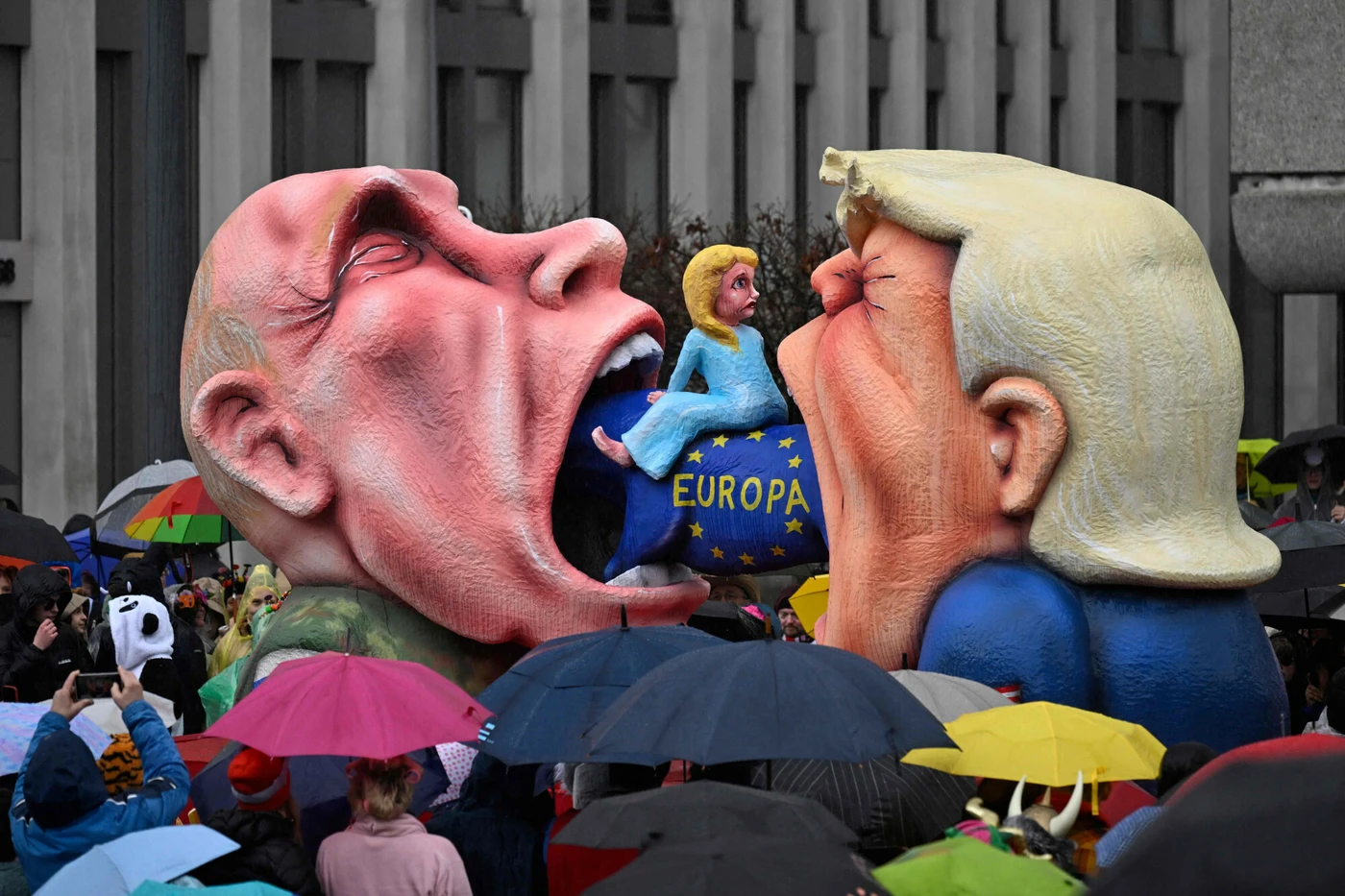
A carnival float by Jacques Tilly shows Trump and Putin eating a cow ridden by Ursula von der Leyen, at the Rose Monday parade in Düsseldorf, Germany, on 16 February 2026. Photo: Ina Fassbender/AFP/Eastnews
Explore further

Europe has 11 ways to choke Russia’s war. It doesn’t need Trump’s permission for any of them

Europe must stand on its own

The last three days demonstrate that the US is no longer an ally, but a strategic adversary. None of Trump's recent decisions helps end the war on Ukrainian or European terms. On the contrary, they encourage Putin and push any realistic hope of peace years away. They undermine international law and support the notion that might makes right.

Worse still, they help explain why war between Russia and Europe by 2029 is becoming more likely. Trump—Putin's close ally—leaves office on 20 January 2029.

Europe must stress its support for continued Ukrainian strikes on Russian refineries unless the Kremlin agrees to a comprehensive energy ceasefire in line with Ukraine’s demands.

Europe urgently needs to distance itself from the US and its foreign policy. Heads of state must join Canada's efforts to unite middle and small powers in common defense against increasingly aggressive great powers. As this series has repeatedly argued, Europe must build a Coalition of Like-Minded countries strong enough to confront Russia, China and, sadly, the US.

NATO Secretary General Mark Rutte addresses foreign ministers at North Atlantic Council meeting Brussels December 2025
Explore further

The alternative to NATO: A Coalition of Like-Minded European Countries

Hans Petter Midttun
Hans Petter Midttun, independent analyst on hybrid warfare, Non-Resident Fellow at the Centre for Defense Strategies, board member of the Ukrainian Institute for Security and Law of the Sea, former Defense Attaché of Norway to Ukraine, and officer (R) of the Norwegian Armed Forces. 

Editor's note. The opinions expressed in our Opinion section belong to their authors. Euromaidan Press' editorial team may or may not share them.

Submit an opinion to Euromaidan Press

  •  

Europe and Ukraine already have the force to stop Russia. What’s missing is the alliance.

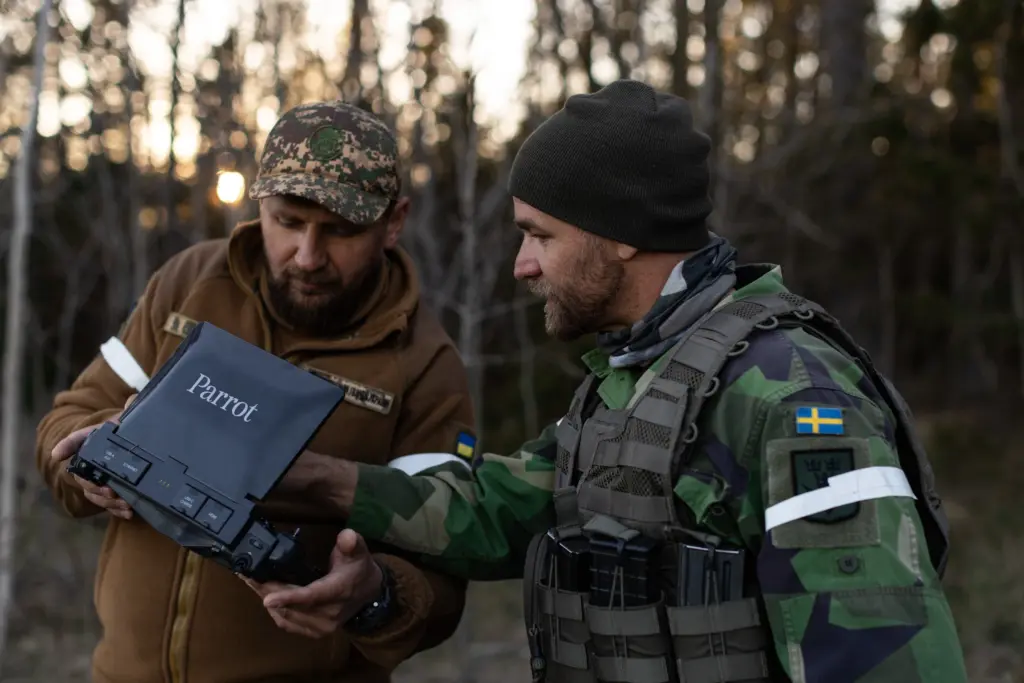
A Swedish Army drone operator launches a reconnaissance drone on Gotland Island during Exercise Aurora 26 in Sweden. Ukraine's Armed Forces sent drone operators to the exercise to pass on lessons learned to their NATO counterparts and to act as a challenging opposing force for Allied soldiers. More than 18,000 soldiers from 13 countries took part. (Photo: NATO)

For decades, Europe operated on a series of assumptions: that borders were essentially settled; that economic interdependence would constrain major-power conflict; that international law would increasingly regulate state behavior; that military force was becoming less relevant; and that, ultimately, the United States would guarantee European security.

Russia's invasion of Ukraine has shattered those norms, as Moscow attempts to change borders by force and reshape the European security order. NATO now describes Russia as the most significant and direct threat to Allied security, while also identifying sabotage, cyberattacks, disinformation, economic coercion, and other hybrid actions as part of the threat.

The foreign policy of the Trump administration is further undermining past postulations. It threatens to annex Canada, speaks of occupying Greenland by force, and ignores Spain's sovereignty. It disrespects European military contributions, then demands European support for operations of its own choosing, legal justification optional. It negotiates European security over Europe's head while resetting relations with the power that threatens the continent, calls European countries "decaying" and their leaders "weak," and has launched a trade war against its former allies while pursuing business with its former strategic opponent.

Discussing solutions without first agreeing on the problem is meaningless. Yet that is what Europe has done since the war started in 2014.

NATO troops Greenland USA threat
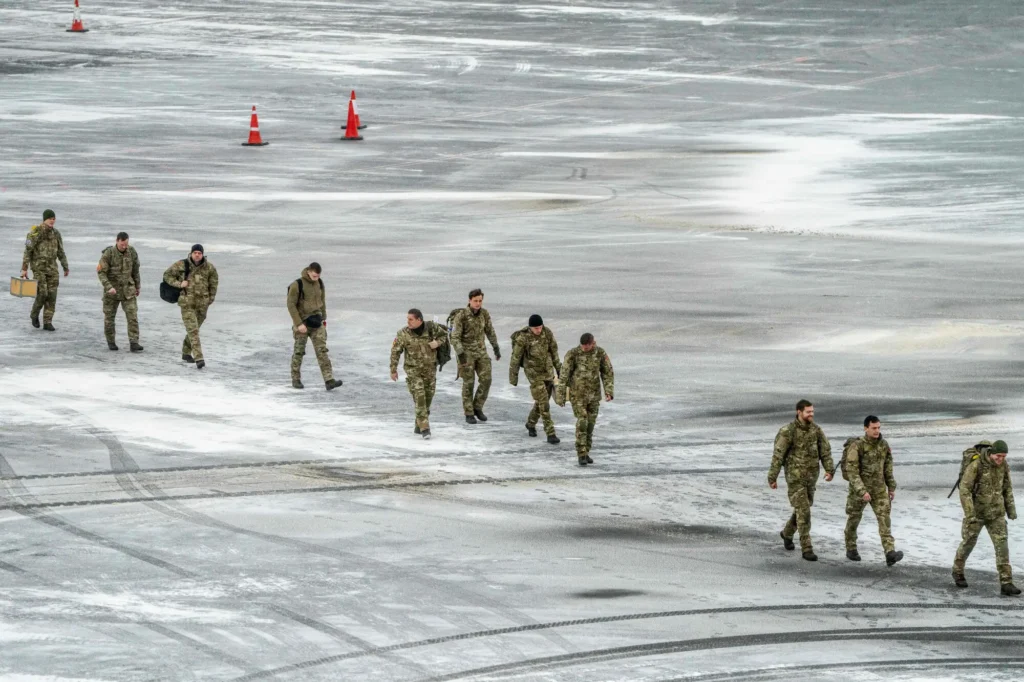
Danish soldiers walk across the frozen tarmac after arriving at Nuuk airport, Greenland, on 19 January 2026, following US President Trump's annexation threats. Photo by Mads Claus Rasmussen / Ritzau Scanpix / AFP) / Denmark OUT/Eastnews

Eight realities

Analyzing the security environment, before recommending solutions, I have identified eight fixed points that I regard as constants.

1. It was never a Russia/Ukraine war

Russia has offered the West four tales, all unpleasant, one designed to look like an "easy way out." The first calls on Ukraine to give up Crimea, Luhansk, Donetsk, Zaporizhzhia and Kherson, the lie Trump's plan is built on. But Putin's demands transcend Donbas, as his 2024 speech and Russia's operations show. The second, "Novorossiya," adds Kharkiv, Dnipropetrovsk, Mykolaiv and Odesa to the first lie.

The third, "one people, one nation," claims all of Ukraine. In the words of former US National Security Advisor Zbigniew Brzezinski: "Without Ukraine, Russia ceases to be an empire, but with Ukraine suborned and then subordinated, Russia automatically becomes an empire." The fourth, "the Russian World," is the only one formalized in Russian strategic documents, encompassing the "former territories of Kyivan Rus, the Kingdom of Muscovy, the Russian Empire, the Soviet Union, and the contemporary Russian Federation."

Ukraine's defeat is crucial to Russia's broader strategy. Integrated with Belarus, a subjugated Ukraine would give Russia the population, economy and technology to be seen as a near peer to the US and China, project power across the post-Soviet space, and ease its own demographic decline, while handing Moscow the country's defense industry, farmland and mineral, gas and oil deposits, and moving Russian military power nearly 900 km closer to London, Berlin and Paris.

It would create an aggressive, imperialist power on Europe's border, emboldened to force NATO's withdrawal to its 1997 borders and to deny the US the ability to deploy forces and nuclear weapons to Europe. The West, not Ukraine, has been defined as Russia's enemy.

2. A war is ongoing in Europe

Russia has been conducting an ever-escalating hybrid war against NATO's European member states since 2014. The EU Parliament acknowledged as much in September 2021. Its aggressions include sabotage against critical infrastructure, cyberattacks, disinformation, GPS jamming affecting civilian aviation, repeated airspace violations by strike drones, and attacks on Europe's defense-industrial base.

Russia's acts of violence against Western targets are becoming increasingly brazen. In August, Western intelligence sources reported a new wave of attacks on weapons factories in Europe under cover of "plausible deniability," The Telegraph reported. A CIA report shared with European governments warns Russia may attack Spain, France or Italy with Gerbera drones launched from ships, El Mundo reported, citing Lithuanian sources.

It is the same hybrid war Ukraine faced until 24 February 2022, one expected to turn open by 2029. Article 5 could, and probably should, have been triggered years ago. Having failed to respond, NATO has lost credibility, raising the risk of war.

Oleg Ozerov (C), Ambassador of the Russian Federation to Chisinau, looks at a Russian-made Gerbera drone recovered by the Moldovan police on November 25, 2025, and exposed on the stairs at the entrance of the Ministry of Foreign Affairs (MAEIE) of Moldova in Chisinau, on November 26, 2025. Russia's Ambassador to Moldova, Oleg Ozerov was summoned at MAEIE in the context of several drones flying over the airspace of the Republic of Moldova. One of the drones crashed in Floresti district on November 25, 2025. (Photo by Elena COVALENCO / AFP/Eastnews)
Russian Ambassador Oleg Ozerov inspects a Gerbera drone recovered in Moldova after it entered the country’s airspace, at the Foreign Ministry in Chișinău, Nov. 26, 2025. (Elena Covalenco / AFP/Eastnews)
3. The tsunami of ripple effects is changing the political landscape in the West

In May 2022, I began using the term tsunami of ripple effects to describe the cost of not intervening in a war that threatens the security of the Alliance. It is the reverberations that raise the cost of living, undermine food and energy security, and spread famine, recession and inflation, raising the risk of unrest, extremism, and, ultimately, the fall of governments. Europe is living through the biggest refugee crisis since the Second World War.

The international security architecture is being dismantled, our institutions discredited, and NATO no longer deters Russia. Building on public frustration, the tsunami of ripple effects gave us Trump and the rise of right-wing parties across Europe.

4. NATO no longer deters Russia

If Russia were deterred, it would not have launched a full-scale invasion of Ukraine. NATO's strategic concept commits it to ending, by political and military means, conflicts that threaten Alliance security, including in Ukraine. Nor would Russia be conducting an ever-escalating hybrid war against NATO's European states, or preparing for a military conflict with the Alliance, as US and European intelligence services warn. Lack of deterrence raises the risk of Russian strategic miscalculation and war, especially since NATO was the only military power able to deny Russia its Great Power aspiration and its demand for a sphere of influence over the post-Soviet space.

NATO used to display readiness and capabilities. Today it has become a religion. Europe begs it is still almighty while Russia is a disbeliever.

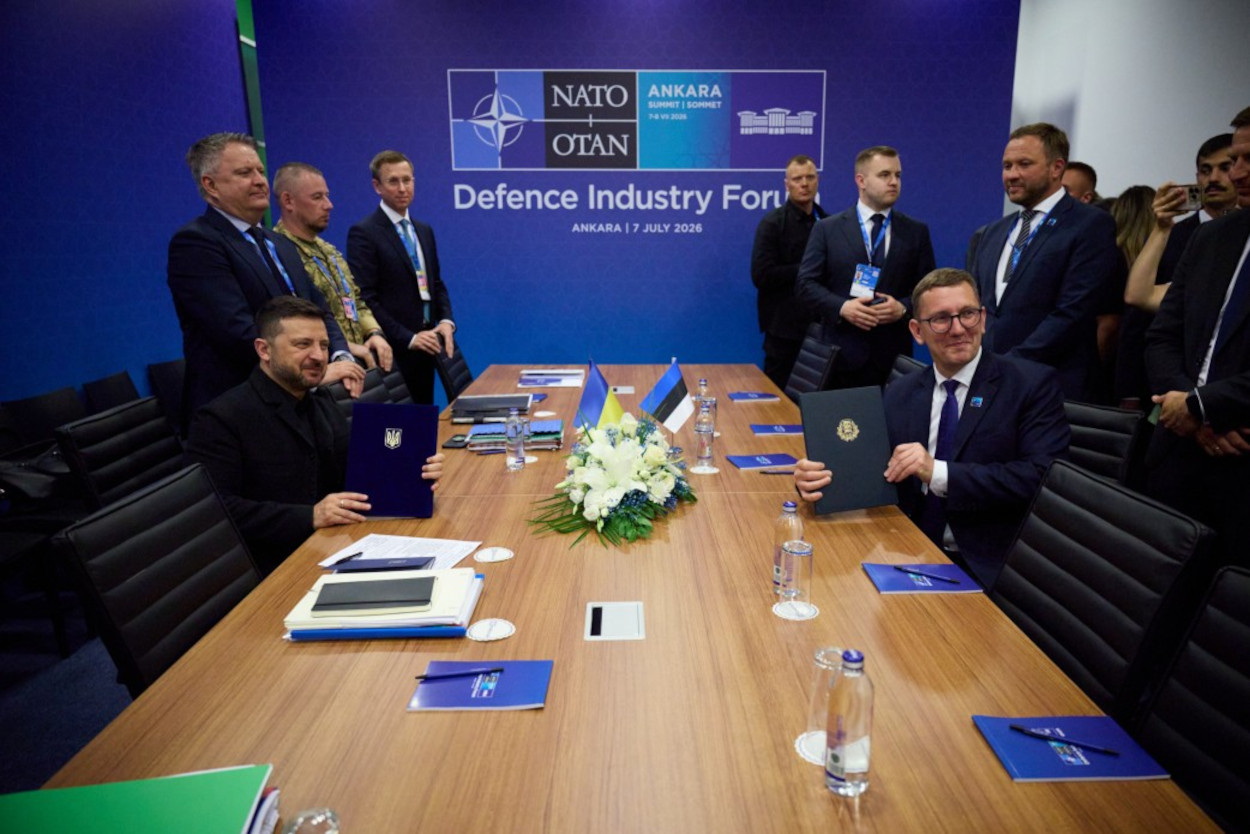
Ukrainian President Volodymyr Zelenskyy and Estonian Prime Minister Kristen Michal on the sidelines of the NATO summit in Ankara, 7 July 2026. Photo: Ukrainian President's Office
Explore further

NATO no longer deters Russia. A new coalition could

5. The transatlantic rupture undermines NATO and European security

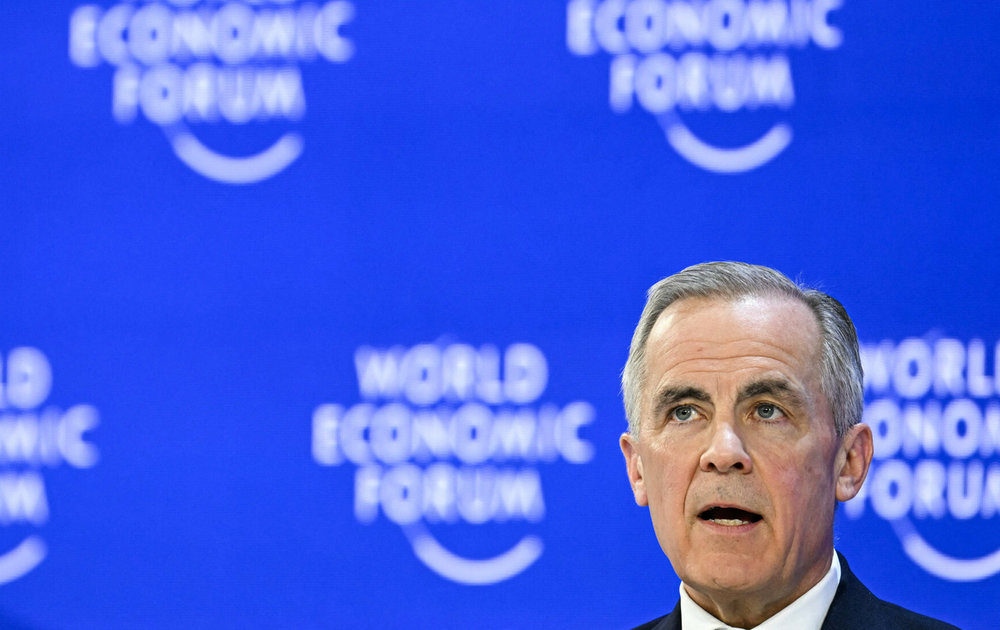
Canadian Prime Minister Mark Carney put it plainly at Davos on 20 January 2026: "We are in the midst of a rupture, not a transition." We "cannot live within the lie of mutual benefit through integration when integration becomes the source of your subordination," he said, calling for countries to organize in the face of great-power rivalry through different coalitions for different issues, based on common values and interests. As he told the World Economic Forum: "We actively take on the world as it is, not wait around for a world we wish to be."

Canadian Prime Minister Mark Carney giving a speech at Davos, 20 January 2026
Canada's Prime Minister Mark Carney delivers a speech during the World Economic Forum (WEF) annual meeting in Davos on January 20, 2026. The World Economic Forum takes place in Davos from January 19 to January 23, 2026. Source: Fabrice COFFRINI / AFP, via East News
6. The war is existential to both Ukraine and Russia

Ukraine is fighting for its right to exist. Russia is fighting for its Great Power status, strategic parity with the USA and China. If it is defeated in Ukraine, it will forever remain a pariah state, potentially imploding. For a negotiation to succeed, it must solve the cause of the war: Russia's Great Power ambitions, which cannot be negotiated away, only denied through military power.

7. Russia will never accept being defeated by Ukraine

Even with the tools to evict the Russian Armed Forces, Ukraine cannot expect Russia to accept defeat by a nation that, in its distorted narrative, "does not exist." Russia would only accept withdrawal from Ukraine if the alternative were to fight a far superior military power and thereby risk losing the means that secure the survival of the regime and the state.

8. Europe has very limited time to stop the war from escalating

Several European intelligence services warn of war by 2029;

  • French intelligence is preparing for large-scale Russian attacks by 2030, and autumn 2027 is now being discussed, France Télévisions reported;
  • US intelligence expects Russia may test NATO's resolve with a limited strike against a member state between this autumn and 2029, the Wall Street Journal reported in August;
  • Baltic intelligence chiefs told The Guardian on 20 September that an attack could come within "months, not years."
  • Worse still, Europe won't be ready until 2035, six to nine years too late, SACEUR warns.
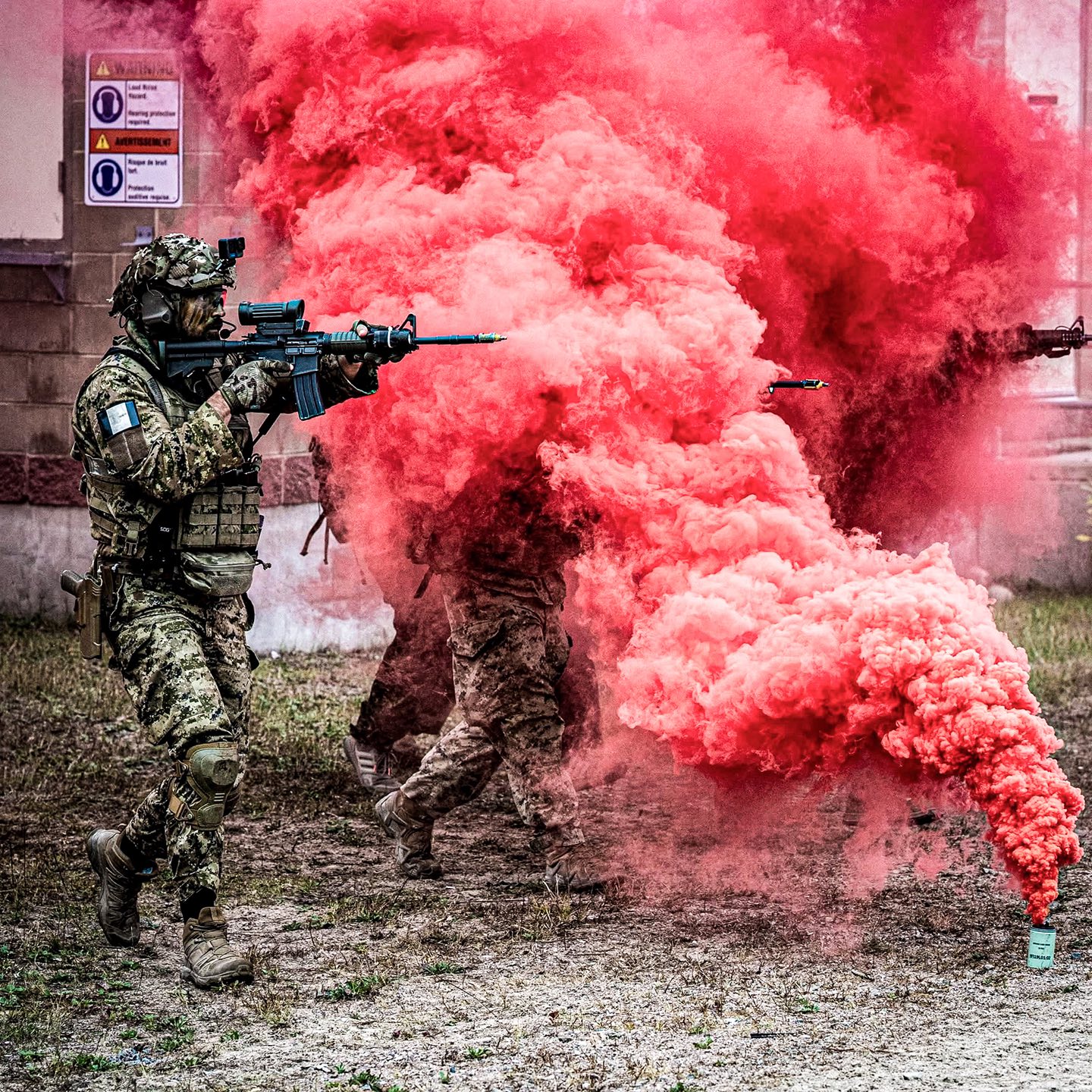
NATO soldiers at the training. Source: Supreme Headquarters Allied Powers Europe (SHAPE)
Explore further

NATO’s generals warn of war by 2029. Europe won’t be ready until 2035.

Rules do not enforce themselves

International law, sovereignty, and territorial integrity remain fundamental principles. But without the capability and political will to defend them, principles become aspirations, not constraints on states prepared to use force. Acknowledging the world as it is means acknowledging that power still matters. It means accepting that deterrence requires more than statements of concern: ammunition, air and missile defense, long-range strike and counter-drone systems, secure communications, logistics, cyber resilience, and the industrial capacity to sustain a prolonged conflict.

Values mean nothing unless one is prepared to defend them.

This is where Carney's second formulation matters: countries must rely not only on "the strength of our values, but also the value of our strength." Values mean nothing unless one is prepared to defend them, as Canada is doing, raising defense spending and strengthening domestic industry. Europe needs to draw the same conclusion: strategic autonomy, not abandoning NATO, but ensuring Europe can defend itself and its interests even when an ally's priorities change.

The European Council already calls Russia's war an existential challenge and demands defense readiness be strengthened by 2030. But acknowledging reality means going further than setting targets.

It means recognizing that Ukraine is not merely the recipient of European security assistance. Ukraine is an integral part of Europe's security architecture. Its battlefield experience, defense industry, intelligence, and ability to absorb and defeat Russian attacks are crucial to European security.

Because individual member states refuse Ukraine as a member, NATO has made itself a liability, and some of the same countries are erecting hindrances to its EU membership too, letting national interest block common security.

The solution

Swedish and Ukrainian drone operators look at the video feed from a reconnaissance drone on Gotland Island during Exercise Aurora 26 in Sweden. Ukraine's Armed Forces sent drone operators to pass on lessons learned to their NATO counterparts and to act as a challenging opposing force for Allied soldiers. More than 18,000 soldiers from 13 countries took part. (Photo: NATO)
Swedish and Ukrainian drone operators check the feed from a reconnaissance drone on Gotland during Exercise Aurora 26. Ukraine sent operators to share lessons with NATO forces and to play a challenging opposing force. Photo: NATO/Flickr

The choice is not between idealism and realism. It is between pretending that the old assumptions still hold and building the capabilities required by the reality that has replaced them.

Acknowledging the world as it is means seeing the threats clearly; defending the world as it should be means acting on that knowledge, and the bridge between the two is strength.

Strength is not found in numbers, but in unity: agreeing on the enemy and a real will and capability to fight.

Accept those eight fixed points, and Europe's room for maneuver is gone, along with its present strategy. Europe cannot afford another 12 years of futile diplomacy while Russia exploits our naivety to prepare for war in the next two to three years, diplomacy that has undermined Europe's need to rearm and establish credible deterrence.

European governments have long acknowledged that their armed forces no longer provide credible defense, yet their security policy still assumes NATO guarantees collective security.

Acknowledge reality, and the illusion shatters.

Europe urgently needs a new strategy, one that looks beyond NATO and the EU's inherent weaknesses toward a military alliance credible enough to reshape the strategic environment. This is why I have long argued for a Coalition of Like-Minded European countries (CALM). It offers a path from recognition to action, from acknowledging NATO's failure to building something that works.

Strength is not found in numbers, but in unity: agreeing on the enemy, his aims and strategy, and committing to countermeasures that demonstrate real will and capability to fight.

NATO Secretary General Mark Rutte addresses foreign ministers at North Atlantic Council meeting Brussels December 2025
Explore further

The alternative to NATO: A Coalition of Like-Minded European Countries

Unlike NATO or the EU, CALM does not have to wait for Europe's rearmament to reach 2035. It builds on existing NATO interoperability.

The force already exists: Ukraine's battle-hardened army, National Guard, Special Operations Forces, air defense, and Unmanned System Forces, combined with European fifth-generation aircraft and state-of-the-art navies, are credible, combat-proven, and in place.

Russia already struggles to fight Ukraine alone; it would face a different reality entirely if Ukraine formally joined a coalition of European military powers. That is why the declaration matters now, not after the capability is fully built: with the interoperability already proven, it changes Russia's strategic assessment immediately, not in 2035.

This is not only about physical capabilities. It is about changing Russia's perception of its strategic environment. It starts with a declaration; preparing for military intervention comes next. But it begins with the declaration.

Hans Petter Midttun
Hans Petter Midttun, independent analyst on hybrid warfare, Non-Resident Fellow at the Centre for Defense Strategies, board member of the Ukrainian Institute for Security and Law of the Sea, former Defense Attaché of Norway to Ukraine, and officer (R) of the Norwegian Armed Forces. 

Editor's note. The opinions expressed in our Opinion section belong to their authors. Euromaidan Press' editorial team may or may not share them.

Submit an opinion to Euromaidan Press
  •  

The West has tried everything except ending the war

Ukraine's President Volodymyr Zelenskyy, center, and U.S. President Donald Trump's envoys Jared Kushner, right, and Steve Witkoff, left, walk prior to their talks in Kyiv, Ukraine, Sunday, Sept. 6, 2026. (AP Photo/Efrem Lukatsky)

On 6 May 2022, I began using the term tsunami of ripple effects to describe the cost of not intervening in a war that threatens the security of the Alliance. That was NATO's own strategic ambition—right up until the Madrid Summit in June 2022, where it found its political will and military capabilities wanting, deterred by Russia.

The latest wave of that tsunami reached American voters this month, in the price of diesel—and the US President's response shows exactly how the refusal to end the war keeps compounding its costs.

Diesel, and the president who blamed the victim

President Trump has urged President Zelenskyy to stop targeting Russian oil refineries, saying the attacks are "hurting the world" as fuel-supply disruptions from the Ukraine and Iran wars propel US diesel prices to a record high, according to CNBC.

"Mr. Zelenskyy has to do one thing. He has to stop knocking out diesel fuel in Russia," Trump said during an official visit to Ireland. "Let him go after targets but not diesel fuel because he's causing a shortage of diesel. This isn't done by the Middle East; this is done by what's happening with Russia and Ukraine."

The claim inverts the evidence. The latest IEA assessment is unusually clear: the US-Iran war and the disruption of Middle Eastern flows are the dominant shock, with Gulf refined-product exports down almost 60% since February.

Disruptions to Russia's refining system and the near-halt in Russian product exports following intensified Ukrainian attacks, the IEA says, "have compounded these losses." The aggressor is responsible for the dominant shock; the war Trump himself helped start accounts for most of the rest; and the victim's attempt to force Russia toward peace has only reinforced the consequences of that aggression.

Yet Trump singled out Zelenskyy—not Putin for starting the war, not himself and Prime Minister Netanyahu for the war against Iran.

Ukraine has intensified the tempo of its refinery-strike campaign and improved its targeting to cause maximum pain to the Russian oil industry, striking at least 26 different Russian oil refineries since the beginning of 2026, according to ISW. The strikes have put roughly half of Russia's refining capacity offline and prompted widespread fuel shortages, with Moscow recently extending a ban on diesel exports through the end of September to stabilize domestic supplies.

The lie, the contradiction, and the lack of credibility

Trump's statement is an outright lie—the link to the US/Israel war on Iran is clear for anyone to see—and it is in direct contradiction with US and European policy.

As late as early July, Trump noted that Ukrainian strikes on Russian oil refineries were an escalation capable of bringing the war to an end. The reversal appears driven primarily by the fuel-price shock and its political consequences—not by any change in his assessment of the strikes' military value. US consumers have seen a roughly 20% increase in diesel prices in a matter of weeks, midterms are seven weeks away, and the Republican Party is struggling in the polls.

Line chart of the weekly US average retail diesel price in dollars per gallon through 2026. Prices sit near $3.50 in January, spike sharply in early March to about $5.40, hold above $5.30 through spring, dip to a low of $4.58 on 6 July, then climb steadily to $5.97 on 7 September, the highest point of the year. Source: EIA.
Line chart of the weekly US average retail diesel price in dollars per gallon through 2026. Source: EIA.

And Ukraine's strikes aim at the exact effect Western sanctions were designed to achieve: ensuring Russia cannot afford to continue the war by undermining its economy. Neither the US nor Europe is supposed to import Russian crude or refined products—the EU banned them, cutting Russia's share of EU oil imports from 25.8% in 2021 to 2.2% in 2025, and the US prohibited them in March 2022.

"The United States is taking sweeping action against Russia's key source of revenue for funding its brutal and illegal war against Ukraine," Treasury Secretary Janet Yellen said in January 2025. That is exactly what Ukraine is doing—with the difference that when Ukraine does it, Trump calls it "hurting the world."

NATO soldiers at the training. Source: Supreme Headquarters Allied Powers Europe (SHAPE)
Explore further

NATO’s generals warn of war by 2029. Europe won’t be ready until 2035.

The tsunami of ripple effects

Diesel is only the latest wave. During the year after Madrid, I watched the West take the role of bystander to a war that is all about us—a Russian ever-escalating hybrid war against European NATO members—seemingly accepting the global consequences.

I say seemingly because it makes no sense to sit idle while the tsunami grows to the point where it causes political, economic, and geopolitical chain reactions impossible to predict and difficult to control.

Inaction is not neutral. It is also a choice, and it carries the consequences of engagement with one crucial difference: inaction makes us react to the strategic environment, whereas action lets us shape it.

Aid without an endpoint is not a policy for ending the war; it is a policy for enduring it.

Enduring it is what produced the tsunami: the reverberations that raise the cost of living, undermine food and energy security, and spread famine, recession, inflation, and rising interest rates—increasing the risk of social unrest, extremism, and, ultimately, the fall of governments. Europe is living through the biggest refugee crisis since the Second World War.

he international security architecture is being dismantled, the institutions meant to unite us are discredited, and NATO no longer deters Russia—raising the risk of direct conflict between Russia and Europe.

Inaction is not neutral. It is also a choice, making us react to the strategic environment instead of choosing it through action.

In June 2023, I argued this would likely change the political landscape in the US and Europe—as in the 1930s—as political forces sought to exploit voters' frustration over the war's global effects. It produced President Trump and a rising tide of right-wing forces across Europe—the leading edge of what Canadian Prime Minister Mark Carney called, at Davos, a rupture the world hasn't yet reckoned with: "We understand that this rupture calls for more than adaptation. It calls for honesty about the world as it is... We know the old order is not coming back." Its consequences for Europe have not yet dawned on us.

Ukrainian President Volodymyr Zelenskyy and Estonian Prime Minister Kristen Michal on the sidelines of the NATO summit in Ankara, 7 July 2026. Photo: Ukrainian President's Office
Explore further

NATO no longer deters Russia. A new coalition could

How to end it

The only way to end the tsunami of ripple effects is to end the war. Waiting only lets it reach the scale where it produces chain reactions impossible to control.

Since 2014, the West has tried to stop Russia's war through diplomacy, negotiations and ceasefires; sanctions and economic pressure; diplomatic isolation; military aid, training and intelligence; NATO deterrence and reinforcement; and humanitarian and financial assistance. More than 200 negotiations were held to stop the war from happening.

They were all futile, because Russia was never negotiating in good faith—it sees negotiation as a means to defeat its opponents. Insanity is doing the same thing over and over and expecting different results.

For a negotiation to succeed, it must solve the cause of the war: Russia's Great Power ambitions, its pursuit of strategic parity with the US and China at the expense of its neighbours. Until that is checked, there will be no peace—and those ambitions are not negotiable. They can only be denied through military power.

The West has done everything short of military intervention. It is time to employ military power, because the cost of continuing the present path is far too high. If Europe wants to turn the tide, it must become proactive. Instead of waiting for the war more intelligence services are warning about, Europe—or rather a Coalition of Like-Minded European countries—must help shift Russia's appraisal of the strategic environment. We need to intervene militarily to end the war, and the tsunami of ripple effects with it.

Hans Petter Midttun
Hans Petter Midttun, independent analyst on hybrid warfare, Non-Resident Fellow at the Centre for Defense Strategies, board member of the Ukrainian Institute for Security and Law of the Sea, former Defense Attaché of Norway to Ukraine, and officer (R) of the Norwegian Armed Forces. 

Editor's note. The opinions expressed in our Opinion section belong to their authors. Euromaidan Press' editorial team may or may not share them.

Submit an opinion to Euromaidan Press

  •  
❌