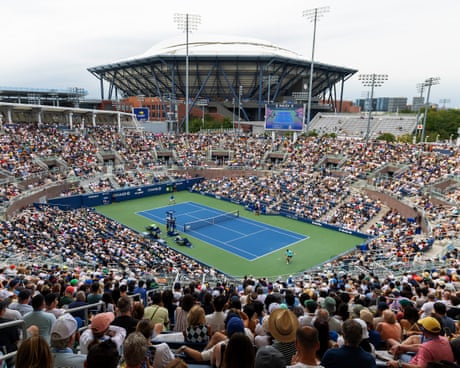
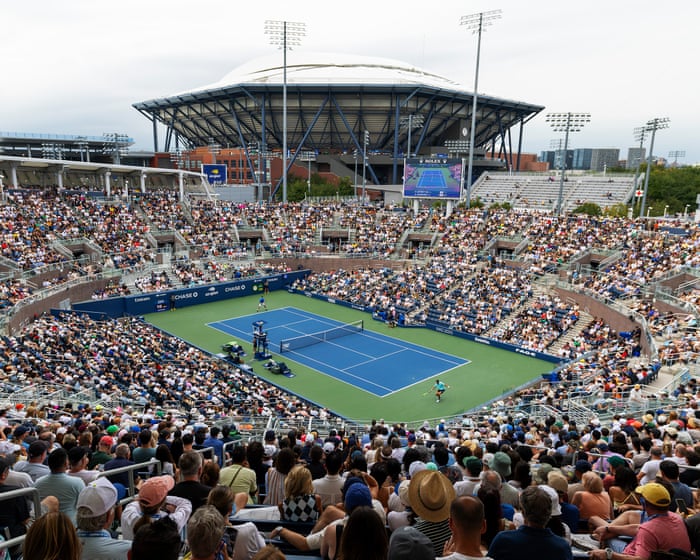
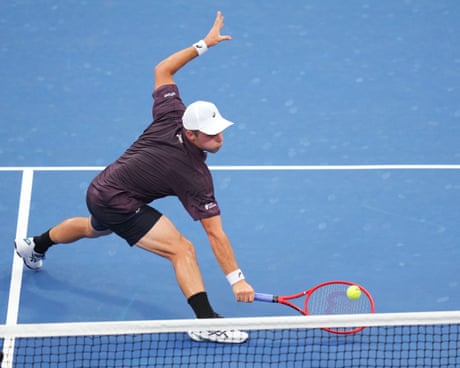
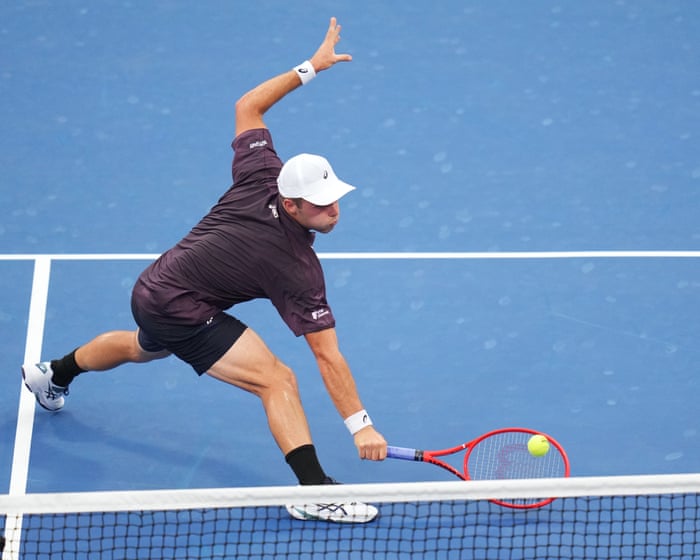
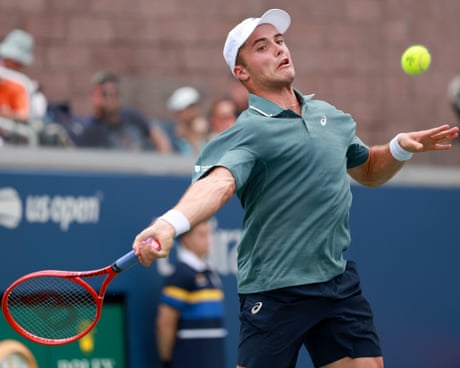
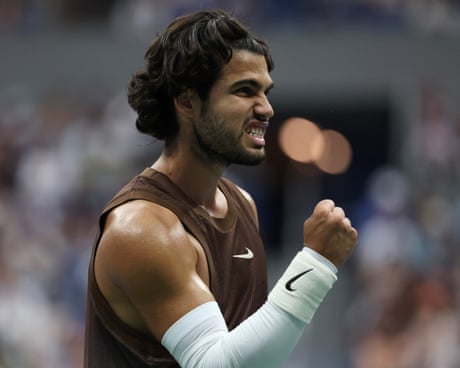
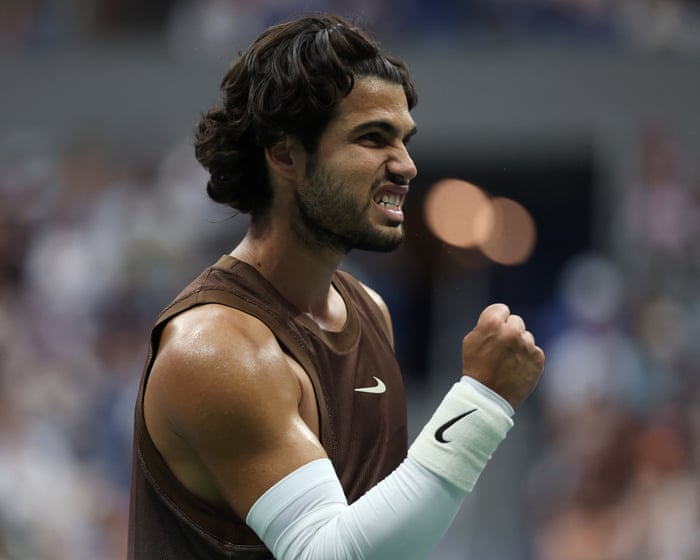
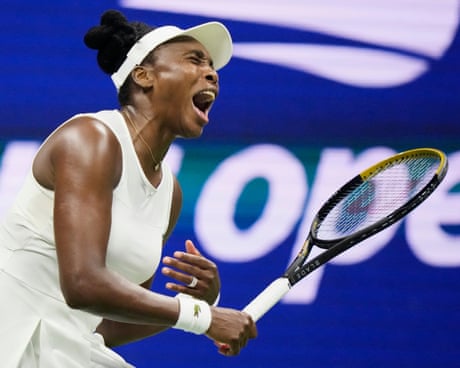
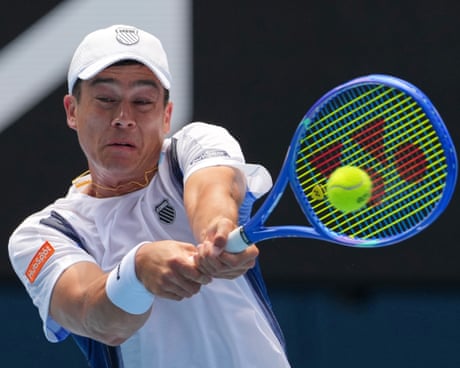
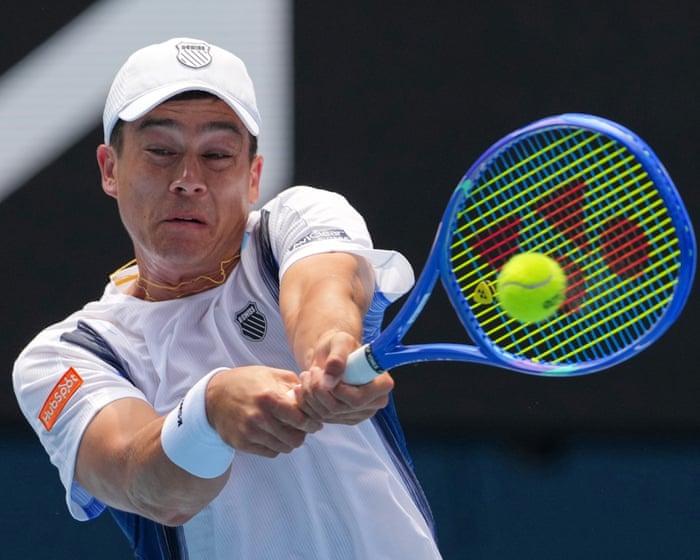
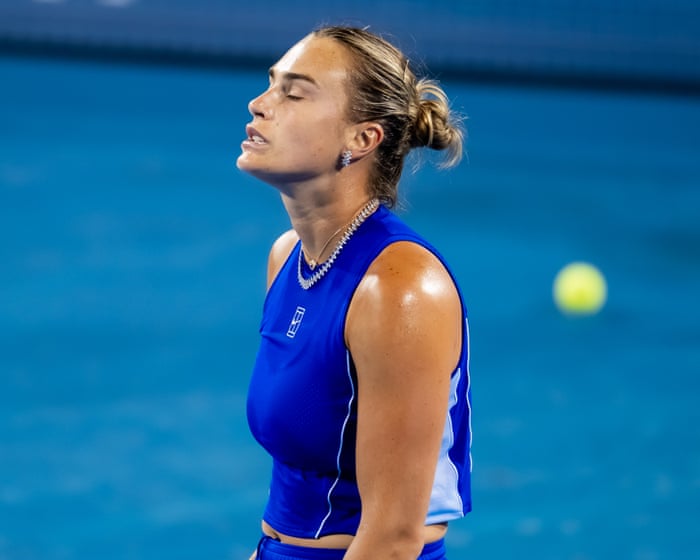
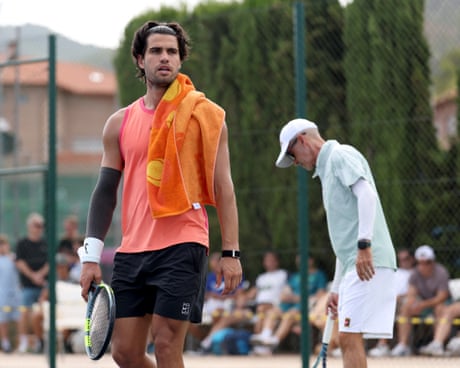
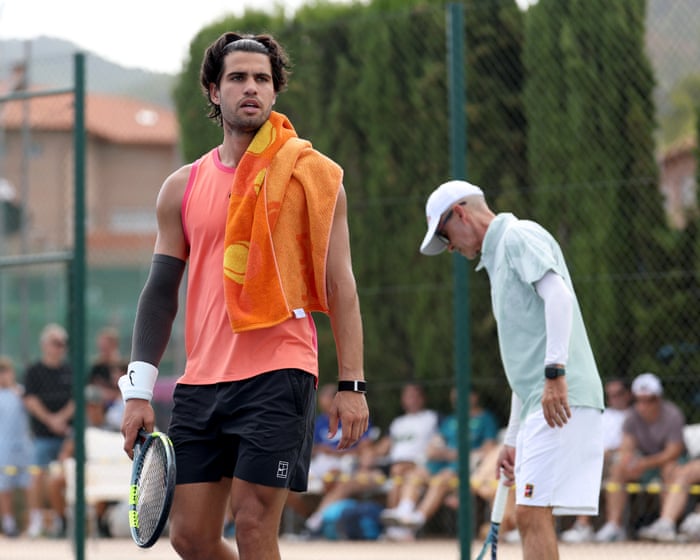
Jeering and heckling are increasingly commonplace, even at grand slams, as spectators try to influence matches
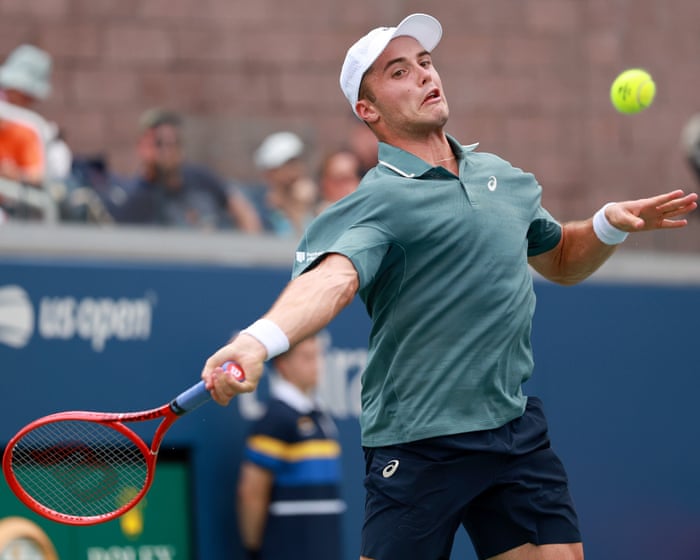
Midway through the first week of the US Open a couple of years ago, Jiri Lehecka’s attempts to find his form were disrupted by incessant taunting from a spectator close by. “There was a guy who sat just behind my bench on a smaller court, court four, and he was talking to me basically for the first three sets, like non-stop,” Lehecka says. “He was talking to me like: ‘You can’t do it. You are tired. He’s better than you are.’”
Lehecka maintained his composure and closed out the match, but even as he focused on navigating the intense stress of competition, he believed he understood this spectator’s motivations. The spectator, he thinks, was not there just to cheer for his favourite player: he was a bettor who had put money on Lehecka to lose. He had entered court four solely to influence the outcome of the match.
The latest third-round updates from Flushing Meadows You can mail Niall and follow us on TikTok and Bluesky
First up on Ashe: it’s Jessica Pegula v Leylah Fernandez.
It’s quite fun picturing Monfils working on the accounts, getting deep in a hole before stylishly producing the goods after a four-hour tussle. Are there any other tennis legends who have taken an office job after retiring? Or any other vocation away from sport? Drop me a line with your suggestions.
Auger-Aliassime lost in the second round, as did Musetti against Australia’s Dane Sweeny, but Fritz, Swiatek and Andreeva won in straight sets and Osaka survived in three
It feels rather odd saying this, given that Osaka is a two-time former US Open champion, but she’s something of a wildcard contender this fortnight, having not won a title since 2021. But over the past year she’s been building momentum, after returning from her maternity leave in 2024, and there were plenty of green shoots on the grass at Wimbledon, where she beat Aryna Sabalenka en route to the quarter-finals. And Osaka has started strongly today, leading Siniakova 3-1 and serving at 40-15. Make that game, as the 13th seed’s pace is too much for the Czech to handle.
Swiatek is serving for the first set at 5-3. And on her second set point, at her advantage, she takes it, when Podoroska prods a return wide. After starting with three holds to love, the set got closer, but the eighth seed found a way through and she’s skipping to the back of the court to start the second set. She looks up for this – and most importantly, more confident than she has done for so much of this year.
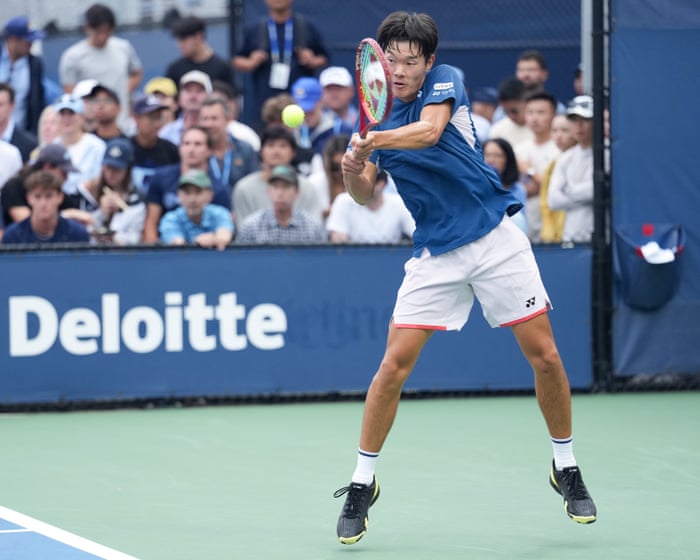
Michael Zheng spent years making the long trek from northern New Jersey, first by bus across the Hudson River to the Port Authority bus terminal and then nearly the full length of the No 7 subway line, all for the opportunity to train at the USTA Billie Jean King National Tennis Center. On a rainswept Wednesday afternoon in Queens, the destination was the same but the purpose had changed entirely.
The 22-year-old American wildcard and two-time NCAA champion from nearby Columbia University brushed aside Hungary’s Fabian Marozsan 6-4, 6-4, 6-2 to win his rain-delayed US Open debut, providing one of the more unlikely highlights on a busy day for the home contingent in New York.
Sabalenka made quick work of Iatcenko in the second round, while Tiafoe, Tsitsipas, Pegula and Muchova were among the other notable winners
And Nakashima breaks too – he’s hitting it hard off both wings and I wonder if he’s in the process of finding a new level. The first few times I watched him, I thought he had a bit of something and, real talk, I thought he’d be better by now than he is. But I really like what I’m seeing from him and, as we know, progress isn’t always linear.
It’s a good start for Medvedev, Gorzy – who saved five match points in round one – tamely ceding serve to 15.
German scrapes home 6-4, 3-6, 6-7 (7), 7-5, 6-4 in thriller
‘I think this is the longest first-round match I’ve played’
Alexander Zverev rallied just in time to avoid becoming the first men’s No 1 seed to lose in the first round of a grand slam tournament since 2003, edging Lorenzo Sonego 6-4, 3-6, 6-7 (7), 7-5, 6-4 in a US Open match that ended in the early hours of Wednesday morning.
Zverev could not cash in on repeated chances to break Sonego’s serve for much of the night and was in danger of becoming the first top-seeded man to fall in his first match in a major tournament since Ivo Karlovic beat Lleyton Hewitt at Wimbledon in 2003.
British Wimbledon semi-finalist loses 6-3, 6-3, 7-5
Elena Rybakina into second round with 6-3, 6-2 win
Six weeks on from the fortnight that changed his life, Arthur Fery’s first grand slam appearance since his semi-final run at Wimbledon came under considerably different circumstances. He is now the 33rd best men’s player in the world, a direct entrant for all of the biggest tournaments, and he has continued to gain experience at the highest level of professional tennis each week.
As a result of his continued exposure on the tour, though, Fery’s adversaries have also learned a bit more about him. In his first main draw appearance at the US Open, Fery came up against a prepared and sharp Lorenzo Musetti, who knew exactly how to exploit the vulnerable parts of his game in order to secure a win. The Italian comprehensively outplayed the British No 1, reaching the second round with a comfortable 6-3, 6-3, 7-5 victory.
Fery could not repeat his Wimbledon odyssey as he lost in the first round to Musetti, while Fritz, Rybakina and Andreeva advanced in straight sets and Cobolli fought back to win in five
Nothing’s going Cobolli’s way at the moment, as he thwacks his own leg with his racket while trying to hit the ball, as he’s taken to deuce once more on his serve. He recovers to get to his advantage, but then balloons another errant forehand well long, before finally getting on the board to reduce his deficit to 3-1.
It was also a day when Stan Wawrinka played his final grand slam match, Carlos Alcaraz made his return from injury and Aryna Sabalenka, after a shaky summer, started her title defence with a comfortable victory.
Japanese player wears Iverson’s signature cornrows
Outfit also has newspaper clippings about Osaka
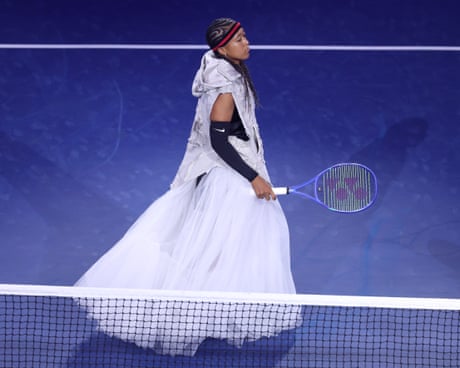
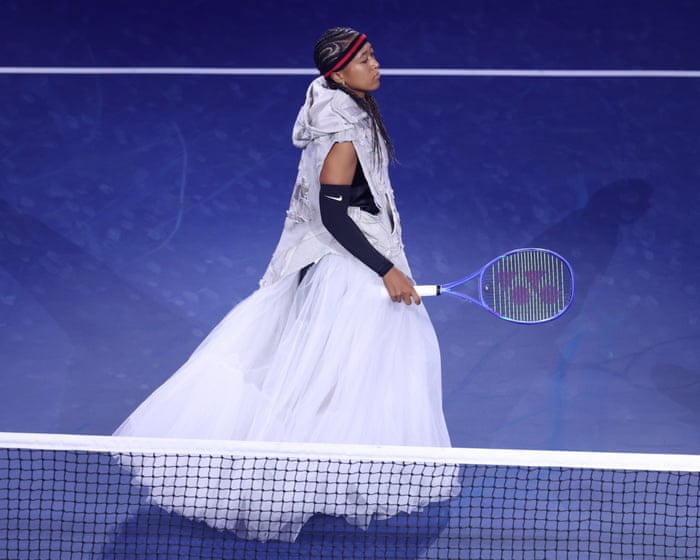
Naomi Osaka channeled former NBA star Allen Iverson before her US Open first-round victory over Anastasia Zakharova on Monday.
Osaka made her usual fashionable entrance for her tournament opener, which she won in straight sets. The two-time US Open champion emerged on to the court at Arthur Ashe Stadium wearing a long, white skirt and a gray, hooded robe featuring newspaper clippings about her.
Alex Eala has become the Philippines’ biggest sporting star since Manny Pacquiao. Now the 21-year-old’s traveling army of fans have descended on Flushing Meadows
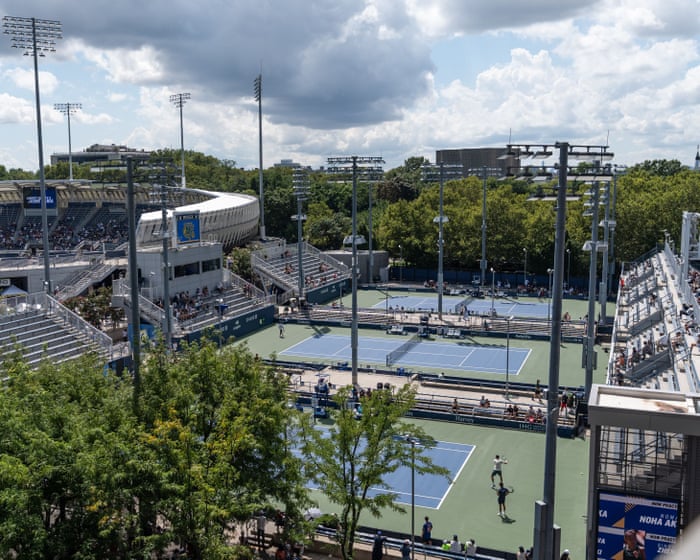
Thecrowd began to swellin Louis Armstrong Stadium a half hour before 2pm. A fair number of fans were probably there to see Taylor Fritz and Terence Atmane practice, but it was the session after theirs that was the headline attraction on the Friday of the US Open’s fan week. The blue, red and white throughout the stands, spotted on bucket hats and posters and basketball jerseys and flags, signaled who these people were here to see.
This has been the year of Alex Eala, the 21-year-old sensation who has taken the tennis world by storm. At No 18, she is the Philippines’ highest-ranked player ever, its biggest sports celebrity since Manny Pacquiao. The country’s president hosted a reception to celebrate her success, and called for a national celebration after she won her first tour-level title last month at the DC Open. Forbes estimates Eala’s off-court earnings for the past year to exceed $5m, plus $1.7m in prize money, and her agent predicts she will be the world’s second-highest-paid female athlete by 2027.
Carlos Alcaraz and Aryna Sabalenka began their title defences with comfortable victories on Arthur Ashe
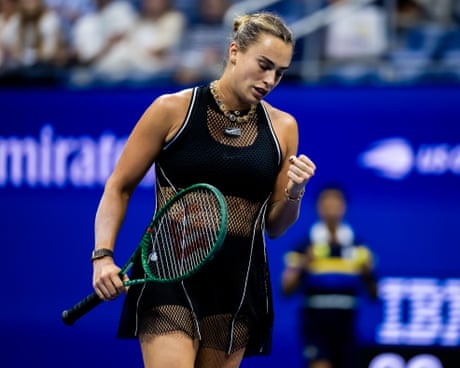
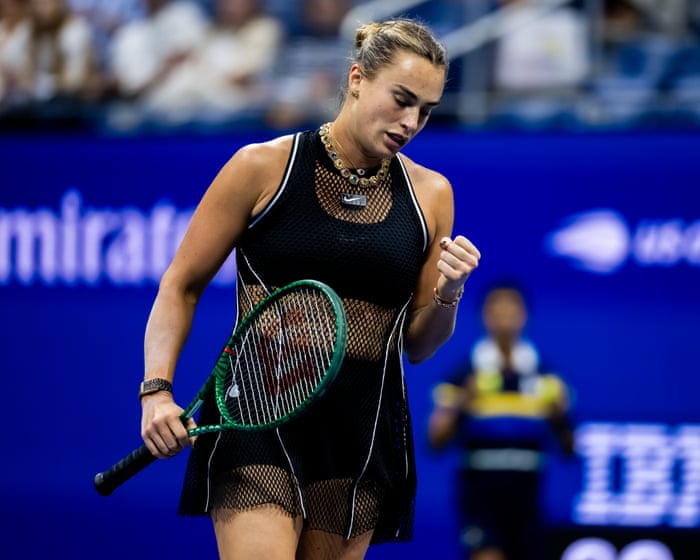
Sabalenka eases through on her serve, advancing to the net to secure her first game of the tournament with a forehand volley. It’s 1-1 in the opening set against Osorio.
Sabalenka and Osorio are underway on Arthur Ashe, with the Colombian serving. She records two double-faults before Sabalenka seizes upon the second serve, whipping a blistering forehand to make it deuce. But the defending champion finds the net and the stratosphere, too, as Osorio holds to go 1-0 up.
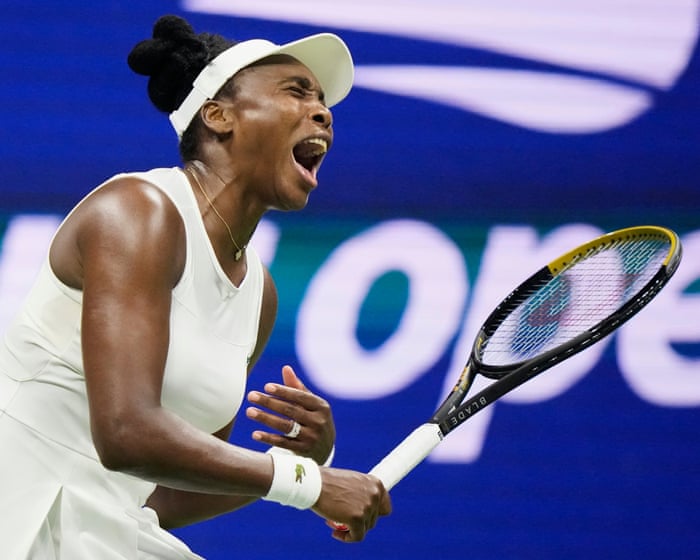
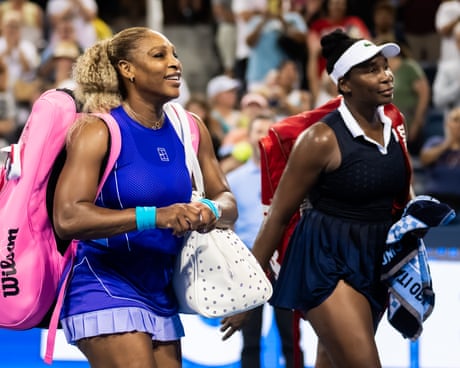
Sunday had become Monday by the time Venus Williams finally emerged beneath the closed roof of Arthur Ashe Stadium, her entrance pushed deep into the night after Novak Djokovic’s bruising defeat by Argentina’s Mariano Navone went the five-set distance. The first ball was struck at 12.13am, the latest start to a match in US Open history, yet several thousand spectators remained to watch a player who has been part of this tournament for as long as the building itself.
At 46 years old, ranked 611th in the world and making her record-extending 26th US Open singles appearance, Williams has grown accustomed to making history simply by showing up. Even by those standards this latest installment was, as she would later describe it, “completely insane”.
Jessica Pegula, the American third seed, began her campaign at Flushing Meadows with a straight-sets win
Krejcikova gets in a muddle after squandering a 40-0 lead on serve. Deuce. She fights back though. Wins the game with a lovely serve down the T. All square at 2-2.
Paolini delivers a dominant effort on serve to change ends at 3-2 up.
Serb hopes to take advantage of wide-open men’s draw
Elena Rybakina has eyes on No 1 world ranking
Novak Djokovic said he was as prepared as he could be for the US Open as he attempts to take advantage of the wide-open men’s draw and battle for a potential 25th grand slam title.
Djokovic arrived in New York having competed only once after his semi-final run at Wimbledon, losing in his opening match of the Cincinnati Open to Thiago Agustín Tirante while struggling with the humidity. However, he now sees the silver lining in that defeat, which he believes gave him the time to make sure he was in optimal shape for the US Open. “I don’t like early losses anywhere, to be honest, but it gave me time to be prepared for US Open in a most adequate way,” he said. “I had almost a few weeks, actually two weeks, to really train and get my body and mind into the right state, prepared for what’s coming up.
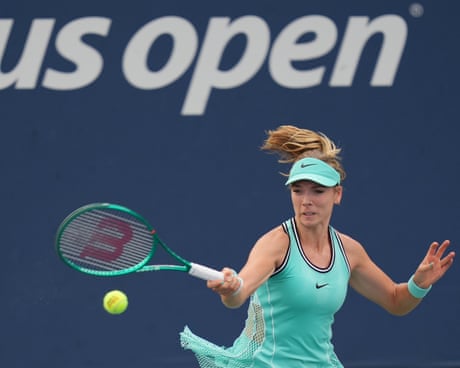
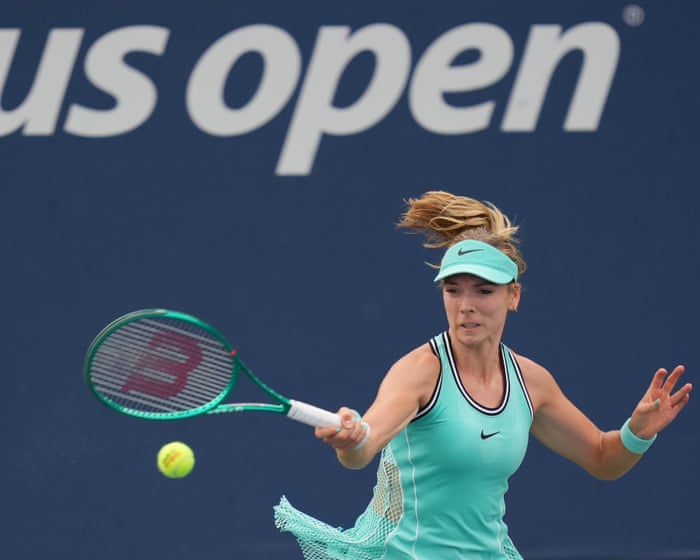
Katie Boulter: ‘You smell it a lot. I’m not a huge fan’
Britain’s US Open hopefuls thought they had put the grass behind them when Wimbledon finished, but the smell of it is all around Flushing Meadows and they are not happy about it.
Marijuana is legal for adults in New York and while smoking is not allowed on site, the aroma of weed wafts over some outside courts from the nearby Corona Park.
Defending champion arrives at Flushing Meadows in poor form and with a host of challengers looking to usurp her
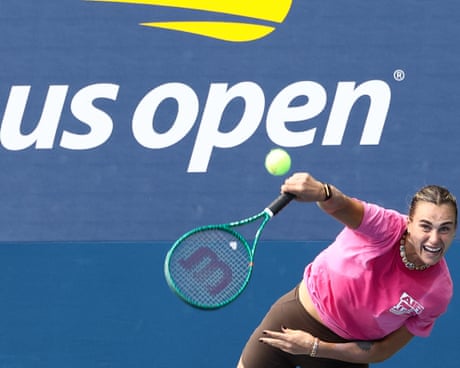
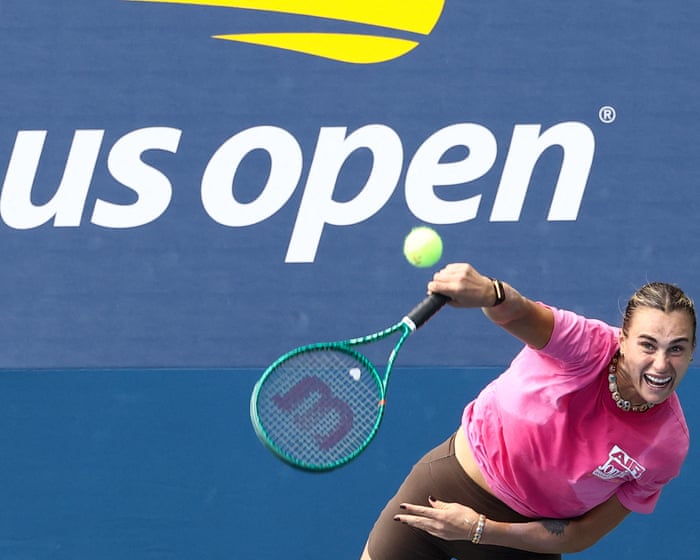
Under any normal circumstances Aryna Sabalenka would not have lost her third-round match at the Cincinnati Open last week. For all of her unforced errors, indecisiveness and the obvious tension surrounding her tennis, the world No 1 had led the unheralded Sára Bejlek 5-1 in the first set tie-break and then 4-1 in set two. She gave herself more than enough chances to close out a comfortable win.
Instead Sabalenka returns to New York trying to find a path through her greatest crisis since she first reached No 1 in the rankings more than three years ago. That straight-sets loss in Cincinnati extended a mediocre 17-7 record dating back to the beginning of April during which she has not reached a final. She has just one more chance to turn her fortunes around as she tries to claim her first grand slam title of the year at the US Open, the tournament she has won on the last two occasions.
The site once paired news and scores with distinctive voices. Its overhaul under Sinclair Media is the latest sign that serious tennis writing in the US is becoming endangered
A few weeks ago, as I often do, I went to the Tennis.com site to get an update about a match and to check out the commentary from my fellow tennis journalists. I was taken aback when, instead of the usual colorful graphics and info, I was greeted with a rudimentary-looking homepage that displayed only scores and rankings.
At first I thought it was a glitch of some sort. But sadly, no. As it turns out, Tennis.com, originally the online site of Tennis Magazine, is under a complete overhaul and will no longer be the home of esteemed writers such as Steve Tignor and Pete Bodo, robbing fans of unique and personal takes on the sport. It appears the longest running American tennis-specific publication is no longer alive in any form.
American talks life on the professional circuit and those making sacrifices for a pay cheque, often compromising physical and mental welfare
For Mackenzie McDonald the players’ push for greater prize money and welfare contributions from the grand slam tournaments could result in the difference between putting food on the table and making a decent living.
After 10 years on the ATP Tour the 31-year-old American is not pleading poverty, but knows that life on the professional circuit can be a hand-to-mouth existence, with players’ physical and mental welfare often compromised due to their desperation to get back on court.
Czech pair beat Bencic and Cobolli in deciding tiebreak
Revamped event draws strong crowds at Arthur Ashe
Singles stars dominate after doubles specialists exit
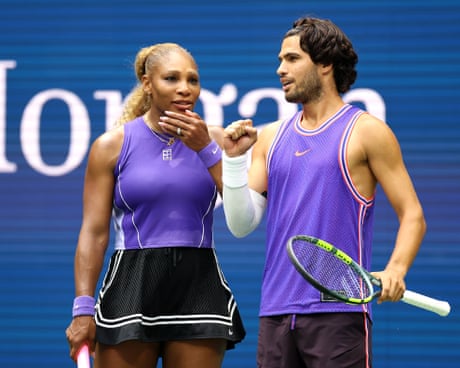
To many who came to the US Open grounds this week, the showpiece of the mixed doubles championship came Tuesday afternoon, with the returns of Serena Williams (after four years away from tennis) and Carlos Alcaraz (after four months out with a wrist injury).
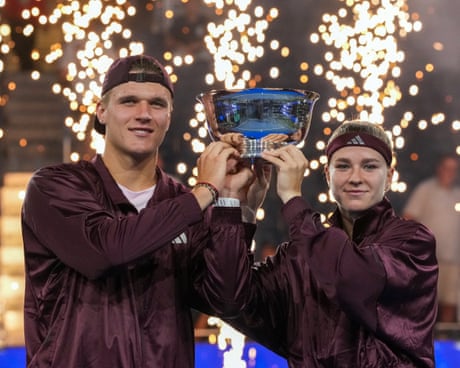
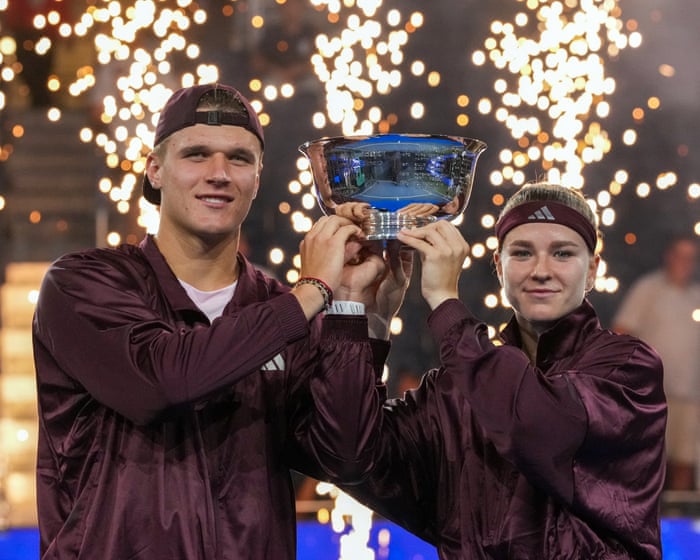
To the players who remained in the field after Williams and Alcaraz exited in the quarter-finals, the real highlight was Wednesday night’s final at Arthur Ashe Stadium, with its $1m in prize money on the line. Karolína Muchová and Jakub Menšík made the most of the spotlight, beating Belinda Bencic and Flavio Cobolli 6-3, 1-6 (10-6) for the title.
World No 10 is one of the best players yet to win a major and heads to Flushing Meadows in fine form after learning to embrace being uncomfortable
Amanda Anisimova can see the signs now. It is just over three years since the American announced she would be taking an indefinite break for mental health reasons. A brilliant junior, she was a semi-finalist at the French Open in 2019 and seemingly destined for the top, only for her world to be rocked by the sudden death of her father, Konstantin, a few months later. Struggling for motivation and burned out, in May 2023, she revealed she would be stepping away from the sport.
It turned out to be the best decision she ever made. “I learned how important it is to have a great balance on and off the court,” Anisimova says in an interview from New York, ahead of the US Open, where she will try to go one better than last year and win her first grand slam title.
Sky Sports is close to agreeing a new deal to extend its live coverage of the US Open. The three-year contract extension, which is expected to be announced when the singles draw from Flushing Meadows begins next week, will keep the tournament live on Sky until 2030.
Under the terms of the new deal, Sky will broadcast more than 12 hours of live tennis each day across the extended three-week tournament, including the new mixed-doubles event which is taking place this week.
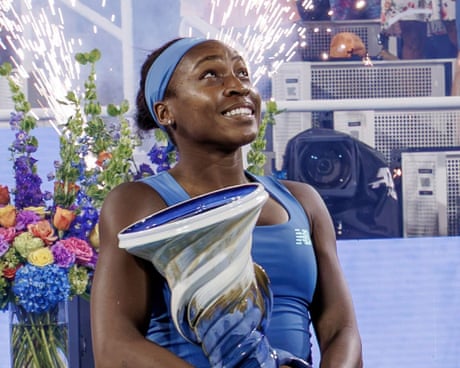
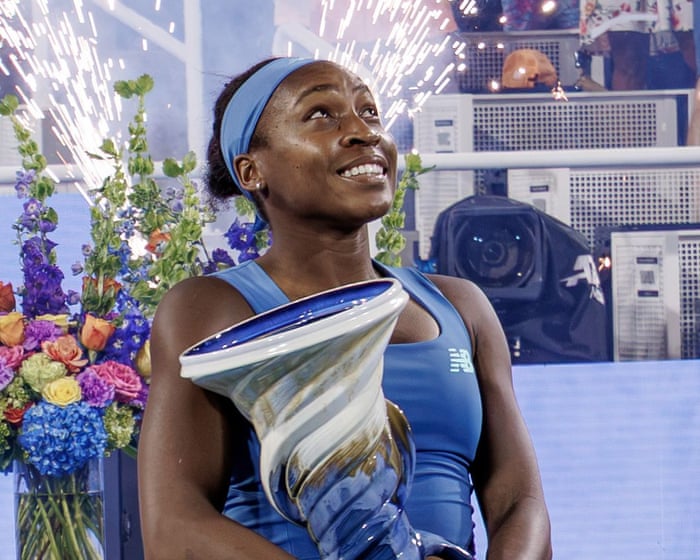
Gauff claims first title of season, her second in Cincinnati
One year ago, Coco Gauff departed the Cincinnati Open with her career at a crossroads. On serve, she had capitulated, offering up countless double faults in most matches, and she had lost confidence in her progress and game. She believed she had to make drastic changes to her team before it was too late.
It has taken an enormous amount of resilience, patience and toil, but this week Gauff began to feel the consequences of those efforts as she closed out one of the smoothest tournaments of her career with her best performance of the season, thoroughly outplaying the third seed Jessica Pegula to win 6-2, 6-4 and clinch the Cincinnati Open title for the second time.
French youngster beats No 7 seed 6-3, 6-4 in Cincinnati
Jessica Pegula battles past Swiatek to reach women’s final
In the middle of a tense, erratic start to a rain-delayed semi-final day in Cincinnati, Arthur Fils found himself locked in defence and miles behind the baseline on his serve at 3-3. He scurried from sideline to sideline, lunging toward the ball at full stretch, seemingly with no real chance of turning things around. As Flavio Cobolli swept to the net with the intention of finishing Fils off, however, the Italian soon learned that his opponent had another gear to reach. From far wide of the court, Fils pulverised a forehand passing shot winner beyond his astounded opponent, drawing a roar from the crowd.
That one point alone provided evidence of the athleticism, explosiveness and sheer audacity that have long marked Fils as such a rare, exciting talent, and it also set the tone for a monumental victory. From that moment onwards, Fils took control of the match and he marched into his first Masters 1000 final at the Cincinnati Open with a supreme performance, defeating Cobolli, the No 7 seed, 6-3, 6-4.
World No 1 makes ‘difficult decision’ to miss slam
Draper still recovering from bone bruise in left arm
Jannik Sinner will miss the US Open with a right knee injury. The world No 1 has not played a match since beating Alexander Zverev last month to successfully defend his Wimbledon title, missing the Masters 1000 events in Canada and Cincinnati. Great Britain’s Jack Draper is also out of the event.
The news comes a day after his great rival Carlos Alcaraz, whom the Italian lost to in the final in New York 12 months ago, revealed he will make his comeback at Flushing Meadows after four months out with a wrist injury.
With one semi-final in her last seven tournaments, the coming months will define the next stage of her career
Towards the end of a messy first set tie-break late on Wednesday, Aryna Sabalenka wildly sprayed another painfully nervous backhand before slamming her racket to the ground. As the racket connected with the acrylic floor, its vibration dampener detached from the strings and rolled off in the direction of the broadcast camera pit by the side of the court.
With the diminutive 20-year‑old Czech player Sara Bejlek leading Sabalenka 6-5 in the tie-break, this slapstick sequence forced play to pause while the Belarusian and a couple of volunteers comically searched for the missing vibration damper underneath the cameras until she gave up and retrieved a new one. A few minutes later, Sabalenka trailed by a set.
Carlos Alcaraz has won his battle to be fit for the US Open.
The seven-time grand slam champion has not played on the ATP Tour since April due to an ongoing wrist issue, but enlisted the help of football transfer journalist Fabrizio Romano to announce his comeback.
Players guaranteed $140,000 for making first round
The world’s leading tennis players have welcomed the US Open’s announcement of a 20% increase in prize money and agreed not to continue their protests at this year’s tournament as a result.
The build up to both the French Open and Wimbledon was overshadowed earlier this year by a media boycott as the players continue to demand a greater share of tournament revenues, but after the US Tennis Association announced a record prize pot of $108m there will be no such disruption at Flushing Meadow.
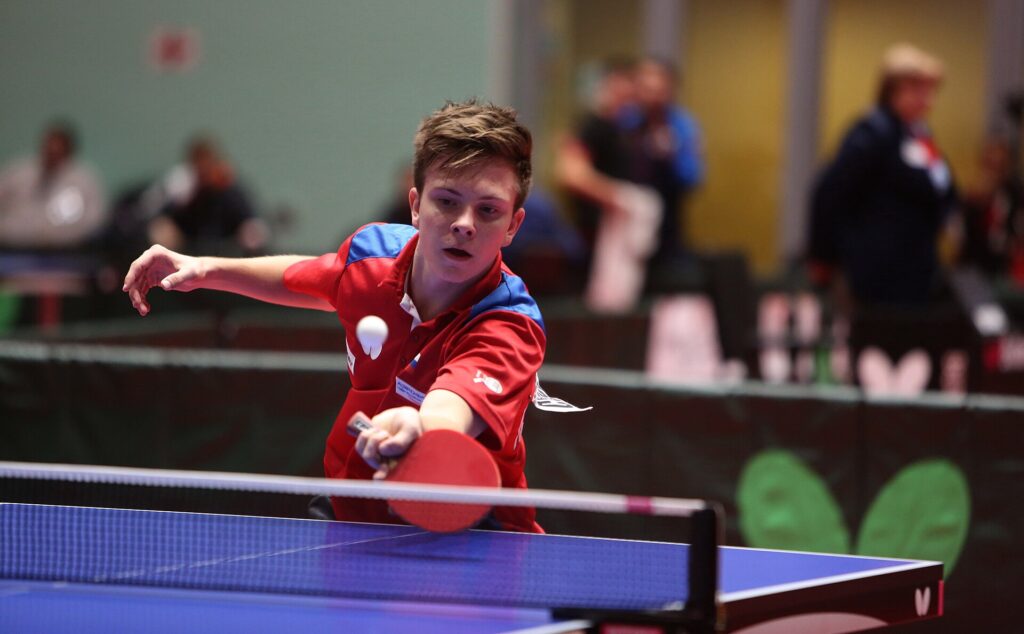
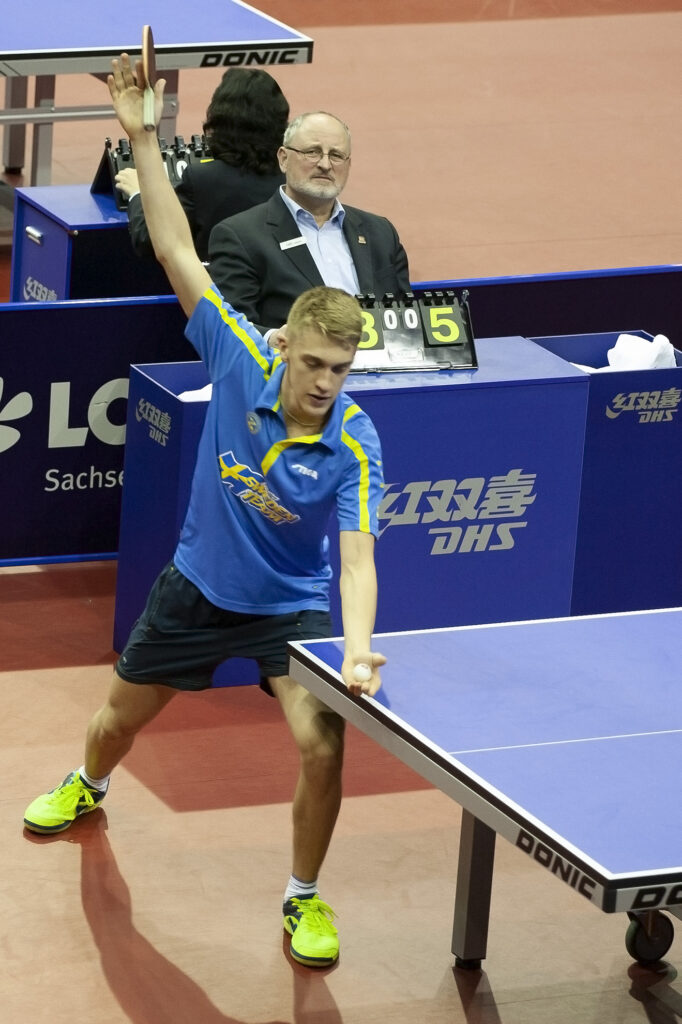
When Sweden’s Anton Källberg walks into the arena on Tuesday to face Vladimir Sidorenko at Europe Smash, the match carries a weight that reaches beyond the table.
Sidorenko is Russian, and unlike the Russian players who spent recent years competing as neutrals, he now takes the table representing Russia, under its flag and anthem.
Flags and anthems are written into international sport precisely because they carry national and political meaning.
The change follows a July decision by the International Table Tennis Federation (ITTF) to lift the restrictions on athletes holding Russian passports. It took effect on 28 July, and Russian players can now enter under the same ordinary rules as everyone else.
For critics, the question is hard to avoid: what has changed in Ukraine to justify the change in sport?
What changed in Ukraine? Nothing
Russia’s full-scale invasion has not ended. Yet the penalty imposed in its wake—that Russian athletes compete without representing the Russian state—has now been lifted in international table tennis.
The Swedish Table Tennis Association has openly opposed the move. Its chairman, Tomas Eriksson, said in July that he saw no change in Ukraine that would justify shifting Swedish sport’s position toward Russian participation. The association has said it will not boycott the tournaments.
That tension now lands on Swedish soil.
Källberg and Sidorenko were drawn against each other at Europe Smash, held in Malmö from 8 to 16 August.
For Swedish supporters of Ukraine, the evening presents a real dilemma. Nobody needs to aim hostility at Sidorenko himself, and no one is claiming individual Russian athletes bear responsibility for their government’s actions. The question is what an athlete is asked to represent.
Sweden’s Anton Källberg, who faces Russia’s Vladimir Sidorenko at Europe Smash in Malmö. Photo: Peter Porai-Koshits / Wikimedia Commons, CC BY-SA 4.0
A flag is never neutral
A neutral athlete competes as an individual. Someone introduced beneath a national flag stands in, however indirectly, for a state. Flags and anthems are written into international sport precisely because they carry national and political meaning.
So restoring the Russian flag is more than an administrative tweak. It is a statement—and a pointed one while Russia’s war on Ukraine continues.
The dispute has an unmistakable Swedish dimension. ITTF is headed by Petra Sörling, the Swedish official who was re-elected president of world table tennis in 2025 for another four-year term. She is a former president of the Swedish Table Tennis Association.
Explore further
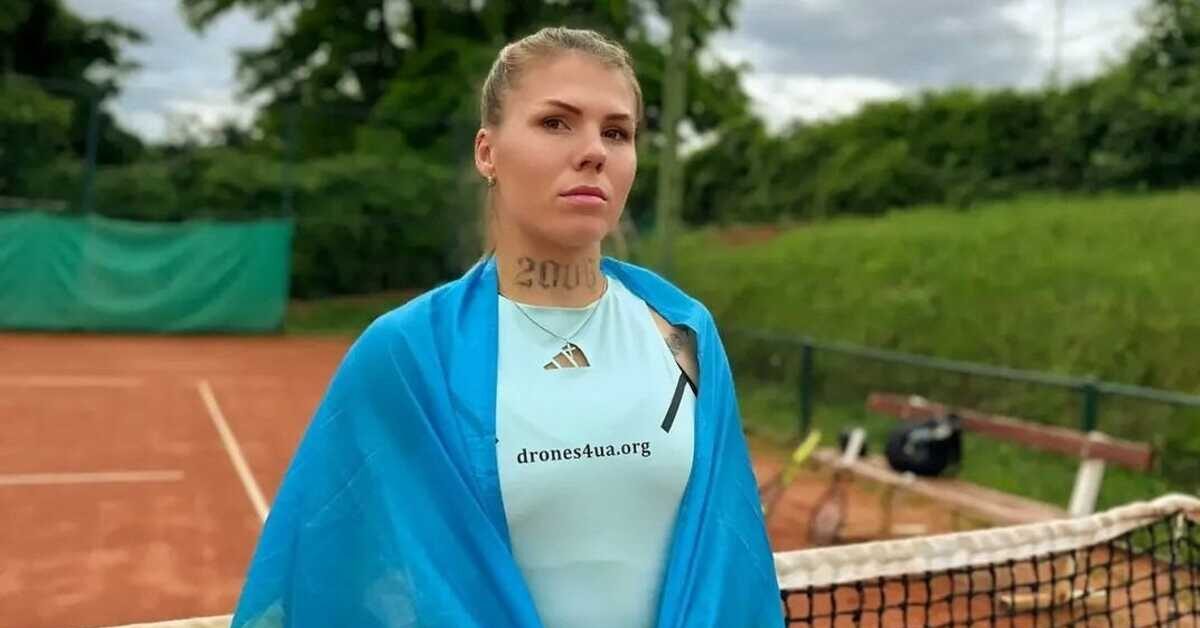
Sport is letting Russia back in. This Ukrainian tennis player says no.
That does not make the reinstatement hers alone to decide; the ITTF Executive Board considered the issue on 10 July. But leadership carries responsibility. ITTF has justified the change by citing equal treatment and proportionality—yet proportionate to what change in circumstances? With Russia’s war on Ukraine still ongoing, the federation has yet to explain what has materially shifted to make the earlier restrictions disproportionate now.
On the evening of 11 August 2026, all of it narrows to something plainer: two players and a table, in front of a Swedish crowd.
Källberg deserves what any Swedish athlete would want at a major home tournament: loud, passionate backing from the crowd. And those who object to the return of the Russian flag have every right to voice it, peacefully, from the same seats.
Symbols cut both ways
Sport does not stand outside the world around it. International federations prove as much every time they raise a flag or set a country’s name beside an athlete.
If those symbols matter when a nation celebrates victory, they matter when a governing body decides who may use them.
And until the reasons for restricting Russia’s national representation have gone, the question facing table tennis stays simple: Why should the restriction disappear first?

 Connexion