
 Connexion

US needs more of French-made rayon that withstands thousands of degrees to boost output of Patriot missiles defending Ukraine
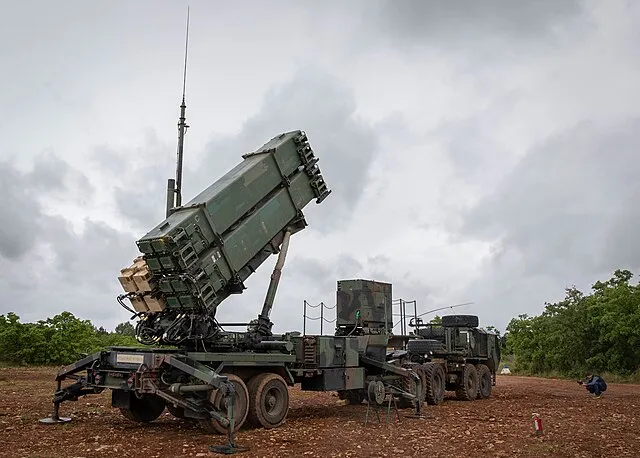
A single heat-resistant fabric woven near the vineyards of Bordeaux is one of the reasons that is holding back America’s drive to build more Patriot missiles. US plans to ramp up production of PAC-3 MSE interceptors are constrained by limited supplies of carbonized rayon that withstands thousands of degrees produced by France’s ArianeGroup near the city, the Wall Street Journal reports.
Ukraine leans on the PAC-3 as its one dependable shield against Russia’s ballistic missiles. Kyiv needs at least 2,000 of the interceptors a year, with one missile may require several interceptors to blow a target, military analyst Oleksandr Kovalenko of Information Resistance has estimated, roughly the number US industry is only now straining to produce.
One fabric, one supplier, an ocean away
The material lines the nozzle of the missile’s solid-rocket motor and keeps it from melting as the fuel burns at thousands of degrees. ArianeGroup carbonizes it from fibers sourced in the Czech Republic, then ships it to Park Aerospace in Kansas, which coats it with resin before it goes into the motors. Only one rayon product of this kind is approved for the most advanced Patriot interceptor, and ArianeGroup has warned that its supply is limited.
A ramp-up of a second supplier cannot speed
Lockheed Martin, which builds the PAC-3 MSE, aims to more than triple output to about 2,000 interceptors a year by the end of 2030, after delivering 620 in 2025.
Meanwhile, qualifying another fabric source is no shortcut, because every component must first undergo exhaustive testing.
“You could go down the path for two years, everything’s looking good—then at the last test it fails, and now you’re back to the drawing board,” Park Aerospace chief executive Brian Shore told the Journal.
Buying time with advances and new plants
To draw out more fabric, Park Aerospace has advanced ArianeGroup about $5 million to add a production line in France, which could start in 2028. They have a preliminary deal for a US plant, backed by $25 million, that might open around 2030.
Even then, each PAC-3 MSE takes about two years to build, and US stockpiles had already shrunk by about 65% from their pre-Iran-war level by late July, a Washington think tank estimated, as interceptors flowed to US forces and allies, including Ukraine.
For Kyiv, the gap is stark: Russia builds its 9M723 ballistic missiles for the Iskander-M at about three a day, more than 1,000 a year, each a target only a Patriot can reliably stop, according to Kovalenko's numbers.
Read also
-
This is how Ukraine finally blew up the Kerch Bridge
-
Training alone doesn’t make leader of sergeant. Without core of character, no course helps, says senior Ukrainian Special Forces soldier
-
Ukraine hits another bridge, this time over Siverskyi Donets River in Luhansk Oblast. It also damages three Russian transport planes
