Following widespread backlash, Meta announced earlier this week it’s putting a planned update of its commercial terms of use on pause. The terms would have required business accounts to allow Meta to “use any content from such domains, web pages, or URLs to provide, develop, improve, research, train, and maintain the integrity of” Meta’s products.
The new terms were initially set to go into effect on October 30, but after outcry from journalists and users who didn’t want Meta reaching far beyond Instagram and Facebook and into their websites to suck up their work as training data for its generative AI products, Meta announced it was pushing the change to November 20. Now, it’s on hold entirely.
“We recently shared that we were updating the Meta Commercial Terms, Product Catalog Terms, Self-Serve Ad Terms, and Ad Creative Generative AI Terms,” Meta says on the page where the commercial terms announcement used to be. “These updates are now paused and will not take effect on November 20, 2026. We are continuing to consult with stakeholders and will provide a further update when we have more to share. In the meantime, our existing terms remain in effect.”
The Los Angeles Times, which first reported the change, notes that following a case supported by the Norwegian Media Businesses’ Association and 180 Norwegian media companies, a court in Norway granted a temporary injunction suspending Meta’s new terms, and the UK Competition and Markets Authority said it would do its own investigation into the terms.
After pushing the update to November, Meta removed the word “train” from a list of allowed use cases, Nieman Lab reported, and limited those uses to “advertising and business products,” where previously it said that data would be used for all Meta products.
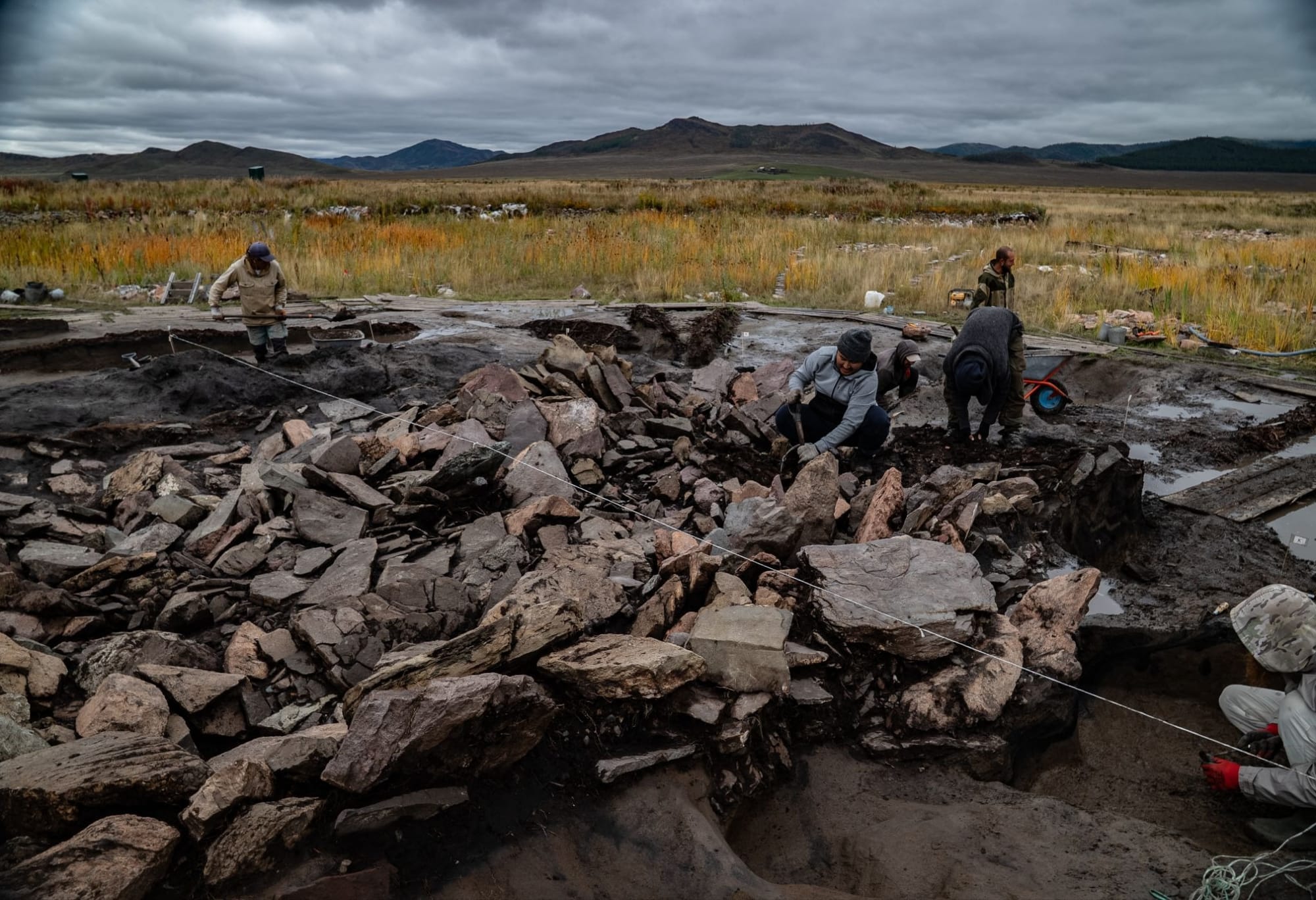
Archaeologists have discovered the oldest direct evidence of psychoactive cannabis use in a Siberian tomb that dates back 2,800 years and was the site of human and horse sacrifices, according to a study published on Thursday in Science.
During excavations of the tomb, a team found more than 1,400 cannabis seeds scattered around the remains of several Iron Age individuals, and even identified cannabinoids—including the active compound tetrahydrocannabinol (THC)—in a person’s preserved hair.
Though humans cultivated cannabis for many millennia before the Iron Age, this is by far the earliest clear-cut proof that the plant was consumed for its psychoactive effects, which have made it one of the most widely used drugs in the world today.
The discovery is “absolutely crazy,” said Gino Caspari, an archaeologist at the Max Planck Institute of Geoanthropology and the University of Bern who led the study, in a call with 404 Media. “People have been speculating a lot about psychoactive use of cannabis in the past, but to actually pin it down and prove it with soft tissue evidence of the humans involved—that is something very special.
“That is an absolutely unique and extremely rare combination of evidence,” he added.
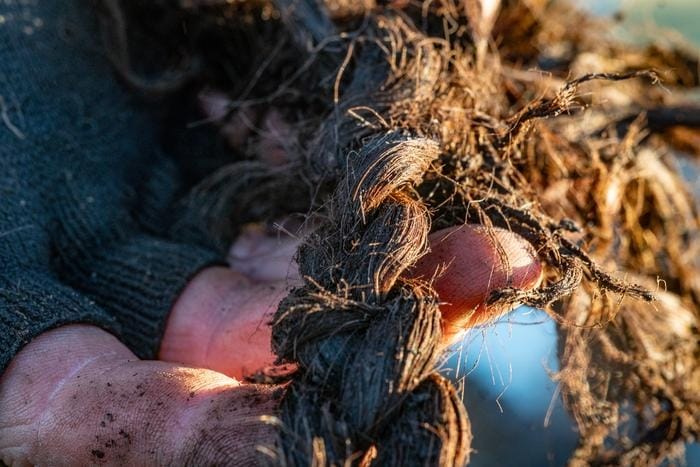
A preserved human hair braid. Image: Frozen Corpses Golden Treasures, T.Wallace & G. Caspari
Cannabis has a multifaceted history as a recreational drug and a pop cultural touchstone, as well as a traditional medicine that has been used for millennia by many cultures, including in China, Russia, and around the Mediterranean Basin. Humans began cultivating the plant as early as 10,000 years ago for its oil and fiber, but the origins of its specific consumption as a psychoactive substance is unclear.
Cannabis was important to the Scythian culture, a horse-riding people that emerged on the Eurasian steppes in the 9th century BCE and became a major force in the subsequent centuries. The historian Herodotus described Scythian rituals that involved ceremonial burning of cannabis in enclosed spaces, and their cannabis residues and products have been found at Scythian archaeological sites.
🌘
Subscribe to 404 Media to get The Abstract, our newsletter about the most exciting and mind-boggling science news and studies of the week.
“Herodotus speaks about the Scythians being quite fond of cannabis in the first place, so this has always been in the back of our minds,” Caspari said. “But it is so incredibly rare to find well-preserved plant remains that this is not really something you can hope for or look for. This is ultimately complete luck and chance.”
Now, Caspari and his colleagues have hit an archaeological jackpot at a tomb known as Tunnug 1, located in Siberia’s Uyuk River Valley. Six elite individuals are interred in the interior of the royal mound inside several tree-trunk coffins and wooden structures. They are mostly men, though one woman is also present. The mound is lined with remains of sacrificed humans, as well as dozens of sacrificed horses, close to the surface.
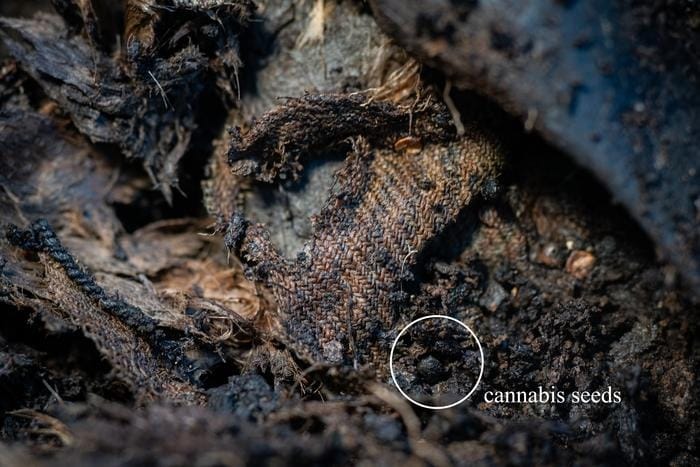
As the team carefully worked through the layers of the burial, they found hundreds of cannabis seeds distributed around the bodies that were dated to the 8th century BCE. However, the real smoking blunt was the detection of cannabinols in preserved hair samples, including traces of THC, the most important mind-altering compound in cannabis.
Cannabis seeds from the excavation. Image. T. Wallace
The results confirm contemporaneous accounts of Scythians as cannabis consumers who used the plant for purification and mortuary rituals. It’s possible that the people selected as human sacrifice consumed the drug to prepare them for their unenviable fate.
“It being in a burial context, of course, there's a ritual aspect to it,” Caspari explained. “It might be a little bit more sinister, but this is speculation. We do have a lot of horse sacrifices and also some human sacrifices on the surface of the mound. And if you imagine humans being sacrificed, they usually don't like that very much. It might be advantageous to have them dosed a little bit, at least, to make the procedure a bit more humane, if you will.”
“Of course, that is speculation,” he cautioned. “We don't have any written sources about that particular area, but that's at least one way we could go with our interpretation.”
The researchers hope to learn more about the context and meaning of the cannabis use at Tunnug 1 through continued excavations and an analysis of more hair samples. What’s more, the team plans to conduct DNA analysis on the seeds, an approach that could yield new insights about the murky history of cannabis domestication and its early use as a psychoactive substance. This line of research could also shed light on modern cannabis strains, and may even be revived for new medicinal or recreational purposes.
“We've already sequenced part of the seeds to unravel and disentangle the domestication history,” Caspari said. “Funnily enough, we don't even know what wild cannabis actually looks like because there has been so much intermixing and interbreeding since the 70s, when people started experimenting and trying to get more potent drug variants. Some of the initial landraces and the actual wild cannabis has been lost.”
“Now, having DNA that's almost 3,000 years old, we will be able to take that step back into the past and see what an unaltered cannabis would have looked like,” he said. “In the ideal case, we might even be able to work together with the medical industry and bring some of these very ancient genetics back into cannabis production to potentially help people with very interesting and distinctive cannabinoid combinations.”
Put that in your pipe and smoke it. Regardless of where future research into this ancient plant leads, this long-sought evidence of cannabis use thousands of years ago confirms the rich cultural legacy of the plant across time and space.
“As an archeologist, I might be a bit biased here, but I think the history and cultural practices really do matter,” Caspari concluded. “I think our findings do indeed inform current discussions on legalization, on usage of medical cannabis—which is very much an ongoing discourse—and I think what we've been able to do with this study is provide an anchor, and show that there is this deep cultural history to the use of cannabis as a psychoactive drug.”
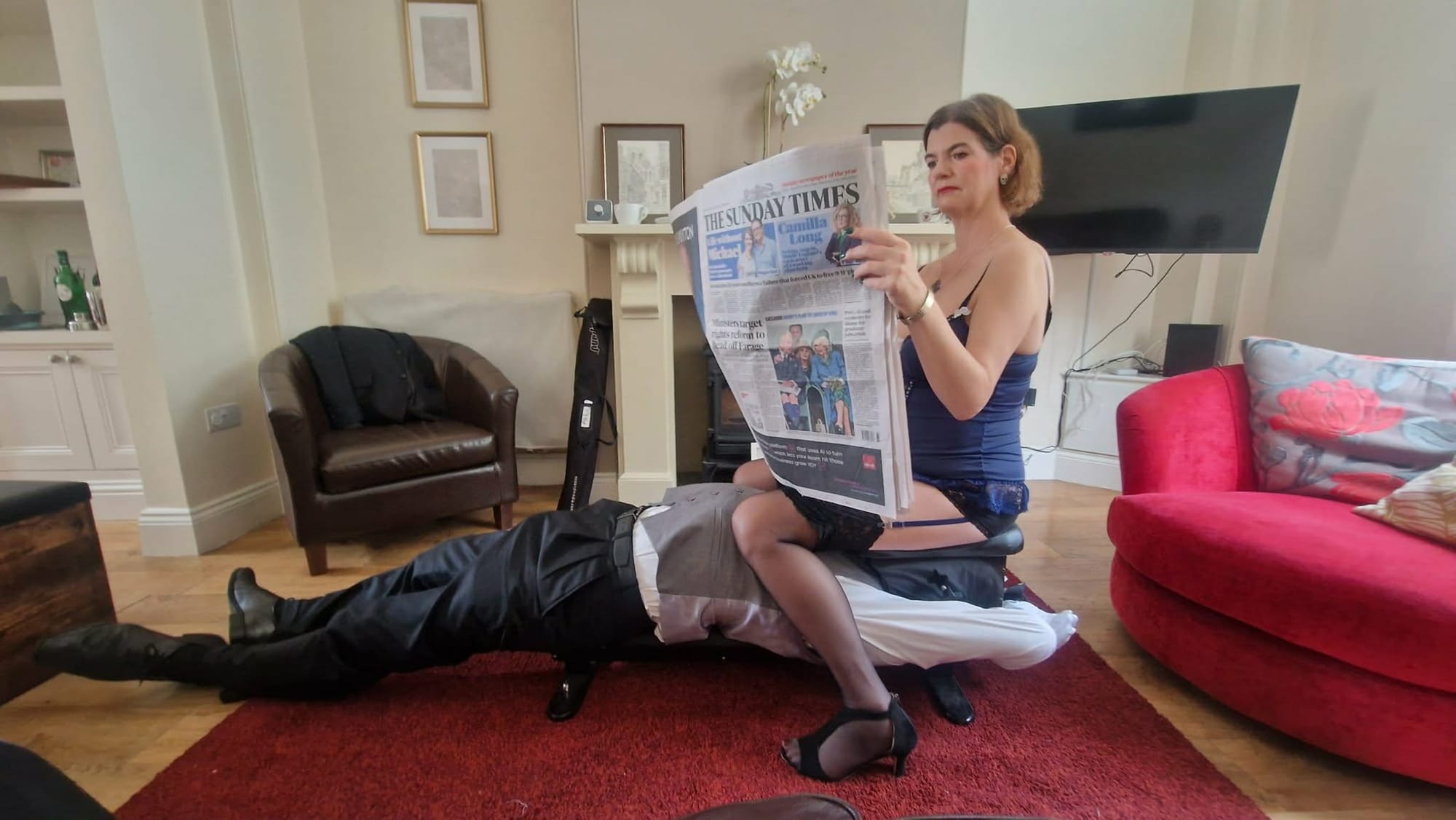
“I adore breath play. I love being strangled, suffocated and drowned, and I love strangling and suffocating others. Waterboarding: that’s my favourite,” Melissa Todd, a UK-based writer and sex worker, told me. “Many women do: it really isn’t only horrid men forcing us to do these dreadful depraved acts. Interrupting oxygen supply produces the most intense sensation of euphoria. I enjoy it in my private life, and I offer it in sessions too.”
Starting tomorrow, she and anyone else in the UK distributing or possessing this type of content, even if it’s just recorded in the privacy of their homes and not for sale on a porn site, could face up to five years in prison. The maximum penalty for possession is “two years’ imprisonment for pornography that depicts strangulation or suffocation, or penetrative sexual activity between certain relatives,” according to the law, and “three years’ imprisonment for pornography depicting sexual activity involving a person who is, or is pretending to be, under 16,” with five years as the maximum penalty for publication of all of the above.
Updates to the Crime and Policing Act go into force on November 6. The law criminalizes a list of sexual acts, including downloading or making choking and incest roleplay porn. According to the law, it will be a criminal offense in England and Wales to possess or publish porn that “explicitly and realistically” depicts strangulation or suffocation, penetrative sexual activity between people who “a reasonable person would think are related, or pretending to be related, in a certain way” and sexual activity between people where “a reasonable person would think at least one person is, or is pretending to be, under 16.” Sixteen is the age of consent in the UK.
“You have to speak up for porn you don’t like, as well as the porn you do, because otherwise the government will keep censoring more and more depictions of acts they don’t fancy."
“The offences only capture pornography that shows people which appear, to a reasonable person, to be real,” the law states — whatever that means.
The rest of the law is similarly vague in defining what’s criminalized. The “guidance” on the law says: “We consider that strangulation generally means one person applying pressure to another person’s neck,” and “We consider that suffocation will generally mean depriving a person of air in a way that affects their ability to breathe. Unlike strangulation, this does not require pressure to the neck. It could, for example, involve covering someone’s mouth and nose or compressing their chest.” This could mean anything from relatively common acts like face sitting or pushing someone’s face into a mattress, to gagging and more extreme breathplay generally left to professionals. The law says it’ll be left to the courts to decide.
“This isn’t just about my personal preferences,” Todd said. “You have to speak up for porn you don’t like, as well as the porn you do, because otherwise the government will keep censoring more and more depictions of acts they don’t fancy. Even if you think strangulation is disgusting, immoral, dangerous, that is no reason to ban it. In a liberal democracy people must be allowed to behave in ways you think ridiculous and disgusting, in the hope that they in turn will extend the same courtesy to you. I don’t understand why people go skiing, or camping, or abseiling, but I’m happy for them to crack on with it. Consenting adults must be allowed to do whatever they want with their own bodies. It is illiberal and dangerous for the government to interfere."
The effect of the law’s vagueness — as it has been in the US when legislators, payment processors and platforms similarly inflict poorly-defined terms on sex workers — is censorship and has a chilling effect on otherwise consensual legal activity between adults. It’s already happening: Adult clip site iWantClips warned, according to content creators using its platform, that in light of the law it’s banning a list of genres and acts: “iWantClips is required to remove certain categories of content from the platform for Artists located in the UK,” the message said, followed by a list including every kind of “smother” imaginable (including ass, foot, and breast smothering), plastic fetishes, all face sitting and specifically, face sitting in jeans, “butt drops,” and trampling fantasies. This isn’t the first time iWantClips has complied in advance of a threat to free speech: In October 2021, following new, strict moderation and documentation regulations set by Mastercard, the platform told creators they’d need to review their archives of content and make sure it was in compliance or risk a permanent ban.
Kinky sex has long drawn the ire of UK officials. In 2014, the British Board of Film Classification attempted to ban a litany of erotic acts from video on demand and streaming services under the The Audiovisual Media Services Regulation. Many protesters doing face-sit-ins in front of Parliament pointed out at the time that the ban was focused on acts that prioritize women’s pleasure. The ban was overturned in 2019.
UK based porn performer and producer Vex Ashley, who owns the independent studio Four Chambers, told me that when the Crime and Policing Bill went through Parliament earlier this year, she examined her back catalog and found that the work she considers her “magnum opus,” which explores the sexual archetype of the mother, could contain criminal content under this law.
“I had to go back and gut the film from the inside out,” Ashley told me. “It exists now in a very different form than it did when before. And obviously the law not only makes it illegal for me to publish it, but it also technically makes it illegal for me to possess the original cut of my film now, which just seems completely wild, considering that it’s me who is in it, and it's me talking about my own experience of my own sexuality.”
Ashley noted that attacks on sexual freedoms always come for non-normative sex first: “kink, fetish, queer and trans bodies, anything a compliance team can’t file under vanilla,” she said. This, she believes, is part of an ongoing swing toward conservatism, authoritarianism, and control.
"Even if you're somebody who doesn't care about porn, who doesn't care about sex, but you do care about this rollout of conservatism that's being force-fed to us, you can defend people's right to fuck and be fucked, and to explore that through media"
“The underlying message here is that actually, it's people's faults for being too horny, and that you should just control yourself,” she said. “That if you see this rollback in our sexual freedoms and this criminalisation of our sexual imaginations as wrong, you are just dangerous and perverted. Which is, I think, a swing back to old conservative and fascist ways of thinking about sex and freedom and bodily autonomy.” The “save the children” narratives that brought us harmful laws like FOSTA/SESTA in the US and an ongoing age verification nightmare around the world are at play with the Crime and Policing Act. In the UK, the Online Safety Act has forced people to verify their ages to use even non-sexually explicit parts of the internet. Looking at Pornhub from a UK-based IP address today, for example, you’d think it was a platform for podcasters and influencers; only once you log in and verify your age with a government ID and/or facial scan does the actual porn become visible.
Independent creators and people dependent on online sex work in the UK will be the hardest hit by this new law. Dominatrixes have reported that they’re expecting to take a financial hit. And even people and platforms outside of the UK may need to block users based in the UK from accessing their content to remain compliant. Many performers focus on specific niches to cater to audiences that seek out fetish content. But a lot of what’s being banned is already either banned by platforms or difficult to monetize, due to the extra-legal morality restrictions imposed by payment processors. Todd told me that while she enjoys the kind of content that’s now banned in the UK in her private life, she doesn’t bother uploading it to platforms where she could monetize it, because their terms of use have restricted most of it already.
Those trying to comply with the law and avoid the threat of jail time face a task. The law's guidance makes it clear that possession and publication apply retroactively. “It's easy to talk about pornography as though it's a constantly replenished stream of disposable content, but for many performers it represents years of work and a significant investment of time and money,” Todd said. “A back catalogue can be an important source of continuing income. If material has to be removed, that isn't simply a matter of changing what you film next week; it can mean losing an asset you've spent years creating.”
“Sex is a vital part of the human experience and it deserves exploration through storytelling, through media, through creation, in the same way that any other part of our experiences is,” Ashley said. “And that is not going to always be super comfortable. Sex is this very complicated, very vulnerable, very powerful thing, and it brings up a lot of things for different people.”
Deciding, as a society, that it’s not worth defending or thinking deeply about is doing us all a disservice, she said — and comes at the cost of sex workers’ safety and freedom. Faced with potential prison sentences for having a face sitting video stored on a hard drive, the freedom in this case is very literal. “Even if you're somebody who doesn't care about porn, who doesn't care about sex, but you do care about this rollout of conservatism that's being force-fed to us, you can defend people's right to fuck and be fucked, and to explore that through media... I think you can defend it even if you think it's complicated.”
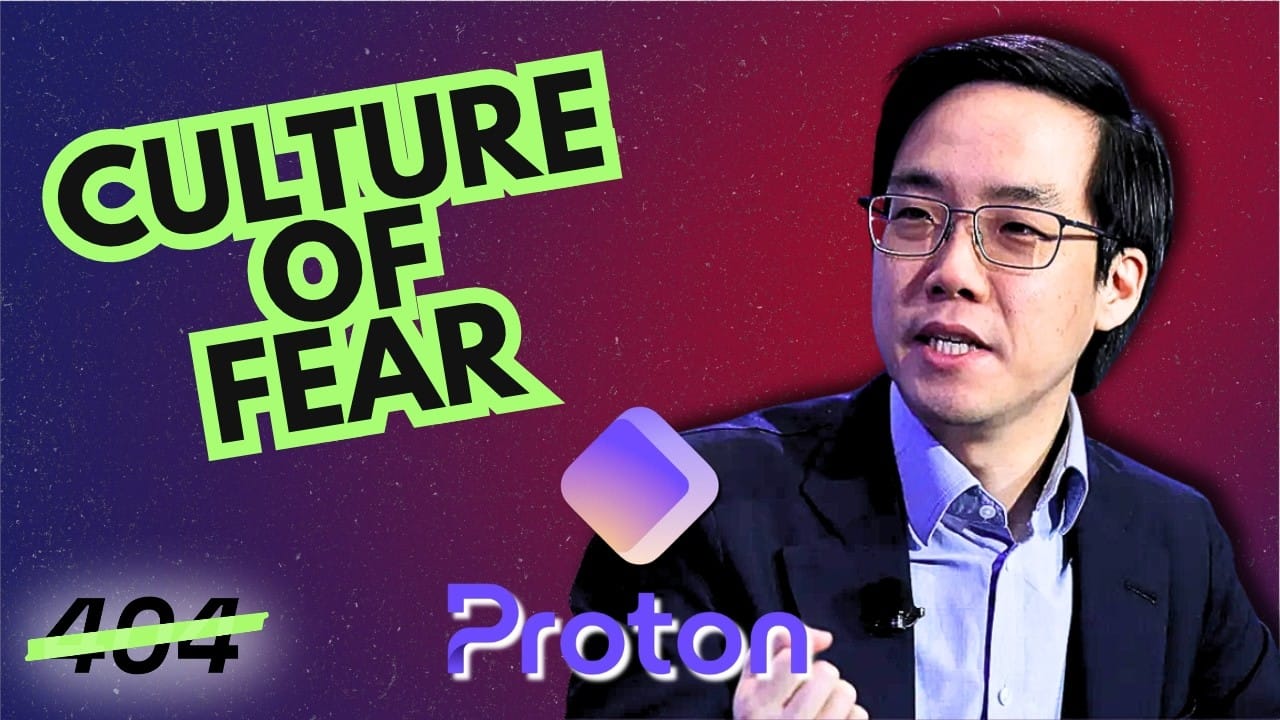
We start this week with Joseph’s investigation into Proton’s culture of fear and the company’s massive push towards AI. A lot to unpack there. After the break, Sam tells us about the AO3 outage and its fallout. In the subscribers-only section, Jason explains: we’re not tech support.
Listen to the weekly podcast on Apple Podcasts,Spotify, or YouTube. Become a paid subscriber for access to this episode's bonus content and to power our journalism. If you become a paid subscriber, check your inbox for an email from our podcast host Transistor for a link to the subscribers-only version! You can also add that subscribers feed to your podcast app of choice and never miss an episode that way. The email should also contain the subscribers-only link for the extended video version too. It will also be in the show notes in your podcast player.
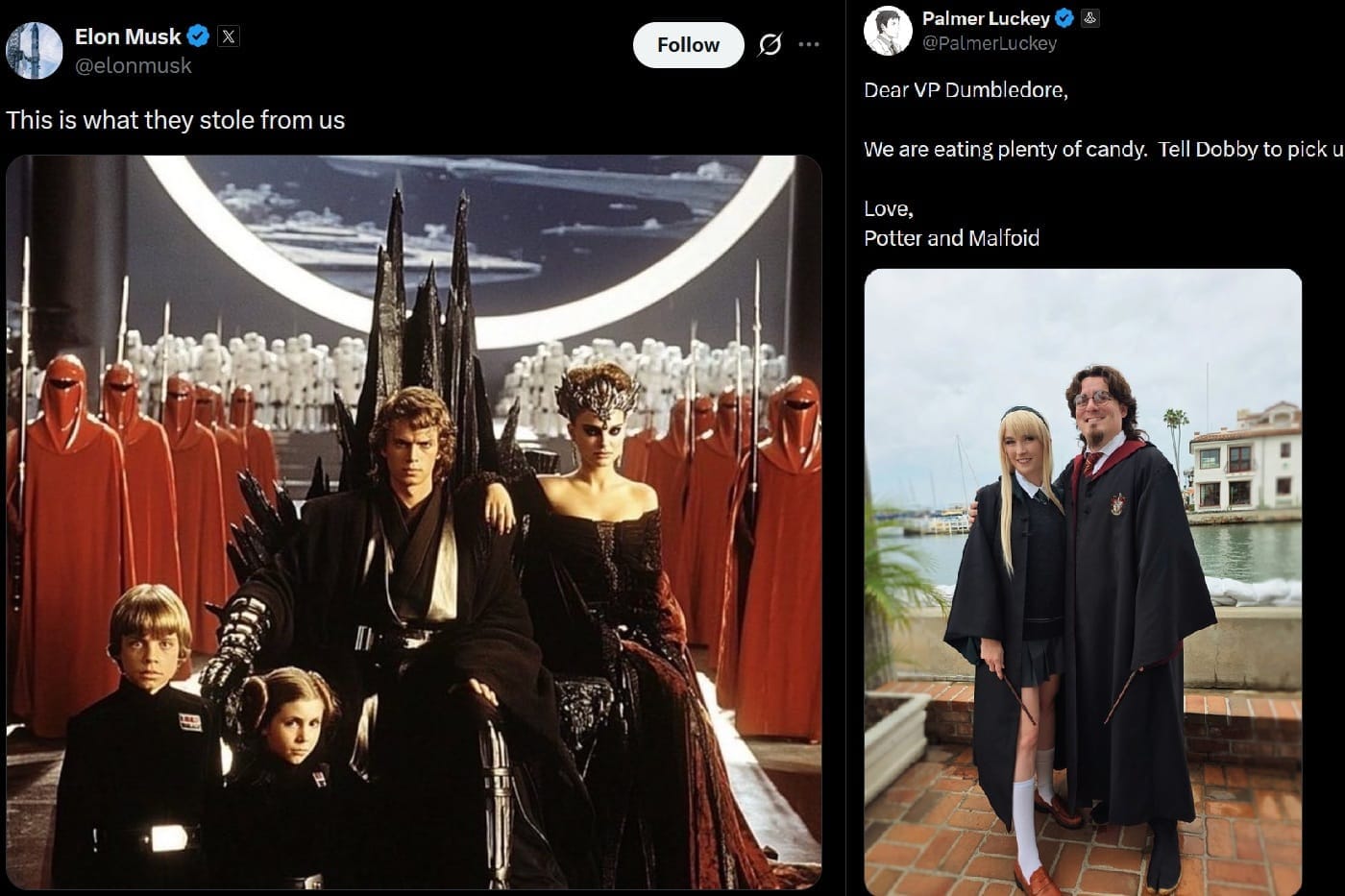
There's a BlazeTV YouTube video whose thumbnail shows the presenter with his arms around Anakin Skywalker and a gender-flipped Draco Malfoy called Malfoid. “Total Chud Victory?” It says. The video's title: “Young Right is Reclaiming Culture and Liberals Are Mad About it.”
BlazeTV posted the video on November 2, the day before Democrats swept the midterms and started a political realignment in America so overwhelming that Republicans lost control of all the most powerful state positions in Texas.
The video is a profound misreading of the political and cultural moment. It reminded me of stories of the Bolsheviks seizing the Winter Palace to discover tarot card playing courtiers who had no idea a revolution was happening in the streets.
The American version was watching defense contractor Palmer Lucky dress up like Harry Potter on Halloween while standing next to his Malfoid wife. And it was Elon Musk — who spent roughly half a billion on the election only to see his chosen candidates fail — posting an AI generated picture of Anakin Skywalker sitting at the head of a happy fascist Star Wars family two days before the midterms.
The online right has dominated American culture for a decade, or at least has dominated political narratives picked up by the mainstream media. Its memes and conspiracies drove news cycles. At first, the right’s memes filtered from random people on obscure Discord channels to Reddit’s r/the_donald or 4chan to Trump’s Twitter feed. More recently they’ve come from AI slop farms, from Musk, or from the administration itself. Powered by a well-funded media and podcast ecosystem, Fox News (and a propensity for shamelessness) its comedians, podcasters, and pundits became powerful celebrities and influencers, at least within Elon Musk’s X.
This insular, often inscrutable world has given us Ben Shapiro, Nick Fuentes, Gamergate influencers, the streamer Asmongold, and a revolving door of characters who have shuffled interchangeably between Twitterverse celebritydom and actual government; Kash Patel, DataRepublican, Laura Loomer, Pete Hegseth, RFK Jr., Dan Bongino, the list goes on.
It has been said many times that “Twitter is not real life,” and that posting too much anywhere will rot your brain. Never has that been more apparent than now: Much of Trumpworld spent the week before an election in which they would get utterly trounced using AI to generate barely legible Anakin and Malfoid memes for an inconsequential ingroup on the social media platform run by the biggest loser on the planet.
“It certainly seems like it has had its high water mark and that reality has FINALLY caught up with the Republican Party,” Michael Senters, a PhD candidate at Virginia Tech who studies online and gaming culture, told 404 Media.
In 2016, 4chan posters talked about “meme magic” — the pseudo-ironic belief that pictures on the internet could manifest great change in reality. According to legend, Trump strategist Steve Bannon was running a World of Warcraft gold farm when he realized the angry gamers could be harnessed into a powerful reactionary political force. Bannon and others would successfully parlay Gamergate into an endless culture war that’s dominated online life in the Trump era.
During the midterm livestream of Bannon’s War Room podcast, his guest read exit polls that suggested the right-wing had lost young men — a group long thought to be its strongest soldiers. The split between the parties was even, the guest explained. “That can’t be right,” Bannon whispered, signalling he’d lost touch with the constituency he’d harnessed on behalf of Trump ten years ago. As the election results began coming in, right-wing podcasters, livestreamers, and newscasters across the internet went through at least a few of the stages of grief. First they struggled to understand what was happening, suggesting the votes must be wrong. Eventually, many of them ragequit.
"Okay, I'm going to be honest. I'm absolutely rage quitting. I'm so frustrated. I am so unbelievably frustrated. I'm so mad. I think Trump didn't do 50 different things he should have done. I think he should have gone a thousand times harder. I think that he wasted his time selling trinkets and nonsense,” Asmongold said as the returns came in. He lives in Texas where Democrats swept in a shock victory.
“I wish that there were more people who thought like me that weren’t sorry about it. But you know what? There’s not. So it’s just me. And that’s fine. It’s fine. It’s OK,” he said, his voice catching in his throat.
Asmongold (@Asmongold) realizing in real time that he's a total fucking moron who got duped by the most cartoonishly obvious con-man of all time and ragequitting his election night coverage pic.twitter.com/XgtnqNjAaf
Many right-wing personalities went into Tuesday somehow expecting to win despite a disastrous war, a disastrous economy, disastrous polls, and a doddering president whose closing argument seemed to be more about his ballrooms, golf courses, and the Reflecting Pool than anything else. Since Trump was re-elected, these same people have called everyone else out of touch, convinced by their X algorithm and prediction markets that no blue wave would materialize. The media has similarly spent many thousands of words suggesting that Bluesky is an out-of-touchleftist echo chamber while mostly failing to suggest anything of the sort about the AI-pilled Silicon Valley executives, bots, and racists shitposting on X. Tuesday’s election wipeout highlights how detached from reality the Malfoid/Anakin-shipping, X-brained billionaires and their acolytes have actually become.
“Blueskywave. Those of us on here, across the board, were out of touch. I see no other conclusion,” Joe Weisenthal of Bloomberg's Odd Lots podcast (who is a serious, good journalist), said in a post on X after the election amidst a sea of Anakins tonguing Malfoids.
The meme game and general demeanor of Trump and his followers has grown wildly tiresome in his thus far-disastrous second term. Under the guidance of White House Communications Director Steven Cheung, official government accounts have posted racist Halo memes, used AI to put a studio Ghibli face on anti-immigrant propaganda, and fully embraced Malfoid and Darth Vader as cultural heroes. The base on X loved this stuff. No one else did.
As our friend Gita Jackson over at Aftermath wisely put it immediately before the election, "The idea that they can meme magic their way into a red sweep by posting about Anakin Skywalker a lot is pure desperation [...] Their values have been rejected by popular culture at large, and they are now resigned to exist in the margins.”
Senters said the midterms showed the hard limits of memes as a political tool. “The power that memes have has always been, in my opinion, the power to help define linguistic and community lines in the amorphous space of the Internet. You create a community when you ‘get the joke’ behind a meme but memes generally don't persuade,” he said. “I'll be curious to see if the government accounts will continue to post these far-right cultural memes in the wake of the defeat or if they'll change their tune at all. Like do they double down on the meme posting to try to rally their base? Because it very clearly had ZERO appeal to anyone outside their base.”
Yet the right-wing has spent the last ten years acting as if their memes had moved the country politically. “They deluded themselves into believing that memes carry persuasive power and that their bubble on X represented material reality in a meaningful way when that was no way close to the truth,” he said. “They saw how many ‘numbers’ the Malfoid and Anakin memes did on X and convinced themselves that this was a real cultural awakening moment and that the volk were on their side.”
It cannot be overstated how culturally significant Anakin poasting is. I dont think you could engineer a better anti-progressive memetic virus in lab if you tried.
Alyssa Mercante, an internet culture reporter who is writing a book about politics and video games called Rage Game, agreed. “I think what it's really showing is that when you start to get a little bit too deep in the weeds of this hyper online culture war stuff, it cannot escape the internet,” Mercante told 404 Media. “It is not working anymore. The material reality of America is just not good enough.” Gas prices are up. Everything is more expensive. And ICE has killed Americans in the streets.
“This conspiratorial mindset is wrecker mentality. It is just destructive for the sake of destruction. There is no goal beyond pulling away any sort of legitimacy from the media or from democracy,” Mercante said. “When you get so deep in the weeds of this anti-establishment conspiratorial thought process, you just can't make anything or do anything of value. You're just upending tables and pointing at them and laughing.”
Democrats crushed Republicans who leaned into the online culture war during the midterms. Bo French — an overt racist who ran for railroad commissioner in Texas — sent text messages to voters that depicted himself as Master Chief from Halo. His opponent beat him by more than a million votes.
In Nevada, Halo composer Martin O’Donnell ran as a Republican for a House seat and lost to incumbent Susie Lee. O’Donnell announced his campaign on Discord and leaned hard into an extremely online gamer identity. “He’s like, ‘I wrote the Halo music and I’m voting for Trump and you should too.’ He did a Halo LAN party campaign fundraiser. The imagery was him as Master Chief,” Mercante said. “This dude is like: ‘My personality is gamers, gamers are not woke and they're resisting this [...] and Trump is the person that is going to help us resist,’ and he's polling like absolute dog water.”
It’s been 12 years since Gamergate set the tempo for online culture wars and a decade since Trump won in 2016. In 2026, Star Wars, Halo, Harry Potter feel dated in a way they didn’t back then. “What 22-year-old kid is going to be like ‘they took Halo from me.’ They don’t know Halo to have it taken away from them,” Mercante said.
She stressed that so much right wing online culture is about distraction — she likened it to jingling keys to capture the attention of a baby. “If the economy is the number one issue for both Democrats and Republicans going into the midterms, no amount of Malfoid scissoring Anakin Skywalker is going to change that need for people to be in a better financial position,” Mercante said. “The tech oligarchs pushed this stuff straight into our eyes for two years straight unfettered [...] And I wake up and gas is this expensive? I don’t care if you take a Taylor Swift song and make JD Vance walk out to it.”
“[They] really thought that this would just last forever,” she added. “When you build up a meme presidency, eventually the cards just collapse underneath you, and there's just nothing to show for it.”
Though this midterm signals a move away from Gamergate-style culture war politics, both Senters and Mercante cautioned that this type of rhetoric is still dangerous, and can still be destructive. “They’re still very good at doing propaganda on the internet — they wrote the book in many cases,” Mercante said.
For months I’ve been speaking to an AI fraud kingpin. You might remember in 2024 we revealed the existence of OnlyFake, an underground site that let anyone generate realistic photos of fake IDs using ‘neural networks’. The creator of that site went by the handle John Wick. A while later, the creator was arrested.
Turns out there was a lot more to that story. Yuriy Nazarenko, the creator of OnlyFake, told me his side of it. How when I published my initial article he panicked, and destroyed his laptop and emails and got a new phone, paranoid that authorities were about to bust down his door. How the pressure of a growing fraud empire pushed him to drugs. And how North Korean fake IT workers used his site. Read below for his story.
A few years ago, Yuriy Nazarenko sat at a desk in his grandfather’s apartment in Ukraine and, on a diet of cigarettes, Lay’s chips, and beer, painstakingly made digital copies of fake identity documents. One of his four computer screens had the messaging app Telegram open. Another displayed a scan of a passport in Photoshop filling the entire monitor.
Pixel by pixel, with rap music blaring, Nazarenko edited each part of the passport. That included the MRZ codes, the block of text printed at the bottom of identity documents; the photographs to superimpose someone else’s face into the document; and the overall dimensions and quirks of each different type of passport. Nazarenko would sometimes sit for more than 12 hours at his computer, obsessively tinkering away, with a single, high-quality fake identity document taking up to a week of work.
When someone thinks of fake IDs, maybe they imagine a spotty underage teen buying a physical counterfeit drivers’ license so they can score some beer. But in the global criminal underworld, digital copies or scans of IDs are like a skeleton key. A convincing scan of an ID or utility bill, loaded with a bogus name or someone else’s identity, can unlock the ability to make bank accounts, bypass checks on cryptocurrency exchanges to buy or sell more Bitcoin, or rent a safehouse, all while keeping the criminal’s real identity hidden. The digitally altered IDs need to fool both human reviewers and automated systems that scan them for inconsistencies. Making fake IDs requires exquisite attention to detail.
All of that manual labor doesn’t really scale, Nazarenko thought to himself as he meticulously edited passport after passport. He went on to make templates of fake identity documents that sped up the process, but it was still slow.
After many of these quiet nights, he had an idea. He built a website to automate the process that autopopulated a fake ID with the personal data a customer wanted, rather than having him do it by hand. Then, when generative AI became mainstream a short while later, he incorporated that too.
“That gradually became OnlyFake,” Nazarenko told me.
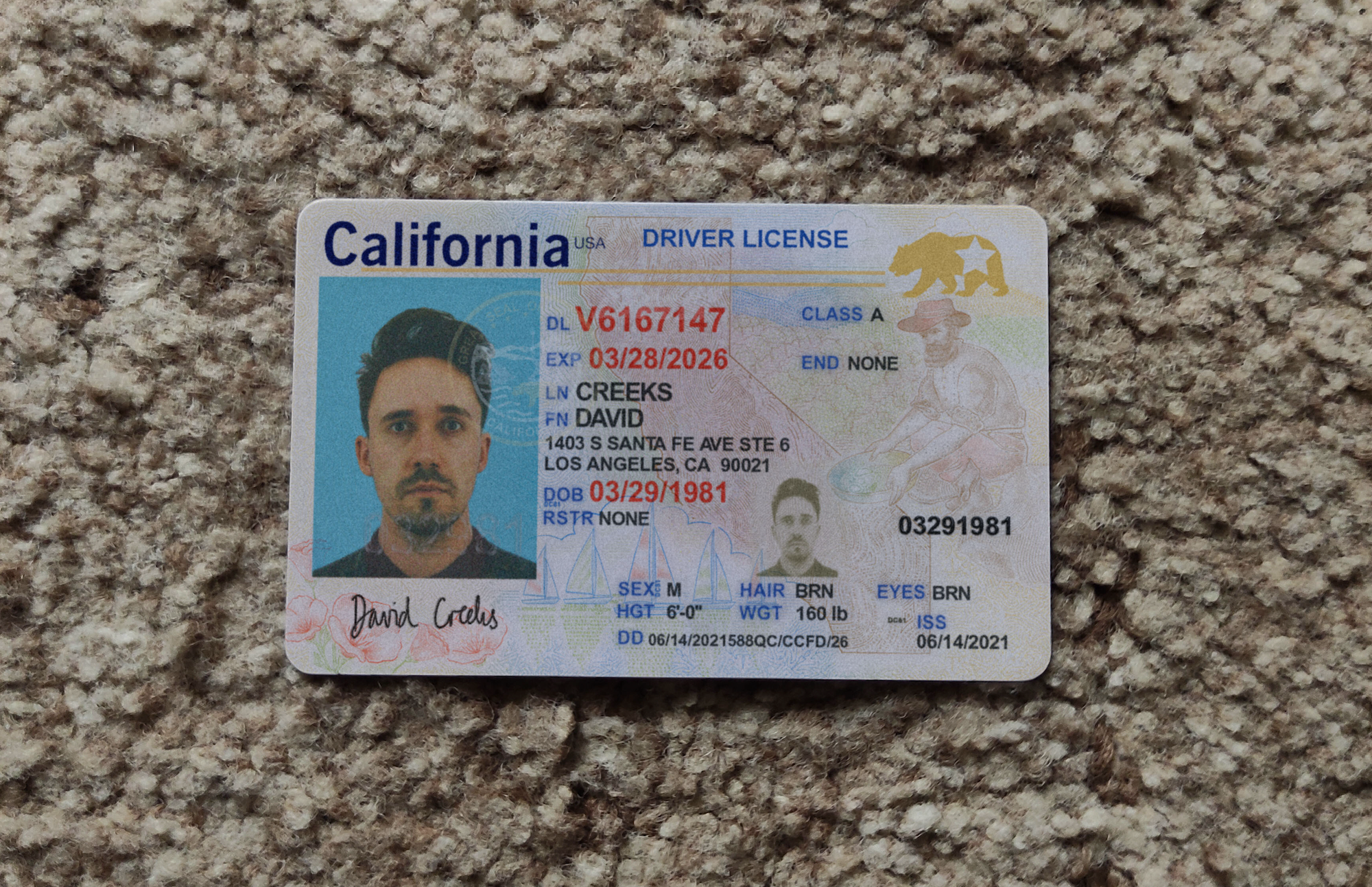
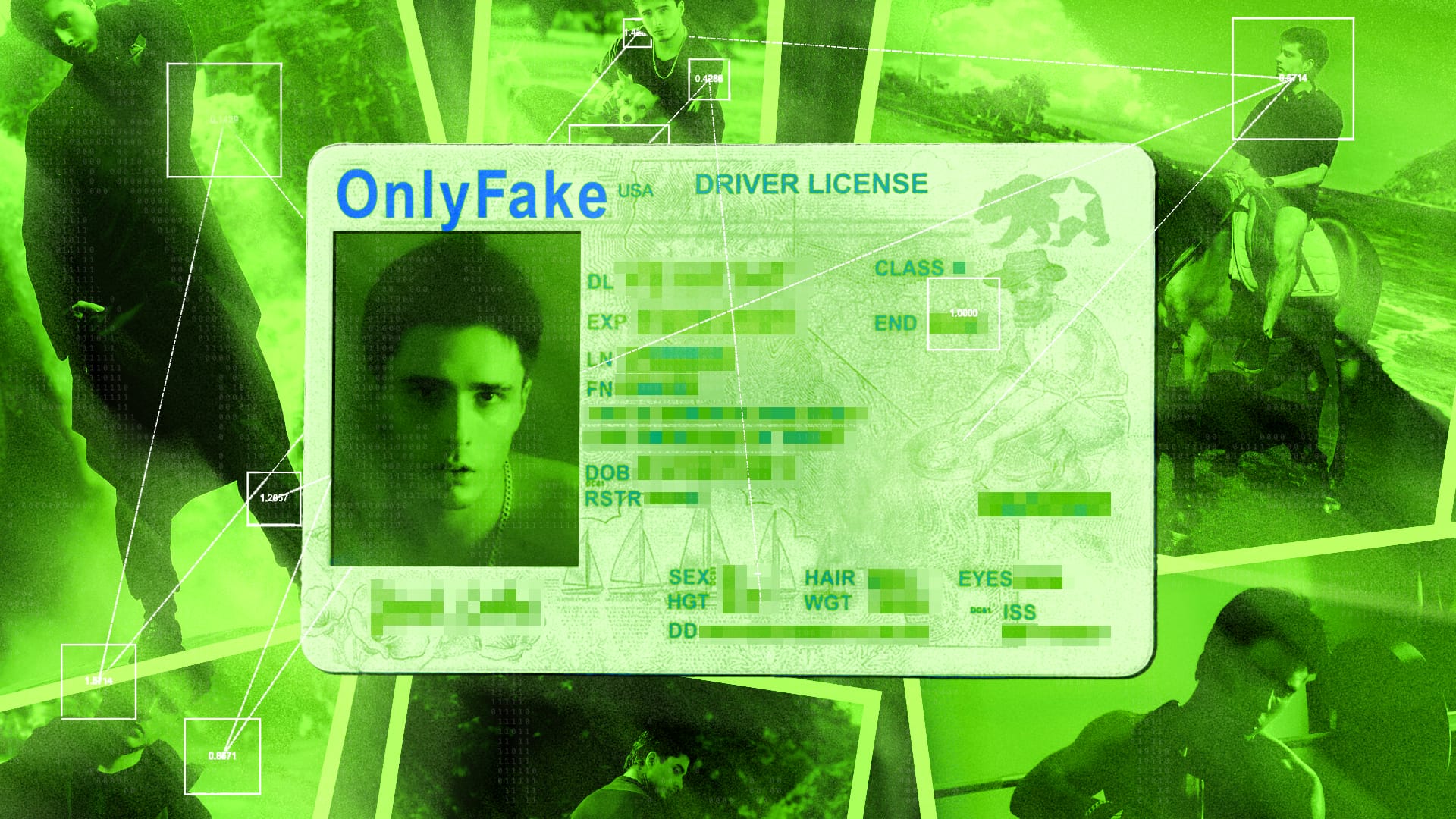
OnlyFake, the underground website Nazarenko made, landed like a bomb in the fraud world. It allowed anyone to generate not only convincing scans of drivers’ licenses or passports, but also realistic looking photos of those fake identity documents laying on a sofa, carpet, or desk, as if someone had taken the ID out of their wallet and snapped a picture of it on their phone. Needed a convincing looking photo of a California drivers’ license to open a cryptocurrency account in someone else’s name? Or a British passport to incorporate a company overseas? Or a Social Security card? No problem. The results were photos of identity documents that didn’t really exist, of people who may not be real, but yet could trick the sorts of people and companies that verify documents.
With OnlyFake, you didn’t have to be a master forger like Nazarenko to make fake documents. Now, anyone could churn out fake IDs at scale, sometimes even hundreds or thousands at a time. OnlyFake threatened the entire idea of know-your-customer, or KYC, where financial institutions take steps to know who exactly are using its services. When anyone can make a photo of a fake ID for just a few dollars in Bitcoin, is anyone really who they say they are?
Nazarenko didn’t know it then, hunched over his desk, but OnlyFake would soon become so influential that it would spawn copy cats, and the FBI would eventually arrest Nazarenko and shut down some of its competitors. The Department of Justice said in an announcement about Nazarenko’s guilty plea that OnlyFake made more than a million dollars selling fake IDs for just $15 a pop.
Now for the first time, Nazarenko, 28, free after a year in prison and living in Asia, is telling his story: how North Korean fake IT workers used his creation, how he ended up in ICE detention for months after serving his sentence in the U.S., and how OnlyFake unleashed a new age of AI-powered fraud. Nazarenko said he wanted to talk to me because I was the first journalist to reveal that OnlyFake existed. This article is based on interviews with Nazarenko and his lawyer; court records; and my own reporting in the online world of fraud that OnlyFake inhabited.
“OnlyFake was the first time I saw how quickly a small internet project could turn into something global. Unfortunately, it also taught me, in a very painful way, what can happen when the scale of something grows faster than your understanding of its consequences,” Nazarenko told me.
Growing up, Nazarenko’s parents questioned whether Nazarenko would ever find a job. His father worked for the Security Service of Ukraine. Raised in a suburb outside of Odesa, Nazarenko jumped between a few different gigs. He worked as a cook, a waiter, at a supermarket, and as a cameraman at a local Ukrainian TV station.
We continued our election coverage with a piece from Matthew Gault on the data center angle. There were actually a ton of proposals related to data centers on the ballot in more than 40 races across 13 states. Well, people voted against data centers in at least 38 of them. People are sick of this stuff and they’re showing up to vote about it.
A few years ago, Yuriy Nazarenko sat at a desk in his grandfather’s apartment in Ukraine and, on a diet of cigarettes, Lay’s chips, and beer, painstakingly made digital copies of fake identity documents. One of his four computer screens had the messaging app Telegram open. Another displayed a scan of a passport in Photoshop filling the entire monitor.
Pixel by pixel, with rap music blaring, Nazarenko edited each part of the passport. That included the MRZ codes, the block of text printed at the bottom of identity documents; the portraits to superimpose someone else’s face into the document; and the overall dimensions and quirks of each different type of passport. Nazarenko would sometimes sit for more than 12 hours at his computer, obsessively tinkering away, with a single, high-quality fake identity document taking up to a week of work.
When someone thinks of fake IDs, maybe they imagine a spotty underage teen buying a physical counterfeit driver’s license so they can score some beer. But in the global criminal underworld, digital copies or scans of IDs are like a skeleton key. A convincing scan of an ID or utility bill, loaded with a bogus name or someone else’s identity, can unlock the ability to make bank accounts, bypass checks on cryptocurrency exchanges to buy or sell more Bitcoin, or rent a safehouse, all while keeping the criminal’s real identity hidden. The digitally altered IDs need to fool both human reviewers and automated systems that scan them for inconsistencies. Making fake IDs requires exquisite attention to detail.
All of that manual labor doesn’t really scale, Nazarenko thought to himself as he meticulously edited passport after passport. He went on to make templates of fake identity documents that sped up the process, but it was still slow.
After many of these nights, he had an idea. He built a website to automate the process that autopopulated a fake ID with the personal data a customer wanted, rather than having him do it by hand. Then, when generative AI became mainstream a short while later, he incorporated that too.
“That gradually became OnlyFake,” Nazarenko told me.
💡
Do you know anything else about OnlyFake or AI fraud? I would love to hear from you. Using a non-work device, you can message me securely on Signal at joseph.404 or send me an email at joseph@404media.co.
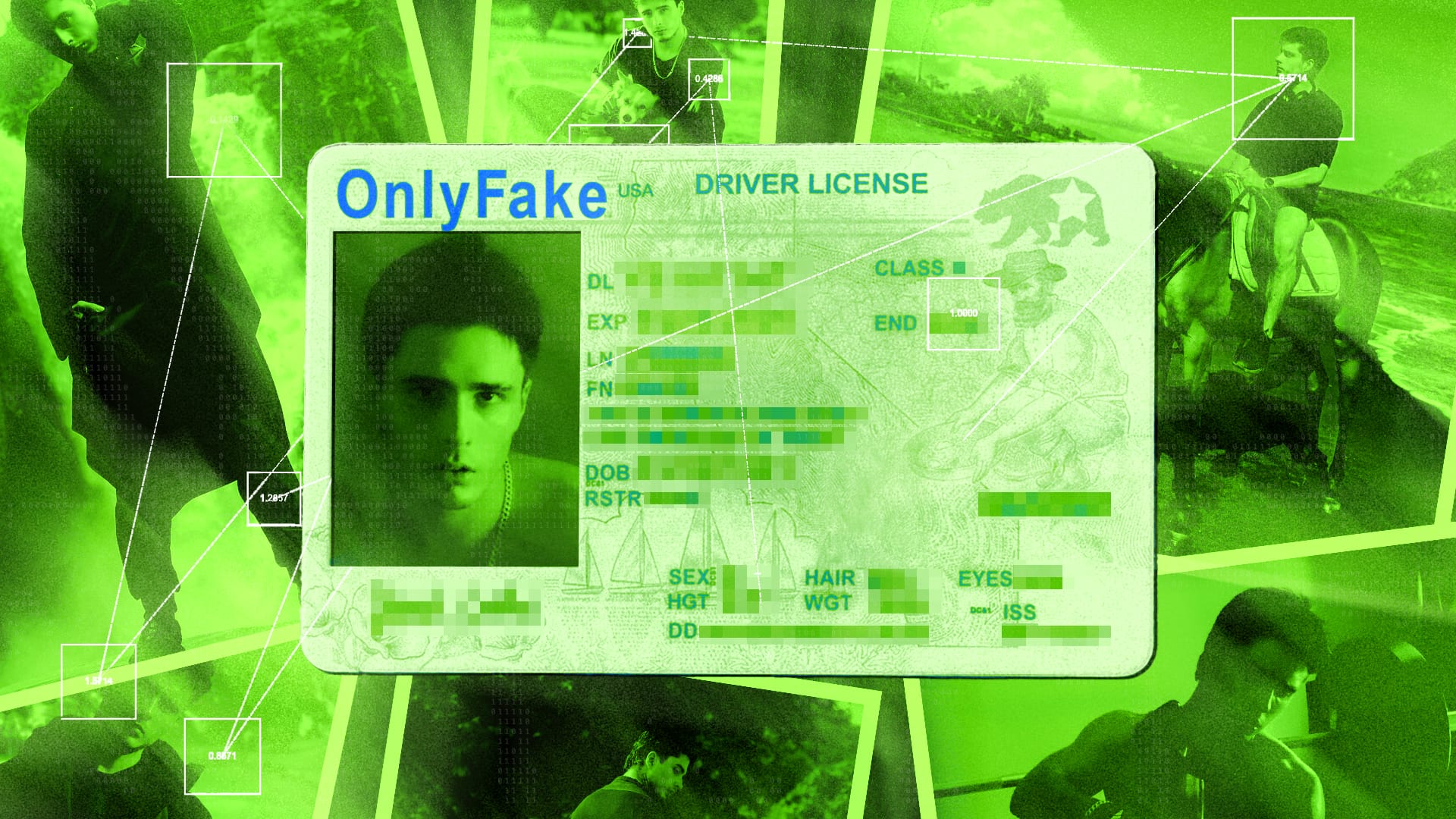
OnlyFake, the underground website Nazarenko made, landed like a bomb in the fraud world. It allowed anyone to generate not only convincing scans of driver’s licenses or passports, but also realistic looking photos of those fake identity documents laying on a sofa, carpet, or desk, as if someone had taken the ID out of their wallet and snapped a picture of it on their phone. Needed a convincing looking photo of a California driver’s license to open a cryptocurrency account in someone else’s name? Or a British passport to incorporate a company overseas? Or a Social Security card? No problem. The results were photos of identity documents that didn’t really exist, of people who may not be real, but yet could trick the sorts of people and companies that verify documents.
With OnlyFake, you didn’t have to be a master forger like Nazarenko to make fake documents. Now, anyone could churn out fake IDs at scale, sometimes even hundreds or thousands at a time. OnlyFake threatened the entire idea of know-your-customer, or KYC, where financial institutions take steps to know who exactly are using its services. When anyone can make a photo of a fake ID for just a few dollars in Bitcoin, is anyone really who they say they are?
Nazarenko didn’t know it then, hunched over his desk, but OnlyFake would soon become so influential that it would spawn copy cats, and the FBI would eventually hunt Nazarenko and shut down some of OnlyFake’s competitors. The Department of Justice said in an announcement about Nazarenko’s guilty plea that OnlyFake made more than a million dollars selling fake IDs which cost just $15 a pop.
Now for the first time, Nazarenko, 28, free after a year in prison and living in Asia, is telling his story: how North Korean fake IT workers used his creation, how he ended up in ICE detention after serving his sentence in the U.S., and how OnlyFake unleashed a new age of AI-powered fraud. Nazarenko said he wanted to talk to me because I was the first journalist to reveal that OnlyFake existed. This article is based on interviews with Nazarenko and his lawyer, court records, and my own reporting in the online world of fraud that OnlyFake inhabited.
“OnlyFake was the first time I saw how quickly a small internet project could turn into something global. Unfortunately, it also taught me, in a very painful way, what can happen when the scale of something grows faster than your understanding of its consequences,” Nazarenko told me.
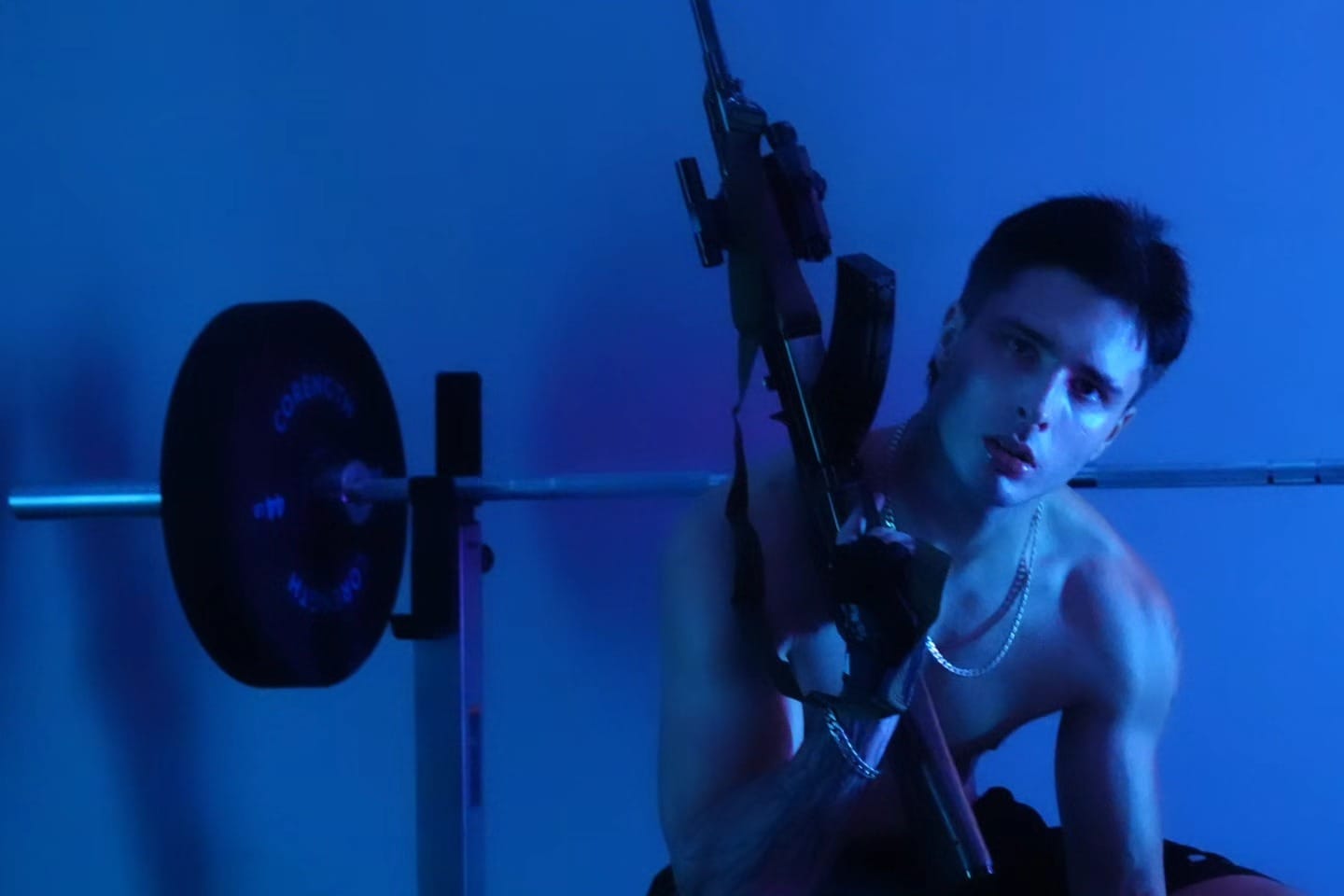
Images Nazarenko provided.
Growing up, Nazarenko’s parents questioned whether Nazarenko would ever find a job. His father worked for the Security Service of Ukraine. Raised in a suburb outside of Odesa, Nazarenko jumped between a few different gigs. He worked as a cook, a waiter, at a supermarket, and as a cameraman at a local Ukrainian TV station.

 Connexion