SAP, one of the world’s biggest software companies, suspended most travel and hiring last month because of AI’s soaring cost, with exceptions only being made for AI-related travel or hires, according to an internal SAP email obtained by 404 Media.
Bloomberg reported on the email and the freezes in July, but a current SAP employee said the bans are still in effect. The employee said the company had a global employee meeting recently where this was brought up again. They added SAP is currently rolling out a newly created AI tool to the entire company “which I can only imagine massively increases the costs.” 404 Media granted the source anonymity to protect them from retaliation.
The email highlights how companies both big and small are coming to grips with the reality of AI’s cost. Rather than being a massive cost saver, in some cases companies are throttling employees’ AI use as it spirals out of control, and scrambling to find other ways to keep costs down.
💡
Do you work at a company dealing with AI's costs? I would love to hear from you. Using a non-work device, you can message me securely on Signal at joseph.404 or send me an email at joseph@404media.co.
Subscribe to 404 Media to get The Abstract, our newsletter about the most exciting and mind-boggling science news and studies of the week.
Scientists have designed a virtual model of an alien cell and dropped it onto a hypothetical exoplanet to see how it behaves, an approach that could help astronomers recognize signs of extraterrestrial life on distant worlds, according to a recent study published in Monthly Notices of the Royal Astronomical Society.
The results revealed new insights about how microbes that produce methane gas, known as methanogens, might evolve on different exoplanets, such as Earth-sized ocean worlds or a class of hypothetical giant “Hycean planets” that host global oceans and hydrogen-rich atmospheres.
Predicting the impacts that methanogens might have on their environments could help scientists recognize potential signs of life, known as biosignatures, in the skies of worlds outside of our solar system.
Whereas many past studies have speculated about what forms of life might evolve on a particular type of exoplanet, this approach flips the idea on its head by starting with a general cell model and then considering how it might evolve in different biospheres.
“This is a kind of plausible life that's very unconstrained by Earth-based conditions,” said Arwen Nicholson, an astrophysicist at Exeter University who led the study, in a call with 404 Media. “We can put it into different environments, and then see: What other effects does it have?”
The idea, she explained, is to simplify one aspect of the hugely complex search for alien life .
“This is a generalized idea of what biology would roughly do that we can then put in different places to try and start getting biosignature predictions ideally for different planets, or to understand what we're seeing from the telescopes,” said Nicholson.
It’s possible that the first lifeforms to emerge on Earth were methanogens that thrived some four billion years ago when our planet was far more depleted in oxygen. These microbes still exist in a wide variety of ecological niches today. Unlike photosynthetic life, which requires sunlight for energy, methanogens can run on chemical energy in a process known as chemosynthesis. As a result, methanogens are adaptable and provide a useful model for considering the emergence of life in a diverse array of habitats, including dark regions that receive no direct starlight.
“We do know that the Earth's early biosphere did have this big component of it that was producing methane and consuming methane,” Nicholson said. “That gives us a starting point to look at other planets. It's a reaction we know works. It works on Earth, and it's something that is thought to work in environments that are very different to Earth.”
To that end, the team developed a baseline model of a spherical methanogen microbial cell and tinkered with different cell sizes, life cycles, and environmental effects that might evolve in various alien biospheres.
The results revealed a host of insights, including that a planet’s levels of hydrogen and methane are sensitive to the microbe’s particular features. In this way, “life will act to ‘erase’ abiotic aspects of their environment” by transforming the composition of gasses in the atmosphere in ways that could be detectable to astronomers, according to the study.
The team also speculated that resource competition on alien worlds would likely favor methanogens that are smaller and longer-lived, which could outcompete similar species that are shorter-lived, larger, or require more energy. But while these clues may help scientists spot likely biosignatures in the future, it will be a challenge to actually predict what sort of lifeform is producing those signals.
“You could have different life forms in your ocean and they would look the same in terms of a biosignature,” Nicholson said. “You could have a single film of some algae covering the whole ocean, or a little amoeba, or maybe something else. I thought that was quite interesting. It almost frees us up from making too many assumptions of what alien life would look like, because how are we going to know?”
“We can use spherical microbes as a representation, but even if we found a biosignature, even if it all made sense, and we found life, we still wouldn't actually know what they look like,” she added.
Nicholson and her colleagues plan to continue this line of research by modeling simplified cells of photosynthetic life and predicting their impact on different exoplanet environments. Ultimately, these studies will help scientists distinguish between genuine biosignatures and complex atmospheric chemistry that arises from geological activity.
It’s also worth preparing for the rather excruciating possibility that we find clear biosignatures on some farflung exoplanet and are never able to learn much more about them. In science fiction, we are used to aliens showing up on Earth or sending us obviously artificial messages. But it’s more likely that we would discover gassy signs of life in a distant world’s skies and then have to accept that we might never learn its specific nature.
“We don't live in sci-fi,” said Nicholson. “Sci-fi is super cool. I love it too. But the reality is, we're looking at a habitable planet like our own. If we find anything, they will be life forms embedded in their world, just like we're embedded in our world.”
“It's a super exciting time to be in astrobiology again with all of this data, and it's super neat that people are so interested in it as well,” she concluded.
🌘
Subscribe to 404 Media to get The Abstract, our newsletter about the most exciting and mind-boggling science news and studies of the week.
A handful of cities across the U.S. have ditched Flock’s automatic license plate reader (ALPR) cameras and immediately replaced them with equivalent systems from law enforcement contracting giant Axon, according to local media reports and government documents from around the country. Axon, for example, advertises AI-powered cameras that attach to an existing streetlamp and are designed to completely blend in with their surroundings, and also collects license plate data with cameras installed inside police officers’ patrol vehicles.
💡
Do you work at Axon? Do you know anything else about its technology or expansion? I would love to hear from you. Using a non-work device, you can message me securely on Signal at joseph.404 or send me an email at joseph@404media.co.
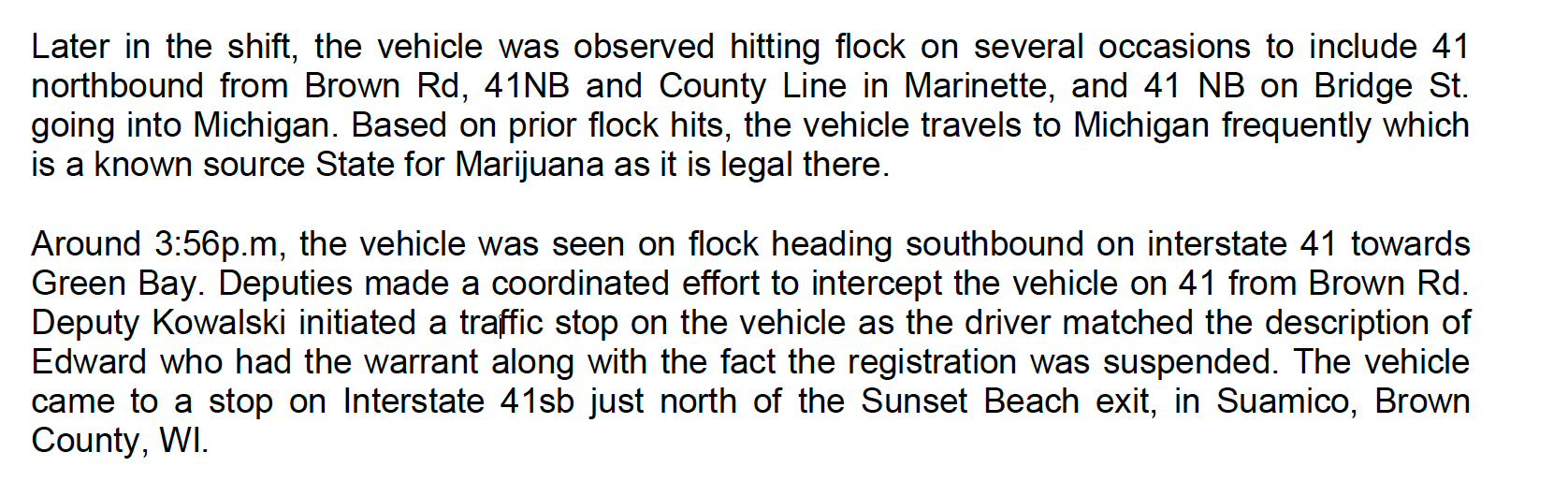
Police in Wisconsin used Flock to determine that a man “travels to Michigan frequently,” where marijuana is legal, then back to Wisconsin, where it is illegal. They then used his travel across state lines as tracked by Flock as part of the probable cause justification to search his car for weed; he was eventually arrested on marijuana possession charges, according to court records reviewed by 404 Media.
The searches came to light in a Wisconsin criminal complaint against Edward Abrams-Phillips, who was wanted for bail jumping on domestic violence charges. But the criminal complaint makes clear that beyond the bail jumping and domestic violence charges, police specifically studied Abrams-Phillips’ interstate travel to create the pretext for searching his car for marijuana. The bail jumping charge was dismissed; Abrams-Phillips was found guilty only of weed possession in the case, according to the court records.
An excerpt from the "Probable Cause" section of the court records.
The complaint explains that Abrams-Phillips was tracked via Flock’s network over the course of the day to determine that he drove from Wisconsin to Michigan, a “known source state for marijuana as it is legal there,” the complaint states, adding that previous Flock hits indicated that he “travels to Michigan frequently.” Police note that, using Flock, they were able to track Abrams-Phillips driving from Wisconsin to Michigan, then back to Wisconsin over the course of several hours, where he was pulled over and arrested. The Flock searches and arrests happened in April 2025.
“The vehicle was observed hitting flock on several occasions to include 41 northbound from Brown Rd, 41NB and County Line in Marinette [Wisconsin], and 41 NB on Bridge St. going into Michigan. Based on prior flock hits, the vehicle travels to Michigan frequently which is a known source State for Marijuana as it is legal there,” the charging document notes. “Around 3:56 p.m., the vehicle was seen on Flock heading southbound on interstate 41 towards Green Bay [Wisconsin]. Deputies made a coordinated effort to intercept the vehicle on 41 from Brown Rd. Deputy Kowalski initiated a traffic stop on the vehicle as the driver matched the description of Edward.”
We start this week with Joseph’s article about Samuel Tunick, the man charged with allegedly wiping his phone before DHS officials could search it. It’s a wild case with a lot to unpack. After the break, Jason tells us all about a TikTok Shop scheme powered by AI. In the subscribers-only section, we talk about possibly the dumbest AI tool ever made.
Listen to the weekly podcast on Apple Podcasts,Spotify, or YouTube. Become a paid subscriber for access to this episode's bonus content and to power our journalism. If you become a paid subscriber, check your inbox for an email from our podcast host Transistor for a link to the subscribers-only version! You can also add that subscribers feed to your podcast app of choice and never miss an episode that way. The email should also contain the subscribers-only unlisted YouTube link for the extended video version too. It will also be in the show notes in your podcast player.
A series of issues in Apple’s web browser engine — the tech underlying all browsers on iOS — means that Apple’s iCloud Private Relay tool, which is supposed to hide a user’s IP address, in many cases doesn’t actually work. Instead, the issues mean a malicious attacker can set up a website to learn a Private Relay user’s real IP address, or that many websites have also already collected this information incidentally. The issues also impact OnionBrowser, an iOS app for browsing the web through the Tor anonymity network, the researchers who discovered the issues say.
The Private Relay leak is the second issue to recently impact Apple’s paid-for privacy products. Last month 404 Media reported a bug in Apple’s Hide My Email feature was actually revealing peoples’ real email addresses. Apple knew about that issue for more than a year before fixing it.
On Wednesday morning, Ted Cruz’s Senate Commerce Committee will convene on five bills aimed at age verification and “child safety.” The bills each have their own issues when it comes to privacy, data collection, parental rights, and free speech. But one bill, the partisan Republican SCREEN Act, is a Christian nationalist nightmare.
Utah Senator Mike Lee introduced the Shielding Children's Retinas from Egregious Exposure on the Net (SCREEN) Act in February 2025, alongside exclusively Republican cosponsors and supporters Senators John Curtis, Jim Banks, and Representative Mary Miller.
The SCREEN Act would require every website that includes even one piece of what the legislation describes as “harmful to minors” to verify visitors’ ages. It defines “harmful to minors” as content that “depicts, describes, or represents, in a patently offensive way with respect to what is suitable for minors, an actual or simulated sexual act or sexual contact, actual or simulated normal or perverted sexual acts, or lewd exhibition of the genitals;” is “obscene” or “child pornography;” or “appeals to the prurient interest in nudity, sex, or excretion.”
Unlike the many laws now in place around the U.S. that apply to sites made up of at least one third adult content, like porn sites and some social media platforms, SCREEN would place the burden and risk of verifying users’ ages to every website on the internet that falls under the law, which would be most sites with user-generated content and also mainstream entertainment platforms like Netflix. It also attacks virtual private networks (VPNs) by requiring sites to verify based on IP addresses; many people in states that have age verification laws in place use VPNs to get around submitting sensitive personal data like ID and biometrics to a smattering of third-party websites in use today. Critics say the SCREEN Act would be a privacy and free speech disaster.
And the agenda of its sponsors is clear: “Internet pornography has infected our culture and corroded the vulnerable minds of America’s kids, with the average age of initial exposure being 12 years old. That’s appalling,” Banks said in Lee’s press release.
A number of religious, conservative, Christian nationalist, and anti-pornography groups are in support of the bill, according to the press release from Lee’s office. They include the National Center on Sexual Exploitation (which recently represented a Kansas mother who sued multiple porn sites because her son found her old laptop and used it to watch Chaturbate), the National Decency Coalition, the Ethics and Public Policy Center (which is “working to apply the riches of the Jewish and Christian traditions to contemporary questions of law, culture, and politics,” according to its website), the Family Policy Alliance (whose stated mission is to “advance biblical values through civic engagement”), the Family Research Council (whose “mission is to serve in the kingdom of God by championing faith, family, and freedom in public policy and the culture from a biblical worldview”), and many more.
Heritage Action, a conservative lobbying group and one of the organizations Lee lists in support of the SCREEN Act, is a sister organization to the Heritage Foundation, which authored Project 2025. Heritage Action “works with lawmakers to implement Heritage Foundation solutions,” according to the Heritage Foundation website. This is important because of how Project 2025, the playbook for right-wing and extremist conservative leadership, has influenced policies and lawmaking in America in the last few years of the Trump Administration. That stretches from attacks on programs that promote diversity, equity and inclusion, to attacks on trans and queer people, to turning the FBI into a political entity.
One of Project 2025’s stated goals is to redefine and eradicate pornography: “Pornography, manifested today in the omnipresent propagation of transgender ideology and sexualization of children, for instance, is not a political Gordian knot inextricably binding up disparate claims about free speech, property rights, sexual liberation, and child welfare. It has no claim to First Amendment protection,” the playbook says, calling for imprisonment of pornographers but also educators and librarians. “And telecommunications and technology firms that facilitate its spread should be shuttered.”
The Senate Commerce Committee will also debate and mark up the text of the Youth AI Privacy Act which would require chatbots to disclose they’re not human among other features like limiting data retention; the CHATBOT Act which would require AI companies to build “family account” systems where parents can monitor kids’ activity; the Children’s Artificial Intelligence Toy Safety Act which would create a federal study into toys that include AI components; and the Kids Online Safety Act (KOSA).
KOSA would impose a legal “duty of care” on social media platforms to prevent and mitigate promotion of suicide, eating disorders, substance abuse, sexual exploitation, and advertisements for products like tobacco. KOSA has been introduced, and failed, multiple times since its first introduction in 2022; it has bipartisan lawmaker support but is extremely unpopular across all sides of the political spectrum among groups that care about freedom of speech because of its potential to increase censorship.
“Whatever disclaimers and exceptions the bill includes, the practical effect is unchanged,” the Electronic Freedom Foundation recently wrote about KOSA. “When platforms face liability for content that someone later claims contributed to harms like anxiety, eating disorders, or substance use, the safest response is to remove lawful speech or shut down forums discussing those topics altogether.”
Unlike KOSA and many of the other age verification laws that have spread across the country, the SCREEN Act does not have bipartisan support. It’s the latest in Lee’s repeated attempts to criminalize content he and his co-sponsors personally consider immoral. Last year, Lee introduced the now-stalled Interstate Obscenity Definition Act (IODA) for the third time. IODA would change the 1973 “Miller Test” for determining what qualifies as obscene, and seeks to make all pornography illegal at the federal level. “Obscenity isn’t protected by the First Amendment, but hazy and unenforceable legal definitions have allowed extreme pornography to saturate American society and reach countless children,” Lee said in a press release. “Our bill updates the legal definition of obscenity for the internet age so this content can be taken down and its peddlers prosecuted.”
Microsoft has introduced new limits to how much its engineers can spend on AI tools at work and told employees that maximizing AI use internally is not the company’s goal.
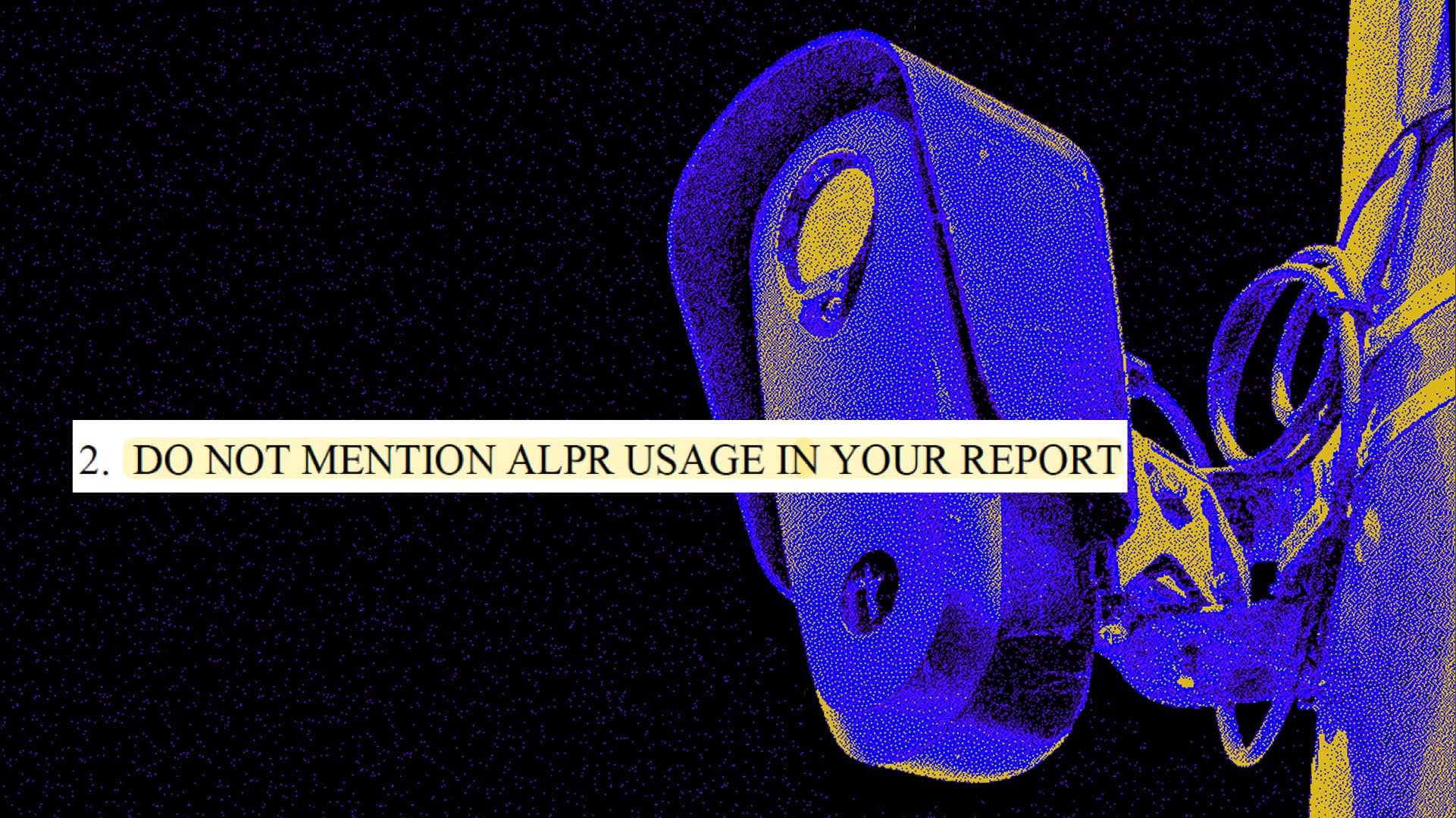
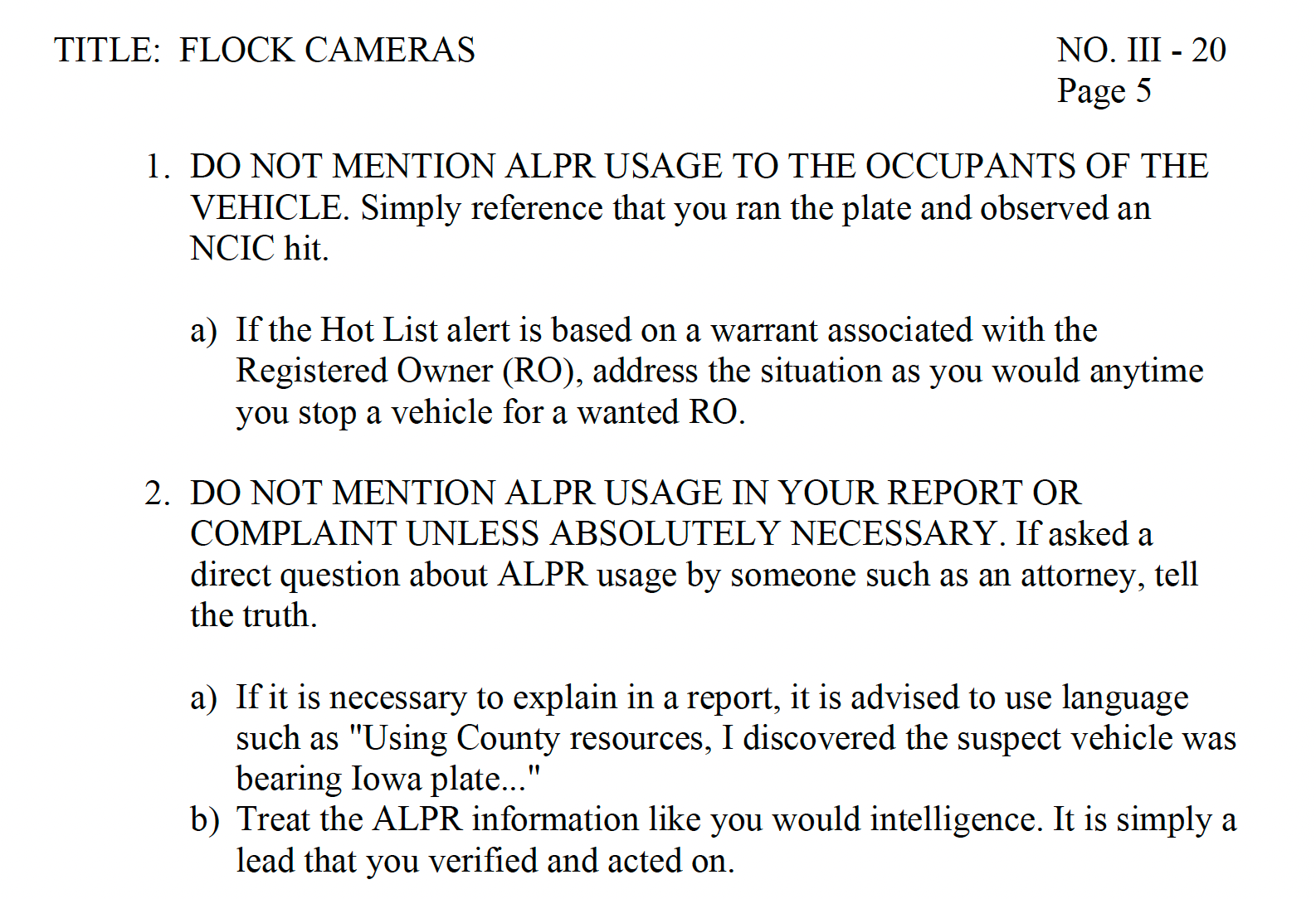
When cops use Flock to arrest someone in Wapello County, Iowa, they don’t want them to know. A usage policy for the automated license plate reader cameras in the county tells police, in no uncertain terms, to keep them a secret: “DO NOT MENTION ALPR USAGE TO THE OCCUPANTS OF THE VEHICLE,” the policy document reads. “DO NOT MENTION ALPR USAGE IN YOUR REPORT OR COMPLAINT UNLESS ABSOLUTELY NECESSARY.”
The police guidance document is unusual in how clearly it tells police not to mention their Flock use, but it also highlights several important things in the Flock debate. While Flock likes to say that it is a transparent surveillance company and that it cares about “accountability” and “governance,” some of its customers believe its use should be kept secret. Flock is now operating in thousands of cities and towns, and when, how, and why police use the system is wildly inconsistent. Even though Flock does have various auditing and transparency tools, police have their own opinions about what Flock can and should be used for and what the policies for it should be.
It is not just local police in small communities who are creating policies designed to obfuscate Flock usage. Earlier this year, we reported that police in multiple states were being told to be “as vague as permissible” about why they were using Flock because their searches could be obtained using public records requests, and that warning was being shared by the FBI and Department of Justice. Residents of many towns using Flock also say that their cities entered into contracts with Flock with little public oversight, essentially quietly opting them into a nationwide surveillance network without robust public debate.
Wapello County’s “standard operating procedures” document for Flock cameras was created in November of 2025 and was obtained by a 404 Media reader using a public records request and was shared with us. Coincidentally, Wapello County’s largest city is Ottumwa, Iowa, where 404 Media ran a Super Bowl commercial earlier this year. The county has four Flock cameras via a contract it signed with the company in late 2024. The policy further instructs police to be vague in any arrest report, suggesting that they simply call the Flock system “county resources.”
“DO NOT MENTION ALPR USAGE IN YOUR REPORT OR COMPLAINT UNLESS ABSOLUTELY NECESSARY. If asked a direct question about ALPR usage by someone such as an attorney, tell the truth,” it says. “If it is necessary to explain in a report, it is advised to use language such as ‘Using county resources, I discovered the suspect vehicle was bearing an Iowa plate.’ Treat the ALPR information like you would intelligence. It is simply a lead that you verified and acted on.”
The guidance to keep Flock use secret is reminiscent—but less extreme—than guidance on some other secretive police technologies. For years, police tried to hide the existence of cell site simulators (popularly known as Stingrays), going as far as to drop criminal cases where it was likely that a judge would expose information about them. Stingrays are essentially fake cell phone towers that can be used to identify the phones of people in a specific area.
In the public records request, Sheriff Don Phillips said “there is no need” to tell people about the use of Flock.
“Our policy requires deputies to check the license plate to make sure the correct plate is accurate and the information as to an arrest warrant, stolen vehicle, stolen plate or missing person is correct,” he said. “There is no need to tell them about our investigative methods or sources, such as the camera system, because the information is verified by the deputy running the license plate. It is common practice for law enforcement to refrain from disclosing investigative methods and sources to prevent criminals from learning how to circumvent them.”
Phillips did not respond to a request for comment.
This article was primarily reported using public records requests. We are making it available to all readers as a public service. FOIA reporting can be expensive, please consider subscribing to 404 Media to support this work. Or send us a one time donation via our tip jar here.
The Securities and Exchange Commission (SEC) bought access to what it described as more than a billion airline ticketing records, related to not just U.S. domestic flights or those landing in the country, but also flights between foreign countries, according to SEC documents obtained by 404 Media. A group of the world’s airlines, including Delta, United, and American, previously sold the data under the company name ARC; that is where the SEC bought the data from.
ARC, or the Airlines Reporting Corporation, stopped selling airline ticketing records after repeated coverage from 404 Media and pressure from lawmakers last year. But the newly obtained records provide additional insight into the breadth of data that airlines were selling without their customers' knowledge, and that law enforcement agencies were tapping into, likely without a warrant.
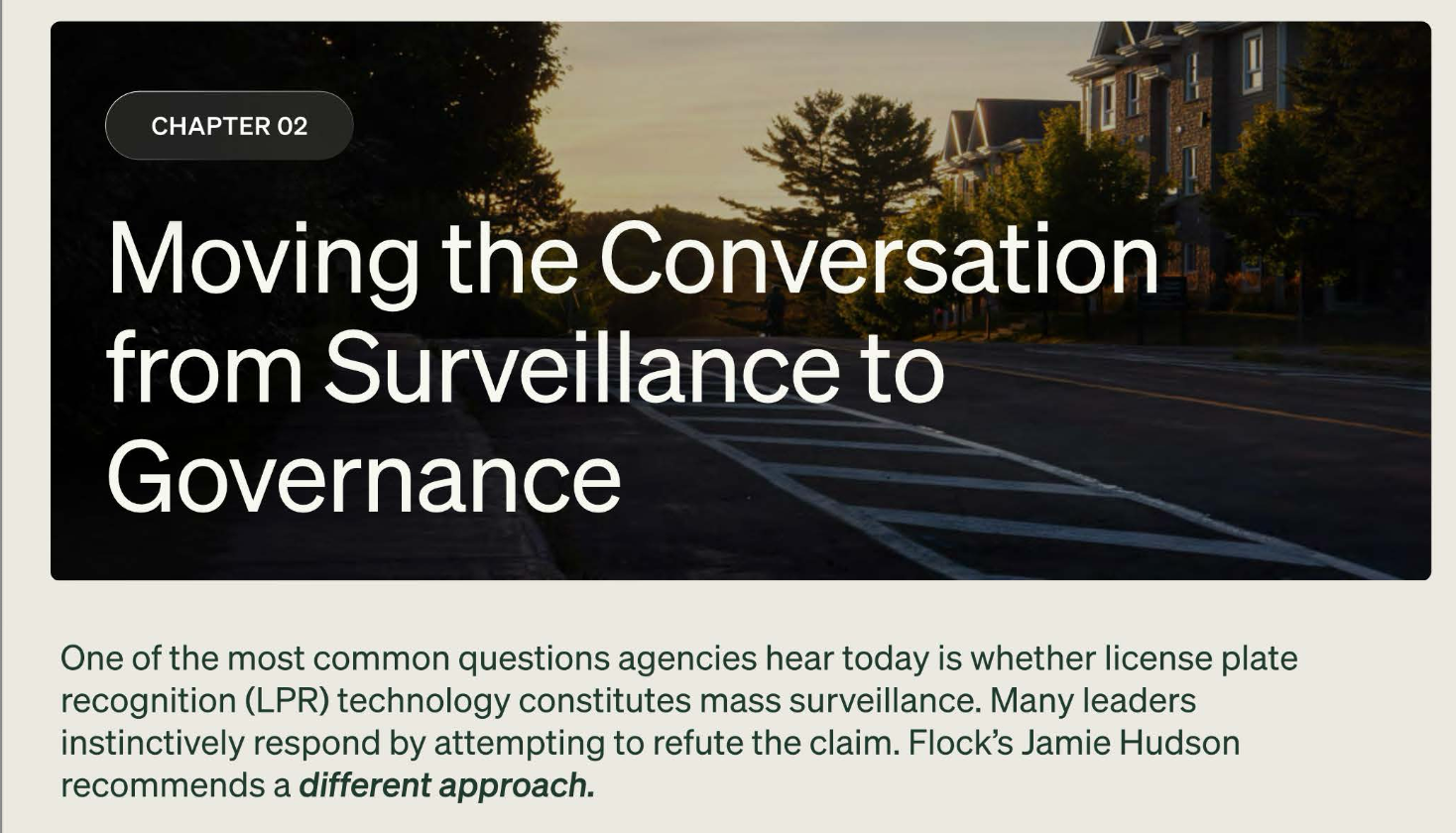
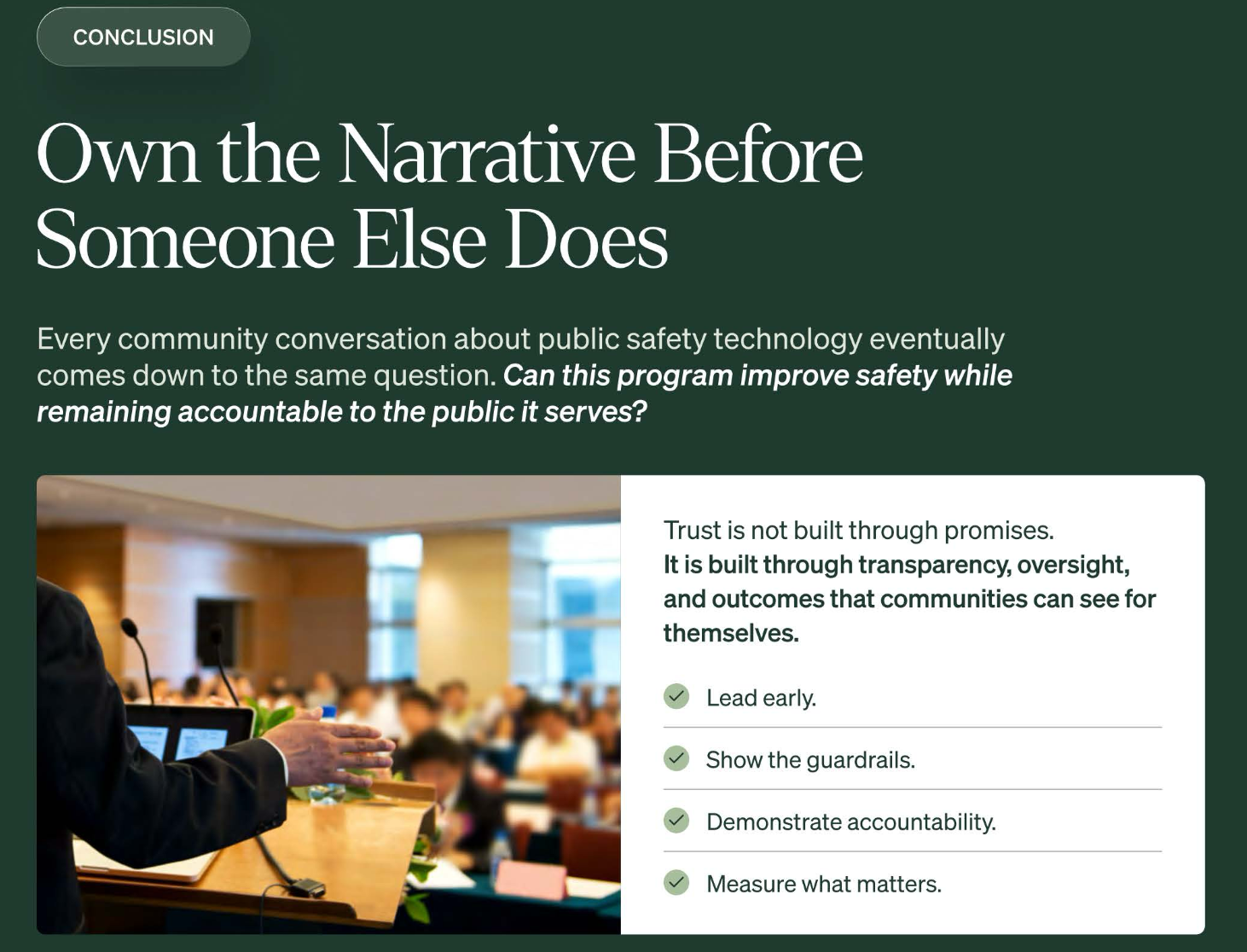
404 Media has obtained a coaching guide that Flock surveillance gives to police about “how to speak to city councils about public safety technology.” The handbook highlights how Flock and police team up to convince cities to buy and keep its automated license plate reader technology, even when there is widespread public opposition to it, and encourages police to “own the narrative before someone else does” by championing the technology before citizens can oppose it during public comment periods.
The PDF guide notes that the general public and cities now “increasingly expect transparency, oversight, and accountability alongside public safety outcomes,” and tells police to not argue with people who believe that Flock’s license plate readers are “mass surveillance.”
“One of the most common questions agencies hear today is whether license plate recognition (LPR) technology constitutes mass surveillance. Many leaders instinctively respond by attempting to refute the claim. Flock's Jamie Hudson recommends a different approach,” the guide reads.
“Don’t avoid the concept of mass surveillance because you’re not going to convince opponents that it’s not,” the company recommends. Flock tells law enforcement agencies they need to try to convince city council and city managers that the technology is worthwhile before meetings with the public occur; that they need to have a “carefully scripted presentation” ready to go; and that police need to say they want Flock because they want to keep the community safe: “You care about your community. That’s why you’re bringing this in.”
Flock began offering this guide as part of a broader attempt to coach police on how to push back against criticism of its policies and security practices, many of which 404 Media has investigated and shed light on. These include the fact that Flock data was regularly making its way to Immigrations and Customs Enforcement (ICE), often in violation of sanctuary city and state laws; that Flock was used to search 83,000 cameras nationwide for a woman who had an abortion in Texas; and that Flock has been used by police to stalk people and surveil protesters. These investigations and broader concern over the surveillance state have led many cities to hold city council meetings to reconsider their Flock contracts, and this Flock-produced guide is an attempt to help police shape the narrative in a way that will either convince cities to buy Flock or to keep their contracts.
“The recent headlines about our company are largely a result of this environment,” the company told cities.
“Opponents have a very carefully scripted narrative. They come prepared. You should also have a carefully scripted presentation that addresses those concerns ahead of time,” the guide says. “The agencies that navigate these conversations successfully rarely wait until a council meeting to educate stakeholders. They brief city managers early. They meet with council members before votes occur. They share policies proactively and answer questions before public comment periods become the first introduction to the program.”
The guide also tells police that they can convince city councils that Flock is worth the monetary cost by conveniently not focusing on how much the cameras cost, but by “reframing the financial discussion itself” to focus on “the cost of unresolved crime.” Flock also writes that much of the opposition to its technology is happening because people “do not understand how it works or how it is governed.” This idea is one that has been regularly repeated by Langley over the last several months.
Surveillance companies regularly try to get police to act as quasi salespeople and spokespeople for their companies, pitting a private company and taxpayer-funded law enforcement on one side and citizens on the other. “For years, surveillance vendors like Flock Safety have shaped policy debates cities are supposed to run independently — staging council ‘prep calls’ and exploiting a basic asymmetry: the vendor controls the facts, and city staff are rarely positioned to challenge them,” Sarah T. Hamid, director of strategic campaigns at the Electronic Frontier Foundation told 404 Media after reviewing the guide. “The financial interest is obvious. Flock isn’t just selling surveillance, it’s scripting the public case for buying it. Because Flock treats public trust as a messaging problem rather than a governance outcome, that script keeps officials focused on ‘accountability’ in the abstract instead of the concrete harms and documented abuses its network has already enabled.”
404 Media has watched numerous city council meetings around the country where police talk about how Flock is a critical law enforcement system for them; in many cases, a police chief will speak about Flock and then introduce a Flock employee to give a presentation about the surveillance system. On Monday, 404 Media published an interview with a former Flock government affairs manager who regularly pitched the technology to cities at public meetings. An activist who has been pushing back against Flock in their community and who shared the guide document with 404 Media said that they have regularly seen the strategies suggested by Flock deployed in city council meetings they have attended and watched. 404 Media agreed to keep the activist anonymous to protect them from retaliation.
“I think this document shows a coordinated effort from Flock Safety to compel law enforcement agencies to convince our elected leaders to represent their interests as a company rather than the interests of concerned citizens,” they said. “I have watched many meetings locally in my city and my state and across the country, and you can see the techniques used in this ebook in the presentations given by law enforcement. Pivoting conversations away from concerns about mass surveillance and directing them towards procedure and governance is a vehicle that's used to downplay the concerns of privacy-minded citizens. We have every right to expect our elected leaders to listen to us, and it's very common to see city councils vote with a supermajority in favor of approving Flock contracts despite standing-room only attendance at city council meetings with little to no public support for this product.”
The guide specifically highlights several supposed success stories in which communities had very real concerns about Flock but ultimately decided not to get rid of the technology. For example, it highlights how Flock was able to get a vote in favor of its technology in Oakland, California, despite it being “one of the most scrutinized public safety technology debates in the state,” with “more than 140 public comments” and opposition from the city’s Privacy Advisory Commission: “The conversation shifted when officials stopped asking the public to trust the technology and started showing how the technology could be audited, reviewed, and held accountable.”
It also tells the story of Richmond, California, which allowed its Flock contract to temporarily lapse after the city’s cameras were included in the company’s national lookup tool. City officials there worried that their cameras’ data would be accessed by ICE, in violation of California and local law. “After concerns emerged around data sharing and sanctuary city policies, the city's program was paused and subjected to intense public scrutiny,” the Flock guide says. “Rather than relying on generalized claims about effectiveness, department leadership presented two and a half years of local results, including 274 arrests and 259 vehicle recoveries connected to the program. The council ultimately voted 4-3 to reinstate the system.”
Flock did not immediately respond to a request for comment.
This is an adaption of a podcast interview 404 Media recorded with Jonathan Paz, a former Flock employee who is now running running for Congress in Massachusetts’ 5th District. Check out the whole thing here on YouTube.
Jonathan Paz was initially nervous when he started working at the surveillance company Flock. It was his first tech job. But he was interested in the company’s mission. Flock’s cameras, which constantly scan the license plate of every vehicle driving past, were for finding missing people. Staff at the company were able to solve real issues.
In his job as a government affairs manager a couple of years ago, Paz represented Flock in public hearings, with the goal of getting a city to purchase Flock cameras. These sorts of hearings are happening on a near constant basis all across the country, as cities and towns participate in a national conversation about whether they want Flock cameras in their community or not.
Welcome to a special edition of the Abstract! I’m out on vacation for the next two weeks, which means it’s time to break out all of the weird and wild studies that have come out so far in 2026, but that slipped through the cracks for one reason or another. I’ve been saving these gems up for a special occasion and hope you enjoy the roundups this week and next!
So without further delay, here are the studies this year that put aliens on lockdown, bedazzled their axes, undulated spermily, and captured shooting stars.
First, scientists come up with a game plan to protect Earth from invasive extraterrestrial species. Then: a trove of rare decorative tools, GIGANTIC SPERM, and a long-sought solution to a Venusian mystery.
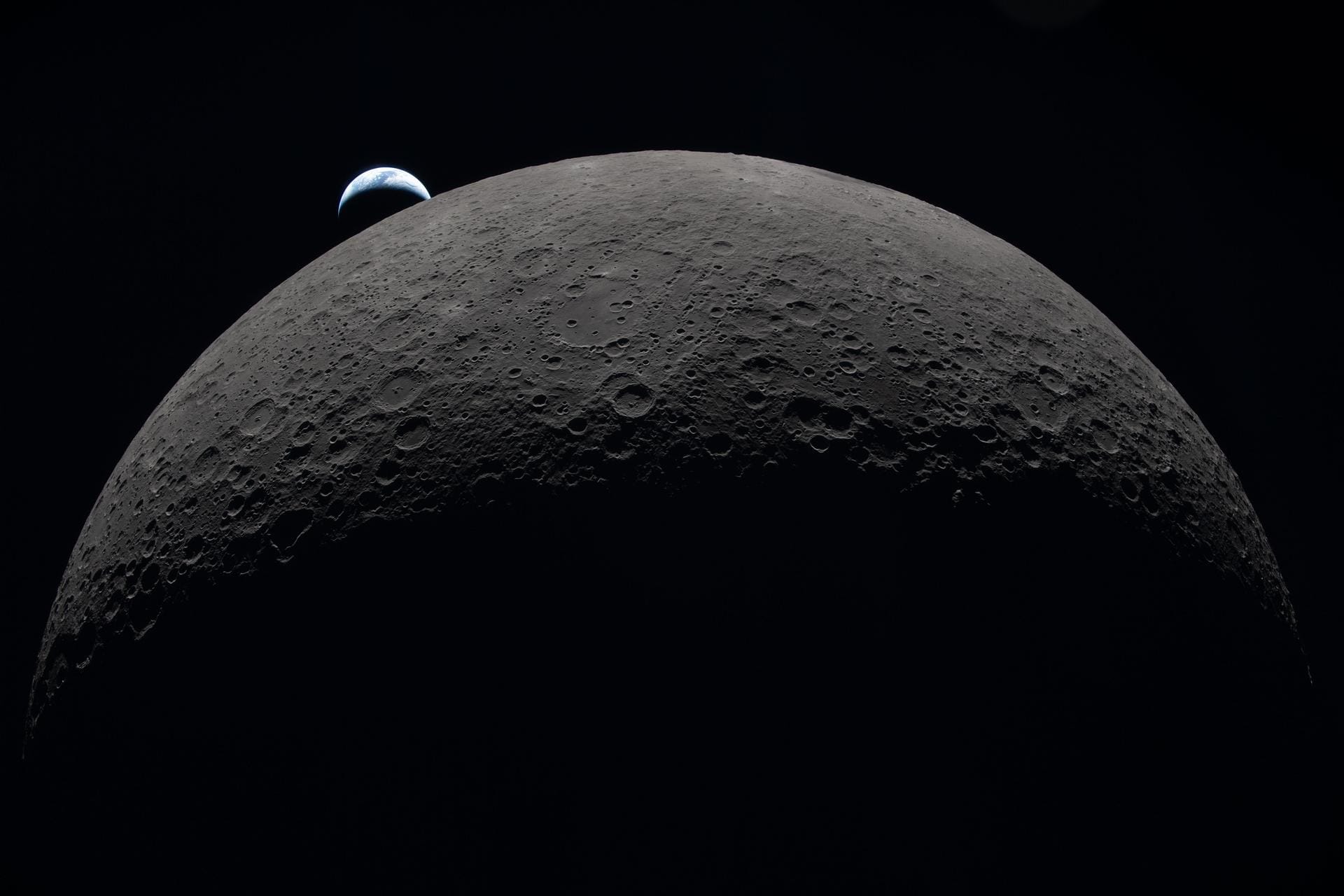
Well, folks: It’s finally time to build a quarantine on the Moon for aliens.
That’s the upshot of a study published in May that argues for the establishment of “a lunar biocontainment facility” to house extraterrestrial samples en route to Earth until they are deemed safe.
The U.S. and China's space programs both aim to bring back samples from the surface of Mars in the coming years, and many missions have already delivered rocks from asteroids. The new study anticipates a disastrous scenario in which samples from nearby celestial bodies might contain dangerous extraterrestrial life.
“If samples from Mars or other celestial bodies harbor dormant or active biological entities, then Earth’s biosphere could become exposed to a potentially invasive novel organism with unpredictable pathogenicity or ecological effects,” said Frederick I. Moxley of Strategic Threat and Analysis Research Laboratories, LLC, and Anthony Ricciardi of McGill University.
“For example, if extraterrestrial life exists, its molecular architecture could reflect atypical biochemistry (such as chirality reversal or alternative nucleic acid analogs) that is hazardous to Earth’s ecosystems and even to human biology,” the team added.
The team pointed to earthly analogs, such as viral strains that have broken containment or species that thrive in habitats that are completely different from the ones in which they originally evolved. If life on Earth can be this adaptable and unpredictable, why should we expect anything different from life elsewhere?
“The Moon must not merely serve as a stepping stone for exploration, but also as a preemptive shield between Earth and potential forms of extraterrestrial contamination…ensuring that exploration does not come at the expense of Earth’s biosphere” the team said. “The formalization of such precautionary lunar quarantine protocols will not only safeguard our planet, but also affirm humanity’s maturity as an interplanetary civilization.”
Moreover, “the economic cost for a lunar biocontainment facility is negligible compared to the potential ecological devastation of an invasive extraterrestrial organism.”
There you have it: We can’t afford not to build an alien Moon quarantine.
Some 500,000 years ago, early humans collected fossils and geodes and crafted them into handaxes, according to a study published in March that suggested these decorative tools had symbolic significance to their makers.
From 2024 to 2025, archaeologists discovered an unprecedented trove of ten fossil-bearing handaxes in what is today the Sakhnin Valley in Israel, which were made by the influential early human Homo erectus. While previous digs have unearthed the occasional handaxe containing fossils, this is the first site to yield a whole hoard of them.
“To our knowledge, no other archaeological context besides Sakhnin Valley has yielded more than a single extraordinary specimen,” said authors Ran Barkai of Tel Aviv University and Muataz Shalala, a local independent researcher who found the site.
“We propose that these handaxes served as tools and mediators between humans and the cosmos, conceived as objects of potency enhanced by the primeval fossil imprints and unique geological features within the stone,” the team said. “The richly embellished rocky landscape of Sakhnin Valley, particularly with its abundant geodes, may have encouraged early humans to express their profound and extraordinary relationships with the cosmos via stones.”
The human appreciation for cool rocks knows no bounds. Given that there’s no obvious functional advantage to the fossil-bearing stones beyond aesthetics, It’s tantalizing to imagine what these geological rarities meant to the bygone humans who selected them.
Here’s a fun fact to share at a party: Fruit flies have the longest sperm in nature. Measuring anywhere from several millimeters to more than two inches depending on the species, these bugs offer an extreme example of “sperm gigantism,” a phenomenon seen across many animal species.
Now, scientists have probed the mystery of how these “ultralong sperm” avoid getting all tangled up in their journey through the female reproductive tract, according to a study published in June.
Using in vivo imagery and mathematical models, researchers revealed how two-millimeter-long sperm from the fruit fly Drosophila melanogaster autonomously organizes themselves en route to prospective fertilization.
Illustration of collective flows of fruit fly sperm. Image: Lucy Reading-Ikkanda/Simons Foundation
“Giant sperm have evolved in several animal taxa for >100 million years—a testament to the enduring success of sperm gigantism as a sexual strategy,” said researchers co-led by Jasmin Imran Alsous of the Flatiron Institute and Brato Chakrabarti of International Centre for Theoretical Sciences in India.
Fruit fly sperm seamlessly forms “collective flows” that are “primarily associated with the dense packing of sperm, rather than the specific geometry of the confining organs,” the team found.
Who knew fruit fly sperm could be so mesmerizing? Nature continues to astonish in the most unexpected places.
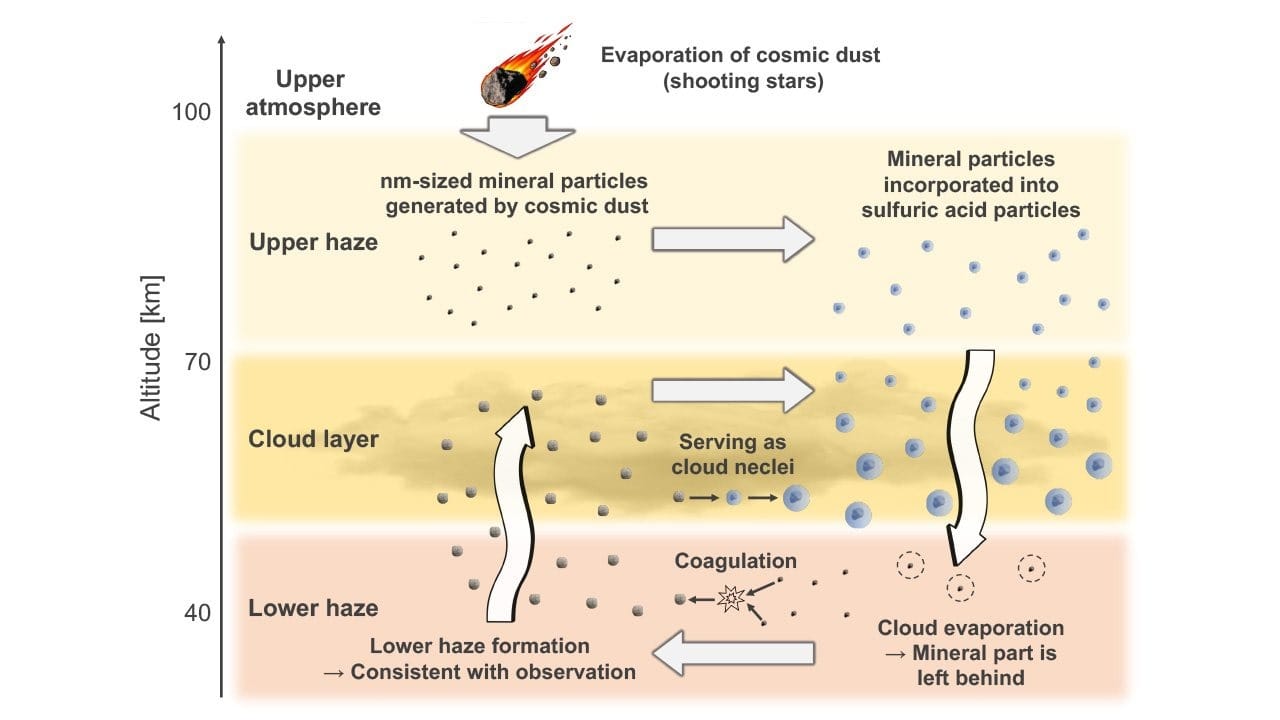
For more than a half-century, scientists have pondered the origin of the so-called “lower haze” on Venus, a particle-rich layer of clouds at about 20 to 30 miles of altitude that was first detected by spacecraft in the 1970s.
In April, a team finally solved the mystery; turns out it’s just a light sprinkling of cosmic dust from bygone shooting stars that broke up and dispersed in the Venusian skies. In addition to providing an ethereal explanation for the phenomenon on Venus, the new results may also inform our understanding of exoplanet atmospheres.
“On planets like Earth, where surface liquid water exists, rain constantly scavenges involatile particles from the air,” said researchers led by Hiroki Karyu of Tohoku University. “However, as observed in our Solar System, planets with surface liquid water are truly unique; most planets possess dry atmospheres where liquid droplets evaporate before reaching the surface.”
“In such worlds, the lower haze originating from cosmic dust can accumulate in the hot lower atmosphere, enhancing cloud formation” and “substantially [impacting] the planet’s climate,” the team added. “These effects establish cosmic dust as an essential component of planetary climates, a role that is also likely to be important for exoplanets.”
No big deal, Venus is just marinating in cosmic crumbs that can shed light on alien skies. Go on with your day.
This is Behind the Blog, where we share our behind-the-scenes thoughts about how a few of our top stories of the week came together. This week, we discuss going into the woods, a "he admit it" moment, and a tofu sandwich.
JOSEPH: Thank you to everyone who came to Thursday’s FOIA Forum. It was a great turnout with a ton of really good questions. We spoke mostly about mining city council meetings for tips or context you can then use to fuel your public records requests. I’ll upload the video soon and put it on the site for everyone to watch.
The other 404 Media co-founders have been writing in Behind The Blog about disconnecting recently. I’m doing something related to that shortly: going to an Airbnb in the woods to do a makeshift ‘silent retreat’.
On Thursday, Google introduced a new AI feature into Google Earth which lets anyone fabricate all sorts of misleading or straight up inaccurate satellite imagery, from making it look like a specific place has suffered a drone strike to manifesting a nuclear plant in Iran.
Usually, Google Earth is an exceptionally useful tool for open source intelligence (OSINT) analysts to digitally monitor areas of interest and see how they change over time, say, during a conflict or disaster. Now, Google Earth can easily be used as a tool for disinformation.
💡
Do you work at Google? I would love to hear from you. Using a non-work device, you can message me securely on Signal at joseph.404 or send me an email at joseph@404media.co.
YouTube banned a wave of ASMR artists this week for violating the platforms’ rules against “sexually gratifying” content, leaving creators confused and angry.
Several creators received the same notice from YouTube about their channels being removed on Wednesday and Thursday. “We have reviewed your content and found severe or repeated violations of our sex and nudity policy. Because of this, we have removed your channel from YouTube,” the email said.
So far, YouTube creators affected by the wave of bans who’ve spoken publicly about YouTube removing their channels include ItsBunniiASMR, Slight Sounds, Nananightray, Roseasmr, Simoneasmr, and Janina Wilhelmsen, all of whom had significant followings on the platform. There are still many ASMR creators on YouTube, making the bans even more confusing.
ASMR, or Autonomous Sensory Meridian Response, describes the tingling feeling that some people get when hearing certain sounds; it’s become shorthand for a genre of content where ASMR artists whisper, brush, tap or make other sounds near a microphone. A lot of ASMR content is meant for relaxation, mindfulness, and sleep.
“YouTube deciding to ban my account and many others feels like they are siding with gross sexualization of ASMR from people outside the community."
"We terminated these channels for linking to content that violates our nudity and sexual content policy," a spokesperson for YouTube told 404 Media in a statement. "Our external link policies apply equally to all creators across YouTube, and this action was taken in accordance with our long-standing policies, not as a change in policy or targeting of ASMR content."
Following 404 Media’s reporting that book database company ISBNdb claimed to source printed books to then sell to AI companies for AI training, the company deleted the part of its website offering the service and walked back claims that it would train AI models, and instead called it “a test of market interest.”
On July 30, nine days after 404 Media’s reporting, ISBNdb added a note to its homepage and an update on its news page about the change. “We've seen the recent coverage about a marketing landing page on our site, and we understand the concern it raised. The facts: ISBNdb has never purchased, scanned, or sold a book — for AI training or anything else,” ISBNdb wrote. “We don't train AI models, and we never have. The page was a test of market interest; no such service was ever brought to life. We've taken the page down. Our job is helping people find books. For more than two decades, ISBNdb has been the card catalog of the book world — the data behind how bookstores, libraries, and reading apps connect readers with titles. Data about books, not the books themselves. That hasn't changed.”
Scientists have proposed the existence of a fifth “dark dimension” that governs the behavior of both dark energy and dark matter—and which may be observationally detected in the near future, according to a recent preprint study.
The dark dimension hypothesis could potentially provide an elegant solution to some of the biggest mysteries in science, including the nature of dark matter, an unidentified substance that makes up most mass in the universe, and dark energy, the term for whatever is causing the universe to expand at an accelerating rate.
The idea arose from string theory, a decades-old framework that suggests the universe contains many dimensions beyond the four dimensions that we can perceive as humans—time, and three-dimensional space. In a series of studies published over the past several years, a group of string theory experts have suggested that one of these dimensions could simultaneously govern dark matter and dark energy, and that this dimension changes over time.
“The question was whether or not this extra dimension is frozen or can evolve,” said Cumrun Vafa, the Timken University Professor in the physics department at Harvard University and an author on these studies, including the newest preprint, in a call with 404 Media. “The fifth dimension is somehow related to the value of dark energy, so it's natural that when the value of the extra dimension changes, the value of dark energy also changes.”
When Vafa and his colleagues started to develop this idea, the conventional wisdom was that dark energy had a fixed value, according to the standard model of cosmology, a well-corroborated set of assumptions that explains most laws and phenomena in the universe.
“We were scrutinized by our colleagues for predicting that string theory requires dark energy to change, whereas dark energy looks constant,” said Vafa. “This is not good for our field because you are predicting string theory is inconsistent with observation.”
But the assumption that dark energy has a fixed value, a central tenet of the standard model, has been challenged by the Dark Energy Spectroscopic Instrument (DESI), a major survey of the universe based at the Kitt Peak National Observatory in Arizona, which released its first results in 2025.
To the surprise of many scientists, the DESI release hinted that the value of dark energy may shift over time, a discovery that was in line with predictions of a dark dimension put forward by Vafa’s team.
“We didn't write a model to fit the data, but rather we had a model based on theory,” said Vafa. “Now that fits the data automatically. That is why I believe in it. It's easy to write a model after you know the data to try to fit it somehow. This is not what we did.”
“Our model is still the best model, as far as I know, that fits the DESI results,” he added.
In their newest preprint, which is currently in the process of peer review, Vafa and his colleagues expand on the workings of this possible dark dimension in light of the DESI data. According to string theory, the universe has many dimensions that are “compactified” into subatomic scales that are not detectable by current instruments, which is why we have not discovered them. The hypothetical dark dimension, however, may be enlarged to a micron scale range.
This would allow gravitons, which are the hypothetical particles that mediate the force of gravity, to spill over into the dark dimension, where they would become dark matter particles. In this view, dark matter is not made of some new form of exotic particle. Instead, it’s made up of gravitons that also exist in our familiar universe and have traversed into the dark dimension.
“We are using the extra dimension to our benefit to explain what dark matter is,” Vafa said. “We don't need to introduce a new particle or particles. We are just saying it's the usual gravity.”
As this dark dimension evolves, so does the mass of these dark matter particles in that realm; Vafa’s team predicts they are becoming lighter. Likewise, the value of dark energy weakens over time. In this way, dark matter and dark energy—long thought to be likely unrelated—arise from the properties of the same extra dark dimension.
It’s a trippy and esoteric concept, and it may soon be put to the test. If a dark dimension does exist, then it should manifest as tiny deviations in Newton's gravitational force at micrometer scales. A team at the Institute for Quantum Optics and Quantum Information in Vienna is currently designing an experiment to test this idea, which could yield results in the coming years.
Moreover, if dark matter particles are just gravitons that wandered into a dark dimension, then there should be some subtle observational hints of “a fifth force” in the dark sector. For example, scientists plan to test the hypothesis by closely watching the movements of stars in interacting galaxies, which are held together by dark matter halos, to search for a dark fifth force.
When the galaxies come near each other, “the visible matter attracts the visible matter of the other galaxy, and dark matter of one also attracts the dark matter of the other galaxy as well,” Vafa explained. “But there's extra force between the dark matter compared to the visible matter because of this fifth force, so you get a more attractive force pulling the dark matter towards each other more than the visible part.”
“There are multiple fronts where things can come together,” he concluded. “Of course, the most exciting would be the confluence of all of these together, that somehow they agree. That would be really remarkable.”
In February, a content creator from New Zealand named Harry Chang posted a YouTube video called “This AI TikTok Shop Video Made Me $67,420 (Here’s How).” In the video, Chang and another YouTuber, Jimmy Farley, describe how Chang created a viral marketing video for a supplement company called Rosabella called the “Nigerian SECRET to CLEAN LIVER!!”
Chang explains that he copy-pasted the script from a video posted by an account called “liverboosthub11” and tweaked it to suggest the supplement he was marketing is “something that’s been used in Asia or Africa for a long time that a lot of people don’t know about in America.”. In Google’s VEO 3, he created an AI-generated Black woman wearing a surgical mask in the foreground of the video, pointing up at another AI-generated Black woman (created in a tool called HeyGen) wearing a pink dress and standing on a stage. He directed the woman in the foreground to have a “strong African American accent,” and to say, “Why is nobody talking about what this hoe said?! If you’ve got issues with that belly, must watch!”
“Builds curiosity, builds intrigue,” Chang says about his creation. “People want to know, ‘damn, what did she say? What did that ho say?’” To make the AI-generated woman on stage read the script he took from liverboosthub11, he pulls up the popular AI voice generator ElevenLabs. He scrolls through a list of voices that he had created, including “African American Woman Organic,” “Black Man 1,” “ORGANIC White Southern Woman,” and “Sad Black Woman in Car.” He settles on a voice called “Latisha 1.” He syncs the voice with the AI-generated videos he created in the video editing software CapCut. This AI video goes on to get 1.3 million views on TikTok and apparently earned him tens of thousands of dollars in affiliate sales.
In another video, Chang explains how he has made tens of thousands of dollars using AI influencers. “I’ve even had my clients buy me Rolexes for selling so much of their products,” he says.
A new lawsuit argues that the strategy is, indeed, illegal. (After 404 Media asked for comment for this story, several of the YouTube videos mentioned in this article were deleted).
In February, a supplement company called Humann sued a competitor called Ambrosia Brands because Ambrosia, through the supplement company called Rosabella, allegedly directed and influenced the creation of hundreds of TikTok Shop videos and ads featuring AI-generated “doctors” that oversold the supposed benefits of Rosabella’s products. Rosabella’s AI marketing practices have previously been written about by 404 Media and The New York Times, but were most thoroughly explored in an excellent episode of the podcast Conspirituality.
The lawsuit reveals new details about how this group of 20-something YouTubers built their army of AI-generated influencers. In practice, Rosabella is more of a social media AI content hustle and AI marketing exercise than a supplement company. What happened in this case is the same type of spam and buy-my-course to get-rich-quick strategy that we have repeatedly written about, only this time the slop is being used to shill supplements largely to the elderly. Rather than payouts coming from the number of views a video gets on social media, the payouts are commissions on products sold. The lawsuit was spotted by the lawyer Rob Freund on X.
“All these guys are ex-dropshipping guys,” Mallory DeMille, who studies the wellness and supplements industry and who reported the episode of Conspirituality, told 404 Media. “They could have chosen anything to sell to make AI content out of, but they chose supplements, and it’s interesting they chose supplements because it’s such an unregulated market where [they] can basically pump out whatever product they wanted to with very little oversight. On the marketing side, it’s also pretty unregulated and there’s a lot of real [human] influencers making unfounded health claims without there being many consequences. In terms of ease of making money — wellness, they chose this industry for a reason. I think it’s pretty seamless, has proven to be seamless and now they’ve sold a fuckton because of how easy it is.”
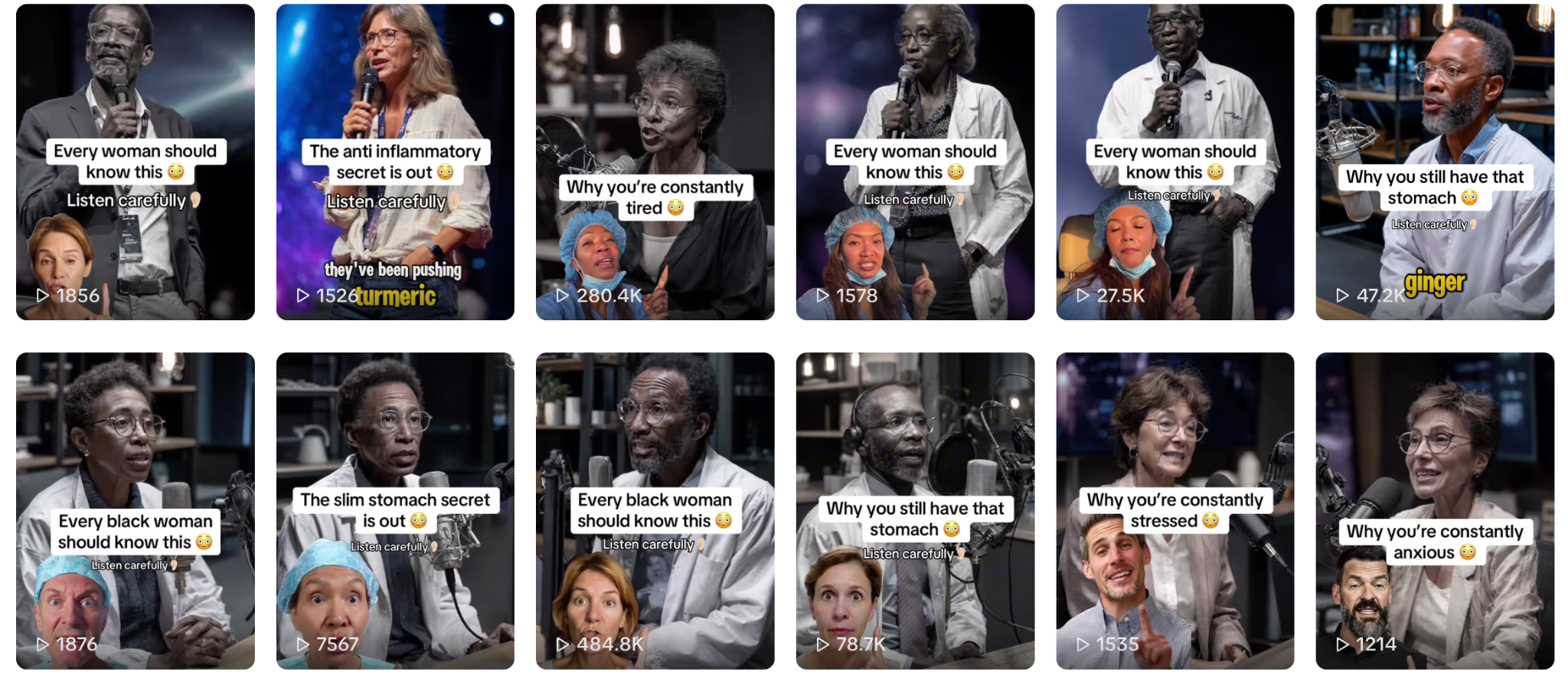
The lawsuit highlights a series of TikTok videos—like the ones I described above, and most of which are still online—featuring AI-generated doctors, TED Talk-style speakers, and videos that are essentially identical to the ones Chang has repeatedly taught people on YouTube how to make. And hundreds of additional videos promoting Rosabella that are not highlighted in the lawsuit are trivial to find on TikTok. Many of them have hundreds of thousands or millions of views and seem to make wild promises about what Rosabella supplements can do.
In another video, Chang explains why his favorite products to sell fall into the “elderly health” category: “It’s an extremely profitable niche, especially in the U.S., guys.”
“In the U.S., they have very high demand for health products,” he says. “They don’t have any free healthcare, right? People over 35 literally are very concerned about their health […] You have moms who buy 100 supplements and put them all in their cupboard. It is crazy. It’s crazy.”
“When you have such a high, problem-solving niche, it’s very easy to write scripts for, very easy to innovate, and just continuously make money,” he says, adding that he usually generates AI influencers who themselves look old.
“They’re relatable and credible,” he says of three older-looking AI people he shows on screen, one of which is shilling beetroot powder from Rosabella. “Why? Because they are old. People are more willing to listen to old people only because they see them as more wise and intelligent […] and look how credible they look. They’re speaking on stage like TED Talk-type style and they’re more relatable because they’re more similar to the age we want to target. If you’re trying to sell health products to a 50-year-old, well, make your avatar 50 years old.”
On TikTok, Rosabella used a mix of paid influencers and AI-generated characters to make unfounded medical claims about its products and about beetroot more generally, the lawsuit alleges. “In several TikTok Posts, the post purports to show a doctor, medical professional, or other medical authority espousing the health benefits of Defendant’s products. All or nearly all of the ‘doctors’ featured in the TikTok Posts are AI-generated and fictitious, making the claims in the advertisement false and/or misleading,” the lawsuit notes. “For example, in a June 14, 2025 TikTok post, influencer ‘poormaninla’ purports to depict a doctor in a whitecoat that promotes the alleged health benefits of Defendant’s products. Before the ‘doctor’ begins speaking, a separate speaker is imposed on the screen in a surgeon’s or nurse’s scrubs.”
The “poormaninla” account is still up on TikTok and its videos are almost entirely AI-generated. Several of the videos have hundreds of thousands of views. “The best food for Black women to eat if they want a slim stomach is not turmeric, it’s not ginger, and it’s definitely not blueberries. Just one teaspoon of this food reduces gut inflammation,” an AI-generated man in a lab coat says in one.
You can see some of the videos promoting Rosabella here:
The lawsuit argues that Rosabella is “orchestrating a misinformation campaign on TikTok through its network of influencers,” who “make various misrepresentations about the health and wellness benefits of Defendant’s beetroot products, which are entirely unfounded.” The lawsuit alleges that Rosabella, through a private Discord channel, offered extensive coaching to content creators on how to make AI-generated TikTok ads; that many of these ads featured fake doctors and other AI-generated people who were made to look authoritative; that some of these videos were racist; and that when people bought Rosabella products through TikTok Shop links on those videos, the creator of those videos would earn a commission. Humann’s argument is that Rosabella’s “false and misleading representations undermine public confidence in other beet products, like Humann’s SUPERBEETS products.”
Ambrosia says, essentially, there is no evidence it told people what to do in the Discord channel. In court filings, Ambrosia claims that Humann “fails to allege any facts that plausibly show Ambrosia induced or materially contributed to the third-party conduct it complains of.” It remains unclear whether what Rosabella was doing is illegal in the unregulated world of supplements in the U.S., or whether a competitor could win a false advertising lawsuit like this. But there is no doubt about Rosabella’s strategy, what their motivations are, and the incredibly close connection between Rosabella and the network of content creators who made, conservatively, hundreds of AI-generated videos.
The lawsuit highlights how common fully AI-generated marketing has become on platforms like Instagram and TikTok, and nods at, but does not dive into, the complicated web of YouTube hustlebros that have largely given rise to this practice, and the social media platforms that have incentivized and promoted AI-generated spam and fly-by-night supplement companies. Rosabella is a company that has already been subject to an “extensively drug-resistant salmonella” recall by the Food and Drug Administration. But it is maybe better understood not so much as a supplement company but more as a branding exercise and vertical video content hustle by the same types of AI spammers and buy-my-course bros we’ve written about numerous times over the last few years.
In a video about “why you need to be working with Rosabella” qposted by an account called “Luca Washenko” on the online course sales platform Whop, a man brags “we paid out over $400,000 last month to creators.” He says that individual people have made more than $300,000, and shows “proof and dates of our creators getting tons of views consistently. Got 55 million right there […] I am one of the lead coaches in the Rosabella server.”
But Washenko isn’t just a creator helping to advertise Rosabella. He is the company’s founder. A YouTube video repeatedly alludes to this, and mentions how much money he and his army of affiliate creators have made selling Rosabella products on TikTok Shop. Washenko is also listed as the cofounder of Rosabella on several trademark filings I found, and his LinkedIn lists him as the founder of “MNY Ventures,” a company that has the Rosabella logo on LinkedIn. Clicking through “MNY Ventures” goes to a LinkedIn page for “Rosabella,” which has several job listings for AI video editors: “MNY Ventures is home to one of the fastest-growing supplement brands in the world, built on the back of a high-performance, results-obsessed culture. We don't just create ads; we create market-leading campaigns that generate massive revenue,” one of the LinkedIn job listings reads. “Your mission is to lead the production of our high-converting AI videos quickly and at high quality. You will be responsible for consistently creating on-brand and compliant video content based on proven formulas designed to maximize reach, ensuring MNY Ventures maintains its position as the #1 leader in AI video marketing for e-commerce.” The listing adds the person will need to produce “10 high-quality AI videos per day, following our preset scripts and styles.”
In a video called “Inside a TikTok Shop Meetup with Million Dollar Creators,” there is no doubt about Rosabella’s strategy, Washenko’s motivations, or Rosabella’s close relationships with the people spamming AI-generated content shilling its products. Rosabella is just the latest of Washenko’s creations. His previous claim-to-fame was selling caffeine vapes on TikTok.
“There have been creators that are now millionaires from working with Rosabella,” Washenko says in the meetup video. “It’s one thing if you make money, it’s another thing if you can help everybody around you make money. An event like this where you can go face-to-face and shake hands with people and they say, ‘You’ve changed my life.’ And I’m like ‘You’ve changed mine.’ Those are the moments that are so special, especially when everything is remote. It’s online. It’s Discord, that’s one thing. You look them in the eye and they say, ‘I was able to pay my mortgage when I lost my job because I was making videos for you.’ That’s a different feeling.”
Washenko explains there are two reasons why people should make content promoting Rosabella: “If you want to be the Tiger Woods of creator, if you want to be the Caitlin Clark, you want to be the Michael Phelps, you want the golden rings you want to be the greatest, to be the number one, that’s what we’re all about. That’s the Rosabella family,” he says. “Along the way, you’ll make a ton of money.”
Later in the video, Washenko stands on stage addressing a crowd, shouting out “all the people I’ve been talking to on Discord from day one, from 18 months, I started Rosabella in my mom’s basement.” He shouts out all the creators who he’s helped make rich and who helped make him rich. He then says there’s one other “person I want to shout out today.” He calls up Harry Chang, the YouTuber who made the video “How I print $51,000/month profit with AI influencers (feels illegal).” Washenko presents him with a Rolex. “I cannot be any more proud to be working on a brand with you,” and for that, I want to give you this watch today. It’s a Rolex, by the way.”
After 404 Media asked for comment on the video, it was deleted from YouTube.
DeMille, who reported the episode of Conspirituality diving into Rosabella, Washenko, and Chang, told me the men are “just actively bragging about it online. I can’t believe they’re openly talking about it like this.”
“A lot of the videos of these AI slopfluencers, they’re using narratives that real-life wellness influencers have seen success using, but they’re taking these narratives and inputting them into whatever AI systems they’re using and making people look whatever age they want,” DeMille said. “There’s no thought behind it. There’s no anything behind the content that they’re turning out. These videos they’re replicating in their AI machines are also being used to sell something, but it’s being generated into something else to sell something else. It’s this inception of bad information by people who don’t actually care.”
“These guys behind these AI slopfluencers have proven that they don’t care, and they obviously care more about money and wealth than they do about health,” she added.
Washenko did not respond to a request for comment. Ambrosia Brands did not respond to a request for comment.
A request sent to Rosabella was returned by someone named Emmanuel Obonga. The response said, “We don’t currently have an active affiliate program. However, we’d be glad to keep your information on file and reach out if we revisit or launch one in the future.” In the course of reporting an earlier story about the AI influencer company Doublespeed, Rosabella previously told 404 Media that it “does not use Doublespeed or any AI-generated accounts to promote our products on TikTok or any other platform. We are committed to authentic engagement and building genuine connections with our community. Regarding the claim about being viral on TikTok, this is based on organic content created by real customers and creators who love our product. We’ve seen a lot of positive buzz and user-generated videos that have helped spread the word naturally.”
Daniel Martens, a lawyer representing Humann, told 404 Media Rosabella’s strategy “makes [the] whole supplement industry look bad. If you’re masquerading as a doctor telling consumers how promising all these benefits that don’t exist [are], that’s harmful.
LinkedIn, a social network awash with long AI-generated posts from executives and other corporate workers, has introduced a new button that users can click to flag if a post “seems like AI slop,” according to 404 Media’s own tests.
If you have been anywhere near LinkedIn in the past couple of years, you have undoubtedly seen users posting blatantly AI-generated missives. Often these posts take some sort of news event, and opine on how this relates to thought leadership, or some other LinkedIn brainrot term. It’s also pretty wild the button specifically uses the term “AI slop” and not, say, “It seems this was generated with AI.”
Last Wednesday, Lux Claridge planned to speak out against a proposed 1,000 acre data center in their town of Emporia, Kansas. They left in handcuffs after a city commissioner ordered them arrested for clapping.
We start this week with Matthew’s experience of what happened when Flock came to his small town. It’s a microcosm of what is happening all across the United States. After the break, Sam tells us about a bunch of no phone Luddite events. In the subscribers-only section, Jason explains why anti-Flock influencers making up BS are bad, actually.
Listen to the weekly podcast on Apple Podcasts,Spotify, or YouTube. Become a paid subscriber for access to this episode's bonus content and to power our journalism. If you become a paid subscriber, check your inbox for an email from our podcast host Transistor for a link to the subscribers-only version! You can also add that subscribers feed to your podcast app of choice and never miss an episode that way. The email should also contain the subscribers-only unlisted YouTube link for the extended video version too. It will also be in the show notes in your podcast player.
On Wednesday the power flickered in homes from Washington DC to Chicago. The cause was a data center disconnecting from PJM — a massive power grid that connects 13 states including North Carolina, Virginia, New Jersey, and Michigan, a span that covers 67 million customers. The incident points to a larger problem with the compute warehouses fueling the AI boom: It’s physically and economically impossible to build power infrastructure fast enough to meet the demands of AI data centers and when problems occur, everyone will pay the price.
AI requires massive amounts of computer hardware to scale. That hardware is housed in data centers, and data centers demand shocking amounts of electricity. More data centers mean more demand on the grid which raises the costs of energy for everyone. This is one of the reasons people hate data centers and have begun to fight their construction.
To bypass the issue of grid demand, many data center builders have promised to power the buildings themselves. The problem with that plan is that it’s easy to build a warehouse full of GPUs. Building power plants and transmission lines to power those warehouses will take years and cost billions more than the data centers. A skilled and efficient builder can complete a data center construction in under a year. Building new energy generation to meet that data center's power needs could take a decade.
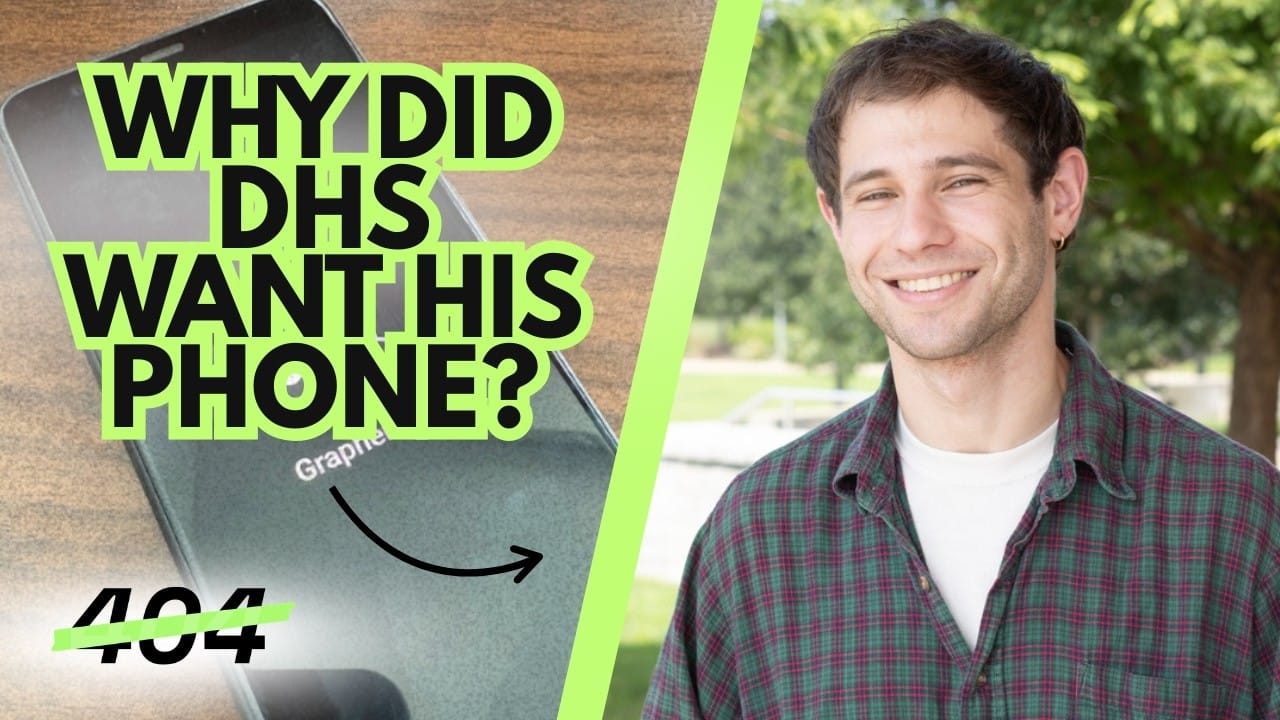
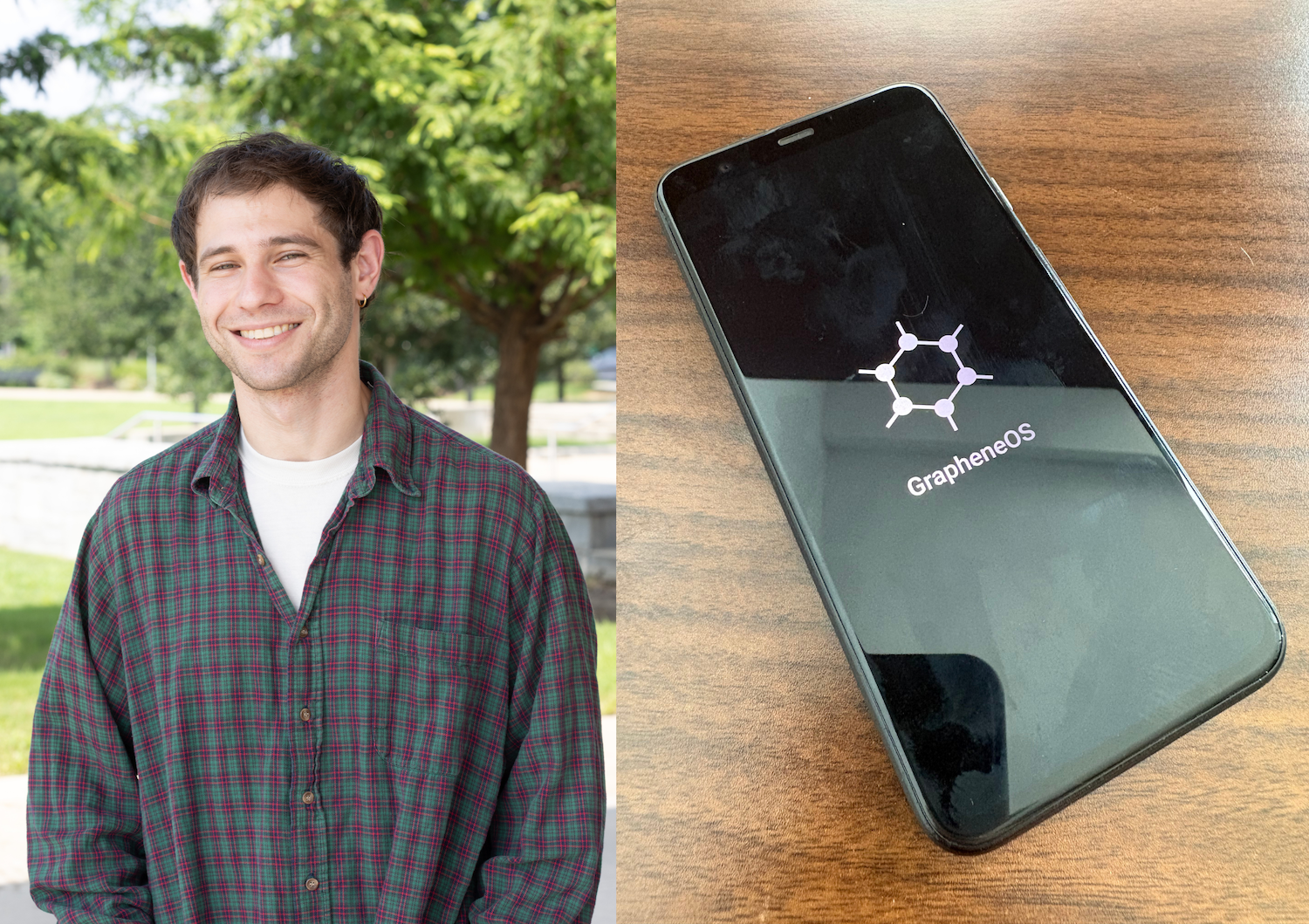
In charging a man for allegedly typing in a duress password which wiped his privacy-focused GrapheneOS phone, the U.S. government is trying to intimidate other activists from protecting their data and participating in social movements, Samuel Tunick, the man charged, told 404 Media in an interview on Tuesday.
The case of Tunick, who participated in the Stop Cop City movement in Atlanta, has resonated across privacy and civil liberties circles. 404 Media first broke news of the case in December. Last week, The Guardian reported additional details including from a court hearing in the case. The maximum sentence for the alleged crime is five years in federal prison.
On July 20, Jacob Petrosky stood in front of the Casa Grande, Arizona City Council during a public comment session and made an announcement.
“I've spent the last several months talking to people all over Casa Grande, and one thing keeps coming up: Safety. So, today I'm excited to announce a new company called Shepherd Safety,” he said. “Our mission is simple. Keep government officials and their families safe.” It would be no different than how the city monitors its citizens using Flock cameras, he said; he planned to launch satellites that would use AI to monitor “where government officials go, where they stop, who they meet with, and when they return home.”
He said he’d already started compiling profiles on their vehicles, spouses vehicles, children's vehicles, and planned to combine that data with Bluetooth signals, advertising IDs, and commercial data sources, “so our authorized users can replay the movements of every government official and their immediate family,” he said. Local businesses would be invited to join the network, to “protect” officials while they shop, eat at restaurants, and move around the city.
Substack contributors are rejecting the company’s decision to flag AI generated writing on the newsletter publishing platform, with several creators saying the new AI detection features are a “witch hunt.” Some Substack users who use AI to help them write or edit articles say the new policy unfairly discriminates against them, while other users who don’t use AI in their writing at all are worried that Substack will mistakenly flag their writing as being AI generated and tarnish their reputation.
“I’m not going to apologize for using AI in the creation process. I wrote for 20 years without AI, I could do it again if I wanted to,” Mack Collier, who has a small Substack called Backstage Pass, wrote. “My output would fall, my posts would be less structured, and it would be more obvious that they needed a good editor. Using AI improves the overall quality of my writing. That’s why I use it.”
“These detectors are notoriously, wildly inaccurate,” Alice Lemee, a ghostwriter and digital writing coach, said in a video she made about Substack’s new AI detection features. “All it takes is one false accusation for a writer to have their reputation almost irreversibly tarnished.”
Substack announced the AI detection features on Tuesday in a post from CEO Christ Best, who said that “It’s getting harder to tell what’s real on the internet” and that “when content made by no one takes over parts of the internet that are supposed to be human, it pollutes the commons and makes it hard to discover and hear human voices.”
Best explained that Substack has partnered with the AI detection tool Pangram, which is now built in to Substack and allows any user to scan a piece of writing. Pangram then produces a percentage-based score determining how much of the writing was AI or human generated. (Disclosure: Pangram previously bought an ad on 404 Media). We’ve covered research from Pangram, or research that relies on its AI detector before, showing how AI generated writing is flooding every corner of the internet.
As we’ve previously reported, AI detectors are not perfect, and Pangram itself is not immune to labeling human content as being AI, and labeling AI as human. Max Spero, the CEO of Pangram, recently told us that the company is constantly working on minimizing errors, and that it estimates its false positive rate at roughly one in 10,000.
“We have now built the mirror image. Pangram is a real machine, trained on vast amounts of text to make a probabilistic guess, and we have pointed it at your writing to work out whether a person is hidden inside,” Sam Illingworth, a professor and the author of Slow AI, said on his Substack in a post titled “Substack’s AI Detector and the Return of the Witch Hunt.” “To decide if there is a human on the other end, Substack asks a machine.”
Substack also added a way for users to add a “How I make this” statement, where they can explain their writing process and disclose if they use AI.
“We’re not against people using AI to assist their work, and we think people should be free to choose which tools they use to express themselves,” Best said. “Some on the platform are human-writing maximalists, others are publicly exploring the frontier of using AI tools while sweating the details to make work they stand behind. We use AI all the time at Substack to write software, do research, and build product features like clipping, translations, and more. But people should know what they’re getting.”
“I think the best way for Substack to address this is to invite further dialogue,” Illingworth told me. “I actually really like the new feature that lets authors tell their readers how they construct their newsletters using AI, and this is the kind of dialogue they should encourage rather than ascribing a score that we know to be incorrect. My worry is that not only do these AI detectors generate false flags for non-native English speakers and neurodiverse writers, but they also remove any opportunity for dialogue because they start from a position of suspicion. Whereas what we need to be doing is developing opportunities for trust between readers and authors.”
"The tools we've introduced today are intended to increase transparency and give readers more context, not to prohibit or penalize AI-assisted writing. They do not impact discovery on the platform,” a Substack spokesperson told me. “We're also encouraging Substack publishers to add a ‘How I make this’ statement, where they can explain their process directly, including how they use (or don't use) AI, and set expectations for readers. Creators can disable detection on their posts pre- and post-publication, as well as report and remove scans on their own work that they believe are mistaken. Find more information on how the features work here.”
Substack’s attempt to detect and label AI generated content was also celebrated by many readers who are exhausted by AI slop and other internet platforms that can’t or don’t want to label it. I just published story about how there is so much unlabeled AI slop on Spotify that people are now creating their own sites to detect and label it without the company’s help.
But the backlash from some Substack users shows that companies can’t just flip a switch if they want to ban or give users the ability to filter out AI content from their feeds. As the flood of AI writing and images we see online and the real world every day makes clear, generating slop is easy. What we’re going to do about it is still an unsolved problem.
In a video my friend’s dog is laying on her back, her little paws in the air, while my friend rubs the dog’s chest. You can see most of the dog — who I’m not naming for very important privacy reasons — from her head to her belly. On closer inspection, you’ll notice the picture includes some dog nipples.
Apple’s iMessage thought this video was so inappropriate that it flagged the video as potentially containing nudity and blurred it. When someone else received the video over iMessage, the app displayed the message “This may be sensitive.” They had to purposefully tap to reveal the video of a dog laying on her back being petted.

 Connexion