Connexion
He was saving 99 goats’ worth of bride price. Russia sent him to die in Ukraine instead
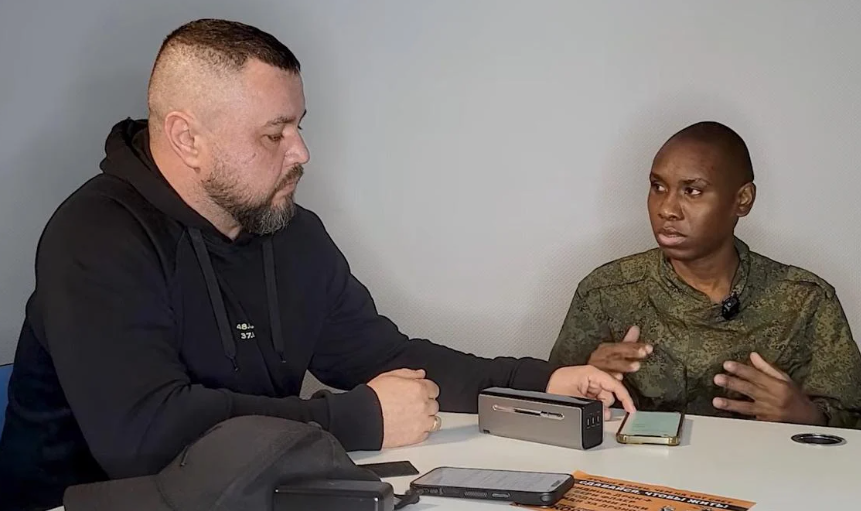
Francis realized he had joined the Russian army when they handed him a uniform. The 35-year-old Kenyan, an electrical engineer by training, had signed what he believed was a contract for security guard work in Russia, he told Ukrainian journalist Dmytro Karpenko in an interview after his capture.
The European Parliament voted 479 to 17 in March 2026 to condemn the practice and classify it as human trafficking. Ukrainian intelligence estimates more than 1,700 fighters from 36 African countries have joined Russian forces. Kenya has shut down over 600 recruitment agencies. Ghana has confirmed more than 50 of its citizens killed.
The recruitment method is consistent across cases: a promise of civilian work, a contract in Russian that the recruit cannot read, and a uniform on arrival.
Job offer came from university friend
Francis finished a contract with a large company and was picking up odd jobs in his city. It was not enough to support his wife and daughter. In July 2025, he met a friend from university who told him about a security guard vacancy in Russia. Francis was out of steady work. He agreed.
The paperwork was minimal: a passport copy, a certificate of no criminal record, and a medical certificate. Even when he signed the contract, Francis says, he believed he was going to work as a guard.
He learned otherwise at the military base when they issued him a uniform.
Two weeks of training, then the front
Francis says he received roughly $9,000 during his service. He planned to build a house with it.
"The money would have been enough to build my own home," he said.
He also described the bride price tradition in his community, which can run to 99 goats but is negotiated between the groom and the bride's parents.
"It is a matter of negotiation. You do not need to pay everything at once. You can pay gradually, even over many years. If your father-in-law and mother-in-law see that you are a good husband, they can say: enough, we forgive the rest," he revealed.
In the war he was sent to fight in, Francis says he understood little.
"I only knew there was some kind of conflict between Russia and Ukraine, but I did not understand it was a full-scale war," he suggested.
He was sent to the front after two weeks of training. He was captured on 22 November 2025 while his unit was changing positions. His commander had stepped on a mine, and the unit was ordered to withdraw to another position.
"We were approaching the Ukrainian side, and during the crossing, we met two Ukrainian soldiers who fired shots into the air," Francis said.
He says he did not immediately understand what had happened, but when he saw his commander throw down his weapon and lie on the ground, he did the same.
Russia recruits where the jobs are not
Russia has built parallel manpower pipelines to avoid a full mobilization that would carry domestic political risk. Contract soldiers inside Russia, North Korean troops, and recruitment networks across Africa, Asia, and Latin America feed the front.
The African networks operate through what the New York Times called "fly-by-night companies", presenting themselves as travel agencies or job placement firms and advertising on WhatsApp and Telegram.
Kenya's foreign minister says Russia agreed in March 2026 to stop recruiting Kenyan citizens. Families of the missing are still waiting.