❌

Vue normale

Training alone doesn’t make leader of sergeant. Without core of character, no course helps, says senior Ukrainian Special Forces soldier

18 novembre 2026 à 15:15

A Ukrainian soldier. Source: The Spartan Brigade

Professional training alone is not enough to make a sergeant a leader. What matters just as much is character, the chief sergeant of Ukraine’s 144th Special Operations Forces Center, callsign Skif, explained on Sergeant’s Day.

A special-operations sergeant’s defining trait, Skif said, is a high level of independence and responsibility, because special-purpose groups often work cut off from the main force and have to decide on the spot. It is the kind of self-reliant, empowered sergeant Ukraine’s army is trying to build across the force.

Commander and sergeant, a tandem

The group’s chief sergeant must grasp not only his own task but the plan of the operation two command levels above him, he added.

“With us, the commander and sergeant work in tandem. The commander plans the task: what we do and why. And the sergeant fully handles how exactly it will be carried out, from preparing the group to running the battle and the operation as it unfolds,” he explained.

Still an operator, and a jack of all trades

Even as he leads, the sergeant stays a full operator, Skif noted: he must know every specialist’s job, cover for any of them, and lead by example. Such sergeants need working knowledge of tactical medicine, engineering, communications, and weapons, and should master one or two specialties in depth. He had seen junior commanders carry out complex tasks and bring their groups home at full strength.

Character first, training second

Yet skills alone do not make a leader, Skif argued. Character is the foundation, in his view, and service and experience only develop the qualities it needs.

“If a person has no core inside, if at the critical moment they are afraid to take responsibility, if they have no critical thinking, then no sergeant courses will make a leader out of them,” he stated.

Those qualities show most, he added, when events break from the plan, and the sergeant must keep a cool head and make the hard calls.

“There are sergeants whose decisiveness and professionalism in commanding a unit many officers could envy,” he concluded.

  • ✇Euromaidan Press
  • What weighs heaviest on Ukraine’s sergeants? Training officer names two burdens, and neither is weapon
    Major Vitalii Humeniuk, deputy commander of the sergeant training battalion at the 199th Training Center of the Air Assault Forces, has disclosed the biggest challenges of Ukrainian sergeants. His remarks came on 18 November, Sergeant's Day, UkrInform reports. Ukraine inherited its rank system from the Soviet army in 1991, a centralized model in which officers decided almost everything and sergeants were little more than senior soldiers with no career ladder. A 2020 law began align
     

What weighs heaviest on Ukraine’s sergeants? Training officer names two burdens, and neither is weapon

18 novembre 2026 à 14:20

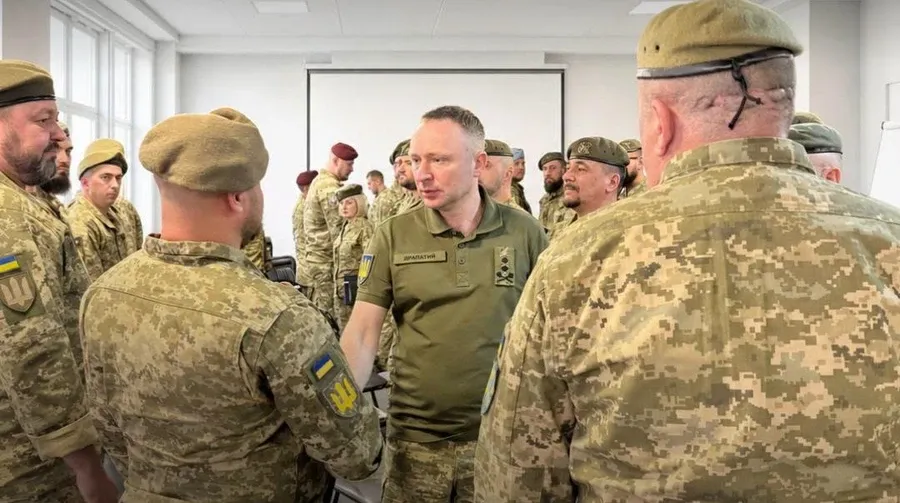
Ukrainian Commander-in-Chief Mykhailo Drapatyi met the senior sergeants. Source: Drapatyi

Major Vitalii Humeniuk, deputy commander of the sergeant training battalion at the 199th Training Center of the Air Assault Forces, has disclosed the biggest challenges of Ukrainian sergeants. His remarks came on 18 November, Sergeant's Day, UkrInform reports.

Ukraine inherited its rank system from the Soviet army in 1991, a centralized model in which officers decided almost everything and sergeants were little more than senior soldiers with no career ladder. A 2020 law began aligning it with NATO standards, and now Commander-in-Chief Mykhailo Drapatyi wants the army’s combat-tested sergeants to have real careers, real authority, and clear paths to promotion, not just a role training recruits.

Too much people, and too many losses

Humeniuk pointed to the personnel shortage and the troops' fatigue as the heaviest burdens. When the men are constantly low, and a sergeant has to lift their morale, he takes on that mood himself.

“Of course, it is hard to see the killed and wounded, but you have to hold firm before your subordinates, like flint. With the constant flow of new people, it is a little hard to work,” he says.

Before the full-scale invasion, soldiers knew each other for years, and a death felt like losing family. Now everyone is emotionally burned out, he notes, because the losses are so heavy.

The old mindset that needs to be changed

Humeniuk ties another challenge to the unfinished change in military thinking, what he bluntly calls the remnants of the Soviet system. A sergeant with five years in an infantry unit, he says, can end up under a commander who has fought less and lacks that experience yet brushes his view aside.

"I'm confident we'll manage to root this out here too, and that, as in NATO countries, sergeants will be on par with officers: in salary, in social benefits, and in decision-making," he adds.

A fair fight turned unfair by drones

What happens on the battlefield presses on sergeants too. Humeniuk calls it a kind of military injustice: infantry are used to a fair duel, one gun against another, but a drone bearing down is far harder to meet. Before fiber-optic drones, he explains, electronic warfare worked at full effect and lifted the infantry’s odds. Now that shield is slipping away.

❌