❌

Vue normale

  • ✇Euromaidan Press
  • Russia’s jet-powered Geran-4 can outrun the American Lancer 7 interceptor drone tested in Ukraine
    US defense company B&M Defense has tested its AA Lancer 7 high-speed interceptor drone in Ukraine and handed some of the drones to Ukrainian Defense Forces units for testing in combat conditions, Defense Express reported, citing company representatives. The drone is designed to combat aerial targets and, according to the company, can reach up to 400 km/h. Defense Express says that speed makes it a possible means of countering Russian strike drones, including Shahed-type ones. The repor
     

Russia’s jet-powered Geran-4 can outrun the American Lancer 7 interceptor drone tested in Ukraine

10 novembre 2026 à 09:37

Lancer 7 interceptor drone

US defense company B&M Defense has tested its AA Lancer 7 high-speed interceptor drone in Ukraine and handed some of the drones to Ukrainian Defense Forces units for testing in combat conditions, Defense Express reported, citing company representatives. The drone is designed to combat aerial targets and, according to the company, can reach up to 400 km/h. Defense Express says that speed makes it a possible means of countering Russian strike drones, including Shahed-type ones. The report does not say when or where in Ukraine the tests took place, or how many drones went to the units.

The test comes as Russia shifts to faster drones. In August, Ukrainian military intelligence (HUR) told Militarnyi that Russia was producing about 3,000 jet-powered Geran-4 and Geran-5 drones a month. According to Militarnyi, the Geran-4 cruises at 350–500 km/h. That means a Geran-4 at the upper end of its cruise range would fly faster than the Lancer 7’s claimed maximum speed. B&M Defense also said it is working on interceptor drones capable of countering jet-powered aerial targets.

What the company has disclosed

According to the company, the AA Lancer 7 cruises at 180 km/h, flies for up to 17 minutes, and carries a 500-gram payload. Its range is up to 30 km, and it can operate at altitudes of up to 4 km.

B&M Defense has not disclosed detailed test results or whether the drone has intercepted any targets so far. Defense Express posted video of the drone on its Facebook page but did not say who filmed it.

Ukraine’s interceptors and Russia’s growing drone output

Ukraine, meanwhile, has scaled up interceptor deliveries to its troops. On 7 January, then-Defense Minister Denys Shmyhal said that in December–January, deliveries to the military reached an average of more than 1,500 anti-Shahed drones a day. Russia, for its part, plans further growth.

In May, Defense Express calculated from HUR’s annual production plan that Russia could make about 450 long-range drones a day by the end of 2026, decoys included. Roughly 55% of them would be strike drones.

  • ✇Euromaidan Press
  • EU training mission for Ukrainian troops to set up a coordination presence in Ukraine
    The Council of the EU extended the EU Military Assistance Mission in support of Ukraine (EUMAM Ukraine) on 9 November for two more years, until 15 November 2028. It also decided to establish a mission presence in Ukraine. Russia rejects any Western troops on Ukrainian soil, and Europe’s planned force for Ukraine would go in only after the fighting stops. Since 2022, EUMAM has trained Ukrainian troops within EU territory. The new presence changes where the mission works, but only partly:
     

EU training mission for Ukrainian troops to set up a coordination presence in Ukraine

10 novembre 2026 à 09:30

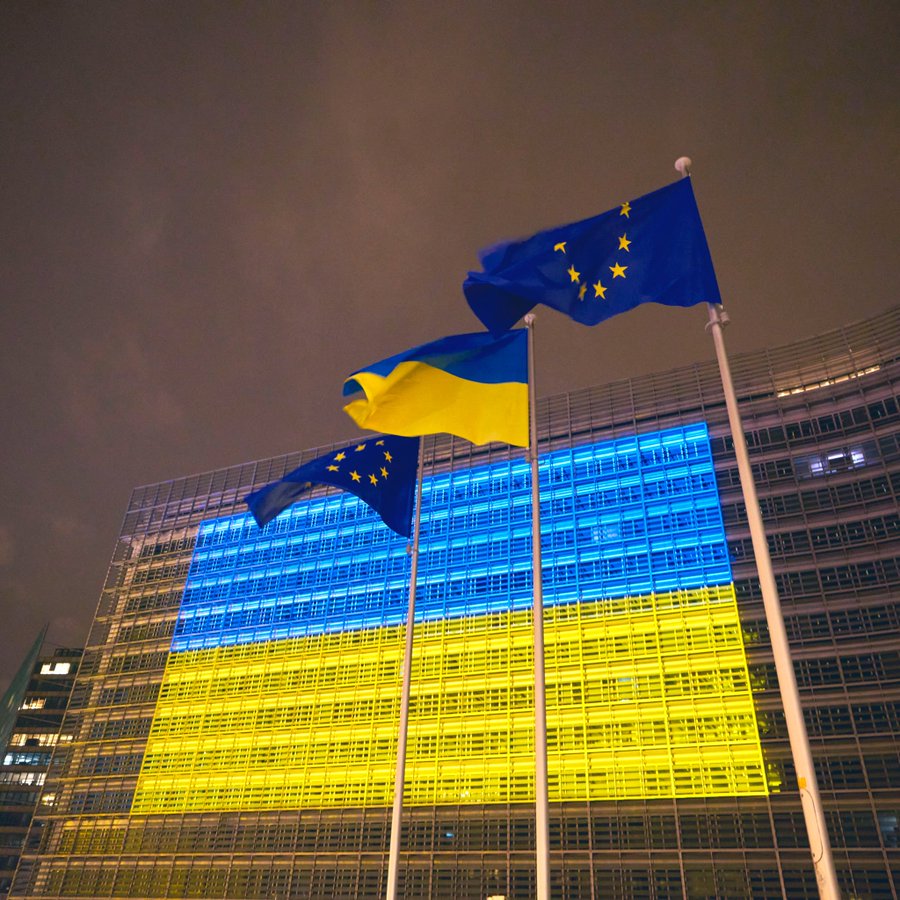
EU buildings lit in Ukraine flag colors on fourth anniversary of Russia's full-scale invasion

The Council of the EU extended the EU Military Assistance Mission in support of Ukraine (EUMAM Ukraine) on 9 November for two more years, until 15 November 2028. It also decided to establish a mission presence in Ukraine.

Russia rejects any Western troops on Ukrainian soil, and Europe’s planned force for Ukraine would go in only after the fighting stops. Since 2022, EUMAM has trained Ukrainian troops within EU territory. The new presence changes where the mission works, but only partly: the Council’s release still describes the training itself as delivered in EU member states.

What the presence in Ukraine is for

According to the Council, the presence is meant to ensure “direct and effective coordination” with Ukraine’s military and international partners, so EU training keeps pace with the army’s needs. The renewed mandate will also focus on battlefield lessons, the Council said.

The Council set a budget allocation of nearly €300 million for the new mandate, below the nearly €409 million it set for 2024–2026. The release does not explain the difference.

It is not the mission’s only EU money, though. On 26 October, the Council approved €230 million in additional financing for EUMAM Ukraine from the European Peace Facility. The €230 million is part of a €6.6 billion package member states agreed on 25 September, which also foresaw reinforcing the mission in 2027, the Council said.

How the mission got here

The EU set up EUMAM on 17 October 2022 at Ukraine’s request. The Council says it has trained more than 100,000 soldiers since then.

The Kyiv idea is not new. In August 2024, then EU foreign policy chief Josep Borrell said member states had agreed to a small liaison coordination center in Kyiv, Euromaidan Press reported. The Council’s 2026 texts do not say whether that center was ever set up.

Then, on 28 September, EU defense ministers agreed on the first step of the mission’s strategic review: the two-year extension. The mission would also establish a coordination cell in Kyiv, the Council said. Monday’s decision, six days before the old mandate runs out, formalized the extension. The 9 November release names no city.

❌