Turhan Mildon, who married Alina Habba this summer, presents himself as a 29-year-old billionaire with ties to global leaders. His story has inconsistencies.
Turhan Mildon, who married Alina Habba this summer, presents himself as a 29-year-old billionaire with ties to global leaders. His story has inconsistencies.
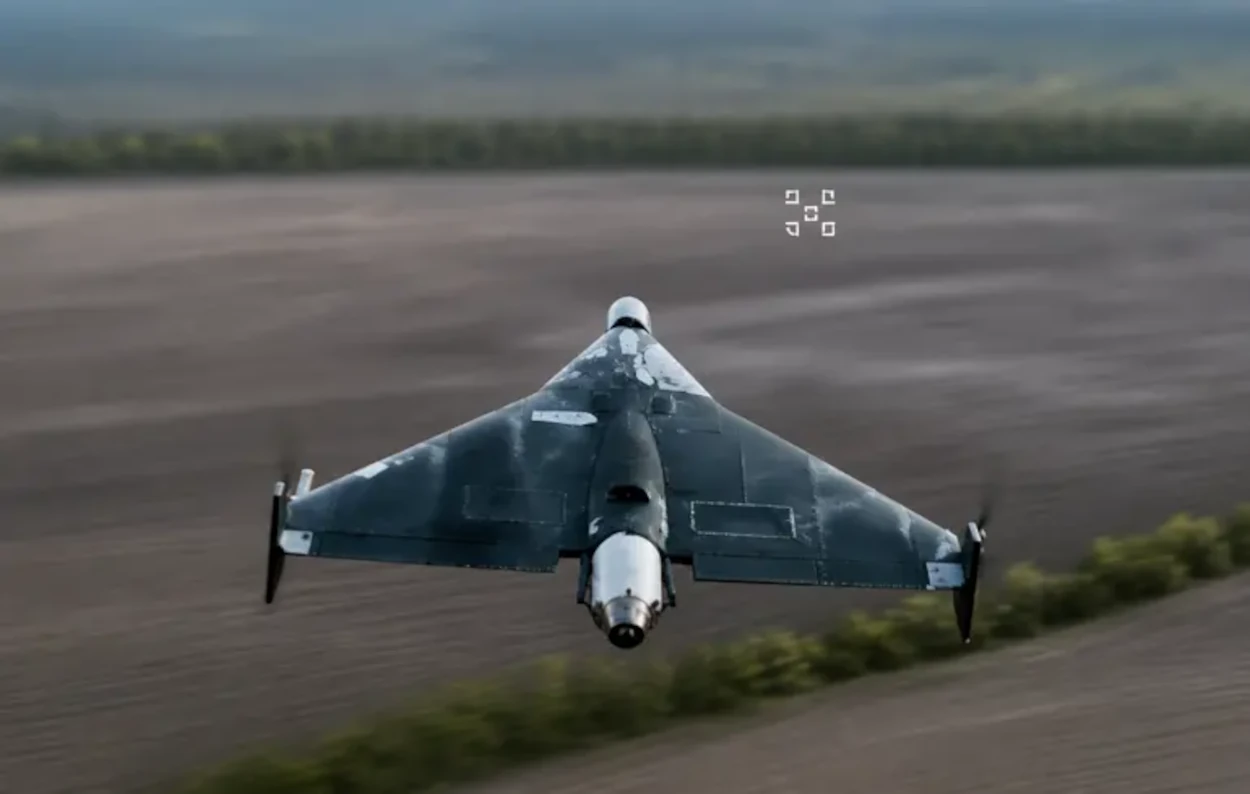
Russia’s Geran-5 jet drones have sped up to 1,000 km/h while maneuvering, Ukraine’s presidential adviser on defense technology Serhii “Flash” Beskrestnov said in Kyiv on 29 October. He added that Chinese engineers help develop Russia’s Geran drones.
When Russia moved to faster Geran versions, Ukrainian developers had to look for new ways to intercept them, Beskrestnov said, and Ukraine must learn to stay a step ahead. From 1 to 26 September, air defenses downed only 55% of Russia’s jet-
Russia’s Geran-5 jet drones have sped up to 1,000 km/h while maneuvering, Ukraine’s presidential adviser on defense technology Serhii “Flash” Beskrestnov said in Kyiv on 29 October. He added that Chinese engineers help develop Russia’s Geran drones.
When Russia moved to faster Geran versions, Ukrainian developers had to look for new ways to intercept them, Beskrestnov said, and Ukraine must learn to stay a step ahead. From 1 to 26 September, air defenses downed only 55% of Russia’s jet-powered drones. On 29 October, one such drone hit Dnipro’s railway station, and the death toll has since risen to 15. Over the past three months, air defenses downed nearly 60% of the jet-powered Geran-4, the General Staff said on 27 October, noting a shortage of guided anti-aircraft missiles. That update gave no Geran-5 figure.
A peak well above cruise speed
That peak, about 620 mph, came during maneuvers. Ukraine’s military intelligence (HUR) puts the Geran-5’s cruise speed at 450–600 km/h. By Beskrestnov’s count, the earlier Geran-3 flew at 280–300 km/h.
Explore further
Ukraine intercepts nearly 60% of Russia’s Geran-4 jet drones, General Staff says, as Kyiv races to counter evolving threat
Russia’s best engineers work against Ukraine, and China’s do too, Beskrestnov told journalists. Russia’s Alabuga drone plant sets Chinese engineers tasks such as work on the control module, he said. Key components inside Russia’s Shahed-type drones are Chinese, he said. Meanwhile, China will require licenses for Geran engines from 18 November, Ukraine’s sanctions commissioner Vladyslav Vlasiuk said. Licensing is not a ban, he stressed.
Speed is the easy part
Some interceptors are being designed to match the Geran-5’s cruise speed. US firm CHAOS Industries claims a top speed of 540 km/h for its Vespid Mk 1 interceptor. On 14 October, Ukrainian defense outlet Defense Express judged that may be enough against the Geran-5’s 450–600 km/h cruise speed.
Explore further
Russia equips Geran attack drones with image-based navigation using Google map imagery, reducing reliance on satellite navigation that Ukraine can jam, defense adviser warns
Ukrainian manufacturers have already shown jet-powered interceptor drones, Beskrestnov said. But they have run into problems with control, guidance, automatic target lock, and scaling up production. A model that flies fast is only one part of the job, he said, and an easy-to-use serial product is a different question entirely.
Russia attacked Kyiv with ballistic missiles late on 29 October, killing a man and injuring a 35-year-old woman, Kyiv city prosecutors said. The strikes damaged eight apartment blocks in Dniprovskyi district, a gas station, a restaurant, a dental clinic, warehouses, and cars. A warehouse building caught fire in Darnytskyi district, the city administration reported.
Overnight, Russia fired Iskander-M, S-400, and KN-23 ballistic missiles, four Kh-59/69 guided missiles, and 113 drones, 83
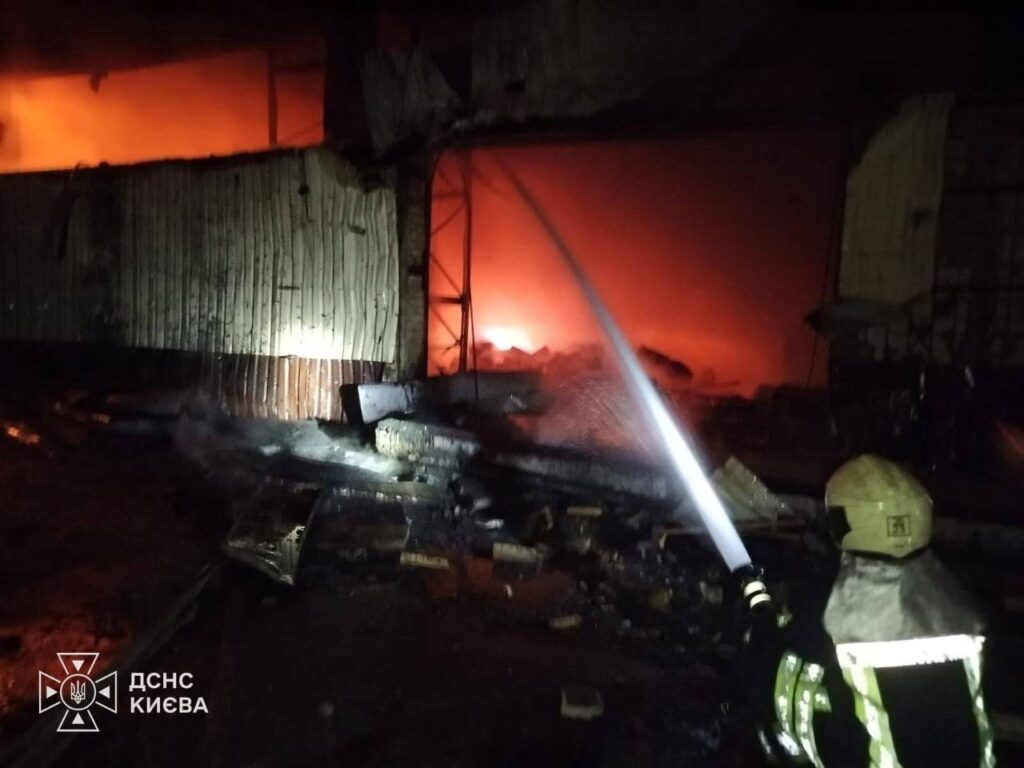
Russia attacked Kyiv with ballistic missiles late on 29 October, killing a man and injuring a 35-year-old woman, Kyiv city prosecutors said. The strikes damaged eight apartment blocks in Dniprovskyi district, a gas station, a restaurant, a dental clinic, warehouses, and cars. A warehouse building caught fire in Darnytskyi district, the city administration reported.
Overnight, Russia fired Iskander-M, S-400, and KN-23 ballistic missiles, four Kh-59/69 guided missiles, and 113 drones, 83 of them jet-powered, Ukraine's Air Force said. The attack mainly targeted Kyiv, Poltava, and Dnipropetrovsk oblasts. Air defenses downed three missiles and 96 drones, but strikes hit 17 locations.
Russia is waging its war on Ukraine's cities around the clock as winter approaches, striking homes, transport, and the power grid that keeps them running. On 29 October, including the late attack on Kyiv, Russian strikes killed at least 27 civilians and injured more than 140 across six regions, by EP's tally of regional authorities' reports. It was one of the deadliest days of the autumn. Most died in daylight, on a train platform in Dnipro, in an apartment block in Kremenchuk, in central Chernihiv, and under guided bombs in Izium.
Dnipro and Kyiv's right bank lose power
A Russian strike on Dnipro left more than 350,000 customers in the city and nearby towns without power, Dnipropetrovsk Oblast's administration said shortly after midnight. Water pumping stations switched to backup power. By morning, engineers had restored electricity to most customers in the oblast, but more than 200,000 were still without power.
Explore further
It was the only transport serving a village where more than 1,600 people still live: Russian forces strike a social bus with a drone in Bilenke, killing a woman and injuring other passengers
In Kyiv, equipment damaged in earlier strikes failed on the right bank, forcing emergency outages, the city administration said. Russia attacked an industrial plant in Poltava Oblast's Kremenchuk district overnight and again in the morning, with no casualties reported, the regional administration said.
A damaged one-story building and debris on the ground in Kyiv, Ukraine, after a Russian ballistic missile attack late on 29 October 2026. Photo: Kyiv City Prosecutor's Office
In the morning, a Russian drone hit a shopping center in Kharkiv's Kyivskyi district, injuring four women, Kharkiv Oblast Governor Oleh Syniehubov said. In Chernihiv Oblast, Russian drones destroyed the house of culture in Mena late on 29 October, and in the morning a drone hit a house in Bobrovytsia and injured a woman, the regional administration said. In Chernihiv itself, 37 people sought medical help after the 29 October strike on the city center that killed two 15-year-old girls, Yana and Mariia.
A burned-out car in central Chernihiv, Ukraine, after a Russian strike on 29 October 2026. Photo: Chernihiv Oblast Military Administration
Two oblasts in mourning as the Dnipro toll rises to 15
A 40-year-old man wounded in the 29 October jet drone strike on Dnipro's railway station died in hospital, raising the toll to 15, the regional administration said. Eleven people remain in hospital. Dnipropetrovsk Oblast declared 30 October a day of mourning.
A police officer near a five-story building partly destroyed by Russian guided bombs in Izium, Kharkiv Oblast, Ukraine, October 2026. Photo: National Police of Ukraine
Poltava Oblast also mourns three people killed when a Russian drone hit an apartment block in Kremenchuk on 29 October. Another 32 were injured, six of them children, the regional administration said.
Explore further
Russian jet drone hits Dnipro railway platform, killing 14 people next to a Zaporizhzhia-bound train
In Izium, Kharkiv Oblast, Russian guided bombs hit a five-story building on 29 October, killing four people and injuring 14, police reported. In Zaporizhzhia Oblast, Russian attacks killed two people in Bilenke and injured 23 across the region, 13 of them when Russia sent seven FPV drones at vehicles and public transport in Zaporizhzhia city, police said. EP reported the city faced a record number of such attacks.

 Connexion