❌

Vue normale

Fifteen months ago, Ukraine’s online arms store for front-line units didn’t exist. Now, it delivers 1 in 5 drones that state buys
19 octobre 2026 à 11:38

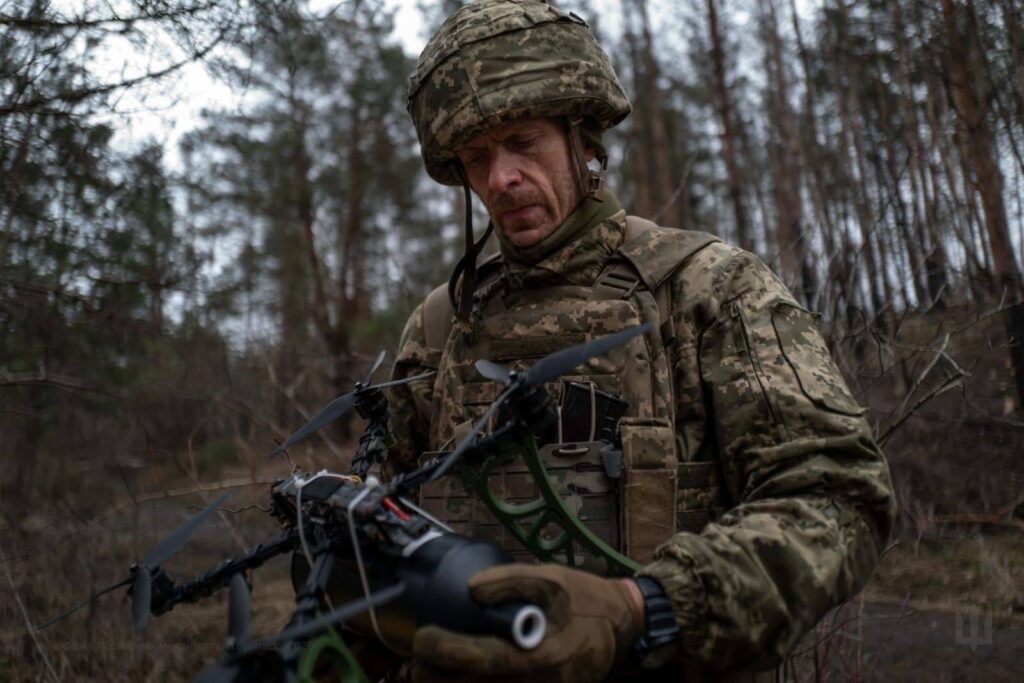
fifteen months ago ukraine's online arms store front-line units didn't exist now delivers 1 5 drones state buys · post ukrainian soldier drone 658142610_1298690549110687_5343675139334166676_n ukraine news reports

Ukraine has turned buying weapons into something closer to online shopping. One in five drones bought by Ukraine's Defense Procurement Agency now reaches troops through DOT-Chain Defence, a state digital marketplace established in 2025 that lets combat units order what they need directly, the Defense Ministry says.

Drone technology changes so fast that a weapon ordered through months of paperwork can be obsolete before it arrives, so Ukraine built a marketplace that puts the choice in the hands of the units that fight. Launched in July 2025, DOT-Chain Defence now serves more than 500 combat units.

Unlike the agency’s other channels, central competitive tenders and fixed procurement lists, the marketplace lets commanders pick from a catalog themselves. The system works like an online store, where the military spends state funds to decide exactly what the state supplies them.

From a catalog to the trenches in eight days

Speed is the point of the model. When an item is in stock, the average time from a unit’s order to shipment is eight days, rising to about a month and a half for pre-orders, the ministry notes.

“Delivery speed is especially important for unmanned systems, because technology in this field develops dynamically,” DOT-Chain Defence chief Artem Romaniukov says.

Also, he states that makers and soldiers constantly rework designs to beat new countermeasures.

The catalog spans the main types of unmanned aerial vehicles, FPV drones, bombers and fixed-wing aircraft, along with their munitions, ground robotic systems and electronic-warfare gear.

Who carries the paperwork now

The shift moves the burden off the fighters. A unit builds its own order in DOT-Chain Defence, and the agency handles the procurement side, signing contracts with manufacturers and making payments. That means that purchases are completed in a few clicks.

In the first nine months of 2026, Ukraine’s troops received more than a million drones and other equipment through this system, part of a drone-buying surge that reached about $8 billion in the first half of the year.

  • ✇Euromaidan Press
  • Ukraine opens its first war-crime case against a ship captain for carrying off 54,000 tons of its stolen grain
    Ukraine has opened its first war-crime case against a ship captain for carrying off its stolen grain. Ukraine’s Security Service and Prosecutor General’s Office have charged the captain of the cargo ship Matros Pozynich with illegally shipping more than 54,000 tons of Ukrainian wheat that Russian forces stole from occupied territory, the Security Service said on Telegram. Russia has looted grain across the Ukrainian land it occupies and sold it abroad as its own, a trade Ukrainian intel
     

Ukraine opens its first war-crime case against a ship captain for carrying off 54,000 tons of its stolen grain

19 octobre 2026 à 11:06

Ukraine has opened its first war-crime case against a ship captain for carrying off its stolen grain. Source: SBU

Ukraine has opened its first war-crime case against a ship captain for carrying off its stolen grain. Ukraine’s Security Service and Prosecutor General’s Office have charged the captain of the cargo ship Matros Pozynich with illegally shipping more than 54,000 tons of Ukrainian wheat that Russian forces stole from occupied territory, the Security Service said on Telegram.

Russia has looted grain across the Ukrainian land it occupies and sold it abroad as its own, a trade Ukrainian intelligence puts at more than 2 million tons in 2025 alone. The case against the Matros Pozynich captain is the first time Kyiv has classified a ship captain’s role in that trade as a war crime, prosecutors said.

The captain, a Russian citizen, twice sailed wheat from occupied Sevastopol in Crimea to the Syrian port of Latakia in 2022 and 2023, according to the Security Service. The first shipment of more than 27,000 tons left Crimea in 2022, and another 27,000-plus tons followed in January 2023.

A crime ordered from the top, investigators say

The shipments were no freelance smuggling run. The grain was removed on the decision of the Russian state’s top political leadership, the Security Service stated, in breach of the Geneva Conventions, which forbid pillaging property in occupied territory.

To hide the voyages, the captain periodically switched off the ship’s automatic identification system and transmitted false coordinates, investigators found. He was notified of suspicion in absentia under two articles of Ukraine’s Criminal Code, including the violations of the laws and customs of war. The service said it is working to identify others in the scheme.

One ship in a fleet that feeds the war

The vessel is a single thread in a much larger theft. Russia has taken roughly 15 million tons of Ukrainian grain from occupied territory between 2022 and August 2025 and earned at least $1 billion from it, money that helps fund the war.

Much of it moves through Russian-controlled ports such as Sevastopol, often relabeled as Russian produce or passed between ships at sea to hide its Ukrainian origin. Buyers have included Syria, Egypt, Türkiye, Lebanon, and others, though Egypt has since pledged to stop accepting grain tied to occupied territories.

Most Ukrainians reject giving Russia all of Donbas. Support for resistance on rose to 62% after new US pressure, poll finds

19 octobre 2026 à 10:42

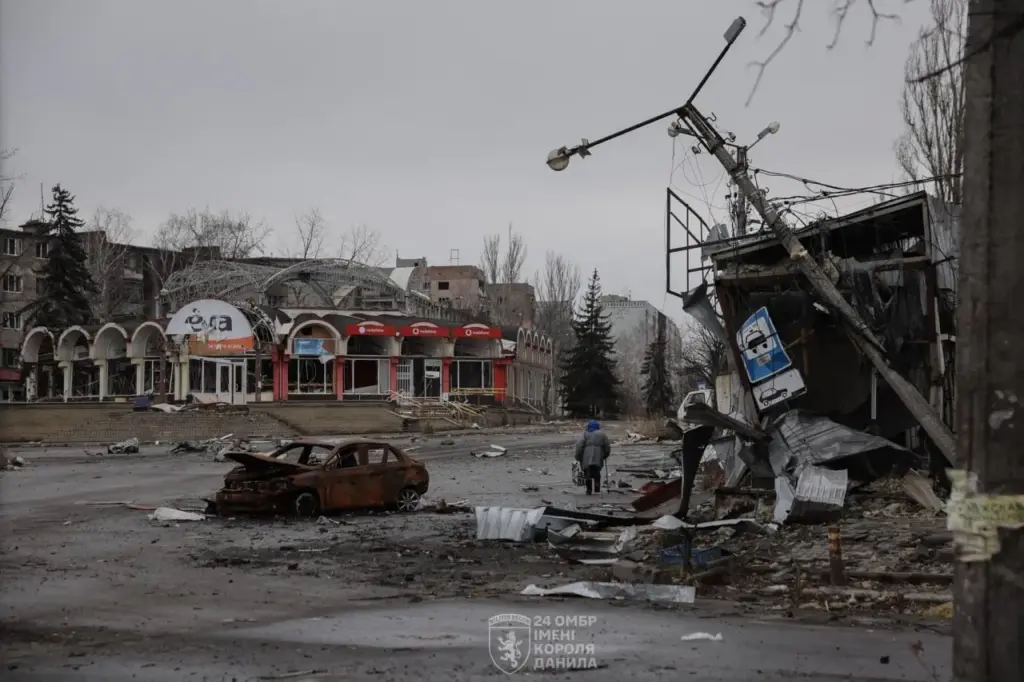
Ruins of a street in Kostiantynivka, Donetsk Oblast, 9 April 2026

A majority of Ukrainians reject handing all of Donbas to Russia in exchange for US and European security guarantees. Some 62% are ready to endure the war for as long as it takes, a survey by the Kyiv International Institute of Sociology shows.

Russia has spent the fall hammering Ukrainian cities, and Washington has eased sanctions on Russian diesel and cut Ukraine’s intelligence and Starlink speed, both apparently aimed at wearing Ukrainians down toward a capitulation. Instead, the majority calls the withdrawal of troops from Donbas categorically unacceptable, with 35% willing to accept it and 4% undecided, a position essentially unchanged since late summer.

The pressure campaign tracked the other way. Among those polled on 8-9 October, before the diesel deal and the pressure that followed, 57% were categorically opposed. Among those polled on 10-16 October, the figure rose to 62% afterward, KIIS reports.

In every region, at least half reject the trade. Resistance is firmest in Kyiv, which has borne a relentless campaign of ballistic and jet-drone strikes, where 66% are categorically against, the highest figure of any region. Even in the east, around Kharkiv, where the most are open to a compromise at 45%, 51% still rule it out.

Bracing for a long war, and ready for it

Few Ukrainians expect a quick end. Only 10% think the war will end by the close of 2026 and 13% in the first half of 2027, while 56% expect it to run into the second half of 2027 or beyond, the institute reports.

Who Ukrainians blame for blocking peace

The poll also measured who is seen as the obstacle. Asked to choose, 78% said Russia’s drive to subjugate Ukraine is what blocks peace, against 12% who blamed an inflexible Ukrainian government, and 92% said Russia strikes economic sites to wreck the economy and force capitulation, not in retaliation.

“The enemy, with its vile strikes by ballistic missiles and drones, is unable to break the spirit and will of Ukrainians,” KIIS executive director Anton Hrushetskyi says.

He argues that what Ukraine needs is “packages of interceptors for Patriot systems,” not an election or one-sided concessions dressed up as peace. The survey polled 1,031 adults across government-controlled Ukraine from 8-16 October.

EU paid Russia 682 million euros for steel in eight months, with slab loophole keeping money flowing, and big consumers lobbying to keep it open — analysis

19 octobre 2026 à 10:20

eu remains ambitious opening all ukraine clusters several capitals hold back · post ukrainian flags flying front european parliament brussels eastnewsua colors flag cities protest against russian invasion news reports

Four years of sanctions have not closed the door through which Russian metal still reaches Europe. The EU imported 1.6 million tons of Russian iron and steel products in the first eight months of 2026, paying 682 million euros, down 54% in value year on year, GMK Center, a Ukraine-based consulting company, reports, citing Eurostat data.

Every euro spent on Russian metal is revenue for a state waging war on Ukraine, and the EU has banned most of it: pig iron, direct-reduced iron, iron ore and ferroalloys. Yet one category still flows almost untouched: semi-finished steel, mostly slabs, which made up 97.8% of the imports, or 1.56 million tons worth 670 million euros.

Volumes dropped 55% year on year after the full ban on Russian pig iron and DRI took effect on 1 January 2026, and no pig iron, ferroalloys, iron ore, or DRI reached the EU from Russia in the period, the center found. Iron ore and ferroalloys fall under sectoral limits, and the largest Russian producers are subject to corporate sanctions.

The slab loophole that keeps the money flowing

Slabs are the gap in the wall. Belgium took 767,700 tons of Russian semi-finished steel, nearly half the EU total, and Italy 191,800 tons, the center said.

Demand still outstrips the rules, with a slab quota for the year to September 2026 standing at nearly 3 million tons and effectively used up within four months, the data showed. Scrap was the only other notable inflow, at 41,300 tons worth 11.7 million euros, down about a third.

A ban that keeps getting postponed

The door is closing slowly, and not without a fight. The quota falls to 2.6 million tons for the year to September 2027, and to 2 million for the following year, the center added, yet attempts to halt Russian slab imports early have failed because the biggest consumer countries lobby against it.

Earlier, the Kiel Institute for the World Economy reported that the EU paid Russia €317 billion in goods since February 2022. The sum is €116 billion more than the €201 billion the bloc extended to Ukraine in financial aid over the same period.

“This is a historic event”: Ukraine’s 92nd Assault Brigade uses heavy hexacopter to fly wounded soldier off kill zone in world’s first aerial evacuation of this kind

19 octobre 2026 à 05:44

“This is a historic event”: Ukraine uses heavy drone to fly wounded soldier off front line in a world first. Source: The 92nd Assault Brigade

Ukraine’s casualty evacuations usually rely on crawling robots. This one had to fly.

    Ukraine has carried out what it calls the world’s first aerial evacuation of a wounded soldier from the front line, flying him out by heavy drone after mines and Russian drones made a ground rescue impossible, the 92nd Assault Brigade said on Telegram.

    Russian FPV drones hunt almost anything that moves in the “kill zone,” the belt tens of kilometers deep along the front. A wounded soldier of the 30th Mechanized Brigade was stranded on a position there, beyond the reach of the ground robots Ukraine normally uses. So the 92nd’s unmanned-systems specialists did what no one had done before and lifted him out through the air.

    “This is a historic event, at least for our unit for sure,” said Napalm, a squad commander and programmer in the 92nd’s unmanned ground systems company.

    The aircraft was a heavy hexacopter from Ukrainian maker Gurzuf Defence, which supplied it free of charge. The drone was piloted by an operator of the 30th Mechanized Brigade, and the soldier was saved, now in treatment and recovery with his life no longer in danger.

    Why the ground robots could not do it

    Ground robotic systems have become Ukraine’s workhorse for pulling out the wounded, logging about 112,000 logistics and evacuation missions from January through August 2026, and the 92nd itself had used them before.

    But mud, craters, mines and drones can stop a ground robot altogether, and this position was both mined and under heavy drone fire. That left an aerial lift as the only way in, a mission the specialists said they took on knowing it had never been tried.

    "The operation was successful — the wounded man was rescued! He is now undergoing treatment and rehabilitation, and his life is no longer in danger," the military said.

    Ukraine flew a wounded soldier out of a front-line position with a heavy hexacopter drone, in the world’s first aerial evacuation

    Ground robots usually carry casualties out, but Russian drones and mined ground made that impossible this time
    🎥 92nd Assault Brigade pic.twitter.com/d83E5uGiDN

    — Euromaidan Press (@EuromaidanPress) October 19, 2026

    A first that outran the prototypes

    The flight turns a tested idea into a battlefield fact. Ukraine only began front-line testing of StarGate, a purpose-built aerial medevac drone from the company SkyFall, days earlier, the Associated Press reported.

    ❌