❌

Vue normale

EU fast-tracks merger of three European firms into one SpaceX rival. It wants to end reliance on US satellites that failed Ukraine this week

16 octobre 2026 à 09:23

Satellites are the new frontline in space and strategy. Photo: Depositphotos

The EU plans to fast-track antitrust approval for Project Bromo, a satellite venture meant to cut Europe's reliance on American space technology, Bloomberg reports. The news comes days after the White House ordered the Pentagon to slow Starshield, the military-grade Starlink service Ukraine's forces use, according to Reuters.

Project Bromo would merge the satellite businesses of Italy’s Leonardo and France’s Airbus and Thales into one company. Bloomberg calls it the bloc’s answer to SpaceX, and the EU sees it as a regional giant able to compete with US and Chinese rivals.

European Commission President Ursula von der Leyen has backed the project, Eunews reports.

“These are the types of industrial champions we need if Europe is to lead in the space economy of tomorrow,” she said at an international space summit in Paris last month, citing Bromo by name.

A year of quiet groundwork before the filing

Over the past year, the partners and EU officials have worked through potential competition concerns so they can be resolved before a formal application, according to Bloomberg. The companies have not yet applied, but Brussels expects them to in the coming weeks.

For large deals, regulators usually hold such preliminary talks to flag obstacles early. If the companies offer concessions, such as selling some assets, the deal could clear after a first-phase review of a little over a month. If competition concerns remain, the Commission could open an in-depth probe lasting several months.

The caveat behind the SpaceX-rival label

A fast review is not a free pass. Competition Commissioner Teresa Ribera has warned that the project cannot expect one, and unions and suppliers have raised concerns about jobs and competition, Bloomberg reports. Von der Leyen’s public backing drew criticism from some members of the European Parliament.

Her support “doesn’t mean we are not going to apply and to enforce our own regulation,” Ribera told Bloomberg TV.

Why it matters to Ukraine

The push is part of a wider European scramble for space autonomy. Ukraine wants to build a satellite system of its own that no single company controls.

This week showed why. After the Starshield order, the military-grade terminals stopped working on fast-moving objects, and now work only at speeds of up to 160 kph, a person in Ukraine’s Defense Ministry told Reuters. Ukrainian officials said the restrictions complicated strike missions against Russian forces and logistics in occupied territory and slowed the interceptor drones that shoot down Shaheds.
Ukraine makes its anti-drone road nets a national standard in a new strategy for defensive lines through 2028. It has already strung over more than 1,000 kilometers of road

16 octobre 2026 à 06:26

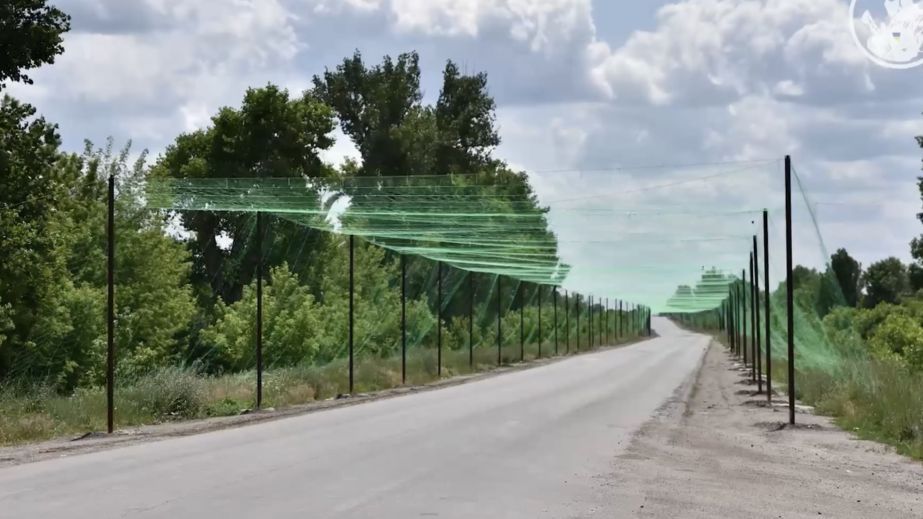
Netting tunnel over a road in Zaporizhzhia, protecting civilians and vehicles from FPV drone attacks.

Ukraine’s government has approved a Strategy for the Engineering Equipment of Defensive Lines through 2028. It makes strengthening anti-drone protection of logistics routes one of its priorities, the Defense Ministry says.

Russian FPV drones hunt almost anything that moves within 15 to 30 kilometers of the front, which has forced Ukraine to drape its logistics roads in overhead netting, wire-mesh canopies and reinforced barriers that catch an attacking drone before it reaches a vehicle. Ukraine had already built more than 1,066 kilometers of such protection by mid-July and aims for 4,000 kilometers by the end of 2026.

The new strategy turns that scramble into a single national standard, setting deadlines, assigning responsibility, and building control mechanisms, the ministry explained.

“Solutions that have proven effective we will scale. But we will also account for new challenges, threats and changes in Russian tactics. The main goal is the protection of our service members and civilians,” the Defense Ministry says.

One digital map for every trench and net

The plan puts the entire defensive network onto a screen. To track and monitor the state of defensive lines, Ukraine will introduce a single digital geographic information platform, built on and expanding existing systems, including the DELTA situational-awareness system.

The database will hold object passports, photographs, and data on each structure’s location and condition, helping officials verify that work is done, identify repair needs, and distribute resources on evidence rather than guesswork.

From trenches to supply roads, one cycle

The strategy covers the full span of military engineering. Its main lines of work are building and maintaining fortifications, laying engineering obstacles, strengthening anti-drone protection of logistics routes, using modern designs, materials and camouflage, creating a reserve of construction materials, and maintaining digital records of the work.

Developed on the Defense Ministry’s initiative based on combat experience, the document spans the entire cycle from planning and construction to accounting, upkeep, and restoration, the ministry noted. Financing will come from the state and local budgets for the relevant year and from other sources not prohibited by law.

Russia pushes its drone war into Volyn Oblast on NATO border, cutting power to 370,000 as strikes creep toward EU

16 octobre 2026 à 06:13

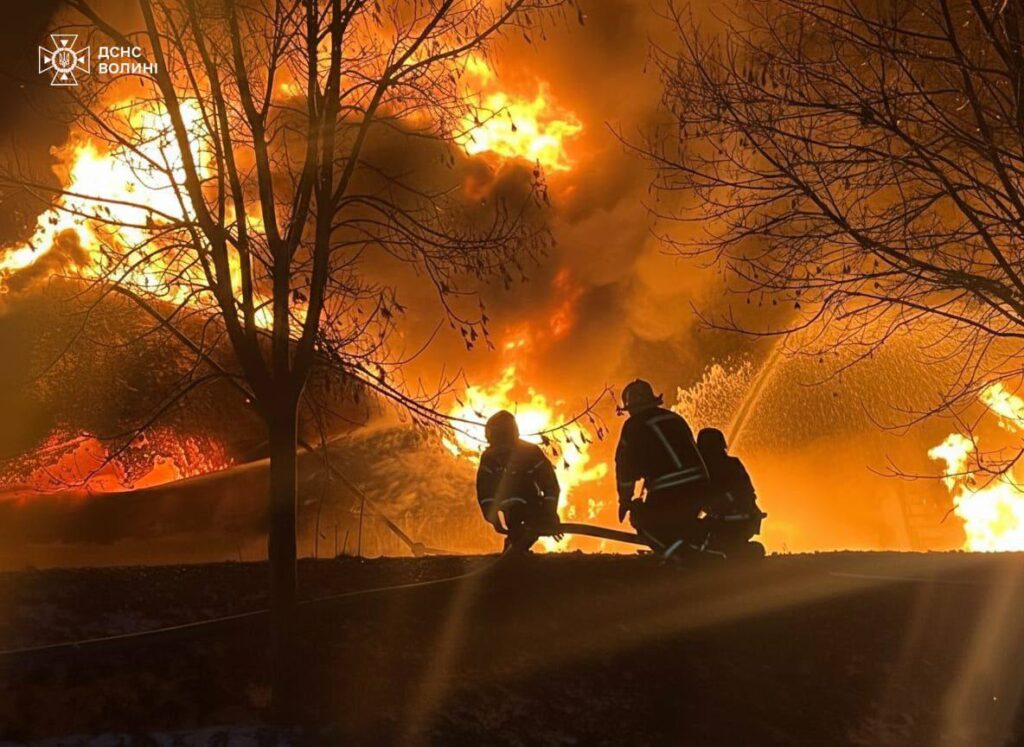
Emergency workers responding to a blaze following a Russian attack in Volyn Oblast, Ukraine. Photo: DSNS Volyn

Russia is pushing its drone war westward, into a Ukrainian region that borders NATO. Russian drones attacked Volyn Oblast through the night of 16 October, hitting civilian and critical infrastructure and leaving 370,000 subscribers without power, regional administration head Roman Romaniuk says. Volyn borders Poland, a NATO member, and Belarus, a Russian ally.

Russia’s jet-powered drones keep flying farther west, and now the strikes reach deeper into the center and the EU-facing frontier too. Moscow launched more than 850 Shahed drones at Ukraine in about a day and a half, including a record roughly 360 on the central Kirovohrad Oblast, precisely as a speed cap on Starlink degraded the interceptor drones Ukraine’s air defense relies on.

Moscow escalates its attacks after winning sanctions relief from the diesel deal of US President Donald Trump and Russian President Vladimir Putin and sensing pressure on Ukraine, exploiting the moment its defenses were artificially restricted.

“Russia takes advantage of every such moment and must be held accountable for what it does,” Zelenskyy says, noting the skies had not been clear for a single hour.

A night that turned deadly in the west

In Volyn Oblast, the damage was concrete and lethal. Debris fell on a power line in the central Lutsk community, cutting electricity and disrupting water supply, and the city lost power entirely with public transport halted, Lutsk council secretary Andrii Razumovskyi says.

The heaviest toll came in Manevychi, where a drone hit the private enterprise Agrofrukt LTD, killing one person and injuring eight. By 10:46 AM, the fire there was contained, and residents were asked to seal windows, doors, and vents due to the risk of an ammonia release from a damaged facility.

A capital-to-border map of the same assault

Throughout the day, Russia has struck Kyiv and its region, and the Dnipropetrovsk, Odesa, Rivne, Kharkiv and Donetsk regions, along with Zaporizhzhia, Kherson, Mykolaiv, Vinnytsia, Zhytomyr, Khmelnytskyi, Poltava and Ivano-Frankivsk.

By reaching western border regions at once, Russia is widening the pressure on civilians across the country and edging closer to the EU.

  • ✇Euromaidan Press
  • One Ukraine out-produced third of EU’s steel. Russian strikes have now cut its output to zero
    Ukraine produced no steel at all last month, Oleksandr Kalenkov, president of the steelmakers’ association Ukrmetalurhprom, says, according to Ukrainian Radio. Russian missiles have destroyed the blast furnaces at its plants, stopping an industry that ran for more than 150 years. At its peak, Ukraine smelted more than 42 million tons of steel a year, more than a third of what the entire EU produced last year. Before the full-scale invasion, steel and mining earned over a third of Ukrain
     

One Ukraine out-produced third of EU’s steel. Russian strikes have now cut its output to zero

16 octobre 2026 à 05:55

Ukraine produced no steel at all last month, Oleksandr Kalenkov, president of the steelmakers’ association Ukrmetalurhprom, says, according to Ukrainian Radio. Russian missiles have destroyed the blast furnaces at its plants, stopping an industry that ran for more than 150 years.

At its peak, Ukraine smelted more than 42 million tons of steel a year, more than a third of what the entire EU produced last year. Before the full-scale invasion, steel and mining earned over a third of Ukraine’s exports and up to 12% of GDP. With the furnaces down, the country now risks losing billions of euros in export earnings, tax revenue, and thousands of jobs, Kalenkov warns.

“What is happening now is not just a hard or critical situation. It is a tragic situation when an industry more than 150 years old produced zero steel last month,” Kalenkov says.

The collapse is the end of a long descent. Output fell from more than 40 million tons to 22 to 23 million after 2014, and to 7.5 million last year, Kalenkov says. Fifteen years ago, the sector earned half the country’s foreign currency.

Steel remains Ukraine’s second-largest foreign-currency earner, employing more than 70,000 people directly and paying close to $1 billion a year in taxes.

A pillar knocked out piece by piece since 2014

The war has chipped at the industry for more than a decade. Ukraine lost about a third of its capacity after 2014, along with almost all its coking-coal mines. It later lost the last one, the Pokrovske mine, too. In 2022 it lost the Mariupol production site, more than 40% of what Ukraine then made, he recalls.

Even the plants left on government-controlled land have worked in survival mode since.

In 2021, the last year before the invasion, the mining and metals complex still accounted for more than a third of all exports and accounted for up to 12% of GDP, rising above 40% of regional output in Zaporizhzhia, Donetsk and Dnipropetrovsk oblasts.

The strikes that finished the furnaces

The decisive blow came from the air. Since August, a huge number of missiles, both ballistic and cruise, have targeted the plants, and practically all the blast furnaces still working were destroyed, he adds.

Ukraine’s largest steelworks, ArcelorMittal Kryvyi Rih, began a cold shutdown after four Russian attacks that killed six workers and halted primary steel production.

Kalenkov’s figure differs from one his association gave earlier: Ukrmetalurhprom reported that Ukraine’s steel output fell 4.7-fold year on year in September, to 131,000 tons, NV reported. It is not clear whether Kalenkov meant September or a narrower measure.

❌