❌

Vue normale

  • ✇Euromaidan Press
  • Frozen assets, embargoes, entry bans: Ukraine names the pressure it wants the EU to put on Moscow
    Ukraine wants the EU to force Moscow into a ceasefire with frozen Russian assets, trade and transit embargoes, maritime bans, and entry bans, Ukrainian Foreign Minister Andrii Sybiha wrote on X after the EU Foreign Affairs Council in Luxembourg on 12 October 2026. He also welcomed new EU sanctions listings adopted that day and progress in Ukraine’s EU accession talks. Kyiv has spent this month laying out truce formats it would accept while awaiting Russia’s position on talks, and the le
     

Frozen assets, embargoes, entry bans: Ukraine names the pressure it wants the EU to put on Moscow

13 octobre 2026 à 12:20

ukraine's defenses against jet drones aren't built up yet its f-16s getting more rounds meantime · post ukrainian foreign minister andrii sybiha сибіга andrij 7ca21 ukraine news reports

Ukraine wants the EU to force Moscow into a ceasefire with frozen Russian assets, trade and transit embargoes, maritime bans, and entry bans, Ukrainian Foreign Minister Andrii Sybiha wrote on X after the EU Foreign Affairs Council in Luxembourg on 12 October 2026. He also welcomed new EU sanctions listings adopted that day and progress in Ukraine’s EU accession talks.

Kyiv has spent this month laying out truce formats it would accept while awaiting Russia’s position on talks, and the levers it is pressing the EU to use include frozen Russian assets that EU leaders failed to agree on tapping last December.

The pressure Kyiv wants from the EU

Sybiha called it “devastating pressure.” He also wants Russian combatants and their families barred from the EU, maximum visa restrictions, and Russia’s isolation in culture and sports.

I was pleased to attend the EU Foreign Affairs Council today.

It is time for Europe to define its strong role. Our future and our security are in our hands.

Now is the time for real European pressure on Moscow. Not half-measures, but devastating pressure: frozen assets, trade… pic.twitter.com/AnI8h6HXbs

— Andrii Sybiha 🇺🇦 (@andrii_sybiha) October 12, 2026

His post named three types of ceasefire—energy, food security, and a full ceasefire—without saying whether Kyiv would accept them separately. Earlier this month, he told journalists Ukraine was ready for an energy and Black Sea ceasefire “but only in such a combination.”

New sanctions listings and two more accession clusters

The minister welcomed the EU’s 12 October adoption of new sanctions listings against Russia—the largest single expansion of the bloc’s blacklist. EU ambassadors agreed on the 1,646 names on 7 October. They include 1,569 tied to Russia’s military industry and 77 to its so-called State Duma elections. The listings are separate from the EU’s 22nd sanctions package, which the EU has yet to adopt.

He also welcomed the EU’s “green light” for opening two more clusters in Ukraine’s EU accession talks: Internal Market, and Competitiveness and Inclusive Growth. The formal opening was scheduled for an intergovernmental conference on 13 October.

Front-line briefing and aid requests

Sybiha said he briefed European colleagues on the front-line situation, Russia’s plans, and ways to deprive it of its advantages, and that he passed partners specific requests for aid. He reaffirmed Ukraine’s commitment to reforms.

  • ✇Euromaidan Press
  • Germany works to organize a Coalition of the Willing meeting as Russia strikes Ukraine’s energy sector
    Germany is preparing a new meeting of the Coalition of the Willing to coordinate further support for Ukraine, President Volodymyr Zelenskyy said on 12 October following a conversation with German Chancellor Friedrich Merz. Russia continues to strike Ukraine’s energy infrastructure despite US President Donald Trump’s claim that Moscow has agreed to an energy truce. German Chancellor Friedrich Merz is initiating a meeting of European leaders to discuss assistance to Ukraine in this situat
     

Germany works to organize a Coalition of the Willing meeting as Russia strikes Ukraine’s energy sector

13 octobre 2026 à 12:02

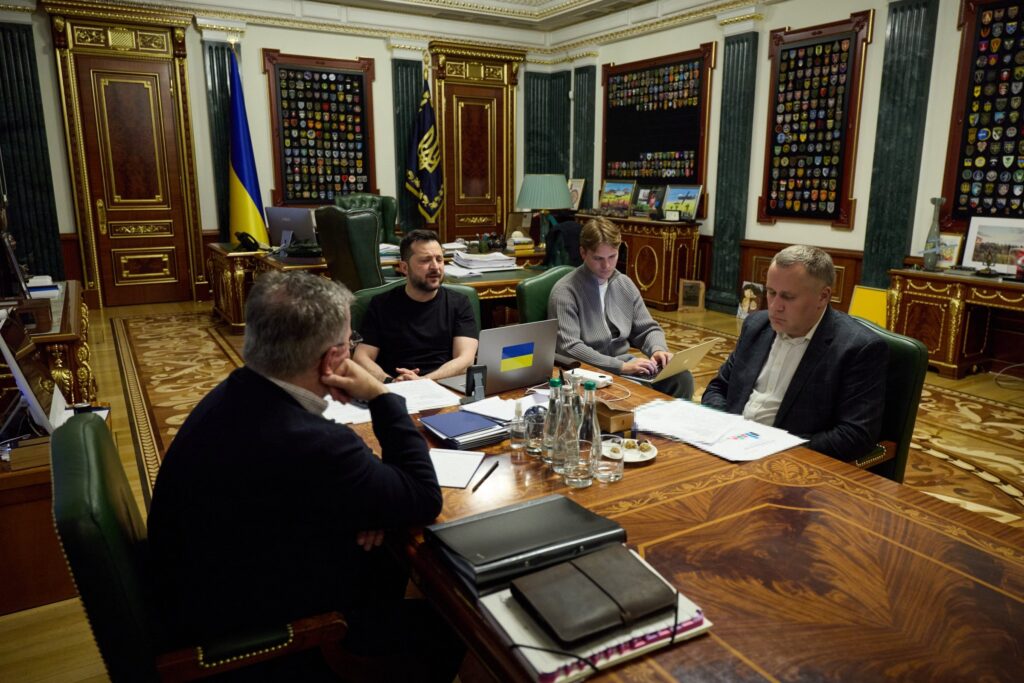
Ukrainian President Volodymyr Zelenskyy during a phone call with German Chancellor Friedrich Merz, 12 October 2026. Photo: Volodymyr Zelenskyy/X

Germany is preparing a new meeting of the Coalition of the Willing to coordinate further support for Ukraine, President Volodymyr Zelenskyy said on 12 October following a conversation with German Chancellor Friedrich Merz.

Russia continues to strike Ukraine’s energy infrastructure despite US President Donald Trump’s claim that Moscow has agreed to an energy truce. German Chancellor Friedrich Merz is initiating a meeting of European leaders to discuss assistance to Ukraine in this situation.

Kyiv and Berlin have also agreed to hold a meeting of national security advisers in the E3 format, with Ukraine participating, according to the statement. The format involves an informal grouping of three leading European countries: the United Kingdom, France and Germany.

Zelenskyy and Merz discuss energy truce and support for Ukraine

During the conversation, the two sides also discussed US President Donald Trump’s proposal for an energy truce and Russia’s subsequent actions. Russian forces continue to attack Ukraine’s energy infrastructure, Zelenskyy noted.

“This is exactly how the Russians behave when pressure eases. It is very important that Europe continue to act on principle,” Zelenskyy stressed.

German Chancellor Friedrich Merz speaks online with Ukrainian President Volodymyr Zelenskyy, 12 October 2026. Photo: Volodymyr Zelenskyy/X

Germany is coordinating preparations for a meeting of the Coalition of the Willing, the Ukrainian president noted. The two sides also discussed support for Ukraine’s financial stability. Further steps are to be coordinated in greater detail during a meeting scheduled for this week, Zelenskyy said.

The Coalition of the Willing seeks additional support for Ukraine

The Coalition of the Willing was initiated by the United Kingdom and France, which held talks with representatives of 37 countries in March 2025 on supporting Ukraine in the event of a peace agreement. The initiative envisaged financial assistance and the deployment of troops, air forces or naval forces to protect Ukraine against renewed Russian aggression, Bloomberg reported.

The latest meeting of the Coalition of the Willing took place on 24 August and was the 16th meeting, according to a statement on the website of the President of Ukraine. Zelenskyy called on partners to strengthen Ukraine’s air defense and provide at least 300 missiles for Patriot systems for the winter, the statement said.

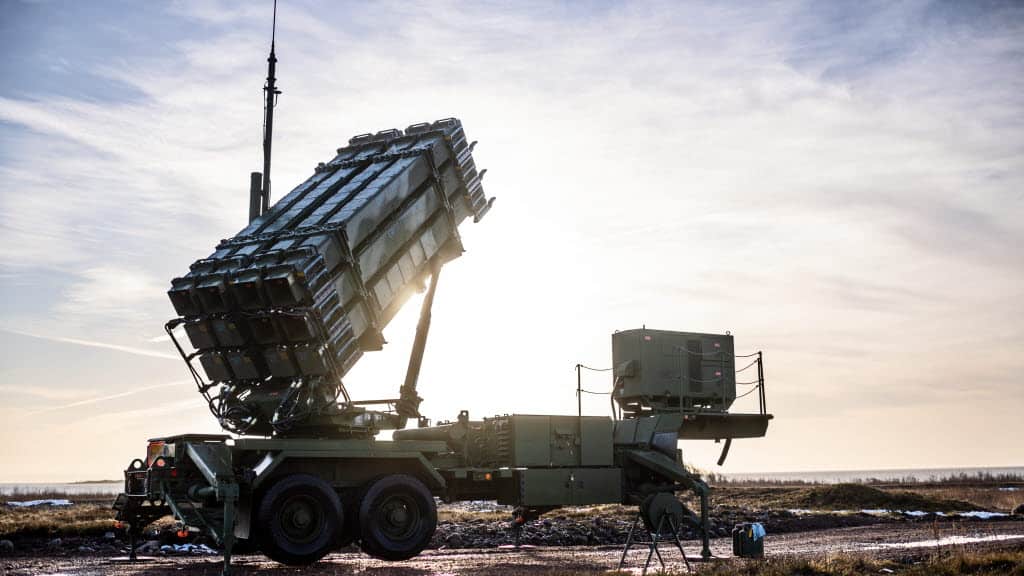
Patriot PAC-3 surface-to-air missile system.
The Patriot PAC-3 surface-to-air missile system. Photo: Swedish Ministry of Defense

The president also proposed bringing forward part of the European loan financing planned for 2027 so that Ukraine could receive the funds this year. He separately stressed the need to find a mechanism for using frozen Russian assets to defend Ukraine and to unblock the maritime corridor in the Black Sea.

“We value this format—the Coalition of the Willing. It brings together countries that are ready not only to talk about security but also to act. We need this—to act and build real security together,” Zelenskyy stressed.

A ceasefire in words, but fresh attacks on energy infrastructure in practice

Ukraine and Russia had allegedly agreed to an immediate energy ceasefire, US President Donald Trump said on Truth Social on 11 October. However, at the time of publication, neither Kyiv nor Moscow had confirmed such an agreement, Ukrainska Pravda reported.

Ukraine supports the ceasefire and is awaiting details from the US side, Volodymyr Zelenskyy said in a post on X the same day. Russia must also agree to halt the strikes, he stressed.

Ukrainian forces had received the relevant orders, and Kyiv was ready to refrain from striking Russian energy infrastructure provided Russia reciprocated, Zelenskyy said in his evening address on 11 October.

Russia continued attacking Ukraine’s energy infrastructure after the ceasefire was announced, including striking a gas production facility and a petrol station, Zelenskyy said on his official Telegram channel on 12 October. Moscow had shown no willingness to abide by the ceasefire, the president added.

❌