❌

Vue normale

  • ✇Euromaidan Press
  • Ukraine’s snipers didn’t vanish in the drone war—their job changed beyond recognition
    Drones get most of the attention in this war, and deservedly so—but the snipers are still out there, two Ukrainian marksmen told Army Inform, and the same drones have made their work far harder to survive. It now turns on watching, not shooting: long stretches at a hidden position, a thermal scope always running, and a constant fight to stay unseen. Across the drone-saturated front, cheap cameras overhead have rewritten nearly every job—infantry, logistics crews, and now marksmen—so tha
     

Ukraine’s snipers didn’t vanish in the drone war—their job changed beyond recognition

18 septembre 2026 à 08:54

ukraine's snipers didn't vanish drone war—their job changed beyond recognition · post ukrainian sniper ukraine news reports

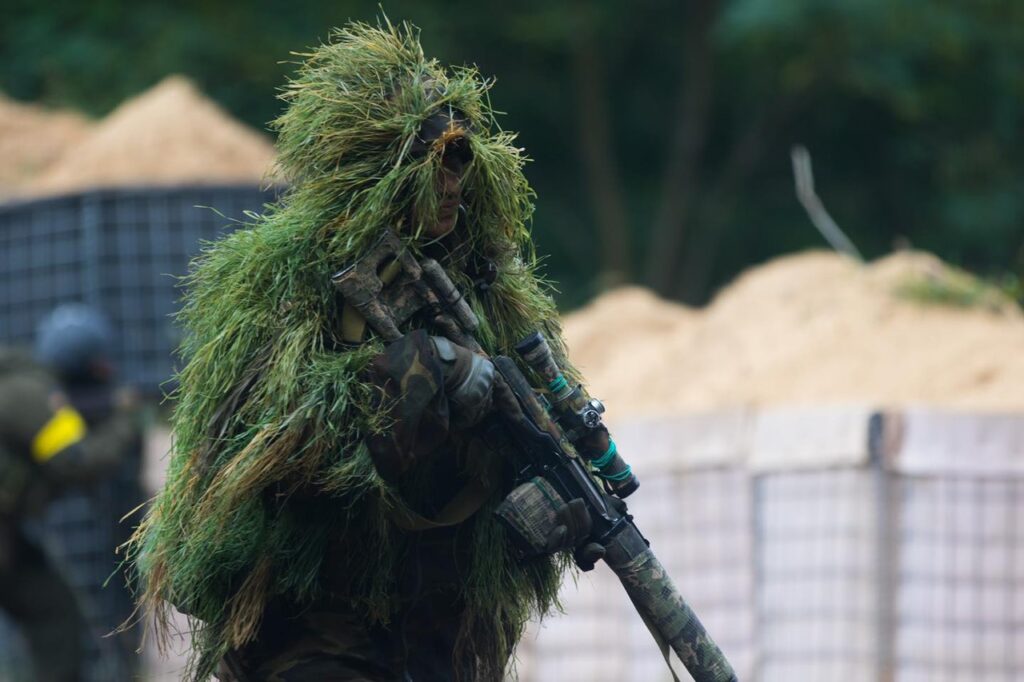
Drones get most of the attention in this war, and deservedly so—but the snipers are still out there, two Ukrainian marksmen told Army Inform, and the same drones have made their work far harder to survive. It now turns on watching, not shooting: long stretches at a hidden position, a thermal scope always running, and a constant fight to stay unseen.

Across the drone-saturated front, cheap cameras overhead have rewritten nearly every job—infantry, logistics crews, and now marksmen—so that surviving depends less on firepower than on never being seen.

The job is mostly watching

The men—a squad leader in a special-purpose sniper company, callsign Efiop, and his partner Maister—serve in the National Guard of Ukraine's 3rd Operational Purpose Brigade Spartan. Maister worked a factory milling machine before joining in 2022. He saw what Russian troops were doing, he said, and Ukrainian children started dying: he went to fight for the children, and he has a daughter of his own. A team takes a sector and holds it around the clock through a thermal scope.

"We can sit 40 days and never fire a shot. Or we go in, and in a single day we take down a lot of them," Efiop said.

His longest stint at one spot ran 48 days, and the greatest distance he has worked was 2,540 meters—more than a mile and a half.

Up to 154 pounds on your back, over 12 miles to cross

Reaching a position is often the hardest part. A sniper carries a vest, helmet, an assault rifle and the sniper rifle, and what supplies will fit—60 to 70 kilograms, or 132 to 154 pounds. They stay more than a month, and a month's worth will not go on one back. That load sometimes crosses more than 20 kilometers, over 12 miles, of open ground with no tree line to hide behind.

"You don't walk, you run," Maister said.

Lately it has eased a little: food can be dropped in by a heavy Vampire bomber drone.

Drones rewrote the rulebook

The biggest shift came from the sky. Russian drones with thermal cameras can see a bullet in flight because it is warm, Efiop said, and then burn out the position.

"They caught us like that once. We took out three, they saw where we fired from and burned the spot. We moved right away, and everyone lived," Efiop noted.

Now the snipers watch remotely from a safer place instead of lying behind the scope for hours. Once, that safer setup saved a life outright: a mortar round came in and pierced only the rifle scope.

  • ✇Euromaidan Press
  • Russian e-commerce will lose $4.8 billion to the drone campaign against its warehouses, analysts estimate
    Ukrainian drone strikes on the warehouses of Russia's biggest online marketplaces will cost the country's e-commerce 400 million orders and 400 billion rubles ($4.8 billion) in revenue this year, the research firm Data Insight estimates, The Moscow Times reported. It prices what the campaign has done to a whole consumer market, not only to the companies whose warehouses burned. Sellers are cutting back on the platform at the center of it, and Wildberries' payout delays are pushing some
     

Russian e-commerce will lose $4.8 billion to the drone campaign against its warehouses, analysts estimate

18 septembre 2026 à 07:12

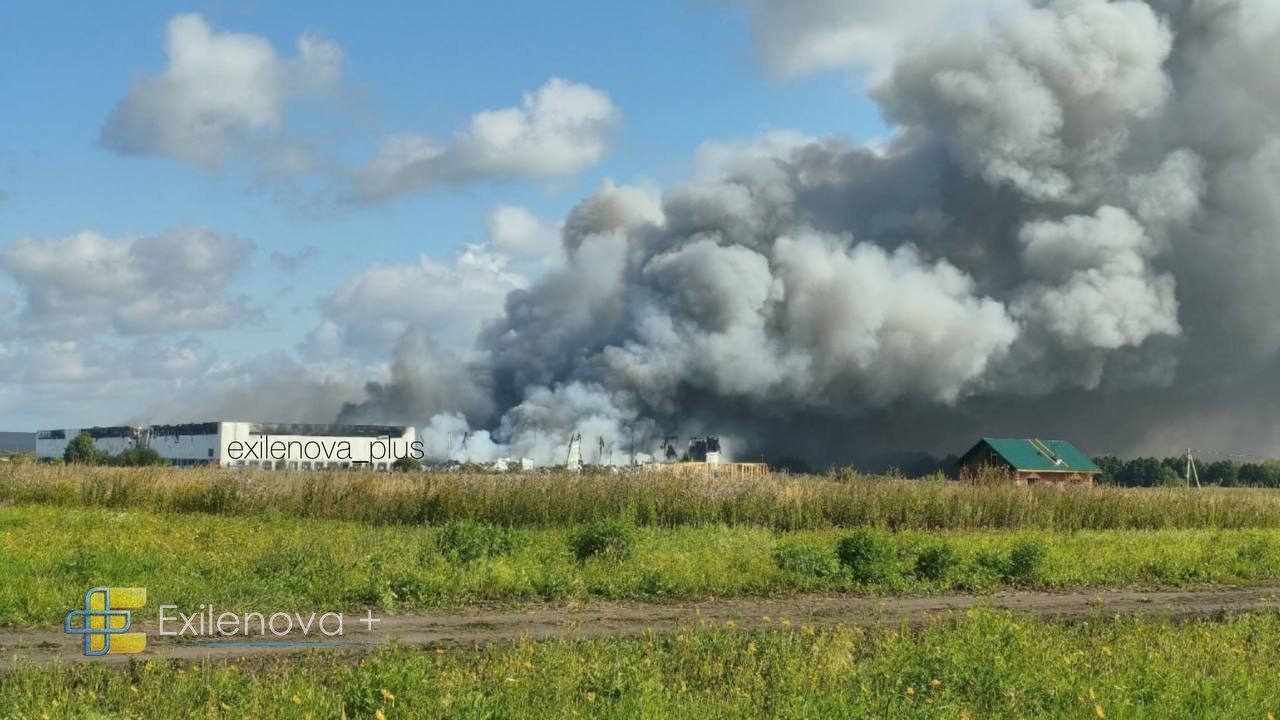
warehouse built hold 54 million items fire tambov oblast russia · post helicopter carrying water bucket above burning wildberries logistics center kotovsk 26 2026 exilenova+ ukraine news ukrainian reports

Ukrainian drone strikes on the warehouses of Russia's biggest online marketplaces will cost the country's e-commerce 400 million orders and 400 billion rubles ($4.8 billion) in revenue this year, the research firm Data Insight estimates, The Moscow Times reported. It prices what the campaign has done to a whole consumer market, not only to the companies whose warehouses burned. Sellers are cutting back on the platform at the center of it, and Wildberries' payout delays are pushing some of them out.

Ukraine's long-range drone campaign has widened from military targets to the infrastructure that funds and equips the war, and the country's biggest online marketplaces sit inside that logic: Russians bought $300 million in body armor, thermal sights, and drone components on Ozon in the twelve months to July.

The forecast, cut by a fifth

Data Insight lowered its growth forecast for Russian online retail by 20%, founder Fyodor Virin said. The market will now grow to 9.6 billion orders this year instead of 10 billion, and to 15 trillion rubles ($178 billion) in sales instead of 15.4 trillion.

That is exclusively the effect of the Ukrainian strikes on marketplace warehouses, Virin said, and most of the loss falls on Wildberries. The bombardment of the depots cut sales because goods were unavailable in a given city or entirely, and because delivery times grew as parcels had to travel further.

All of it lands in the second half of the year. Strikes on Wildberries warehouses began on 18 July and on Ozon's on 25 August, according to Virin. Euromaidan Press reported the first strike on an Ozon warehouse on 22 August.

About 30% of the orders that got stuck or disappeared from sale were cancelled outright, Virin estimates. The rest of the unmet demand went mostly to other online platforms and, to a lesser degree, to physical retail. Payout delays that began in mid-August have pushed some sellers to pull their stock, and Wildberries blamed the first missed round on a DDoS attack.

warehouse built hold 54 million items fire tambov oblast russia · post burned-out buildings wildberries logistics center kotovsk 26 2026 exilenova+ ukraine news ukrainian reports
Explore further

A warehouse built to hold up to 54 million items burned down in Tambov Oblast, Russia

What the companies lost

Damage to RWB, the company that runs Wildberries, from the loss of warehouses and infrastructure may reach 147 to 280 billion rubles ($1.7–3.3 billion), while sellers have provisionally lost 445 to 507 billion rubles ($5.3–6 billion), Data Insight's lead analyst Sergei Semko estimated. All of the marketplace's key logistics complexes have been hit, and it could lose a fifth of its network and over half its main hubs at once.

Much of what the sellers lost will not come back. On 22 July, Wildberries' founder said the warehouses were insured but that standard policies do not cover drone-strike risk, and Ozon has told sellers that losses from military action are an entrepreneurial risk neither it nor insurers will compensate.

Total losses for Ozon and its sellers are far lower, at around 100 billion rubles ($1.2 billion). Ozon has a much more branched warehouse network and rents most of its large complexes, Alfa-Bank analysts said. Its shares still fell as much as 29% in a single August session on a day when the Moscow exchange lost 2.9%.

❌