❌

Vue normale

Ukraine keeps hitting the fuel that Russia’s war runs on. Its latest target is the Slavyansk-EKO refinery, with an annual processing capacity of at least 3 million tonnes
14 septembre 2026 à 15:15

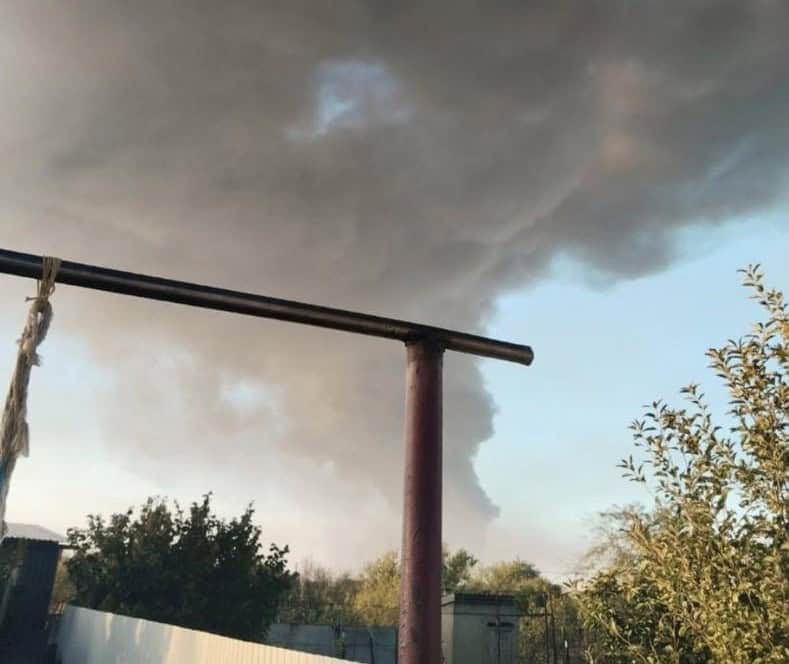
Smoke from a fire at the oil refinery in Slavyansk-on-Kuban. 13 September, 2026. Photo: Exilenova+

An oil refinery in Slavyansk-on-Kuban in southern Russia was attacked overnight on 13 September, Astra reported. By morning, residents began posting videos showing smoke over the refinery and nearby areas. That same morning, Ukraine’s Defense Intelligence (HUR) reported that Ukrainian drones had struck the Slavyansk-EKO refinery.

Ukrainian strikes on Russian oil refineries have become systematic, aimed in part at reducing the Russian military’s access to fuel, which is critical for waging the war. Ukrainian forces have been striking strategic facilities located hundreds of kilometers from the front line.

The design capacity of Slavyansk-EKO is approximately 5.2 million tonnes per year, though actual volumes are lower by about one to two million tonnes, Militarnyi reports.

Thick smoke visible for dozens of kilometers

The Ukrainian strike hit a key oil-processing unit and the facility’s oil storage tank farm, which “fuels the criminal war against Ukraine,” HUR reported.

Two oil storage tanks were destroyed in the strike, according to photos published by Dnipro Osint. Militarnyi noted that the photos also show damage to neighboring tanks.
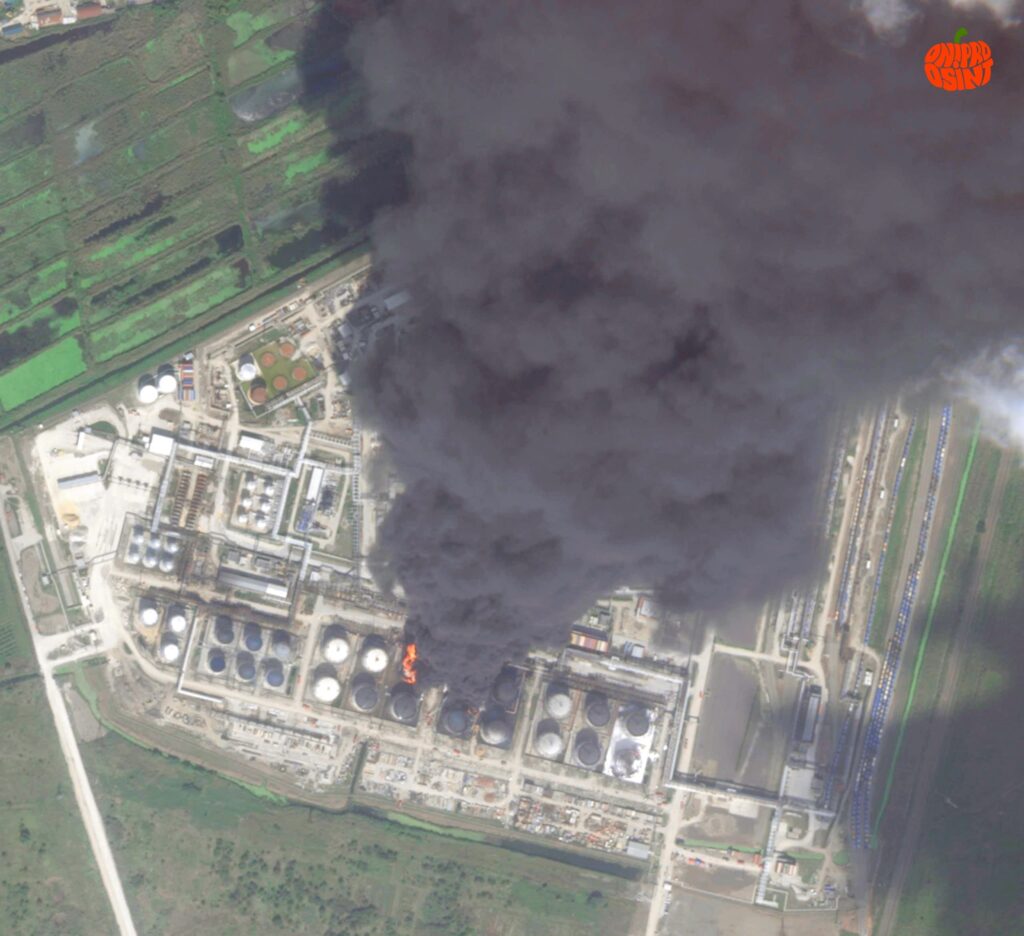
Satellite imagery of the Slavyansk oil refinery after a nighttime UAV attack on 13 September. Part of the refinery is obscured by thick smoke from a fire in the tank farm, Krasnodar Krai, Russia. Photo: Dnipro Osint


The strike reportedly hit the area containing the facility’s largest storage tanks. The refinery operates using purchased or tolling crude oil because it does not have its own crude oil production base.
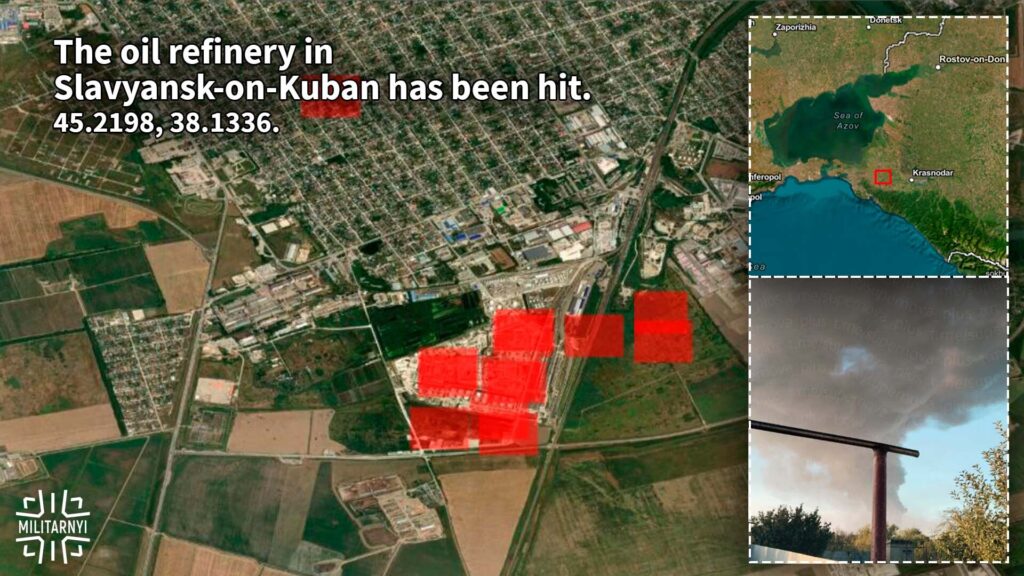
Fire broke out at the oil refinery in Slavyansk-on-Kuban following an attack by Ukrainian drones on September 13, 2026. Analysis by Militarnyi, with an Esri map and NASA FIRMS data

The refinery has been targeted before

Slavyansk-EKO is one of the largest independent oil refineries in southern Russia. The facility is located in Slavyansk-on-Kuban, about 69 kilometers northwest of Krasnodar.

Ukraine’s General Staff said that the refinery is “part of the energy rear of the Russian Federation and involved in supplying the armed forces of the aggressor.”

Before the 13 September strike, Ukrainian drones had struck the refinery at least four times, starting in 2024:

  • 27 April 2024 — a Ukrainian drone attack damaged the Slavyansk refinery, after which a fire broke out at the facility.
  • 19 May 2024 — SBU drones attacked the Slavyansk refinery, after which the facility suspended operations.
  • 26 January 2026 — Ukrainian Defense Forces struck infrastructure at the Slavyansk-EKO refinery. According to preliminary data, elements of the primary oil refining unit were damaged.
  • Five months later, on 28 June, Ukraine struck the Slavyansk refinery again, causing a large fire at the facility. EP noted that the refinery supplies fuel, including to occupied Crimea.
  • ✇Euromaidan Press
  • Ukraine hit the radar that guards Sochi, the Russian resort city it struck ten days ago
    Ukraine's Defense Forces struck the 92N6 multifunction radar of a Russian S-400 Triumf air defense system in Sochi, the General Staff said on 14 September. The S-400 is Russia's longest-range air defense system.  The radar tracks aerial targets and guides the system's missiles onto them, which makes it the part of an S-400 that decides whether the launchers can fire at anything. The strike came on 13 September and overnight into 14 September, alongside hits on drone launch sites, radars
     

Ukraine hit the radar that guards Sochi, the Russian resort city it struck ten days ago

14 septembre 2026 à 14:11

ukraine hit radar guards sochi russian resort city has been striking all month · post drone explodes air over russia after defense 14 2026 explosion fire groups sept news ukrainian

Ukraine's Defense Forces struck the 92N6 multifunction radar of a Russian S-400 Triumf air defense system in Sochi, the General Staff said on 14 September. The S-400 is Russia's longest-range air defense system.  The radar tracks aerial targets and guides the system's missiles onto them, which makes it the part of an S-400 that decides whether the launchers can fire at anything. The strike came on 13 September and overnight into 14 September, alongside hits on drone launch sites, radars, and relays elsewhere in Russia and occupied Crimea, according to the military.

Russia's full-scale war against Ukraine is in its fifth year, and Ukraine now carries it into Russia's rear, where the radars it keeps hitting are what widens the corridor for the next deep strike.

What was hit in Sochi

Ukrainian monitoring channels reported the explosions hours before the military did. Ukrainian Telegram channel Exilenova+ published night footage from Sochi at 3:29 with the sound of small arms fire, drone engines, and an explosion in the air, then a second clip in which the blast came on the ground. At 4:25 the channel posted a clip of distant explosions in Dagomys, a suburb of Sochi.

Sochi's regional operational headquarters claimed that falling drone debris injured five people in the city, including a child, and that one adult went to hospital and three private houses took damage. Russia's Defense Ministry claimed its air defenses intercepted and destroyed 399 Ukrainian drones overnight.

By 11:34, Exilenova+ reported that a new-generation medium-range air defense system and the infrastructure of a military unit near Dagomys had preliminarily been hit overnight.

Sochi is a Russian resort city on the eastern Black Sea coast, about 600 km from the front line in southern Ukraine. Drones hit two fuel depots there and an air defense position near the Abkhazia border on 4 September, and satellite imagery later showed nine destroyed storage tanks and impact marks at the air defense position, which Russian officials had never acknowledged.

💥 This night, Russians reported explosions and drone attacks in the Krasnodar region, - OSINT channels.

There were reports of loud noises in Sochi and Dagomys, at the very least. However, there is currently no information about the consequences of the attack. pic.twitter.com/IhOYlN9JPv

— Gianl1974 (@Gianl1974) September 14, 2026

The rest of the target list

Near Kursk and the occupied city of Donetsk, Ukrainian forces hit sites where Russia stores, prepares, and launches attack drones, the General Staff said. A drone control point of a Russian unit was struck in Novohrodivka, Donetsk Oblast.

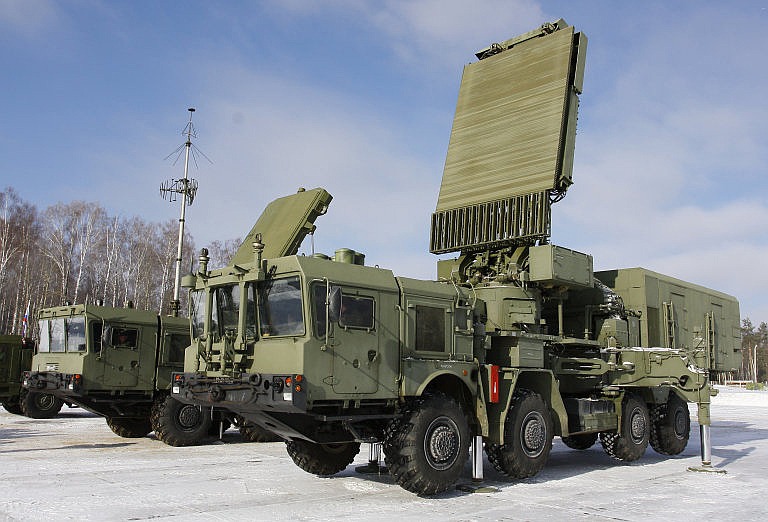
ukraine says struck russia’s prized s-400 radar crimea — drones system meant detect russia's 92n6e station russian defense ministry militarnyi 92n6e96l6e-missilesru-3s ukraine’s special operations forces (sof) said 30 2025 triumf
Russia's 92N6E radar station. Illustrative photo: Russian Defense Ministry, via Militarnyi

Radar stations were hit in Litizh, Trostenchik, and Lipovka in Bryansk Oblast, and three signal relays in Rokhmanovo, Krasny Styag, and Kamen in the same oblast. At Saky airfield in occupied Crimea, Ukrainian forces struck a short-range radio navigation system.

The extent of the damage is being assessed, the General Staff said, adding that work against key Russian military targets continues.

  • ✇404 Media
  • Inside ‘Project Lily’: The Humans Reading Your ChatGPT Chats
    OpenAI is hiring hundreds of contractors who read a massive stream of real users’ ChatGPT prompts, with the prompts sometimes including sensitive personal information, 404 Media has learned. The prompts these people review can include whole conversations between users and the chatbot, conversations that most of ChatGPT’s more than 900 million users probably don’t realize may be read by actual people.The goal of these prompt review teams is to improve the responses ChatGPT gives to its users,
     

Inside ‘Project Lily’: The Humans Reading Your ChatGPT Chats

14 septembre 2026 à 10:22
Inside ‘Project Lily’: The Humans Reading Your ChatGPT Chats

OpenAI is hiring hundreds of contractors who read a massive stream of real users’ ChatGPT prompts, with the prompts sometimes including sensitive personal information, 404 Media has learned. The prompts these people review can include whole conversations between users and the chatbot, conversations that most of ChatGPT’s more than 900 million users probably don’t realize may be read by actual people.

The goal of these prompt review teams is to improve the responses ChatGPT gives to its users, with the contractors rating and critiquing the chatbot’s generated replies. Internal documents seen by 404 Media show contractors training ChatGPT to not anthropomorphize itself, and to be less sycophantic, a key problem for OpenAI whose over-sycophantic 4o model led in part to multiple peoples’ suicides, according to various lawsuits.

💡
Do you work as a prompt reviewer for OpenAI or Anthropic? I would love to hear from you. Using a non-work device, you can message me securely on Signal at joseph.404 or send me an email at joseph@404media.co.

The news presents a major privacy risk for ChatGPT’s users, with people often using ChatGPT as a therapist, professional assistant, or digital friend, and providing it with all sorts of intimate details about their lives. The contractors don’t see ChatGPT usernames, and OpenAI says it tries to remove personal information before prompts reach the reviewers, but the company acknowledged sensitive details can still get through. 

The news also dispels the misconception that these models are improving only because of OpenAI’s mass scraping of the internet, the talent of its well-paid engineering and AI teams, or the power of its newer models. An important and overlooked part are the outside contractors paid to read and review ChatGPT responses to real prompts over and over again. Anthropic confirmed to 404 Media it is also using human review to improve its models.

“No,” someone who works with the prompts said when asked if they think ChatGPT users know that humans are reading their chats. “I don’t think they would imagine some contractor somewhere [...] is analyzing the conversations.”

❌