Vue normale

For first time, Ukraine is tendering ground robots to ministry-set specifications and no maker can take more than half of any class
25 août 2026 à 15:41

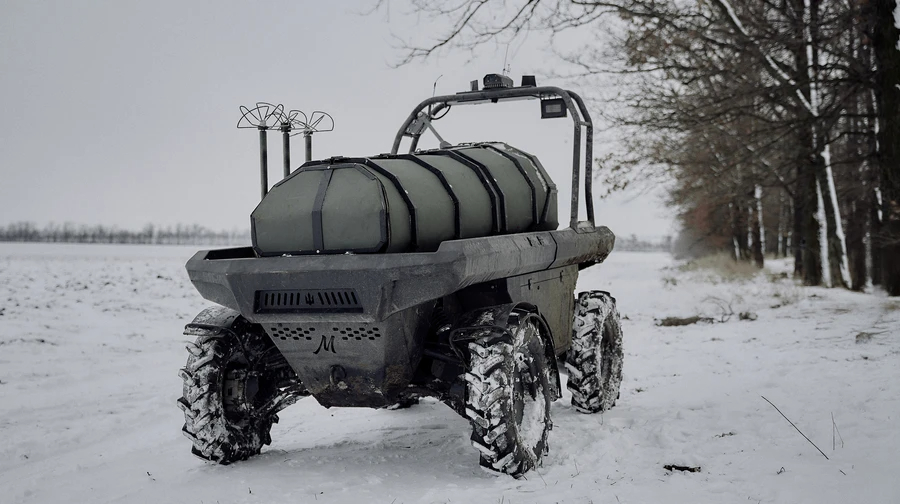
The MAUL unmanned ground vehicle. Source: AIDronesUA

Ukraine's ground robots ran more than 100,000 missions in the first eight months of 2026. The Defense Procurement Agency will now buy logistics and strike ground robotic complexes according to specifications set by the Defense Ministry, rather than approving models one at a time, the ministry announced.

The mechanism is three days old. The agency applied the same structure to fiber-optic FPV drones on 22 August—classes, multiple lots each, no supplier above half a class. Ukraine is standardizing how it buys entire weapons categories, one category at a time.

The rules sort makers by class

Complexes will be divided into classes by operating range and payload, with four to five lots per class. No single manufacturer may take more than half the order within one class.

Suppliers must meet the technical specifications and hold at least one codified ground robotic complex. The procurement runs in a closed environment under defense security requirements.

"A tender is one of the best instruments for this, because we can buy more equipment for the same money and minimize the risk of supply disruptions by splitting the order among different manufacturers," Deputy Defense Minister Mstyslav Banik said.

Mission volume keeps climbing

Monthly figures of ground robot missions logged in the DELTA combat system rose almost without interruption: 7,511 in January, 11,028 in April, 19,969 in July. Units recorded another 15,729 between 1 and 20 August, about 790 a day compared with roughly 640 a day in July, The Defense Post reported.

Ukraine has contracted more than 22,000 ground robots since January, nearly double the total for all of 2025. The number of units operating them grew from 117 at the end of 2025 to 230 by mid-2026.

A commander disputes the evacuation case

The ministry lists casualty evacuation as one of the tender's purposes. A frontline officer challenged that three days ago.

Tetiana Chornovol, who commands an anti-tank guided missile platoon, said ground robots are too slow for evacuation and often easy targets for Russian drones, arguing brigades need staffed evacuation teams and small light-armored vehicles instead.
  • ✇Euromaidan Press
  • Ukrainian drone maker is pitching its new five-inch strike FPV as assault squad’s mortar
    A Ukrainian drone maker is pitching a weapon that works like a mortar, not a drone. F-Drones has unveiled the F5, a compact five-inch strike FPV built for assault units working treelines, built-up areas, and position support at short range, according to the company's announcement. Fiber-optic drones are now a bulk consumable. Ukraine's military received 374,000 under state contracts in 2025 and nearly as many again in the first four months of 2026, the Defense Ministry
     

Ukrainian drone maker is pitching its new five-inch strike FPV as assault squad’s mortar

25 août 2026 à 12:24

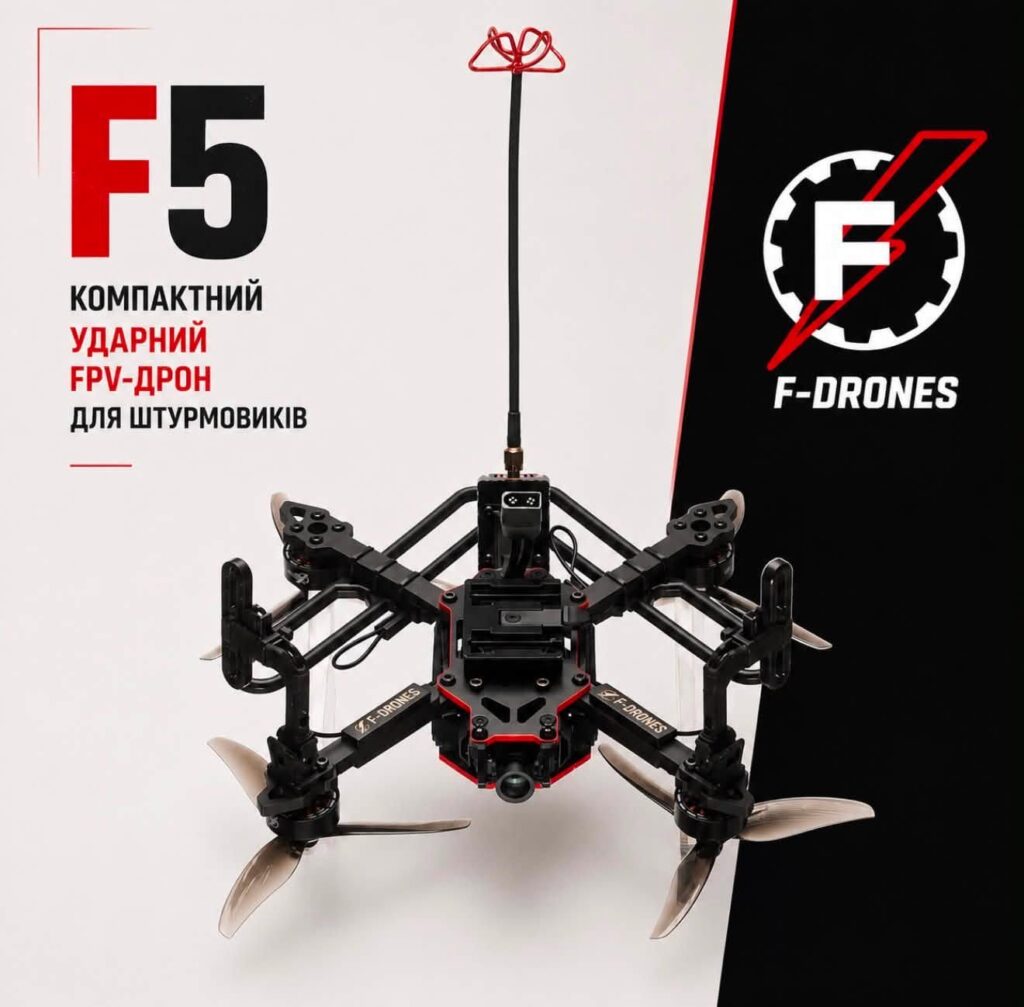
F-Drones has unveiled the F5, a compact five-inch strike FPV built for assault units. Source: F5

A Ukrainian drone maker is pitching a weapon that works like a mortar, not a drone. F-Drones has unveiled the F5, a compact five-inch strike FPV built for assault units working treelines, built-up areas, and position support at short range, according to the company's announcement.

Fiber-optic drones are now a bulk consumable. Ukraine's military received 374,000 under state contracts in 2025 and nearly as many again in the first four months of 2026, the Defense Ministry reported in April.

The F5 arrives three days after Ukraine's Defense Procurement Agency launched its first purchase of fiber-optic FPV drones, in line with ministry-set specifications rather than individual manufacturers.

The specifications come from the manufacturer

F-Drones describes a lightweight five-inch carbon frame that carries up to one kilogram and is supplied in two control configurations.

The fiber-optic version flies about six kilometers. The radio version reaches roughly twice that, up to 13 kilometers. Several drones fit in one backpack, and a ground robot can deliver nine to a position at once, compared with the six FPVs per carrier on the Black Widow ground system.

Fiber optics buys immunity at a cost

F-Drones calls the fiber version fully invulnerable to electronic warfare. Fiber-optic control does defeat jamming because the drone emits no radio signal, but the cable restricts range and maneuverability and can snap or tangle mid-flight, cutting control. Ukrainian crews have also tracked Russian operators by following reflective fibers in sunlight back to the launch point.

The company compares its drone to a mortar

The pitch is about availability, not reach.

"In its role, the F5 is closer to an 82mm mortar than to a classic long-range FPV: always nearby and ready to close out the task here and now," the company said.

The F5 ships with a codified Opera electronic initiation board, and F-Drones says the aircraft has been tested and codified by Ukraine's Defense Ministry.

  • ✇Euromaidan Press
  • Ukraine mapped Russia’s Su-35 down to individual control units—and found 22 firms nobody has sanctioned
    Ukraine's military intelligence has named the Russian companies that build the Su-35S fighter jet and singled out those no country has sanctioned, according to the Main Intelligence Directorate of Ukraine's Defense Ministry (HUR). The unsanctioned suppliers make parts as ordinary as wheels and fuel-system units, and one of them helped develop the aircraft. Kyiv wants sanctions efforts synchronized across every link of Russia's military-industrial complex. More than four
     

Ukraine mapped Russia’s Su-35 down to individual control units—and found 22 firms nobody has sanctioned

25 août 2026 à 10:30

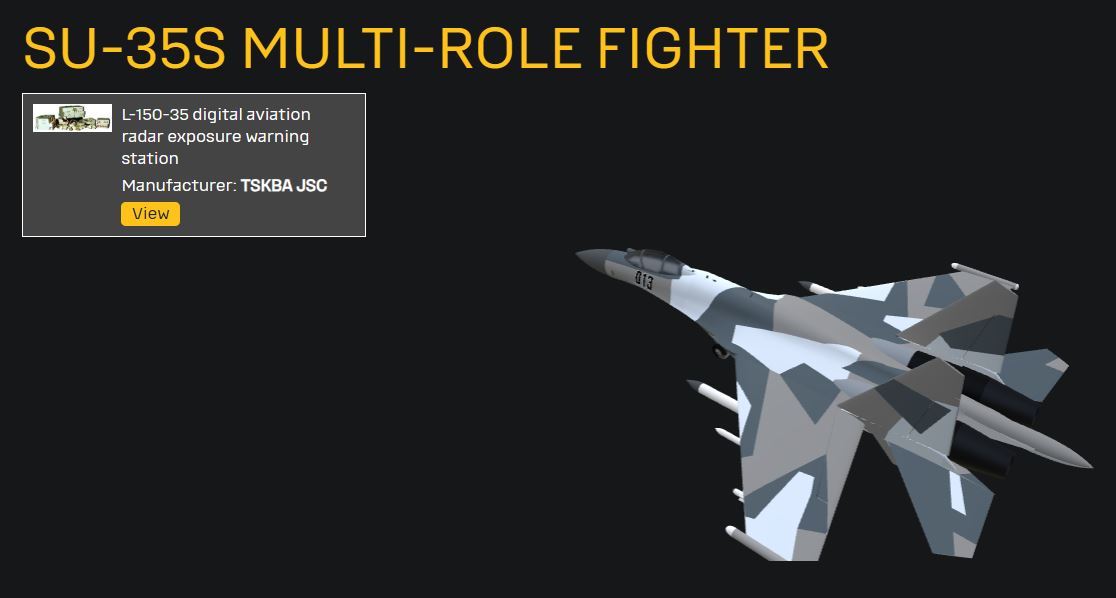
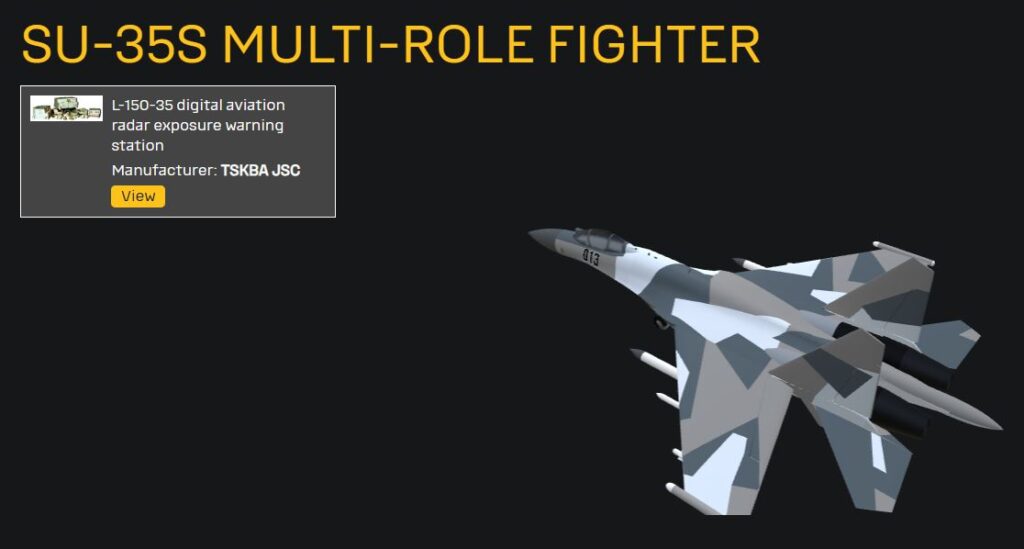
ukraine mapped russia's su-35 down individual control units—and found 22 firms nobody has sanctioned · post interactive 3d model su-35s multirole fighter published ukraine's war&sanctions portal l-150-35 radar warning station

Ukraine's military intelligence has named the Russian companies that build the Su-35S fighter jet and singled out those no country has sanctionedaccording to the Main Intelligence Directorate of Ukraine's Defense Ministry (HUR). The unsanctioned suppliers make parts as ordinary as wheels and fuel-system units, and one of them helped develop the aircraft. Kyiv wants sanctions efforts synchronized across every link of Russia's military-industrial complex.

More than four years of harsh restrictions have made Russia's arms industry slower and costlier to run rather than idle, and it keeps closing the gaps by substituting parts and buying through third countries. Every restriction works one company at a time, which makes the depth of a sanctions list, not its length, the thing that decides whether production slows.

The 22 firms no one has sanctioned

HUR identified 79 companies in the Su-35S production chain. Of those, 22 face no sanctions from any country restricting Russia over the war. The agency highlighted three. Rubin Aviation Corporation supplies the aircraft's braking and non-braking wheels. Gidroavtomatika builds the AU46-05 control units inside the fuel system. The Oktava research institute carried out design and development work on the Su-35S itself.

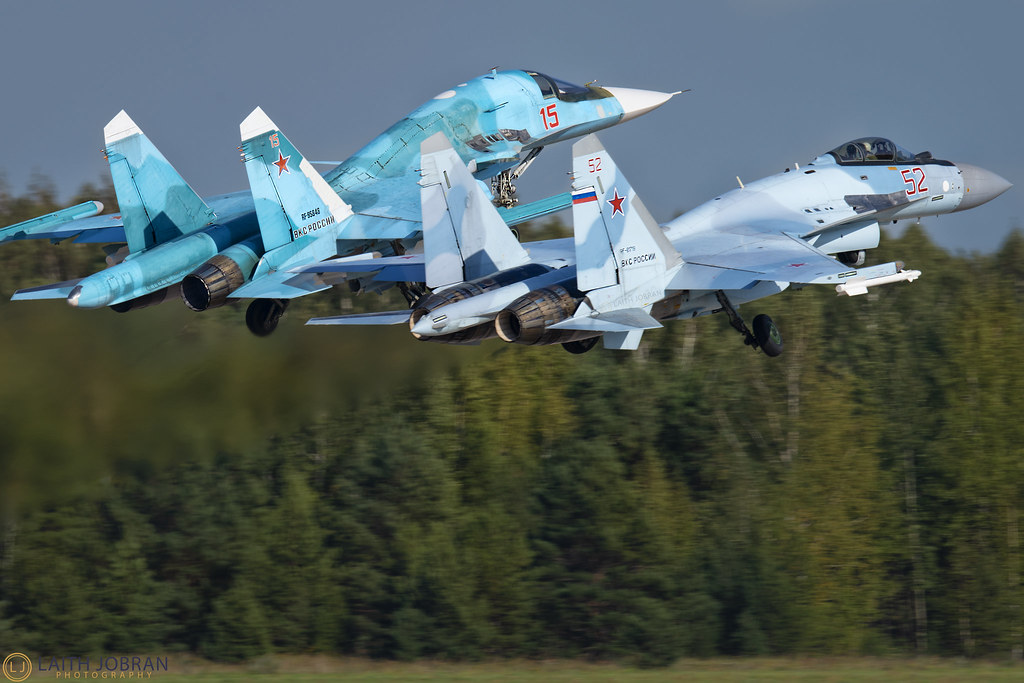
Russian Airspace Force's Su-34 fighter-bomber (left) and Su-35 fighter jet (right). Illustrative image: Flickr/Laith Jobran

What the rest of the network builds

The 79 firms develop and produce the engines and fuel system, the control, communications, and guidance systems, the electronic warfare suite, and the main aviation missiles the jet carries into the war against Ukraine. HUR set the data out in the "Components in weapons" section of its War&Sanctions portal. The page carries a rotatable 3D model of the aircraft whose parts open onto the firms behind them, alongside directory listings and a profile for each company.

Russia uses the jet mainly to cover its own Su-34 fighter-bomber strike groups, ground troops, and installations. It also intercepts Ukrainian drones and cruise missiles, and works against Ukrainian air defense systems. Ukraine's Air Force said in July it had shot one down over the east, and such losses are hard for Moscow to replace: Russian factories ordered 12 of the jets in 2024 and delivered 10.

ukraine mapped russia's su-35 down individual control units—and found 22 firms nobody has sanctioned · post interactive 3d model su-35s multirole fighter published ukraine's war&sanctions portal l-150-35 radar warning station
Explore further

Ukraine mapped Russia’s Su-35 down to individual control units—and found 22 firms nobody has sanctioned

Three sanctions regimes, loosely aligned

The gaps HUR points to exist because the restrictions are not one list. The EU legislates in packages, the US and other G7 states maintain their own designations, and Ukraine issues sanctions by presidential decree, each covering a different set of firms. Kyiv has spent years asking partners to synchronize those lists, and its own designations often run ahead of them. A company can therefore supply a frontline fighter and still trade freely under most of them.

Previously, HUR ran the same exercise on the Su-34, where a third of the production network was still unsanctioned. The same pattern shows up above the component level, with Russia's largest arms conglomerate covered by EU measures while hundreds of its subsidiaries are not, and Western machine tools still sitting inside Russian missile plants. 

  • ✇US news | The Guardian
  • Lego sales jump 21% to nearly £5bn, helped by World Cup and F1 ranges
    Danish toymaker also scores success with KPop Demon Hunters, Star Wars and botanicals productsLego sales have risen by more than a fifth as tie-ups with the football World Cup, Formula One and the hit film KPop Demon Hunters as well as its flower-based and Star Wars kits drive demand.The toymaker said its revenues had increased by 21% to 41.9bn Danish kroner (£4.8bn) in the first six months of 2026, driven by strong growth in the Americas, Europe and the Asia-Pacific regions, offsetting stalled
     

Lego sales jump 21% to nearly £5bn, helped by World Cup and F1 ranges

25 août 2026 à 07:29

Danish toymaker also scores success with KPop Demon Hunters, Star Wars and botanicals products

Lego sales have risen by more than a fifth as tie-ups with the football World Cup, Formula One and the hit film KPop Demon Hunters as well as its flower-based and Star Wars kits drive demand.

The toymaker said its revenues had increased by 21% to 41.9bn Danish kroner (£4.8bn) in the first six months of 2026, driven by strong growth in the Americas, Europe and the Asia-Pacific regions, offsetting stalled sales in China.

Continue reading...

© Photograph: Patrick T Fallon/AFP/Getty Images

© Photograph: Patrick T Fallon/AFP/Getty Images

© Photograph: Patrick T Fallon/AFP/Getty Images

Australia Bans Generative A.I. From Official Music Charts

25 août 2026 à 04:04
Under new rules, recordings developed using generative A.I. will only be allowed if they are “substantially human-made,” the peak body says.

© Brendon Thorne/Getty Images for ARIA Hall of Fame

The Australian Recording Industry Association (ARIA), which oversees the charts of the country’s most popular music, said the changes will apply from Friday.
❌