Vue normale

  • ✇Euromaidan Press
  • HUR: Russia seeks rest of Donetsk Oblast, not a peace deal, by year-end
    Ukraine's military intelligence (HUR) sees no battlefield signs that Russia is preparing for a ceasefire, deputy chief Major General Vadym Skibitskyi said in an interview with RBC-Ukraine on 18 August 2026. The agency expects no peace agreement before the end of 2026. Russia’s General Staff plans to capture the remainder of Donetsk Oblast by year-end, Skibitskyi said. Meanwhile, HUR estimates that Russian personnel losses exceeded contract recruitment in June and July,
     

HUR: Russia seeks rest of Donetsk Oblast, not a peace deal, by year-end

18 août 2026 à 11:48

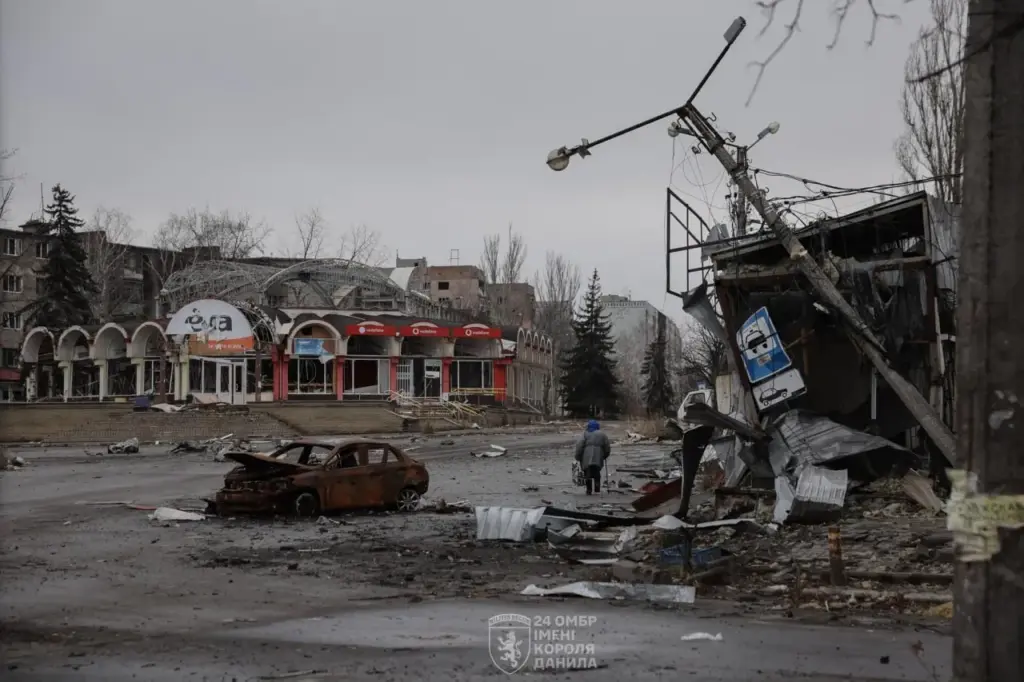
A person walks along a war-damaged street past a burned-out car, rubble, shattered buildings and a collapsed utility pole.

Ukraine's military intelligence (HUR) sees no battlefield signs that Russia is preparing for a ceasefire, deputy chief Major General Vadym Skibitskyi said in an interview with RBC-Ukraine on 18 August 2026. The agency expects no peace agreement before the end of 2026.

Russia’s General Staff plans to capture the remainder of Donetsk Oblast by year-end, Skibitskyi said. Meanwhile, HUR estimates that Russian personnel losses exceeded contract recruitment in June and July, leaving Moscow unable to create new military formations without mobilization.

HUR estimates Russia lost more troops than it recruited in both June and July. Losses exceeded new contract personnel by 3,000 in June and by at least 1,000 in July, leaving recruitment unable to replace battlefield losses. The agency says Russia’s operational reserve is only about one-tenth the size of the part already engaged in combat against Ukraine.

Russia has set a 2026 target of recruiting 409,000 personnel. Without mobilization, however, Moscow cannot create new formations or turn existing brigades into divisions because it lacks personnel, Skibitskyi said. The recruitment plan for Russia’s unmanned-systems forces is only 30% complete, and the command is trying to fill the gap with personnel from other military branches, he added.

If Russia mobilizes after its September parliamentary elections, it could assemble a powerful strike group by around February 2027, according to HUR. Skibitskyi did not rule out its use for a northern offensive. At present, however, HUR sees no conditions, indicators, or troops for such an operation.

Russia previously targeted September for Donbas

In April, Skibitskyi told the Financial Times that Moscow aimed to capture all of Donbas by September, after missing its deadlines to take Kostiantynivka and Druzhkivka. Russia was transferring 20,000 troops from strategic reserves to sustain the offensive, although this amounted to less than one month's worth of its battlefield losses.

By early August, DeepState reported 36 square kilometers of additional Russian-controlled territory across Ukraine in July, a figure that included map corrections for May and June. Without those corrections, Russia gained about 88 square kilometers.

DeepState reported limited progress near Rodynske and Kostiantynivka and toward Sloviansk and Kramatorsk, the heart of Ukraine’s “fortress belt.” At that pace, Russia had “no chance” of capturing all of Donetsk Oblast even by 2027, the group said. It cautioned that another wave of mobilization or a wider deployment of North Korean troops could change the forecast.

  • ✇Euromaidan Press
  • Operation Hell-2: Azov says it burned 4,221 tons of Russian fuel in occupied Donetsk Oblast
    The 1st Corps of Ukraine's National Guard, known as Azov, says it destroyed 67 Russian fuel tanks holding 4,221 tons of fuel in occupied Donetsk Oblast, in an operation it named Hell-2. The unit released video of the strikes on 17 August, saying it had spent a month tracking where Russian forces moved and stored the fuel before hitting it. Fuel is the blood of Russia's war, which is why its forces increasingly hide storage sites and route deliveries through improvised l
     

Operation Hell-2: Azov says it burned 4,221 tons of Russian fuel in occupied Donetsk Oblast

18 août 2026 à 11:27

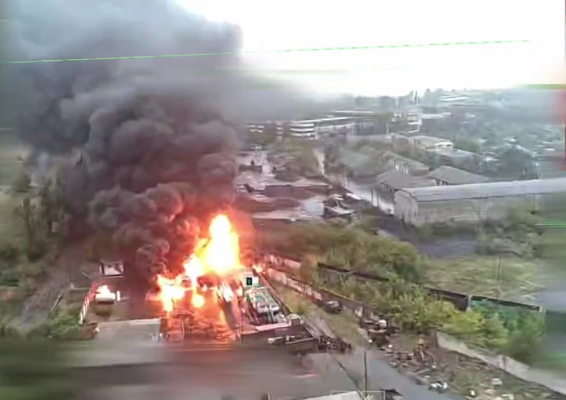
Aftermath of a strike on Russian fuel infrastructure during the Hell-2 operation in occupied Donetsk Oblast. 2026. Screenshot: National Guard of Ukraine

The 1st Corps of Ukraine's National Guard, known as Azov, says it destroyed 67 Russian fuel tanks holding 4,221 tons of fuel in occupied Donetsk Oblast, in an operation it named Hell-2. The unit released video of the strikes on 17 August, saying it had spent a month tracking where Russian forces moved and stored the fuel before hitting it.

Fuel is the blood of Russia's war, which is why its forces increasingly hide storage sites and route deliveries through improvised logistics hubs. Strikes on those hubs strip Russian units of what they need to move, supply, and fight. There have already been cases of Russian forces concealing fuel in grain trucks in occupied territories.

Azov warned the Russian forces before the strike

Azov says it flagged the fuel sites a month before hitting them, and struck when the Russians kept using them anyway.

“A month ago, we warned the occupier: ‘Azov sees your movements and will strike at the right moment.’ But some units of the Russian Armed Forces continued to store fuel in occupied Donetsk Oblast,” Azov said.

1 корпус НГУ «Азов» карає окупантів за спроби перевезення і зберігання військових вантажів. Задіяні у зберіганні та постачанні палива об’єкти росіян залишаються лише на картах, у реальності на їхньому місці – випалена земля. pic.twitter.com/FGgdn4J34k

— НГУ (@ng_ukraine) August 17, 2026

Azov emphasizes that it does not attack civilian gas stations or civilians. The operation targeted facilities used to supply Russian occupation forces. At the same time, according to Azov fighters, Russian military infrastructure remains a legitimate target.

The Russians didn’t get the message the first time

Hell-2 is likely a follow-up to the Hell operation, during which the first series of strikes, Azov also targeted the fuel logistics of Russian forces in occupied Donetsk Oblast.

On 12 July, Azov reported striking a secret Russian fuel base in Novoamvrosiivka. Drone operators from the 1st Azov Corps of the National Guard conducted reconnaissance and used Hornet drones to strike the facility. The strikes damaged fuel tanks and the base’s infrastructure and blocked the railway track.

According to the report, the Russians used the facility as a logistics hub to supply their occupation forces. After the strike, they were forced to abandon the base and move their logistics operations from the occupied territory into Russia.

  • ✇Euromaidan Press
  • Blast marks Moldova’s third airspace breach in nine days
    An unidentified aerial object exploded in a cornfield outside Talmaza in southeastern Moldova, tearing a crater about two meters wide and 50 centimeters deep, Moldovan police said on 18 August. The shock wave spread across roughly 45 by 20 meters, but nobody was injured. Russia has intensified its attacks on Ukraine’s Black Sea and Danube ports, bringing drones and missiles close to Moldova’s border. Moldova has recorded three aerial incidents in nine days, with the lat
     

Blast marks Moldova’s third airspace breach in nine days

18 août 2026 à 10:53

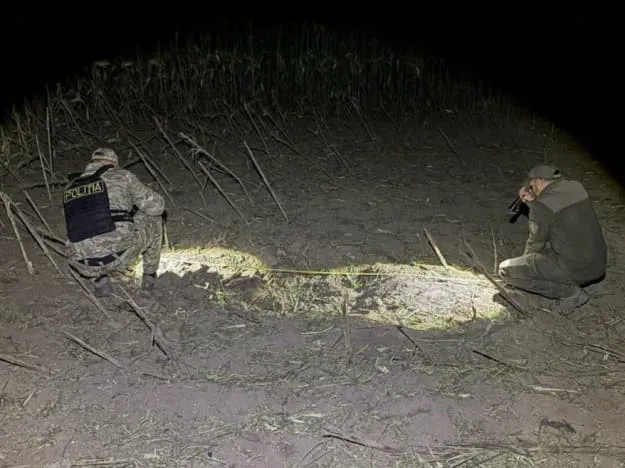
Two investigators examine a blast site with flashlights in a cornfield near Talmaza, Moldova, at night.

An unidentified aerial object exploded in a cornfield outside Talmaza in southeastern Moldova, tearing a crater about two meters wide and 50 centimeters deep, Moldovan police said on 18 August. The shock wave spread across roughly 45 by 20 meters, but nobody was injured.

Russia has intensified its attacks on Ukraine’s Black Sea and Danube ports, bringing drones and missiles close to Moldova’s border. Moldova has recorded three aerial incidents in nine days, with the latest forcing authorities to close part of the country’s airspace.

Investigators recovered fiberglass body fragments, damaged electronics, and a turbojet engine, which Militarnyi noted is also used by the Banderol. Police said the components resembled those of a jet-powered missile-drone but could not identify the aircraft conclusively.

Ukraine's Air Force reported on 17 August that a Russian Banderol had crossed from Odesa Oblast toward Moldova. Militarnyi identified the weapon as an S8000 and placed the crossing near the Moscow-backed breakaway region of Transnistria.

Moldova’s Defense Ministry separately said it had tracked an unidentified object flying from Kuchurhan toward Tiraspol, the capital of Transnistria.

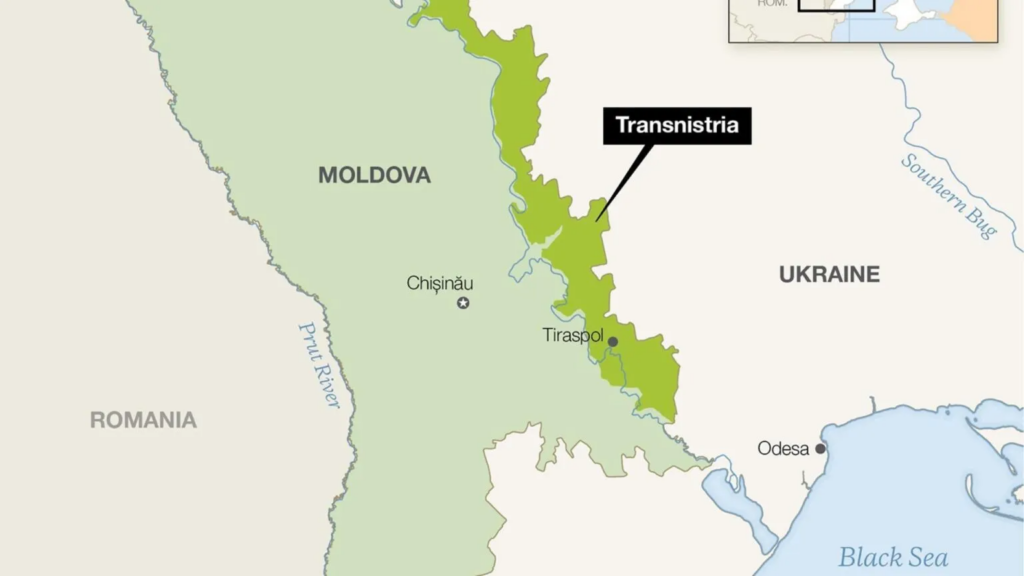
Map showing Transnistria — the Russian-occupied strip of Moldovan territory on the left bank of the Dniester River, bordering Ukraine to the east and wedged between Chișinău and Odesa. Map: Hudson Institute

Authorities closed central Moldovan airspace for 15 minutes before the object disappeared from radar near Talmaza, Militarnyi said.

Moldova’s Foreign Ministry called the incident a serious violation of its sovereignty and a threat to public safety.

Talmaza blast follows two recent drone incidents in Moldova

The Talmaza explosion followed two similar incidents near Moldova’s border with Ukraine. On 9 August, an unidentified aircraft exploded in a field 12 kilometers from Ukraine and started a fire. Another object entered Moldovan airspace the following evening and was believed to be a jet-powered Shahed.

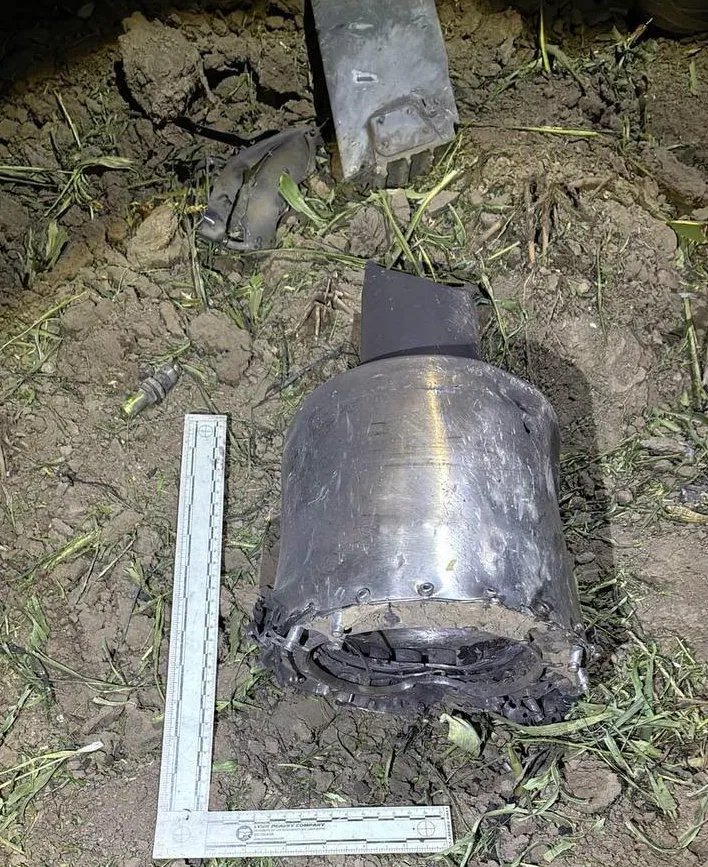
Metal wreckage from an unidentified aerial object lies beside a forensic measuring scale in a cornfield near Talmaza, Moldova.
Investigators documented wreckage from an unidentified aerial object that exploded in a cornfield near Talmaza, Moldova, on 17 August 2026. Moldovan police said its exact type had not yet been confirmed. Credit: Poliția Republicii Moldova/Facebook.

The recent incidents continue a longer pattern. Six Russian drones entered Moldova during an attack on Ukraine in November 2025, and one landed on a civilian roof.

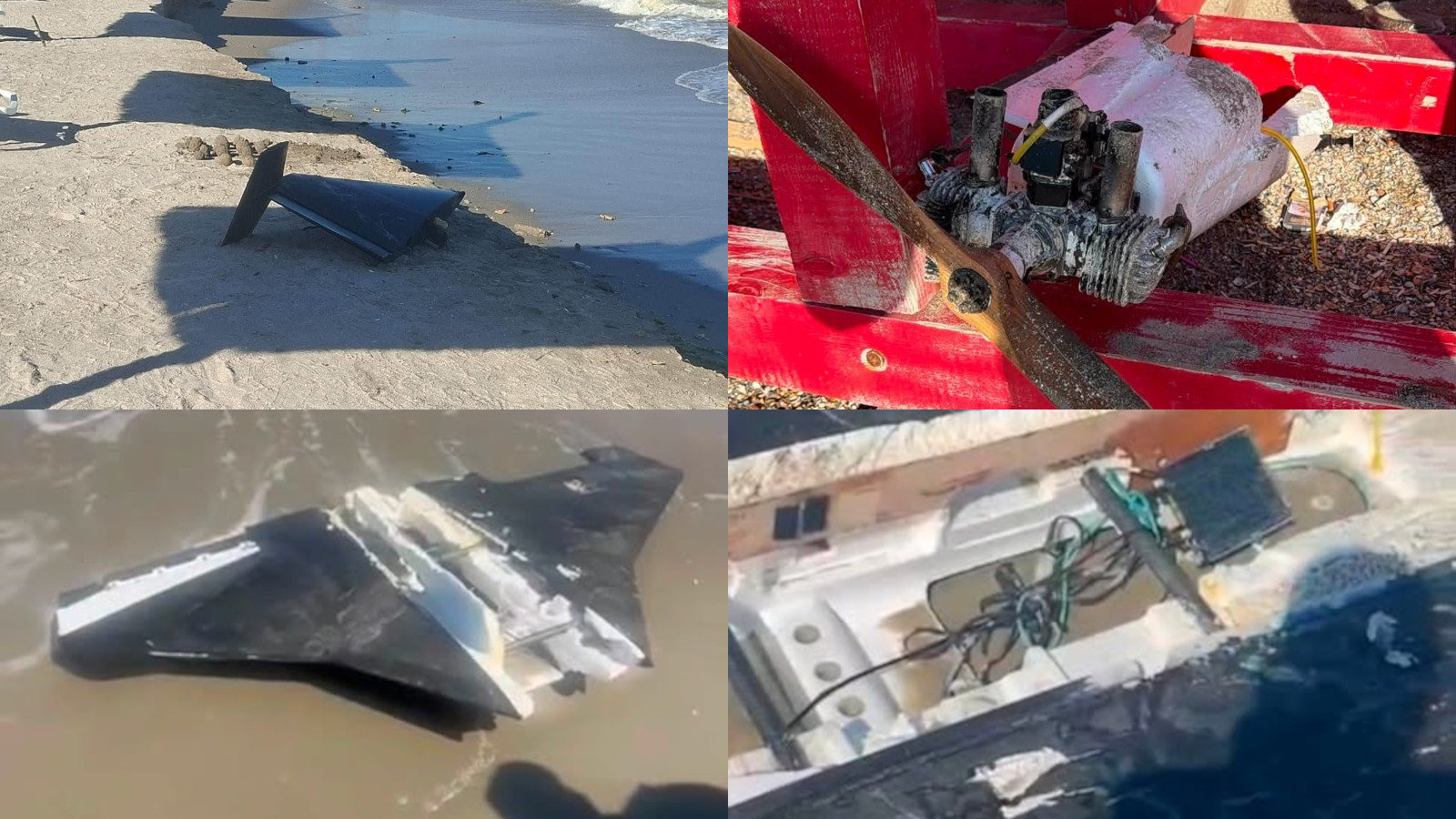
Drone debris washed ashore in Romania after Russian attacks on Ukraine, 13-14 August 2026. Photos: Radu Miruță
Explore further

More than 100 drones detected near Romania in four days, NATO jets scrambled seven times

President Maia Sandu has called for counter-drone technology capable of intercepting and destroying hostile drones that violate Moldovan airspace, acknowledging that the country currently lacks such capabilities.

Russia’s port campaign reaches Moldova’s border

Across the border, Russian attacks on Ukraine’s Danube ports have reached a recent high, with Romania detecting more than 100 drones during seven recent attacks, interim Defense Minister Radu Miruță said.

Kyiv and Chișinău are also discussing a rail route through Moldova to Romania’s Constanța port as Russian strikes disrupt Ukraine’s maritime exports. Ukraine estimates the route could carry only about 10 percent of its grain exports.

❌