Vue normale

  • ✇Euromaidan Press
  • Ukraine’s new Tu-95 killer is a $48,000 copy of a drone China refused to sell
    Ukraine's state security service has its own special attack drone The MICH 2000 is a highly evolved copy of a Chinese drone China refused to sell There are at least eight versions of the 2,000-km drone, from $48,000 On 16 July, one-way attack drones from the Ukrainian state security service—the vaunted SBU—motored 800 km to strike Engels-2 air base in western Russia. At the time, there were reportedly five bombers on the ground at the base: four Tupolev Tu-22M
     

Ukraine’s new Tu-95 killer is a $48,000 copy of a drone China refused to sell

Par : David Axe
13 août 2026 à 13:01

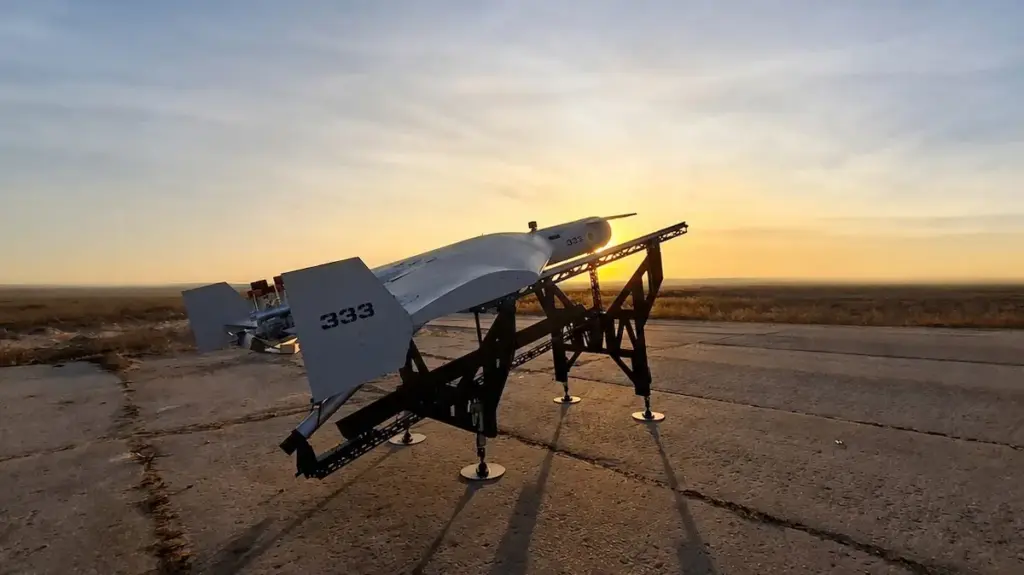
The MICH 2000 drone can fly up to 2,000 km and carry a warhead weighing up to 60kg. Photo courtesy of the manufacturer

  • Ukraine's state security service has its own special attack drone
  • The MICH 2000 is a highly evolved copy of a Chinese drone China refused to sell
  • There are at least eight versions of the 2,000-km drone, from $48,000

On 16 July, one-way attack drones from the Ukrainian state security service—the vaunted SBU—motored 800 km to strike Engels-2 air base in western Russia. At the time, there were reportedly five bombers on the ground at the base: four Tupolev Tu-22Ms and a single Tupolev Tu-95.

The drones struck the four-engine, propeller-driven Tu-95. "According to preliminary data, the plane suffered critical damage," the SBU claimed. "It completely tore off the tail part." That particular aircraft, the SBU added, had been used systematically to launch massed missile strikes on Ukraine. Satellite imagery later confirmed the bomber's destruction.
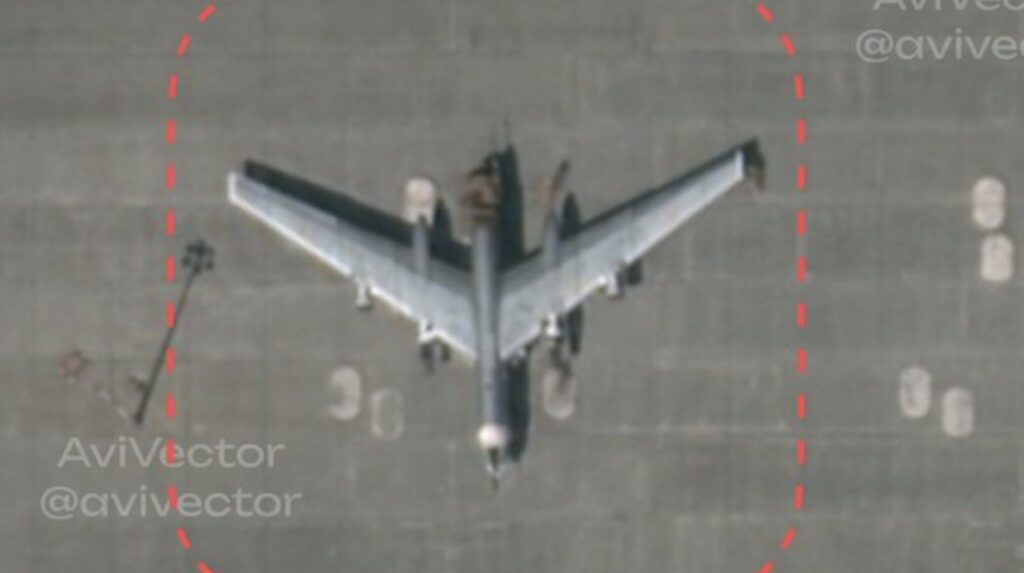
The destroyed Tu-95.
The destroyed Tu-95. Satellite imagery via AviVector.

Nearly a month later, we finally know which drone type the SBU flung at Engels-2 and its parked bombers. They were MICH 2000s—Ukrainian aircraft that began as copies of the Chinese ZTK-150, built after Beijing stopped selling. Ukrainian website Oboronka, which visited the factory, broke the news. "Today, the Mich' is no longer just a Chinese plane, but a drone that is exclusively used by the SBU Special Operations Center 'Alpha.'"

According to Oboronka, whose report was agreed in advance with the manufacturer and the SBU, the MICH 2000 flies as far as 2,000 km with a warhead weighing 25 to 60 kg. "The list of targets hit by this drone is updated every week," Oboronka noted. They include Russian ports, military and industrial sites around Moscow and Engels-2.

The Engels-2 raid might be the most immediately impactful. After the 16 July raid, the Russians may be down to 43 Tu-95s, only a dozen of which are usually active at any given time.

The mysterious Shahed like Ukrainian drone that has been repeatedly spotted during strikes deep inside Russia finally has a name: MICH 2000.

Until now, almost nothing was publicly known about it. The drone is used exclusively by the SBU’s Alpha unit, can fly up to 2,000 km and… https://t.co/yUHIXEjvLl pic.twitter.com/HT59LiigrI

— Special Kherson Cat 🐈🇺🇦 (@bayraktar_1love) August 12, 2026

The plane that came from China

The MICH 2000 started as someone else's drone. In the summer of 2023, Beijing restricted exports of the civilian aircraft Ukrainian units had been buying and converting into deep-strike munitions. At the end of that year, a team of Ukrainian developers flew to China to buy some anyway.

At the factory, they found dozens of ZTK-150s coming off the line—Shahed lookalikes distinguished mainly by a pair of forward canards. The Chinese intermediaries floated selling the production technology outright, and Ukrainian commanders liked the idea. But when the team came back ready to buy, the factory's management refused.

The intermediaries wanted the deal anyway. They offered to assemble the drones somewhere without export restrictions—and to train Ukrainian pilots. The team took the training. "We came there to teach pilots to fly Chinese drones," one member told Oboronka. "And in parallel with the training we photographed everything that was there. Everything from the production process to the arrangement of the shelves and cabinets." They flew home with trained pilots and eight Chinese drones.

Two years later, the Ukrainian version costs $48,000 in its basic configuration. The Chinese original costs $50,000. And according to the manufacturer, almost nothing of the Chinese drone survives in the MICH 2000 now except its outline.

Whittling down the bomber fleet

Ukrainian drones are slowly chipping away at the Tu-95 fleet. A 2022 drone raid badly damaged one of the lumbering turboprop bombers at Engels-2, potentially leaving no more than 51 intact Tu-95s in the Russian air force inventory at the time. Smuggling tiny explosive drones across Russia in trucks on 1 June, 2025, the SBU hit at least seven more Tu-95s as well as four Tu-22Ms, among other aircraft.

The 16 July raid is the more recent Ukrainian effort to shrink the Russian bomber force, but it surely won't be the last. The Russians' roughly 120 bombers—Tu-95s, Tu-22Ms and Tupolev Tu-160s—launch the cruise missiles that routinely blast Ukrainian cities and power plants.

Struggling to intercept all Russian deep strike munitions in the target zone, in part owing to a deepening shortage of the best air defense missiles, Ukrainian forces increasingly aim to prevent the Russian munitions from even launching—by smashing munitions factories or, yes, destroying irreplaceable bombers. Of the three Russian bomber types, just one—the Tu-160—is still in production, albeit at a rate of barely just one every year or two.
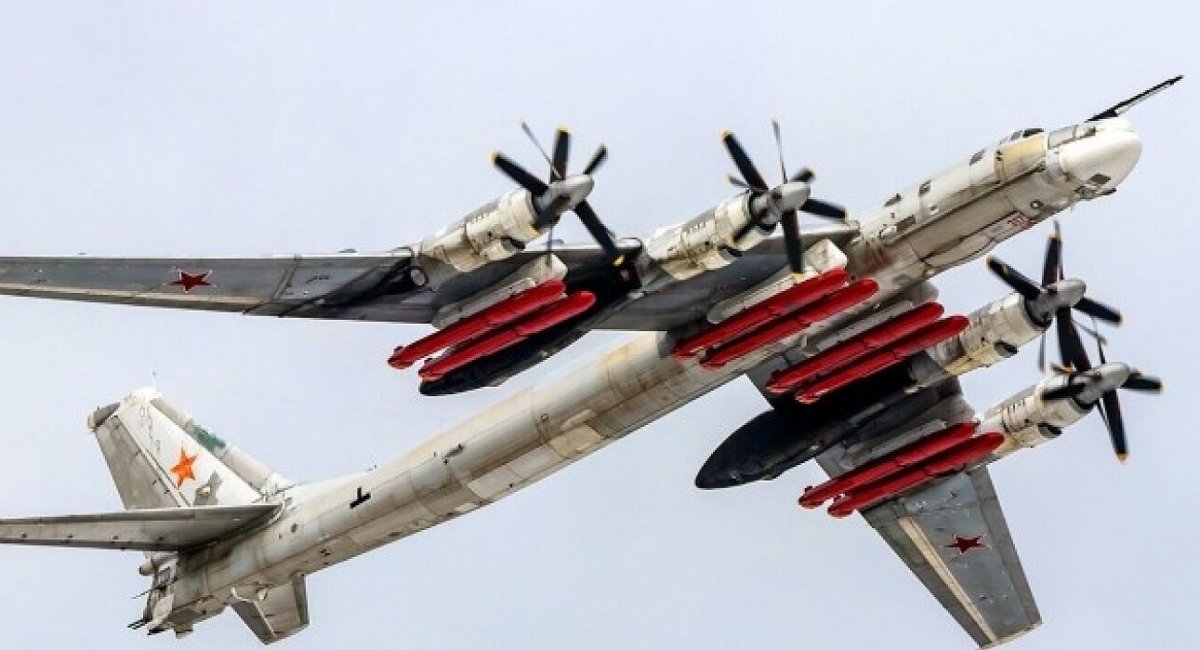
Russian strategic bomber TU-95 carrying Kh-101 missiles. Source: Defense Express
Explore further

Ukraine kills bomber inside Russia. Soviet Union stopped building them decades ago — so this one is gone for good

Expect more MICH 2000 raids. The type's anonymous builder churns out 6,000 MICH 2000s a year but aims to boost output to 10,000 a year. And the firm customizes the drones to suit particular missions.

According to Oboronka, there are eight main versions. "Fighters can choose what kind of communication they need: analog, digital or Starlink. They can choose the warhead, the size of the fuel tank, the possibility of additional guidance." The navigation system can be made more jam-proof by adding additional jam-resistant controlled reception pattern antennas.
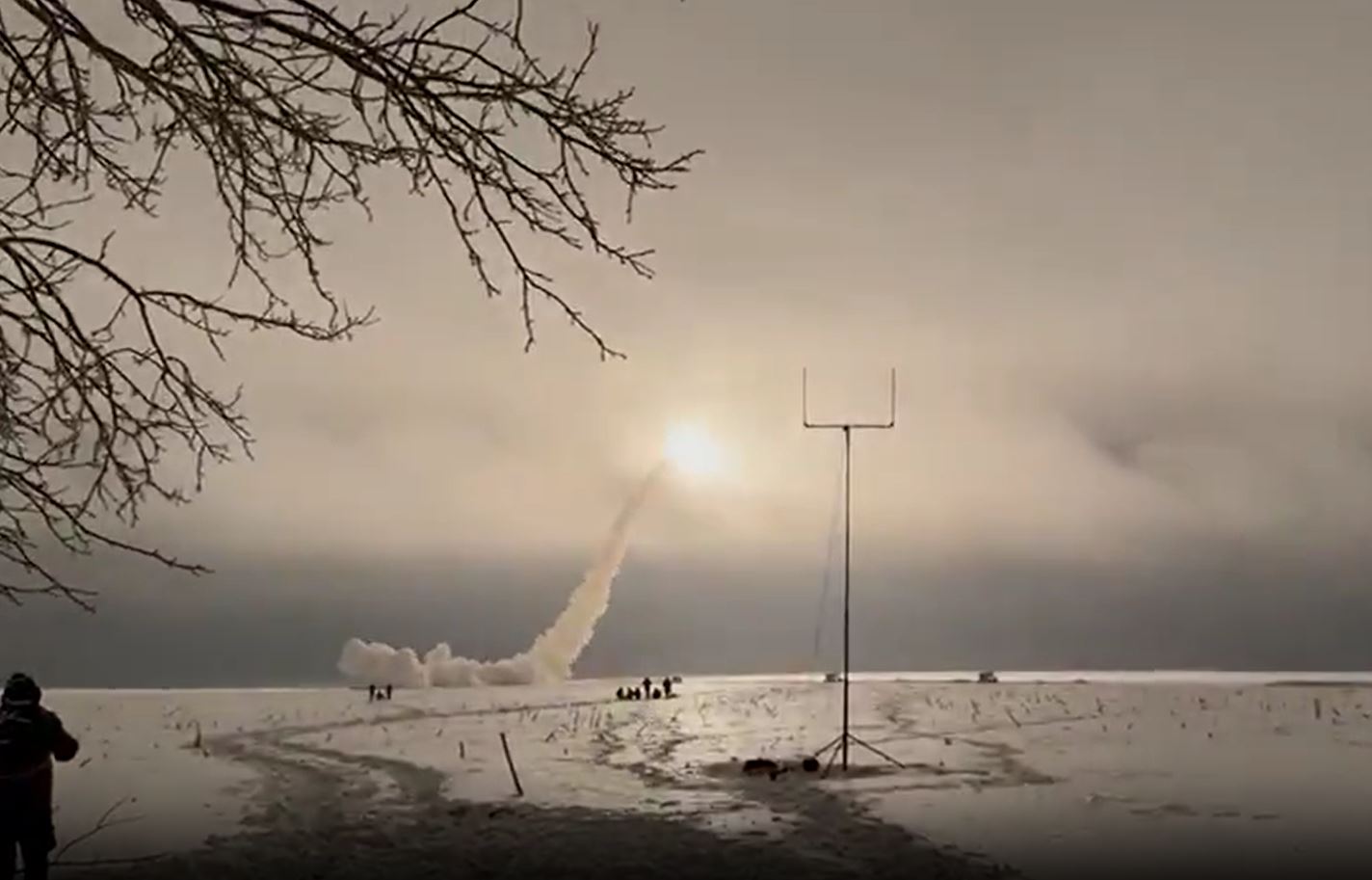
flamingo vs oreshnik ukraine's genstaff now details damage russia's launch site · post fp-5 cruise missile targeting kapustin yar test range ukraine confirmed ballistic infrastructure previous strikes astrakhan oblast intermediate-range
Explore further

Russia has figured out how to stop Ukraine’s most powerful missile

Drone strikes by MICH 2000s and other drone types aren't the only ways Ukrainian forces are trying to blunt Russian attacks on Ukrainian cities and power plants. Ukrainian drone teams are also trying to take out the last five warships in the battered Russian Black Sea Fleet that can fire Kalibr cruise missiles.

On 11 August, drones struck at least three of the ships in the port of Novorossiysk in southern Russia. The frigates Admiral Essen and Admiral Makarov and the corvette Bykov all suffered visible damage.
  • ✇Euromaidan Press
  • Blackout and a blinded radar: Ukraine hits Russian military infrastructure across Crimea and beyond
    Ukraine’s Defense Forces struck a Russian Nebo-U long-range radar in occupied Sevastopol and several other military targets in Russia and occupied Ukrainian territories during a series of overnight attacks on 13 August, the General Staff of Ukraine’s Armed Forces reported. The strikes are part of Ukraine’s broader “Middle-Strike” campaign, which targets Russian military infrastructure beyond the immediate front line. Nebo-U radar hit in Sevastopol The most signifi
     

Blackout and a blinded radar: Ukraine hits Russian military infrastructure across Crimea and beyond

13 août 2026 à 12:06

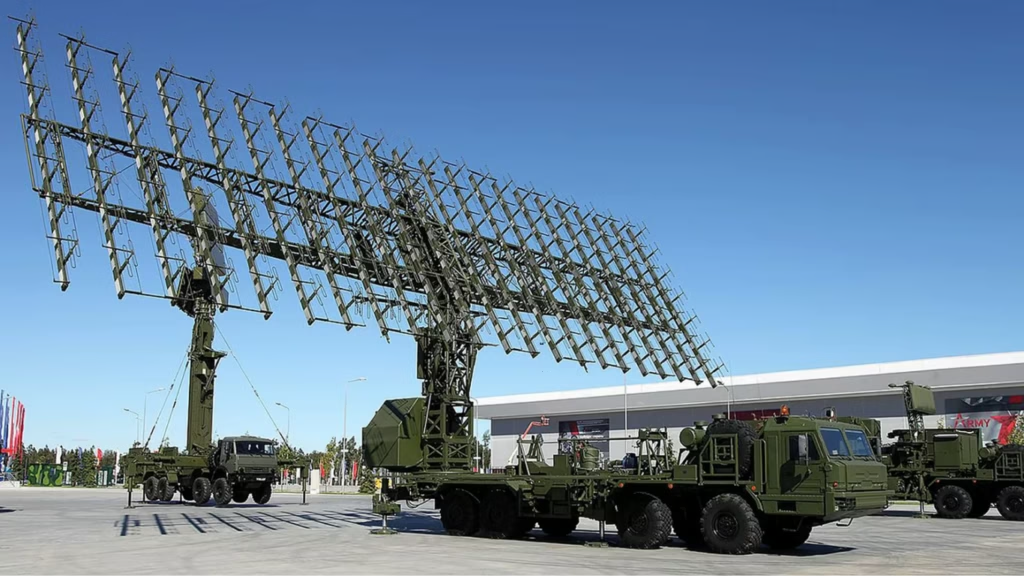
Russian Nebo-U radar station. Photo: Russian media

Ukraine’s Defense Forces struck a Russian Nebo-U long-range radar in occupied Sevastopol and several other military targets in Russia and occupied Ukrainian territories during a series of overnight attacks on 13 August, the General Staff of Ukraine’s Armed Forces reported.

The strikes are part of Ukraine’s broader “Middle-Strike” campaign, which targets Russian military infrastructure beyond the immediate front line.

Nebo-U radar hit in Sevastopol

The most significant overnight target was a Russian Nebo-U radar station in Sevastopol, occupied Crimea.

The Nebo-U is a Russian long-range, three-coordinate radar operating in the meter wavelength range. It is designed to detect and track airborne targets, including aircraft, cruise missiles, and ballistic missiles.

The General Staff said disabling the radar weakens Russia’s ability to detect and track incoming aircraft, cruise missiles, and ballistic missiles, potentially making it harder for Russian forces to detect future Ukrainian strikes and giving Ukrainian weapons a better chance of reaching their targets.

The Nebo-U is estimated to cost around $100 million, making it a high-value Russian surveillance system.

The radar strike supposedly came during a broader Ukrainian drone attack on Sevastopol that also damaged energy infrastructure, according to Russian occupation authorities. The attack caused a citywide blackout before power was later restored through a temporary setup. Ukrainian drones also reportedly targeted the Balaklava power plant, one of Crimea’s two main power stations.

Earlier strikes hit Crimean military infrastructure

The General Staff also reported strikes on Russian military infrastructure in occupied Crimea on 12 August, including a control tower at the Saky airfield.

Ukrainian forces also struck a communications relay near Chornomorske used to control Russian Geran and Gerbera strike drones, according to the General Staff. It said the strikes weaken Russia’s ability to operate the military airfield and control its attack drones.

Russian logistics and supply sites targeted

Ukrainian forces also struck a Russian drone control center near Myrne in occupied Zaporizhzhia Oblast, a fuel and lubricants depot near Dovzhansk in occupied Luhansk Oblast, and an ammunition depot near Novyi Hai in occupied Zaporizhzhia Oblast.

Another strike hit a Russian logistics and equipment depot near Kalanchak in occupied Kherson Oblast.

The General Staff said these strikes disrupt Russian logistics and reduce the military’s ability to accumulate and use ammunition, equipment, and personnel.

Strike reported inside Russia

Ukraine also reported striking a Russian personnel concentration area near Butyrky in Russia’s Belgorod Oblast.

The General Staff did not provide details on the weapons used, the scale of damage, or possible casualties at the individual sites.

The latest report is part of Ukraine’s continued campaign to strike Russian military infrastructure beyond the battlefield. The “Middle-Strike” concept focuses on targets that support Russia’s ability to conduct and sustain combat operations, including command, logistics, air defense, and other military facilities.

The General Staff said Ukrainian forces continue to carry out strikes against key Russian military targets.

  • ✇Euromaidan Press
  • Is a fifth or well over half of Wildberries gone—or can both counts be right?
    Since mid-July, Ukrainian drones have burned their way through the warehouses of Wildberries, Russia’s answer to Amazon, and how much of it is gone has become a question with too many answers.Estimates in circulation range from a fifth of the company’s network to well over half, and they clash because each counts something different. Only by sorting out what each figure measures can you see what the campaign has actually done—and what it has done is heavier, where it co
     

Is a fifth or well over half of Wildberries gone—or can both counts be right?

13 août 2026 à 11:38

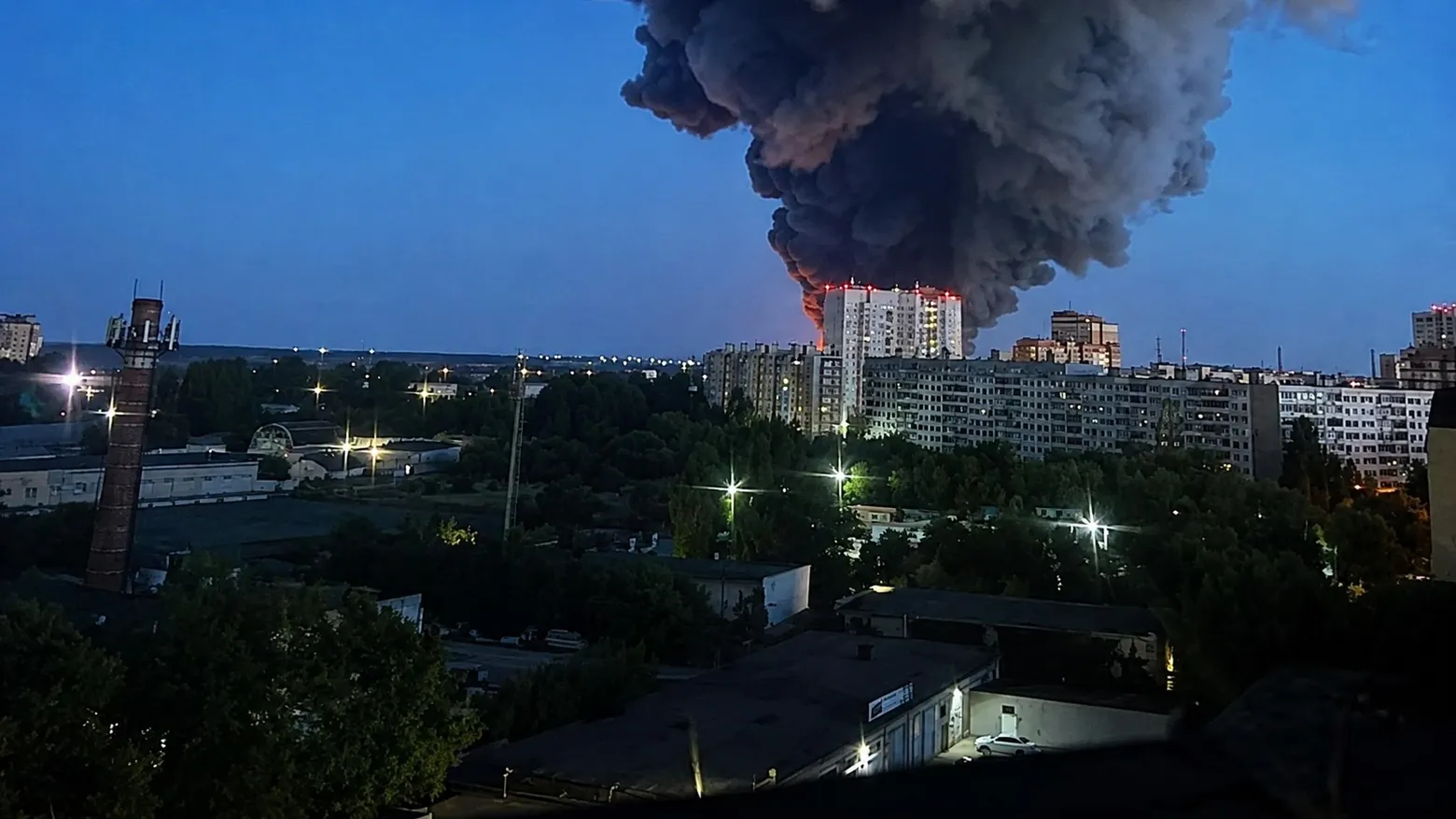
logistics centre in Bashkortostan, Russia,

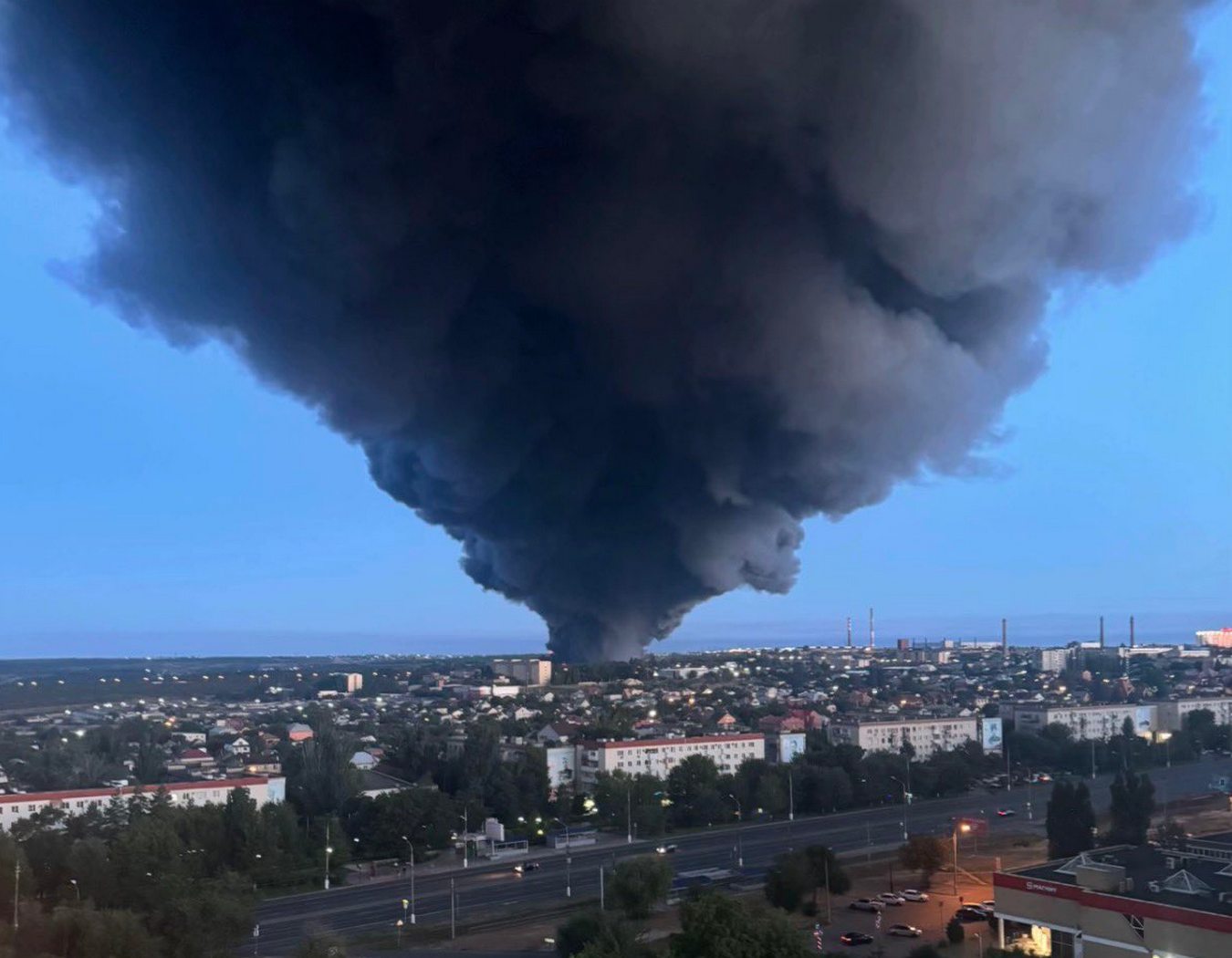
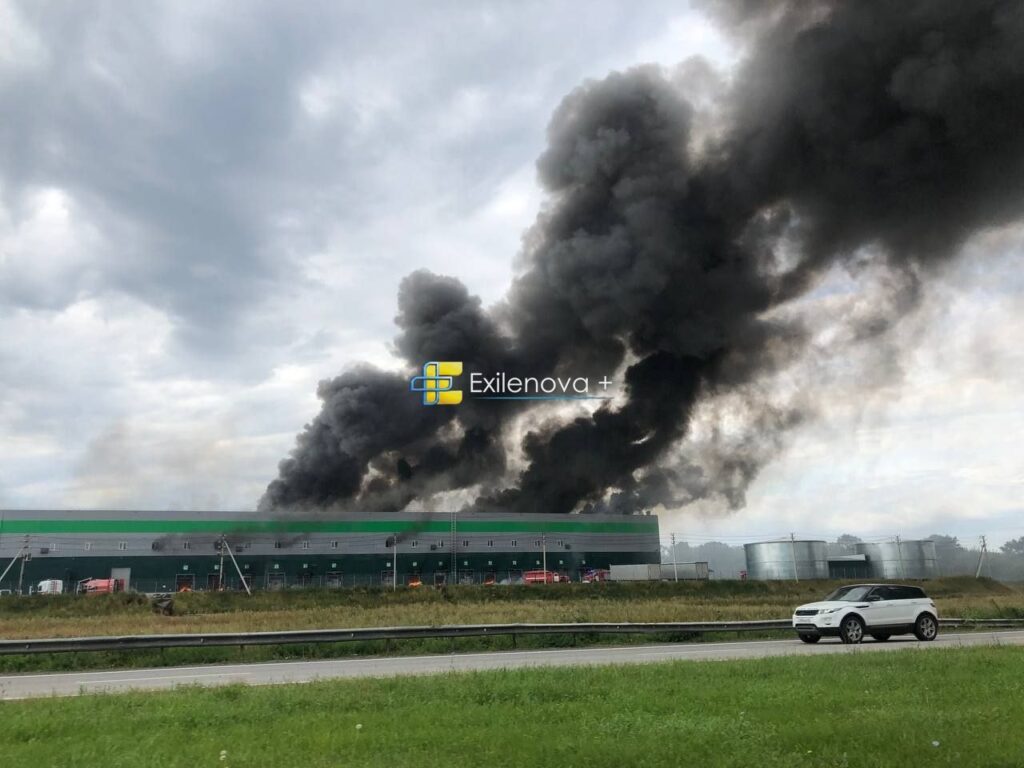
Since mid-July, Ukrainian drones have burned their way through the warehouses of Wildberries, Russia’s answer to Amazon, and how much of it is gone has become a question with too many answers.

Estimates in circulation range from a fifth of the company’s network to well over half, and they clash because each counts something different.

Only by sorting out what each figure measures can you see what the campaign has actually done—and what it has done is heavier, where it counts, than the modest numbers suggest.

Ukraine has concentrated its drones on a couple of dozen hubs that move most of the goods, while the hundreds of small depots that pad the total remain mostly untouched.

Wildberries’ network is scattered across hundreds of small sorting points that would hardly be missed if one burned.

Wildberries is no marginal target. Nearly half of everything Russians buy online runs through it, a marketplace as woven into daily life there as Amazon is in the West. And Kyiv is not burning it for the sneakers.

Estonian military intelligence reports that Wildberries, though not a military firm, supplies the Russian armed forces with kit bought straight off the platform—body armor and drone parts—a case Ukraine makes too. Wildberries denies it.

Yet once the strikes began, the company pulled its “SVO” tag, the label that had gathered those goods in one place, while the goods stayed on sale under other categories; it also barred warehouse workers from carrying camera phones.

drones hit volgograd kept flying 1100 km tatarstan · post large fire black smoke over russia after ukrainian drone strike wildberries logistics center 31 2026 exilenova+ ukraine news reports
Explore further

Russia’s largest retailer is taking cameras away from its own workers month after eight of its warehouses burned

Count the hubs, and the damage jumps

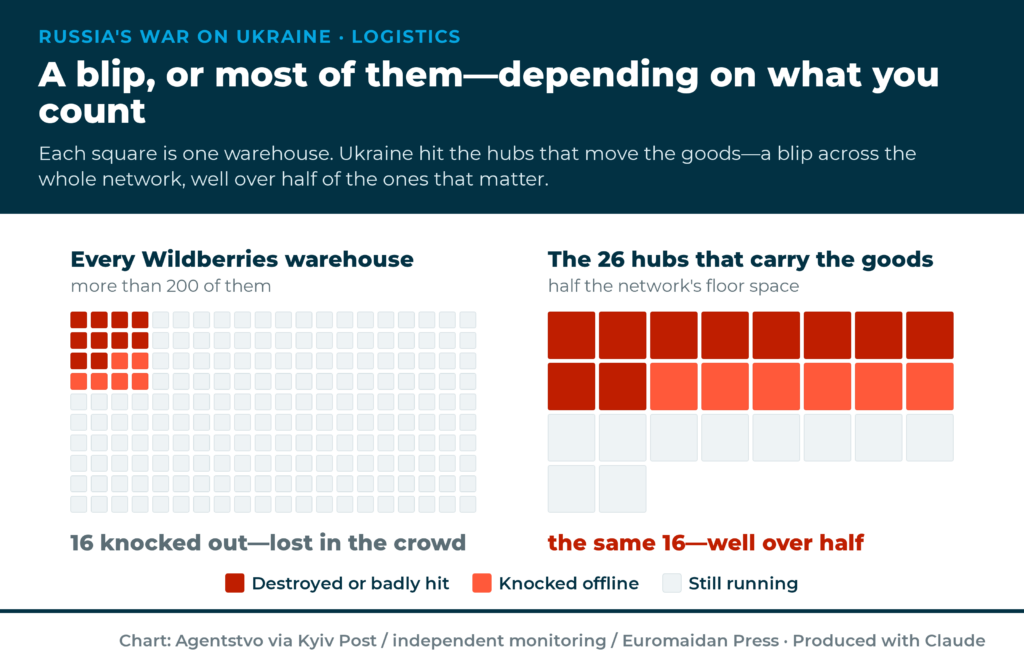
The clash comes down to the word “network.” Most of Wildberries’ floor space is scattered across small sorting points that would hardly be missed if one burned. Set the damage against all of it, and the loss—about a fifth—looks minor.

But the parcels move through these two dozen hubs that hold more than half the company’s space, and those are the ones Ukraine has hit: more than a third are damaged, and by another count, well over half are out of action. It is the same campaign counted in two ways, and only the second shows its aim.

The gap between a building’s size and its damage is easy to miss, and the biggest hub shows how. Koledino, outside Moscow, covers more than 200,000 square meters, and that number keeps getting logged as a loss.

It shouldn’t be. When a drone came down there on 28 July, the fire took a neighboring warehouse—a separate operator that stocks shelves for chains like Lenta and Auchan—while the Wildberries hub kept working.

depending on how to count, ukraine has taken out either a fifth or well over half wildberries warehouses
Ukraine has concentrated its drone strikes on the major hubs that move most of Russia's goods. Measured against all 200-plus Wildberries warehouses, the damage looks like a blip; measured against the largest hubs, it takes out well over half. Chart: Agentstvo via Kyiv Post / independent monitoring / Euromaidan Press · Produced with Claude

Damage reaches beyond the warehouses

The Wildberries strikes are one arm of a declared campaign. On 25 June, Zelenskyy announced a 40-day operation to pressure Russia to end the war.

The warehouse strikes began on 18 July near Moscow and have since spread across a dozen regions, reaching as far as Yekaterinburg in the Urals.

The cost runs beyond floor space. At least eight people have been killed in the strikes so far—warehouse staff and residents caught near the hubs when the drones came down. And the pressure is pushing the company outward: Wildberries is scouting for storage in Kazakhstan, hunting warehouse space beyond the reach of Ukrainian drones.

drones hit volgograd kept flying 1100 km tatarstan · post large fire sends up black smoke over russia after ukrainian drone strike wildberries logistics center 31 2026 x/@bayraktar_1love bayraktar_1love hoivgso
Explore further

Ukraine’s strikes gave Kazakhstan leverage over Russian retail giant Wildberries

The fires have become a line in Russia’s budget. The Kremlin is weighing state loans to keep Wildberries upright—at a point when the federal deficit had, halfway through 2026, already outrun the shortfall the Treasury set aside for the entire year.

Oil and gas revenue, the Kremlin’s main source of war funding, keeps falling short. Russia appears unwilling to let a company this central fail. Paying to save it, hub by burned hub, is the bill Ukraine is now handing Moscow.

❌