Vue normale

  • ✇Euromaidan Press
  • Ukrainian drone pilots turned a captured AK and a hard-drive magnet into a flying machine gun
    Drone operators from Ukraine's Presidential Brigade mounted a captured AK with a 45-round magazine on a heavy drone using a neodymium magnet from a hard drive, rope, and tape. They connected the trigger to a remote electronic mechanism and fired the weapon at Russian positions. The soldiers on the receiving end fled, according to a video the brigade published on Facebook on 11 August 2026. Ukrainian units have been turning whatever they capture or are given into weapons
     

Ukrainian drone pilots turned a captured AK and a hard-drive magnet into a flying machine gun

12 août 2026 à 09:38

flying-AK

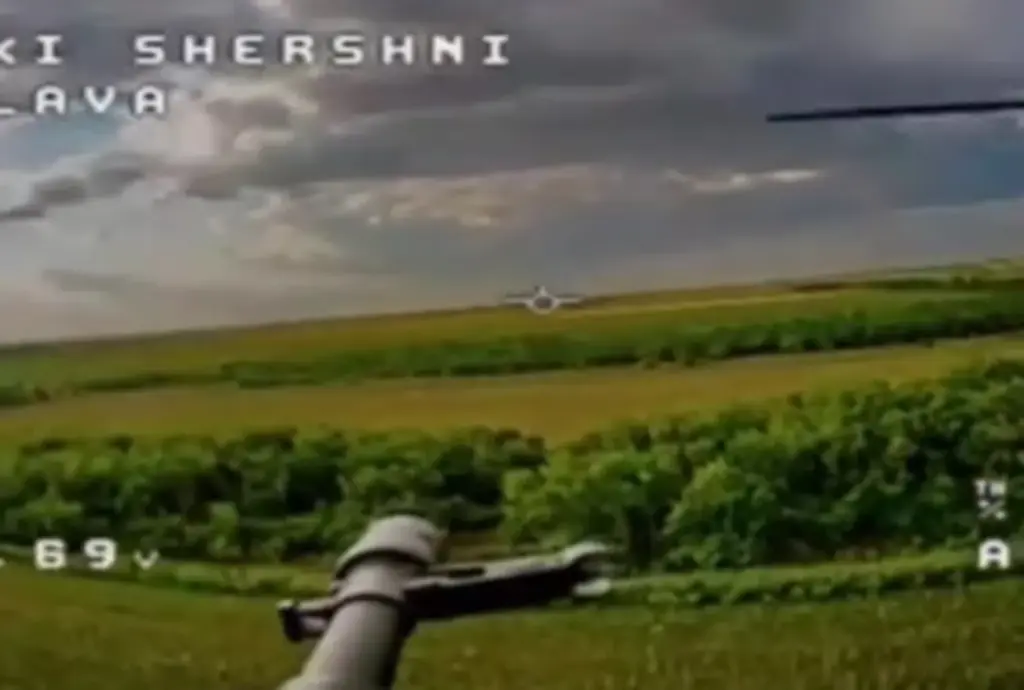
Drone operators from Ukraine's Presidential Brigade mounted a captured AK with a 45-round magazine on a heavy drone using a neodymium magnet from a hard drive, rope, and tape. They connected the trigger to a remote electronic mechanism and fired the weapon at Russian positions. The soldiers on the receiving end fled, according to a video the brigade published on Facebook on 11 August 2026.

Ukrainian units have been turning whatever they capture or are given into weapons throughout Russia's ongoing full-scale invasion.

The pilot behind the idea, callsign Joker, said it came after his unit received a heavy drone called Queen of Hornets from volunteers and started looking for a way to attach a weapon beneath it.

"I once took apart a hard drive and remembered the neodymium magnet inside. A fellow soldier said, 'I have a small one, but it's very powerful.' We tried lifting the rifle, and it worked," he said in the video.

A Ukrainian drone pilot turned a captured AK and a magnet from a broken hard drive into a flying gun

He anchored the rifle under a heavy drone with the magnet, rope, and tape, then wired the trigger to fire by remote. Early flights swung like a pendulum until he steadied… pic.twitter.com/xjQekIMBBP

— Euromaidan Press (@EuromaidanPress) August 12, 2026

In the brigade's account, the first flights were rough: the rifle swung beneath the drone like a pendulum, making the aircraft nearly uncontrollable. The pilots eventually adapted.

The weapon scared more than it hit, Joker said.

"When a drone flies up to you and starts shooting an assault rifle at close range, it really hits your nerves. They ran pretty fast," he said.

The crew then began experimenting with heavier weapons, including grenade launchers. According to the pilot, during one combat deployment, the crew confirmed at least one Russian soldier killed.

The brigade said its units continue looking for unconventional ways to strengthen their drones' combat capabilities at the front.

  • ✇Euromaidan Press
  • A record 4.41 million Ukrainians are under EU protection—and few are going home
    The number of Ukrainian citizens holding temporary protection status in EU countries reached 4.41 million as of 30 June 2026, the highest since the mechanism was activated in March 2022, according to data published by Eurostat on 11 August. The total rose by 24,380 (+0.6%) from the previous month. The displacement is one dimension of the broader demographic damage that Russia's war is inflicting on Ukraine. The country's population has contracted from over 41 million be
     

A record 4.41 million Ukrainians are under EU protection—and few are going home

12 août 2026 à 06:13

eurostat-data-2026

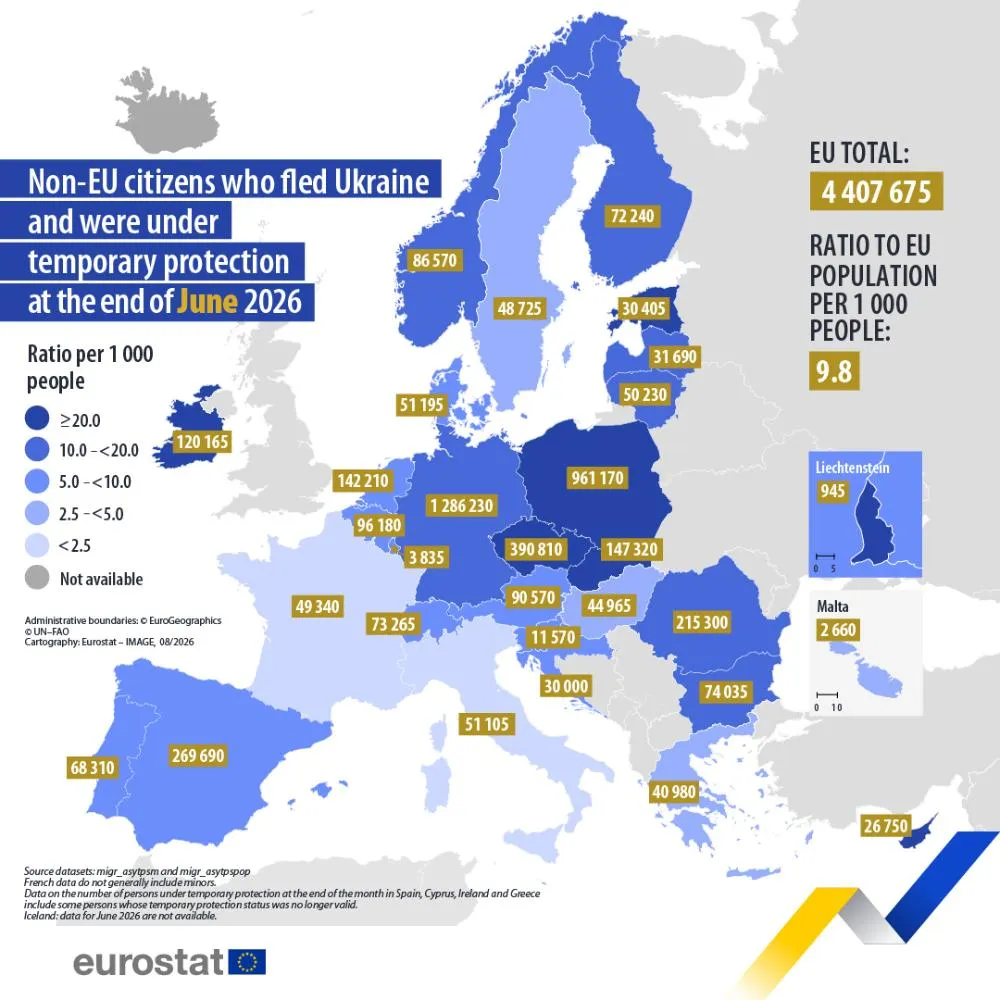
The number of Ukrainian citizens holding temporary protection status in EU countries reached 4.41 million as of 30 June 2026, the highest since the mechanism was activated in March 2022, according to data published by Eurostat on 11 August. The total rose by 24,380 (+0.6%) from the previous month.

The displacement is one dimension of the broader demographic damage that Russia's war is inflicting on Ukraine. The country's population has contracted from over 41 million before the full-scale invasion to roughly 31 million, driven by displacement, war casualties, and a fertility rate that has collapsed to among the lowest in the world. Only 23% of Ukrainian women refugees with children say they plan to return, even if the war ends.

The figure has been edging upward since mid-2023. It crossed 4 million in September 2023, reached 4.2 million by October 2024, and has now hit a new high. New decisions granting protection are now falling: EU countries issued 155,640 in the first quarter of 2026, down 17% from the previous quarter, and 2025's annual total was 14% below 2024's — even as the overall number of people already holding the status keeps rising.

The numbers suggest an accumulation effect: fewer people are leaving the system than are entering it. Cumulatively, EU countries have issued 7.1 million temporary protection decisions since March 2022, meaning roughly 2.7 million of those decisions are no longer active — as people returned to Ukraine, moved on, switched to other residence statuses, or were deregistered.

  • Germany hosted the most beneficiaries at about 1.29 million (29.2% of the EU total), followed by Poland with roughly 961,000 (21.8%) and Czechia with about 391,000 (8.9%).
  • Relative to population, the ranking shifts. Czechia recorded 35.8 beneficiaries per thousand residents, followed by Slovakia (27.2) and Cyprus (26.8), against an EU average of 9.8 per thousand.
  • Protection numbers rose in 24 of 27 EU countries. Italy posted the largest absolute increase (+4,115, or +8.8%), followed by Czechia (+3,835) and Germany (+2,960). Poland was the only country with a significant decrease (-6,335, or -0.7%). Belgium and Ireland posted negligible declines.

The EU just extended shelter for Ukrainians to 2028—with a new catch for military-age men

Ukrainian citizens accounted for over 98.5% of all beneficiaries. Adult women made up 43.4%, adult men 27%, and minors nearly a third (29.6%). The share of adult men has risen from 23% in October 2024, around the time Czech Interior Minister Lubomír Metnar's government pushed for the new military-compliance condition adopted by the Council in August.

The EU's temporary protection mechanism, activated in March 2022, has been renewed annually since. The most recent extension, a Council decision that took effect on 5 August, prolonged the framework to March 2028 while adding a new condition: Ukrainian men of military age applying for the first time must now prove they have met their mobilization obligations, including through Ukraine's Reserve+ app. The June data predates that rule, making it a baseline for measuring its impact.

❌