Vue normale

  • ✇Euromaidan Press
  • Russia builds 3,000 jet drones monthly to counter Ukrainian interceptors, HUR says
    Russia has ceased producing its Geran-3 jet-powered attack drone, Ukraine’s Military Intelligence (HUR) told the Ukrainian defense outlet Militarnyi. The agency estimates Russian industry now makes about 3,000 newer Geran-4 and Geran-5 drones per month. Russia is shifting toward faster jet drones as Ukraine’s low-cost interceptors have become more effective against slower Shaheds. The Geran-4 and Geran-5 leave defenders less time to react, requiring faster interceptors
     

Russia builds 3,000 jet drones monthly to counter Ukrainian interceptors, HUR says

12 août 2026 à 14:02

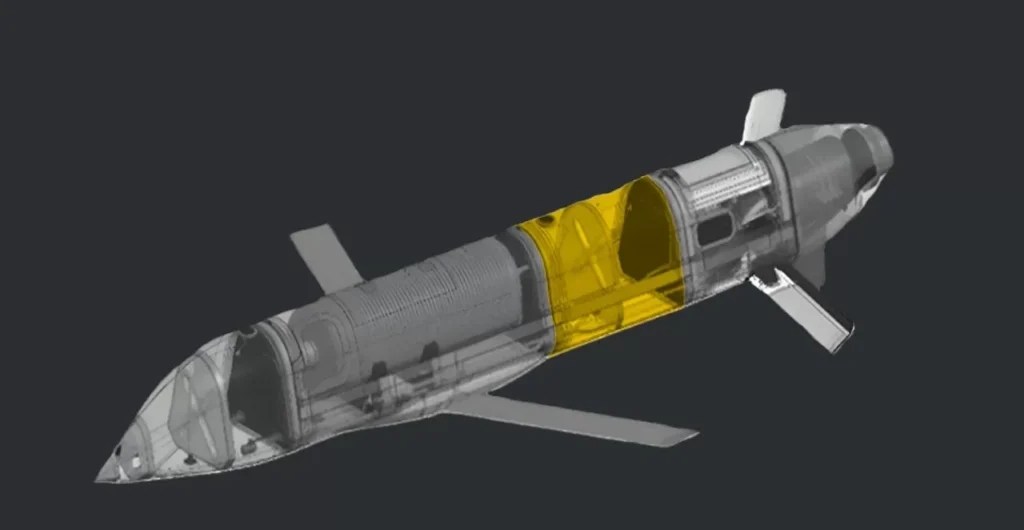
3D model of a Russian Geran-4 jet-powered attack drone, shown from above with its tracker and navigation unit listed beside it.

Russia has ceased producing its Geran-3 jet-powered attack drone, Ukraine’s Military Intelligence (HUR) told the Ukrainian defense outlet Militarnyi. The agency estimates Russian industry now makes about 3,000 newer Geran-4 and Geran-5 drones per month.

Russia is shifting toward faster jet drones as Ukraine’s low-cost interceptors have become more effective against slower Shaheds. The Geran-4 and Geran-5 leave defenders less time to react, requiring faster interceptors or short-range air defenses. At the reported production rate, these newer Geran models, previously used in limited numbers, could become a regular feature of Russian attacks.

HUR said Russia has established serial assembly of the two newer models at the Alabuga complex in Tatarstan, with other Russian companies supplying components. The agency also said Russia’s Defense Ministry wants to expand Alabuga’s capacity. Construction began in May. Satellite imagery showed large-scale work by early July 2026, although the purpose of the new buildings remains unknown.

From Geran-3 to newer jet drones

Russia first used Geran-3 drones in large numbers during a combined nighttime attack on Ukraine on 30 July 2025. At least eight flew alongside propeller-driven Shaheds and decoys. The model retained the Geran-2 airframe but replaced its piston engine with a Chinese Telefly JT80 turbojet. HUR gave it a speed of 300–370 kilometers per hour and a range of up to 1,000 kilometers.

In May, then-Defense Ministry adviser Serhii “Flash” Beskrestnov said Ukrainian defenses stopped 95% of incoming Shaheds during the most recent documented strike and predicted Moscow would produce more jet-powered Geran variants.

The newer Geran-4 has a more robust airframe than the Geran-3 and is designed for high-speed flight and maneuvers. It can reach 500 kilometers per hour.

The larger Geran-5 carries a roughly 90-kilogram warhead and has a stated range of up to 1,000 kilometers. HUR has said Russia may equip it with R-73 air-to-air missiles, potentially threatening aircraft sent to intercept it.

The Chinese engines that Russia itself can't build

The Geran line combines Iranian designs, Russian assembly, and imported technology. HUR described the Geran-3 as a localized version of Iran’s Shahed-238. It found 45 foreign components inside, including parts from the United States, China, Switzerland, Germany, Britain, and Japan.

Russia depends on China for the turbojet engines in newer Geran models. HUR deputy chief Vadym Skibitskyi told RBC-Ukraine that Russia remains fully dependent on Chinese turbojet engines for the Geran-4 and Geran-5. Each costs about $35,000–$40,000, he said.

A Chinese XK-F358 mesh radio recovered from a Geran-5 also helps Russian drones resist jamming. Its manufacturer remains outside the US, EU, UK, and Ukrainian sanctions, according to a review by Euromaidan Press.
Russians work three shifts to build jet-powered missiles powered by a $16,000 Chinese engine from AliExpress

12 août 2026 à 12:50

Rocket S8000 Banderole

Russia is turning out its cheap Banderol drone-cruise missile at scale. Russia is capable of producing up to 80 jet-powered weapons a month, Ukraine's Defense Intelligence (HUR) told the defense outlet Militarnyi in response to a query.

The production figure sharpens a threat Ukraine has tracked as the Banderol expands. The missile has a relatively short range of about 500 kilometers, so Russia effectively launches it from Crimea at Odesa. It means Russia can sustain and grow the Banderol strikes on Ukraine's south, a weapon whose ground launcher Ukraine recently found could let Russia fire it without warning and in salvos.

The missile is fast, cheap, and short-range

The Banderol was developed and is made by the Russian company Kronshtadt, reaching a maximum speed of 620 to 650 kilometers per hour and cruising at 520 to 560, with a fragmentation-high-explosive warhead of 114.3 kilograms, of which 49.5 kilograms is explosive.

Its range dictates where it is used. At about 500 kilometers, the Banderol cannot reach far into Ukraine, which is why Russia fires it from occupied Crimea at Odesa, using the peninsula's proximity to strike the southern port city that has borne so much of Russia's missile campaign.

It has launched them at the Kyiv agglomeration to hit Rozetka, Ukraine's largest online retailer.

Banderol's jet propulsion allows speeds that Ukrainian mobile fire teams cannot match with standard ground-based machine guns. Countering the missile requires systems like the Gepard that can track fast-moving targets. 

The production runs on Western parts

The 80-a-month figure comes at a cost in effort and imports. To sustain the stated production rate, Russian enterprises work in three shifts, and to make the missiles, Russia uses Western components.

Ukraine's War & Sanctions portal documented over 20 foreign-made components and approximately 20 microchips of foreign origin from 30 different companies in the missile's construction, with a Chinese Swiwin SW800Pro jet engine, available on AliExpress for approximately $16,000, powering the weapon.

  • ✇Euromaidan Press
  • Ukraine’s first domestically built CBRN scout vehicle just replaced Soviet jeep with no armor at all
    Ukraine is retiring a Soviet chemical-scout vehicle in favor of one it built itself. Ukraine's National Guard has received the first Ukrainian radiation and chemical reconnaissance vehicles on the armored Tisa chassis, replacing the outdated Soviet UAZ-469RKh, National Guard commander Oleksandr Pivnenko announced. The vehicle is a step in Ukraine's shift from Soviet legacy equipment to its own modern designs. Developed to National Guard specifications for current battle
     

Ukraine’s first domestically built CBRN scout vehicle just replaced Soviet jeep with no armor at all

12 août 2026 à 00:45

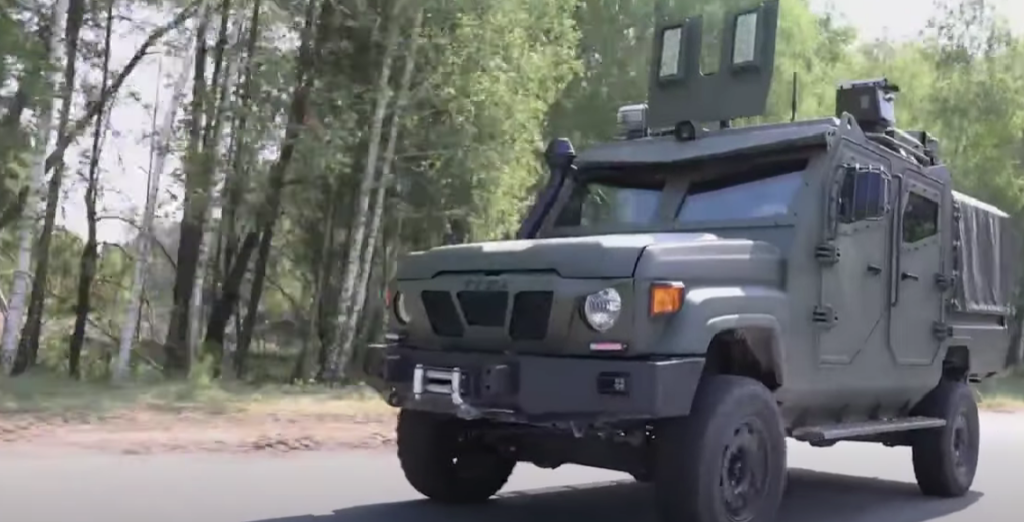
The first Ukrainian radiation and chemical reconnaissance vehicles on the armored Tisa chassis. Source: Pivnenko

Ukraine is retiring a Soviet chemical-scout vehicle in favor of one it built itself. Ukraine's National Guard has received the first Ukrainian radiation and chemical reconnaissance vehicles on the armored Tisa chassis, replacing the outdated Soviet UAZ-469RKh, National Guard commander Oleksandr Pivnenko announced.

The vehicle is a step in Ukraine's shift from Soviet legacy equipment to its own modern designs. Developed to National Guard specifications for current battlefield conditions, the armored scout allows crews to survey and monitor contaminated zones without leaving the protected vehicle.

What the vehicle does

The vehicle carries radiation and chemical reconnaissance instruments, an automated system for collecting and processing information, a weather station, modern communications, and satellite navigation, all of which enable real-time data collection and transmission to assess a situation and make decisions faster.

The mission is early warning of invisible threats. The task of chemical, biological, radiological, and nuclear (CBRN) units is to detect radiation, chemical, and biological threats in time, determine the extent of contamination, and quickly pass the information to command.

"The safety of soldiers, the completion of combat tasks, and the protection of the civilian population depend on the speed and accuracy of this work," Pivnenko said.

The armored base is the upgrade

The Tisa chassis is what sets the new vehicle apart from its Soviet predecessor. The light-armored Tisa is built on the Toyota Land Cruiser 79 platform and meets the NATO STANAG 4569 protection standard, providing ballistic and mine protection that the open-topped UAZ never offered.

The vehicle is equipped for hard conditions. It carries night-vision systems and air ventilation and filtration systems, letting the crew work in contaminated or dangerous environments while staying protected. The filtration matters especially for a CBRN vehicle: it lets the crew operate inside a sealed, over-pressured cabin in exactly the toxic zones the vehicle is sent to scout.

❌