President Volodymyr Zelensky on June 20 condemned Russia's attempts to advance in Sumy Oblast, as Moscow intensifies its rhetoric of maximalist demands toward Ukraine."The Russians had various plans and intentions there — absolutely insane, as usual. We are holding them back and eliminating these killers, defending our Sumy Oblast," Zelensky said in his evening address.Russian President Vladimir Putin, earlier on June 20, claimed that "all of Ukraine" belonged to Russia, citing the Kremlin's pro
President Volodymyr Zelensky on June 20 condemned Russia's attempts to advance in Sumy Oblast, as Moscow intensifies its rhetoric of maximalist demands toward Ukraine.
"The Russians had various plans and intentions there — absolutely insane, as usual. We are holding them back and eliminating these killers, defending our Sumy Oblast," Zelensky said in his evening address.
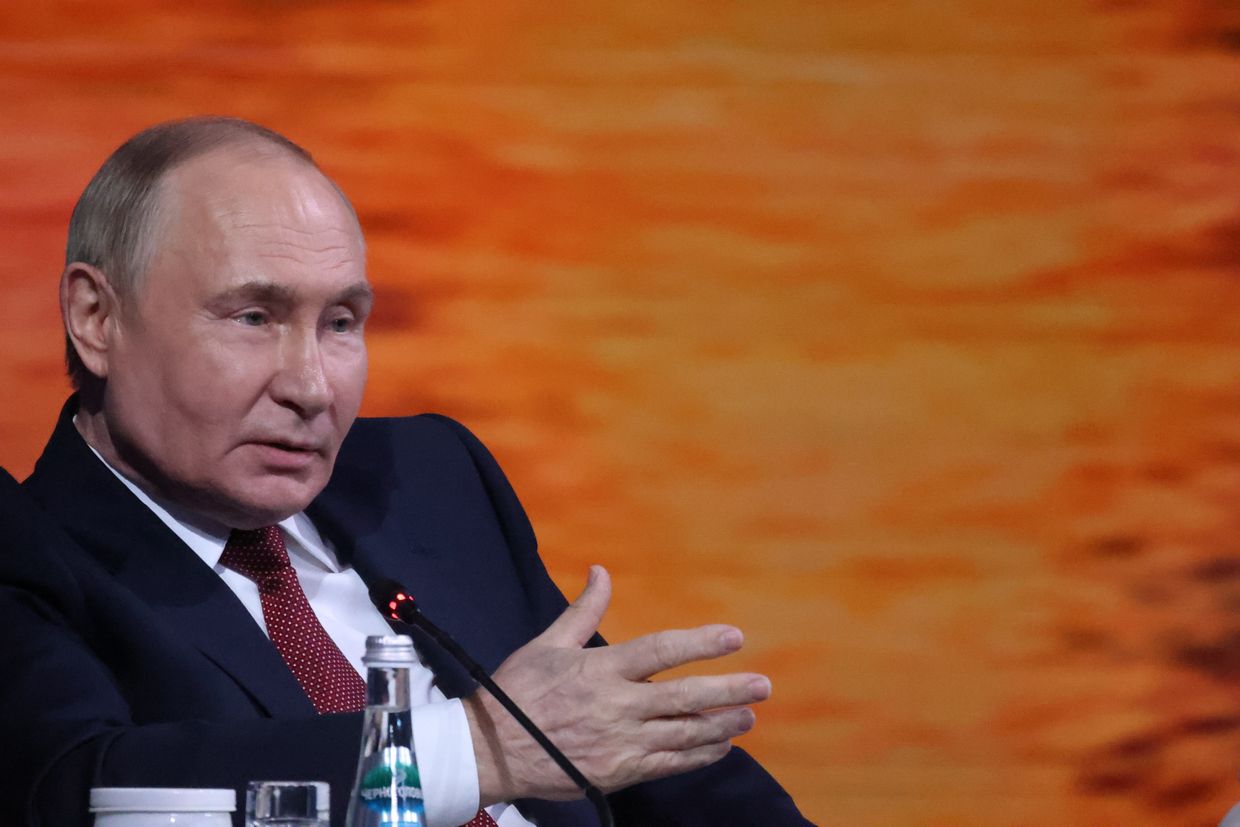
Russian President Vladimir Putin, earlier on June 20, claimed that "all of Ukraine" belonged to Russia, citing the Kremlin's propaganda talking points. Moscow regularly claims that Russians and Ukrainians are "one people."
Putin singled out Sumy, saying that "the city of Sumy is next, the regional center. We don't have a task to take Sumy, but I don't rule it out."
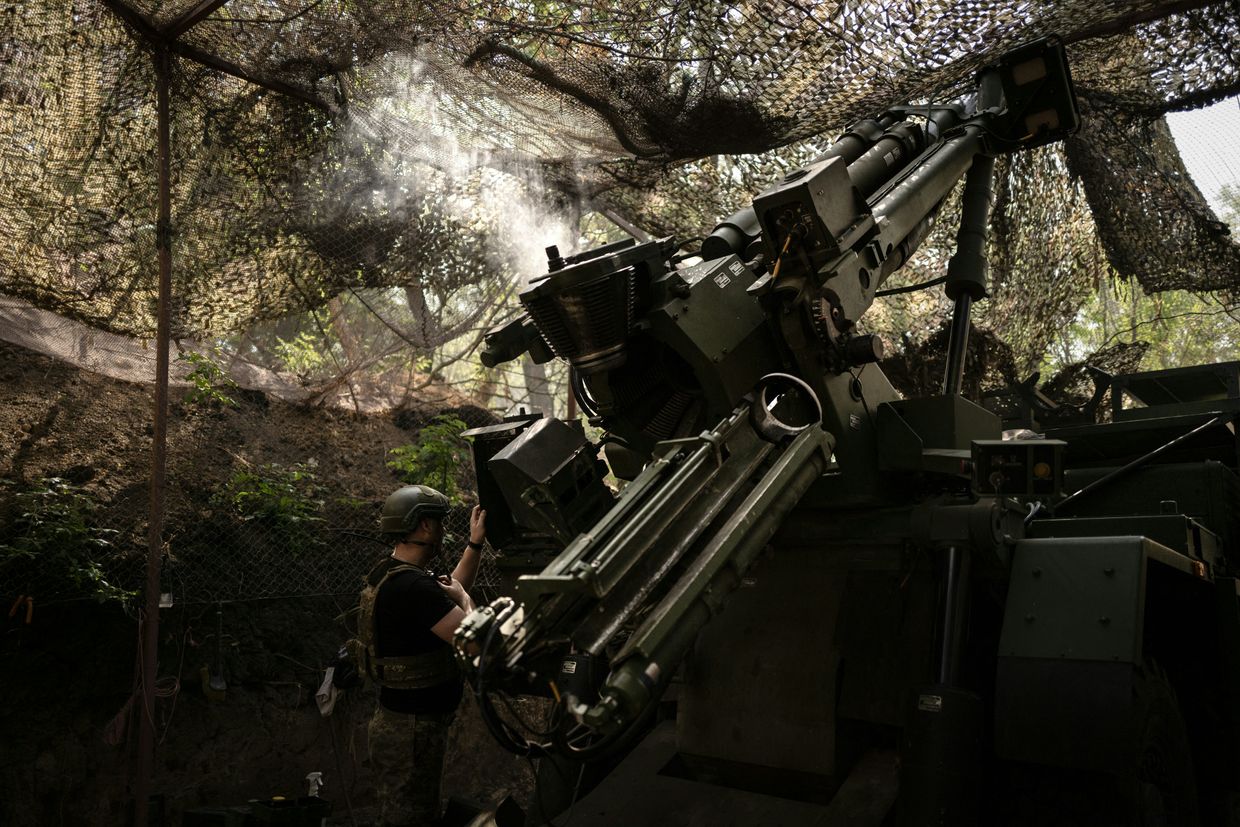
Ukraine's northeastern Sumy Oblast borders Russia and regularly faces Russian shelling as well as drone and missile attacks.
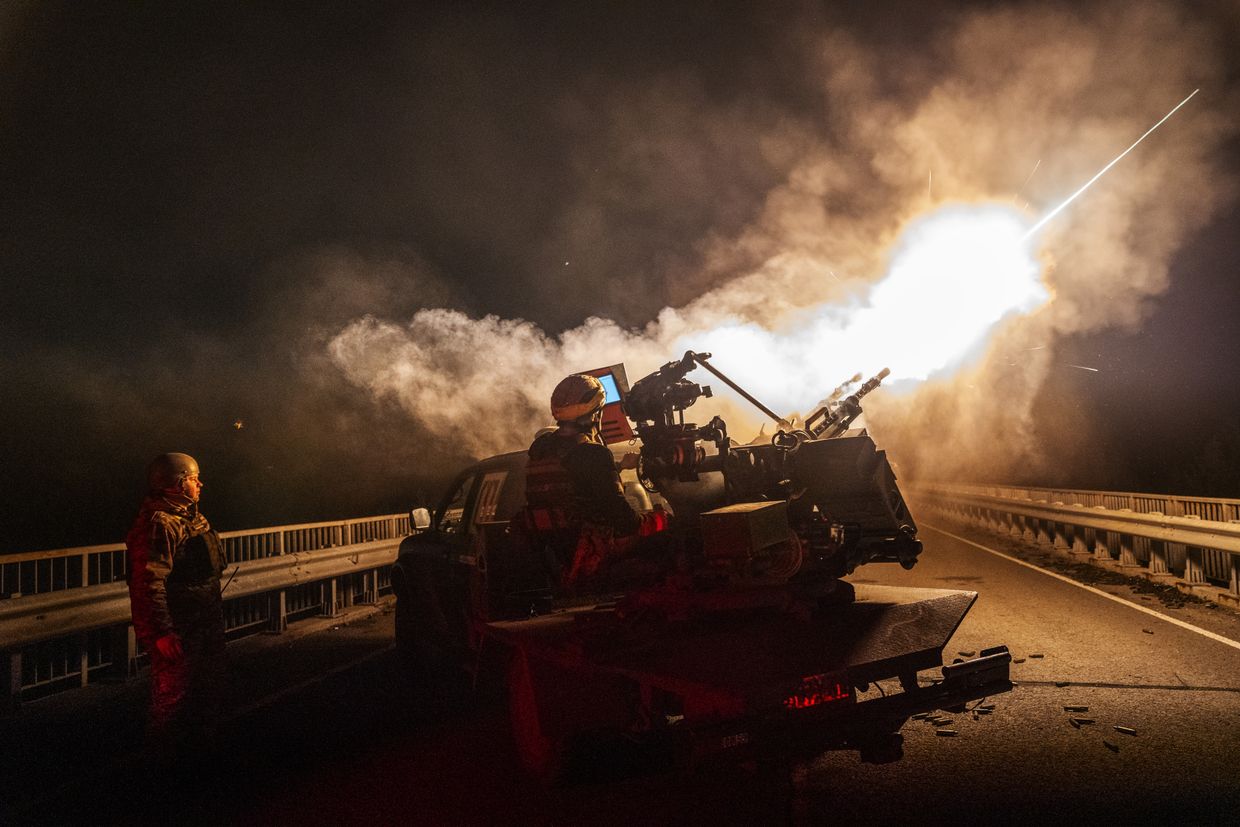
"There was a meeting of the Staff — a very detailed report on the frontline. Particular attention was paid to the Sumy Oblast, to operations in the border areas. I am grateful to our units for their resilience," Zelensky said.
Ukraine continues efforts to work with its allies to increase investment in defense production, he said.
"The volume of support this year is the largest since the start of the full-scale war," Zelensky noted.
Ukraine and Russia held direct peace talks in Turkey on May 16 and June 2. The efforts were largely inconclusive, with Moscow reiterating maximalist demands towards Ukraine.
The two sides were able to agree on large-scale prisoner exchanges. Despite the efforts, Russia has intensified drone and missile attacks on Ukraine.
On June 17, a Russian drone and missile attack on Kyiv killed 30 people and injured another 172. The nearly nine-hour-long strike saw Moscow's forces launch large numbers of drones and missiles at Ukraine's capital.
Editor's Note: This story was updated with comments from Foreign Minister Andrii Sybiha.Russian President Vladimir Putin said "all of Ukraine" belonged to Russia in a speech on June 20 at the St. Petersburg International Economic Forum, amid increasingly aggressive official statements about Moscow's final territorial ambitions in Ukraine.Putin's claim was based on the false narrative often pushed both by himself as leader and by Russian propaganda that Russians and Ukrainians are "one people."Th
Editor's Note: This story was updated with comments from Foreign Minister Andrii Sybiha.
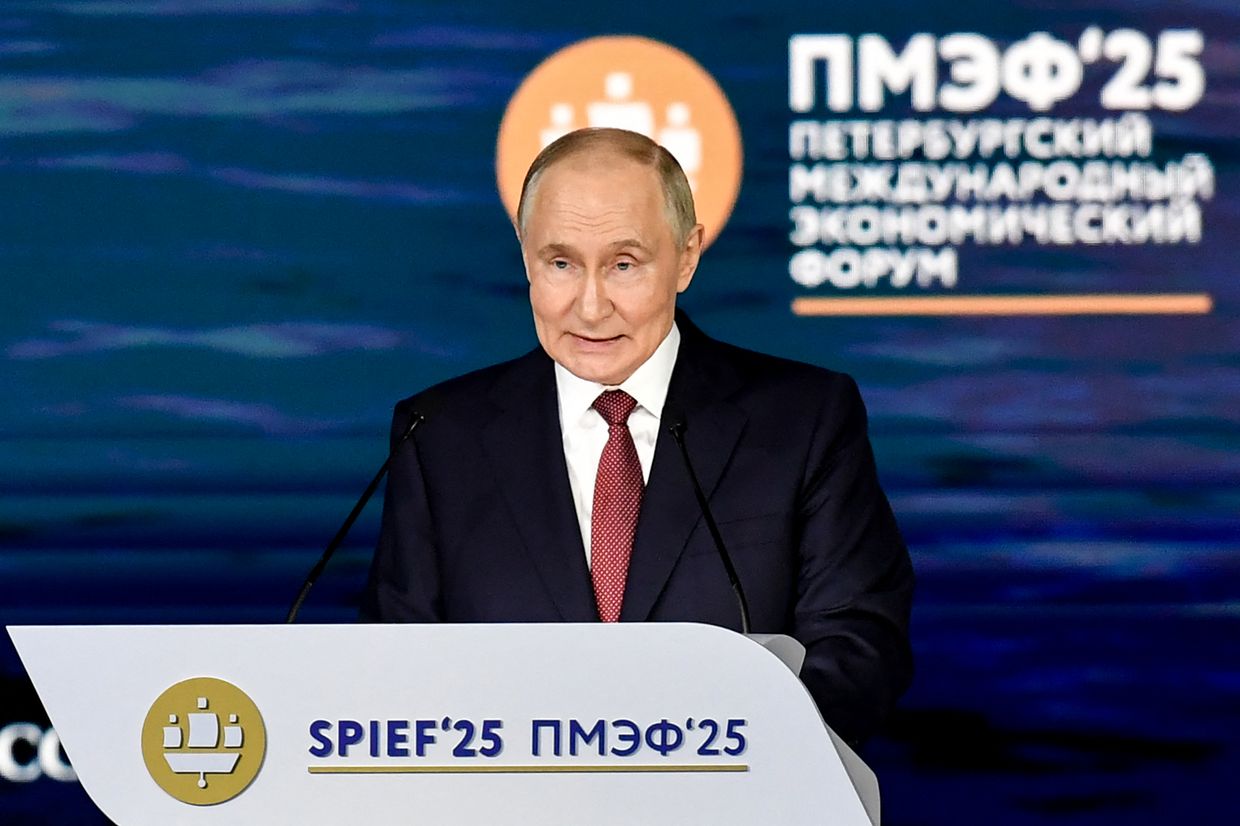
Russian President Vladimir Putin said "all of Ukraine" belonged to Russia in a speech on June 20 at the St. Petersburg International Economic Forum, amid increasingly aggressive official statements about Moscow's final territorial ambitions in Ukraine.
Putin's claim was based on the false narrative often pushed both by himself as leader and by Russian propaganda that Russians and Ukrainians are "one people."
The narrative has long figured prominently in Putin's rhetoric, often brought up as justification for its aggression in Ukraine.
In July 2021, just half a year before the full-scale invasion, the Russian leader stoked fears of a larger attack when he wrote and published an essay on the "historical unity of Russians and Ukrainians."
In response to the speech in St Petersburg, Foreign Minister Andrii Sybiha condemned Putin’s comments as "cynical," saying it showed “complete disregard for U.S. peace efforts."
"While the United States and the rest of the world have called for an immediate end to the killing, Russia's top war criminal discusses plans to seize more Ukrainian territory and kill more Ukrainians," he wrote in a post on X.
Putin made several other statements at the forum, some contradictory, about Moscow's aims in the war going forward.
"Wherever the foot of a Russian soldier steps is Russian land," Putin said, directly implying Russia's intention to continue occupying more than just the five Ukrainian regions that Moscow has illegally laid claim to: Donetsk, Luhansk, Zaporizhzhia, and Kherson oblasts, as well as the Autonomous Republic of Crimea.
Sybiha said that "Russian soldier's foot" brings only "death, destruction, and devastation." He accused Putin of indifference toward his own troops, calling him “a mass murderer of his own people.”
"He already disposed one million Russian soldiers in a senseless bloodbath in Ukraine without achieving a single strategic goal. One million soldiers. Two million feet," the minister said.
"And, while Putin is busy sending Russian feet to invade other countries, he is bringing Russians inside the country to their knees economically."
As per the "peace memorandum" presented by the Russian delegation at the last round of peace talks in Istanbul on June 2, Moscow demands Kyiv recognize the oblasts as Russian and hand over all territory not yet controlled by Russian forces into occupation, including the regional capitals of Kherson and Zaporizhzhia.
Asked whether Russia aimed to seize the regional center of Sumy in Ukraine's northeast, Putin said that while such a mission has not been assigned, he wouldn't rule it out.
Russian ground attacks into Sumy Oblast have intensified along the northeastern border in the past weeks, having first crossed the border after Ukraine's withdrawal from most of its positions in Kursk Oblast in March.
Russian troops have moved 10-12 kilometers (6-8 miles) deep into the region, according to Putin.
"The city of Sumy is next, the regional center. We don't have a task to take Sumy, but I don't rule it out," Putin said.
Sybiha urged the West to ramp up military aid to Ukraine, tighten sanctions against Russia, designate Moscow a terrorist state, and "isolate it fully."
"His cynical statements serve only one purpose: to divert public attention away from the complete failure of his quarter-century rule," the minister added.
Since March, Russia has reportedly taken control of about 200 square kilometers (80 square miles) in northern Sumy Oblast, including roughly a dozen small villages, according to open-source conflict mapping projects.
As of May 31, mandatory evacuations had been ordered for 213 settlements.
In May, Russian President Vladimir Putin ordered his military to create a so-called "security buffer zone" along the border with Ukraine, while Zelensky said on May 28 that Moscow had massed 50,000 troops near Sumy.
In a separate interview with Bild on June 12, Zelensky dismissed Moscow's claims of significant territorial gains as "a Russian narrative" aimed at shaping global perceptions. He stressed that Ukrainian forces have managed to hold off a renewed offensive for nearly three weeks.
When asked if Moscow requires the complete capitulation of Kyiv and the Ukrainian leadership, Putin denied this, saying that Russia instead demands the "recognition of the realities on the ground."
The statement follows a consistent line from Russian officials since the return of U.S. President Donald Trump brought new momentum to the idea of a quick negotiated peace in Ukraine.
Projecting a winning position on the battlefield and gaining confidence from Trump's frequent anti-Ukrainian rhetoric and refusal to approve further military aid to Kyiv, Moscow has stuck to maximalist demands, refusing the joint U.S.-Ukraine proposal of a 30-day unconditional ceasefire along the front line.
On June 18, in an interview to CNN, Russian ambassador to the U.K. Andrei Kelin said that while Russian forces were advancing on the battlefield and taking more Ukrainian, there was no incentive to stop, and that Kyiv must either accept Moscow's peace terms now or "surrender" after losing much more.
Regime change in Iran is "unacceptable" and the assassination of Supreme Leader Ayatollah Ali Khamenei would "open Pandora's box," Kremlin spokesperson Dmitry Peskov told Sky News in an interview published June 20.Russia, which signed a strategic partnership with Iran in January, has reportedly grown increasingly alarmed as the United States weighs deeper involvement in Israel's military campaign against Tehran. Earlier, U.S. President Donald Trump suggested the option of assassinating Iran's Su
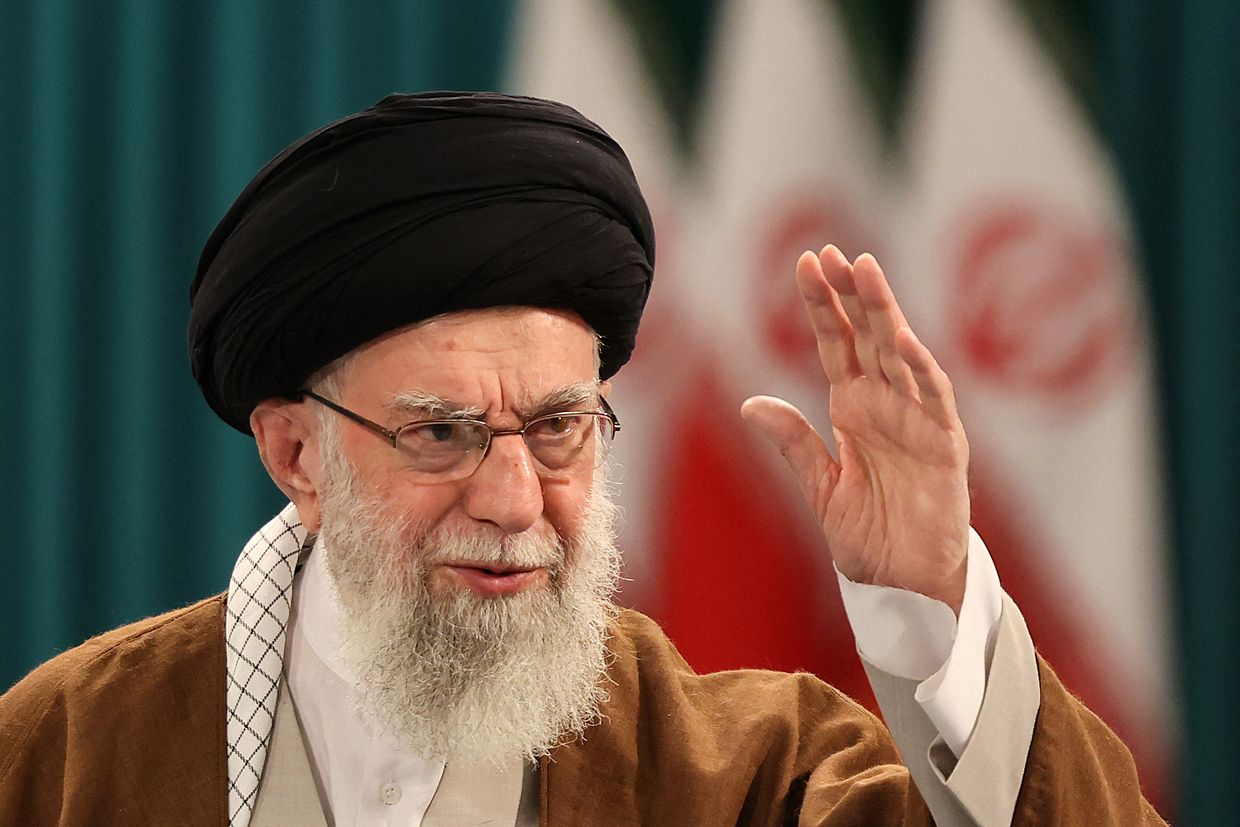
Regime change in Iran is "unacceptable" and the assassination of Supreme Leader Ayatollah Ali Khamenei would "open Pandora's box," Kremlin spokesperson Dmitry Peskov told Sky News in an interview published June 20.
Russia, which signed a strategic partnership with Iran in January, has reportedly grown increasingly alarmed as the United States weighs deeper involvement in Israel's military campaign against Tehran.
Earlier, U.S. President Donald Trump suggested the option of assassinating Iran's Supreme Leader Khamenei remains on the table, though he said the U.S. does not plan to act on it "for now."
The comment followed reporting that Israel had earlier proposed a plan to kill Khamenei — a proposal Trump initially rejected, according to a U.S. official cited by AP.
Peskov warned that any attempt at regime change in Tehran or threats to its leadership would "open Pandora's box," deepening instability across the Middle East and beyond.
"(Regime change in Iran) is unimaginable," Peskov said. "It should be unacceptable, even talking about that should be unacceptable for everyone." He added that the killing of Khamenei would promote extremist sentiment inside Iran and provoke unpredictable consequences.
"The situation is extremely tense and is dangerous not only for the region but globally," Peskov said. "An enlargement of the composition of the participants of the conflict is potentially even more dangerous. It will lead only to another circle of confrontation and escalation of tension in the region."
Russia has been a close regional ally of Iran, while Tehran supplied drones and ballistic missiles for Moscow's war against Ukraine. Meanwhile, Israel has maintained a delicate balance, refraining from joining Western sanctions against Moscow while condemning Iran's role in supporting Russia's war effort.
Asked on whether Moscow would respond to a possible strike against Khamenei, Peskov declined to specify, saying any reaction would come from "inside Iran."
Peskov also commented on Trump's dismissive response to Russian President Vladimir Putin's offer to mediate between Israel and Iran. The U.S. president reportedly told Putin to "mediate your own conflict" in reference to the Russia-Ukraine war. Peskov shrugged off the remark, calling Trump's language "unique" and urging mutual tolerance.
Tensions have risen between the U.S. and Iran following a wave of Israeli air strikes on Iranian territory, beginning June 13. The attacks targeted nuclear infrastructure and senior Iranian commanders, prompting Iranian missile strikes on Tel Aviv and other Israeli cities.
Tehran claimed that at least 224 Iranian civilians were killed on June 16, though the figures remain unverified.
Russia has offered to mediate the crisis, with Putin reportedly reaching out to both Iranian President Masoud Pezeshkian and Israeli Prime Minister Benjamin Netanyahu. Tel Aviv, according to the Kremlin, is reluctant to accept the proposal, while the EU leaders rejected it, citing Russia's aggression in Ukraine and its close military ties to Iran.

 Connexion
 The Kyiv IndependentThe Kyiv Independent news desk