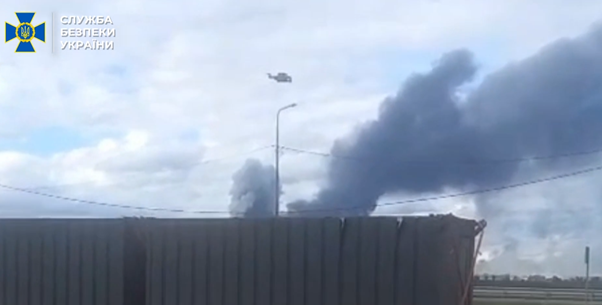
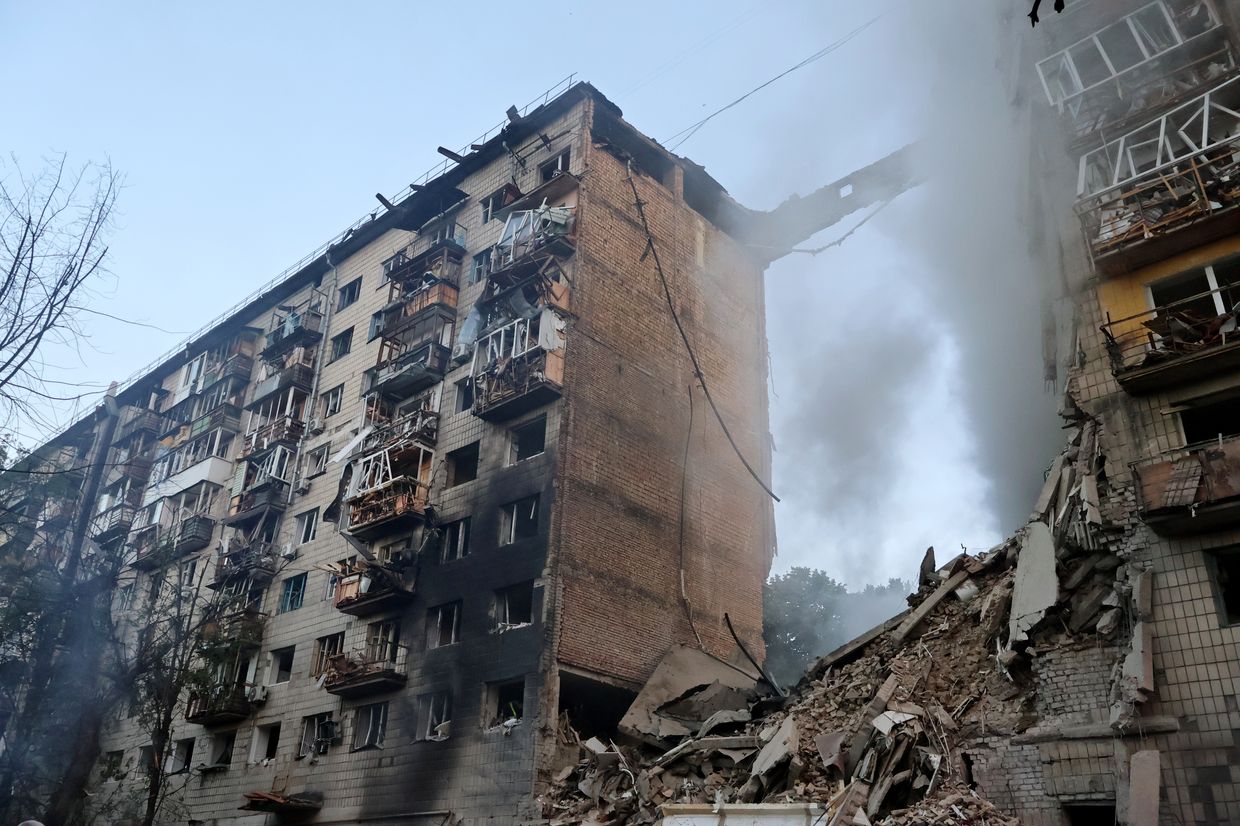
Russian attacks on Kherson Oblast injured nine people and damaged residential infrastructure on June 18-19, according to local authorities. Thirty-four settlements were reportedly targeted with artillery and drones.On June 18 at 6:00 p.m. local time, eight civilians were reported injured, including two men in Komyshany and Romashkovo, and six others in Bilozerka, Beryslav, Antonivka, and the regional capital Kherson. One more person has been injured since then.Civilian infrastructure, including
On June 18 at 6:00 p.m. local time, eight civilians were reported injured, including two men in Komyshany and Romashkovo, and six others in Bilozerka, Beryslav, Antonivka, and the regional capital Kherson. One more person has been injured since then.
Civilian infrastructure, including private homes and residential buildings, was also damaged in the attacks. A gas pipeline, emergency medical clinic, and fire department were also damaged, according to the latest reports.
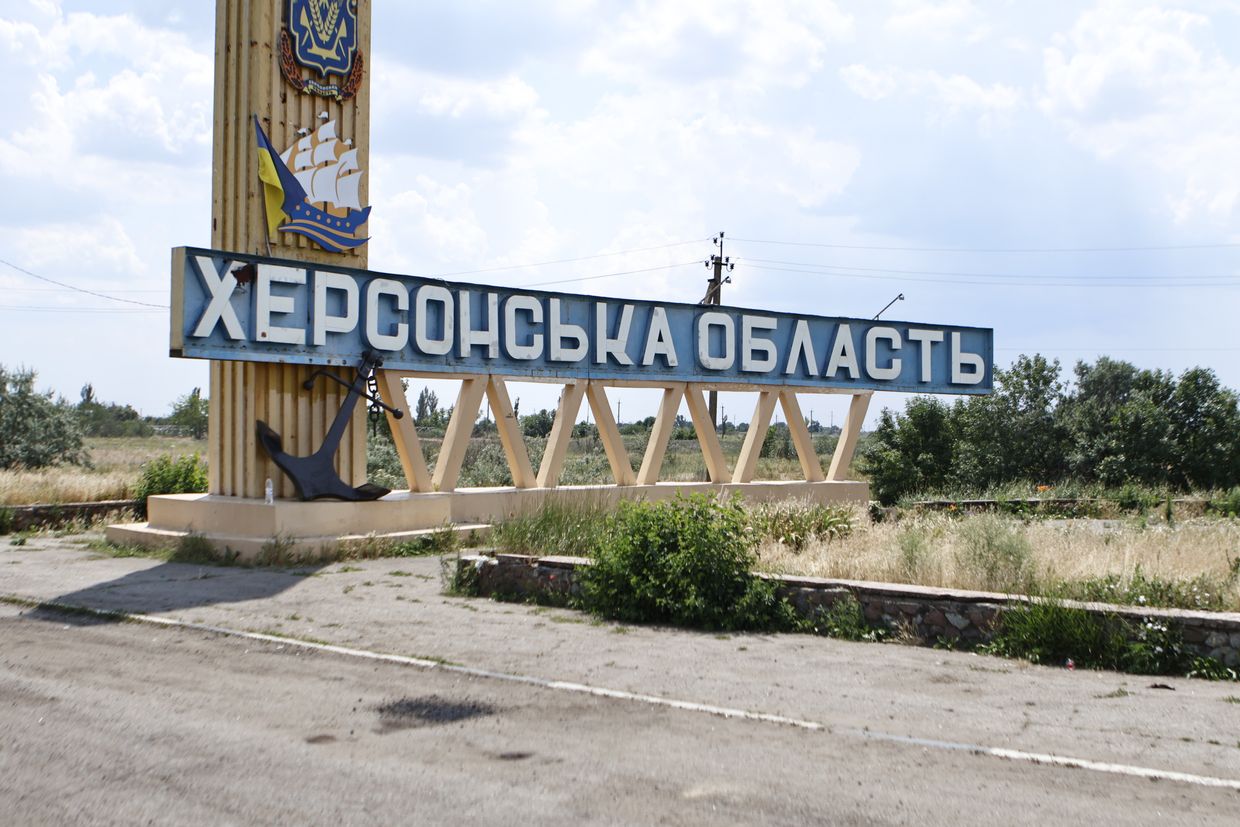
Kherson Oblast is located in southern Ukraine, just north of Russian-occupied Crimea, and has been relentless targeted by Russian forces throughout the war.
Ukrainian forces liberated the city of Kherson, the regional capital, in November 2022.
Russian troops continue to occupy large parts of the region and regularly launch attacks on civilian areas using artillery, guided bombs, and drones.
Russian President Vladimir Putin is facing renewed pressure from hardliners to formally declare war on Ukraine, with critics inside the Kremlin warning what he calls his "special military operation" no longer goes far enough. Anger intensified following Ukraine’s June 1 drone strike, dubbed Operation Spiderweb, which targeted four Russian air bases deep inside the country and reportedly damaged at least 20 Russian nuclear bombers. "Shock and outrage" is how one senior official described to the T
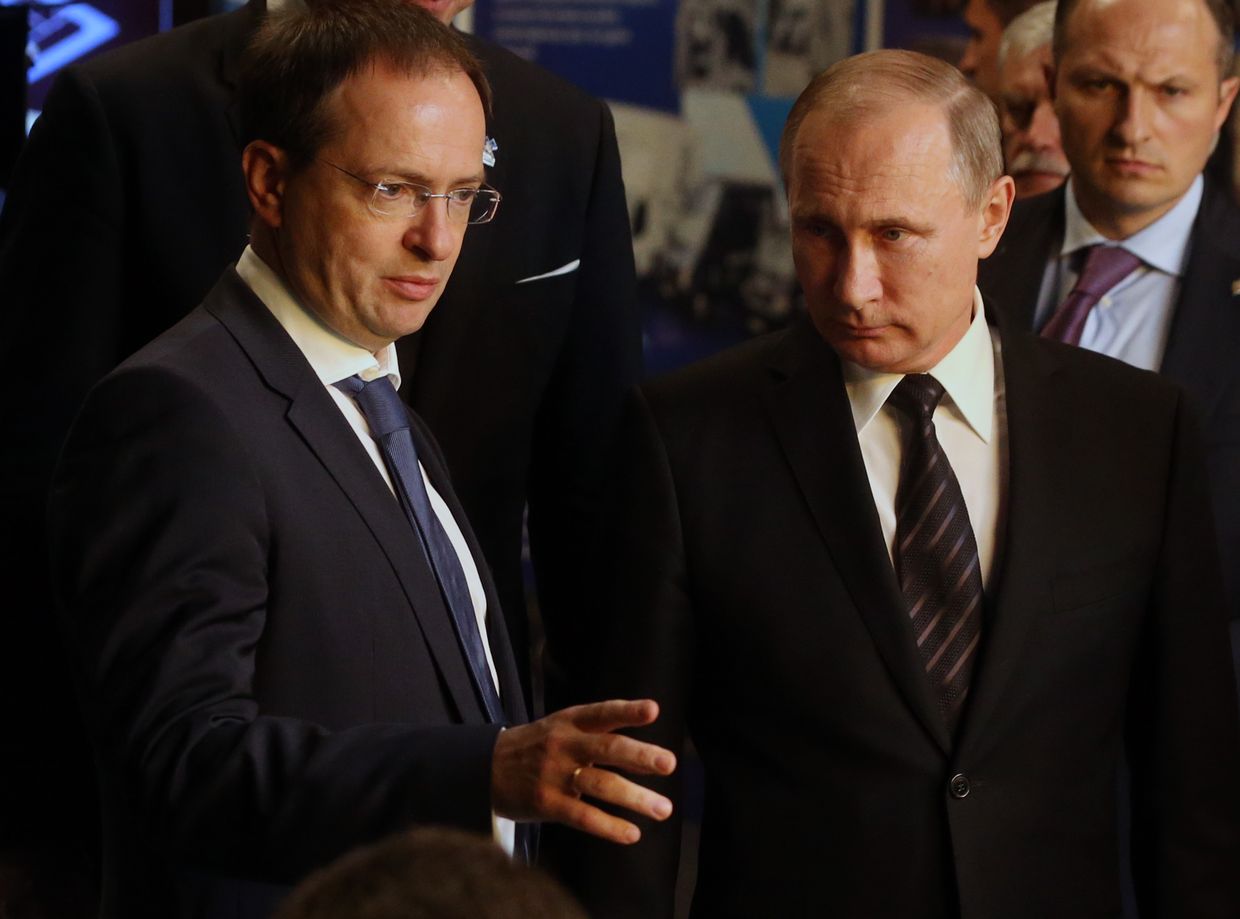
Russian President Vladimir Putin is facing renewed pressure from hardliners to formally declare war on Ukraine, with critics inside the Kremlin warning what he calls his "special military operation" no longer goes far enough.
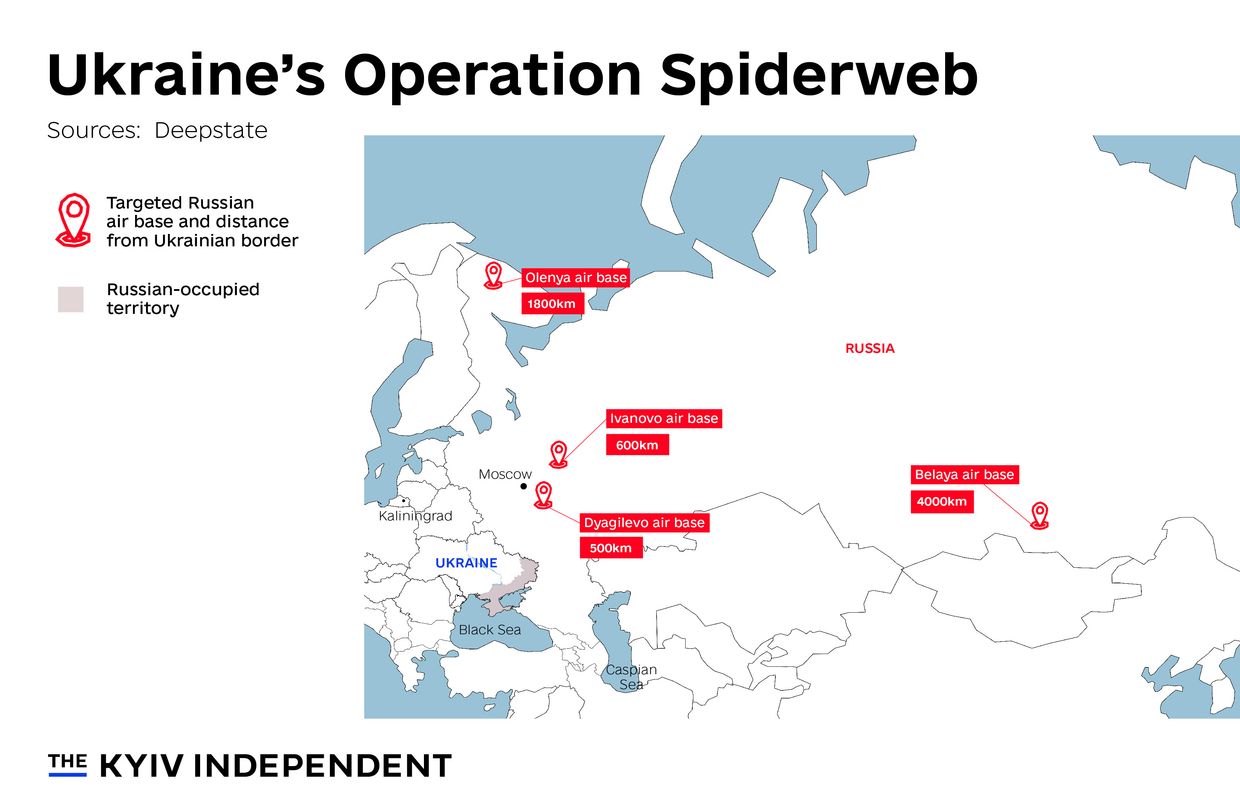
Anger intensified following Ukraine’s June 1 drone strike, dubbed Operation Spiderweb, which targeted four Russian air bases deep inside the country and reportedly damaged at least 20 Russian nuclear bombers. "Shock and outrage" is how one senior official described to the Telegraph the mood in the Kremlin, while another called the attack "a personal tragedy."
Russia has apparently redeployed dozens of long-range bombers to more remote bases within the country following the strike, Russian independent media outlet Agentstvo reported on June 11, citing OSINT analyst AviVector.
Despite the escalation, the Kremlin has so far avoided any dramatic shift in strategy. "This did not catalyse a political discussion or a change in the format of military operations," a former Kremlin official told the Telegraph. Another source close to the Russian Defense Ministry said, "Could the president declare war on Kyiv? Right now, unlikely. As cynical as it may sound, the leadership is satisfied with the current situation."
Hardliners argue that only a formal war declaration would permit true escalation—full-scale mobilization, regular missile strikes, and potentially the use of tactical nuclear weapons. One analyst told the Telegraph that a formal war declaration would give the Russian government sweeping authority to shift the country fully onto a wartime footing.
However, despite record levels of defense spending, the Kremlin has avoided taking that step—seeking instead to preserve the illusion of control and protect the broader population from the immediate impact of the war.
The Kremlin is projected to allocate 6.3 percent of its GDP to defense this year — the highest level since the Cold War — yet still far below what would typically indicate a country fully mobilized for war. By contrast, Ukraine spent 34 percent of its GDP on defense last year, while British military spending surpassed 50 percent of GDP during the Second World War.
"Mobilization undermines economic stability," said one current government employee. According to him, those in Putin’s inner circle have convinced the president that large-scale mobilization could trigger the collapse of the war effort. "And why is it needed now? We have Kalibr missiles, we have volunteers. Their resources are not yet exhausted," he was quoted as saying.
The U.S. Embassy in Kyiv on June 18 condemned Russia's massive missile and drone attack on Kyiv that killed at least 23 people and injured more than 130 a day earlier, saying it "runs counter" to U.S. President Donald Trump's peace efforts."Today, with all of Ukraine, we join a day of mourning in Kyiv for the victims of Russia's June 17 attack," the U.S. Embassy in Ukraine said in a statement. "We extend deepest condolences to the victims' families. This senseless attack runs counter to Presiden
The U.S. Embassy in Kyiv on June 18 condemned Russia's massive missile and drone attack on Kyiv that killed at least 23 people and injured more than 130 a day earlier, saying it "runs counter" to U.S. President Donald Trump's peace efforts.
"Today, with all of Ukraine, we join a day of mourning in Kyiv for the victims of Russia's June 17 attack," the U.S. Embassy in Ukraine said in a statement. "We extend deepest condolences to the victims' families. This senseless attack runs counter to President Trump's call to stop the killing and end the war."
The nine-hour overnight attack, which began late June 16, has become one of the largest aerial assaults on the Ukrainian capital since the start of Russia's full-scale invasion in 2022.
Ukrainian officials said Russia launched 472 aerial weapons, including nearly 280 Shahed-type attack drones and cruise and ballistic missiles. Ukraine's air defense downed 428 targets, but several struck residential areas, including a nine-story apartment building in Kyiv's Solomianskyi district.
Among the dead was a U.S. citizen, State Department Press Secretary Tammy Bruce confirmed at a briefing on June 17.
"We are aware of last night's attack on Kyiv, which resulted in numerous casualties, including the tragic death of a U.S. citizen," Bruce said. "We condemn those strikes and extend our deepest condolences to the victims and to the families of all those affected."
President Volodymyr Zelensky called it "one of the most horrifying attacks on Kyiv" and urged stronger international support to help Ukraine defend itself.
Despite the scale of the attack, Trump appeared to be unaware of the strike when questioned by reporters aboard Air Force One early on June 17.
"When was that? When?" Trump responded when a reporter asked for his reaction. Told that the drone and missile attack had occurred "very recently," Trump said: "Just now? You mean as I’m walking back to see you, that’s when it took place? Sounds like it. I’ll have to look at it."
As of a day later, the White House had still not issued an official response to the strike.
The June 17 attack caused extensive damage across the capital. Civilian infrastructure hit included kindergartens, a university dormitory, residential neighborhoods, and industrial sites.
Fahrenheit, a Ukrainian manufacturer of military and civilian clothing, reported that its Kyiv factory was damaged and operations were suspended. Ukrposhta, the national postal service, lost two branches. Ukrainian Railways said a grain-carrying train was struck, disrupting transit.
Kyiv Mayor Vitali Klitschko said unexploded cluster munitions were found in the city — a type of weapon banned by some countries due to the danger they pose to civilians. June 18 was declared a day of mourning in Kyiv.
Foreign Minister Andrii Sybiha called the timing of the attack, as G7 leaders gathered in Canada, a deliberate message from the Kremlin. Moscow has escalated strikes on Ukrainian cities in recent weeks, targeting residential areas and critical infrastructure.
Ukraine has urged Western allies to respond by reinforcing air defense capabilities and tightening economic pressure on Russia.

 Connexion
 The Kyiv IndependentAnna Fratsyvir