❌

Vue normale

Jamming doesn’t stop Russia hitting bridges. A Ukrainian expert points to the Iskander’s last-second radar scan

9 novembre 2026 à 09:05

An Iskander-M short-range ballistic missile launcher with its missile raised, at the Army-2016 military expo near Moscow, Russia, 8 September 2016

Russian Iskander-M ballistic missiles can still hit bridges when satellite navigation is jammed, because onboard seekers correct their course in the final seconds, Ukrainian radio-technology expert Serhii “Flash” Beskrestnov wrote on 9 November. Ukraine’s military intelligence database lists both seekers he names, though not how they perform under jamming.

Since 1 October, Russia has been striking Kyiv’s Dnipro crossings, the first such attacks since the full-scale invasion began. Jamming is one of Ukraine’s defenses against guided weapons. If it can’t throw these missiles off course, the bridges have to rely on interceptors and repairs, with backup crossings still being built.

The last seconds of the flight

Navigation is suppressed over the whole country during air-raid alerts, Beskrestnov wrote in a Telegram post. That makes it hard for an Iskander to hit within a meter of its target, and an inertial system alone won’t give that accuracy, he added. Russia, he wrote, wants its hits.
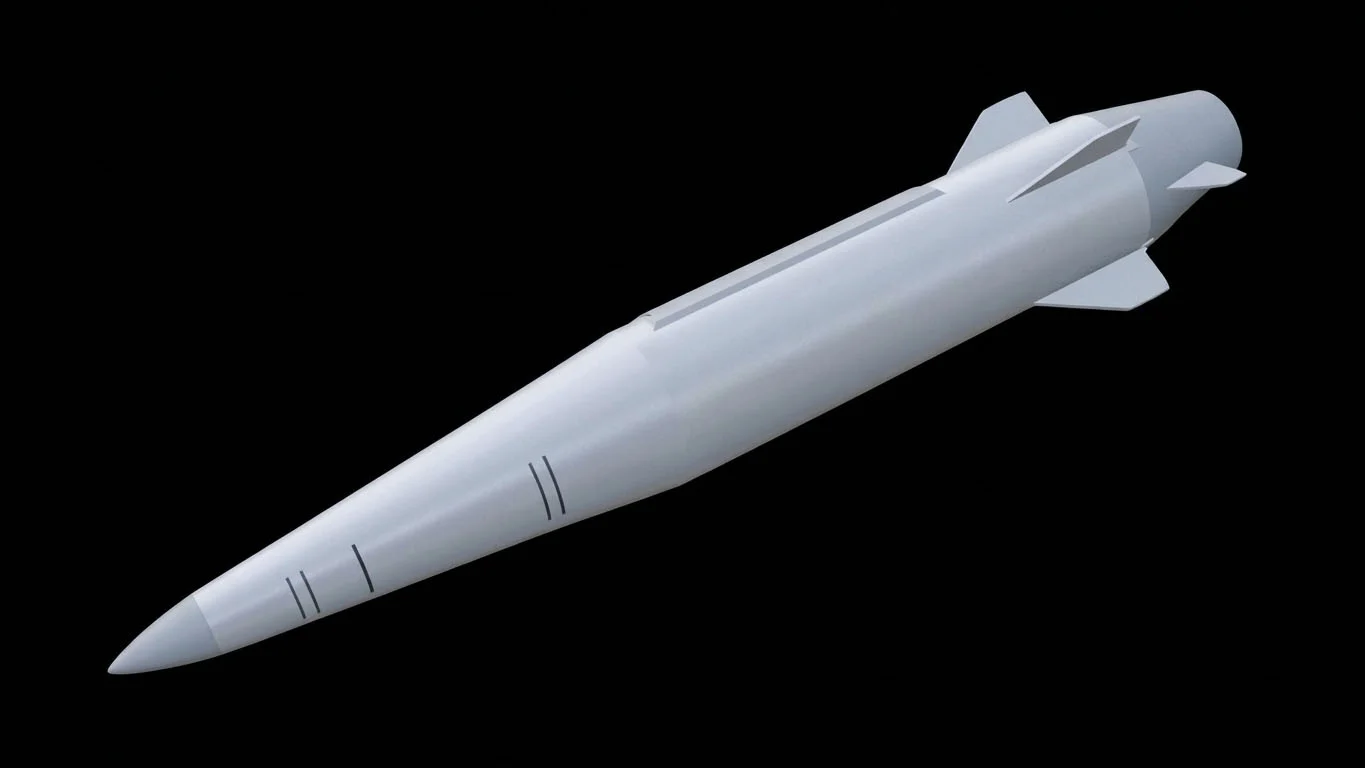
3D model of the Kh-47M2 Kinzhal missile. Photo: Ukraine’s Ministry of Defence
Explore further

Kinzhal is 90% identical to Iskander-M: Ukraine’s intelligence identifies 58 companies in production chain

That’s why, according to Beskrestnov, Iskanders carry optical homing heads or more expensive radar-guided ones. As the warhead falls, radar scans the terrain for a few seconds, and a correction goes into the missile’s guidance system, he explained.

What the intelligence database shows

Beskrestnov linked to War&Sanctions, a portal run by Ukraine’s Defense Intelligence (HUR) that catalogs components found in Russian weapons. One entry lists the 9E436 optical correlation homing head for the 9M723 Iskander-M. It names Russia’s TsNIIAG as the manufacturer and the NII Televideniya institute as an involved company. Another lists the 9B918 active radar homing head, made by the Russian company Radar MMS.

Russian drones first hit Kyiv’s Southern Bridge on 1 October, and the strikes continued the next day. Days later, a strike cratered the Northern Bridge. Then, overnight on 27 October, a ballistic attack damaged the Southern Bridge. Mayor Vitali Klitschko said traffic across it was closed and metro trains between Osokorky and Chervonyi Khutir stations were suspended. On 7 November, six ballistic missiles targeted the Northern Bridge and four hit it, Zelenskyy said. Traffic across it was closed in both directions, Klitschko reported.

The Proton electronics plant in Oryol, Russia, after a Ukrainian missile strike on 23 October. The facility reportedly produces electronic components used in Russian weapons systems, including Iskander-M ballistic missiles. Photo: Exilenova+
Explore further

Russian plant supplying components for Iskander missiles reportedly struck by Ukrainian Storm Shadow missiles

Meanwhile, Infrastructure and Recovery Minister Mykola Kalashnyk said on 30 October that Ukraine plans 21 alternative crossings over rivers, including the Dnipro, with the first in Kyiv due in early 2027. Bridges have been targets in both directions. In June, Ukraine struck the Chonhar bridge to occupied Crimea, and a Ukrainian commander told Army TV the strike left a Russian brigade waiting for fuel.

  • ✇Euromaidan Press
  • Russia was widening this bridge to four lanes for its Crimea road. Drones have now closed it
    Drones damaged the bridge over the Mius River on the R-280, Russia's highway from Rostov to occupied Mariupol and Crimea, on the morning of 8 November, Rostov Oblast Governor Yuri Slyusar said. The road leading to the crossing was closed by midday. A day earlier, occupation officials said drone strikes on the grid had cut power to much of occupied Luhansk Oblast. Russia's army in occupied southern Ukraine runs on roads, and for months Ukraine has been hitting the trucks that use them. T
     

Russia was widening this bridge to four lanes for its Crimea road. Drones have now closed it

8 novembre 2026 à 08:11

A map of the Mius River bridge at km 97 of the R-280 highway in Rostov Oblast, Russia, a street-level view of the bridge, and Rostov Oblast Governor Yuri Slyusar's posts on the drone attack of 8 November 2026, with the posts machine-translated

Drones damaged the bridge over the Mius River on the R-280, Russia's highway from Rostov to occupied Mariupol and Crimea, on the morning of 8 November, Rostov Oblast Governor Yuri Slyusar said. The road leading to the crossing was closed by midday. A day earlier, occupation officials said drone strikes on the grid had cut power to much of occupied Luhansk Oblast.

Russia's army in occupied southern Ukraine runs on roads, and for months Ukraine has been hitting the trucks that use them. The R-280 has been at the heart of that campaign, with drones hitting Russian vehicles on its occupied stretches. Ukraine's defense minister has said the strikes are turning occupied Crimea into an island. The Mius crossing lies on the Russian side of the same road, about 155 km from the front line.

A closed bridge on the road to Crimea

Slyusar said the drone attack and “falling debris” damaged the bridge deck at the 97th kilometer of the R-280 in Neklinovsky district, along with two crawler cranes. He reported no casualties. Traffic first crossed in alternating directions, but the governor later said the stretch of road leading to the bridge had been closed.

The R-280, which Russia calls the Novorossiya highway, links Rostov with occupied Mariupol, Melitopol, and Crimea and forms part of Russia's land route to the peninsula. Russia began widening the Mius bridge to four lanes in 2025. Ukraine has not commented on the attack. Russia's Defense Ministry claimed it downed 142 drones overnight, including over Rostov Oblast and Crimea.

The bridge went out of service a day after Russia hit one in Kyiv. Russian strikes on 7 November damaged the capital's Northern Bridge, closing it in both directions, Kyiv Mayor Vitalii Klitschko said. The attack damaged the road surface, a trolleybus line, and a power line, and the blast wave hit five trucks parked nearby, he added. In October, Russia struck Kyiv's Southern Bridge, and the city began preparing backup river crossings.

Map of Ukrainian strikes on 7–8 November 2026: the Mius River bridge in Rostov Oblast, occupied Luhansk Oblast, Oryol, and Saratov, with distances from Ukraine

Occupied Luhansk Oblast loses power

Drone strikes on energy facilities left more than 300,000 customers in the south and center of occupied Luhansk Oblast without electricity on 7 November, the Russian-installed “government” said, Russian Telegram channel Astra reported. It said no one was hurt.

The night before: a missile-parts plant, a refinery, and Iskanders

Overnight on 7 November, Ukraine's missile forces hit the Proton-Electrotex plant in Oryol with Neptune coastal missiles, Ukraine's General Staff said, recording a hit, explosions, and a fire. The plant makes optoelectronic equipment, including modules for Kover cruise missiles and parts for Iskander-M ballistic missiles. Oryol, about 165 km from the Ukrainian border, had already been hit on 23 October. Ukrainian Telegram channel Exilenova+ posted footage of the strike.

Oryol, moment of missile strike. pic.twitter.com/3P5VxyRtlh

— Exilenova+ (@Exilenova_plus) November 7, 2026

Oryol Governor Andrei Klychkov acknowledged that the production premises of an enterprise in the city were partly damaged, Meduza reported. President Volodymyr Zelenskyy thanked the crew of a Neptune mobile missile system for hitting Russian military production in Oryol and Rostov Oblast.

The same night, drones set the Rosneft oil refinery in Saratov, about 600 km from the front line near Kupiansk, on fire, Astra found, citing footage from residents. A drone also exploded outside a car-parts shop about 2 km away, Astra added. Saratov Governor Roman Busargin preliminarily reported injured people and damage to civilian infrastructure, and later said several houses were damaged.

The Saratov oil refinery, fucked up after a kamikaze drone raid.

Lately, refineries have been hit directly by massive strikes, leaving multiple fires burning across the facilities at once.

Burning nicely. ✋ pic.twitter.com/VZHOk7UJBL

— Exilenova+ (@Exilenova_plus) November 7, 2026

On 6 November and overnight, Ukrainian forces also hit two Iskander launchers and a Pantsir-S1 air defense system in Russia's Bryansk Oblast, as well as supply depots in occupied Luhansk Oblast, Ukraine's General Staff said, adding that the damage was still being assessed.

❌