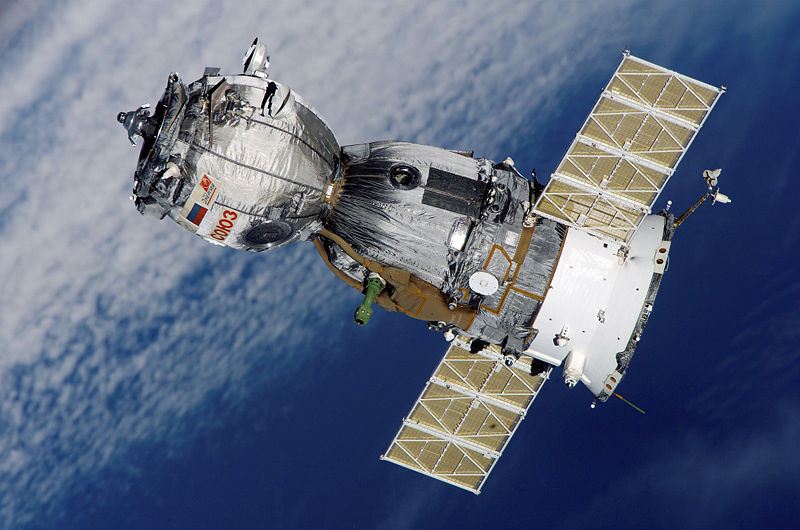
A Sofia court has cleared European arrest warrants for two 19-year-old Germans charged with setting fire to Starlink antennas south of the Bulgarian capital, a court spokeswoman told dpa. Prosecutors named the pair in court, but both had already left Bulgaria. The case adds Bulgaria to a run of attacks on Starlink sites in Europe, which Poland and Lithuania have linked to Russia.
While Russia presses its assault along the front and strikes Ukraine’s cities, Starlink keeps Ukraine’s dron
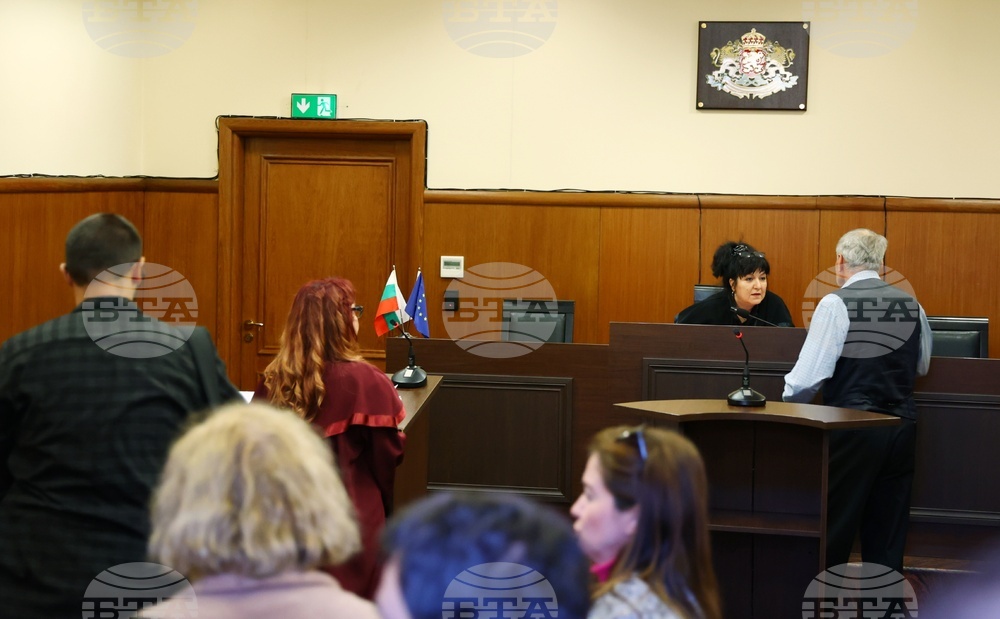
A Sofia court has cleared European arrest warrants for two 19-year-old Germans charged with setting fire to Starlink antennas south of the Bulgarian capital, a court spokeswoman told dpa. Prosecutors named the pair in court, but both had already left Bulgaria. The case adds Bulgaria to a run of attacks on Starlink sites in Europe, which Poland and Lithuania have linked to Russia.
While Russia presses its assault along the front and strikes Ukraine’s cities, Starlink keeps Ukraine’s drone units and front-line troops connected, and Poland pays about $50 million a year for its terminals. The network’s ground links in Europe are now a target in their own right, and ISW has linked the Polish fire to a wider Russian pattern of sabotage. Each attack on a ground station hits a network whose speed caps already disrupted Ukraine’s drone missions this month.
Two names, a few hours in Bulgaria
Prosecutors identified the suspects as Zeka Islam and Tirpan Beytullah, Bulgaria’s state news agency BTA reported, noting the names may be misspelled. Their whereabouts are unknown, according to German authorities cited by the agency. They were charged in absentia on 14 October and face three to 12 years in prison if convicted.
According to the indictment, the two crossed from Serbia at the Kalotina checkpoint at 17:37 on 9 October and told border officers they were tourists. At about 22:25, wearing gloves and masks, they allegedly set fire to antennas at the Plana teleport, a satellite ground station near the village of Plana. They drove back into Serbia through the same checkpoint at 23:55.
Three antennas burned completely, two were partly damaged, and three more were affected, prosecutors say. The pair traveled in a Volkswagen with German plates, and a national warrant followed two days after the charges, ZDF reported.
Explore further
Musk pushed Trump to slow Starlink in Ukraine, weakening air defenses as Russian drones attacked cities – The Telegraph
The court-appointed lawyers argued that investigators had pinned down the vehicle, not the men in it. The court rejected those objections, finding reasonable grounds to suspect the pair. The lawyers said they would appeal. The ruling can be challenged within three days.
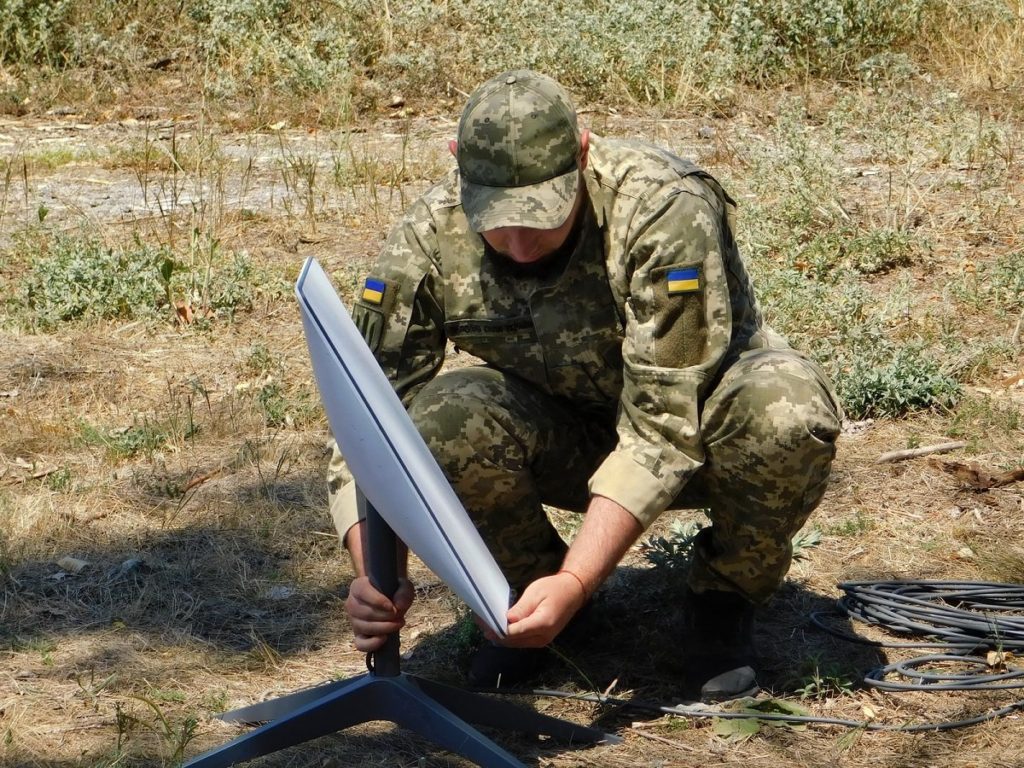
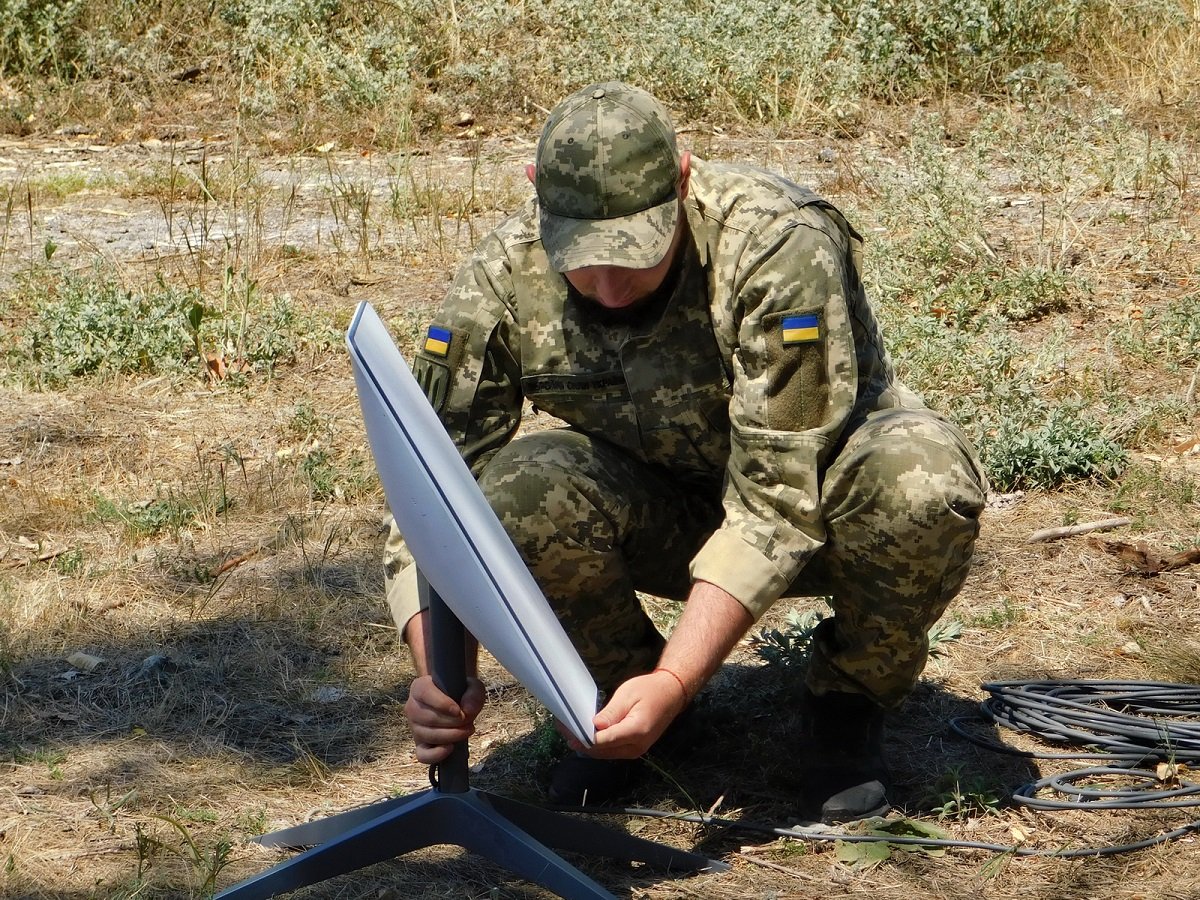
A Starlink antenna. Illustrative photo: Christoph Soeder/dpa
An opposition MP made the fire public three days later
The fire became public only on 12 October, when opposition MP Ivaylo Mirchev of Democratic Bulgaria posted about it on Facebook. He said 11 antennas had been set on fire, more than prosecutors later counted.
In parliament two days later, Prime Minister Rumen Radev asked the head of the State Agency for National Security (DANS) not to reveal details, saying disclosure could harm the investigation. DANS head Plamen Tonchev told lawmakers he believes the fire was sabotage and that more such attacks cannot be ruled out, dpa reported.
Explore further
White House ordered limits on Ukraine’s military satellite service — Reuters. Who made the decision remains unclear
After the ruling, Mirchev wrote that Radev personally owes the public an explanation of what has been achieved, BTA reported.
Bulgaria’s case joins attacks Poland and Lithuania tie to Russia
Bulgaria has not said who might be behind the fire. Authorities in Poland and Lithuania have linked similar recent arsons on Starlink equipment to Russia.
In September, fire hit a Starlink ground station south of Warsaw, and Germany later detained two suspects. On 18 October, Lithuania’s prime minister said intruders had tried to burn a company’s Starlink antennas used by Ukraine, calling it part of Russia’s hybrid war. Moscow claims such accusations are baseless, Reuters reported.
Someone tried to set fire overnight to a Lithuanian company that stores Starlink communication equipment, but tipped-off guards foiled the attempt, Lithuanian Prime Minister Mindaugas Sinkevičius said. He linked the attack to Russia’s hybrid war against Europe. It is the third suspected sabotage of Starlink infrastructure in Europe in under a month.
Russia keeps attacking Ukraine at the front and from the air while running a sabotage campaign behind the lines in Europe, which ISW has li
Someone tried to set fire overnight to a Lithuanian company that stores Starlink communication equipment, but tipped-off guards foiled the attempt, Lithuanian Prime Minister Mindaugas Sinkevičius said. He linked the attack to Russia’s hybrid war against Europe. It is the third suspected sabotage of Starlink infrastructure in Europe in under a month.
Russia keeps attacking Ukraine at the front and from the air while running a sabotage campaign behind the lines in Europe, which ISW has linked into one pattern. Starlink keeps Ukraine’s drone units and front-line troops connected, and Poland pays for much of that service.
Fuel canisters and a control unit
The attack came just after midnight, the prime minister wrote. Security services had warned the company about possible attacks, security was stepped up, and the attempt failed.
The company provides connectivity through nine Starlink satellite antennas used by Ukraine, Sinkevičius told Lithuanian public radio LRT. At almost 2 a.m., intruders tried to burn the antennas and their control unit, leaving behind incendiary liquid in canisters of 3 to 10 liters.
“It is obvious that this is part of Russia’s hybrid war with elements of sabotage,” he said, adding that the client was likely “the Russian side.”
He said he believes the people involved, and how many there were, are known, but gave no details, citing the investigation.
Police Commissioner General Arūnas Paulauskas said no suspects had been detained, any damage was minimal, and the company kept working. A pretrial investigation is under way.
Explore further
New Starlink restrictions disrupt Ukrainian drone missions. Kyiv adviser says move is tied to “political situation”
A drone the same morning
Hours later, an object that apparently entered from Poland crossed northern Lithuania, and NATO jets failed to identify it, Defense Minister Robertas Kaunas said. Possible fragments were found in the Pasvalys district near the Latvian border. Latvia’s military said the object may have blown itself up on a course toward Latvia.
Sinkevičius said the sabotage version had to be checked for the drone too. He called the National Security Commission for Monday, 19 October, to examine both incidents and consider giving services more powers to neutralize drones.
The third Starlink site
In September, a fire destroyed the distribution panel at a Starlink ground station in Wola Krobowska, Poland. Germany detained two Turkish nationals on 12 October, and Warsaw blamed Russian intelligence. In Bulgaria, masked intruders burned 11 of 17 Starlink antennas near Sofia.
German services detained two Turkish citizens on 12 October over the 23 September arson attack on a Starlink ground station in Wola Krobowska, near Warsaw, Poland’s Internal Security Agency (ABW) said. Both are suspected of arson, and Polish officials blame Russian intelligence. RMF24 later reported that German police also detained two more people who may be connected to the attack.
Poland is one of the main corridors for Western aid to Ukraine, and Polish Foreign Minister Radosław Siko
German services detained two Turkish citizens on 12 October over the 23 September arson attack on a Starlink ground station in Wola Krobowska, near Warsaw, Poland’s Internal Security Agency (ABW) said. Both are suspected of arson, and Polish officials blame Russian intelligence. RMF24 later reported that German police also detained two more people who may be connected to the attack.
Poland is one of the main corridors for Western aid to Ukraine, and Polish Foreign Minister Radosław Sikorski has said Poland spends about $50 million a year on Ukraine's Starlink service. That puts Polish infrastructure in the path of a Russian campaign that already hacks cameras to track arms heading east.
Fingerprints, DNA, and a route out
The men were held under European arrest warrants and now await transfer to Poland. Interior Minister Marcin Kierwiński wrote that the suspects would face charges of “subversion, sabotage on behalf of a foreign intelligence service” after their transfer to Poland. Polish authorities issued European arrest warrants for the suspects, who were subsequently detained in Germany.
Działania @PolskaPolicja i @ABW_GOV_PL we współpracy ze służbami niemieckimi (BKA) doprowadziły do zatrzymania na terenie Niemiec 2 obywateli Turcji odpowiedzialnych za podpalenie stacji Starlink w Woli Krobowskiej. Zarzut-dywersja, sabotaż na rzecz obcego wywiadu. @CBSPolicji
Police chief Marek Boroń said investigators reconstructed how the suspects prepared the attack and fled. “We have secured recordings pointing to this specific action. We have fingerprints, the perpetrators’ DNA, how they moved, when they came to Poland, and when they were evacuated from our country,” he said. One suspect lives in Germany, and the other had been ordered to leave the country, he added.
Warsaw points at Moscow
Prime Minister Donald Tusk called the fire another act of Russia's hybrid war and promised the saboteurs will answer to Polish justice.
Na zlecenie polskich służb niemiecka policja zatrzymała dwóch obywateli tureckich podejrzanych o podpalenie stacji Starlink na Mazowszu. To kolejny akt wojny hybrydowej. Sprawcy sabotażu odpowiedzą przed polskim wymiarem sprawiedliwości.
“We have no doubt that Russian intelligence services are behind this act of sabotage,” said Tomasz Siemoniak, the minister coordinating Poland’s special services.
Those services increasingly turn to people tied to the criminal world, he added.
Two more possible links
German counterterrorism officers detained a woman in Berlin, and a man is also in German custody, Polish radio RMF FM reported, citing its reporter. Both may be linked to the arson. The woman allegedly picked up the Turkish men near Łódź after they entered Poland from Germany, then drove them to Wola Krobowska. The man’s role is still being examined.
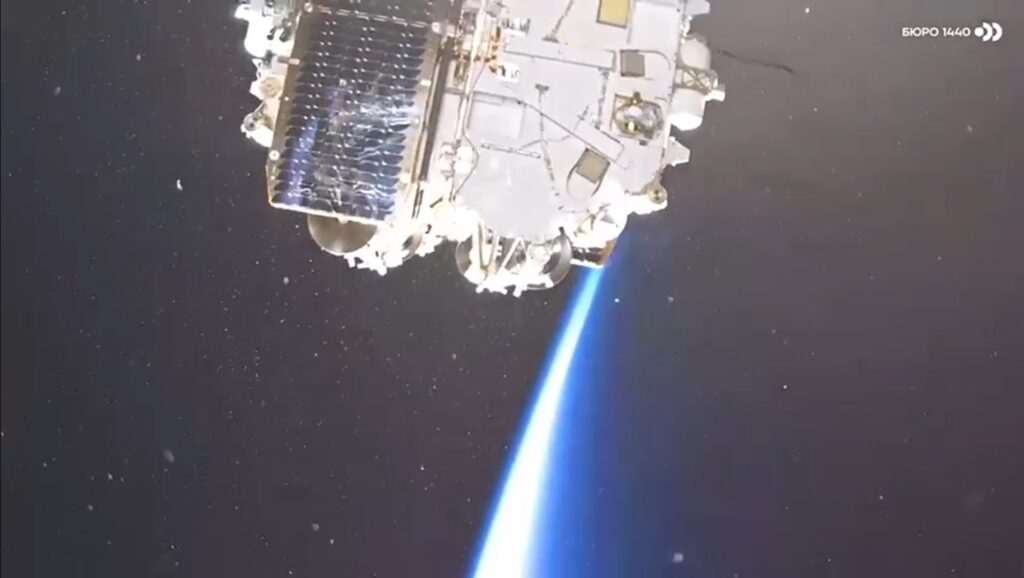
Russia's low-Earth-orbit satellite constellation Rassvet went from a few minutes of connectivity over Ukraine to two stable windows lasting more than an hour each in just five months. The system was built by the Russian private company Bureau 1440 as Moscow's answer to Starlink.
As of now, it is nowhere near matching SpaceX's 10,000-satellite network—but the gap between what Russia has now and what it needs is closing, and the tools that could slow it down mostly sit unused. When Ukrai
Russia's low-Earth-orbit satellite constellation Rassvet went from a few minutes of connectivity over Ukraine to two stable windows lasting more than an hour each in just five months. The system was built by the Russian private company Bureau 1440 as Moscow's answer to Starlink.
As of now, it is nowhere near matching SpaceX's 10,000-satellite network—but the gap between what Russia has now and what it needs is closing, and the tools that could slow it down mostly sit unused. When Ukraine and SpaceX bricked Russian-obtained Starlink terminals earlier this year, Russian assaults froze across the front—proof that cutting satellite command-and-control links matters more than disrupting guidance. Russia is now building its own links. The most consequential tool that could slow that down is Western sanctions against Bureau 1440 itself.
Four years of Western sanctions have failed to cut Russia off from the foreign components its missile and drone factories rely on: parts manufactured after sanctions were imposed still reach Russian assembly lines within months. Rassvet is a new version of the same problem. The system is still being built and relies on imported components whose exact origin is disputed—some experts point to American and European parts reaching Russia through sanctions-evasion networks, others say the core hardware is built from off-the-shelf Chinese components. Its manufacturer remains unsanctioned by any Western government, while some of the infrastructure needed to expand production has already been struck by Ukraine.
Six minutes in March, two hours by August
In March 2026, Bureau 1440 launched its first operational batch of 16 Rassvet satellites from Plesetsk Cosmodrome. Each pass over Ukraine created a window of six to 10 minutes, Serhii Beskrestnov, callsign Flash, a Ukrainian presidential adviser on defense technology, estimated at the time.
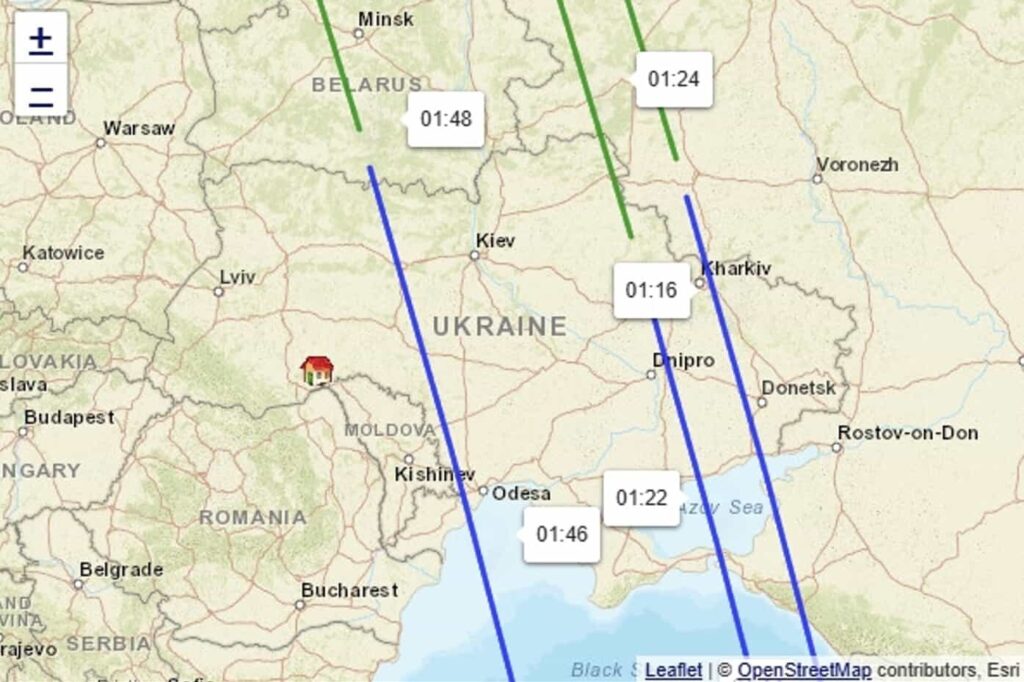
By late August, the picture had changed. Tracking data from N2YO showed four passes a day and two stable communication windows lasting more than an hour each. Satellite communications expert Volodymyr Stepanets said that 12 of the 16 satellites from the first batch had reached their operational altitude of 550 km, three were still ascending, and one had burned up—likely due to a manufacturing defect. A second batch of 16 went into orbit in July, though those satellites struggled to reach their target altitude and some may reenter the atmosphere.
Bureau 1440 shows footage of separation of 16 Rassvet satellites from Soyuz's third stage pic.twitter.com/jhe2krZ1kA
The second batch may be climbing faster than the first did at the same stage. Still, Russia is far from the 200–250 satellites Beskrestnov considers necessary for stable, round-the-clock coverage, and the altitude of roughly 550 km is still short of the roughly 800 km the constellation is designed to reach.
What Rassvet would change on the battlefield
Russia is unlikely to have any civilian use in mind for these communication windows. The satellites transmit in the Ka and Ku bands—high-frequency signals that are difficult to jam and difficult to detect.
Radio frequency spectrum and satellite frequency bands, including Ka and Ku bands used by Russia's Rassvet constellation. Source: Bliley Technologies
Right now, Ukraine's electronic warfare can push Russian drones offline: a Shahed flying low through a jammed zone loses its link and drifts off course. A satellite relay overhead would change that. The drone holds its course, receives updated coordinates mid-flight, stays below radar, and strikes. The constellation could do this for long-range strike and naval drones alike—letting them operate through electronic warfare at very low altitudes, where Ukraine's air defenses struggle to see them.
Bureau 1440 has also developed user terminals small enough to fit on Geran-type attack drones and cruise missiles. Gerans have struck Ukrainian territory, including Kyiv and Kyiv Oblast, almost continuously over the past month. A terminal on a Geran would turn a one-way munition into a weapon that can be redirected after launch. Unlike the Starlink terminals Ukraine relies on, which are geographically restricted, Russian terminals are expected to face no such limits—the same terminal that connects a Geran over Kyiv Oblast would work over Berlin or Paris.
A pass of the Russian Rassvet satellites over Ukraine scheduled for 21 April 2026. Source: www.n2yo.com
The sanctions lever—and the gap in it
Rassvet's parent company, IKS Holding, is one of Russia's largest hardware and software developers. The US sanctioned the holding, its then-owner Anton Cherepennikov, and the subsidiaries Kryptonit and KNS Group on 24 February 2023. Cherepennikov died under unexplained circumstances, but the company keeps operating.
Ukraine's Foreign Intelligence Service (SZRU) says the holding serves as a personnel reserve for the Federal Security Service (FSB). The first deputy CEO of IKS Holding is Boris Korolyov, son of FSB First Deputy Director Sergei Korolyov, according to the SZRU. He took the post at 27 in 2023, after Cherepennikov's death.
More importantly, though, is the company that actually builds the satellites—Bureau 1440—and its leadership. Ukraine has placed the company on its own sanctions list, but Kyiv's unilateral designations carry limited trade enforcement power, because these people and this company are absent from Western lists. At Euromaidan Press's request, the US-based research organization C4ADS confirmed that Bureau 1440 and its leadership sit outside every Western sanctions regime, and called designating the manufacturer the single most visible and effective step available.
From the Ukrainian side, Viktoriia Vyshnivska, a senior analyst at the Independent Anti-Corruption Commission (NAKO), told Euromaidan Press that sanctions on Bureau 1440 are not a magic button—but they are not pointless, either. Because Bureau 1440 uses Western equipment, designating the company would directly affect trade in those boards and components, she said. Any Western manufacturer that kept doing business with the company would also risk investigation and legal consequences.
Given the reach of Russia's sanctions-evasion networks and its close ties with China in joint production and technology sharing.
"We shouldn't expect a magical effect," Vyshnivska said.
But sanctions would make direct trade impossible and raise the cost and difficulty of sourcing Western components.
Even if the useful window is short, making supplies more expensive and harder to find is the point.
Many of the goods Bureau 1440 uses are already banned from sale to Russia under EU export controls, Vyshnivska noted. Yet Bureau 1440 itself is still absent from the sanctions lists. Her recommendation: Bureau 1440, its current owners, its parent company, the key related entities and individuals, and its main suppliers should all be designated.
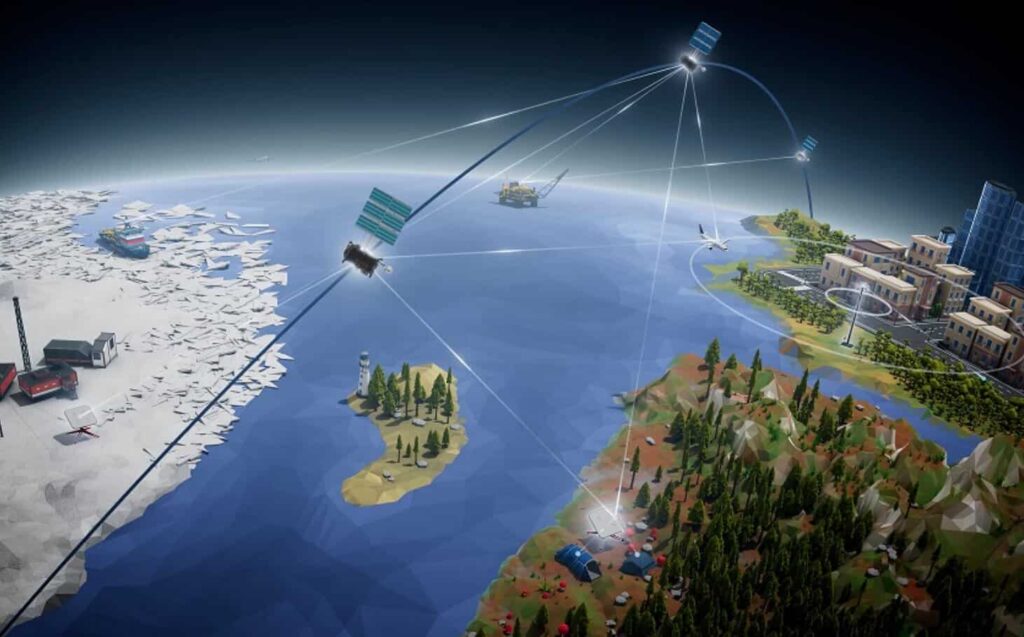
Illustration of the Russian Rassvet satellites by Bureau 1440
Diplomacy: Ukraine goes to the ITU
Beyond that, Ukraine is trying to act on its own on several fronts.
The first is diplomacy. On 28 August, Ukrainian Foreign Minister Andrii Sybiha said Ukraine had sent a formal note to the International Telecommunication Union (ITU), the UN agency that coordinates radio frequencies, demanding that Ukrainian territory be excluded from Rassvet's service areas across all frequency bands. The system's use over Ukraine "has nothing to do with civilian purposes," he wrote on X.
Today, we officially addressed the International Telecommunications Union @ITU requesting an exclusion of Ukraine’s national territory from the declared service areas of all beams of the Russian military satellite system 'Rassvet' satellite networks in all frequency bands.
Days later, at a meeting of EU foreign ministers in Ireland, Sybiha handed partners a list of nine legal entities linked to the project and urged them to impose sanctions.
The EU had already moved once: its 21st sanctions package, adopted on 23 July, targeted the Rassvet network. But the main gap is not closed, and that round stopped short of the manufacturer, leaving Bureau 1440 and its chief executive off the lists.
Hitting the supply chain with weapons
Another lever is direct strikes. In mid-August, Ukrainian-made Flamingo cruise missiles struck an industrial zone in Samara that houses the Progress Rocket Space Center—the only plant in Russia that serially assembles the Soyuz-2.1b rockets used to launch Rassvet into orbit. Satellite imagery published by the Ukrainian Telegram channel Exilenova+ showed a collapsed roof section 85 meters long and 35 meters wide over Building 106A, the hall where crews wire the rockets' control systems and cabling. The channel reported two missile hits on that hall.
The aftermath of a strike by two FP-5 Flamingo cruise missiles on the Progress Rocket and Space Center. Photo: t.me/exilenova_plus
If the hall was destroyed, production could stop entirely, and switching to other Russian launch vehicles would take significantly longer and add complexity. Drones also attempted to strike Plesetsk Cosmodrome, from which both 2026 batches were launched.
Both targets—the factory that builds the rockets and the site that launches them—are needed if Russia is to expand Rassvet production.
The timeline: 5.5 to eight years, if nothing changes
Russia plans to expand the constellation to 292 satellites by the end of 2027, Deputy Chief of Ukraine's Defense Intelligence (HUR) Vadym Skibitskyi said. Moscow's longer-term goal is 924 satellites by 2035.
Explore further
After SpaceX cuts off Starlink access, Russia launches first 16 satellites of its own “Rassvet” alternative
With 32 satellites already launched in two batches, 260 more are needed. At 16 satellites per launch, that requires roughly 17 launches. At a four-month interval between launches, deploying them would take roughly 5.5 years even if every launch succeeded and every satellite reached its target orbit. That most likely won't fully work out: one satellite from the first batch is already lost, two from the second batch may be lost as well, and none of them has yet reached the required altitude.
Russia also depends on the scarce Soyuz-2.1b rocket. The rocket has averaged only six to eight launches per year since 2022—most committed to GLONASS navigation satellites, ISS resupply, and military payloads—limiting Russia to a theoretical maximum of roughly two Rassvet-dedicated launches per year, or 128 Rassvet satellites over four years at that rate.
There is still time to shut this project down or slow it. Vyshnivska put the useful window to slow Rassvet at about a year. Russia, by Ukrainian calculations, needs five to eight years to see it through.

 Connexion





 (@afec7032)

 (@andrii_sybiha)