❌

Vue normale

  • ✇Euromaidan Press
  • Most drone interceptors ram or explode. This Ukrainian one just throws a net—six shots to a module
    A Ukrainian defense company has shown a new way to knock FPV drones out of the sky, unveiling a net-firing interceptor at the IT Arena tech conference in Lviv, dev.ua reported. The system, called Mangal and developed by Phantom Defense, is still a prototype—the company says the first production units could reach the market in a few months. Ukraine's counter-drone work has turned into a crowded contest, with firms racing to field jammers, interceptor drones, and net-throwers that can blu
     

Most drone interceptors ram or explode. This Ukrainian one just throws a net—six shots to a module

30 septembre 2026 à 06:31

Modular FPV drone interceptor “Mangal” by Phantom Defence. September 2026.

A Ukrainian defense company has shown a new way to knock FPV drones out of the sky, unveiling a net-firing interceptor at the IT Arena tech conference in Lviv, dev.ua reported. The system, called Mangal and developed by Phantom Defense, is still a prototype—the company says the first production units could reach the market in a few months.

Ukraine's counter-drone work has turned into a crowded contest, with firms racing to field jammers, interceptor drones, and net-throwers that can blunt Russia's growing use of cheap FPVs.

What Mangal does

Phantom Defense designed the modular launcher to defend positions, vehicles, and other targets against enemy drones. It fires a special net weighted with sinkers. The net opens the moment it fires, tangling the drone and dragging it down. One module holds six charges. Two cameras give the crew a clearer view, and the system can detect targets on its own, which speeds up how fast an operator spots a threat. Crews can fix Mangal in place to guard checkpoints, trenches, or infrastructure, or bolt it onto a vehicle.

Why a net

FPV drones—aircraft a pilot flies straight into a target—have become a routine danger along the front. A small, fast drone is hard to hit with a single round. A net spreads as it travels, so it is more forgiving to aim. Neither Phantom Defense nor the outlets covering the launch have said how far Mangal's net can reach.
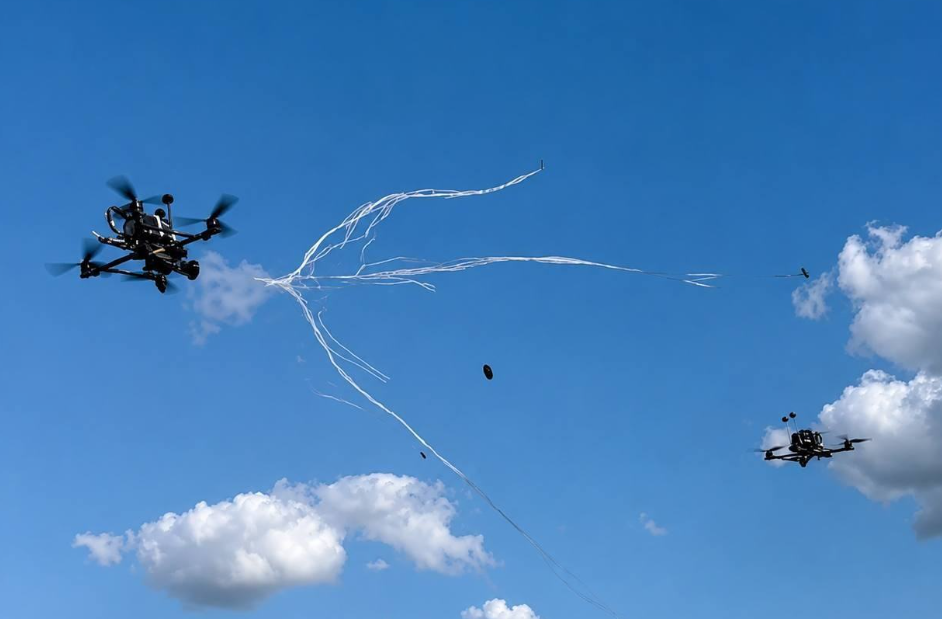
he Ukrainian company WINFLY unveiled the WINFLY Spider, an interceptor equipped with a net-launcher. Source: Militarnyi
Explore further

Ukraine’s newest interceptor doesn’t ram its target. It nets it for $27, then flies home to catch another

Other net-based counters

Other developers are turning to nets too. The WINFLY Spider is an interceptor drone that snares a target in a net and returns to its launch point intact, at about $27 a shot. That lets one aircraft make repeated intercepts instead of being spent on a single kill. Scan Horizon comes from Postup Solutions, a firm registered in Wrocław, Poland, and pairs a net launcher from Ukrainian company Ptashka Drones. Its net reaches about 30 meters. Contra Drone, meanwhile, has shown interceptor missiles that can reportedly carry net warheads alongside other options.

  • ✇Euromaidan Press
  • A Ukrainian firm now rents out drone jammers by the day—but the deposit is the device’s full price
    Ukrainian defense-tech firm BlueBird Tech has begun renting out its Hrets electronic-warfare jammers by the day, in what it calls Ukraine's first such service, the company said on 29 September 2026. Electronic-warfare gear—the devices that scramble the radio links attack drones rely on—is normally bought outright, renting lets a user take a system for a single mission or test it before committing. The pull is a war where cheap first-person-view (FPV) drones have made portable jamming a
     

A Ukrainian firm now rents out drone jammers by the day—but the deposit is the device’s full price

29 septembre 2026 à 13:50

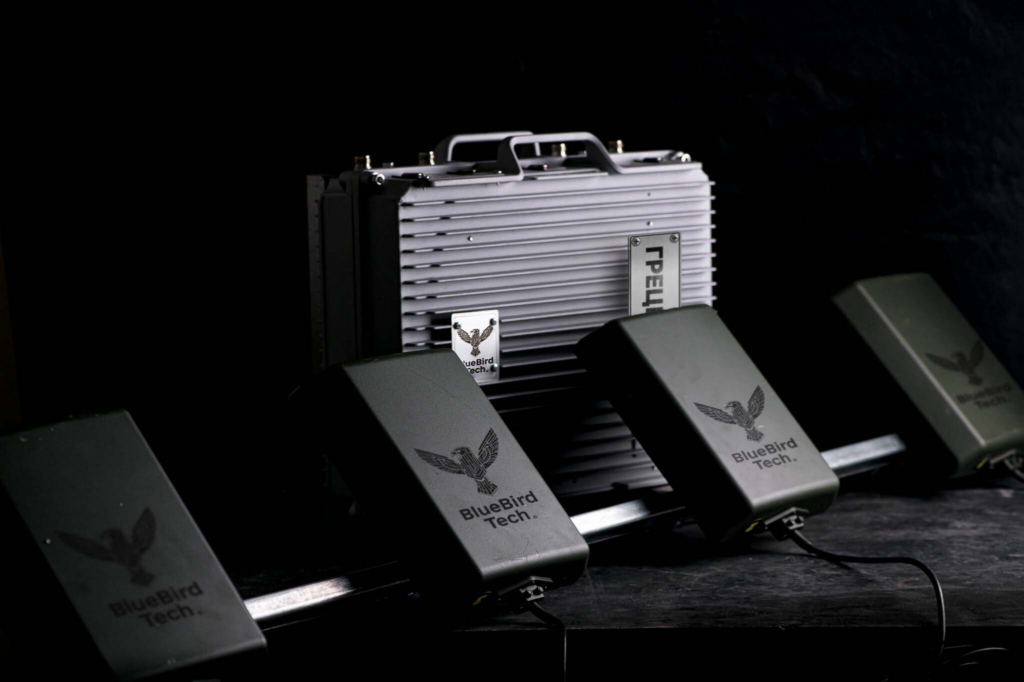
Hrets electronic-warfare jammers.

Ukrainian defense-tech firm BlueBird Tech has begun renting out its Hrets electronic-warfare jammers by the day, in what it calls Ukraine's first such service, the company said on 29 September 2026. Electronic-warfare gear—the devices that scramble the radio links attack drones rely on—is normally bought outright, renting lets a user take a system for a single mission or test it before committing.

The pull is a war where cheap first-person-view (FPV) drones have made portable jamming a routine need, one many users face only for a stint.

How renting works

After paperwork and a deposit equal to the device's full price, the system is handed over, and that handover counts as day one. Each day's rent is then drawn from the deposit, return the system working and undamaged and the renter gets back what is left. Keep it long enough that the fees add up to the full price, and the jammer passes to the renter automatically. Renting is open to individuals, companies, charities, and volunteer groups.

Three models, and what each one jams

The Hrets XL is a modular FPV jammer built from two to 10 working modules, priced case by case. The vehicle-mounted Hrets 4MC is an anti-drop system that jams DJI Mavic-type quadcopters—the drones Russian forces use to drop munitions—for about $56 a day. The lightweight Hrets 4M jams FPV drones at a stated 70 to 400 meters for about $67 a day. One Ukrainian firm has even packed detection, decoding, and jamming of an FPV signal into a single device.

  • ✇Euromaidan Press
  • A former US nuclear-sub commander, a Ukrainian fund, and a plan to shield Odesa with drone swarms
    TAF Industries signed a joint-venture memorandum with Danish firm Upteko for production but says bureaucracy is slowing the process. Meanwhile, Resist.UA agreed to invest in BlueShadow, a Danish maritime-defense startup whose founder commanded a US nuclear submarine and whose engineering team works largely in Ukraine, Defender Media reported. Ukraine's defense industry has outgrown much of its own 2022-era hardware in two years of rapid wartime iteration, but a government fee of 20-30%
     

A former US nuclear-sub commander, a Ukrainian fund, and a plan to shield Odesa with drone swarms

23 septembre 2026 à 10:05

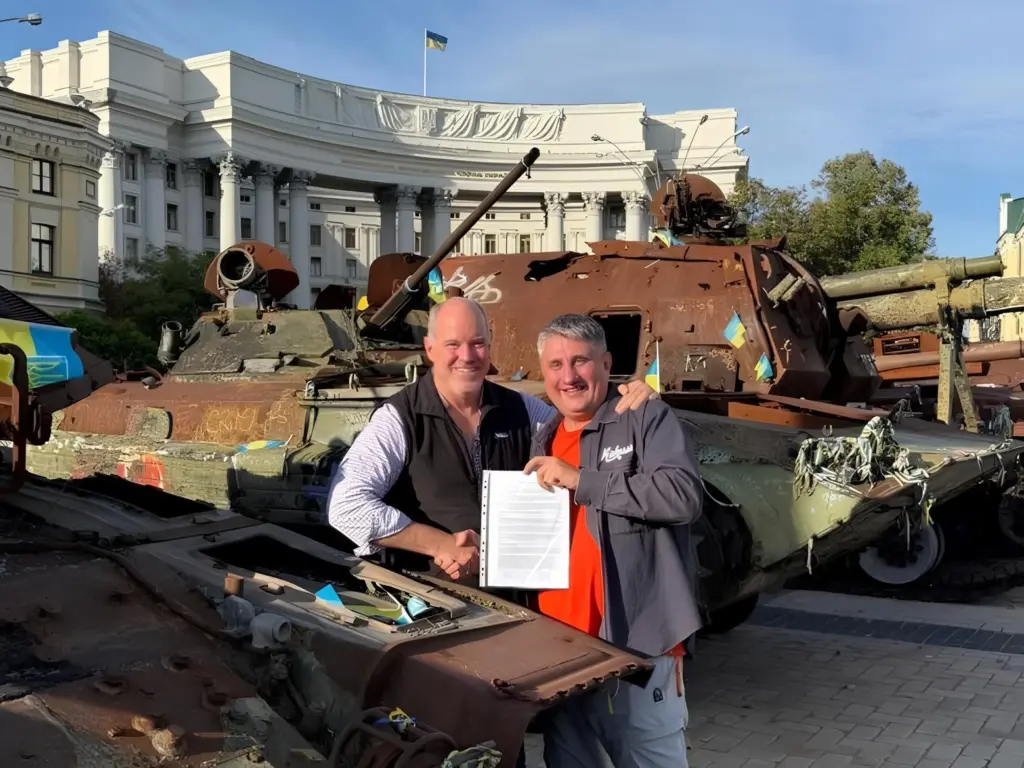
CEO of BlueShadow Charlie Maher with Resist.UA founder Roman Sulzhyk.

TAF Industries signed a joint-venture memorandum with Danish firm Upteko for production but says bureaucracy is slowing the process. Meanwhile, Resist.UA agreed to invest in BlueShadow, a Danish maritime-defense startup whose founder commanded a US nuclear submarine and whose engineering team works largely in Ukraine, Defender Media reported.

Ukraine's defense industry has outgrown much of its own 2022-era hardware in two years of rapid wartime iteration, but a government fee of 20-30% on export permits and over 200 stalled co-production bids have left the country's foreign arms sales far behind battlefield demand. Deals like the two in Denmark route Ukrainian technology into allied markets without waiting for Kyiv's export apparatus to catch up.

Ukrainian first-person-view drones, made on Danish soil

Drone maker TAF Industries plans to produce its first batch in Denmark by the end of 2026, through a joint venture with local firm Upteko. The two signed a memorandum in August 2026, but paperwork on both sides has slowed things down.

"We need to pass a fairly large number of bureaucratic procedures to make it possible," chief business development officer Mykhailo Diachenko told NordicDefenceWatch.

He called the year-end target reachable, "though maybe it will look more like a miracle."

TAF wants footholds in other countries that support Ukraine. It has started the process in Norway and is negotiating with Sweden's Recas. Diachenko said the goal is local production plus sharing Ukrainian combat experience and technology with European partners. TAF builds FPV drones, with capacity near 1 million units a year.

A Ukrainian fund bets on Odesa's sea defense

Ukrainian fund Resist.UA signed a letter of intent to invest an undisclosed sum in Danish maritime-defense startup BlueShadow's €2 million ($2.29 million) pre-seed round, the company announced. BlueShadow's software collects data from maritime sensors, commercial feeds, and open sources, merges them into a single operational picture, and uses AI to detect threats, Defender Media reported.

The company has also built an open software platform it says can help intercept Shahed-type drones. BlueSentry, designed to protect ports, offshore wind farms, undersea cables, and maritime borders from hybrid attack, is one product that the company plans to launch in the Baltic and North seas in October. BlueDragon, now in prototype testing with Defense Ministry certification targeted for late 2026 and deployment planned for spring 2027, is designed to defend Odesa with autonomous swarms of armed sea drones meant to shoot down Russian attack drones.

Founder Charles Maher is a former US Navy submarine commander who ran a nuclear-powered boat, Defender Media reported. Almost his entire engineering team works in Ukraine, drawing on more than 15 Ukrainian suppliers. Resist.UA this summer launched Resist 2.0, an Estonia-based fund aiming to raise €50 million for Ukrainian defense-tech companies.

  • ✇Euromaidan Press
  • Foreign volunteers retrain as drone operators as Ukraine’s battlefield changes
    Four foreign volunteers serving in the Babai rifle battalion are training to operate FPV drones in Ternopil Oblast in western Ukraine, where they have formed a dedicated drone team, Suspilne reported on 22 September. Ukraine's military increasingly looks to unmanned systems for roles traditionally carried out by soldiers. In May, an adviser to the commander of Ukraine's Third Army Corps said the corps planned to replace roughly 30% of its infantry with ground robotic systems by the end
     

Foreign volunteers retrain as drone operators as Ukraine’s battlefield changes

23 septembre 2026 à 08:46

foreign soldiers

Four foreign volunteers serving in the Babai rifle battalion are training to operate FPV drones in Ternopil Oblast in western Ukraine, where they have formed a dedicated drone team, Suspilne reported on 22 September.

Ukraine's military increasingly looks to unmanned systems for roles traditionally carried out by soldiers. In May, an adviser to the commander of Ukraine's Third Army Corps said the corps planned to replace roughly 30% of its infantry with ground robotic systems by the end of 2026 "to save the lives of our soldiers." The plan concerns ground robots rather than FPV aircraft, but reflects the broader move toward using unmanned systems on the battlefield.

From mortars to FPV drones

The team was assembled by Harry, a British volunteer who has fought in Ukraine since arriving in March 2022. He served as a machine gunner in Kharkiv and during the Kharkiv counter-offensive, as well as in Bakhmut and Zaporizhzhia.

Before coming to Ukraine, Harry served with People's Defense forces against ISIS in Syria. He said Ukraine's battlefield is fundamentally different, with drones and artillery making combat more dangerous.

foreign soldier
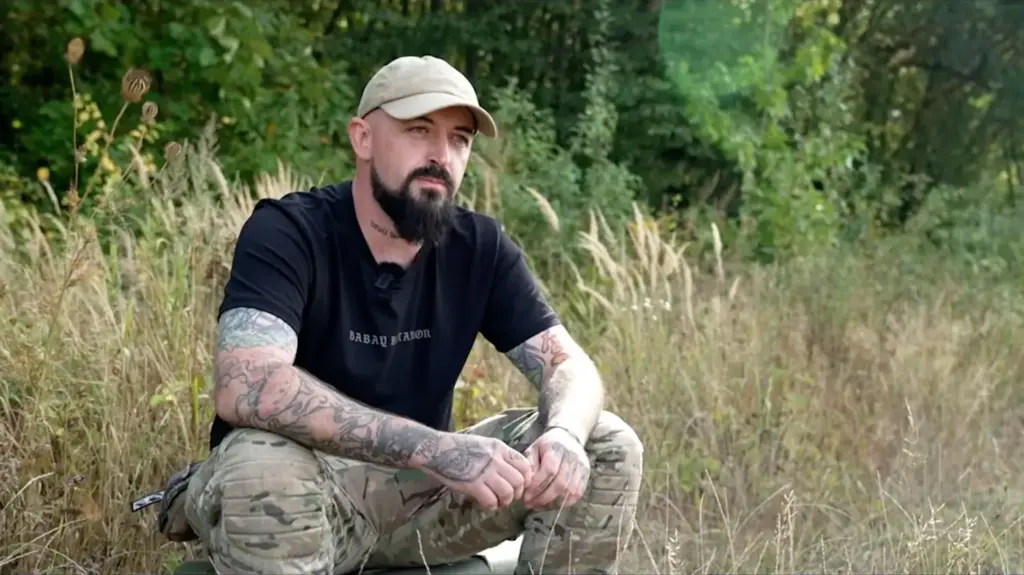
British volunteer Harry. Screenshot from video: Suspilne Ternopil

For Fuzzy, a former British Army infantryman and counterterrorism specialist, the transition came after more than two years as a mortar operator. He arrived in April 2022 and initially trained Ukrainian defenders before moving into combat roles.

Fuzzy said he had initially been reluctant to switch from mortars to FPVs but found the drones not as difficult to operate as he had expected after training for more than two months.

foreign soldier
Former British Army infantryman Fuzzy. Screenshot from video: Suspilne Ternopil

Not everyone on the team flies. Rupert, who served in the British and Israeli armies, called Ukraine the clearest case of right against wrong since 1939 and said anyone who does nothing will regret it. His role on the team is technical: setting up antennas and checking drones before flights. "The younger guys can fly," he said.

Mac, an American with no previous military service, joined the war in a different role. He arrived in February 2025 and served with the Azov brigade as a logistics specialist in Donbas. Ukraine first appeared on his radar with the 2014 Maidan protests, he said, and when Russia's full-scale invasion began—"seeing the massacre in Bucha, the maternity hospital blown up in Mariupol"—he called it a higher calling and began preparing to come.

Adapting to the battlefield

The volunteers came to Ukraine with different backgrounds and have taken different roles during the war. Harry assembled the FPV team from fighters he had served with in different Ukrainian units. Fuzzy said the changing nature of the war made the transition necessary.

"The war has changed so much that what I was teaching could no longer be applied everywhere," Fuzzy added. "At this stage of the war, we have to keep pace with the times—everything is improving now."

Harry said his long-term goal is to live permanently in Ukraine and open a business. "I see Ukraine as my home," he said. "I want to defend not just the Ukrainian people but also the place where I want to live the rest of my life."

❌