Connexion
“Its task is not cargo. Its task is people”: After Russian FPV drone hit their house, K-2 brigade sent ground robot to carry casualties out
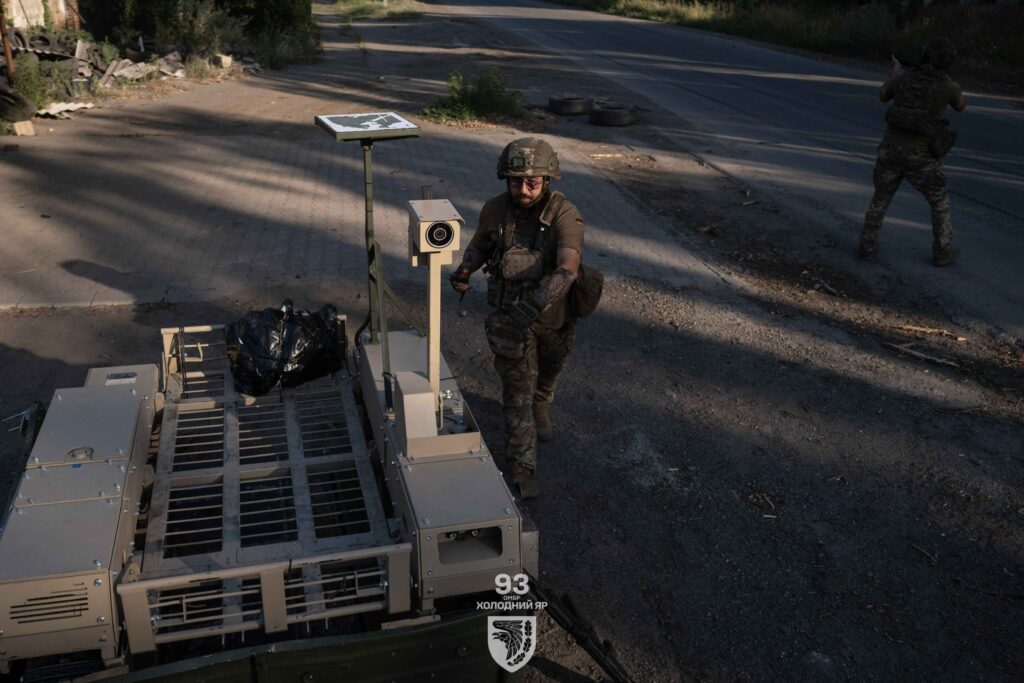
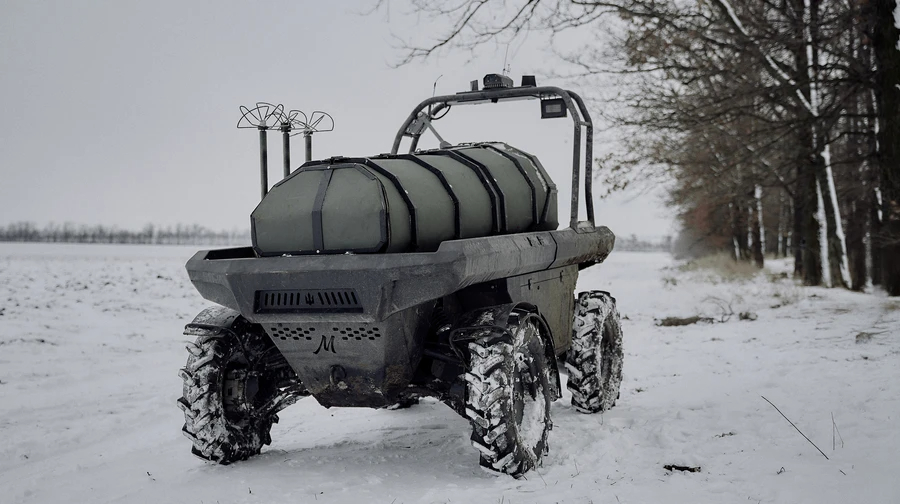
A Ukrainian ground robot that usually hauls ammunition and supplies to the front carried a different load out of it this time: wounded civilians. The 20th "K-2" Unmanned Systems Brigade sent the unmanned vehicle to evacuate people hurt when a Russian FPV drone struck their house, and its soldiers walked the entire route to shield them from more drones.
On a front where Russian FPV drones hunt anything that moves, Ukraine has handed its ground robots the jobs that get soldiers killed: hauling ammunition, clearing mines, and dragging out the wounded. Its units ran more than 100,000 such robot missions in the first eight months of 2026, and Zelenskyy has pushed to contract at least 50,000 more of the machines.
A Ukrainian civilian home took a direct Russia's FPV hit, and the wounded had nowhere safe to run
— Euromaidan Press (@EuromaidanPress) September 11, 2026
Ukrainian troops sent in a ground robot to pull them out, with no human driver risking their lives. Usually, such machines haul ammo or supplies"K-2" Brigade pic.twitter.com/NTFE93sLFS
The robot carries people, not cargo
An FPV drone hit the civilian house and left casualties who had to be moved out of the danger zone, K-2 explained, and an ordinary evacuation would have been too risky, so the unit used an unmanned ground vehicle instead.
"Its task is not cargo. Its task is people," the brigade said.
Soldiers guard the whole route
The robot did not go alone. As the footage shows, K-2 soldiers escorted the vehicle along its entire path so they could protect the wounded from Russian drones if the machine came under attack.
That risk is real: Ukraine's evacuation robots have themselves become targets, with Russian forces striking anything that moves on a front where the drone kill zone can stretch a dozen kilometers back from the line.
Near Kupiansk, a robot that once ran a dozen missions now survives three or four before it is destroyed, according to a robot-unit commander.
Earlier, Tetiana Chornovov, the commander of a platoon of anti-tank guided missile systems, said that Ukraine still didn't have a proper system for getting its wounded off the battlefield. Chornovol believes that creating separate staffed evacuation units within brigades is the most necessary reform now, each with an autonomous team and special transport.
Read Also
-
Lithuania launches military exercises across 12 municipalities as Russia keeps probing NATO’s eastern border
-
He had survived Mariupol, Russian captivity and took over Ukraine’s Azov grouping in Donetsk. Now Brigadier General Prokopenko warns Russia may mobilize up to 600,000 for its next offensive
-
Belarus trains troops to fight saboteurs as Minsk puts its military on a war footing