Move is latest deterioration in trade relations between neighbors with historically strong economic tiesDonald Trump announced a new 50% tariff on automobiles and crucial raw materials from Canada, the latest deterioration in trade relations between the two neighbors with historically strong economic ties.The US president said that the increased tariffs would start on 1 January 2027 on all cars, trucks, automobile parts and steel. He also derided the nation’s tariffs on American farmers, writing
Move is latest deterioration in trade relations between neighbors with historically strong economic ties
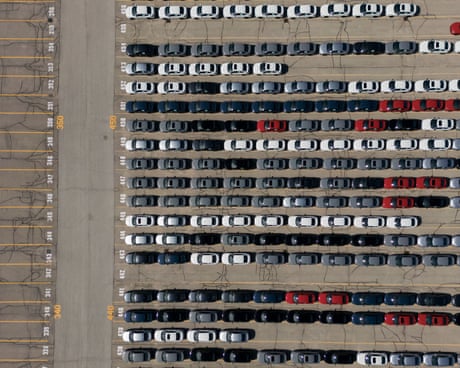
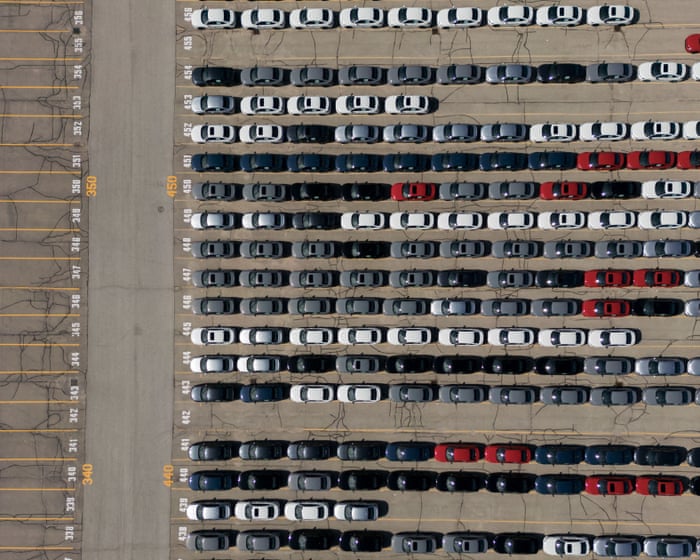
Donald Trump announced a new 50% tariff on automobiles and crucial raw materials from Canada, the latest deterioration in trade relations between the two neighbors with historically strong economic ties.
The US president said that the increased tariffs would start on 1 January 2027 on all cars, trucks, automobile parts and steel. He also derided the nation’s tariffs on American farmers, writing on social media that Canada has been “ripping off” the US “for years”.
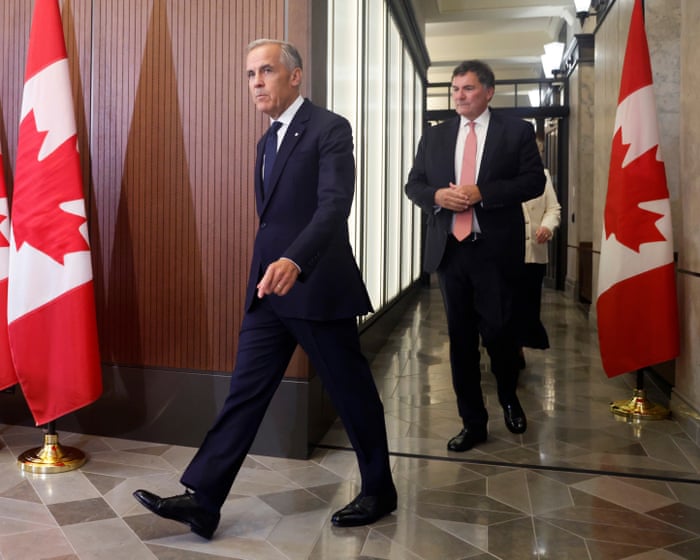
Prime minister praised for rejecting US trade proposal as Trump shows little interest in retreating from disputeAre you a Canadian boycotting US products? We’d like to hear from youMark Carney said on Monday that while American negotiators saw the French language in Canada as an “irritant … in Quebec, these are rights,” days after receiving widespread praise from political leaders for rejecting a US trade proposal that many perceived as weakening the country’s Francophone culture.The prime minis
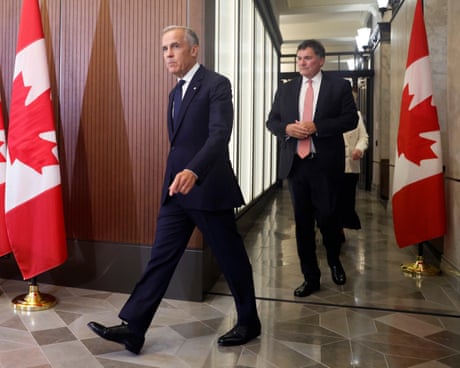
Mark Carney said on Monday that while American negotiators saw the French language in Canada as an “irritant … in Quebec, these are rights,” days after receiving widespread praise from political leaders for rejecting a US trade proposal that many perceived as weakening the country’s Francophone culture.
The prime minister’s remarks came hours after the US president, Donald Trump, showed little interest in retreating from the spat, posting on social media that Canada had been “ripping off the United States of America for years” and threatening a swath of new, economically devastating tariffs on cars and trucks.
The Council of the EU on June 12 approved fresh tariffs on fertilizers and remaining agricultural goods from Russia and Belarus, aiming to reduce Russian export revenues.The measures target those goods that have not yet been subject to additional customs duties and will enter into force on July 1. The tariffs on fertilizers will increase gradually over the next three years.The step comes as the EU readies additional sanctions against Russia as it continues to wage its all-out war against Ukraine
The Council of the EU on June 12 approved fresh tariffs on fertilizers and remaining agricultural goods from Russia and Belarus, aiming to reduce Russian export revenues.
The measures target those goods that have not yet been subject to additional customs duties and will enter into force on July 1. The tariffs on fertilizers will increase gradually over the next three years.
"Polish Presidency motto is 'Security, Europe!' and these measures increase our economic security by reducing dependencies from Russia," said Michal Baranowski, the trade undersecretary at the Polish Economy Ministry.
"We are further reducing Russia’s export revenues and therefore its ability to finance its brutal war. This is united Europe at its best," he said in a statement.
The new tariffs will apply to goods that made up around 15% of all agricultural imports from Russia in 2023. Fertilizer tariffs will focus on certain nitrogen-based products, the Council said in a statement.
Russian fertilizers accounted for more than a quarter of all of the EU's imports in this sector in 2023, worth almost $1.5 billion.
Apart from stifling Russia's trade revenue, the step also aims to reduce the EU's dependence on Russian and Belarusian goods, protect European farmers, and diversify the supply.
The EU adopted higher tariffs on cereals, oilseeds, and some other products from Russia and Belarus in May 2024. Earlier this year, the European Commission proposed imposing similar measures on all remaining agricultural products from the two countries.

 Connexion