Vue normale

  • ✇Euromaidan Press
  • Russia’s latest strike on Ukraine’s most important trade route: Togo-flagged civilian ship hit in Odesa
    Russia struck Odesa's port again and hit a foreign civilian ship. Russian forces attacked port infrastructure in Odesa Oblast overnight, damaging a civilian vessel flying the flag of Togo, Oleh Kiper, the head of the regional military administration, reported. The strike hit neutral commercial shipping at a port that Russia has repeatedly attacked. Odesa is Ukraine's main gateway for seaborne trade, and Russia has struck its port infrastructure throughout the war, endan
     

Russia’s latest strike on Ukraine’s most important trade route: Togo-flagged civilian ship hit in Odesa

17 août 2026 à 15:01

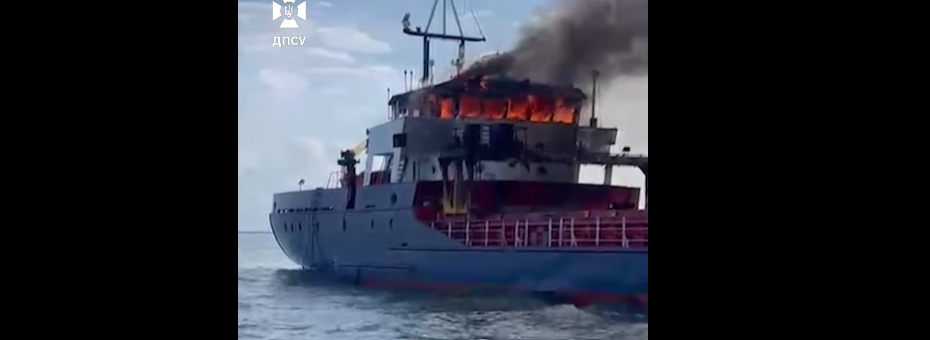
A Russian Shahed drone struck a Palau-flagged vessel carrying corn twice as it left a port in Odesa Oblast, setting it on fire. Source: Ukraine's State Border Guard Service

Russia struck Odesa's port again and hit a foreign civilian ship. Russian forces attacked port infrastructure in Odesa Oblast overnight, damaging a civilian vessel flying the flag of Togo, Oleh Kiper, the head of the regional military administration, reported.

The strike hit neutral commercial shipping at a port that Russia has repeatedly attacked. Odesa is Ukraine's main gateway for seaborne trade, and Russia has struck its port infrastructure throughout the war, endangering the foreign-flagged merchant ships that dock there to move Ukrainian grain and cargo.

Four people were injured

The strike caused casualties among those at the port. Four people were injured, three of them hospitalized and one in serious condition, and all are receiving the necessary medical care, Kiper said.

Fires broke out as a result of the strike and have now been fully extinguished, Kiper said.

The target was Ukraine's trade gateway

Hitting a foreign merchant ship strikes at the heart of Ukraine's economic lifeline. Odesa's ports are how Ukraine ships its grain and imports to the world, and the foreign-flagged vessels that call there are civilian commercial traffic, not military targets.

Earlier, Ukraine’s Agriculture Ministry cut its forecast for agricultural exports in 2026–2027 by 54% after Russia's strikes on the port. The ministry now expects 29.6 million tons of agricultural exports, down from 64.4 million. Its wheat export forecast fell by 53%, from 17.6 million tons to 8.3 million tons.

The scale of the crisis triggered by Russia

In July alone, Russian strikes damaged 28 vessels traveling to or from the ports of Greater Odesa, roughly 11–12% of maritime traffic, killing 21 sailors and injuring 34, according to Andrii Klymenko of the Black Sea Strategic Studies Institute’s monitoring group.

Land and river routes cannot make up the difference. Low water levels are limiting the Danube's capacity, and there is no full substitute for Ukraine’s deep-water ports in the medium term. If the delays continue, he said, Ukraine may have to store an additional 10–12 million metric tons of grain it cannot export.

  • ✇Euromaidan Press
  • Two railway workers killed: a Russian jet drone hit their train’s locomotive in Odesa Oblast
    A Russian jet-powered Shahed drone struck the locomotive of a passenger train in Odesa Oblast on the morning of 13 August, killing the driver and his assistant, Ukraine's national rail operator Ukrzaliznytsia reported. The train was carrying 340 passengers on the Odesa–Dnipro route. Russia has spent 2026 methodically dismantling the network that keeps Ukraine supplied, destroying or damaging more than 200 locomotives in the first half of the year alone, as Euromaidan Pr
     

Two railway workers killed: a Russian jet drone hit their train’s locomotive in Odesa Oblast

13 août 2026 à 03:54

locomotive, Odesa Oblast

A Russian jet-powered Shahed drone struck the locomotive of a passenger train in Odesa Oblast on the morning of 13 August, killing the driver and his assistant, Ukraine's national rail operator Ukrzaliznytsia reported. The train was carrying 340 passengers on the Odesa–Dnipro route.

Russia has spent 2026 methodically dismantling the network that keeps Ukraine supplied, destroying or damaging more than 200 locomotives in the first half of the year alone, as Euromaidan Press documented. The crew kept the train moving toward a station so passengers could get out; all 340 evacuated without injury, and were driven on to Odesa by bus.

Overnight drone barrage

Ukraine's Air Force shot down 111 of the 133 Shahed drones Russia launched overnight, it said. Part of Izmail lost power after the attack, and a strike set port infrastructure alight in Odesa Oblast.

A drone damaged a civilian vessel at a Mykolaiv Oblast port. In Chernihiv Oblast, Russia hit two raions, damaging homes and knocking out a filling station; a child was treated for shock.

Kherson and Kharkiv

Two men were killed and a three-year-old injured in a strike on Kherson's Korabelnyi district, according to reports. A separate airstrike on the city's central district injured a 63-year-old man, local officials reported.

In Kharkiv Oblast, a Russian strike killed a 36-year-old woman in Tsyrkuny. Three more people were wounded when Russia hit the center of a village elsewhere in the oblast.

Zaporizhzhia and the northeast

Over the previous day, Russia killed one person and injured three in Zaporizhzhia Oblast, striking 52 settlements 962 times with airstrikes, drones, and artillery, regional head Ivan Fedorov said. Seven people were injured across Sumy Oblast, where Russia shelled 19 settlements, the regional administration reported.

Russians work three shifts to build jet-powered missiles powered by a $16,000 Chinese engine from AliExpress

12 août 2026 à 12:50

Rocket S8000 Banderole

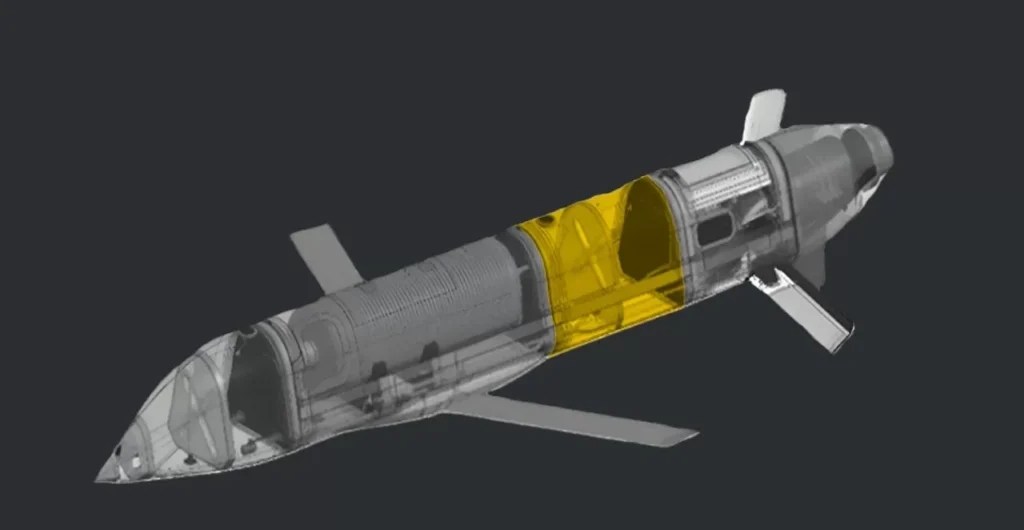
Russia is turning out its cheap Banderol drone-cruise missile at scale. Russia is capable of producing up to 80 jet-powered weapons a month, Ukraine's Defense Intelligence (HUR) told the defense outlet Militarnyi in response to a query.

The production figure sharpens a threat Ukraine has tracked as the Banderol expands. The missile has a relatively short range of about 500 kilometers, so Russia effectively launches it from Crimea at Odesa. It means Russia can sustain and grow the Banderol strikes on Ukraine's south, a weapon whose ground launcher Ukraine recently found could let Russia fire it without warning and in salvos.

The missile is fast, cheap, and short-range

The Banderol was developed and is made by the Russian company Kronshtadt, reaching a maximum speed of 620 to 650 kilometers per hour and cruising at 520 to 560, with a fragmentation-high-explosive warhead of 114.3 kilograms, of which 49.5 kilograms is explosive.

Its range dictates where it is used. At about 500 kilometers, the Banderol cannot reach far into Ukraine, which is why Russia fires it from occupied Crimea at Odesa, using the peninsula's proximity to strike the southern port city that has borne so much of Russia's missile campaign.

It has launched them at the Kyiv agglomeration to hit Rozetka, Ukraine's largest online retailer.

Banderol's jet propulsion allows speeds that Ukrainian mobile fire teams cannot match with standard ground-based machine guns. Countering the missile requires systems like the Gepard that can track fast-moving targets. 

The production runs on Western parts

The 80-a-month figure comes at a cost in effort and imports. To sustain the stated production rate, Russian enterprises work in three shifts, and to make the missiles, Russia uses Western components.

Ukraine's War & Sanctions portal documented over 20 foreign-made components and approximately 20 microchips of foreign origin from 30 different companies in the missile's construction, with a Chinese Swiwin SW800Pro jet engine, available on AliExpress for approximately $16,000, powering the weapon.

❌