Vue normale

  • ✇Euromaidan Press
  • Russia is trying to get its guns within range of Zaporizhzhia. First it has to take a prison
    Russian forces want their guns within range of Zaporizhzhia City A series of strongpoints stand in the way, including an old prison Moscow announced it had captured the prison village nine months ago. It had not After months of failed assaults, the Russians surrounded the village first—and this month came back to storm it Ukraine's southeastern counteroffensive has rolled back Russian advances at the intersections of Zaporizhzhia, Dnipropetrovsk, and Donets
     

Russia is trying to get its guns within range of Zaporizhzhia. First it has to take a prison

Par : David Axe
19 août 2026 à 18:17

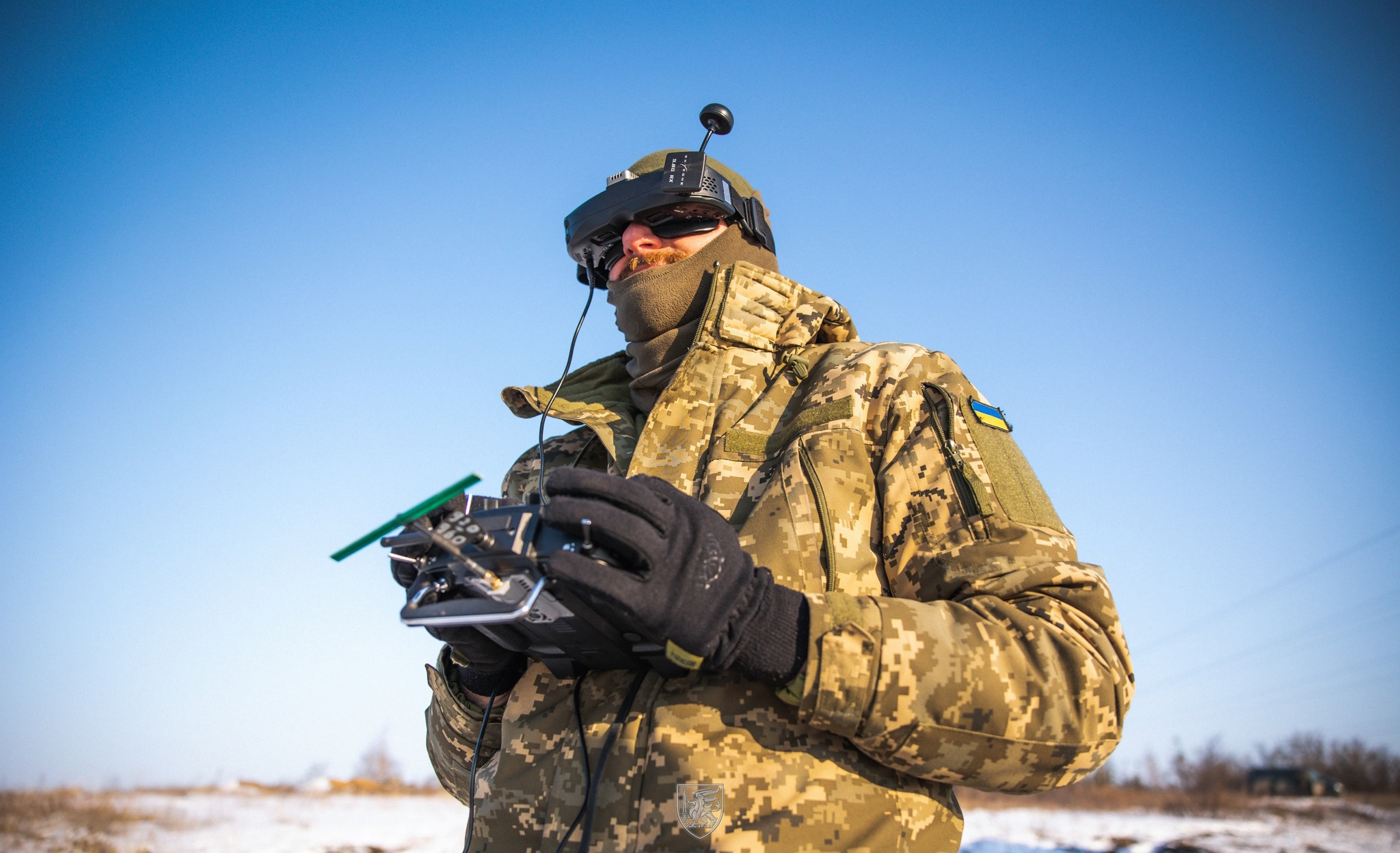
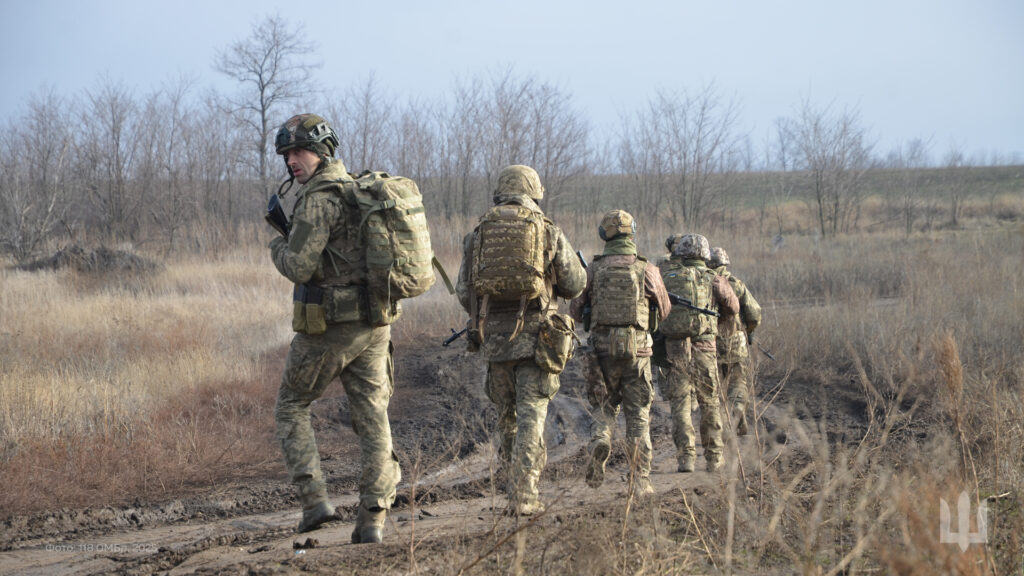
118th Mechanized Brigade troopers.

  • Russian forces want their guns within range of Zaporizhzhia City
  • A series of strongpoints stand in the way, including an old prison
  • Moscow announced it had captured the prison village nine months ago. It had not
  • After months of failed assaults, the Russians surrounded the village first—and this month came back to storm it

Ukraine's southeastern counteroffensive has rolled back Russian advances at the intersections of Zaporizhzhia, Dnipropetrovsk, and Donetsk Oblasts. The Ukrainian attacks set back, by months if not years, the Russian plan for marching on Zaporizhzhia City from the northeast.

But there's a shorter path for the Russians: the southern approach through the town of Orikhiv, around 50 km from Zaporizhzhia City. And the Russians may not need to travel all of it. The stated Russian objective on this axis, according to the Institute for the Study of War, is to advance within tube artillery range of Zaporizhzhia City—which means getting to within 20 or 30 km of a regional capital, not capturing it. That is what Russian forces did to Kharkiv.

The route is short but hard. And for three years, it has been blocked at its first obstacle by the ruins of a prison.

The first obstacle for the Russians is the village of Mala Tokmachka. In particular, the thickly built ruins of a former prison, which function as an interlocking series of bunkers for the Ukrainian 118th Mechanized Brigade. The second obstacle is Orikhiv itself, which sits astride all the passable roads leading to Zaporizhzhia City.

The Russian Defense Ministry announced the capture of Mala Tokmachka on 16 November 2025. Ukrainian government sources still had the village under Ukrainian control in April 2026. Russian milblogger Boris Rozhin's repeated claims that the village was nearly cleared became, in Meduza's account, the most popular Russian military meme of the first half of 2026—shorthand for the distance between what the Russian army announces and what it holds.

Observer Thorkill has watched closely as Russian forces have probed for weaknesses in Ukrainian defenses between the disputed gray zone and Zaporizhzhia City—and found very few.

Sytuacja w rejonie Orichiwa (Zaporoże).

W okolicach połowy czerwca 2026 r. ograniczone działania zaczepne rus 35 Armii w rejonie Orichiwa nabrały większego rozmachu. Jej 71 Pułk Strzelców Zmot ze składu 42 Dywizji rozpoczął natarcie w rejonie wsi Novodaniliwka w pasie obrony ukr… pic.twitter.com/kBPvFVlF6P

— Thorkill (@Thorkill65) August 17, 2026

The Russian army's 270th Motor Rifle Regiment, which is part of the 42nd Motor Rifle Division, has been trying to advance through Mala Tokmachka "for many months," Thorkill noted. But the Russian attacks "have always faltered against the strongly fortified strongpoint in the complex of ruins of the former prison buildings."

If the Russians can't capture Orikhiv, they can't get their artillery within range of Zaporizhzhia City. But they can't capture Orikhiv if they don't first capture Mala Tokmachka. And they can't take Mala Tokmachka if they don't overrun the old prison.
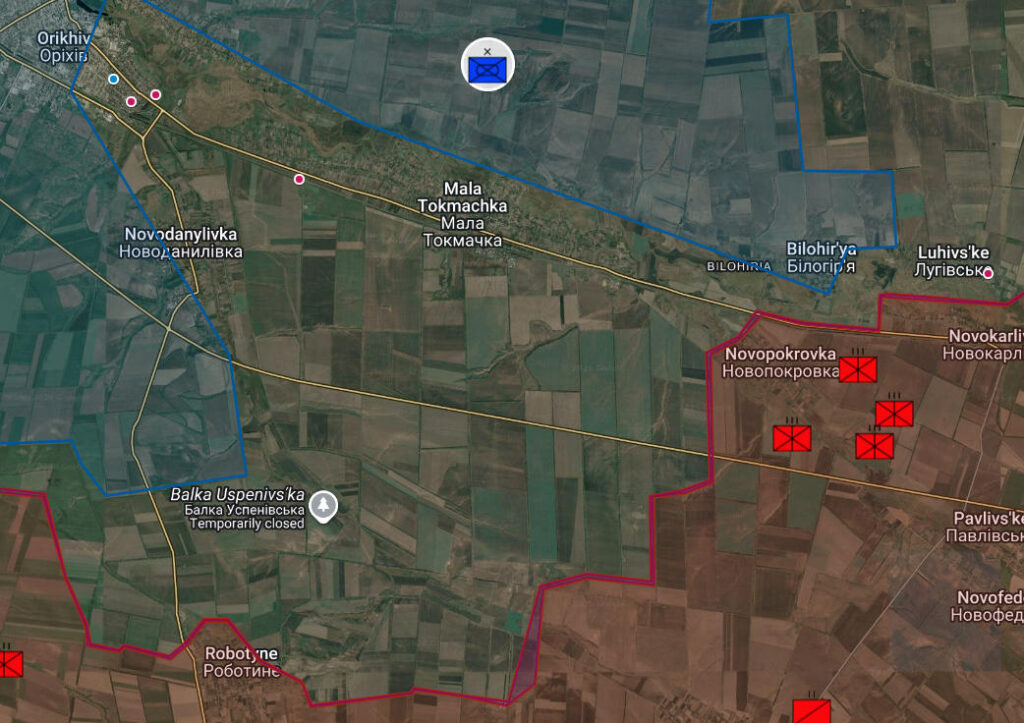
Map of the Orikhiv and Mala Tokmachka axis in Zaporizhzhia Oblast
The Orikhiv-Mala Tokmachka axis. Ukraine Control Map

Surround first, storm later

Frustrated in their attempts to directly assault the prison, the Russians took a different approach in early July. Borrowing tactics that have worked for Russian field armies all along the 1,200-km gray zone, the Russians set out to cut off Mala Tokmachka and starve its garrison before trying again to capture the prison complex.

The geography lends itself to this approach. The Russians control the village of Robotyne, 10 km south of Orikhiv, as well as the road leading north from Robotyne through the village of Novodanylivka, which lies just south of the Mala Tokmachka-Orikhiv conglomeration.
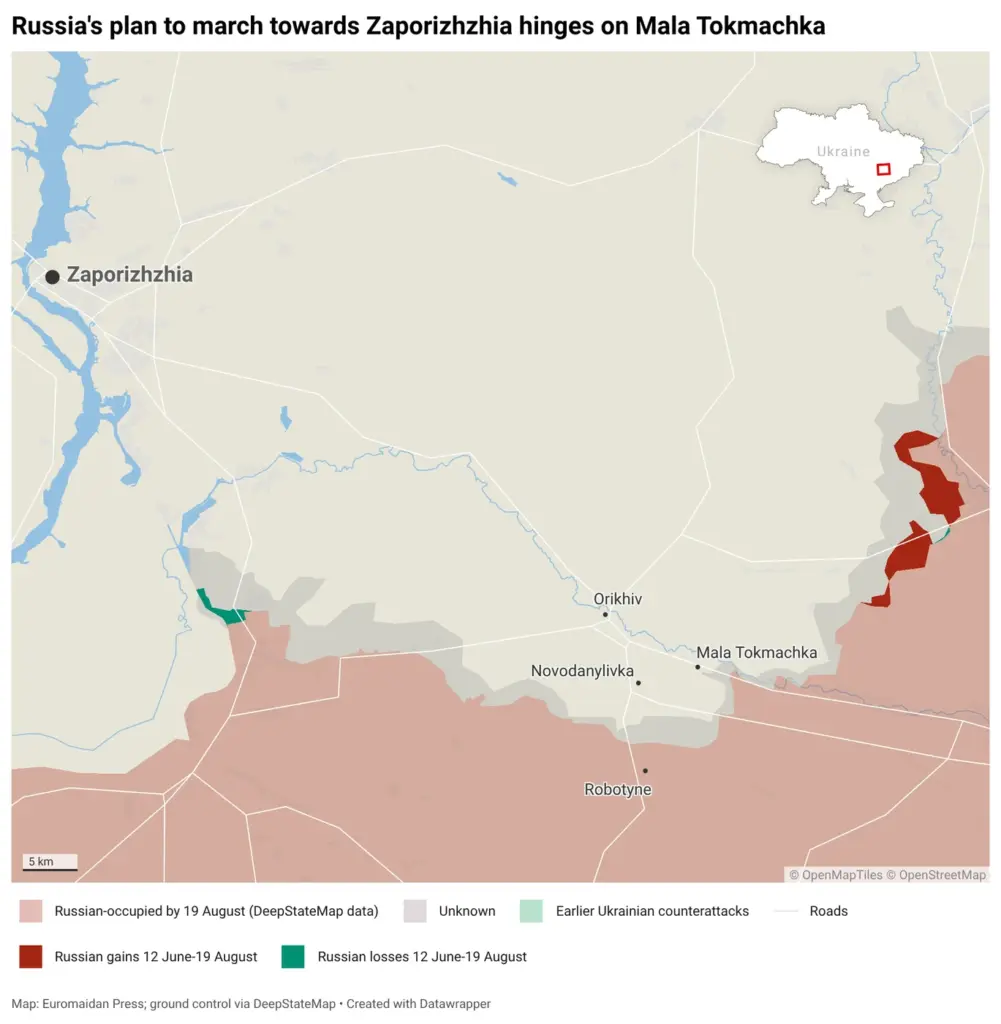
Russia's plan to march towards Zaporizhzhia hinges on Mala Tokmachka
Map: Euromaidan Press. Deepstatemap does not yet show Novodanylivka as captured or in the gray zone

If the conglomeration has a soft underbelly, it's Novodanylivka. And in a series of actions in early July, the 71st Motorized Rifle Regiment pushed enough small infiltration groups into Novodanylivka to take the village from the 118th Mechanized Brigade. In capturing Novodanylivka, the Russians "drove a narrow wedge into the Ukrainian defense," according to Thorkill.

The wedge was not the end of the plan. It was the preparation for it. With Novodanylivka in Russian hands and the supply route between Orikhiv and Mala Tokmachka under threat, the Russians came back to the assault.

Five days in August

In the five days to 17 August, Russian forces "massively stepped up their assault operations towards Orikhiv from several different directions, resulting in a partial collapse of Ukrainian defences," mapper AMK Mapping reported. The mapper counted a Russian gain of around 26 sq km across the sector.

Situation on the Orikhiv direction, Zaporizhzhia Oblast:

Over the last five days, Russian forces have massively stepped up their assault operations towards Orikhiv from several different directions, resulting in a partial collapse of Ukrainian defences.

In the southwest,… pic.twitter.com/uWynOf3Mb5

— AMK Mapping 🇳🇿 (@AMK_Mapping_) August 17, 2026

The Russians re-established control over the eastern part of Mala Tokmachka and began infiltrating the northern part. Several groups crossed north over the Kinska River and are now attacking Ukrainian trench fortifications on the tactical heights beyond. "If they are able to consolidate," AMK Mapping wrote, "a defense of Mala Tokmachka by Ukraine will become nearly impossible." To the northeast, Russian forces broke through north of Bilohirya, putting the Ukrainian troops there at risk of being cut off.

The Polish Centre for Eastern Studies reached a similar reading on 18 August, reporting that Russian assault sub-units had begun to replace the sabotage and reconnaissance groups, that the battle for the eastern part of Orikhiv appeared to have begun, and that the eastern part of Mala Tokmachka was most likely under Russian control.

Heavy fighting continues for the prison complex and the residential streets around it. "The goal of the offensive operations by the Russian 42nd Motorized Rifle Division is not, for the time being, the capture of Orikhiv," Thorkill wrote, "but rather the elimination of the presence of Ukrainian soldiers in the Mala Tokmachka area."

If the Russians can squeeze the Ukrainians out of Mala Tokmachka, they could pivot toward Orikhiv without worrying about Ukrainian positions at their rear. And they would be one strongpoint closer to putting a regional capital of several hundred thousand people under daily artillery fire.
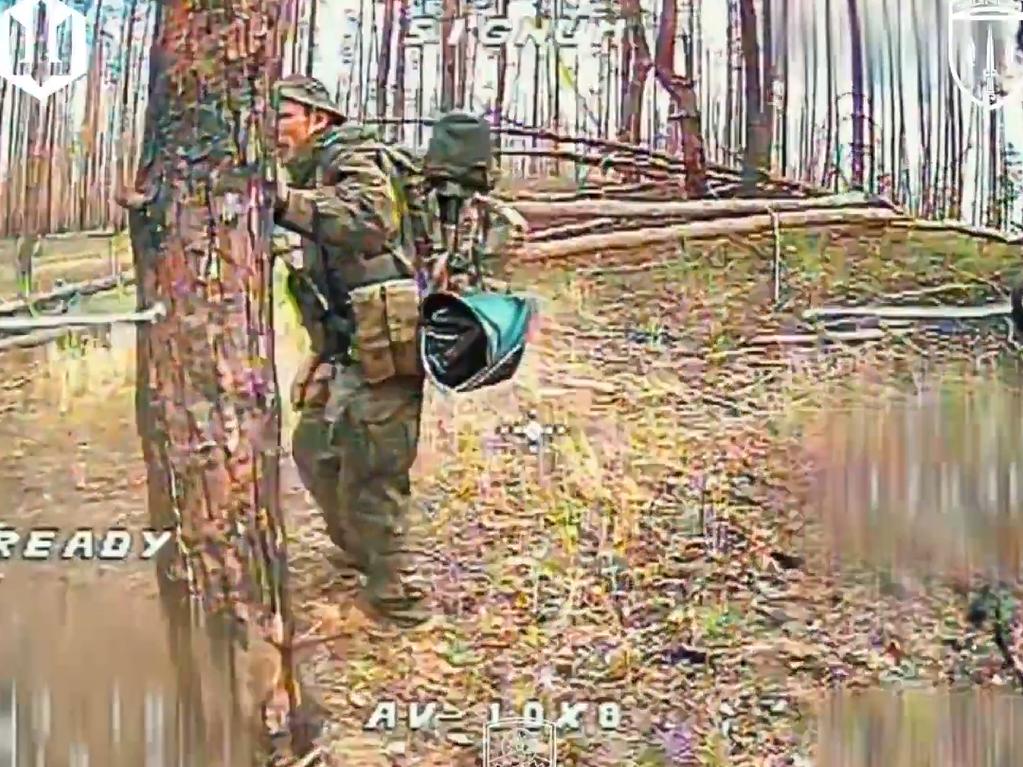
A Ukrainian drone right before it strikes a Russian soldier near Lyman.
Explore further

Russian troops inch toward Lyman. Drones keep delaying the plan.

  • ✇Euromaidan Press
  • Ukraine may have just lost its first Swedish assault boat—to a Russian jet drone
    Sweden and its neighbors gave Ukraine the fast assault boats that carry raiders to Russian-held beaches Russia is now hunting those boats with Geran-4 jet drones One of the two boats hit this month may be the first CB-90 Ukraine has lost On or around 12 August, a Russian Geran-4 attack drone found a Ukrainian navy CB-90 in the waters off the Kinburn Spit and attacked it. Three days later, another Geran-4 went after a Ukrainian tugboat in the same waters. If th
     

Ukraine may have just lost its first Swedish assault boat—to a Russian jet drone

Par : David Axe
17 août 2026 à 08:48

Ukrainian Navy CB90 assault boats sailing Black Sea patrol operations coastal defense against Russian drones

  • Sweden and its neighbors gave Ukraine the fast assault boats that carry raiders to Russian-held beaches
  • Russia is now hunting those boats with Geran-4 jet drones
  • One of the two boats hit this month may be the first CB-90 Ukraine has lost

On or around 12 August, a Russian Geran-4 attack drone found a Ukrainian navy CB-90 in the waters off the Kinburn Spit and attacked it. Three days later, another Geran-4 went after a Ukrainian tugboat in the same waters. If the CB-90 sank, it may be the first one the Ukrainian navy has lost.

The CB-90 is a Swedish design and a Swedish gift, and it is the reason Ukraine can raid the spit at all. Fifteen meters long, armored against small arms, gun-armed and capable of around 40 knots, it can put 21 troops—or a ton of machinery—onto a hostile beach and be gone before the defenders react. Sweden has supplied most of the more than 38 in Ukrainian service; Norway, the Netherlands and the Ukrainian billionaire Rinat Akhmetov's Steel Front initiative supplied the rest. Swedish instructors trained the crews.

Russia has now answered Ukraine's raids, and it is aiming at the boats rather than the raiders. The Geran-4s doing the hunting are jet-propelled, AI-assisted and fast enough to outrun most of what Ukraine can shoot back with. If the campaign continues, it could close the approach that has made the raids possible.

What that approach makes possible is worth spelling out. In July, unmanned boats belonging to the Ukrainian Territorial Defense Forces landed at least one gun-armed unmanned ground vehicle on the Kinburn Spit, the westernmost Russian outpost in occupied Ukraine. As aerial drones watched, the UGV opened fire on a nearby Russian installation. No Ukrainian was anywhere near the beach.

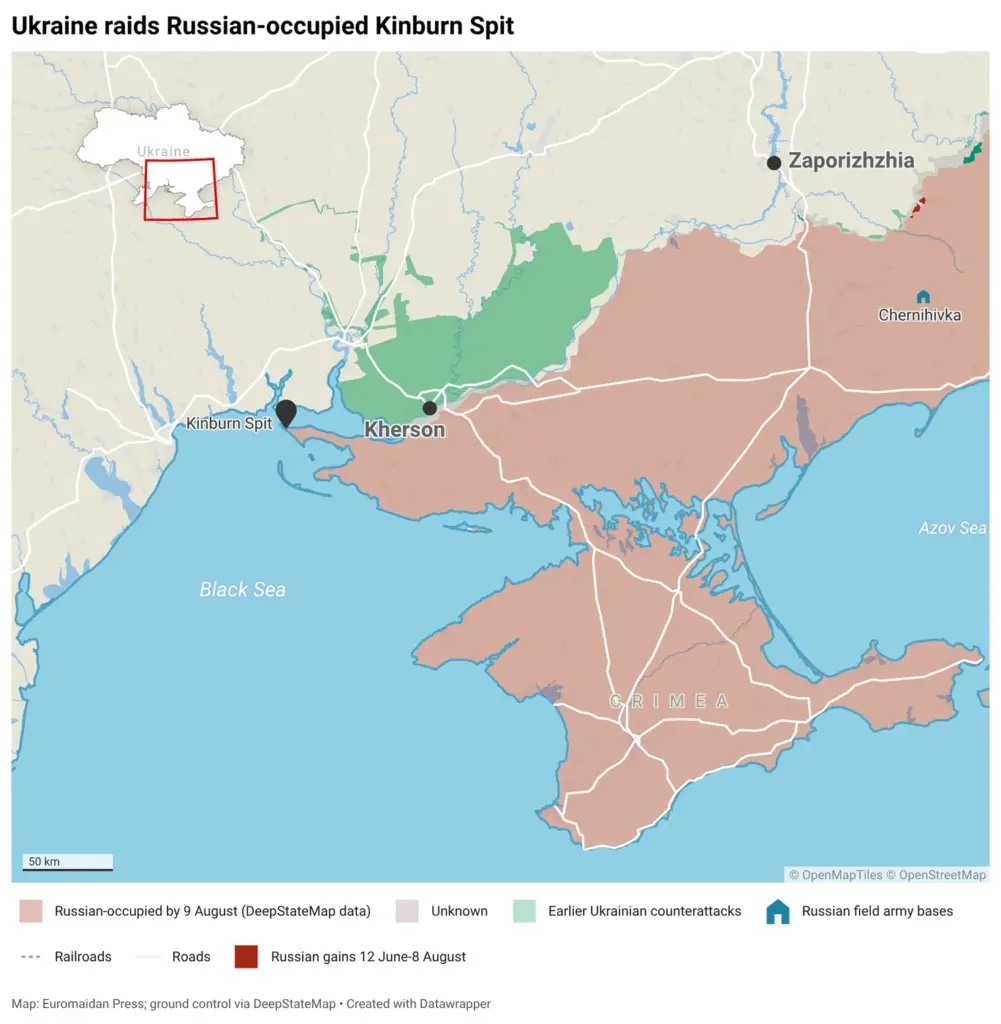
Russian forces on the Kinburn Spit can monitor Ukrainian maritime traffic, making the narrow sandy spit a key outpost in the ongoing battle for the Black Sea's most important sea lanes. Ukrainian forces are determined to dislodge Russian forces from the spit. The Russians are determined to cling to their sandy outpost.

Минобороны России опубликовало видео поражения украинского патрульного катера CB-90 беспилотным летательным аппаратом «Герань-4 сикер» близ Очакова 12 августа 2026 года.

📷Геопривязка (https://t.co/oFm8LyBAdt) pic.twitter.com/SgQnTRerm9

— Lost Armour (@lostarmour) August 12, 2026

The Geran attacks are helping. The 12 August Geran raid targeted the CB-90. The 15 August Geran raid targeted the tugboat. It's unclear how much damage the Gerans inflicted, but it's worth noting that the CB-90 is just 15 m long; a tugboat might be slightly longer. A Geran's warhead weighs as much as 90 kg—probably enough to sink such a small vessel or burn it down to the keel.

The Ukrainian navy has only a few large warships, and they're all donated minehunters that have been waiting out the current wider war in the relative safety of European waters. The bulk of the Ukrainian fleet is made up of small patrol boats, auxiliaries such as tugs, and several types of unmanned surface vessels. These vessels defend waterways and ports and, more rarely, support offensive operations.

A Russian Gerbera drone struck a tugboat of the Ukrainian Navy in the Dniprovska Gulf, opposite Russian positions on the Kinburn Spit. pic.twitter.com/Arnwts6BEL

— AMK Mapping 🇳🇿 (@AMK_Mapping_) August 15, 2026

Spit raids

The July robot landing was one episode in a long Ukrainian raiding campaign along the spit—the kind of operation the Geran-4s are now trying to spoil.

Location of Kinburn Spit. Map: Euromaidan Press

The Geran strikes on Ukrainian boats could blunt these raids and help the Russians maintain their tenuous hold on the Kinburn Spit. The Russian strikes are part of a wider maritime campaign. Shortly after Ukrainian drone units began targeting the unregistered cargo ships and tankers belonging to Russia's shadow fleet, Russian drone and missile units retaliated—with devastating attacks on Ukrainian ports and the ships sailing to and from these ports in support of Ukraine's lucrative grain exports.

The Ukrainian attacks on the shadow fleet damaged hundreds of ships and effectively ground Russian Black Sea trade to a halt. But Russian attacks on Ukrainian ports effectively ground Ukrainian Black Sea trade to a halt, too.

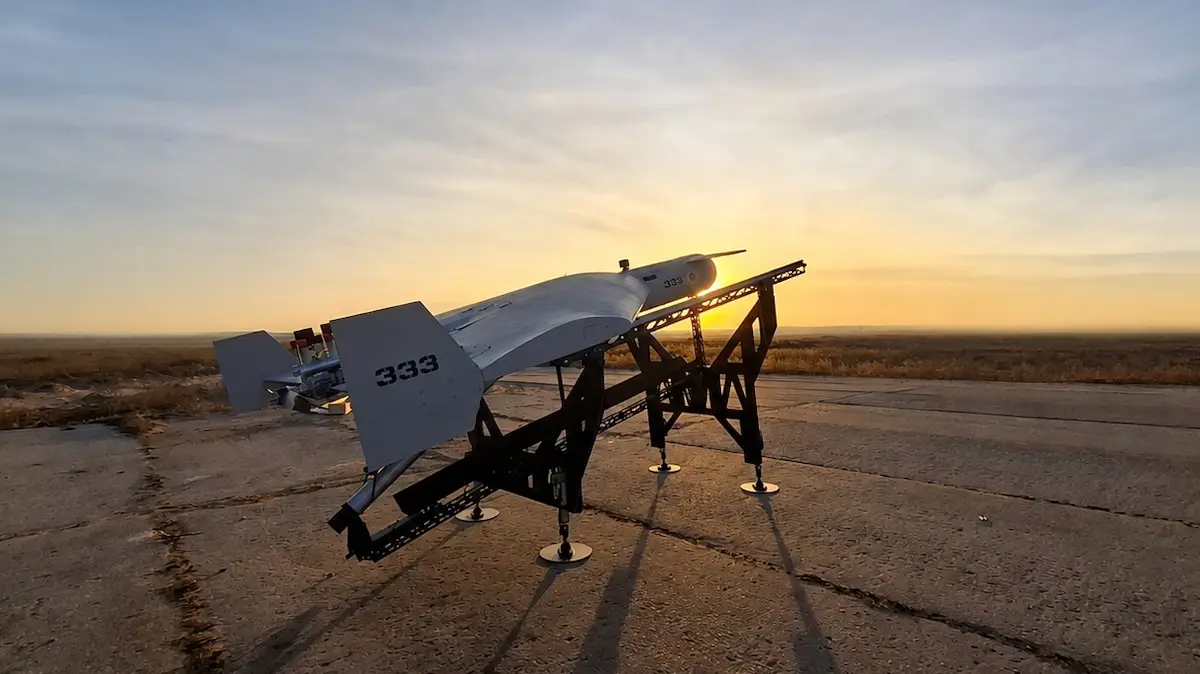
The MICH 2000 drone can fly up to 2,000 km and carry a warhead weighing up to 60kg. Photo courtesy of the manufacturer
Explore further

Ukraine’s new Tu-95 killer is a $48,000 copy of a drone China refused to sell

The new jet-propelled Geran-4s with their AI-assisted targeting were central to the effort. Their 500 km/h top speed makes them hard to shoot down. And the AI makes jamming far less useful than it used to be: the operator locks the drone onto a target, and from there the machine vision flies the attack, holding the lock even if Ukrainian electronic warfare severs the radio link in the final seconds.

That makes the CB-90s valuable targets. Armed with guns and armored against enemy small arms fire, they're perfect for raiding far-flung enemy outposts such as those on the Kinburn Spit. But they're vulnerable to drone attack—and each one is irreplaceable in the sense that matters, since Ukraine cannot build them and has to wait for the next donation.

Ukrainian forces aren't powerless to stop the Russians from spoiling Ukrainian raids on the spit. Geran-4s might be too fast for Ukrainian gun teams, armed light aircraft, and cheap interceptor drones, but they're not too fast for supersonic Ukrainian air force MiG-29 fighters.

Several of the MiGs patrol over the western Black Sea. One crashed recently, but others remain.

  • ✇Euromaidan Press
  • Ukraine’s quiet counteroffensive took 745 square km. Russia’s dead Starlink is how
    In six months of unheralded advances, Ukrainian forces liberated a wide stretch of the southeast The collapse of Russian communications turned a local push into a six-month advance Now the Russians may mobilize yet again, so the Ukrainians are digging in and consolidating their gains The scale of Ukrainian forces' counteroffensive in southeastern Ukraine early this year is finally becoming clear. In six months of maneuver starting on 29 January, a clutch of Uk
     

Ukraine’s quiet counteroffensive took 745 square km. Russia’s dead Starlink is how

Par : David Axe
14 août 2026 à 16:07

Soldiers of Ukraine's 79th Air Assault Brigade.

  • In six months of unheralded advances, Ukrainian forces liberated a wide stretch of the southeast
  • The collapse of Russian communications turned a local push into a six-month advance
  • Now the Russians may mobilize yet again, so the Ukrainians are digging in and consolidating their gains

The scale of Ukrainian forces' counteroffensive in southeastern Ukraine early this year is finally becoming clear. In six months of maneuver starting on 29 January, a clutch of Ukrainian units, including the 78th, 79th, 80th, 82nd, and 95th Air Assault Brigades and the 1st and 425th Assault Regiments—tens of thousands of troops, in all—marched through gaps in Russian defenses and, according to Ukrainian officials, liberated around 745 square km and 26 settlements. Mostly in Dnipropetrovsk Oblast but also in neighboring Zaporizhzhia and Donetsk Oblasts.

That is Kyiv's own accounting, and it is the high end. The Institute for the Study of War, which maps control from geolocated imagery, put the figure at roughly 627 square km across the Oleksandrivka direction and the northern Hulyaipole direction—while noting its own conservative method probably undercounts. Either number describes the largest Ukrainian territorial gain since 2023.

The Ukrainian gains helped to offset Russian gains around the last few free cities in eastern Ukraine's Donetsk Oblast. Between the start of February and the end of July, Russian regiments captured a net total of just 260 square km of Ukrainian soil, according to a tally by the Black Bird Group. It would've been more than 1,000 square km if those air assault and assault units hadn't been busy clearing the Russians from a wide swathe of the southeast.

According to our data, in July the net gains of the Russian armed forces in Ukraine were approximately 106km².

This is the fastest Russian advance since January, but their gains remain extremely limited. In July of 2025 the Russians captured nearly 5 times as much territory.

1/ pic.twitter.com/02931eDLk0

— Black Bird Group (@Black_BirdGroup) August 4, 2026

The Ukrainian counteroffensive kicked off on 29 January. Three days later, Elon Musk's Starlink bricked Russia's thousands of smuggled and stolen satellite terminals. Practically overnight, the Russians lost their best method for controlling small drones and guiding assault units across the disputed gray zone. Drones couldn't fly. Troops couldn't navigate.

Ukrainian commanders surely knew their communications advantage wouldn't last: the Russians would eventually adapt with new methods of command and control. Seizing the opportunity, Ukrainian paratroopers and assault troops pressed the attack. And in stark contrast to the usual assault tactics for both sides, the Ukrainians attacked in tanks and other armored vehicles, counting on the Russians' connectivity problems to clear a path for heavy forces.

The blackout was not the only thing working in Ukraine's favor. ISW credits the gains to five reinforcing factors: better operational planning, a campaign to suppress and destroy Russian air defenses, deeper strikes on Russian logistics, Ukrainian drone superiority at the tactical level—and the Starlink cutoff. But the cutoff is the one that arrived all at once, and it arrived just as Ukrainian armor was starting to move.

As expected, @Deepstate_UA and other Ukrainian 🇺🇦 media outlets followed on the liberation of multiple villages

Despite many "analysts" doubting OPSEC, not too much information filtered from this offensive. Thus, let's get back inside to understand what happened

🧵THREAD🧵⬇ pic.twitter.com/Sy2cYxiZy3

— Clément Molin (@clement_molin) August 12, 2026

Mechanized assaults

Not all the vehicles got through. The assault troops lost one up-armored M-1 Abrams tank in early February. But by March, other assault forces M-1s were engaging Russian troops at point-blank range with their 120-mm main guns. After clearing a few disputed villages along a 45-km front between Dobropillya and Zelenyi Hai, the Ukrainians focused their maneuver and firepower on Komar, 12 km southeast of Zelenyi Hai.

The Ukrainians "started a slow and quiet offensive, with very few videos and small teams, during April and May," mapper Clément Molin recalled. The strict information security obscured the Ukrainian moves for all but the closest observers, allowing Ukrainian commanders to press their attacks without drawing too much attention—and risking a Russian countercounteroffensive.

By summer, the Ukrainians were within mortar range of Komar. Embarrassed Russian commanders resorted to sending out small teams on virtual suicide missions to plant Russian flags in disputed territory. The flags could create the impression of Russian control on terrain that, in fact, neither side controlled. "Russia is trying to intoxicate us with flag videos, which are meant to hide the real situation to both us and their command," Molin wrote.

The reality was that the Ukrainians had gained ground. A lot of it.

A Ukrainian drone right before it strikes a Russian soldier near Lyman.
Explore further

Russian troops inch toward Lyman. Drones keep delaying the plan.

Announcing the results on 12 August, Ukrainian officials also claimed 9,550 Russian troops killed and more than 6,600 wounded—figures no independent body has verified. Former commander in chief Oleksandr Syrskyi, who planned the operation, said it proved the Ukrainian army "is capable not only of steadfastly holding its defences, but also of launching offensives, seizing the initiative, and liberating Ukrainian land."

But the momentum was unsustainable. As the Russians gradually restored command and control through the summer, the Ukrainians encountered more resistance. Now the gray zone is stabilizing again. Observer Moklasen predicted new Ukrainian commander in chief Maj. Gen. Mykhailo Drapatyi will order his corps and brigade commanders "to dig in positions, consolidate and strengthen more army corps" instead of continuing to attack.

After all, the Russians are pushing hard in Donetsk, and the resources the Ukrainians had devoted to the southeastern counteroffensive could boost the defensive effort in the east. Moreover, there are worrying signs the Kremlin may attempt another mobilization soon, potentially surging hundreds of thousands of fresh troops into Ukraine.

The Ukrainians may soon prioritize holding over attacking.

  • ✇Euromaidan Press
  • Russia squeezes the flanks, then infiltrates the middle. Around Kramatorsk, it can’t do both
    Russian forces use the same strategy over and over to capture Ukrainian cities Surround on the flanks, infiltrate in the middle But that strategy requires doing both at once, and Russia lacks the infantry Around Kramatorsk, every Ukrainian unit that holds forces a shuffle that stalls something else Russian troops are slowly marching toward and around Kramatorsk and Sloviansk, the last two big free cities in eastern Ukraine's Donetsk Oblast. The Russians
     

Russia squeezes the flanks, then infiltrates the middle. Around Kramatorsk, it can’t do both

Par : David Axe
10 août 2026 à 17:24

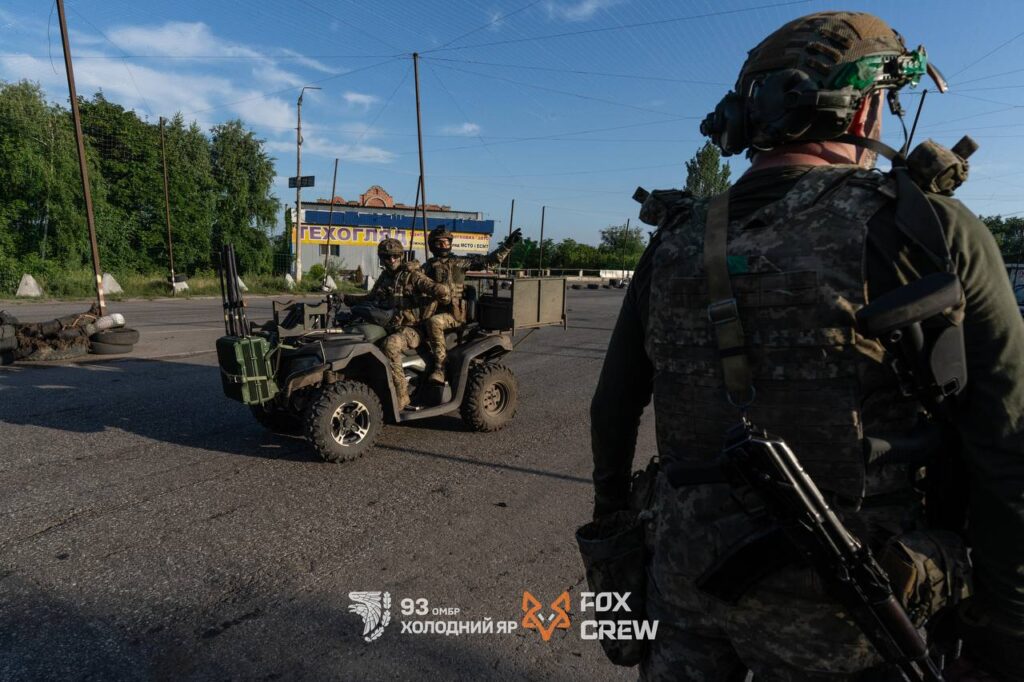
Soldiers of the 93rd Separate Mechanized Brigade’s Fox Crew prepare for a logistics run near the Kramatorsk–Kostiantynivka road in Donetsk Oblast. The unit, once focused on anti-tank warfare, now uses strike drones to disrupt Russian supply lines. Credit: 93rd Separate Mechanized Brigade / Fox Crew.

  • Russian forces use the same strategy over and over to capture Ukrainian cities
  • Surround on the flanks, infiltrate in the middle
  • But that strategy requires doing both at once, and Russia lacks the infantry
  • Around Kramatorsk, every Ukrainian unit that holds forces a shuffle that stalls something else

Russian troops are slowly marching toward and around Kramatorsk and Sloviansk, the last two big free cities in eastern Ukraine's Donetsk Oblast.

The Russians have a standard playbook for taking a Ukrainian city, and running it means doing two things at the same time. Along the nearly 100-km Kramatorsk front, they don't have the infantry to do both at once. Every time a Ukrainian brigade holds somewhere, the Russians have to move men to cover it—and something stalls somewhere else.

That strategy is simple in concept but difficult in practice. The idea is for Russian forces to advance along a city's under-protected flanks in order to put pressure on the main supply lines of the city's garrison. As the flank attacks squeeze the garrison's logistics, Russian infiltrators slip into the city, hoping to create a lodgement for follow-on forces.

The final assault through that lodgement comes late in the campaign, after the Ukrainians are already weakened by a lack of supplies.

Structural Deterrence

Russian offensive planning at the operational level remains disciplined on paper: groupings are sequenced, axes are assigned, objectives are staggered. What the discipline is not is well-manned. I read the shift to two- and three-man infiltration teams on… https://t.co/Py1GbXM9aR

— Vitaly (@M0nstas) July 24, 2026

The strategy only works when the troops on the flanks and those in the middle work together. The former squeezes. The latter infiltrates. The problem for the Russian Center Group of Forces on the Kramatorsk front is that it's not squeezing and infiltrating at the same time. That delays the overall Russian advance and buys time for Ukrainian forces to dig in, reinforce, and hope for a miracle.

"Russian offensive planning at the operational level remains disciplined," mapper and analyst Vitaly explained. But only "on paper," Vitaly added. "Groupings are sequenced, axes are assigned, objectives are staggered."

"What the discipline is not is well-manned," the mapper wrote.

Vitaly reads one recent Russian adaptation as evidence of the shortfall rather than of cleverness. "I read the shift to two- and three-man infiltration teams on motorcycles and ATVs as less a sign of tactical innovation than of a manpower deficit that organization is straining to hide," he wrote.

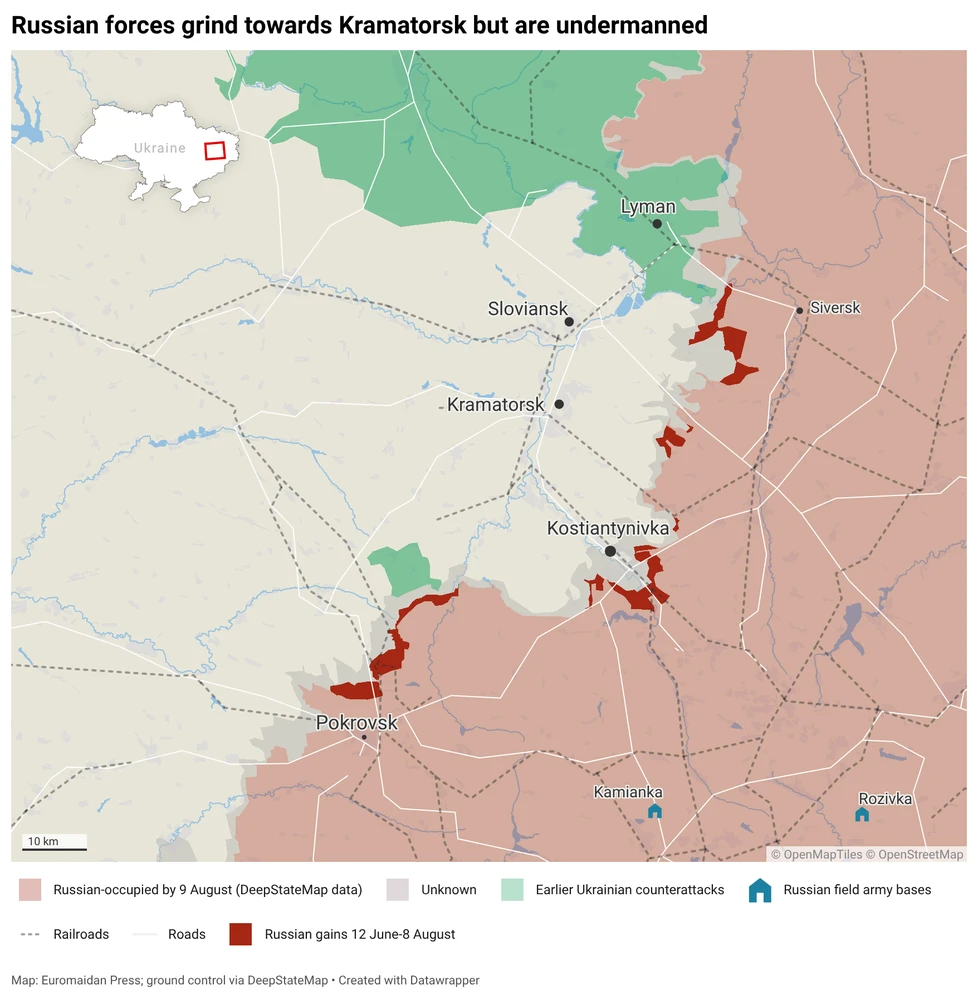
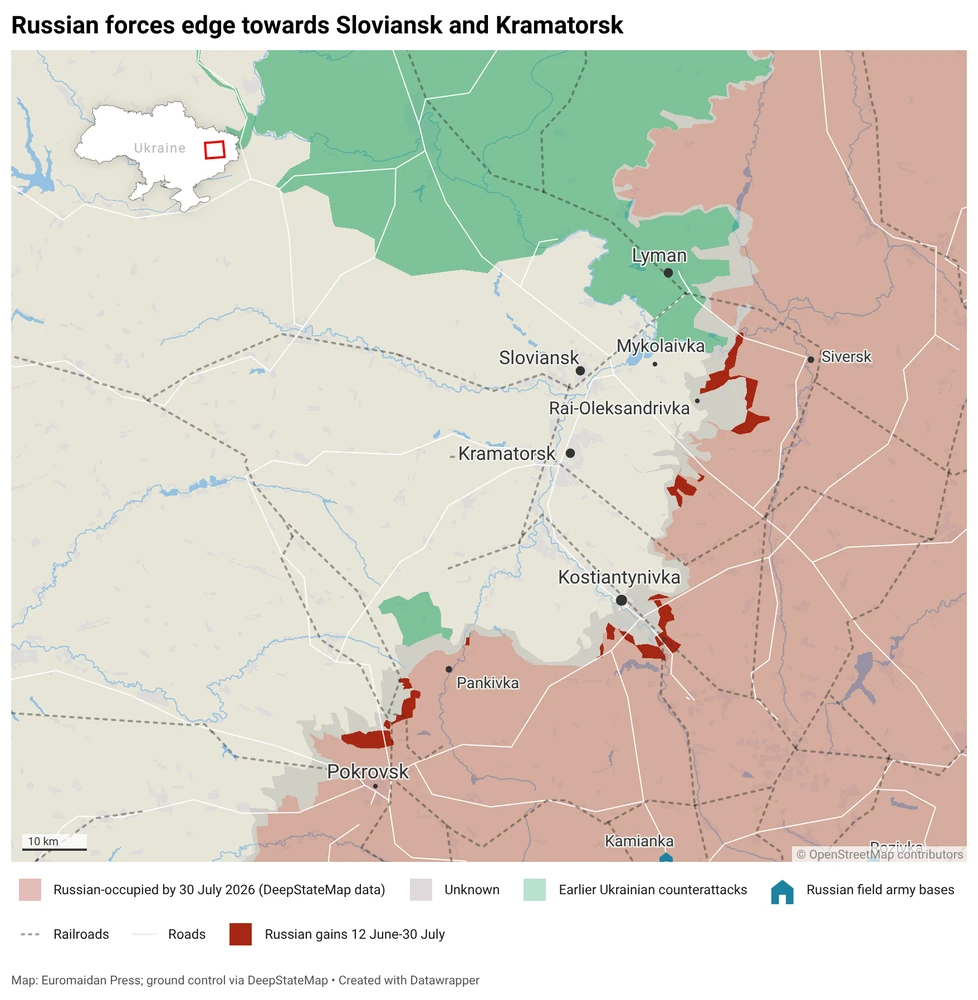
Russian forces advance towards Kramatorsk and Sloviansk, making inroads in the last 2 months
Map: Euromaidan Press

Manpower shortages

Ukraine's manpower problems are well-known. Fewer observers appreciate that Russia struggles, too. Yes, the Russians still recruit around 30,000 fresh troops every month. In theory, that's enough new manpower to replace monthly losses.

But replacing casualties is not the same as resourcing a strategy. Ukraine's commander-in-chief Oleksandr Syrskyi put the Russian force in Ukraine at 721,300 at the end of June—a gain of only around 11,000 since late 2025, against Russian losses he estimated at 30,000 to 35,000 a month. Contract recruitment collapsed in the spring, falling by a third year on year, and Ukraine's foreign intelligence service counted 195,000 contract recruits by early July against an annual target of 409,000.

A Russian general, speaking anonymously to the investigative outlet IStories, put the requirement more starkly. To capture the rest of the Ukrainian-held Donbas, he said Russia would need to replace at least 55,000 to 60,000 casualties every month—roughly double what it recruits. That figure rests on a single unnamed source and should be weighed accordingly. But it describes the same gap Vitaly sees on the map.

When a Ukrainian brigade defeats one attack anywhere along the Kramatorsk front, it may compel Russian regiments to shuffle troops between units in order to quickly replace the losses. The shuffle may sap the combat power of a flanking or infiltration unit working along some other section of the front.

A weak flanking unit may not be able to keep up the pressure on enemy supply lines, perhaps imperiling the adjacent infiltration unit as it probes for the gaps in Ukrainian defenses that the flankers were supposed to help create. By the same token, weak infiltrators may find gaps in Ukrainian defenses, but fail to secure a lodgement—effectively wasting the efforts of the adjacent flankers.

A drone operator from the 81st Air Mobile Brigade.
Explore further

Russia is assaulting the gateway to Sloviansk. Ukraine’s 81st Brigade is holding it nearly alone

"That gap keeps producing the same effect," Vitaly explained. The Ukrainian armed forces' "ability to hold separate sections of the front independently forces Russian formations to compensate for each other's failures, and that compensation creates new stalls."

Vitaly gave a name to the effect, and was careful about what he was not claiming. "I call it structural deterrence—not deterrence in the conventional sense, and not a doctrine, but the byproduct of asking an undermanned army to keep a sequenced plan on schedule."

A byproduct is not a defense, and it holds only as long as the Ukrainians can keep producing it. That requires synchronization of their own. Supplies and reinforcements must arrive when and where they're most badly needed. Air and artillery support should shift from sector to sector depending on the urgency of the local garrisons' needs.

All that is to say, the lack of synchronization that has slowed the Russians' march on Kramatorsk could eventually speed up the Russians' march—if and when the Ukrainians are the ones struggling to synchronize.

It's worth noting that the Russians aren't advancing fast toward Kramatorsk and Sloviansk, but they are advancing—especially from the northeast.

The Russians may not be perfectly synchronized. But they're clearly synchronized enough to grind toward the last free cities in Donetsk. Just very, very slowly.

A 53rd Mechanized Brigade trooper.
Explore further

Can Ukrainian forces save Sloviansk and Kramatorsk?

  • ✇Euromaidan Press
  • Russia is assaulting the gateway to Sloviansk. Ukraine’s 81st Brigade is holding it nearly alone
    Russian forces are creeping into Mykolaivka, the gateway to Sloviansk The Ukrainian 81st Airmobile Brigade is defending the town nearly alone Reinforcements would have to cross a canal under Russian fire—but so would the Russians, later For years, Russian troops probed the Ukrainian garrison at Mykolaivka in eastern Ukraine's Donetsk Oblast, sending in small teams of infiltrators for the defenders to hunt down. On 29 July, they stopped probing. "The Russians h
     

Russia is assaulting the gateway to Sloviansk. Ukraine’s 81st Brigade is holding it nearly alone

Par : David Axe
6 août 2026 à 19:06

A drone operator from the 81st Air Mobile Brigade.

  • Russian forces are creeping into Mykolaivka, the gateway to Sloviansk
  • The Ukrainian 81st Airmobile Brigade is defending the town nearly alone
  • Reinforcements would have to cross a canal under Russian fire—but so would the Russians, later

For years, Russian troops probed the Ukrainian garrison at Mykolaivka in eastern Ukraine's Donetsk Oblast, sending in small teams of infiltrators for the defenders to hunt down. On 29 July, they stopped probing. "The Russians have begun an assault on Mykolaivka from the east," observer Thorkill reported, citing the local Ukrainian Telegram channel nikolaevka_online.

Russian assault groups are attacking the apartment blocks along the town's eastern edge. Mykolaivka sits 8 km east of Sloviansk, one of just two big free cities in Donetsk Oblast, and taking it is the precondition for any Russian siege of the city. "The situation is deteriorating," nikolaevka_online warned.

Mykolaivka is "the eastern gateway to Sloviansk," according to mapper Clément Molin. The Russian offensive in Donetsk aims to lay siege to and ultimately capture Sloviansk and neighboring Kramatorsk, which together are still home to nearly 100,000 people despite hundreds of thousands of others having fled.

For months, the situation on the Sloviansk front has been deteriorating

The new Chief of the General Staff of the Ukrainian 🇺🇦Army, Mykhailo Drapaty, must respond as the first Russian 🇷🇺 units have reached approximately 10 km east of Sloviansk and Kramatorsk.
Since the fall of… pic.twitter.com/qnQ3WwB3PT

— Clément Molin (@clement_molin) July 28, 2026

A Ukrainian garrison anchored by the 81st Airmobile Brigade has defended Mykolaivka for years. But the garrison has been struggling to interdict every team of Russian infiltrators—and now the infiltrators have company.

The sector is an exception to a mostly frozen front. Russian troops captured 106 square km of Ukrainian territory in July, according to the Blackbird Group—the fastest Russian advance since January, but a fifth of what the Russians seized in July 2025. Blackbird reads the figure as evidence Russia has largely exhausted its offensive options; in June, Russian forces lost 9 square km on net. The slow average along the 1,200 km gray zone belies much faster movement in a handful of sectors, and east of Sloviansk is one of them.

Expect a long, hard fight in and around the ruins of Mykolaivka. "It is highly unlikely that the battle for Sloviansk will begin this year, not least because the fighting in Mykolaivka is likely to be prolonged," Molin explained.

According to our data, in July the net gains of the Russian armed forces in Ukraine were approximately 106km².

This is the fastest Russian advance since January, but their gains remain extremely limited. In July of 2025 the Russians captured nearly 5 times as much territory.

1/ pic.twitter.com/02931eDLk0

— Black Bird Group (@Black_BirdGroup) August 4, 2026

Tough terrain

The geography is difficult for both the defenders and the attackers. The Donets Canal, which abuts Mykolaivka on the west, "aids the Ukrainian defense just as much as it facilitates the Russian offensive," Molin noted. To reinforce the 81st Airmobile Brigade in and around Mykolaivka, Ukrainian troops must cross the canal while under Russian fire. "Massing troops there is a highly complex undertaking," Molin warned.

Sloviansk kramatorsk mykolaivka map
Map: Euromaidan Press

But the Russian army will face the same challenge if and when it marches through Mykolaivka. "Crossing the canal, particularly around the Sloviansk power plant and its network of waterways, will come at a very high cost, especially given the extensive fortifications the Ukrainians have built in the area over recent months," according to Molin.

In other words, the 81st Airmobile Brigade has fallback positions on the near side of the Donets Canal. If the brigade can't hold Mykolaivka, maybe it can hold the canal—and delay if not halt further Russian advances toward Sloviansk.

The Ukrainians would prefer to hold in Mykolaivka, of course. But it's looking increasingly dire. The Russians appear to be accumulating in the seasonal homes, or "dachas," on the northeastern outskirts of Mykolaivka. "It is difficult to say at this point how many Russian soldiers have infiltrated there," Thorkill wrote. "However, their very presence has forced the command of the 81st Air Assault Brigade—responsible for the city's defense—to secure with patrols."

A 53rd Mechanized Brigade trooper.
Explore further

Can Ukrainian forces save Sloviansk and Kramatorsk?

The Ukrainian brigade is trying to build a wall of infantry and drones between the dachas and a key road intersection that can carry defenders and attackers across central Mykolaivka.

But the 81st Airmobile Brigade is outnumbered, probably badly so. For the first two years of the wider war, the brigade could count on help from the 54th Mechanized Brigade, which clung to the 81st Airmobile Brigade's right flank.

While the 54th Mechanized Brigade still registers on many maps of the gray zone, in fact it's barely there. "Various snippets of information indicate that the 54th Mechanized Brigade—longtime right-flank neighbor of the 81st Brigade—was completely withdrawn from the front between June and July 2024 and sent to the deep rear," Thorkill wrote. East of Sloviansk, "only its drone group remained."

"The unit had long been a brigade in name only," Thorkill noted. So the 81st Airmobile Brigade fights mostly alone, for now—defending the gateway to Sloviansk.

❌