Ukraine is launching a joint weapons production program with members of the Ukraine Defense Contact Group (UDCG), or Ramstein summit participants, Defense Minister Rustem Umerov announced on July 1. The UDCG was formed in 2022 under former U.S. President Joe Biden to coordinate military assistance for Ukraine among about 50 of Kyiv's allies. As part of a new joint production program, new factories and weapons manufacturing facilities will be built in Ukraine and abroad, Umerov said in a social m
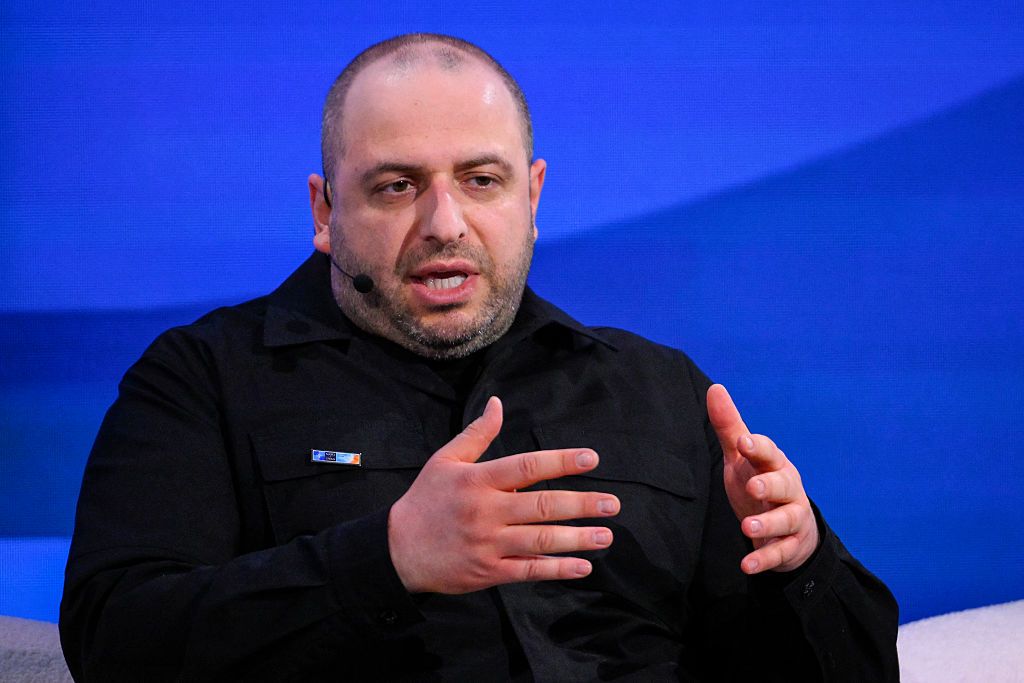
Ukraine is launching a joint weapons production program with members of the Ukraine Defense Contact Group (UDCG), or Ramstein summit participants, Defense Minister Rustem Umerov announced on July 1.
The UDCG was formed in 2022 under former U.S. President Joe Biden to coordinate military assistance for Ukraine among about 50 of Kyiv's allies.
As part of a new joint production program, new factories and weapons manufacturing facilities will be built in Ukraine and abroad, Umerov said in a social media post. The international sites will be UDCG member countries participating in the Ramstein-format summit.
New legal and tax regulations will also be put in place for Ukrainian weapons manufacturers, facilitating the construction of new sites and allowing them to rapidly scale up production, Umerov said.
The Defense Ministry on July 1 joined the Verkhovna Rada (Ukraine's parliament) Finance, Tax, and Customs Committee in presenting four draft laws regarding domestic weapons production "aimed at developing the industry." The legislation introduces amendments to tax, customs, and budget regulations, as well as the Criminal Code.
The first vote on the new legislative package is expected to take place in a month, according to Umerov.
"This is a new type of military-industrial cooperation, where Ukraine is an equal partner and player in the global defense market," he said.
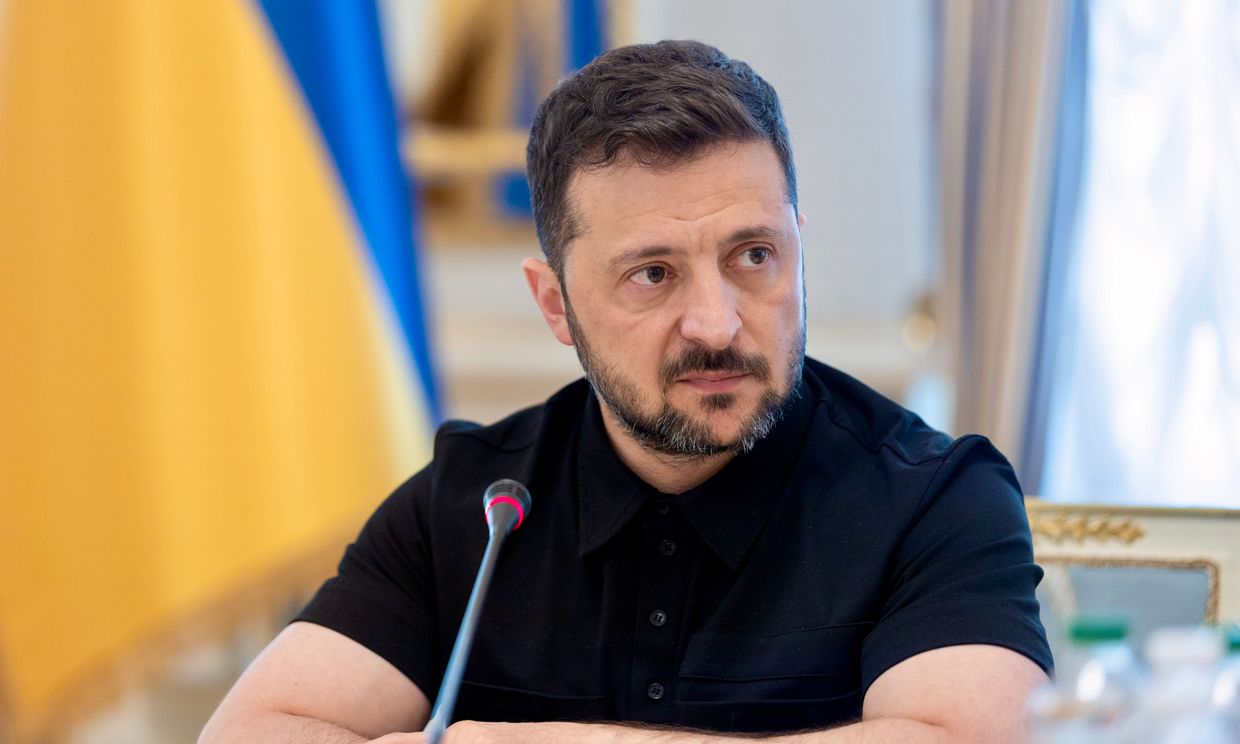
As Ukraine scales up domestic defense production, President Volodymyr Zelensky has been lobbying foreign partners to provide funding to help match its manufacturing capacity. At the NATO summit in The Hague, Ukraine signed agreements on joint weapons production with the U.K. and Denmark. Norway also pledged to jointly develop air defense systems with Kyiv.
Editor's note: The story was updated with information about the death of one of the pilots who was operating the plane.A Russian Air Force Su-34 fighter jet crashed during a training exercise in Nizhny Novgorod Oblast, Russian state media Ria Novosti reported on July 1, citing Russia's Defense Ministry.One of the pilots died due to sustained injuries, Russian media outlet Mash reported later in the day. After ejecting, he landed on a tree. Medics could not save him, according to Mash.One of the
Editor's note: The story was updated with information about the death of one of the pilots who was operating the plane.
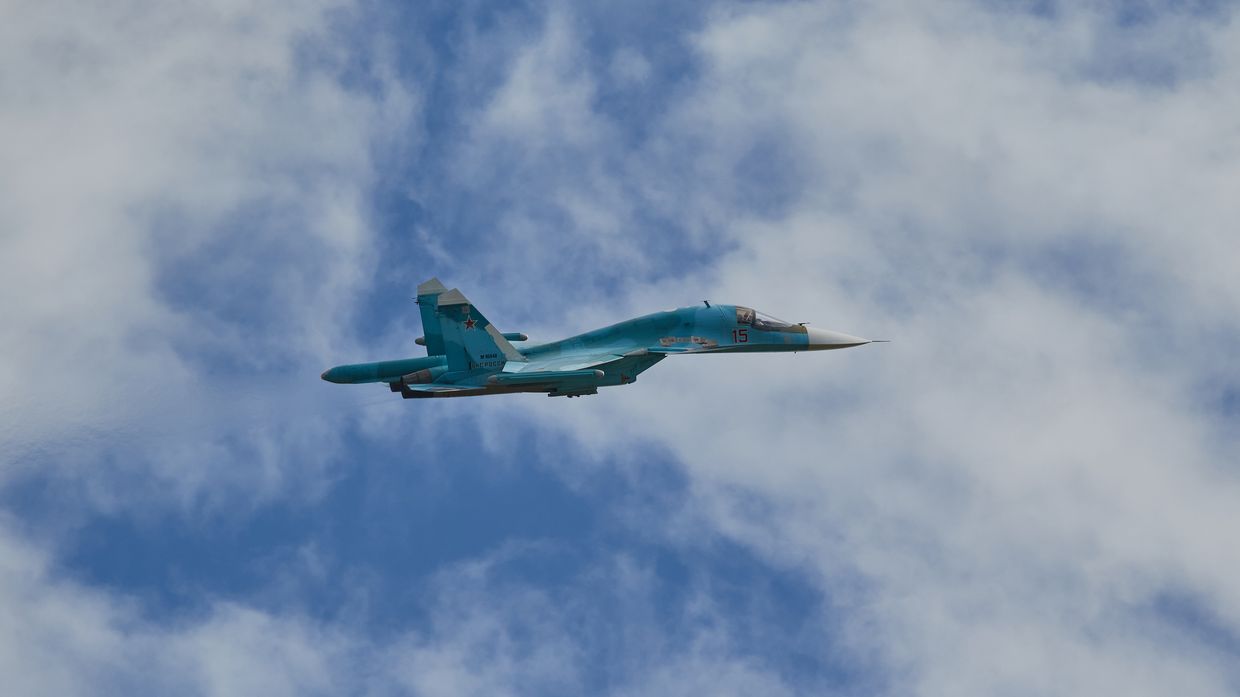
A Russian Air Force Su-34 fighter jet crashed during a training exercise in Nizhny Novgorod Oblast, Russian state media Ria Novosti reported on July 1, citing Russia's Defense Ministry.
One of the pilots died due to sustained injuries, Russian media outlet Mash reported later in the day. After ejecting, he landed on a tree. Medics could not save him, according to Mash.
One of the landing gear struts was not released during landing. The crew made several attempts to fix the malfunction in flight, but it did not help.
The crew successfully ejected from the plane, and there were no casualties, according to the ministry.
The Russian Su-34 is a Soviet-era medium-range fighter-bomber.
Plane and helicopter crashes have become more commonplace in Russia since the beginning of the full-scale invasion of Ukraine and the subsequent imposition of Western sanctions.
According to the U.K. intelligence, Russia has lost over 30 Su-34 aircraft since the start of the full-scale invasion in 2022.
Moscow does not comment on its losses it faces inn its war against Ukraine.
Editor's note: This story was updated with information shared by an SBU source.Ukrainian drones struck a major Russian military plant in the city of Izhevsk, over 1,300 kilometers (800 miles) from the front in Ukraine, a source in the Security Service of Ukraine (SBU) told the Kyiv Independent on July 1.The SBU source said the agency's long-range drones targeted the Kupol plant in Russia's Udmurt Republic on the morning of July 1. At least two confirmed strikes struck production and storage faci
Editor's note: This story was updated with information shared by an SBU source.
Ukrainian drones struck a major Russian military plant in the city of Izhevsk, over 1,300 kilometers (800 miles) from the front in Ukraine, a source in the Security Service of Ukraine (SBU) told the Kyiv Independent on July 1.
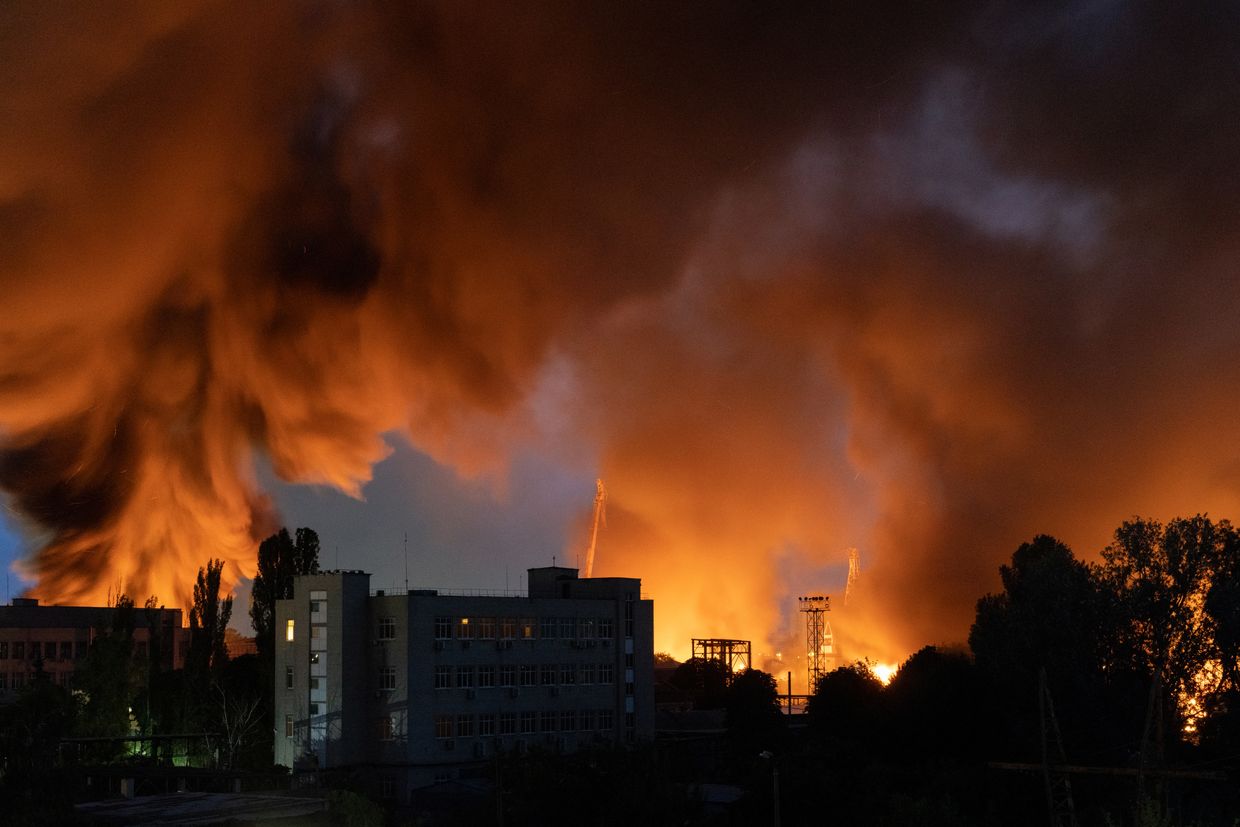
The SBU source said the agency's long-range drones targeted the Kupol plant in Russia's Udmurt Republic on the morning of July 1. At least two confirmed strikes struck production and storage facilities, starting a fire at the site, according to the source.
The facility produces Tor and Osa air defense systems, as well as Harpy attack drones for the Russian military, and is under international sanctions as part of Russia's defense-industrial complex.
"With surgical precision, the SBU continues to carry out strikes against Russia's military-industrial enterprises contributing to the war effort against Ukraine," the source said.
"Each such operation weakens (Russia's) offensive potential, disrupts weapons production chains, and proves that no part of Russia is a safe zone for its military infrastructure."
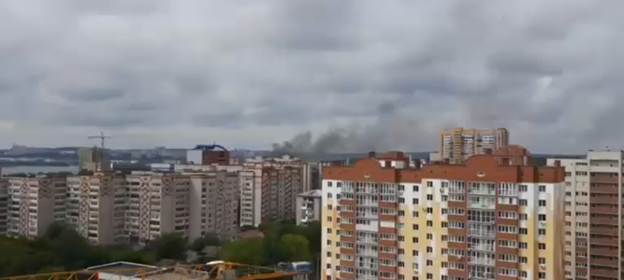
Residents of Izhevsk reported explosions early on July 1, while local authorities confirmed a drone strike on a facility in the city. Alexander Brechalov, head of Russia's Udmurt Republic, said emergency services had responded to the attack and that further information would be provided as it became available.
One of the facilities in Izhevsk was targeted by Ukrainian drones — local authorities
“All emergency services have arrived at the scene. I’ll share more details as they come in,” wrote Udmurt Republic head Alexander Brechalov on his Telegram channel.
Brechalov later reported casualties, citing deaths and serious injuries, but did not provide specific figures.
Russia's aviation agency temporarily suspended flights in and out of the city's airport following the incident.
Russian Telegram channels reported that no air raid siren was sounded before the drone attack on the Kupol plant. According to Astra, Izhevsk residents also could not access warnings via Telegram due to mobile internet outages, which locals say have persisted for nearly two weeks.
The city was previously targeted on Nov. 17, 2024, when a drone strike damaged a factory known for producing air defense systems, including Tor missile systems and radar components used by the Russian military. That strike marked the first known Ukrainian drone attack on the region during the full-scale war.
Russia's Defense Ministry said its air defenses shot down 60 Ukrainian drones overnight across several regions, including 17 over occupied Crimea, 16 over the Rostov Oblast, and 11 over the Sea of Azov. Others were reportedly downed over the Kursk, Saratov, Belgorod, Voronezh, and Oryol oblasts, as well as the Black Sea.
In occupied Crimea, local Telegram channels reported explosions near the town of Kurortne on the Kerch Peninsula, where Russian S-300/S-400 surface-to-air missile systems and radar stations are allegedly located. A monitoring group cited NASA satellite data showing a large fire in the area overnight, though there was no official confirmation of any damage to the air defense assets.
Local residents reported explosions between 0:20 a.m. and 0:50 a.m. in the cities of Kerch and Feodosia.
The Kyiv Independent could not independently verify the claims.
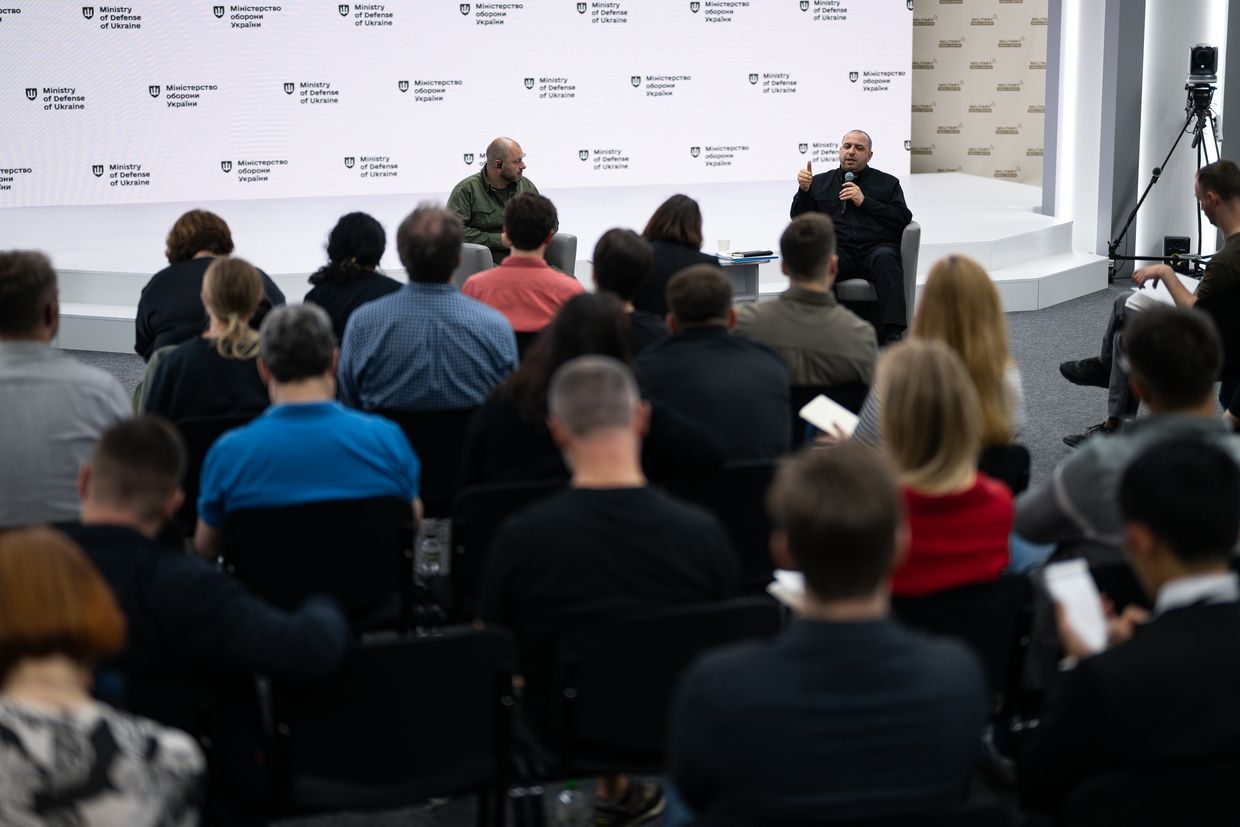
Ukraine's one-year military contract for volunteers aged 18 to 24 is proving effective on the battlefield, Defense Minister Rustem Umerov said at a June 26 press briefing, citing fresh reports from commanders across the front line.Umerov said units made up of young contract soldiers had shown "resilience, professionalism, and confident actions in combat," challenging early skepticism about the new recruitment model."We saw them on the battlefield — and it's truly motivating."The contract, launch
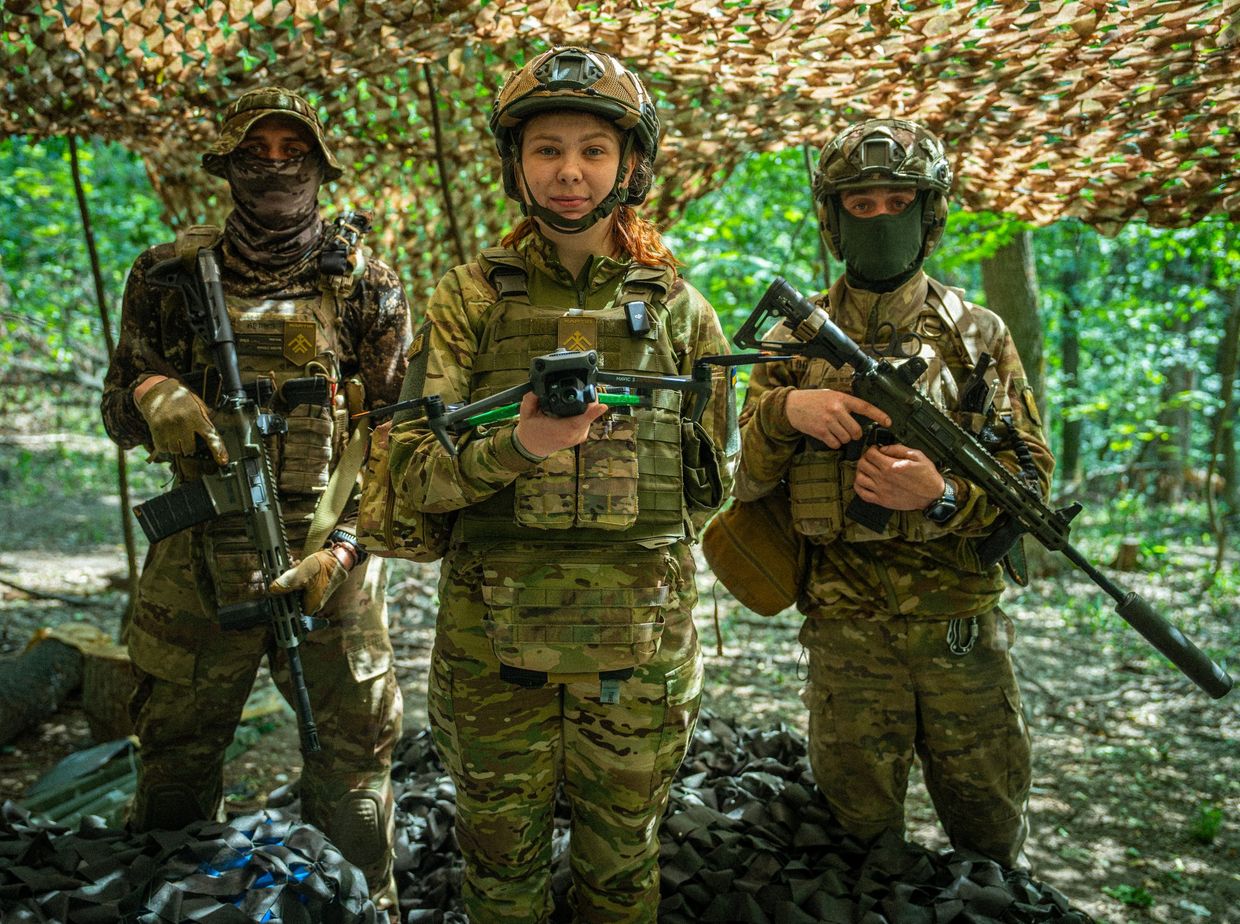
Ukraine's one-year military contract for volunteers aged 18 to 24 is proving effective on the battlefield, Defense Minister Rustem Umerov said at a June 26 press briefing, citing fresh reports from commanders across the front line.
Umerov said units made up of young contract soldiers had shown "resilience, professionalism, and confident actions in combat," challenging early skepticism about the new recruitment model.
"We saw them on the battlefield — and it's truly motivating."
The contract, launched in February, offers substantial benefits to young volunteers. It includes basic general military training, vocational training, and an adaptation course in an army unit. Volunteers will receive a one-time monetary aid payment of Hr 1 million ($24,000) and a monthly allowance of up to Hr 120,000 ($3,000).
The campaign initially faced backlash from some front-line troops and activists, who argued it created unfair disparities in pay and support. Now, the initiative is being credited with improving performance in specific units, Umerov said, citing internal military assessments received by the ministry two weeks ago.
Umerov, however, hasn't shared the number of soldiers recruited through the campaign.
The campaign is under constant evaluation based on financial, personnel, and training metrics. Umerov said the Defense Ministry is working to enhance the motivational package further, using data and feedback from participants and focus groups.
Despite pressure from international partners, particularly the United States, to lower Ukraine’s mobilization age from 25 to 18, service for those aged 18–24 remains voluntary. President Volodymyr Zelensky has consistently rejected compulsory mobilization starting at 18, warning that it could damage Ukraine's long-term future.
In a recent interview, Zelensky said Ukraine's Western allies have at times withheld new sanctions on Russia over Kyiv's refusal to lower the draft age. He stressed that the "weapons and technology," rather than raw manpower, were more decisive on the battlefield.
Ukraine faces personnel challenges as Russian forces continue to press along the front line. While a mobilization reform law lowered the draft age from 27 to 25 in 2024, the pace of new enlistment has slowed, leaving infantry units understaffed.
"The younger generation is a powerful human resource that deserves support and development," Umerov said.
Ukraine's Defense Ministry has officially approved the new domestically produced unmanned ground vehicle, known as the Termit, for front-line use, the ministry announced on June 21.The tracked robot is a next-generation version of Ukraine's existing ground-based unmanned systems already deployed across the front. These systems have supported operations by transporting supplies, conducting reconnaissance, and carrying explosives in contested areas.Termit, the newest model in the series, features
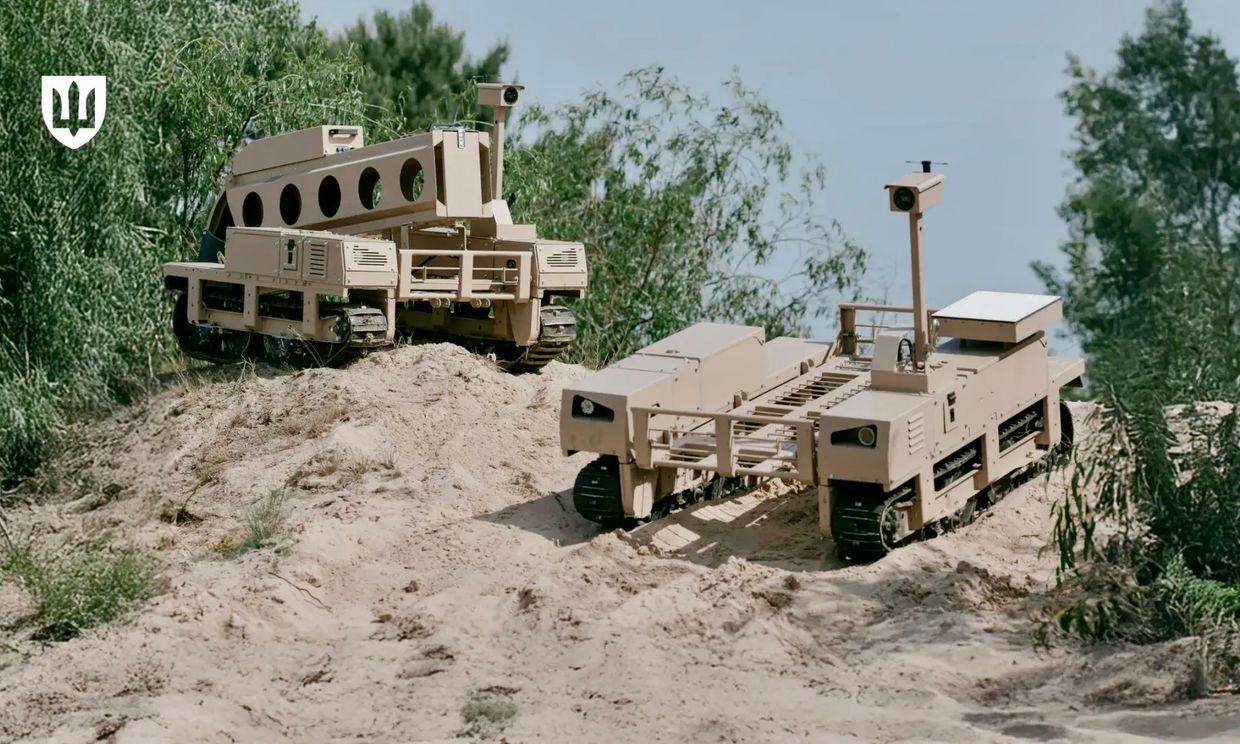
Ukraine's Defense Ministry has officially approved the new domestically produced unmanned ground vehicle, known as the Termit, for front-line use, the ministry announced on June 21.
The tracked robot is a next-generation version of Ukraine's existing ground-based unmanned systems already deployed across the front. These systems have supported operations by transporting supplies, conducting reconnaissance, and carrying explosives in contested areas.
Termit, the newest model in the series, features improved mobility and modularity. The drone can carry up to 300 kilograms and operates on various terrains thanks to its low profile, tracked design, and improved weight distribution.
Its traction battery system allows for several hours of continuous movement over dozens of kilometers. According to the Defense Ministry, Termit drones can be equipped with combat modules, used for medical evacuations, or for transporting specialized equipment as needed.
Ground drones such as Termit are being used more frequently to minimize soldier exposure to front-line risks. Since Russia's full-scale invasion in 2022, Kyiv has prioritized the development of unmanned systems across all domains — air, sea, and land.
President Volodymyr Zelensky has called for the production of at least 30,000 long-range drones in 2025, alongside expanded investment in strike-capable hybrids such as the Palianytsia and Peklo missile-drone platforms.

 Connexion