Editor's note: The article was updated with a statement from Ukraine's military intelligence agency.A tanker carrying 1 million barrels of oil experienced an explosion near Libya, its operator, TMS Tankers, said on June 30. The vessel, Vilamoura, is now being towed to Greece, where the extent of the damage will be assessed upon arrival. The blast caused the engine room to flood due to water intake, though the cause of the explosion remains unclear, according to a company spokesperson.The spokesp
Editor's note: The article was updated with a statement from Ukraine's military intelligence agency.
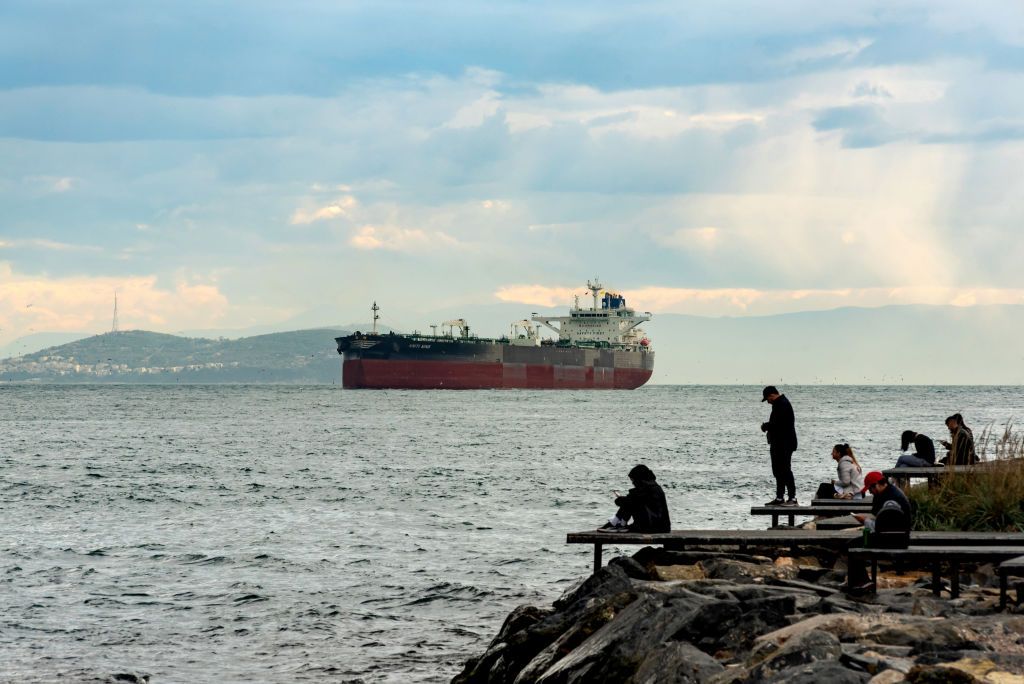
A tanker carrying 1 million barrels of oil experienced an explosion near Libya, its operator, TMS Tankers, said on June 30. The vessel, Vilamoura, is now being towed to Greece, where the extent of the damage will be assessed upon arrival.
The blast caused the engine room to flood due to water intake, though the cause of the explosion remains unclear, according to a company spokesperson.
The spokesperson confirmed that the crew is safe and no pollution has been reported.
The explosion occurred on June 27 as the vessel was departing the Libyan port of Zuwetina, some 150 kilometers (90 miles) northeast of Libyan territorial waters, Ukraine's military intelligence reported.
The incident comes amid a series of unexplained blasts targeting oil tankers that had previously visited Russian ports. In response, shipowners have started inspecting their vessels for mines using divers and underwater drones.
Vilamoura had visited Russian oil terminals twice since April, loading Kazakh-origin crude rather than Russian oil. According to Bloomberg vessel-tracking data, the tanker called at the Russian port of Ust-Luga in early April and at the Caspian Pipeline Consortium (CPC) terminal near Novorossiysk in May. Both terminals primarily handle Kazakh crude exports.
Maritime risk consultancy Vanguard Tech reported that four other vessels have been damaged by explosions since the beginning of the year. Each had recently docked at Russian ports, the firm said.
Ukraine has targeted Russian energy assets throughout the full-scale invasion, including a drone strike in February on the CPC pipeline, a route responsible for moving roughly 80% of Kazakhstan’s oil exports.
President Volodymyr Zelensky has instructed government officials to prepare a decision introducing a long-term moratorium on business inspections in Ukraine, the Presidential Office announced on June 27. Zelensky discussed the moratorium during an address at the "State and Business Forum: From Dialogue to Partnership," held in Kyiv. "I have instructed that a decision on a long-term moratorium on business inspections be prepared to protect businesses from any pressure by unscrupulous individuals
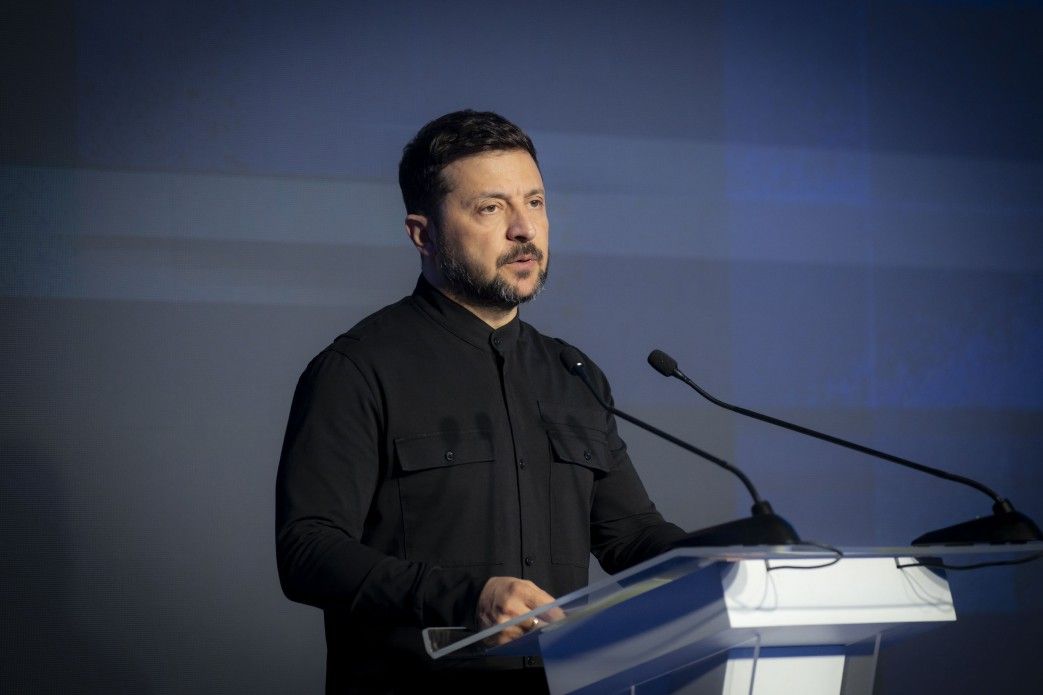
President Volodymyr Zelensky has instructed government officials to prepare a decision introducing a long-term moratorium on business inspections in Ukraine, the Presidential Office announced on June 27.
Zelensky discussed the moratorium during an address at the "State and Business Forum: From Dialogue to Partnership," held in Kyiv.
"I have instructed that a decision on a long-term moratorium on business inspections be prepared to protect businesses from any pressure by unscrupulous individuals in various government positions," he said.
Economic growth is a vital component of Ukrainian resilience, necessitating ongoing dialogue between the government and entrepreneurs, Zelensky said. In addition to imposing the moratorium on inspections, Kyiv will also expand the Council for Entrepreneurship Support in an effort to cultivate entrepreneurship in Ukraine.
"Even under such harsh conditions of this war, Ukraine can rely on its entrepreneurs — on our domestic Ukrainian manufacturing, our Ukrainian logistics, our Ukrainian services across all sectors — from security to everyday life, as well as on Ukrainian developments and investments," the president said.
Following Russia's full-scale invasion in early 2022 and the onset of martial law, Ukraine temporarily suspended certain business regulations, including tax inspections for businesses. Zelensky signed a law resuming tax inspections for certain businesses in December 2023.
Now in its fourth year of full-scale war against Russia, Ukraine's economy is still attempting to recover from the massive blow dealt in 2022, when the GDP dropped by 29.1%. At the same forum on June 27, Ukraine's new Prosecutor General Ruslan Kravchenko announced another measure meant to boost business: an audit of criminal cases related to businesses in Ukraine.
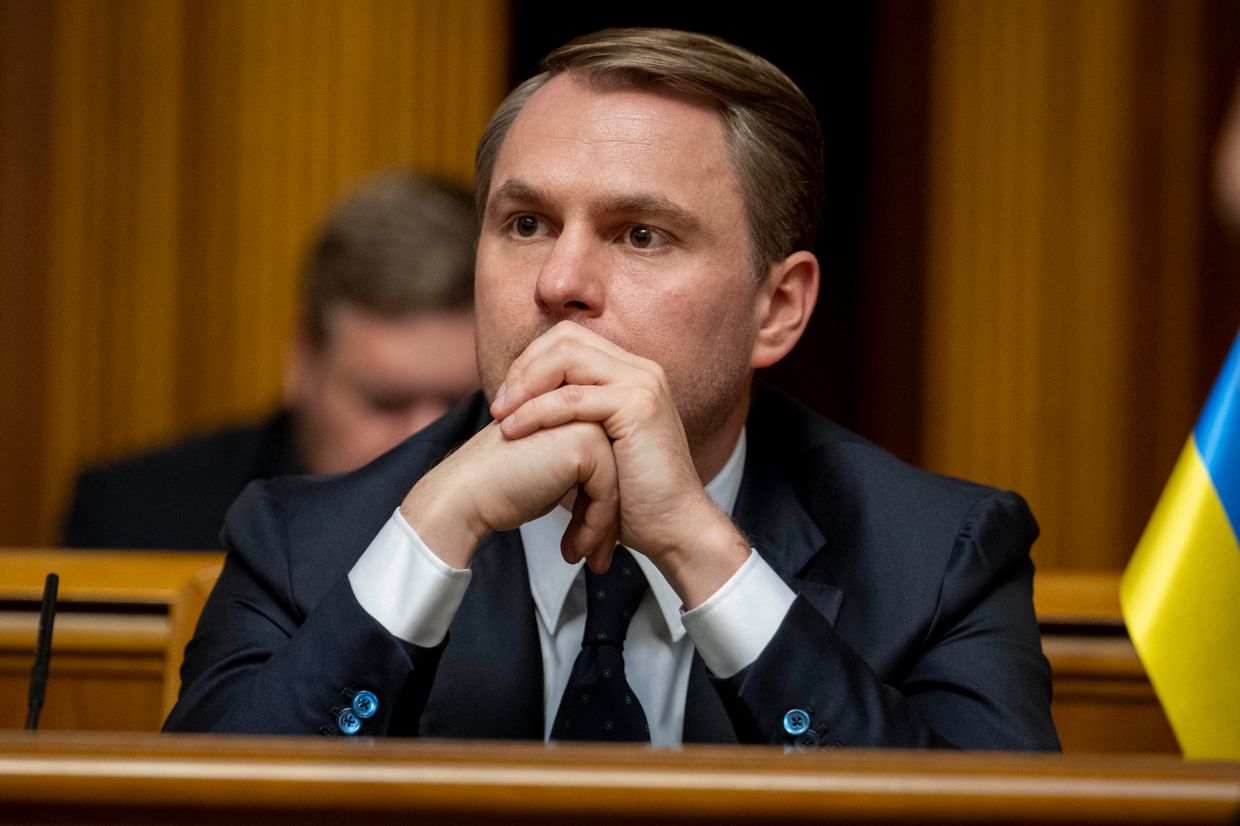
"The second priority is to finally sort out the proceedings related to business, protect business, and achieve justice in these matters," Kravchenko said.
The Prosecutor's Office will be dedicated to "ensuring the rights of investors and businesses," Kravchenko wrote on his Telegram channel on June 26. Efforts to safeguard businesses will not interfere with Ukraine's legal obligations and the regulatory reforms required for its integration into the European Union, he said.
President Vladimir Putin claimed on June 20 that Russia's economy is strong despite war and sanctions, brushing off mounting warnings from his own officials about stagnation and looming recession.Speaking at the St. Petersburg International Economic Forum, Putin was asked about reports that the ongoing war in Ukraine was "killing" the Russian economy."Rumors of my death are greatly exaggerated," he replied, quoting American writer Mark Twain.The president claimed that Russia has outpaced global
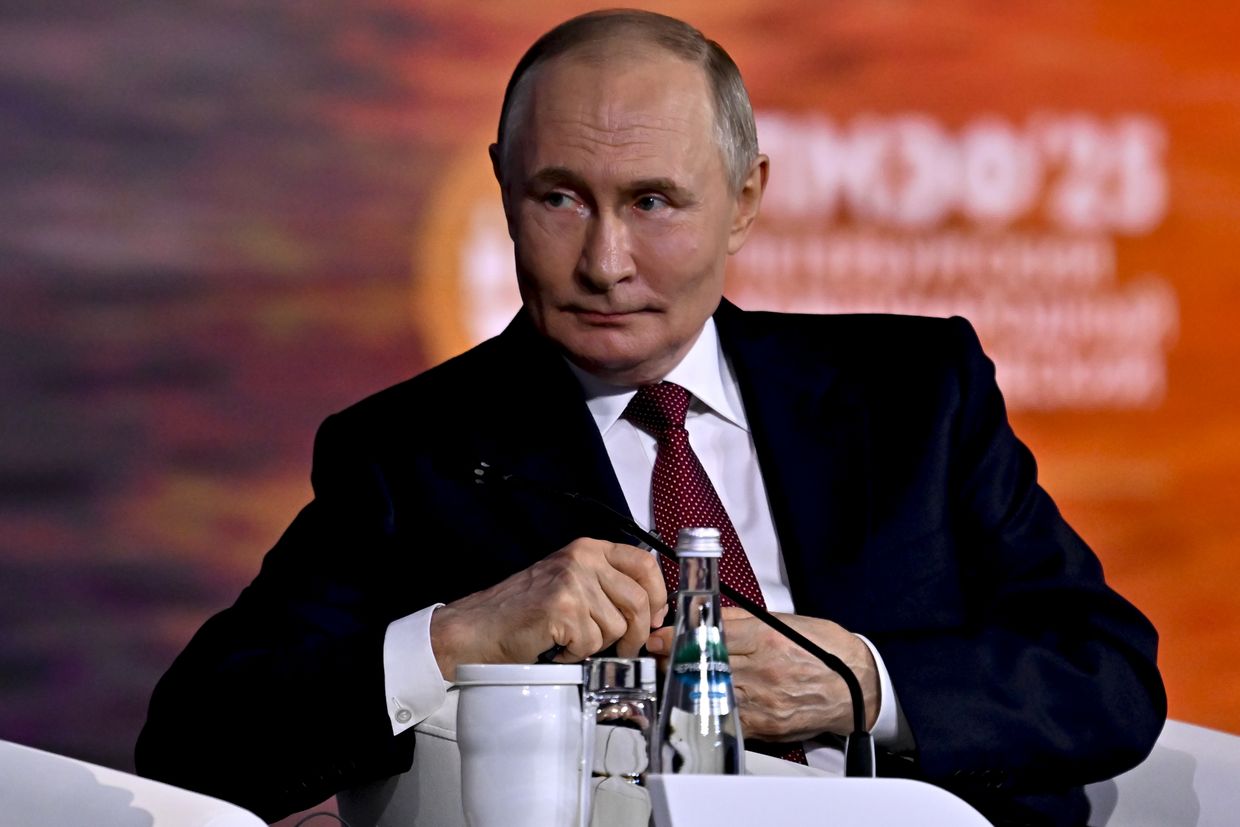
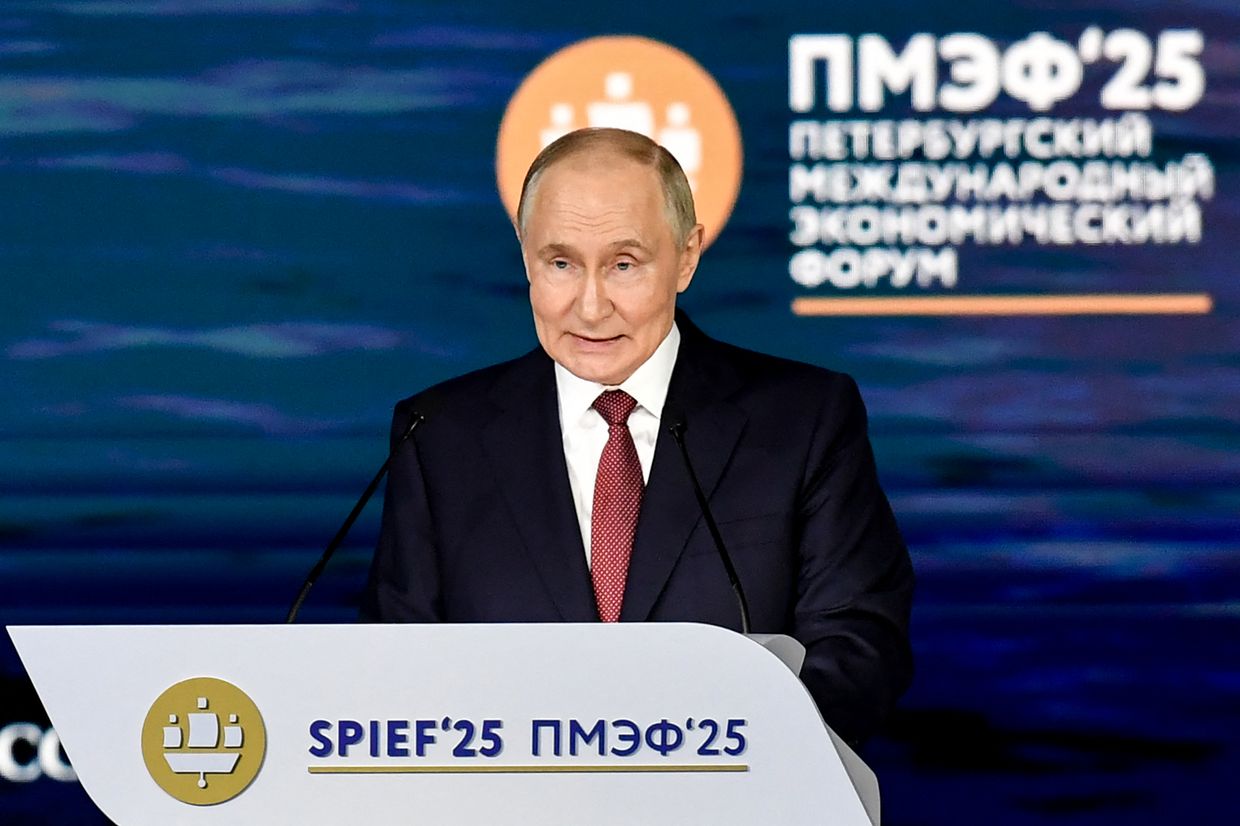
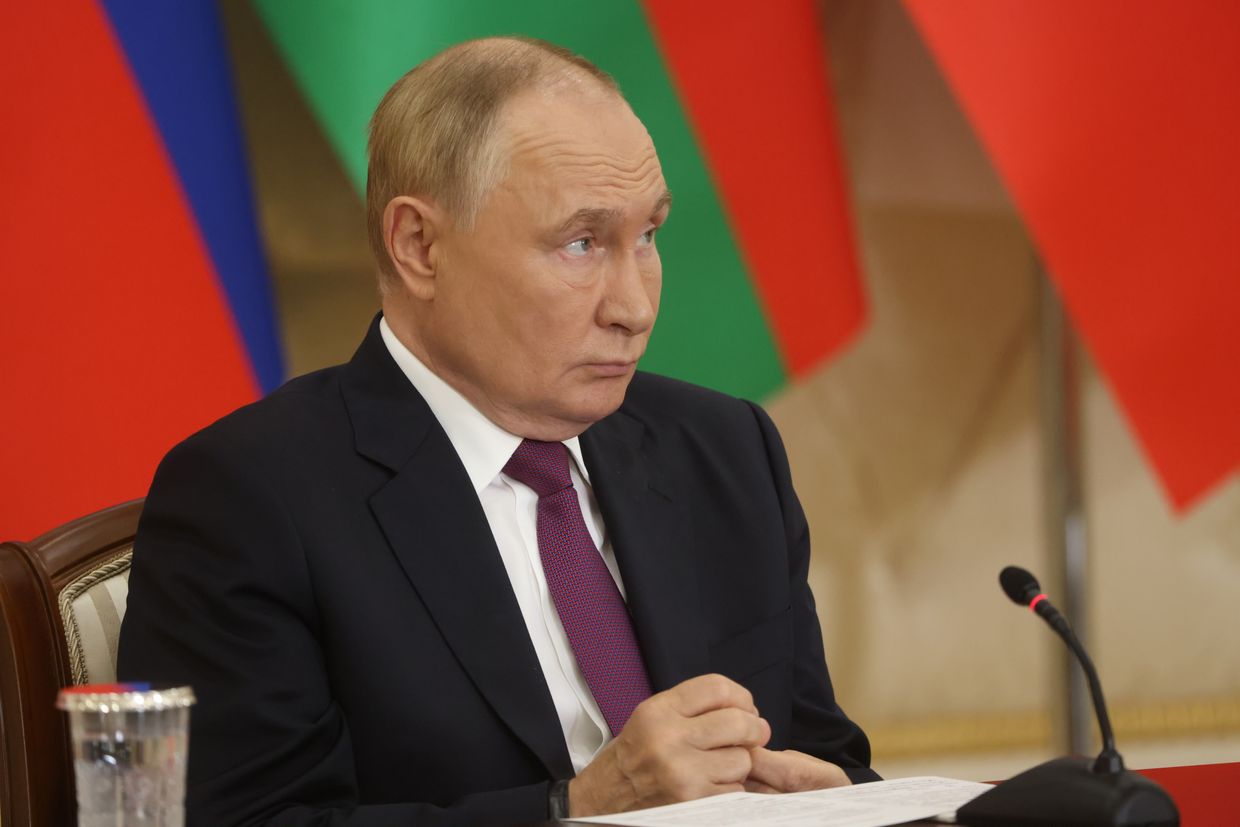
President Vladimir Putin claimed on June 20 that Russia's economy is strong despite war and sanctions, brushing off mounting warnings from his own officials about stagnation and looming recession.
Speaking at the St. Petersburg International Economic Forum, Putin was asked about reports that the ongoing war in Ukraine was "killing" the Russian economy.
"Rumors of my death are greatly exaggerated," he replied, quoting American writer Mark Twain.
The president claimed that Russia has outpaced global economic growth over the past two years, allegedly expanding by over 4% annually.
"Our most important task is to ensure the economy's transition to a balanced growth trajectory," Putin said. "At the same time, some specialists and experts point to the risks of stagnation and even recession. This should not be allowed under any circumstances."
The statement came just a day after Central Bank Governor Elvira Nabiullina warned on that Russia's wartime economic momentum is fading fast. She said the economy is approaching the limits of its growth potential, adding that previously effective tools are now exhausted.
Economy Minister Maxim Reshetnikov echoed the concerns, telling a separate forum audience on June 19 that Russia is "on the verge of a transition to recession." He emphasized that recession is not inevitable and that "everything depends on our decisions."
Moscow has experienced rapid inflation and historically high interest rates amid its full-scale invasion of Ukraine. The central bank raised rates repeatedly to combat inflation, but on June 6, it made its first cut in nearly two years, from 21% to 20%.
Putin has criticized the central bank's tight monetary policy for choking off private investment, especially in non-defense sectors.
Despite Putin's optimistic rhetoric, analysts attribute Russia's economic slowdown to sustained international sanctions, falling oil prices, rising wartime spending, and supply disruptions.
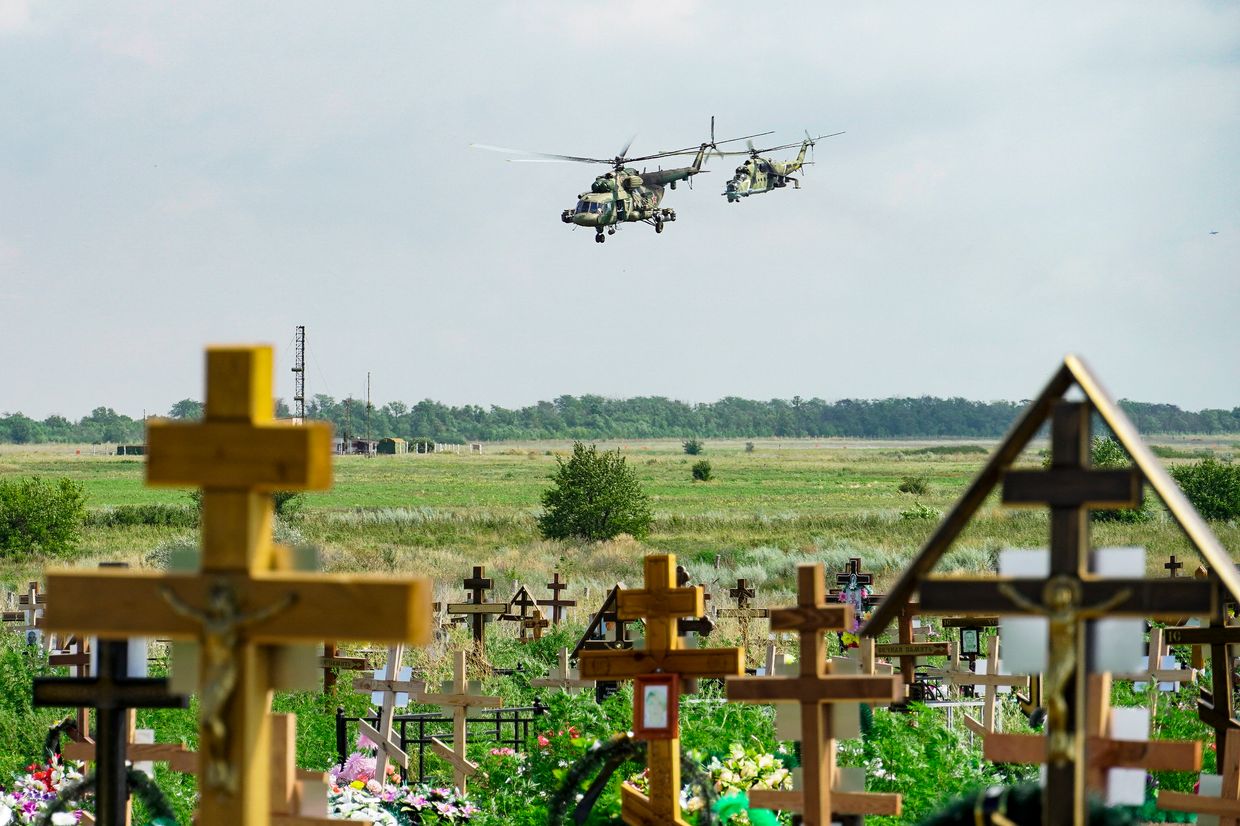
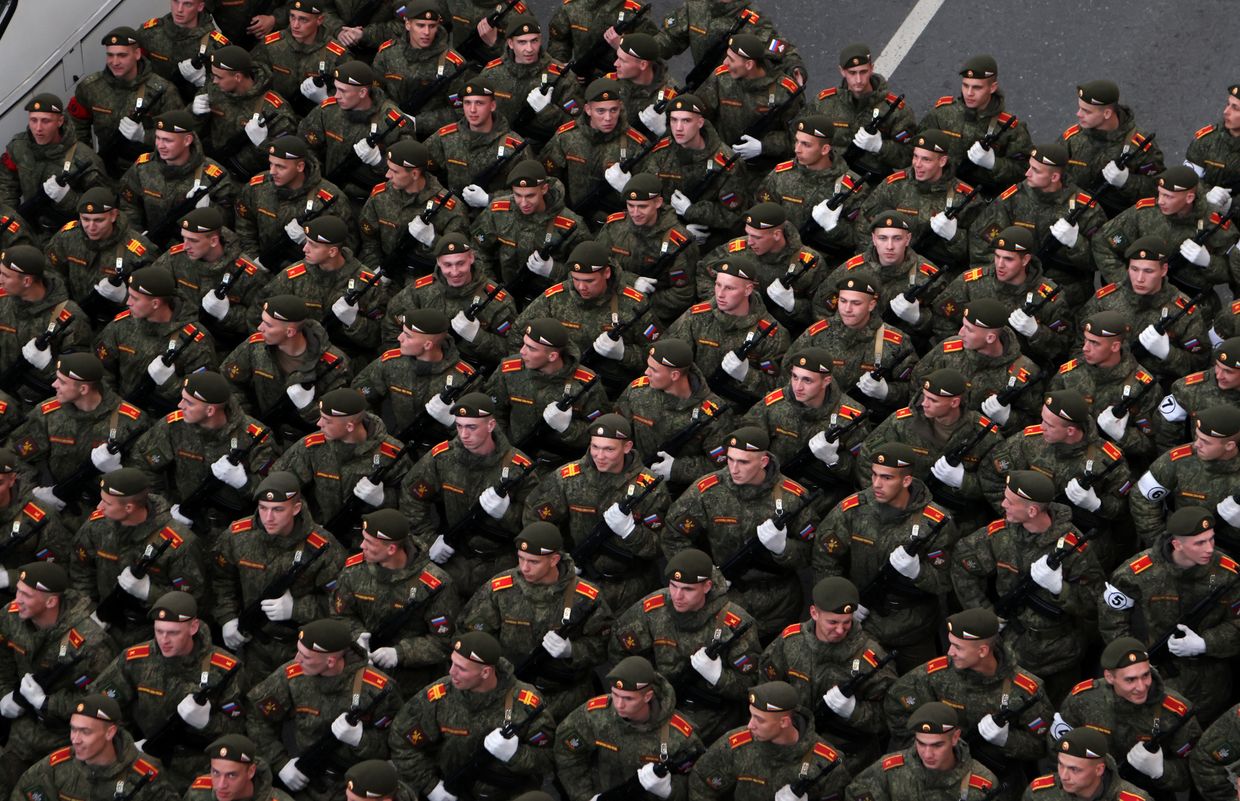
Russia's ever-mounting losses on the battlefield which recently passed the 1 million mark are also likely contrbuting to the economic turmoil as the Kremlin is having to pay people to sign up to fight rather than introduce what would be a hugely unpopular mass mobilization.
According to an analysis by economist Janis Kluge, Russia's daily bill just for sign-up bonuses is $24 million.
Editor's note: This story was updated to include Russian President Vladimir Putin's remarks at the St. Petersburg International Economic Forum. Russia's wartime economic momentum is fading fast, with key resources nearly exhausted, Russian Central Bank Governor Elvira Nabiullina said, warning that the country can no longer rely on the same tools that sustained growth in the first two years of the full-scale war against Ukraine, the Moscow Times reported on June 19.Speaking at the St. Petersburg
Editor's note: This story was updated to include Russian President Vladimir Putin's remarks at the St. Petersburg International Economic Forum.
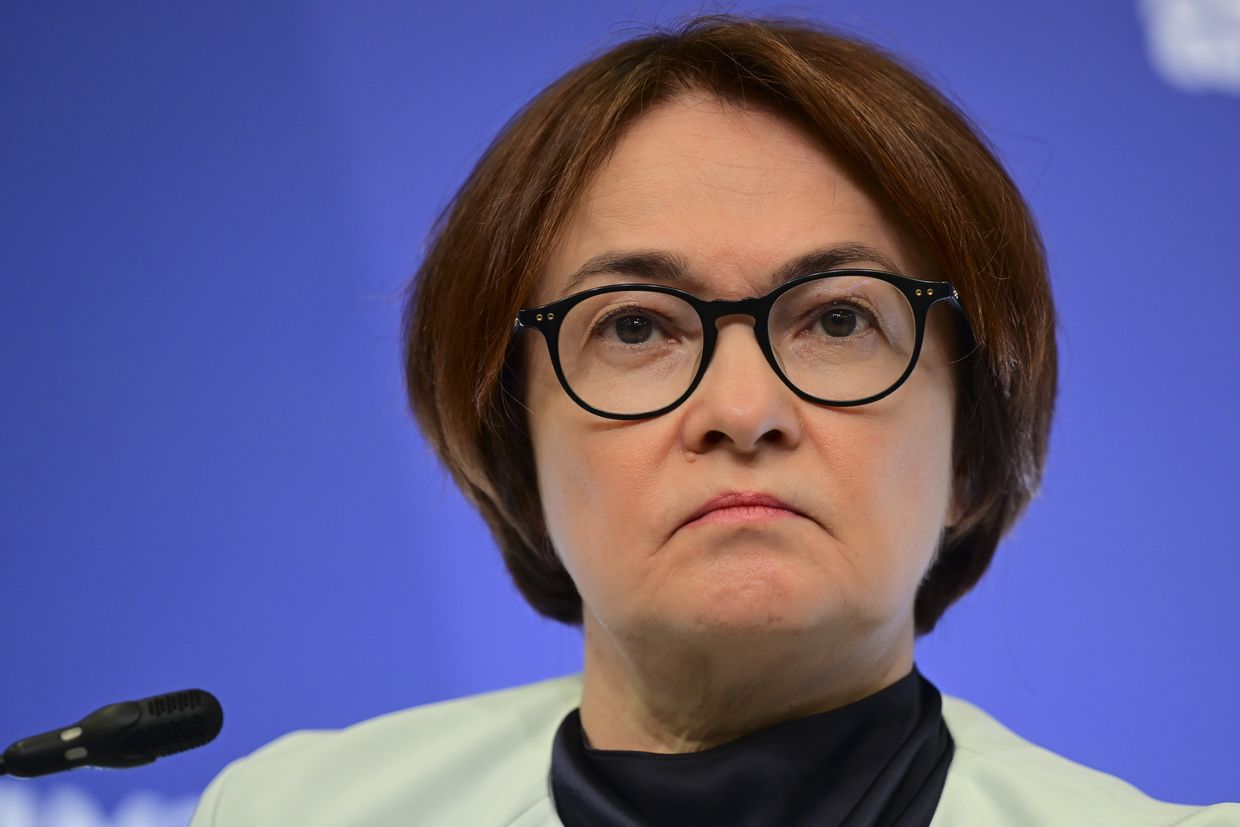
Russia's wartime economic momentum is fading fast, with key resources nearly exhausted, Russian Central Bank Governor Elvira Nabiullina said, warning that the country can no longer rely on the same tools that sustained growth in the first two years of the full-scale war against Ukraine, the Moscow Times reported on June 19.
Speaking at the St. Petersburg International Economic Forum, Nabiullina said that the Russian economy had been expanding on the back of "free resources," including labor, industrial capacity, bank capital reserves, and liquid assets from the National Wealth Fund (NWF) — all of which are now reportedly nearing depletion.
"We grew for two years at a fairly high pace because free resources were activated," she said. "We need to understand that many of those resources have truly been exhausted."
Speaking at the same forum, Russian President Vladimir Putin ordered officials "not to allow stagnation or recession" in the Russian economy under any circumstances.
"We must consistently change the structure of our economy," he said.
The comments come after Russia's ambassador to the U.K., Andrei Kelin, claimed in an interview with CNN this week that Russia is spending "only 5–7%" of its federal budget on the war. Kelin claimed that Russia can continue waging its war, saying Moscow "is winning."
According to the state statistics agency Rosstat, Russia's unemployment rate has dropped to a historic low of 2.3%. At the same time, mass emigration and large-scale wartime recruitment have created a labor shortage estimated at 2 million people. Industrial capacity utilization has surged beyond 80%, the highest in modern Russian history.
Russia's economy is now "on the verge of a transition to recession," Russian Economy Minister Maxim Reshetnikov said at the same forum. Official data show that GDP growth slowed from 4.1% in late 2023 to just 1.4% in the first quarter of 2024, with the economy contracting quarter-on-quarter for the first time since 2022.
Business profits in March fell by one-third overall and dropped by half in the critical oil and gas sector. Industrial growth stagnated at 1.2% year-over-year between January and April, while civilian sectors of the economy began shrinking. Retail turnover growth slowed from 7.2% in December to just 2.4% in April.
An anonymous Russian analyst told Novaya Gazeta Europe that government technocrats are effectively telling Putin it's time to choose between "war or economy."
During its invasion of Ukraine, Russia has faced rising inflation due to record military spending, pushing the central bank to maintain high interest rates. Under government pressure, the bank cut the rate slightly from 21% to 20% earlier in June, despite concerns about weakened private investment.
Officials have scaled back key development projects and reduced shipments of metals and oil products. Early hopes for recovery in 2025, driven by talks with the U.S., have faded as inflation and sanctions weigh heavily on growth.
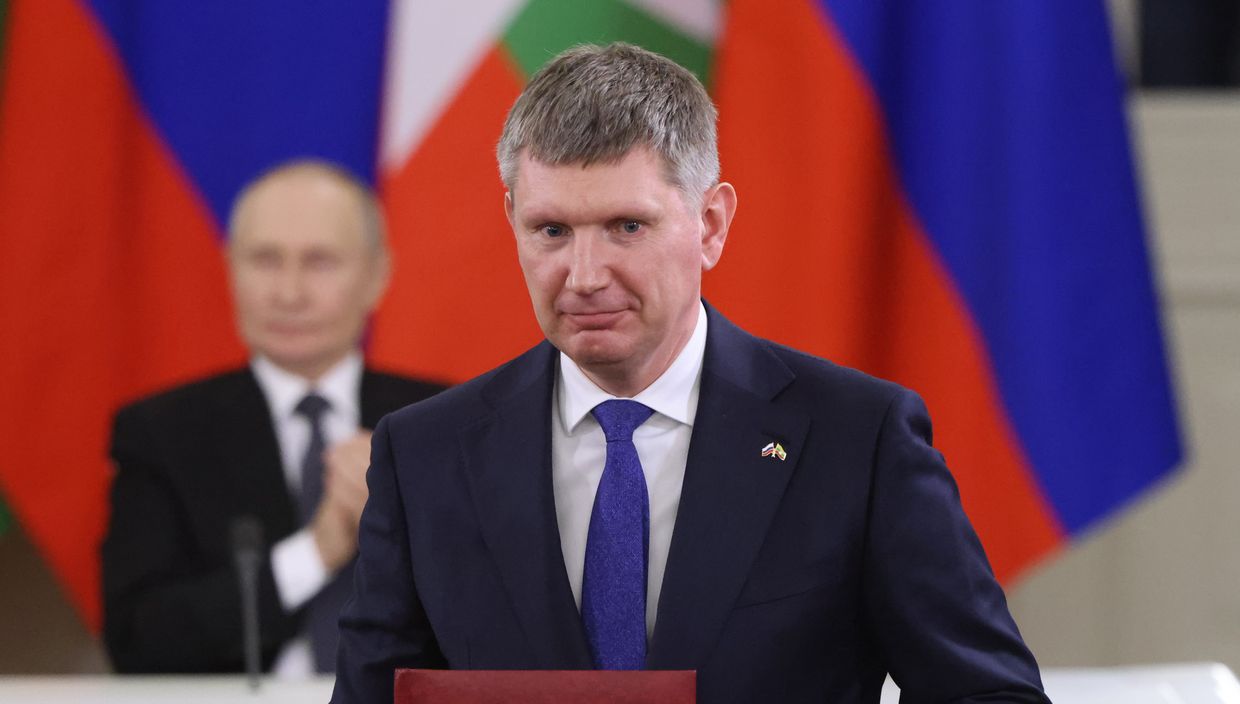
The Russian economy appears to be "on the verge of a transition to recession," Russian Economy Minister Maxim Reshetnikov said on June 19, adding that the next step will be decisive.The comments underscore Russia's mounting economic challenges as it continues its all-out war against Ukraine."According to figures, we have a cooling stage (in the economy). But all our numbers are like a rearview mirror," Reshetnikov said at the St. Petersburg International Economic Forum when asked about Russia's
The Russian economy appears to be "on the verge of a transition to recession," Russian Economy Minister Maxim Reshetnikov said on June 19, adding that the next step will be decisive.
The comments underscore Russia's mounting economic challenges as it continues its all-out war against Ukraine.
"According to figures, we have a cooling stage (in the economy). But all our numbers are like a rearview mirror," Reshetnikov said at the St. Petersburg International Economic Forum when asked about Russia's economic situation.
"According to current business perceptions, we are already, it seems, on the verge of a transition to a recession," the minister added. Reshetnikov clarified that recession is not inevitable and that "everything depends on our decisions."
Russia has faced soaring inflation during its invasion of Ukraine, driven by record wartime spending. This forced the central bank to set one of the highest key interest rates in decades, hurting private investments in non-defense-related sectors.
Facing government pressure, the central bank slashed the interest rate from 21% to 20% earlier this month.
Reshetnikov himself urged the central bank to cut rates in order to boost growth, aiming to achieve a 3% growth target set by Russian President Vladimir Putin.
Russia has been forced to slash key projects across various sectors in the face of an economic slowdown, brought on in part by plummeting oil prices. Major Russian exporters have also cut down on rail shipments of metals and oil products, even beyond earlier projected reductions.
After some positive signals earlier in 2025 due to U.S. President Donald Trump's outreach to Moscow and hopes for a ceasefire, more recent reports again indicate a sharp slowdown in Russia's economic growth.
Analysts have connected this development to the central bank policies, sanctions, low oil prices, supply difficulties, and high inflation.

 Connexion
 The Kyiv IndependentOleg Sukhov