Vue normale

  • ✇The Kyiv Independent
  • EU leaders call for tougher sanctions on Russia at G7 summit
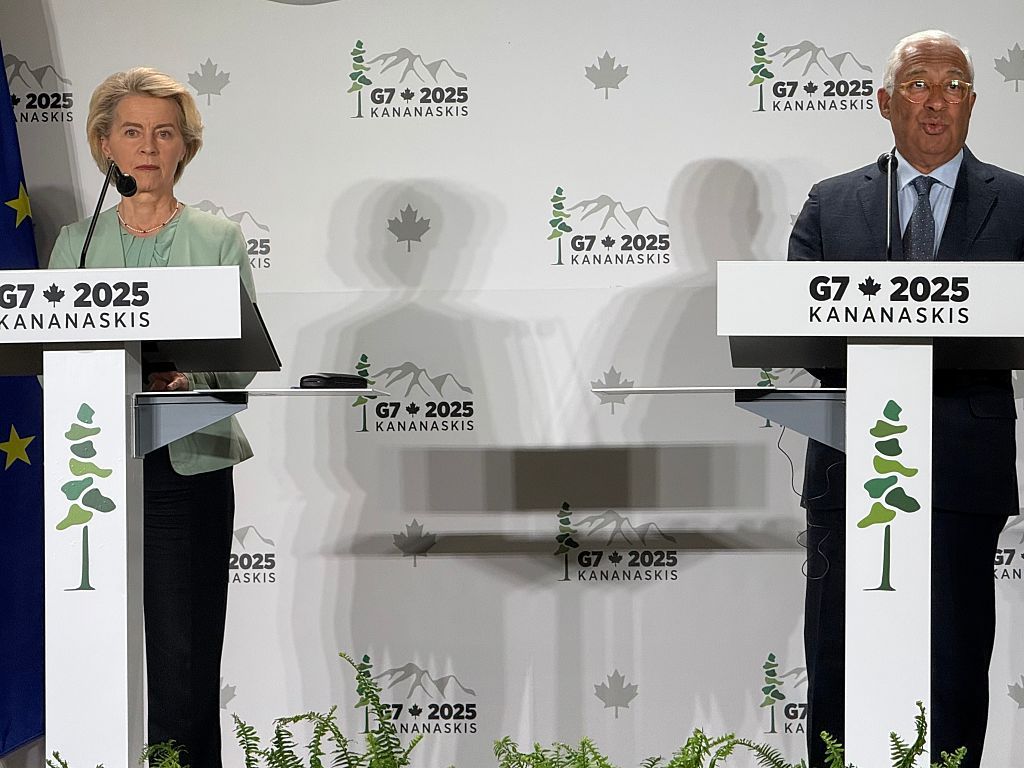
    The Group of Seven (G7) nations need to impose harsher sanctions on Moscow in order to secure a ceasefire in the war against Ukraine, European Commission President Ursula von der Leyen and European Council President Antonio Costa said at the start of the G7 summit in Canada.The G7 Leaders Summit kicked off on June 15 in Kananaskis, Canada, with official talks held June 16-17. While Ukraine hopes to win economic support and unified pressure against Russia, the rapidly escalating conflict between
     

EU leaders call for tougher sanctions on Russia at G7 summit

16 juin 2025 à 00:09
EU leaders call for tougher sanctions on Russia at G7 summit

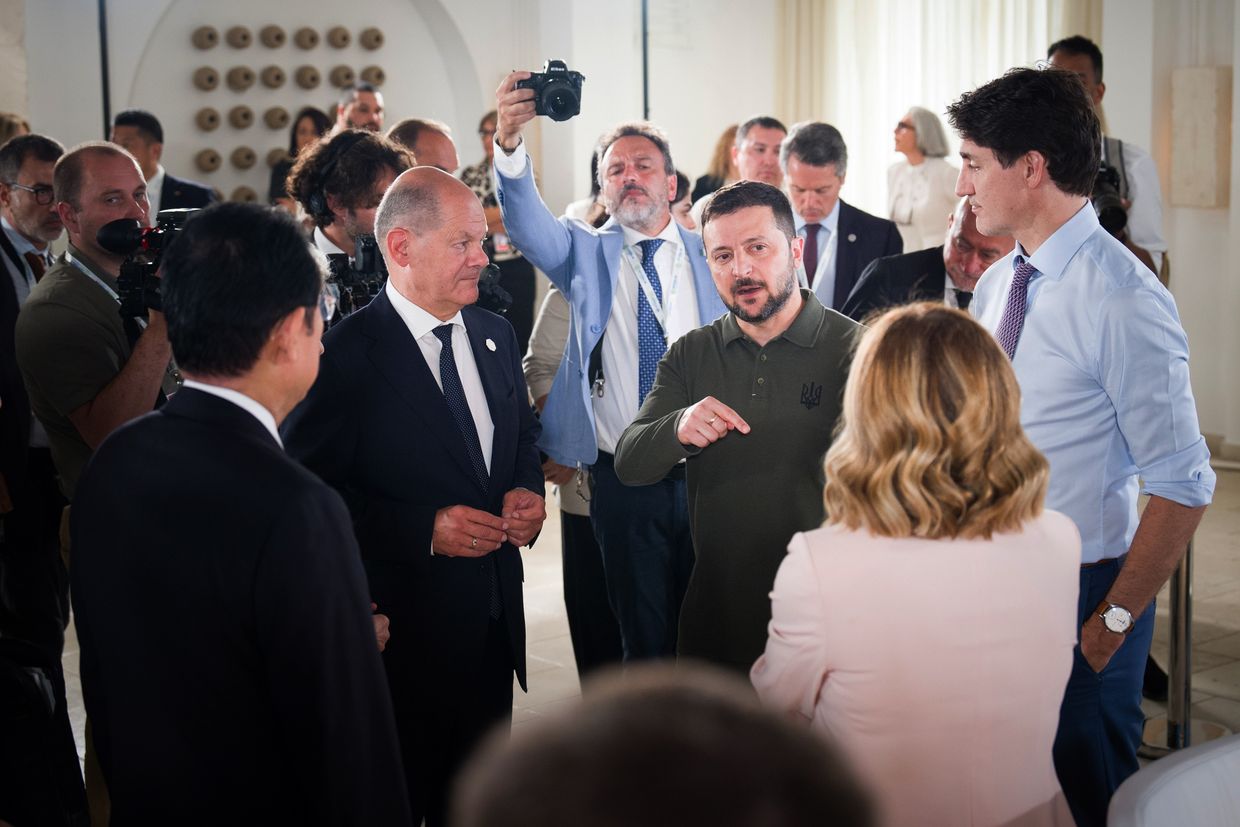
The Group of Seven (G7) nations need to impose harsher sanctions on Moscow in order to secure a ceasefire in the war against Ukraine, European Commission President Ursula von der Leyen and European Council President Antonio Costa said at the start of the G7 summit in Canada.

The G7 Leaders Summit kicked off on June 15 in Kananaskis, Canada, with official talks held June 16-17. While Ukraine hopes to win economic support and unified pressure against Russia, the rapidly escalating conflict between Israel and Iran may dominate this year's conference.

"To achieve peaceful strength we must put more pressure on Russia to secure a real ceasefire, to bring Russia to the negotiating table, and to end this war. Sanctions are critical to that end," von der Leyen said at a press briefing on June 15 attended by a Kyiv Independent journalist.  

Economic sanctions have been an effective intervention since the start of Russia's full-scale invasion, von der Leyen said. She noted that combined G7 and European Union sanctions have decreased Russian oil and gas revenues by nearly 80% since February 2022.

"(T)he sanctions are working, and we will do more," she said.

Von der Leyen urged the G7 to adapt the economic restrictions proposed in the EU's 18th sanctions package, announced on June 10. The new measures target Russia's energy and banking sectors and propose a further reduction in the oil price cap, bringing the cap down from $60 to $45 per barrel.

"I will invite all G7 partners to join us in this endeavor," she said.
With no new US aid packages on the horizon, can Ukraine continue to fight Russia?
The U.S. has not announced any military aid packages for Ukraine in almost five months, pushing Kyiv to seek new alternatives. But time is running out quickly as Russian troops slowly advance on the eastern front line and gear up for a new summer offensive. “While Ukraine’s dependence on
EU leaders call for tougher sanctions on Russia at G7 summitThe Kyiv IndependentKateryna Hodunova
EU leaders call for tougher sanctions on Russia at G7 summit

Costa echoed the call for sanctions and the necessity of economic pressure in order to achieve a ceasefire. Europe is committed to "increasing additional sanctions to cripple (Russia's) ability to wage war and pressing for an unconditional ceasefire," he said.

Europe's call for unity may meet with resistance from the United States, which has assumed a dramatically different posture towards Ukraine and Russia since President Donald Trump took office in January. Trump has not imposed any new sanctions against Russia, even Moscow blatantly obstructs peace efforts and escalates mass strikes against Ukrainian cities.

The U.S. also reportedly opposes lowering the G7 oil price cap — a measure first introduced in December 2022 that prohibits Western companies from shipping, insuring, or otherwise servicing Russian oil sold above $60 per barrel.

The price cap debate has become more urgent as oil prices, which had fallen below the $60 cap in recent months, surged following Israel's recent strikes against Iran.

Despite U.S. resistance, the EU and the United Kingdom — backed by other European G7 countries and Canada — have said they are prepared to move forward with the proposal, even without Washington's endorsement.

President Volodymyr Zelensky, on the other hand, has said the EU sanctions and proposed price cap drop don't go far enough. Zelensky on June 11 said the EU's 18th round of sanctions "could be stronger" and proposed further slashing the oil price cap to $30 per barrel.

"A ceiling of $45 per barrel of oil is better than $60, that's clear, that's true. But real peace will come with a ceiling of $30," he said. "That's the level that will really change the mindset in Moscow."

Zelensky and Trump are expected to meet on the sidelines of the G7 summit on June 17. The meeting will mark their third in-person encounter since Trump took office.

High stakes, low resolve: What Ukraine can expect from the upcoming G7 summit
As world leaders prepare to gather in the remote community of Kananaskis in Alberta, Canada for the Group of Seven (G7) Leaders’ Summit on June 15-17, Russia’s war in Ukraine once again holds center stage — but views on how to address the three-year conflict diverge sharply. In the five months
EU leaders call for tougher sanctions on Russia at G7 summitThe Kyiv IndependentDmytro Basmat
EU leaders call for tougher sanctions on Russia at G7 summit
  • ✇The Kyiv Independent
  • Russia exploits medical exemptions to bypass sanctions, Lithuania says
    Russia is exploiting automatic medical exemptions in EU sanctions regulations to import dual-use goods for its military, Lithuania's Deputy Foreign Minister Gabija Grigaite-Daugirde told Bloomberg on June 12.According to Grigaite-Daugirde, Lithuanian customs authorities blocked 28,854 goods in 2024 that were allegedly destined for Russia and Belarus "under the guise of medical exemption."Many of the flagged shipments contained parts for motor vehicles, refrigerators, copiers, and microelectronic
     

Russia exploits medical exemptions to bypass sanctions, Lithuania says

12 juin 2025 à 14:16
Russia exploits medical exemptions to bypass sanctions, Lithuania says

Russia is exploiting automatic medical exemptions in EU sanctions regulations to import dual-use goods for its military, Lithuania's Deputy Foreign Minister Gabija Grigaite-Daugirde told Bloomberg on June 12.

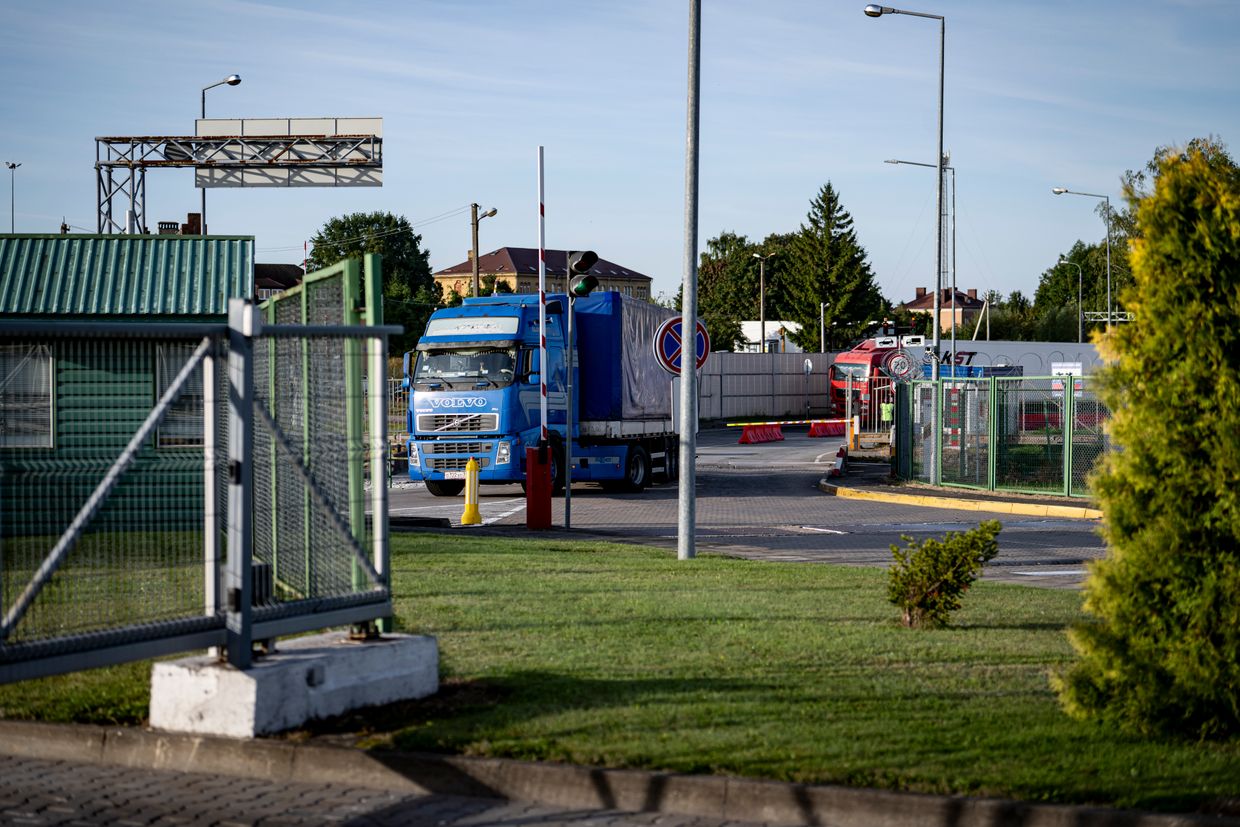
According to Grigaite-Daugirde, Lithuanian customs authorities blocked 28,854 goods in 2024 that were allegedly destined for Russia and Belarus "under the guise of medical exemption."

Many of the flagged shipments contained parts for motor vehicles, refrigerators, copiers, and microelectronics — all of which can have military applications.

"We have witnessed parts for motor vehicles, refrigerators, copying machines, and other types of microelectronics being exported directly to Russia, claiming that these are bound for medical use," she said.

Under current EU rules, medical exemptions are automatically granted, leaving customs authorities to investigate the shipments retroactively. Lithuania has called for reforms allowing exporters to apply for exemptions before shipments are approved.

"Leaving automatic exemptions from sanctions for medical goods is like closing a door but leaving a keyhole," Grigaite-Daugirde said. "Russia definitely finds a way to pass."

As Moscow shifts to a wartime economy and seeks Western-made technology for its arms production, its efforts to circumvent sanctions have grown "desperate," she added.

Lithuania, a key EU and NATO member bordering both Belarus and Russia's heavily militarized Kaliningrad exclave, has taken a hardline stance on enforcement and regularly pushes for tougher sanctions within the bloc.

Why can’t the West match Russia’s ammunition production?
The West is failing to catch up to Russia’s production of the most basic unit of war for the past half-millennium — gunpowder. The modern propellants and explosives that power war have largely been offshored. While Western manufacturers are churning out shell casings, they are short on the materials to fill
Russia exploits medical exemptions to bypass sanctions, Lithuania saysThe Kyiv IndependentKollen Post
Russia exploits medical exemptions to bypass sanctions, Lithuania says
❌