❌

Vue normale

Russia’s 2026 deficit nearly doubles to a record $88 billion, and its new budget plans three more years in the red

1 octobre 2026 à 12:41

russia's 2026 deficit nearly doubles record $88 billion its new budget plans three more years red · post russian president vladimir putin brics summit kazan 23 2024 holding commemorative banknote

The Russian government has submitted a draft federal budget for 2027–2029 to the State Duma, Meduza reported on 30 September, citing TASS. In all three years, Russia's expenditures will exceed its revenues, the outlet noted.

Russia's finances have been eroding since it launched its full-scale invasion of Ukraine. To keep paying for the war, the Kremlin has drained its reserves, borrowed more, and pushed tax burdens onto residents and businesses, while the wider economy stalls.

The government listed social obligations, including aid to those who fought in its war against Ukraine and their families, along with defense needs among the budget's priorities, while its press release left out the planned cuts to social spending and the rise in military spending, Meduza noted, citing The Bell.

Spending will exceed revenue by about 2% of GDP a year

Russia's federal budget for 2027 sets spending at 48.8 trillion rubles ($585 billion) and revenue at 43.3 trillion ($519 billion), the Russian government stated, leaving a deficit of 5.5 trillion rubles ($66 billion). It claimed the draft is "balanced" and that healthcare spending will rise compared with 2026.

Deficits of 5.1 trillion rubles ($61 billion) in 2028 and 5.3 trillion ($64 billion) in 2029 are also planned, about 2% of GDP a year, Meduza noted.

This year's deficit is now set to reach a record 7.345 trillion rubles ($88 billion), nearly double the previous forecast of 3.785 trillion ($45 billion), The Moscow Times reported on 1 October. To help close the gap, Moscow plans an array of tax hikes for 2027–2029 to fund military spending. Already by May, its four-month deficit had run 50% above what it had planned for the whole year.
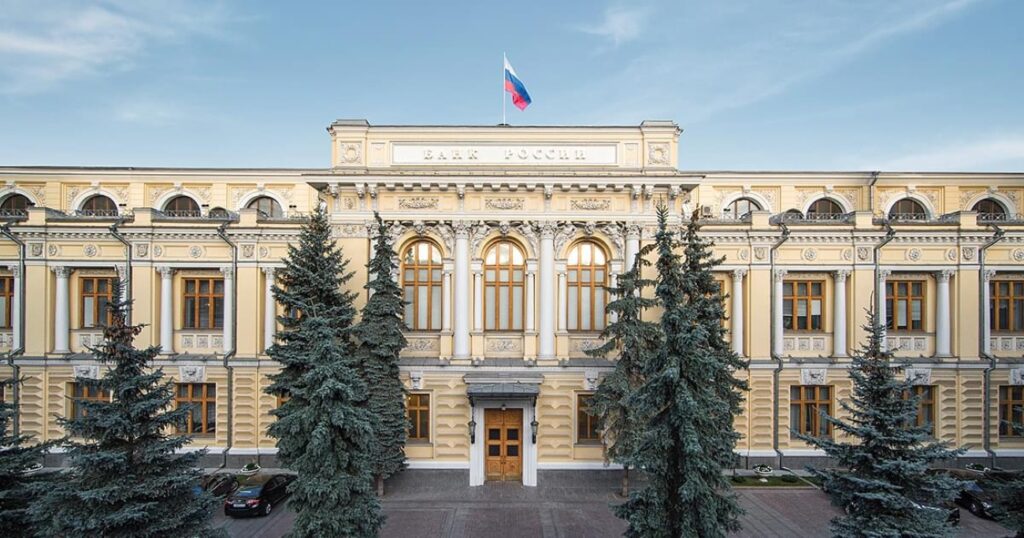
Head office of the Central Bank of the Russian Federation in Moscow.
Head office of the Central Bank of the Russian Federation in Moscow. Photo: Central Bank of Russia

Even as the deficit widens, Russia plans its highest defense spending since the full-scale invasion began: 17.1 trillion rubles ($202.58 billion) in 2027, 27% more than the 13.5 trillion originally planned.

Only 2.3 trillion rubles ($28 billion) of that sum is itemized in public documents, and 34.9% of all 2027 spending will be classified, the highest share in at least 12 years, exiled outlet Vyorstka reported. The Duma is expected to hold the first of three readings on 29 October, the date proposed by Budget Committee chairman Andrei Makarov, Interfax reported.
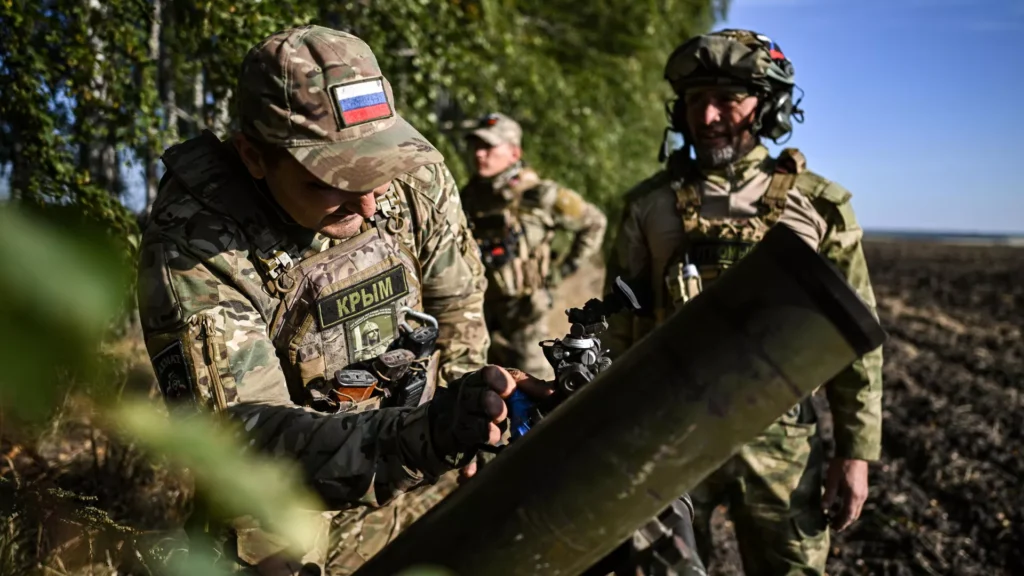
Russia raises its war budget by 27% and expands the army again – both to new records – even as its budget deficit widens and oil revenues fall

29 septembre 2026 à 11:14

russia pulling strategic reserves prop up failing offensive hur says — 20000 troops less than one month its own losses · post russian soldiers fighting ukraine sputnik 29015058_0_1 60_3072_1888_1920x0_80_0_0_39d39d77ce429d32e9ff0408ae7775aejpg news

Russia plans to sharply increase military spending in 2027 while expanding the authorized size of its armed forces, according to budget documents seen by Reuters and a report by Novaya Gazeta Europe.

The developments point to Moscow preparing to expand its war effort into next year, even as its battlefield gains remain limited and its campaign increasingly relies on missile and drone attacks against Ukrainian cities and civilian infrastructure. It is also doing so as the Russian government faces a widening budget deficit and falling projected oil and gas revenues.

Russia plans 27% increase in 2027 defense spending despite widening budget deficit

Russia plans to spend 17.1 trillion rubles ($202.6 billion) on defense in 2027, according to government documents reviewed by Reuters. That is about 27% more than the 13.5 trillion rubles originally budgeted for defense in 2027 and would be the highest level of military spending since Russia launched its full-scale invasion of Ukraine in February 2022.

The documents project total defense spending of 50 trillion rubles over the next three years. The actual amount Russia will spend on defense in 2026 is classified, Reuters reported, while some military-related spending can be recorded under other parts of the state budget.

The planned increase comes alongside worsening fiscal pressures. Russia has raised its forecast for the 2026 budget deficit to 3.2% of GDP, from an earlier estimate of 1.6%, according to Reuters. Overall government spending is expected to rise 13.2% this year to 48.6 trillion rubles, or 20.9% of GDP.

The government also expects to increase net borrowing by 26% in 2026 to 5 trillion rubles and withdraw 459 billion rubles from its National Wealth Fund, Reuters reported. Its forecast for 2026 oil and gas revenues has been cut to 7.6 trillion rubles from 8.9 trillion.

Russia is reportedly planning new tax increases for 2027 to help cover the growing deficit. A new windfall tax on metals and mining companies is expected to bring in about 200 billion rubles a year, according to the documents. State debt is projected to rise to 21.7% of GDP in 2027, above the 20% level Russian authorities have previously considered safe.

The draft budget is expected to be submitted to Russia's parliament by October 1.

Army staffing also reaches new high

At the same time, Russian President Vladimir Putin has again increased the authorized size of the country's armed forces.

Putin signed a decree raising the official staffing level of the Russian Armed Forces to 2.44 million people, including 1.55 million military personnel, Novaya Gazeta Europe reported on September 28. The increase is 15,500 personnel compared with the previous decree issued in August.

It is the fourth increase in the authorized size of the Russian military in 2026 and the seventh since the beginning of the full-scale invasion of Ukraine, according to Novaya Gazeta Europe. Before the invasion, the authorized force stood at 1.90 million people, including 1.01 million military personnel.

Russia shifts more of the war into the air

The increases in military staffing and spending come as Russia continues to pursue its maximalist war aims despite limited battlefield progress. The Institute for the Study of War assessed on September 27 that Russia's frontline has remained largely static in recent months and that the Kremlin is increasingly relying on long-range missile and drone strikes as part of its effort to force Ukraine to capitulate during the winter of 2026–27.

ISW assessed that Putin may be trying to make Ukraine's infrastructure and air defense capacity buckle under sustained Russian strikes rather than relying solely on further territorial gains. The institute also said the Kremlin may delay a large-scale mobilization while it assesses whether its expanded long-range strike campaign can achieve its objectives.

The planned increase in military spending and the repeated expansion of the armed forces show that Moscow is preparing to sustain and expand its war effort into 2027, even as its forces make limited territorial gains in Ukraine.

❌