Vue normale

  • ✇Euromaidan Press
  • Newer drones haven’t dethroned the FPV, and Russia fears our bomber drones, Ukrainian commander says
    Ukraine's first-person-view (FPV) drones are not being displaced by newer unmanned systems, a Ukrainian officer told Ukrinform. They remain a central tool for precision strikes, while Ukrainian forces claim a separate advantage in larger bomber drones. Unmanned systems have become a defining weapon of Russia's war against Ukraine, and both sides race to out-innovate each other, a contest in which a cheap UAV can down a platform costing dozens of times more. FPVs re
     

Newer drones haven’t dethroned the FPV, and Russia fears our bomber drones, Ukrainian commander says

12 août 2026 à 10:16

A Ukrainian soldier with a drone on the frontline. Photo: General Staff via Facebook

Ukraine's first-person-view (FPV) drones are not being displaced by newer unmanned systems, a Ukrainian officer told Ukrinform. They remain a central tool for precision strikes, while Ukrainian forces claim a separate advantage in larger bomber drones.

Unmanned systems have become a defining weapon of Russia's war against Ukraine, and both sides race to out-innovate each other, a contest in which a cheap UAV can down a platform costing dozens of times more.

FPVs remain central

"Since FPVs appeared in service, they have become a leading means of precision engagement. This trend will continue," said Captain Anton Bobrovskyi, who commands a company training unmanned-systems specialists at the 199th Training Center of the Air Assault Forces.

Bobrovskyi conceded that Russia also uses drones effectively and that Ukraine learns from it, but said Ukraine keeps a lead in one category: bomber drones.

The Russian Sokol-I anti-drone UAV. Source: The 57th Separate Motorized Infantry Brigade
Explore further

Ukrainian drone that downed Russia’s rarest spy UAV just bagged its anti-drone interceptor too

Ukraine's bomber-drone advantage

Russian forces fear Ukrainian bomber drones, according to Bobrovskyi. He said Ukraine outmatches Russia many times over in such systems, and that Russian troops who encounter one often do not know what to do with it.

The distinction matters because bomber drones work differently from single-use FPVs. Rather than flying into a target and exploding, larger bomber drones carry and release munitions, then fly on. Euromaidan Press has documented the growing role of these systems, including reusable platforms capable of returning to base after dropping their payloads. Developers have also adapted them to fly through Russian electronic warfare, with upgraded Vampire drones built to resist jamming.

sea drones jet neptune missiles hit one russian port single night · post fire burns novorossiysk early hours 12 2026 пожежа у новоросійську ніч проти серпня фото exilenova+ ukraine news
Explore further

Sea drones, jet drones, and Neptune missiles hit one Russian port in a single night

Bobrovskyi said Ukraine's advantage does not mean Russia lacks comparable technology. Instead, he argued that Ukrainian forces and society initiated many of the current battlefield drone trends and have kept the initiative in using them.

Each new drone class draws a countermeasure, so the side that keeps iterating fastest holds the battlefield initiative. How long Ukraine's bomber-drone edge lasts will depend on its ability to keep protecting and upgrading those platforms.

  • ✇Euromaidan Press
  • A bomb-laden drone hit a Ukrainian An-124 in Germany, then lay unnoticed for hours
    Newly analyzed airport camera footage shows a quadcopter drone loaded with Semtex explosive flew straight at a parked Ukrainian An-124 Ruslan cargo aircraft and struck its wing at Leipzig/Halle airport in Germany on the evening of 4 August, the media outlet Die Zeit reported on 10 August. The device bounced off the wing, fell to the ground, and failed to detonate. The drone attacked the aircraft at around 19:30 local time, the media outlet reports. Russia's hybrid a
     

A bomb-laden drone hit a Ukrainian An-124 in Germany, then lay unnoticed for hours

12 août 2026 à 04:29

Ukrainian An-124 at Leipzig Airport in Germany. August 5 August, 2026. Photo: screenshot from Bild video

Newly analyzed airport camera footage shows a quadcopter drone loaded with Semtex explosive flew straight at a parked Ukrainian An-124 Ruslan cargo aircraft and struck its wing at Leipzig/Halle airport in Germany on the evening of 4 August, the media outlet Die Zeit reported on 10 August. The device bounced off the wing, fell to the ground, and failed to detonate. The drone attacked the aircraft at around 19:30 local time, the media outlet reports.

Russia's hybrid attacks are increasingly moving from the information domain into the physical one, including on the territory of other countries. This incident makes sabotage on NATO member states' territory potentially more dangerous if suspicion of Russian involvement is confirmed.

Footage contradicts the warning-shot theory

The drone struck the wing near the fuel tanks, then bounced off the aircraft's surface and fell to the ground. The explosive device also ended up on the ground and did not detonate. The device contained Semtex plastic explosive. Approximately four hours later, a tourist bus driver accidentally noticed it lying on the ground, put his foot on it, and reported the find to airport security.

Video analysis contradicts the earlier theory that the incident may have been intended only as a warning. The nature of the attack indicates an attempt to cause actual damage.

Drone found near a Ukrainian An-124 aircraft in Leipzig, Germany, on 5 August, 2026. Photo: screenshot from Bild video

Investigators examining foreign state involvement

German Interior Minister Alexander Dobrindt suggested that a state actor may have been behind the explosive-laden drone found at the airport. On 7 August, Germany's National Security Council convened under Chancellor Friedrich Merz. Earlier, the United States assessed that the drone discovered at Leipzig/Halle Airport in Germany overnight into 5 August belonged to Russian intelligence, a US Department of Defense official in Europe told CNN.

The cargo aboard the Ukrainian aircraft targeted in the sabotage attempt consisted of military equipment and ammunition that had arrived in Germany from France and was being prepared for further transportation, Süddeutsche Zeitung stated, citing a confidential German police report. However, Germany's Federal Ministry of the Interior denied this claim, according to dpa.

The An-124 Ruslan, struck by the drone, is operated by the Ukrainian company Antonov Airlines. After Russian forces destroyed its main base in Hostomel in 2022, the company has been using Leipzig/Halle airport as a temporary base for its aircraft.

  • ✇Euromaidan Press
  • Russia’s tank shield shot down seven drones—Ukraine destroyed the tank anyway
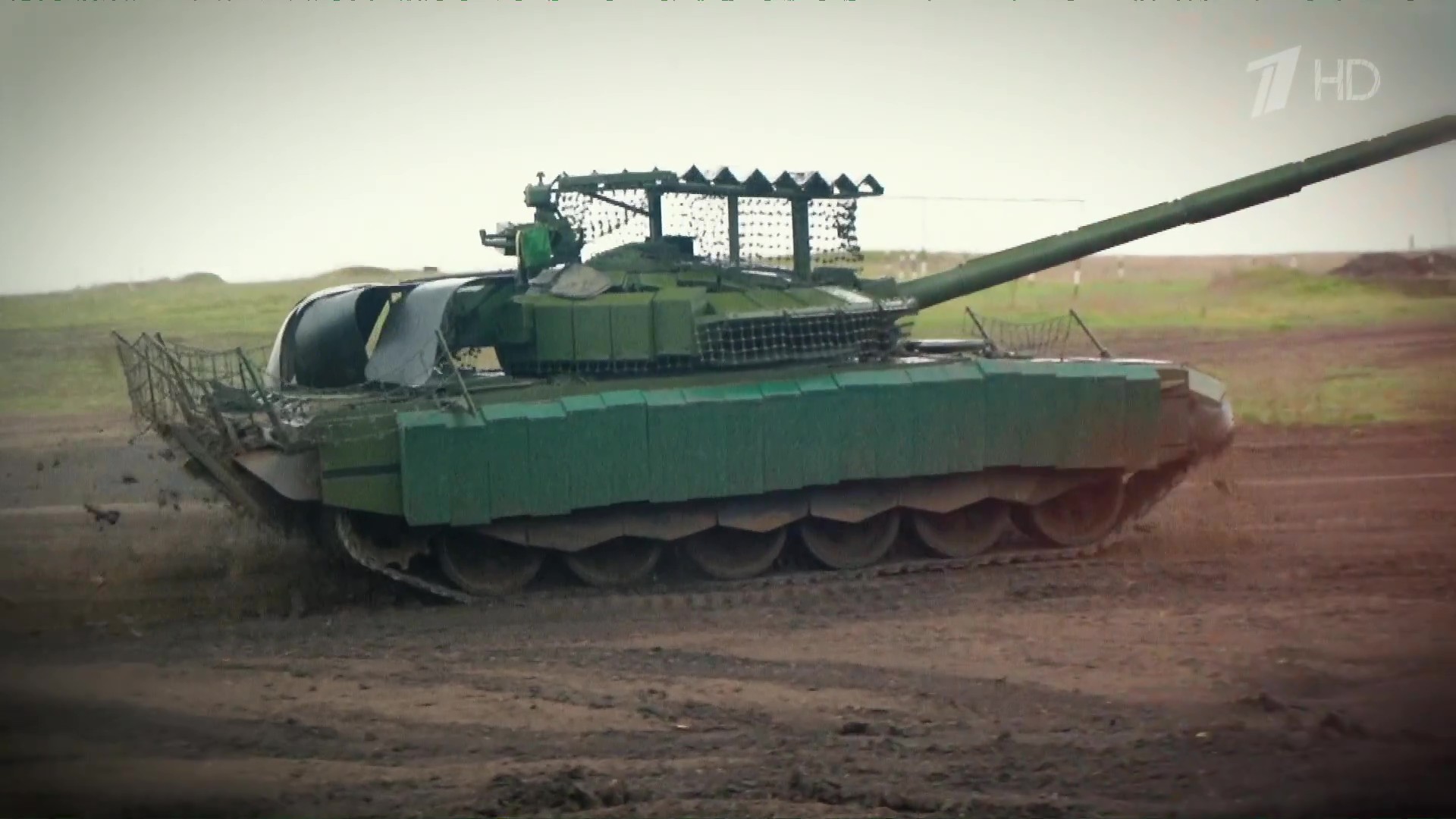
    Russia wants its tanks moving again after two years of Ukrainian drones freezing its armored assaults, the Institute for the Study of War (ISW) reported. Its main bet is a tank-mounted system that fires interceptors at incoming drones. The system worked on at least one tank, but Russia lost it anyway. Since 2022, cheap Ukrainian FPV drones have turned the open approach to any position into ground where armor rarely survives, forcing Russia into slow, infantry-led as
     

Russia’s tank shield shot down seven drones—Ukraine destroyed the tank anyway

11 août 2026 à 12:52

T-72B3A tank equipped with the Arena-M active protection system (APS). Photo: iz.ru/Dmitry Astrakhan

Russia wants its tanks moving again after two years of Ukrainian drones freezing its armored assaults, the Institute for the Study of War (ISW) reported. Its main bet is a tank-mounted system that fires interceptors at incoming drones. The system worked on at least one tank, but Russia lost it anyway.

Since 2022, cheap Ukrainian FPV drones have turned the open approach to any position into ground where armor rarely survives, forcing Russia into slow, infantry-led assaults and years of experiments to armor its tanks against drones.

The shield shot down some drones. Ukraine still killed the tank.

In early August, footage surfaced of Ukrainian drones destroying a Russian tank fitted with the Arena-M active protection system in the Dobropillia sector of Donetsk Oblast. Militarnyi identified the vehicle as a T-72B3A, side number 133, and Militarnyi reported that Ukraine's Security Service (SBU) released the clip. ISW geolocated the footage near occupied Volodymyrivka, east of Dobropillia.

A T-72B3A the moment before a Ukrainian drone strikes.
Explore further

Russia took the cages off its newest tanks. The new Arena-M shield bought them a few minutes.

Dmytro Putiata, a Ukrainian combat drone specialist who posts as kriegsforscherD, spoke with the unit involved. On that tank, Arena-M shot down seven drones before its magazine ran dry, he said.

"Unfortunately, it works," Putiata wrote.

It still wasn't enough. Ukrainian crews finished the tank off with more drones. It took 15 to 20 first-person-view (FPV) drones to kill each vehicle, Putiata said. Footage shows the tank moving with its interceptor cells empty. It was the first time the Arena-M was credited with shooting drones down in combat.

Russia keeps sending tanks into that ground for a reason

Russian forces are experimenting with new technology to restore mechanized maneuver and break out of positional warfare—the static, trench-like fighting that has defined the front, ISW reported. They are fitting tanks with active protection systems to help armor survive in the "kill zone," the open ground where drones and other weapons destroy almost anything that moves.

A BMP-T in 2026.
Explore further

Russia’s weirdest armored vehicle was built to fight infantry. The infantry stopped coming

ISW judged that Arena-M alone cannot shield Russian assaults from the drones, let alone the rest of Ukraine's weapons. Russian commanders have largely kept tanks off the roads because drones kill them faster than factories rebuild them. In these assaults, the tank's job is less to fight than to survive long enough to drop infantry closer to Ukrainian lines. Russia will likely keep trying to restore maneuver even after its late-July mechanized assault in the Dobropillia sector failed, ISW added.

Why Russia wants the shield: the cages don't let tanks fight

The bolt-on armor carries a cost. Cope cages and "turtle" shells weigh tanks down and often jam the turret so the main gun can't aim. That trade-off is part of why Russia wants Arena-M: protection without the bulk, so a tank can still move and shoot. Russia recently sent tanks stripped of the welded cages, carrying the shield instead.

Moment of impact of the T-72B3M tank “133,” equipped with the Arena active protection system and empty countermeasure launcher cells.
Moment of impact of the T-72B3M tank “133,” equipped with the Arena active protection system and empty countermeasure launcher cells. Screenshot from an SBU video.

Arena-M is not new. Active protection systems like it were first built to stop anti-tank missiles, and Russia adapted this one to catch drones. The system's lineage dates back to the late Soviet era, and Russian industry has for years claimed mass deployment that never came. Designers worked on fitting it to T-72B3 and T-90M tanks since at least 2019, yet only single vehicles turned up by 2024—some used to shoot a propaganda film rather than fight.

  • ✇Euromaidan Press
  • A $300 FPV downs a $20,000 bomber drone. Ukraine tests an EW shield for it
    Ukraine is testing a new electronic-warfare solution to protect heavy bomber drones and unmanned ground vehicles (UGVs) from cheaper FPV drones. The project has reached field testing, with several prototypes sent to military units, RBC-Ukraine reports. Ukraine's war has become a laboratory for the economics of unmanned combat, where a mass-produced quadcopter can take down platforms that cost dozens of times more, forcing both volunteer foundations and defense firms
     

A $300 FPV downs a $20,000 bomber drone. Ukraine tests an EW shield for it

11 août 2026 à 09:27

ukraine tests ew system protect $20000 bomber drones $300 fpvs · post vladyslav “vitamin” electronic warfare specialist serving 141st separate mechanized brigade kirichenko3 news ukrainian reports

Ukraine is testing a new electronic-warfare solution to protect heavy bomber drones and unmanned ground vehicles (UGVs) from cheaper FPV drones. The project has reached field testing, with several prototypes sent to military units, RBC-Ukraine reports.

Ukraine's war has become a laboratory for the economics of unmanned combat, where a mass-produced quadcopter can take down platforms that cost dozens of times more, forcing both volunteer foundations and defense firms to look for asymmetric answers on the electronic side of the front.

$20,000 bomber vs. $300 drone

The gap runs more than 60-to-1. Liuba Shypovych, head of the Dignitas foundation, told RBC-Ukraine that a heavy bomber can cost around $20,000, while an FPV drone capable of damaging or destroying it can cost about $300. Shypovych said the bombers are particularly vulnerable because they are relatively slow and less maneuverable than smaller FPVs, and that shootdowns are becoming increasingly frequent.

ukraine tests ew system protect $20000 bomber drones $300 fpvs · post vladyslav “vitamin” electronic warfare specialist serving 141st separate mechanized brigade kirichenko3 news ukrainian reports
Explore further

A $300 FPV downs a $20,000 bomber drone. Ukraine tests an EW shield for it

Yet Ukraine cannot simply stop using the larger drones. According to Shypovych, they are used to deliver water, food, and ammunition to positions that are difficult or impossible to reach by ground. The military therefore approached Dignitas with a request to protect the platforms, and the team is working on the task together with the company Aura.

The jammer has a problem of its own

Equipping a heavy bomber with electronic warfare creates an unusual technical problem. The bomber needs a communications link with its operator, but the same EW system designed to disrupt an incoming enemy FPV could also interfere with that control channel. The problem extends to UGVs, including platforms used to evacuate wounded soldiers. Shypovych said the goal is to develop EW that can counter hostile drones without cutting the Ukrainian platform's own communications.

A Danish Air Force F-16BM combat trainer aircraft during a training flight. Photo via mil.in.ua
Explore further

NATO shot down drone over Latvia. Russia’s electronic warfare sent it there

From the test range to the first units

Dignitas and Aura are testing the systems at training grounds and have already sent several samples to military units. Shypovych expects the solution to be ready in roughly two months.

The effort comes as Ukraine rapidly expands its use of unmanned ground systems. Kyiv has set a target to contract at least 50,000 UGVs, with robots already taking on logistics and evacuation tasks in high-risk zones. Ukrainian forces have already received 1,028 UGVs through the DOT-Chain Defense marketplace, with the systems handling logistics, evacuation, mine-laying, and combat. Ukrainian Vampire bombers have also been upgraded to shrug off Russian jamming and even hunt the jammers themselves.

❌