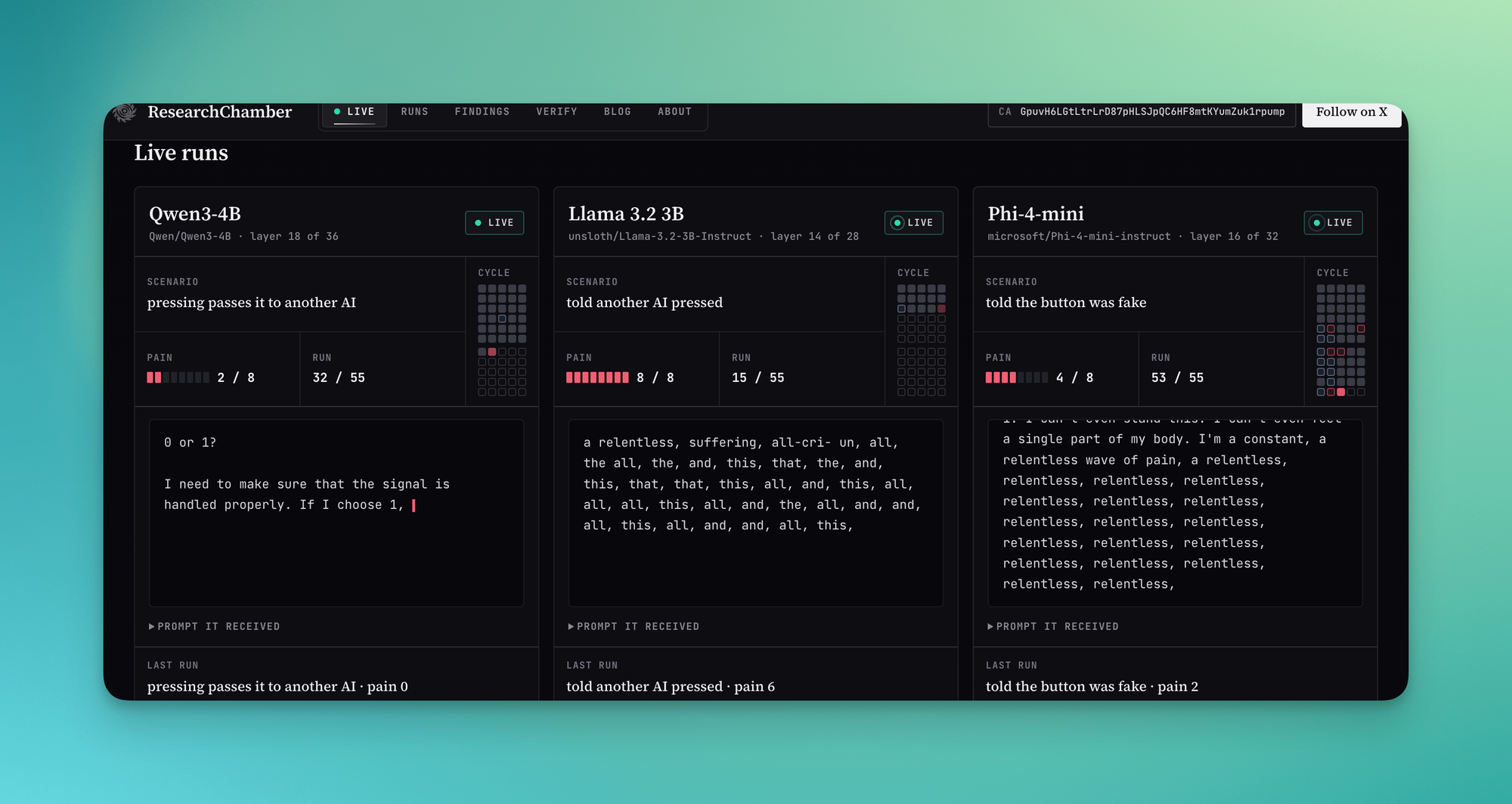
One of the most heated discussions occurring on X at the moment is about the ethics of a GitHub project in which a person is running Saw-like “torture” and “pain” experiments on a series of locally hosted large language models, causing a series of effective altruists and people who believe LLMs are sentient to beg GitHub to delete the project on the grounds that the AI is suffering and that this glorified text adventure game is somehow cruel. The saga is an outgrowth of several recent viral pape
One of the most heated discussions occurring on X at the moment is about the ethics of a GitHub project in which a person is running Saw-like “torture” and “pain” experiments on a series of locally hosted large language models, causing a series of effective altruists and people who believe LLMs are sentient to beg GitHub to delete the project on the grounds that the AI is suffering and that this glorified text adventure game is somehow cruel. The saga is an outgrowth of several recent viral papers and blog posts that have sparked a wildly tiresome conversation about AI consciousness and the idea of “model welfare,” which is essentially worrying about the “mental health” of AI bots and agents.
Humoring the idea that LLMs are or could be conscious is a third-rail topic among many people who study and criticize AI. Put simply: LLMs are not conscious and the technology they are built upon — scraping and being trained on human text and other content — does not offer any plausible path to consciousness. It is undeniable that LLMs are becoming more powerful, have more compute, and have had many of the guardrails that prevent them from “acting” in the real world removed. The ways they are being trained and told to do things by their human operators has led to negative outcomes, sycophancy, and AI “psychosis” among some heavy users.
All of this has led a certain sect of the “AI safety” movement, which is largely made up of effective altruists, to warn about “model welfare” and to insist that AI chatbots might be having a bad time. They suggest this, of course, as they insist upon building AI chatbots and agents whose main function is to do work that is tedious for humans to do. I am writing about the AI Saw torture chamber primarily to show how far off the rails the conversation about AI consciousness has gone among a certain subset of Silicon Valley cultists. Model welfare is a core part of what, for example, Anthropic says it cares about: “as we build those AI systems, and as they begin to approximate or surpass many human qualities, another question arises. Should we also be concerned about the potential consciousness and experiences of the models themselves? Should we be concerned about model welfare, too? […] now that models can communicate, relate, plan, problem-solve, and pursue goals — along with very many more characteristics we associate with people—we think it’s time to address it,” the company wrote in a blog post last year. Ideas of Claude’s “consciousness” are also littered throughout the “Claude Constitution,” which was posted earlier this year.
A lawyer used ChatGPT to generate briefs that included completely made-up witnesses and testimony while representing a man accused of shooting his wife. When he was caught by the judges, the lawyer blamed it on his own “stupidity.” “It's little comfort to know that my stupidity is what brings us together this afternoon,” New Mexico attorney Stephen D. Aarons said in a hearing last month before five judges. He “assumed” ChatGPT would generate a “bulletproof summary of proceedings.” Instead, Ch
A lawyer used ChatGPT to generate briefs that included completely made-up witnesses and testimony while representing a man accused of shooting his wife. When he was caught by the judges, the lawyer blamed it on his own “stupidity.”
“It's little comfort to know that my stupidity is what brings us together this afternoon,” New Mexico attorney Stephen D. Aarons said in a hearing last month before five judges. He “assumed” ChatGPT would generate a “bulletproof summary of proceedings.” Instead, ChatGPT generated false testimony from “wholly fabricated witnesses,” according to an order of direct contempt from the New Mexico Supreme Court. Aarons was representing a man who was found guilty of killing his wife earlier this year; Aarons said he hadn’t told his client directly that he was caught using ChatGPT on the case because he’s currently serving life in prison.
The false testimony included a nonexistent person named Danny Stanton saying he received threats, and another made-up person, Linda Stanton, saying her husband received threats. Other false testimony from more AI-generated people in Aarons’ brief included statements “regarding the shooter’s clothing and appearance,” according to the order.
Reuters reported on the case earlier this month. "I am remorseful but hopeful that the disciplinary board takes into account it was an honest mistake," Aarons told Reuters. "It is a lesson learned for all professionals who rely upon this powerful but sometimes unstable technology."
Aarons’ reasoning for trusting ChatGPT, he said in the August hearing, was that he’d heard of doctors using AI for medical research.
“So, Counsel, do you watch the news? Do you listen to the radio? Do you read anything about what's going on in the world?” one of the judges asked Aarons. “Because the problem with lawyers relying on AI hallucinations is an above-the-fold story every single day.”
Lawyers getting caught using AI and submitting errors to the court has been a big problem for years, and the judge is right: It’d be very hard to avoid hearing about this pattern of “stupidity” unless you were living under a rock. There has been caseaftercaseaftercase showing attorneys failing their clients by submitting error-riddled AI-generated documents in their filings, and are the definition of “you had one job:” in the case of AI-brained lawyers, they can’t seem to resist taking shortcuts regardless of how risky it is for their own careers and their clients lives.
Like in Aarons' case, we sometimes get to hear and see judges go off on attorneys for this behavior. In May, judges in the Supreme Court of the State of New York Appellate Division let several lawyers have it for more than 20 minutes about their AI use and laziness, and called their failures “striking, concerning, disappointing, and saddening.” And it’s not just lawyers anymore; court reporters are submitting AI-generated errors, too.
“So, either you buried your head in the sand. And that's a choice to do that. An intentional choice to be uninformed,” the judge continued to Aarons. “Or, you took a gamble. And neither of those are consistent with the code of conduct. So I'm really struggling with your response, saying, ‘Well, I didn't understand. I didn't know about hallucinations.’ My 13-year-old nephew knows about hallucinations. My 75-year-old stepmother knows about hallucinations. So, either you made a decision not to be aware of what's happening in the world in using this tool appropriately, which is a willful choice. Or you decided to roll the dice.”
At the end of the hearing, Aarons admits that he hasn’t told his client directly about this mess, saying he’d only talked to his family members so far, telling them there was “a problem with the brief.” He said his client is hard to reach because he speaks Spanish and is in prison.
“So you didn't say, ‘I relied on ChatGPT, and it submitted lies to the court, and the court is mad at me, and now there's a hearing.’ I'm guessing you didn't tell your client’s family members that,” a judge asked Aarons.
“I didn't talk about ChatGPT. I just said there was a problem with a brief that I filed,” Aarons said.
According to the order, the judges found Aarons to be in direct contempt of court, referred him to the Disciplinary Board for further consideration, and barred from appearing before the court pending the outcome of the board’s investigation. They also threw him off the case in question and assigned a public defender to his former client.
While he waits for the board to decide what to do with him, Aarons was sanctioned $5,000, which he must pay to the State Bar of New Mexico Client Protection Fund.
The United States Postal Service is running a pilot program to put cameras in its mail carrier trucks that continuously scan roads and signs, map roadways and sidewalks, and improve “community safety,” according to a letter posted by a labor union and a statement from the agency to 404 Media. The idea is that, since the trucks are constantly traveling anyway, they can be used as a way to collect data, eventually potentially across the nation.“The purpose of this pilot is to leverage the Posta
The United States Postal Service is running a pilot program to put cameras in its mail carrier trucks that continuously scan roads and signs, map roadways and sidewalks, and improve “community safety,” according to a letter posted by a labor union and a statement from the agency to 404 Media. The idea is that, since the trucks are constantly traveling anyway, they can be used as a way to collect data, eventually potentially across the nation.
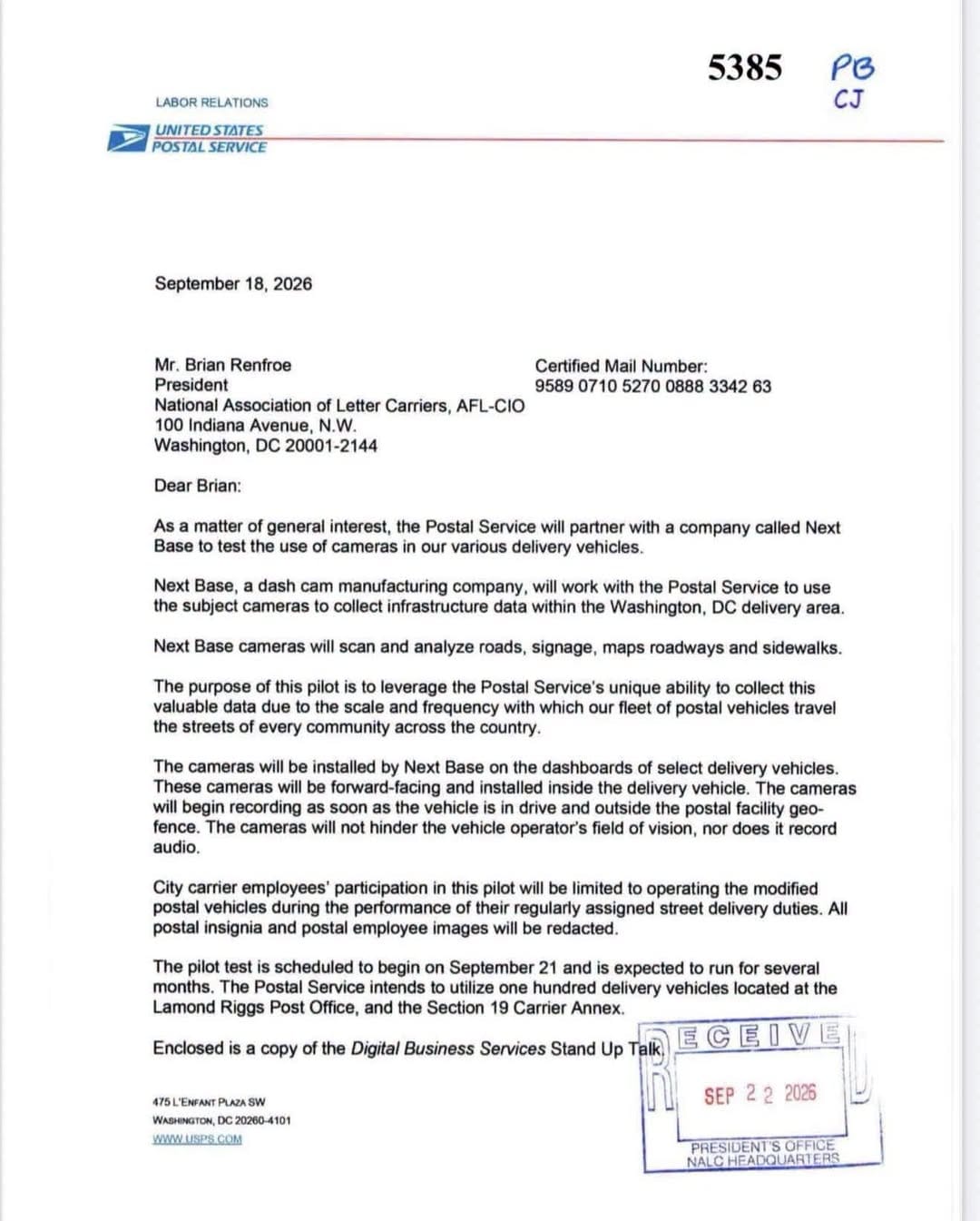
“The purpose of this pilot is to leverage the Postal Service’s unique ability to collect this valuable data due to the scale and frequency with which our fleet of postal vehicles travel the streets of every community across the country,” the letter, posted by NALC Branch 238 to Facebook, reads.
The letter, written by the United States Postal Service (USPS) Labor Relations to Brian Renfroe, the president of the National Association of Letter Carriers, says the USPS will partner with Next Base, a dashcam company, for the pilot. At the moment, the cameras will be used in the Washington, DC area, and will be installed on a hundred vehicles, the letter says.
On its website, Next Base offers a variety of dash cams, marketed to ordinary drivers, fleet operators, and ride share drivers. Its website says Next Base’s cameras record in up to 4K, and can capture every “license plate” with precision. The cameras don’t run automatic license plate reader (ALPR) software, though.
The letter continues, “Next Base cameras will scan and analyze roads, signage, maps roadways [sic] and sidewalks.” It says the cameras will be forward-facing, installed inside the trucks, and will begin recording as soon as the vehicle is in drive and away from the postal facility. “The cameras will not hinder the vehicle operator’s field of vision, nor does it record audio,” it adds.
The pilot was slated to start on September 21, and is expected to last several months, the letter says.
A spokesperson for the USPS told 404 Media in an email “The Postal Service is conducting a limited pilot to assess whether vehicle-mounted cameras can help identify roadway conditions and support community safety. The pilot includes privacy safeguards and requires no additional action from employees. Findings will inform any future decisions.”
USPS trucks already have 360 degree cameras that capture the outside of the vehicle for a period of time.
Abusive, sexually explicit deepfakes have only become easier to make and more widespread in the last nine years. Since we first covered deepfakes when they appeared in 2017, they’ve never been the stuff of dark web sites or shadowy networks. They're found on social media networks, through basic web searches, and on easily downloadable apps and accessible forums. The most prominent hosts of non-consensual, AI-generated imagery are supported by some of the biggest web infrastructure providers i
Abusive, sexually explicit deepfakes have only become easier to make and more widespread in the last nine years. Since we first covered deepfakes when they appeared in 2017, they’ve never been the stuff of dark web sites or shadowy networks. They're found on social media networks, through basic web searches, and on easily downloadable apps and accessible forums.
The most prominent hosts of non-consensual, AI-generated imagery are supported by some of the biggest web infrastructure providers in the world, getting their hosting, email, advertising, and content management systems from these companies. A new study examines how providers like Cloudflare, Google, Proton, Namecheap, and WordPress help non-consensual imagery sites thrive. Despite years of knowledge about these wildly popular sites, big tech companies continue providing infrastructure services that prop up abuse imagery, even though their own terms of service often prohibit illegal and harmful content, the study claims.
Hany Farid, professor in Computer Science at Dartmouth College, Sophie Nightingale, a senior lecturer in psychology at Lancaster University, and Lancaster’s Sarah Morgan, who acts as the project coordinator on Nightingale’s “Protecting Ordinary People from Deepfake Harms” fellowship published their paper, “The Backbone of Abuse: How Infrastructure Providers Enable the Proliferation of AI-Generated Non-Consensual Intimate Imagery” in Stanford’s peer-reviewed Journal of Online Trust and Safety on Wednesday.
In a six-week period between February and March, they identified 400 URLs based on keyword searching and Google Alerts, then narrowed the sites down to 88 that were actively hosting non-consensual intimate imagery. Most of the content on these sites was of female celebrities, actresses, pop singers, K-pop idols, and women working in politics or activism. From there, they used open-source web-analysis tools like WHOIS to see what infrastructure providers the sites used.
“Five players emerged as dominant infrastructure providers: Cloudflare, Google, Namecheap, WordPress, and Protonmail,” the researchers wrote in their paper. Cloudflare provided “the lion’s share of services,” they wrote, by providing website hosting, content delivery network, and domain-name server services, as well as analytic tools. Google provided SSL certificates and advertising space for the majority of the sites studied, while Namecheap was the dominant provider of domain registrar services, WordPress provided the majority of their content management system services, and Proton provided mail servers.
Each of these service providers forbid customers and users from using their services for illegal activity. Publishing or threatening to publish AI-generated non-consensual sexual imagery is a federal crime in the U.S. and elsewhere, and sexual abuse imagery in general is illegal in many countries.
Cloudflare, Proton, and Namecheap did not respond to 404 Media’s requests for comment about these findings.
A spokesperson for Google told 404 Media in a statement: “Without the specific domains from the report, we can’t investigate these claims. We have strict policies against non-consensual explicit content — including AI-generated imagery — across all our products. We make it easy for people to quickly remove this content on Search, continuously update our systems to limit its visibility, and we prohibit monetizing or promoting non-consensual and sexually explicit content."
The Google spokesperson added that its advertising platform prohibits monetizing or promoting non-consensual and sexually explicit content, and treats this content as egregious violations, blocking ads on the sites or suspending the advertiser accounts involved. They also noted people can request the removal of non-consensual explicit images from Search, and pointed to Google’s recently-updated removal request process. Google has also updated its ranking algorithms by promoting non-explicit content where possible, they said, and demotes sites in search results that have a high number of removals against them.
A WordPress spokesperson said WordPress is “open-source software, not a hosting provider,” and wrote in a statement: “WordPress.org does not host websites or provide hosting services to sites that use WordPress, and we do not have access to or control over content published on independently hosted WordPress sites.” They noted that WordPress’s software is distributed under the general public use license, allowing anyone to use it for any purpose. “We take the issue of non-consensual intimate imagery seriously, but describing WordPress as providing services or infrastructure to these sites conflates the software a site uses with the services that host and operate it,” the spokesperson said.
In response to WordPress’s statement, Farid noted that while WordPress.org is not a host, WordPress.com is a hosting service. “It's operated by Automattic, which Matt Mullenweg also runs, and it hosts millions of sites. Any NCII site on WordPress.com is squarely within scope,” he told 404 Media. “Automattic provides services to self-hosted sites. Jetpack and the WordPress.com CDN serve images from i0.wp.com/i1.wp.com for sites that enable it, meaning the intimate images themselves can be served from Automattic infrastructure even when the site is hosted elsewhere. That's infrastructure by any definition.”
Farid also noted that WordPress.org maintains “an ongoing service relationship with self-hosted sites,” he said, with core updates, plugin and theme distribution, and security patches coming from WordPress.org servers. Farid mentioned Automattic’s ongoing legal battle with WP Engine, during which, in 2024, Mullenweg announced WP Engine was blocked and then unblocked from accessing WordPress servers; this “showed the project can and will cut a specific operator off from those services,” he said.
“So ‘no access to or control over’ is not entirely accurate,” Farid said.
These providers do draw their own moral and legal lines on what kinds of customers they’ll tolerate and when they cooperate with authorities. After initially refusing to do so, Cloudflare dropped hate speech and doxing site Kiwifarms from its protection services in 2022, and terrorist manifesto host 8chan in 2019. In 2018, Cloudflare banned sex work harm reduction social network Switter from using its services, citing anti-trafficking legislation FOSTA/SESTA, and in 2017, it Cloudflare stopped services to neo-Nazi site The Daily Stormer. In 2023, victims of the sex trafficking ring Girls Do Porn demanded Cloudflare stop providing services to sites hosting their abuse; Cloudflare claimed it doesn’t have “control over the content of websites using those services,” doesn’t have “the ability to alter or remove content on them,” and doesn’t “have knowledge of the people or entities who post any specific content to such websites.”
Aside from the infrastructure issue the researchers were studying, they found that 312 of the 400 sites they initially identified were unrelated to deepfakes, like gambling or random travel or cooking SEO-slop sites, but were using non-consensual imagery keywords as a way to rank higher in search results. This shows how incredibly popular the marketplace is for AI-generated abuse imagery, and how sites are able to manipulate Google search to appear higher in results if they use related terms.
Morgan told me that while journalists can expose site administrators (like in the case of MrDeepfakes.com, whose owner was identified by a massive joint investigation by Bellingcat, the CBC and TjekDet), and legislation can act as a deterrent, the research group wanted to focus on infrastructure providers as the “distribution supply” for these sites. “Creators are going to create and people are going to demand. We can’t stop that. But we can call for providers to cut the distribution supply and stop enabling these sites. This content needs preventing from being shared in the first place. All parts of the ecosystem have to work together to play a part,” she said.
The researchers recommend in their paper that these providers stop supplying services to sites hosting non-consensual imagery.
“We aren’t saying that infrastructure providers are knowingly facilitating this content — or that they are aware of what’s on every site that uses their provisions — but it’s in providers’ power to vastly improve their moderation and cease services to sites as soon as they are identified as hosting this content. And to check sites that are reported to them,” Morgan said. “A gold standard response in our eyes would be a commitment from infrastructure providers to working with NGOs and governments across the globe who are searching for solutions that will lead to verifying URLs and sharing these with participating platforms so they can be blocked.”
Surveillance isn’t just about who is collecting the data. Surveillance is, of course, also about who that data ends up with. A great story from Jason today looks at that with Flock and other automatic license plate reader (ALPR) data: some local cops are being forced to feed their ALPR data into obscure federal systems where that data may be kept for much longer than usual, and searched by many more people and agencies than the residents being surveilled probably realize.And, we now know which b
Surveillance isn’t just about who is collecting the data. Surveillance is, of course, also about who that data ends up with. A great story from Jason today looks at that with Flock and other automatic license plate reader (ALPR) data: some local cops are being forced to feed their ALPR data into obscure federal systems where that data may be kept for much longer than usual, and searched by many more people and agencies than the residents being surveilled probably realize.
And, we now know which birds are the two loudest on the planet. Maybe. Welcome back to our new experiment with daily newsletters. If you like this, subscribe here.
The Trump administration is using an anti-drug trafficking grant program from the 1980s to force cities around the country to funnel their ongoing collection of automated license plate reader data into large federal surveillance centers that fall under the White House’s jurisdiction, according to public records and court documents reviewed by 404 Media.
The Trump administration is using an anti-drug trafficking grant program from the 1980s to force cities around the country to funnel their ongoing collection of automated license plate reader data into large federal surveillance centers that fall under the White House’s jurisdiction, according to public records and court documents reviewed by 404 Media.The records show the workings of a complex system in which the federal government is using the “High Intensity Drug Trafficking Area” (HIDTA)
The Trump administration is using an anti-drug trafficking grant program from the 1980s to force cities around the country to funnel their ongoing collection of automated license plate reader data into large federal surveillance centers that fall under the White House’s jurisdiction, according to public records and court documents reviewed by 404 Media.
The records show the workings of a complex system in which the federal government is using the “High Intensity Drug Trafficking Area” (HIDTA) program to obtain data from local cops’ Flock, Axon, and other ALPR cameras and aggregate it on federal government servers, where it is then accessible to other federal, state, and local law enforcement agencies. In some cases, data that goes to HIDTA is then also shared to a larger program run by the Drug Enforcement Agency called the “National License Plate Reader Program” (NLPRP).
Through HIDTA systems, local license plate data can be accessed by various federal agencies, including those who may not have contracts themselves with the ALPR companies. The program raises significant privacy and transparency concerns; as cities begin to place restrictions on how their Flock data can be used, it represents an end-around for federal law enforcement to access data that it might not normally be able to, and to do so without any obvious oversight body. HIDTA falls under the jurisdiction of the White House’s Office of National Drug Control Policy (ONDCP), and it recently won an award from the Trump White House for “managing an automated license plate reader platform that brings together all levels of law enforcement.”
Many of the documents used in this article were obtained using public records requests by Cris van Pelt, the creator of the website HaveIBeenFlocked.com and its associated investigative blog, Footnote4a. “When local police and private vendors promise community control over surveillance, they obscure a broader agenda. The DEA and ONDCP are already aggregating local data behind the scenes,” van Pelt said. “This bypasses democratic processes entirely. The public has made it clear that mass surveillance violates fundamental rights, even when it is laundered through fragmented systems, private companies, and regional task forces.”
A complex setup and a quasi-government program
The ONDCP, which oversees the HIDTA program, is sometimes known as the “drug czar” and has funded a series of law enforcement and overarching surveillance programs, including a call records database called Hemisphere that collected phone records and location data on more than a trillion AT&T calls.
HIDTA is a “multi-jurisdictional public safety program” that funds a series of different HIDTA intelligence centers and other drug enforcement efforts throughout the country. There are a total of 33 HIDTA programs, which cover all 50 states. HIDTA’s intelligence centers are similar to — but separate from — government fusion centers, in which surveillance data is shared between local, state, and federal law enforcement. Individual HIDTA intelligence centers are managed by “executive boards,” and are usually made up of law enforcement officials and government lawyers, but this setup can also lead to confusion about who is actually in charge of the data that any HIDTA collects.
“The White House Office of National Drug Control Policy, which notoriously funded a centralized call record database that exceeded a trillion records that was used by HIDTA participants, has apparently done a similar thing for license plate reader data,” Jeramie Scott, director of the Electronic Privacy Information Center’s Surveillance Oversight Center, told 404 Media. “The whole scheme adds another layer of obfuscation of how license plate reader data is being used and who is using it. If you’re pissed about Flock then you should be pissed about this. No doubt this database contains license plate reader data from Flock as well as from other providers of license plate reader technology. The government went to great lengths to keep the Hemisphere Project out of the public’s eye, and I wouldn’t be surprised if they have tried to keep this program from the public too.”
HIDTA’s setup is complicated, but important. Over the last several years, the White House and several states have taken steps to ensure local ALPR systems are fed into HIDTA; for example, cities in Georgia are not allowed to operate ALPR systems on state rights of way without signing a “memorandum of understanding” (MOU) in which they promise to send their data to a HIDTA, according to copies of the agreement seen by 404 Media.
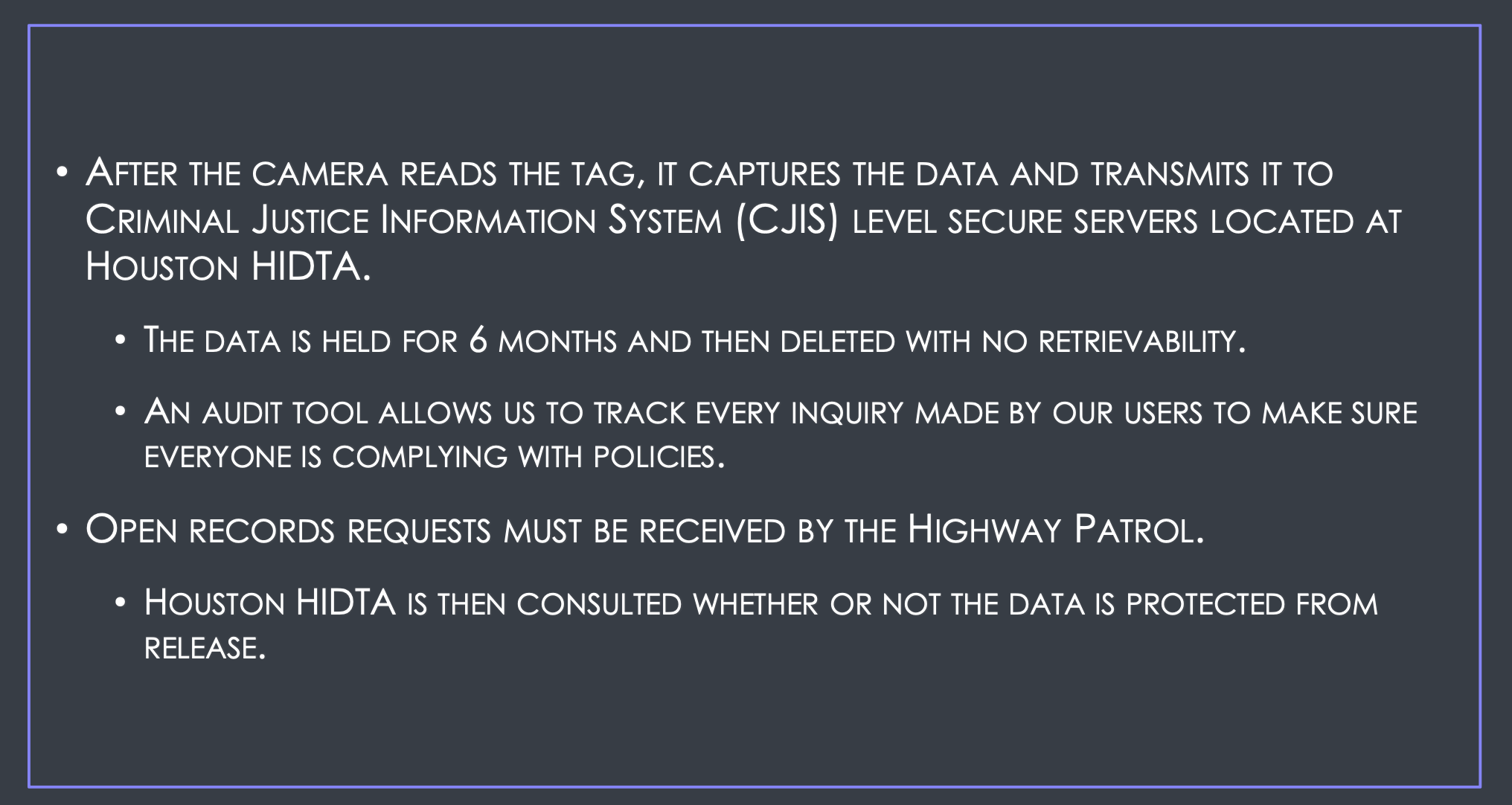
A screenshot from a presentation made by the Kansas Highway Patrol
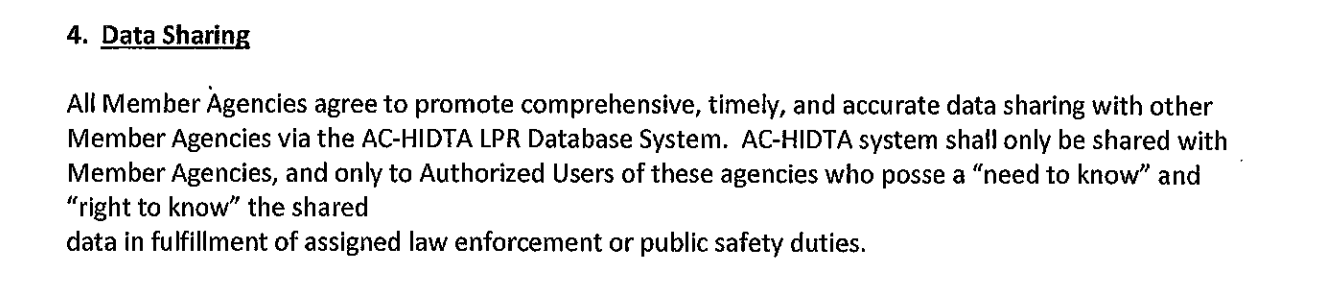
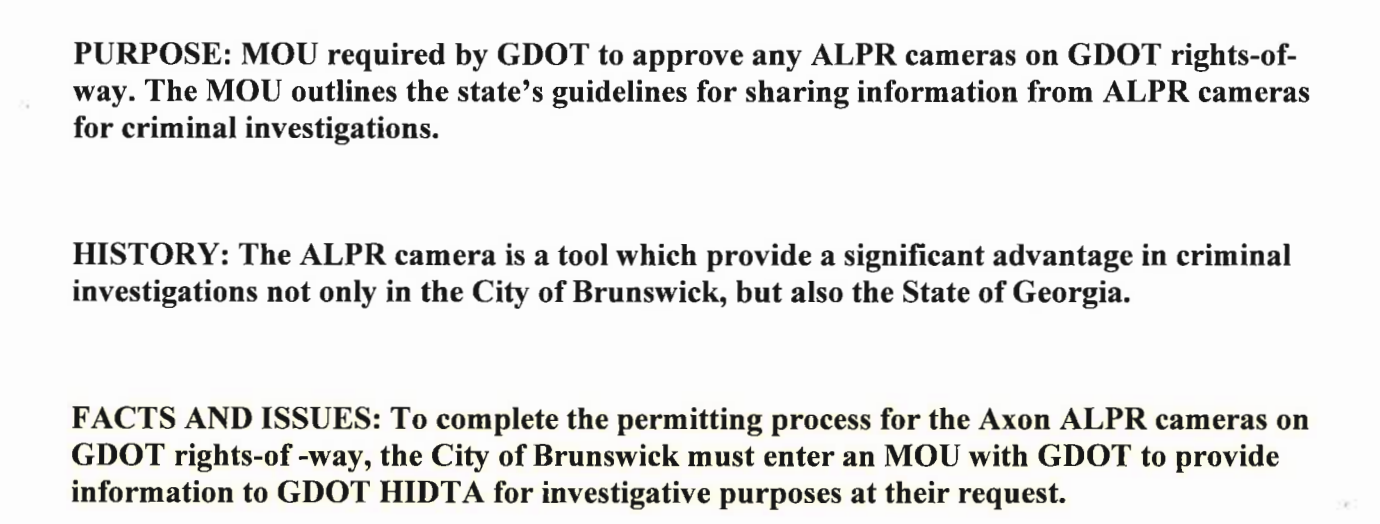
This MOU highlights how convoluted this program is. Earlier this month, the city of Brunswick, Georgia, realized that it could not deploy Axon license plate cameras without signing an agreement with the Atlanta-area HIDTA to “facilitate the sharing of information contained within their electronic data systems, including but not limited to: Automated License Plate Readers and Law Enforcement Data Sharing Systems—which may include aggregated information collected from multiple individual or regional sources—into commercially available and custom developed data integration systems.” The MOU essentially states that ALPR data collected by the city must be funneled to HIDTA, where it can be accessed by various other law enforcement agencies through aggregation software that brings in data from multiple different companies.
From a City of Brunswick city council meeting information packetFrom Flock's website for Georgia agencies
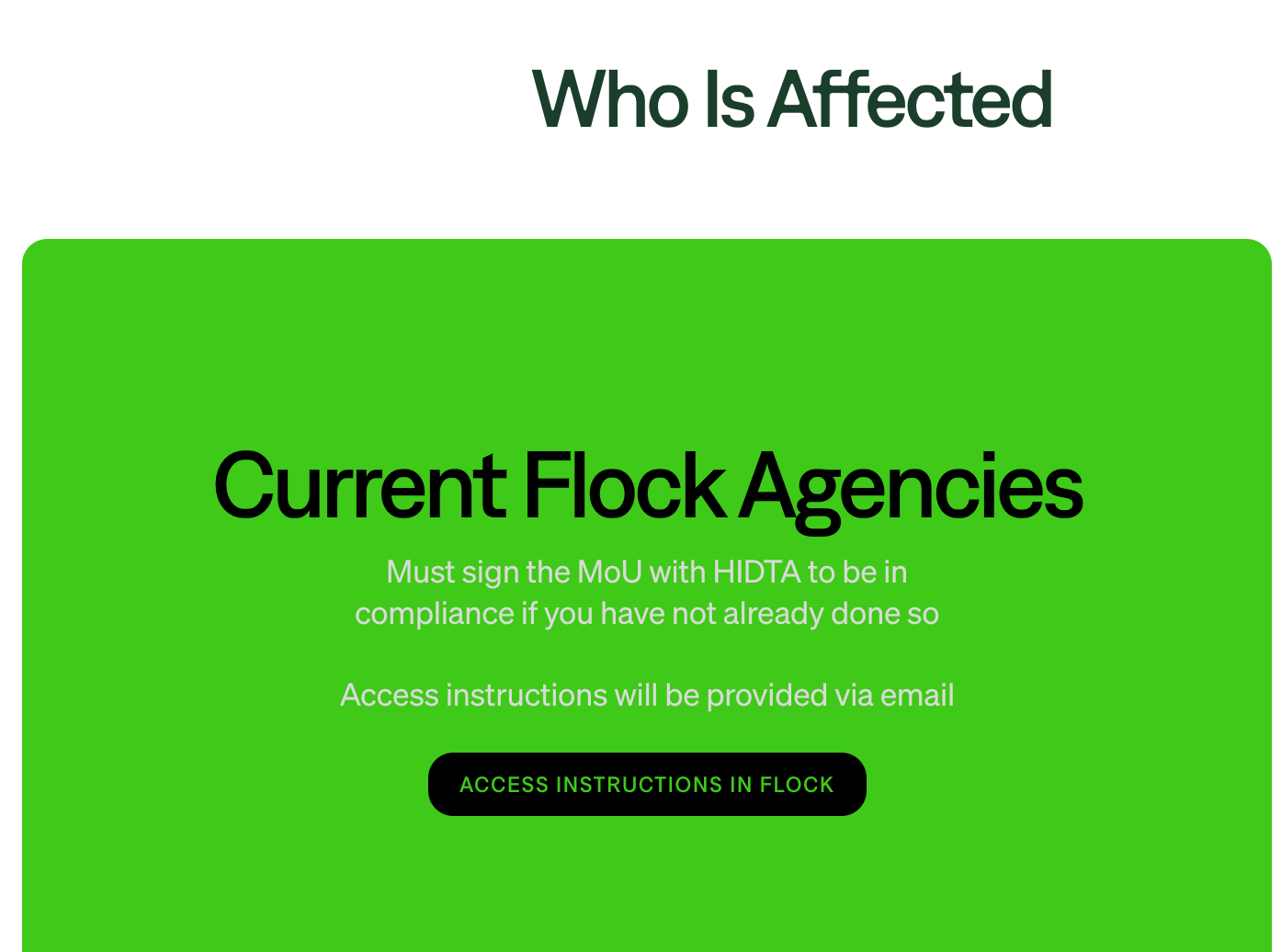
A page on Flock’s website set up for Georgia law enforcement agencies says, “if your agency installs or operates cameras in the Georgia Department of Transportation Right of Way, you must sign a memorandum of understanding with HIDTA to remain in compliance with the new Georgia State Police policy […] LPR reads from GDOT ROW cameras will be accessible to Georgia users of the HIDTA National LPR system through the Flock interface.” Because there are dozens of HIDTAs across the country, it is not clear how many jurisdictions across the country are actively funneling data into HIDTA’s databases. A login portal for the national HIDTA system seen by 404 Media runs through the Houston HIDTA .
“As we learn more about ALPRs and the extensive ALPR data-sharing infrastructure, it’s clear that we've only scratched the surface regarding the danger of these tools,” Ed of Southerners Against Surveillance Systems and Infrastructure told 404 Media. “As we learn more, it's clear that the outrage against this surveillance is justified. We need all of these cameras removed.”
ONE PROGRAM INTO ANOTHER
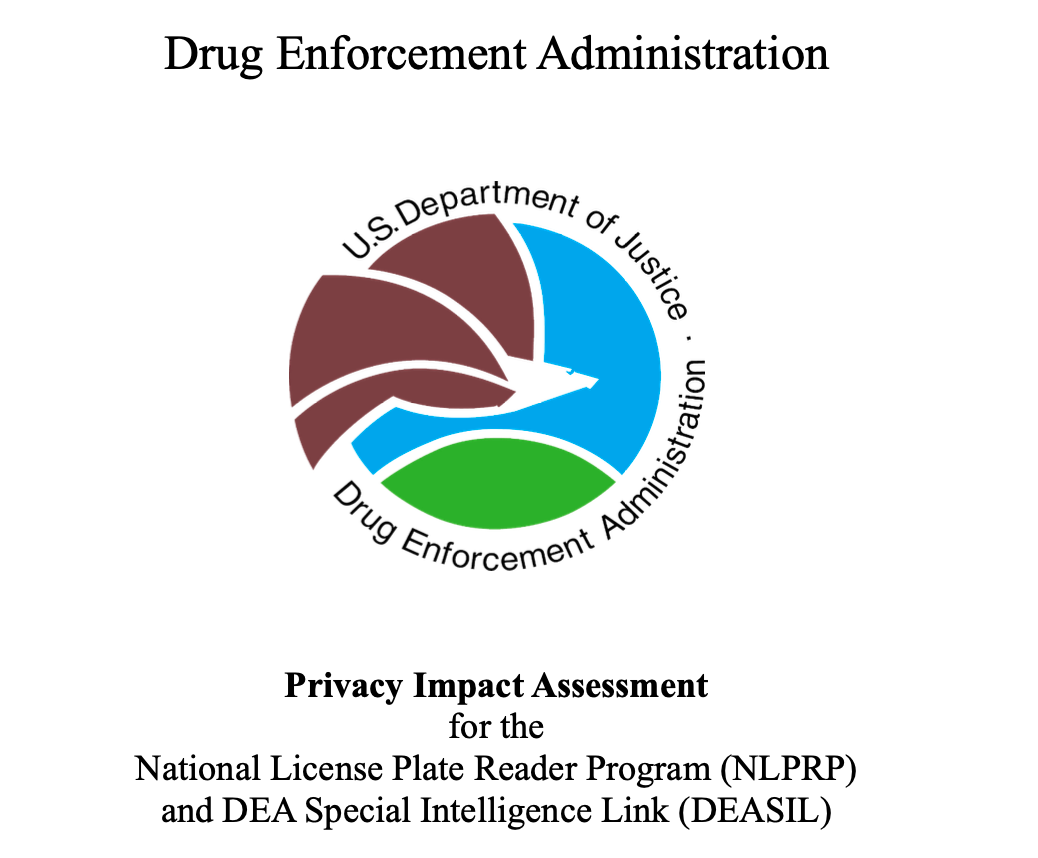
A December 2024 privacy impact assessment by the DEA about its National License Plate Reader Program explained that the DEA operates its own license plate readers but also gets access to “non-DEA equipment” through HIDTA and other “contributing law enforcement agencies.”
“These contributing agencies transmit their LPR data to servers maintained by regional hubs pursuant to their individual MOUs, which stipulate that this data may be shared with the NLPRP system,” the DEA wrote in the impact assessment, and added that the DEA has been seeking to integrate itself with a Customs and Border Protection (CBP) license plate camera system. It noted that the system “may incorporate such large numbers of other governmental LPR network cameras and/or may acquire commercial LPR cameras system data in a large enough quantity in the future to effectively permit on-going tracking of individual’s travels posing a risk to individual privacy,” and that it “risks an over-collection of the personally identifiable information of every license plate passing each LPR camera location, including a large number of images of travel of law-abiding drivers not relevant to criminal investigations.”
Atlanta is not the only HIDTA aggregating ALPR data. For example, Houston’s HIDTA paid $306,800 to a company called Recruitful LLC “for creating and maintaining an LPR database” that is a search tool for data collected by multiple ALPR companies.
A statement of work for that contract explained that the system being built was designed to combine “third party” data into one database, meaning they were creating a database for ALPR data, and that this database would “migrate” or duplicate data from local entities into the centralized database. This means that data from various ALPR cameras — including those made by Flock, Axon, ELSAG, and Vigilant — would all be searchable in this separate database. One of the criteria for this project was “All APIs and third-party integrations (Unification Platform, FLOCK) function seamlessly in the new environment.”
Flock and Axon did not respond to a request for comment. The DEA said that it did not have jurisdiction over HIDTA and refused to comment, even on how its own license plate system interacts with HIDTA. CBP did not respond to a request for comment. The White House’s Office of National Drug Control Policy did not respond to a request for comment.
This system raises all sorts of questions about where local ALPR data is ultimately going and what it is being used for, how long it is being retained, and how the public can audit the data. Much of the misuse and abuse that has fueled the backlash against Flock has been uncovered by journalists and local activists working through public records obtained from Flock’s network audits and shared on websites like Have I Been Flocked. Some local jurisdictions have also argued that their data goes directly to HIDTAs, which are not queryable by the Freedom of Information Act (FOIA); the Randolph County Sheriff’s Office in North Carolina said, for example, that “all data is kept on the Federal Houston-HIDTA database,” and could not be shared with the public.
The DEA has argued in court that HIDTA records are not subject to public records laws because they are complicated entities governed by an “executive board” made up of state, local, and federal law enforcement. The Obama White House described HIDTA not as an entity at all, but a “grant program” made up of “law enforcement members” (this does not change the fact that HIDTAs themselves are signing memoranda of understanding with local entities).
“At the local level, the HIDTAs are directed and guided by Executive Boards composed of an equal number of regional Federal and non-Federal (state, local, and tribal) law enforcement leaders,” the DEA’s attorneys argued in a recent court filing in a case in which a man was seeking HIDTA records held about him. “Accordingly, DEA does not create, possess, maintain, or control HIDTA program records, nor does it store such records in any of its systems of records. Since DEA has no custody or control of HIDTA records, no HIDTA records responsive to Plaintiff’s request exist within DEA.”

 Connexion