Vue normale

Reçu — 10 juillet 2026 Euromaidan Press
  • ✇Euromaidan Press
  • Britain’s incoming leader promises Ukraine aid “will not waver”—but money is the catch
    Andy Burnham, all but certain to become Britain's next prime minister in the coming weeks, has told Ukraine what it wanted to hear. British support "will not waver," he wrote in The Times, pledging to hold aid at "100%" of current levels. He added that British and broader Euro-Atlantic security are tied to developments in Ukraine. For Kyiv, the words are welcome. They are also beside the point. The question that has worried Ukrainian officials through Britain's summer of po
     

Britain’s incoming leader promises Ukraine aid “will not waver”—but money is the catch

10 juillet 2026 à 12:33

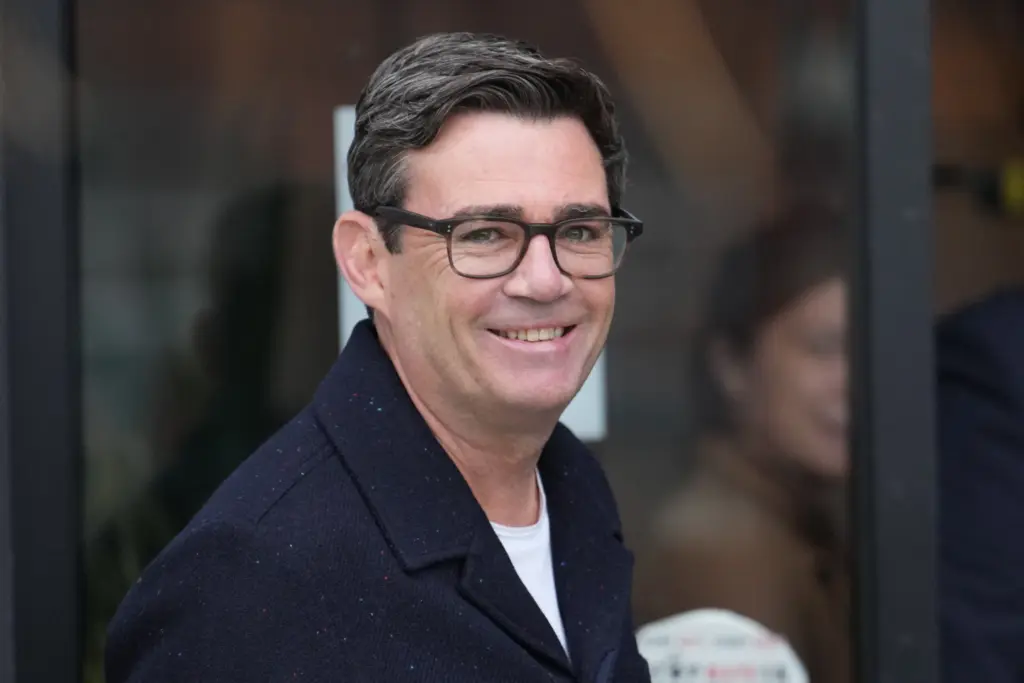
Andy Burnham, the Mayor of Manchester, arrives a fringe meeting during the annual Labour Party conference in Liverpool, England, Sept. 29, 2025

Andy Burnham, all but certain to become Britain's next prime minister in the coming weeks, has told Ukraine what it wanted to hear. British support "will not waver," he wrote in The Times, pledging to hold aid at "100%" of current levels. He added that British and broader Euro-Atlantic security are tied to developments in Ukraine. For Kyiv, the words are welcome.

They are also beside the point. The question that has worried Ukrainian officials through Britain's summer of political chaos was never whether Burnham personally supports Ukraine—he plainly does, from backing Ukraine and its mayors since 2022 to building an "Unbroken Cities Network" that has linked Lviv with Manchester and Liverpool since 2023. The question is whether Britain, as Burnham inherits it, can keep the promises he is making.

How he got here

Burnham reached the threshold of Downing Street by a route modern Britain has almost never used—the last premier to enter the Commons through a by-election was Alec Douglas-Home in 1963. mid-June, he was not even a member of Parliament—he had spent nine years as mayor of Greater Manchester, outside Westminster entirely.

When Keir Starmer's government began to collapse after a catastrophic showing in May's local elections, in which opposition parties made major gains, and Labour lost roughly 1,500 council seats, a sitting Labour MP stood down specifically to let Burnham contest the vacant seat. He won it in a landslide, was sworn in on 22 June, and within hours, Starmer announced his resignation.

Burnham is now the only candidate to replace him. He arrives, in other words, not on a wave of confidence but as his party's emergency exit—the man Labour MPs believe is their best hope of surviving the next election against Nigel Farage. That origin shapes everything about how he is likely to govern, including his approach to Ukraine.

Why the pledge is the easy part

British support for Ukraine will continue under Burnham for the simplest of reasons: it is mainstream in his party, and he believes in it. Starmer's signature foreign-policy achievement—co-chairing a European "coalition of the willing" for Kyiv—is not something Burnham has any reason to unwind. Foreign Secretary Yvette Cooper calls him "100% behind" Britain's unwavering support for Ukraine.

Empty playground in Ukraine. deported Ukrainian children abducted by Russia
Explore further

UK, EU, and Canada sanction Russian networks linked to deportation of Ukrainian children

The strain lies elsewhere, in three pressures the pledge does not resolve. The first is attention. Burnham is a domestic politician who ran an inward-facing campaign and has said strikingly little about foreign affairs. Analysts expect him to delegate diplomacy and concentrate on Britain's cost-of-living and public services crises. Ukraine, under him, is likely to keep a competent maintainer rather than the hands-on champion Starmer became.

The second is money, and it is the real threat. Britain has pledged to raise defense spending toward 3.5% of GDP by 2035. Still, the path there is unfunded, and the fight over it already claimed a casualty: Defense Secretary John Healey resigned in June over the lack of a credible plan to pay for it. Burnham has to fix decaying public services, raise defense spending, and sustain aid to Ukraine, all against near-record national debt and strict fiscal rules. Something has to give, and Kyiv's line is not the most politically protected.

The third is the electorate. The force now driving Labor's fear—Farage's Reform UK—campaigns on the claim that Labour prioritizes foreign commitments over ordinary Britons' living standards. Reform is aligned with Trump and known for skepticism toward Ukraine rather than open-ended support. It is not anti-Ukraine, but among Britain's major parties, it is the most skeptical of the current aid scale—and it is winning. Burnham's central mission is to beat it, which means proving he can deliver at home, a goal that directly competes with the money and attention Ukraine needs.

What it means for Ukraine

The honest reading is neither the reassurance of the headlines nor the alarm. Under Burnham, British support for Ukraine will not be cut in principle, and the coalition Starmer built will hold. But it now rests on fiscal arithmetic that already toppled one minister, and on an electorate drifting toward a party that frames the war as a cost. Nothing changes on the day Burnham enters Downing Street. The question is what changes over the years he has to govern—and whether a prime minister who won power by promising to look inward can keep looking outward at the same time.
  • ✇Euromaidan Press
  • Poland armed Ukraine with Patriot missiles. Its president’s camp called it “treason”
    A Patriot missile handover to Ukraine has turned into a betrayal accusation inside Poland's government, broadcaster TVN24 reported. President Karol Nawrocki's camp questioned the move, and the defense minister fired the charge back at the presidency. The dispute widened into a contest over who controls Polish security policy. Russia's war against Ukraine, now past its fourth year, has drained European air-defense stockpiles and forced allies to weigh their own protection ag
     

Poland armed Ukraine with Patriot missiles. Its president’s camp called it “treason”

10 juillet 2026 à 10:29

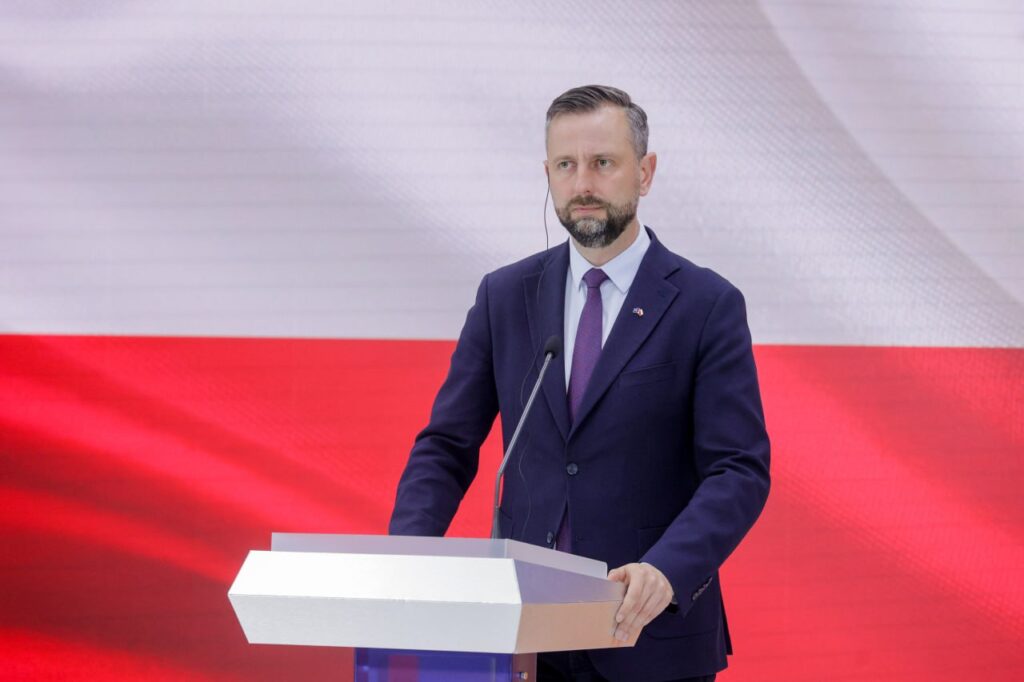
Polish Defense Minister Władysław Kosiniak-Kamysz in Kyiv, on 18 September 2025.

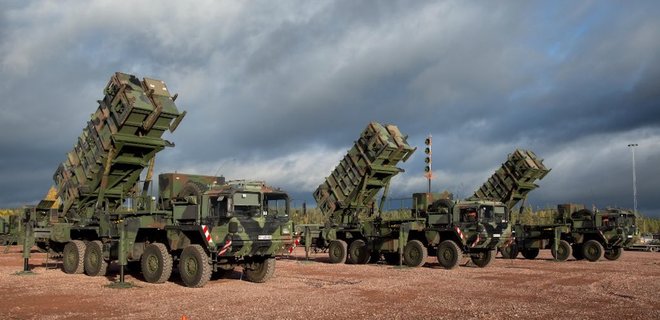
A Patriot missile handover to Ukraine has turned into a betrayal accusation inside Poland's government, broadcaster TVN24 reported. President Karol Nawrocki's camp questioned the move, and the defense minister fired the charge back at the presidency. The dispute widened into a contest over who controls Polish security policy.

Russia's war against Ukraine, now past its fourth year, has drained European air-defense stockpiles and forced allies to weigh their own protection against Kyiv's, turning military aid into contested domestic politics.

Is this treason or just stupidity?

Marcin Przydacz, who heads the Polish president's International Policy Bureau, put that question on X, pointing to the deputy defense minister as the force behind the transfer. Defense Minister Władysław Kosiniak-Kamysz threw the phrase straight back. He asked whether the real "treason or stupidity" was what the president's side had been doing for days. The transfer of a few Patriot missiles came at the request of the United States and NATO's secretary general, he said, and he called it a good thing rather than a bad one.

"I'm proud that we're helping a state that has for four years been grinding down the Russian Federation," he said.

A feud that runs past the missiles

Kosiniak-Kamysz then widened the attack. He accused Nawrocki of "betraying the Polish uniform" by refusing to sign SAFE, the European Union's new defense-spending program. Without the government's persistence, he argued, Poland would not hold 62 military contracts worth 120 billion zloty (about $32 billion USD). He also called the opposition hypocritical, noting that the Law and Justice party handed Ukraine tanks, planes, and helicopters during its own years in power. Poland remains one of NATO's fastest-rearming countries on the eastern flank, making every transfer of military equipment politically sensitive

Who gets to decide

Asked whether the president had been blindsided, the minister was blunt.

"Of course, he knew," he said.

Nawrocki was informed, Kosiniak-Kamysz argued, but the president does not decide arms donations — he is only told of them. "The government makes the decision, the government takes full responsibility," he said. The two men spoke at the NATO summit in Ankara, he added, but did not raise the transfer there.

The row lands while Warsaw and Kyiv are already at odds over a separate memory dispute that has chilled relations between the two neighbors.

  • ✇Euromaidan Press
  • Japan builds the missiles Ukraine needs most—its own rules forbid the handoff
    Mitsubishi is the only licensed non-US manufacturer of the advanced PAC-3 interceptor, and Zelenskyy pointed to it as a model for building Ukraine's own production capacity, speaking to journalists on 9 July. Ukrainian President Volodymyr Zelenskyy said Ukraine wants to work with Japan's Mitsubishi Heavy Industries. He also said the company demonstrates a very high level of Patriot missile production and called it perhaps the strongest example today of how a country can est
     

Japan builds the missiles Ukraine needs most—its own rules forbid the handoff

10 juillet 2026 à 08:57

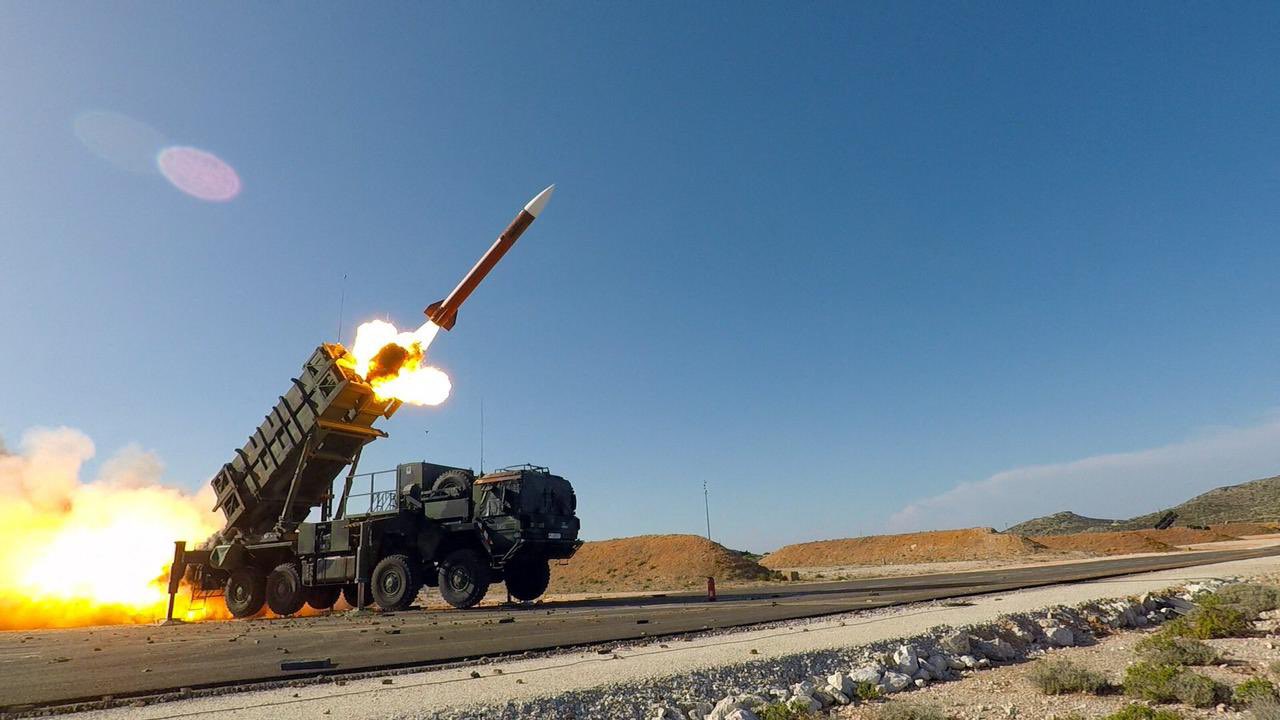
Patriot ukraine air defense

Mitsubishi is the only licensed non-US manufacturer of the advanced PAC-3 interceptor, and Zelenskyy pointed to it as a model for building Ukraine's own production capacity, speaking to journalists on 9 July. Ukrainian President Volodymyr Zelenskyy said Ukraine wants to work with Japan's Mitsubishi Heavy Industries. He also said the company demonstrates a very high level of Patriot missile production and called it perhaps the strongest example today of how a country can establish its own anti-ballistic missile production after obtaining a US license. Ukraine would like to see similar production capabilities developed domestically.

The statement came the day after Trump promised Ukraine a Patriot production license at the NATO summit in Ankara—the prerequisite that would make any Mitsubishi partnership meaningful. But Zelenskyy's interest runs into a wall his own words can't wish away: Japan's Three Principles on the Transfer of Defense Equipment and Technology bar arms transfers to countries engaged in active conflict.

When Tokyo shipped PAC-3 interceptors to the United States in November 2025, it did so on the explicit condition that they stay under US control and never reach a third country—which is why Ukraine received not a single Japanese-made interceptor from that transfer, only the US stocks it backfilled.

What Mitsubishi makes—and why Ukraine wants it

Mitsubishi Heavy Industries produces roughly 30 PAC-3 interceptors a year under license from Lockheed Martin, with the capacity to roughly double that once its main constraint—Boeing-built seekers, still in short supply—eases.

Boeing began expanding seeker production in 2023, with results expected from 2027. Japan's leverage in the Patriot supply chain runs deeper than assembly: it is the only producer of the guidance gyroscopes fitted in PAC-2 missiles—a component the US lost the ability to make domestically and had to request from Tokyo, which approved the export on 17 July 2014.

Ukraine's interest is less about buying interceptors than about copying a template: how a non-US country took an American technology license, built a domestic manufacturing base, and became an exporter of one of the most sought-after air-defense interceptors in the world.

Patriot air defense system
Explore further

Ukraine rewrote the Patriot playbook—but it’s still running out of missiles

In November 2025, Japan completed its first-ever export of a finished lethal weapon since World War II—those PAC-3s —to the United States to help replenish stocks drawn down by transfers to Ukraine. Kyiv wants to be the next country to run that playbook.

The license alone won't do it

Only the US, Germany, and Japan hold the rights to produce the Patriot. Germany co-produces the PAC-2 GEM-T—a variant with limited ballistic missile defense capability—with Raytheon, but cannot independently manufacture or export the system. Japan produces under strict controls. Trump's promised license would make Ukraine the fourth government in that circle—but without a partner that has already solved the seeker, gyroscope, and scaling problems, a license on its own would take years to become missiles.

Zelenskyy's Mitsubishi comment makes the sequencing explicit: license first, then a partner who knows how to use it.

"But this depends on the desire of the Japanese side," he said — an acknowledgment that the partnership is aspirational, not agreed.

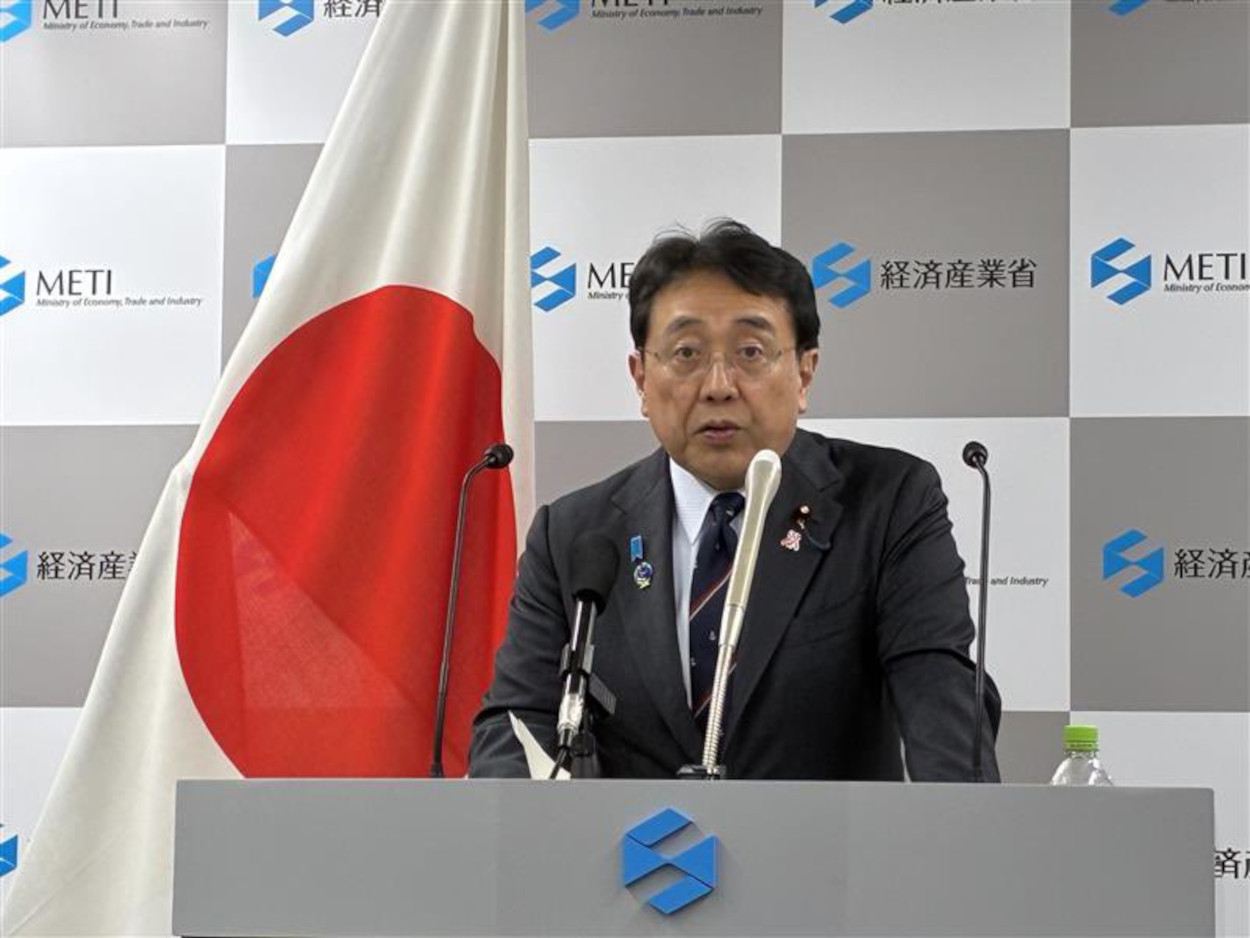
Japanese Trade Minister Ryosei Akazawa, 26 May 2026. Photo: Ryosei Akazawa on X
Explore further

Russia tried to secure Japanese jet fuel amid shortages. Tokyo closed the loophole

Japan loosened its arms rules—but not the part that blocks Ukraine

Japan's Prime Minister Takaichi Sanae's cabinet revised the Three Principles on 21 April, scrapping the rule that had confined finished exports to five non-lethal categories and permitting the export of lethal weapons in principle—a historic break with Japan's postwar pacifism.

But the revision did not remove the obstacle that matters for Ukraine. It kept the prohibition on transfers to countries in active conflict, allowing them only in narrow "exceptional circumstances." And it permits lethal exports to the 17 countries with which Japan holds Equipment and Technology Transfer Agreements—Australia, Germany, Sweden, the US, and 13 others.

Ukraine is not among them, so the door Japan opened this spring opened toward its partners and the Indo-Pacific, not toward a nation at war. Zelenskyy's public call is, in effect, an invitation for Tokyo to reach for the one narrow exception its rules still allows—a step its government has not chosen, and shows no sign of choosing.
❌