Vue normale

  • ✇Euromaidan Press
  • New EU rule blocks temporary protection for Ukrainian men who dodge military duty

    A European Union rule requiring newly arrived Ukrainians of military age to prove they have met their military obligations before receiving temporary protection took effect on 5 August, according to the Council of the EU and Czechia's Interior Ministry. The rule, Council Implementing Decision (EU) 2026/1912, was published in the EU's Official Journal on 4 August and applies only to new applicants — not to Ukrainians already holding protected status. The measure closes a
     

New EU rule blocks temporary protection for Ukrainian men who dodge military duty

5 août 2026 à 05:05

Ukrainian war refugees

A European Union rule requiring newly arrived Ukrainians of military age to prove they have met their military obligations before receiving temporary protection took effect on 5 August, according to the Council of the EU and Czechia's Interior Ministry. The rule, Council Implementing Decision (EU) 2026/1912, was published in the EU's Official Journal on 4 August and applies only to new applicants — not to Ukrainians already holding protected status.

The measure closes a gap Czech and other EU officials have raised for months: hundreds of thousands of Ukrainian men of conscription age have used temporary protection to remain in the EU while Ukraine's own martial law bars most men aged 23 to 60 from leaving the country. Applicants must now show they left Ukraine legally — typically via a passport exit stamp — or produce paper or electronic proof of an exemption or completed service, drawn from Ukraine's Reserve+ registration app, among other documents.

What the rule requires

The decision extends the EU's temporary protection mechanism for displaced Ukrainians to 4 March 2028, one year beyond its prior expiration. That extension applies broadly. The new documentation requirement is narrower: it targets people with military obligations under Ukrainian law who are applying for temporary protection for the first time, not renewals.

Czech Interior Minister Lubomír Metnar said the change would cut new arrivals "by tens of percent," according to a statement carried by the Interior Ministry and Radio Prague International. He said the restriction would ease pressure on the Czech healthcare and social welfare systems, which he said are close to capacity — Czechia hosts roughly 395,000 Ukrainians under temporary protection, the largest share relative to population of any EU state.

The EU has framed the change as balancing humanitarian protection against Ukraine's manpower needs. "Recognising both the need to protect displaced persons and Ukraine's need to defend itself against Russia's illegal war of aggression, EU countries agreed that temporary protection should be granted only to those complying with their military obligations in Ukraine," the Council of the EU said.

A narrow carve-out, a broader debate

The rule does not close off asylum entirely — Ukrainians can still apply for international protection under standard EU asylum law, evaluated case by case, regardless of military status.

The change follows years of friction over Ukraine's own registration system. EP has previously reported that the Reserve+ app, heavily promoted by Ukraine's Ministry of Defense as a fix for a paper-heavy, post-Soviet mobilization bureaucracy, "delivered far less than hoped," part of a broader draft-evasion problem officials have linked to gaps in the system rather than to the app itself.

The EU's move also lands against a backdrop of Ukrainians increasingly settling in for the long term. In Poland, which hosts the largest Ukrainian population in the EU, 73% of surveyed Ukrainians say they plan to stay long-term and 44% for at least several more years, according to a University of Warsaw Center of Migration Research study cited in the source reporting; employment among that group has risen from 69% in 2022 to nearly 83% in 2026, though 45% work outside their qualifications.
  • ✇Euromaidan Press
  • US has burned through 80% of THAAD interceptors, sources tell CNN
    The US military has used up nearly 80% of its THAAD interceptors and roughly half of its Patriot stock during the five-month war with Iran, according to two sources familiar with the latest Pentagon inventory report, CNN reported. Senior US military commanders are warning the Pentagon's munitions stockpile is "dangerously low," according to multiple sources familiar with the matter. The disclosure on THAAD levels has not been previously reported. Before the war began, t
     

US has burned through 80% of THAAD interceptors, sources tell CNN

5 août 2026 à 03:24

us weapon

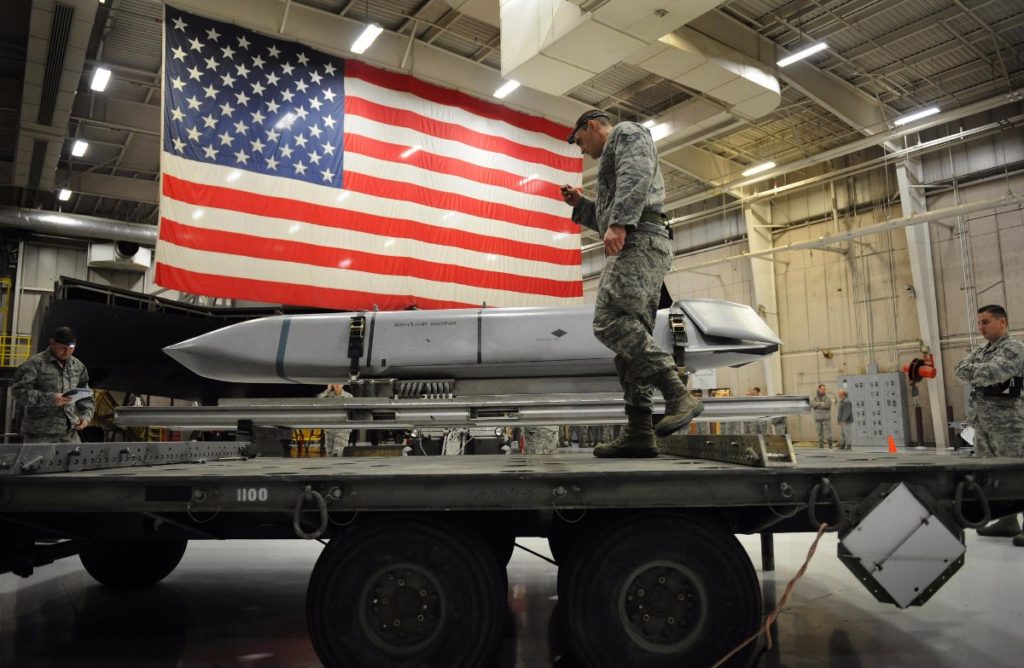
The US military has used up nearly 80% of its THAAD interceptors and roughly half of its Patriot stock during the five-month war with Iran, according to two sources familiar with the latest Pentagon inventory report, CNN reported.

Senior US military commanders are warning the Pentagon's munitions stockpile is "dangerously low," according to multiple sources familiar with the matter. The disclosure on THAAD levels has not been previously reported. Before the war began, the US had around 2,200 Patriot interceptors of the platform's two most modern variants and 452 THAAD missiles, according to Center for Strategic and International Studies (CSIS) estimates. CSIS has assessed the war with Iran drained over half the global Patriot stockpile within its first 39 days.

The Patriot and THAAD systems are the same interceptor families that arm Ukraine's own air defense against Russian ballistic strikes - Kyiv depends on to stop Russian ballistic missiles. Thus a stockpile "dangerously low" for Washington is one that's already left Ukrainian Patriot launchers running empty during Russian barrages.

Commanders call stockpiles dangerously low

The US Army has fired "virtually all" of its long-range, surface-to-air precision weapons during the war, one source told CNN, referring to Army Tactical Missile Systems (ATACMS) and Precision Strike Missiles (PrSM). Close to half of the US Tomahawk cruise missile stockpile has also been used, a source said, up from nearly 30% reported by CNN in April.

Gulf allies have raised concerns that the shortage could limit their own ability to intercept Iranian retaliation, particularly if Washington resumes strikes. Replenishment is slow: the Pentagon is currently receiving about 15 new Tomahawks and 20 new Patriot missiles a month, and CSIS estimates rebuilding THAAD stocks to prewar levels will take three years or more.

Weekend strikes called off over stockpile concerns

The munitions warnings, combined with intelligence on the risks of striking Iranian energy infrastructure and concerns raised by Gulf states, were factors in President Donald Trump's decision to call off planned strikes over the weekend, according to CNN's sources. Trump had authorized the operation Friday, with Defense Secretary Pete Hegseth receiving the final order to proceed, a senior Trump official said. Trump reversed course Saturday after Middle East allies told him they feared Iranian retaliation against their energy infrastructure, the official said. He told Hegseth to stand down for now but has not ruled out strikes at a later date.

Pentagon spokesman Sean Parnell said in a statement that the US military "has everything it needs to execute at the time and place of the President's choosing." White House spokesperson Anna Kelly said the military has "more than enough munitions, ammo, and stockpiles to serve all of President Trump's strategic goals and beyond."

Joint Chiefs Chairman Gen. Dan Caine raised the stockpile issue in a separate White House meeting last month, CNN previously reported, where officials also discussed the risk of mass civilian casualties from a resumed US campaign inside Iran.

The shortage extends beyond Iran

CNN's sources said the depleted stockpile could affect the US military's ability to fight a future war involving China, Russia, or North Korea. "The lack of interceptors means that conventional attacks can backfire if the suicide drones start making it through in-masse," one source said. "Tit-for-tat will never end this."

Euromaidan Press has reported that the same Patriot shortage has already strained deliveries to Ukraine, which depends on PAC-3 interceptors as its only defense against Russian ballistic missiles. A senior Ukrainian official has told the Financial Times that deliveries to Kyiv faced delays since the war with Iran began, and President Volodymyr Zelenskyy has said late arrivals have left Patriot launchers empty during Russian missile barrages.

Analysts expect a slow recovery. The Precision Strike Missile and Joint Air-to-Surface Standoff Missile inventories should return to prewar levels by mid-to-late 2027, according to CSIS. The Defense Department has signed two deals this week to expand Patriot and THAAD rocket motor production, though a Pentagon spokesperson declined to say when the expansion would show results.

Trump on Monday called Iranian leadership "unbelievably duplicitous" after Tehran denied that negotiations would resume, and said Tehran had one "last chance" to sign a deal.

  • ✇Euromaidan Press
  • Ukraine hits 16th Wildberries warehouse in under three weeks, one injured overnight
    A Ukrainian drone strike set fire to a Wildberries logistics center in Oleksin, Russia's Tula Oblast, overnight into 5 August, according to the monitoring Telegram channel Exilenova+ and Russian outlet ASTRA. Tula Oblast Governor Dmitry Milyaev confirmed one person was injured and said a drone came down on the sorting center's territory before the fire broke out. The strike extends a Ukrainian campaign against Russia's largest online retailer that has hit 15 Wildberries
     

Ukraine hits 16th Wildberries warehouse in under three weeks, one injured overnight

5 août 2026 à 01:40

Russia Tula oblast attacl

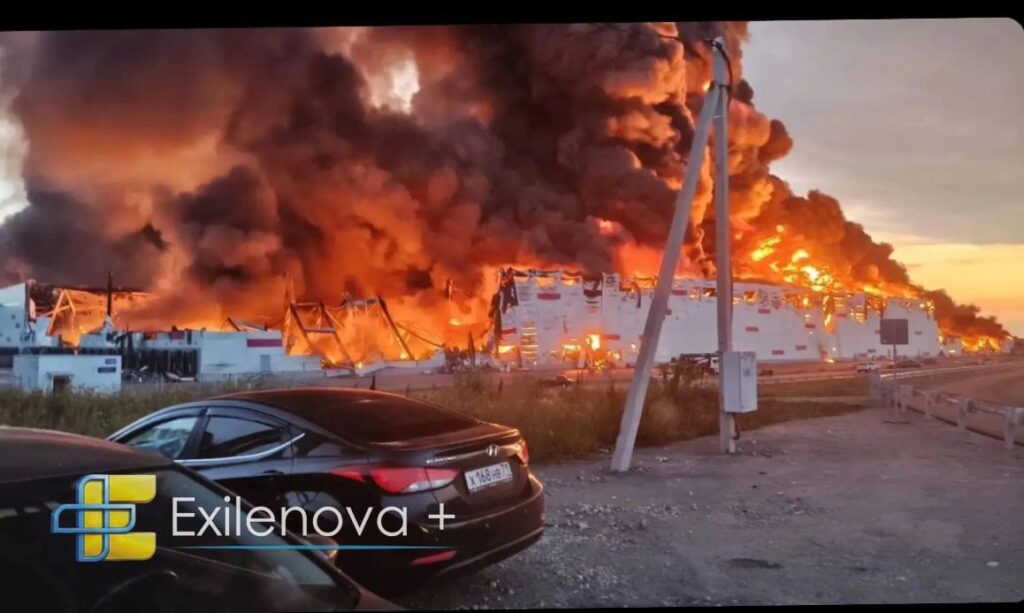
A Ukrainian drone strike set fire to a Wildberries logistics center in Oleksin, Russia's Tula Oblast, overnight into 5 August, according to the monitoring Telegram channel Exilenova+ and Russian outlet ASTRA. Tula Oblast Governor Dmitry Milyaev confirmed one person was injured and said a drone came down on the sorting center's territory before the fire broke out.

The strike extends a Ukrainian campaign against Russia's largest online retailer that has hit 15 Wildberries logistics sites in 18 days, Unmanned Systems Forces commander Robert "Madyar" Brovdi said on 4 August, before the Oleksin strike. Thirteen of those 15 were knocked out of action or seriously damaged, he said. Ukraine's deep-strike drones have turned Wildberries hubs — repeatedly described by Ukrainian officials as Russia's answer to Amazon — into a recurring target as they widen a campaign against the fuel and freight networks that keep Russia's war economy running.

Wildberries confirmed the fire at its Oleksin site, saying it evacuated staff in advance and temporarily redirected new deliveries to other warehouses. Milyaev also reported damage to two apartment buildings in Venyov district and two industrial sites in Novomoskovsk and Uzlovaya district from the same overnight barrage.

The Oleksin center covers about 194,500 square meters, according to Exilenova+, and opened in 2022. It supplies Tula, Kaluga, Oryol, Bryansk, Kursk, Lipetsk, Ryazan, and other central Russian oblasts, and partly relieves logistics centers in the Moscow region.

The strike follows fires at two other Wildberries sites — in Krasny Bor, Leningrad Oblast, and Chekhov, Moscow Oblast — overnight into 4 August, and comes as Wildberries has begun restricting employees to camera-free phones after staff filmed and shared footage of the strikes.

  • ✇Euromaidan Press
  • Russia hits Kyiv and its region overnight, 14 dead as ammonia leaks and building collapses
    Russia launched a massed combined missile and drone attack on Kyiv and Kyiv Oblast overnight into 5 August, killing 14 people and injuring 26, Ukraine's State Emergency Service (DSNS) reported. Rescuers were still working seven locations across three raions as of the latest update, with fires, a residential building collapse, and an ammonia leak among the damage reported in the capital and its surrounding region. The strike is the second massed barrage on Kyiv in five d
     

Russia hits Kyiv and its region overnight, 14 dead as ammonia leaks and building collapses

5 août 2026 à 01:15

attack on kyiv

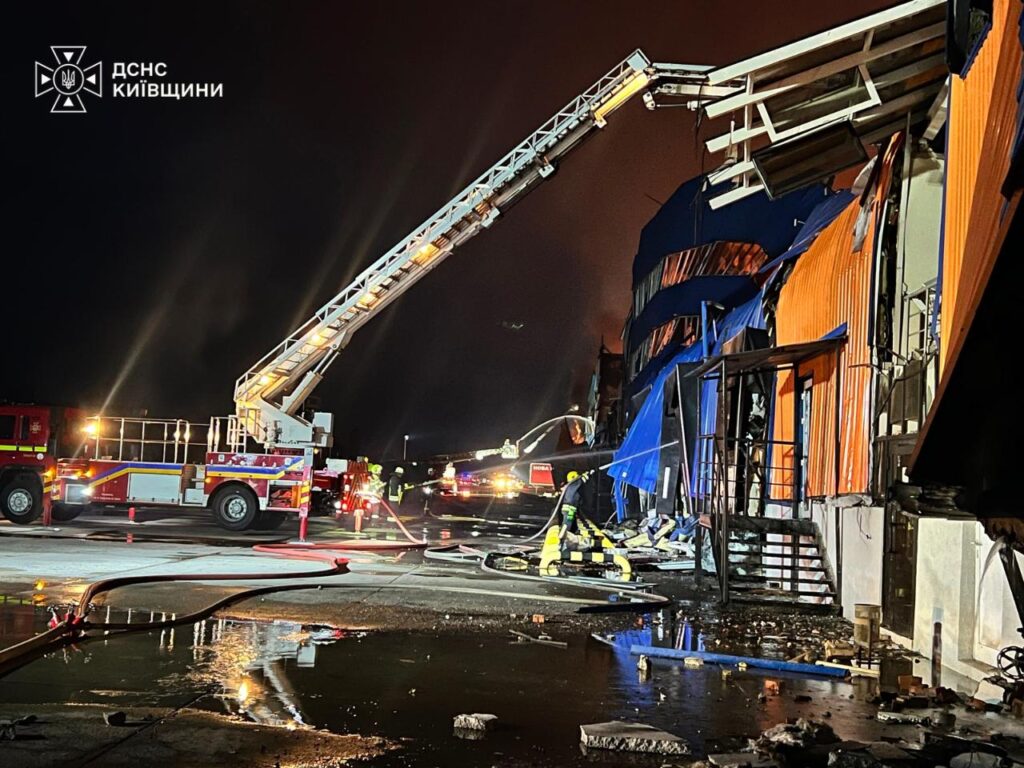
Russia launched a massed combined missile and drone attack on Kyiv and Kyiv Oblast overnight into 5 August, killing 14 people and injuring 26, Ukraine's State Emergency Service (DSNS) reported. Rescuers were still working seven locations across three raions as of the latest update, with fires, a residential building collapse, and an ammonia leak among the damage reported in the capital and its surrounding region.

The strike is the second massed barrage on Kyiv in five days. Russia killed nine people in the capital on 1 August with 27 ballistic missiles, damaging the Lithuanian embassy and destroying part of the city's ambulance fleet in a double-tap strike on a medical-transport depot.

The renewed attack this week points to a pattern of sustained pressure on the capital even as Russia continues to reject a full ceasefire in ongoing talks.

Kyiv Oblast bore the heaviest toll. Most of the deaths came in Brovarskyi raion, where nine people were killed, according to Kyiv Oblast Military Administration head Tymur Tkachenko. Four more people died in Bucha raion and one in Fastiv raion. Warehouse fires broke out in Brovary, Velyka Dymerka, Kvitneve, and Peremoha in Brovarskyi raion; rescuers were also fighting a warehouse fire in Chaiky, Bucha raion, and had extinguished a logistics-facility fire in Sofiivska Borshchahivka.

In Kyiv city, ballistic missiles and drones struck four districts — Obolonskyi, Sviatoshynskyi, Holosiivskyi, and Desnianskyi — starting shortly after midnight. A woman was killed in Obolonskyi, where a non-residential building caught fire. In Holosiivskyi, a strike destroyed a private residential building, with rescuers searching for people under the rubble, and damaged a tank holding roughly 300 liters of ammonia at a nearby industrial site. Emergency crews contained the leak and confirmed no threat to residents. Repeated explosions at one strike site also damaged an ambulance, injuring its driver.

The overnight fires pushed air quality across Kyiv to hazardous levels by morning, with monitoring stations in Obolonskyi and Sviatoshynskyi districts recording index readings of 140–174 against a healthy baseline of under 50, according to SaveEcoBot and AQICN data.

DSNS said the death and injury toll could still rise as search-and-rescue operations continue in Brovarskyi and Bucha raions.

❌