Vue normale

  • ✇Euromaidan Press
  • “We will answer their answer”: Ukraine tests EW against jet Shaheds’ MESH control
    Ukrainian presidential adviser on defense technology development, Serhii "Flash" Beskrestnov, spent a day at a test range, jamming the control channel of its hardest air-defense problem. Ukraine is testing new electronic warfare means against jet-powered Shaheds, he said. Russia's new Banderol jet-powered drone is fast, cheap to make, and dangerous to Ukrainian cities. The S8000 "Banderol" is a hybrid of a kamikaze drone and a cruise missile.  "At a meeting, the President
     

“We will answer their answer”: Ukraine tests EW against jet Shaheds’ MESH control

22 juillet 2026 à 09:52

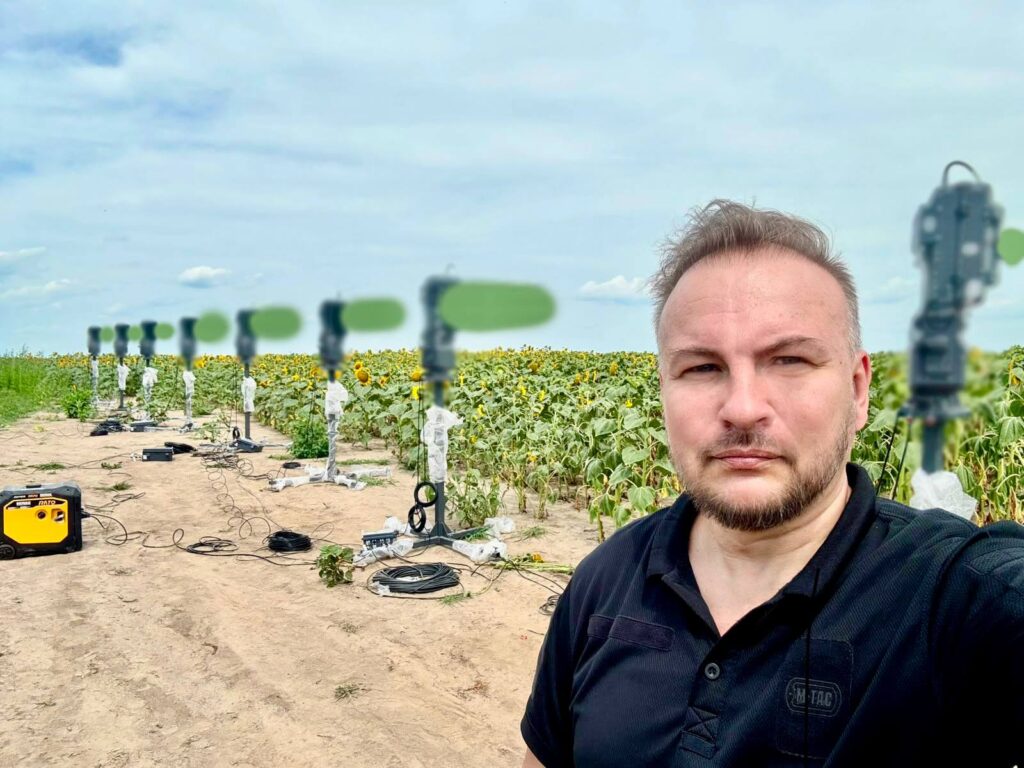
Presidential adviser on defense technology development Serhii "Flash" Beskrestnov at the test range of new electronic warfare means against jet-powered Shaheds. Source: Serhii "Flash" Beskrestnov

Ukrainian presidential adviser on defense technology development, Serhii "Flash" Beskrestnov, spent a day at a test range, jamming the control channel of its hardest air-defense problem. Ukraine is testing new electronic warfare means against jet-powered Shaheds, he said.

Russia's new Banderol jet-powered drone is fast, cheap to make, and dangerous to Ukrainian cities. The S8000 "Banderol" is a hybrid of a kamikaze drone and a cruise missile. 

"At a meeting, the President defined one of the most important tasks — the question of countering jet Shaheds," Beskrestnov wrote.

Both sides will escalate in war of technologies 

Jet Shaheds are a real challenge for Ukrainian air defense, but they are most dangerous in online-control mode through a MESH network. 

"Today I spent the day at a test range where we tested options for countering MESH networks with electronic warfare," he revealed.

EW producers, with support from the Brave1 defense-tech cluster and the General Staff's Main Directorate of Electronic Warfare, are advancing technologies to suppress the control channels of enemy Shaheds that run over MESH radio modems, he said.

"I know how and with what the enemy will answer our EW. And we will answer their answer. Welcome to the world of the war of technologies," Flash wrote.

MESH-controlled jet Shahed is threat that beats both defenses

The target of the tests is the combination that defeats Ukraine's two main counters at once. Jet-powered Geran variants cruise at 300 to 350 km/h and burst to higher speeds, outrunning much of Ukraine's cheap interceptor-drone fleet. And a drone flown live by an operator over a MESH radio network is not following a preprogrammed route.

Beskrestnov identified this exact evolution in May, when Ukraine's interception rate against ordinary Shaheds hit 95%: Russia's response would be jet-powered variants and border-area targeting, where mesh radio control works.

This month, he documented the next step. According to him, Russia is shifting from mass raids to single, complex, hand-flown strikes, including one Shahed that dropped to 22 meters to slip under Ukrainian radar.

  • ✇Euromaidan Press
  • Ukraine’s interceptors got so good that Russia is changing its gasoline drone tactics, says expert
    Ukraine's air defense downs 92-96% of gasoline-powered Shaheds attacking its deep rear, Ukraine's Defense Minister adviser Serhii "Flash" Beskrestnov said on 4 July. The interception rate is pushing Russia to reorient production toward serial jet-powered Shahed variants, while it continues about 200 gasoline Shahed strikes per day on Ukrainian border territories. The shift extends Russia's response to Ukraine's expanding interceptor industry. Beskrestnov estimated Ukraine's
     

Ukraine’s interceptors got so good that Russia is changing its gasoline drone tactics, says expert

6 juillet 2026 à 10:47

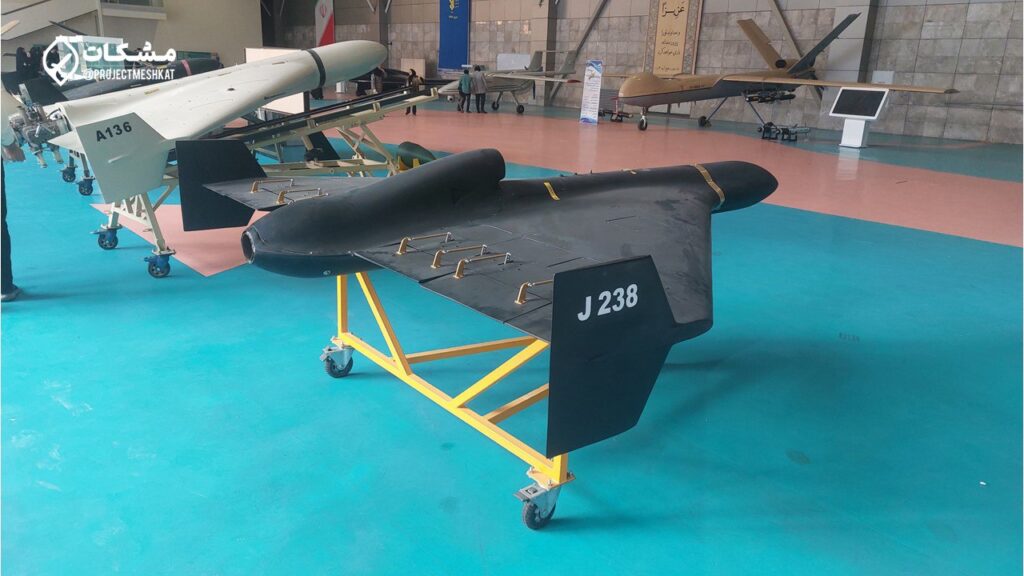
Jet powered Shahed-136 kamikaze drone Credit: Open sources

Ukraine's air defense downs 92-96% of gasoline-powered Shaheds attacking its deep rear, Ukraine's Defense Minister adviser Serhii "Flash" Beskrestnov said on 4 July. The interception rate is pushing Russia to reorient production toward serial jet-powered Shahed variants, while it continues about 200 gasoline Shahed strikes per day on Ukrainian border territories.

The shift extends Russia's response to Ukraine's expanding interceptor industry. Beskrestnov estimated Ukraine's Shahed interception rate at 95% in May 2026, with Russia's three-part response identified as jet-powered variants, electronic-warfare additions, and border-area targeting.
Border areas absorb 200 gasoline Shaheds daily

Earlier, Mykolaiv Oblast head Vitalii Kim said on 3 July that Russia designated a 150-kilometer targeting zone and is hitting gas stations, warehouses, and combustible civilian objects for the smoke images that can be broadcast on Russian television as evidence of damage to Ukrainian logistics.

Ukrainian military logistics is unaffected, Kim said, because Ukrainian forces use separate fuel channels.

Total Shahed volume launched at Ukraine decreased sharply in June 2026, but the reduced count masks a compensating pivot toward jet-powered variants that outrun Ukrainian interceptor drones and ballistic missiles that Ukraine intercepts at only 17%.

Beskrestnov sees no technical or economic pressure driving the volume drop, with only a deliberate Russian reorientation of production capacity toward the more expensive, more foreign-dependent jet models.

Proximity to the border allows Russia to use mesh-modem radio control at scale on these attacks. Ukrainian jamming of satellite navigation, effective against deep-rear penetration, is ineffective against border-region radio-controlled Shaheds.

Russia moves from mass strikes to selective targeting

Beyond the border, Beskrestnov observed a shift from mass strikes to selective targeting. Russia selects important targets, conducts multi-phase reconnaissance, studies Ukraine's electronic warfare systems, radar coverage, and air defense positioning, probes corridors around interceptor engagement zones, and builds routes at different altitudes and speeds.

Russia is deploying "Seeker" modification Shaheds with independent target-capture capability.

Ukrainian Air Force spokesperson Yurii Ihnat said on 1 July that Russian jet-powered Shahed variants exceed 300 km/h, making them "unreachable" for Ukrainian interceptor drones limited to that speed, per OBOZ.UA. Ukraine must engage jet Shaheds with more expensive surface-to-air missiles rather than the interceptor drone fleet. 

❌