Vue lecture

Russia plans ”accidental” drone strikes on NATO countries, Tusk says
donald tusk

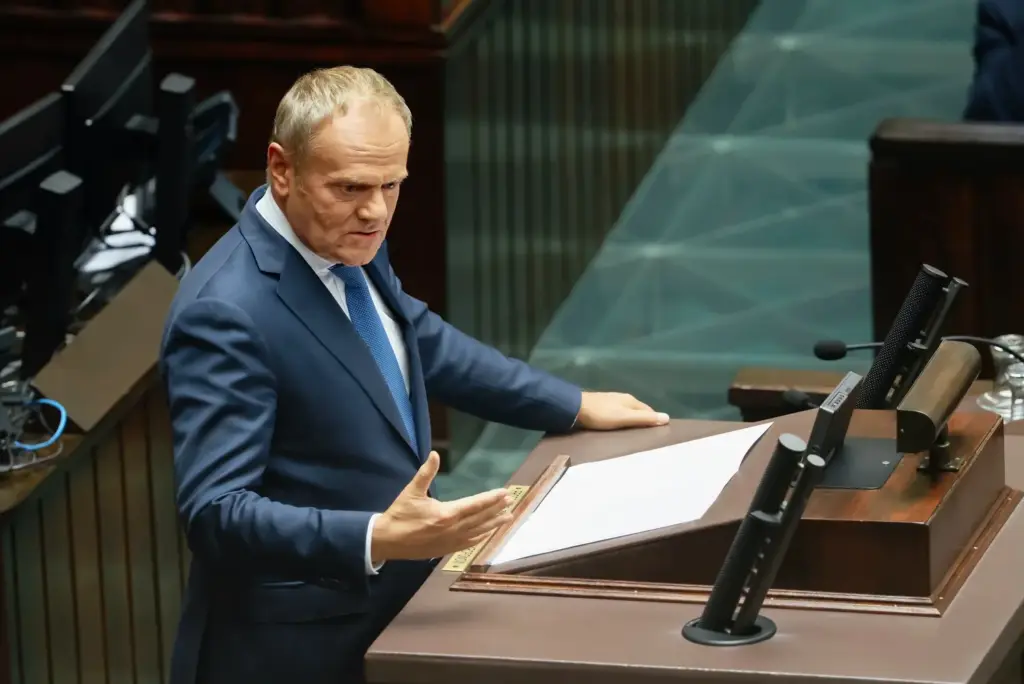
Intelligence assessments indicate that Russian plans include drone and missile strikes against countries supporting Ukraine, including Poland, Polish Prime Minister Donald Tusk told parliament on 17 September. He said Russia could seek to make such attacks appear accidental in order to weaken NATO's resolve.

The warning comes after an escalating pattern of drone incidents and suspected sabotage in Poland, Lithuania and Germany, as European governments face growing security risks linked to Russia's war against Ukraine.

Tusk cites NATO, US and Ukrainian intelligence

Tusk said he was relying on intelligence from NATO, Ukraine, and the United States. He described late autumn and winter as the most critical phase of the war so far and warned of escalating attacks on Ukrainian infrastructure.

"There is a real risk that the territory of one or several NATO countries on the eastern flank may be entered by drones or other types of missiles," Tusk said.

He said the purpose could be to show that Article 5 "exists only in theory" and to weaken NATO's willingness to respond.

Jet-powered drones near the Polish border

The 17 September attack struck near Yahodyn, close to the Dorohusk border crossing. Tusk said Russia had used jet-powered drones that travel at higher speeds and altitudes, making them harder to intercept.

A pattern of incidents near NATO territory

The warning follows several incidents near NATO's eastern border. On 13 September, a drone struck a passenger train at Yahodyn, near the Ukraine-Poland border. Ukraine's state railway company said it was "highly probable" that the Russian drone's intended target was a diplomatic train that had carried former British Prime Minister Boris Johnson and former Swedish Prime Minister Carl Bildt. Former CIA Director David Petraeus was on a separate train that remained at the station. No one was injured.

On 15 September, Italian NATO jets shot down a drone in Lithuanian airspace after it apparently entered from Belarus. Lithuanian authorities said the wreckage indicated it had likely been carrying explosives. Poland also recovered a Gerbera-type drone carrying a live warhead from the Baltic coast near Rusinowo.

Germany on 1 September blamed Russia for an attempted drone attack involving explosives at Leipzig/Halle Airport on 4–5 August, adding another NATO country to the series of incidents.

From warning to coalition

Tusk visited Ukraine on 18 September for the inaugural Carpathian Eight summit. Zelenskyy said Ukraine and its European partners were building an anti-ballistic coalition, while Polish Deputy Prime Minister Radosław Sikorski said Warsaw was preparing its largest military aid package for Ukraine, potentially including Patriot missiles.

Russia's Foreign Ministry rejected Tusk's accusations as "contrived" and "far-fetched".

  •  

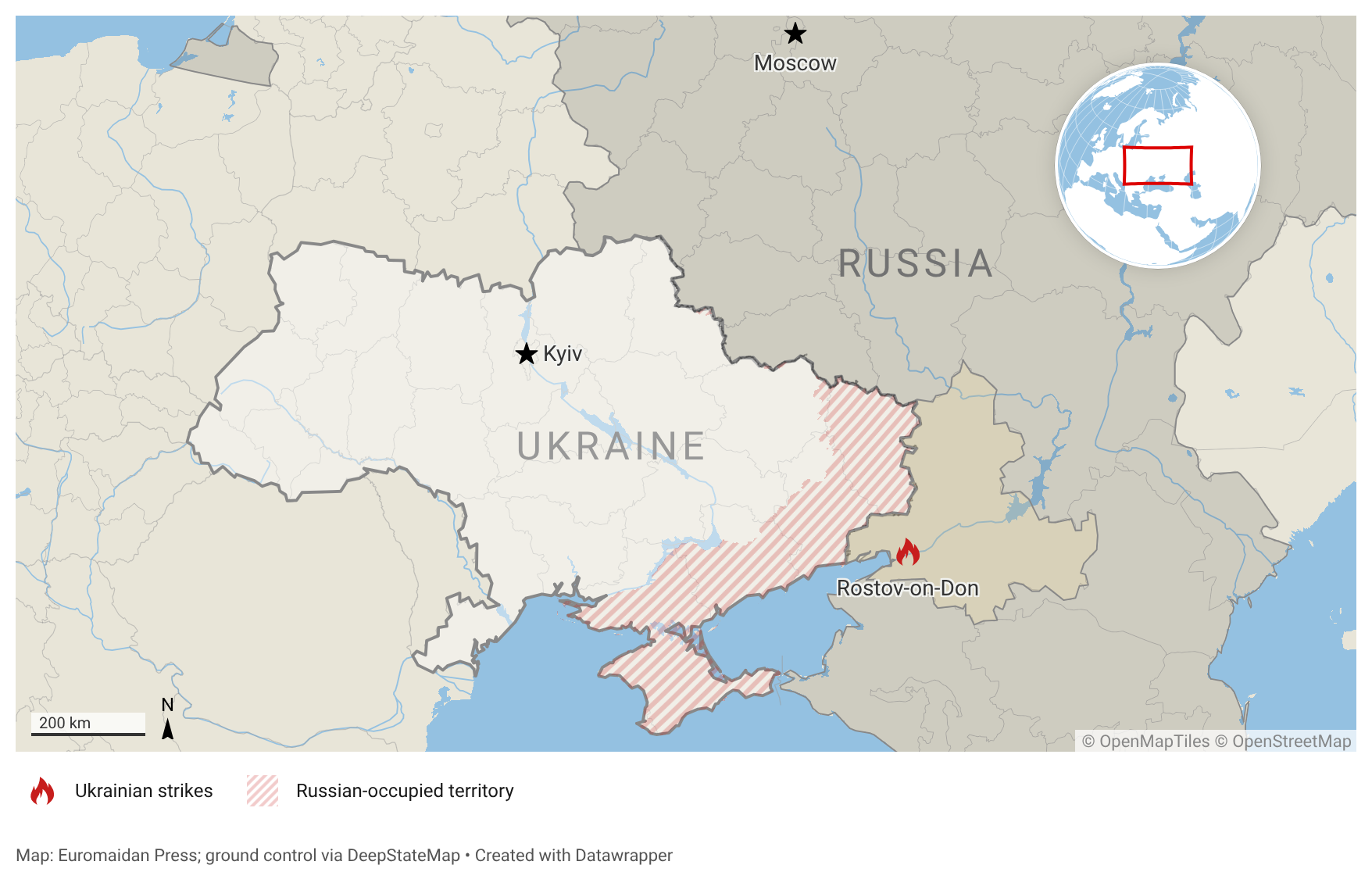
Drones hit Rostov-on-Don for the second straight night—OSINT monitors say the military airbase was likely the target again

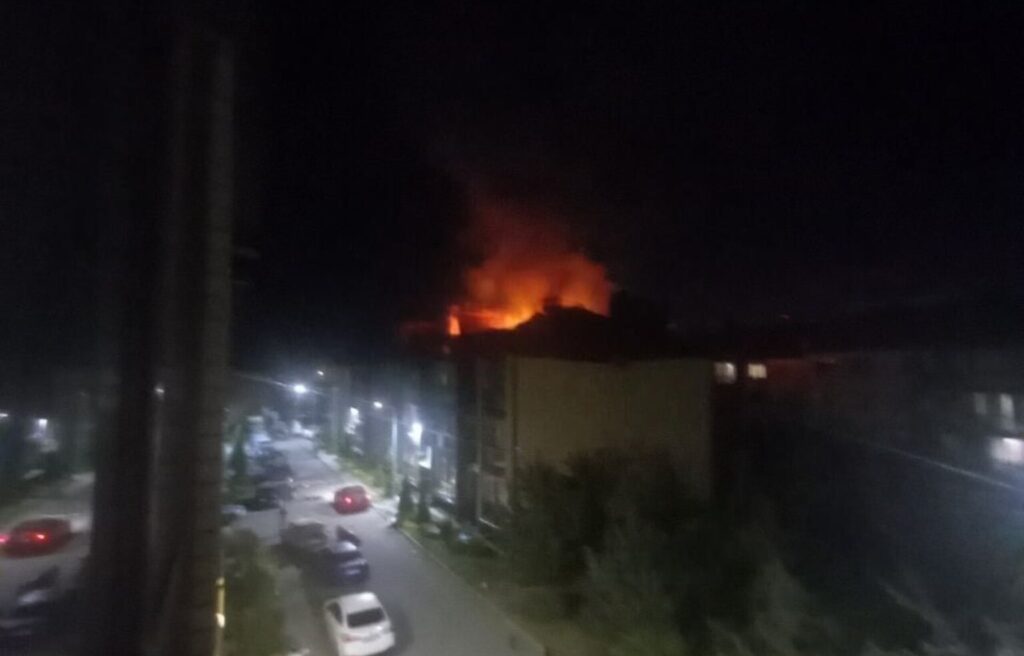
drones hit rostov-on-don second straight night—osint monitors say military airbase likely target again · post fire over after ukrainian drone attack 18 2026 пожежа у російському ростові унаслідок атаки українських

Ukrainian drones struck Rostov-on-Don for the second consecutive night, with OSINT channels reporting the military airbase was likely targeted again, Militarnyi reported on 18 September. The previous night's strike hit the same installation, and Ukrainian President Volodymyr Zelenskyy reported the destruction of three military aircraft and three helicopters there.

Russia's full-scale war against Ukraine grinds through its fifth year with Russian military airfields serving as launch pads for guided-bomb strikes on Ukrainian cities and front-line positions. Ukraine's drone campaign against these bases and against the defense-industrial plants that supply them aims to destroy the aircraft, radars, and production lines Russia needs to sustain the war.

Second consecutive overnight strike

The attack began around midnight, Russian news Telegram channel Astra reported. Rostov-on-Don city mayor Aleksandr Skryabin stated around 02:00 that air defenses were active and urged people to take cover indoors.

Rostov Oblast governor Yurii Slyusar claimed more than 50 drones were downed overnight over Rostov-on-Don, Taganrog, Bataysk, and five other districts. He listed damage to private houses, apartment buildings, cars, and gas pipes but made no mention of the airbase.

Ukrainian OSINT channel Supernova+ suggested the airbase was the target again. Krymsky Veter reported a fire near the airfield. However, Astra noted the published footage had not been verified by its OSINT expert, and the results of the repeat strike on the base remain unverified.

Residents told Astra they heard no air-raid sirens and did not know where shelters were located. The Moscow Times reported locals described "deafening bangs" from around 00:30.

drones hit rostov-on-don second straight night—osint monitors say military airbase likely target again · post fire over after ukrainian drone attack 18 2026 пожежа у російському ростові унаслідок атаки українських
Explore further

Drones hit Rostov-on-Don for the second straight night—OSINT monitors say the military airbase was likely the target again

Russia's Defense Ministry claimed 629 Ukrainian drones downed overnight across all regions.

Ukraine's General Staff did not mention the airbase

Ukraine's General Staff reported verified results from several earlier strikes, including a hit on Kombinat Kamensky, a solid-rocket-fuel factory in Kamensk-Shakhtinsky, also in Rostov Oblast. The batch did not mention the Rostov-on-Don airbase. That does not necessarily mean the second attack did not take place—the General Staff can report strike results on the same day or days later, once damage is assessed.

Previous night: reported aircraft kills

The previous strike hit the Rostov-on-Don Central military airfield overnight on 17 September. Zelenskyy reported hits on a military transport An-12, two An-26 aircraft, and three helicopters. The SBU said a fire erupted on the aircraft parking area and secondary detonation of ammunition followed, with local residents reporting a large-scale blaze visible across the city. There is no independent verification of these figures.

drones hit rostov-on-don second straight night—osint monitors say military airbase likely target again · post fire over after ukrainian drone attack 18 2026 пожежа у російському ростові унаслідок атаки українських
Explore further

Drones hit Rostov-on-Don for the second straight night—OSINT monitors say the military airbase was likely the target again

Ukraine's General Staff had earlier reported strikes on the same airfield on 6 September. Ukrainian forces also reported destroying a Podlyot radar and two Pantsir-S1 air defense systems at the base, though no imagery was released.

Ukraine has been systematically targeting Russian military airfields and their air defenses with drones across the front, from occupied Crimea to Rostov Oblast. In August, a combined strike also hit a Rostov Oblast airfield alongside a major refinery.

  •  

Russian e-commerce will lose $4.8 billion to the drone campaign against its warehouses, analysts estimate

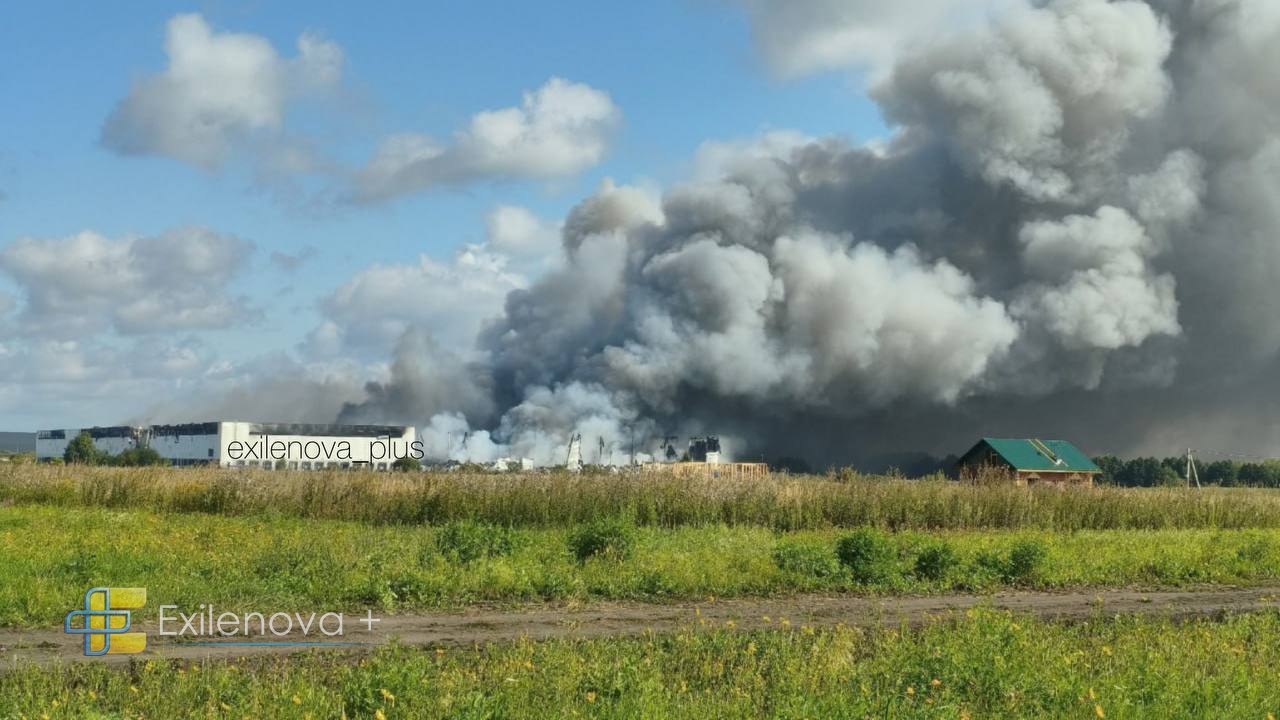
warehouse built hold 54 million items fire tambov oblast russia · post helicopter carrying water bucket above burning wildberries logistics center kotovsk 26 2026 exilenova+ ukraine news ukrainian reports

Ukrainian drone strikes on the warehouses of Russia's biggest online marketplaces will cost the country's e-commerce 400 million orders and 400 billion rubles ($4.8 billion) in revenue this year, the research firm Data Insight estimates, The Moscow Times reported. It prices what the campaign has done to a whole consumer market, not only to the companies whose warehouses burned. Sellers are cutting back on the platform at the center of it, and Wildberries' payout delays are pushing some of them out.

Ukraine's long-range drone campaign has widened from military targets to the infrastructure that funds and equips the war, and the country's biggest online marketplaces sit inside that logic: Russians bought $300 million in body armor, thermal sights, and drone components on Ozon in the twelve months to July.

The forecast, cut by a fifth

Data Insight lowered its growth forecast for Russian online retail by 20%, founder Fyodor Virin said. The market will now grow to 9.6 billion orders this year instead of 10 billion, and to 15 trillion rubles ($178 billion) in sales instead of 15.4 trillion.

That is exclusively the effect of the Ukrainian strikes on marketplace warehouses, Virin said, and most of the loss falls on Wildberries. The bombardment of the depots cut sales because goods were unavailable in a given city or entirely, and because delivery times grew as parcels had to travel further.

All of it lands in the second half of the year. Strikes on Wildberries warehouses began on 18 July and on Ozon's on 25 August, according to Virin. Euromaidan Press reported the first strike on an Ozon warehouse on 22 August.

About 30% of the orders that got stuck or disappeared from sale were cancelled outright, Virin estimates. The rest of the unmet demand went mostly to other online platforms and, to a lesser degree, to physical retail. Payout delays that began in mid-August have pushed some sellers to pull their stock, and Wildberries blamed the first missed round on a DDoS attack.

warehouse built hold 54 million items fire tambov oblast russia · post burned-out buildings wildberries logistics center kotovsk 26 2026 exilenova+ ukraine news ukrainian reports
Explore further

A warehouse built to hold up to 54 million items burned down in Tambov Oblast, Russia

What the companies lost

Damage to RWB, the company that runs Wildberries, from the loss of warehouses and infrastructure may reach 147 to 280 billion rubles ($1.7–3.3 billion), while sellers have provisionally lost 445 to 507 billion rubles ($5.3–6 billion), Data Insight's lead analyst Sergei Semko estimated. All of the marketplace's key logistics complexes have been hit, and it could lose a fifth of its network and over half its main hubs at once.

Much of what the sellers lost will not come back. On 22 July, Wildberries' founder said the warehouses were insured but that standard policies do not cover drone-strike risk, and Ozon has told sellers that losses from military action are an entrepreneurial risk neither it nor insurers will compensate.

Total losses for Ozon and its sellers are far lower, at around 100 billion rubles ($1.2 billion). Ozon has a much more branched warehouse network and rents most of its large complexes, Alfa-Bank analysts said. Its shares still fell as much as 29% in a single August session on a day when the Moscow exchange lost 2.9%.

  •  
❌