❌

Vue lecture

Ukraine shows its drones in Canada as Ottawa pledges a third of its future output
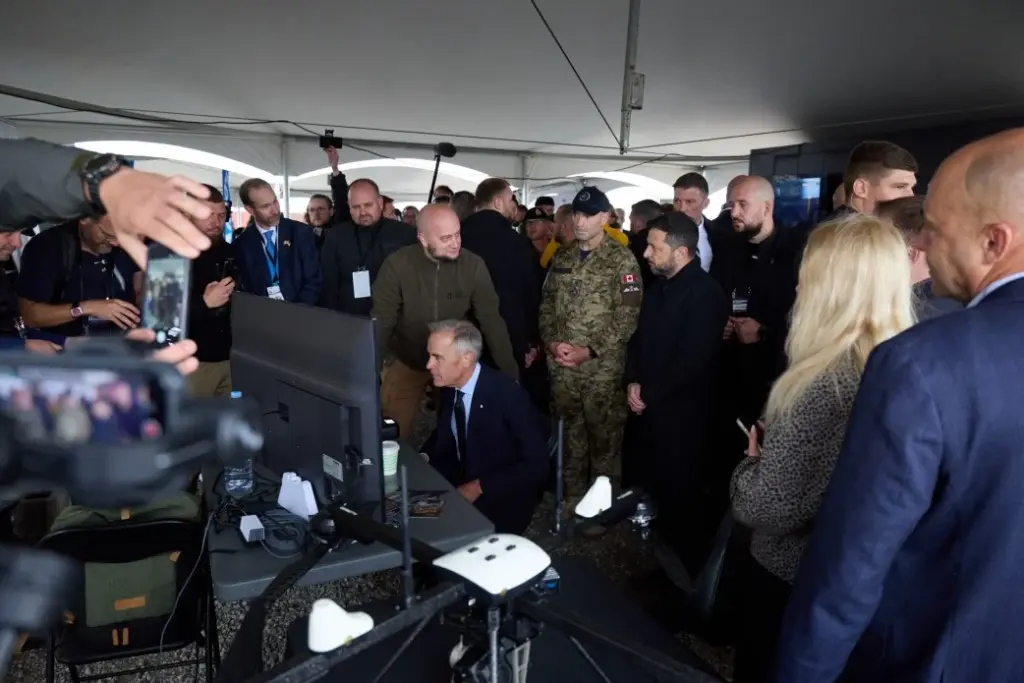
ukrainian drones showcased canada kyiv ottawa broaden defense cooperation · post canadian prime minister mark carney sits drone control station president volodymyr zelenskyy looks during presentation calgary 10 2026 joint

Ukrainian President Volodymyr Zelenskyy and Canadian Prime Minister Mark Carney attended a presentation of Ukrainian drones, Ukrainian-Canadian developments, and defense-component manufacturers in Calgary on 10 September, the Ukrainian presidential readout said.

The event followed the signing of documents on defense and security cooperation, which Kyiv calls the first step toward a Drone Deal on the American continent. That deal would take cooperation beyond individual Ukrainian-Canadian production projects toward a broader industrial model pairing Ukrainian technology with Canadian manufacturing capacity.

The systems shown included the Vampire 4S, a heavy multirotor that drops munitions at night and that Russian troops call Baba Yaga, and SkyFall's P1-SUN interceptor, designed to bring down Shahed-type drones and priced at about $1,000 at this year's World Defence Show. The lineup also included the Shrike FPV drone and the Hor reconnaissance UAV. Companies also presented projects involving drones, ground robotics, and secure communications.

The systems and joint projects

The presentation featured Himera radio sets alongside the four drone systems. Zelenskyy and Carney were also shown the remote operation of the Ratel ground robotic complex and uncrewed maritime systems from UFORCE and Scorpena.
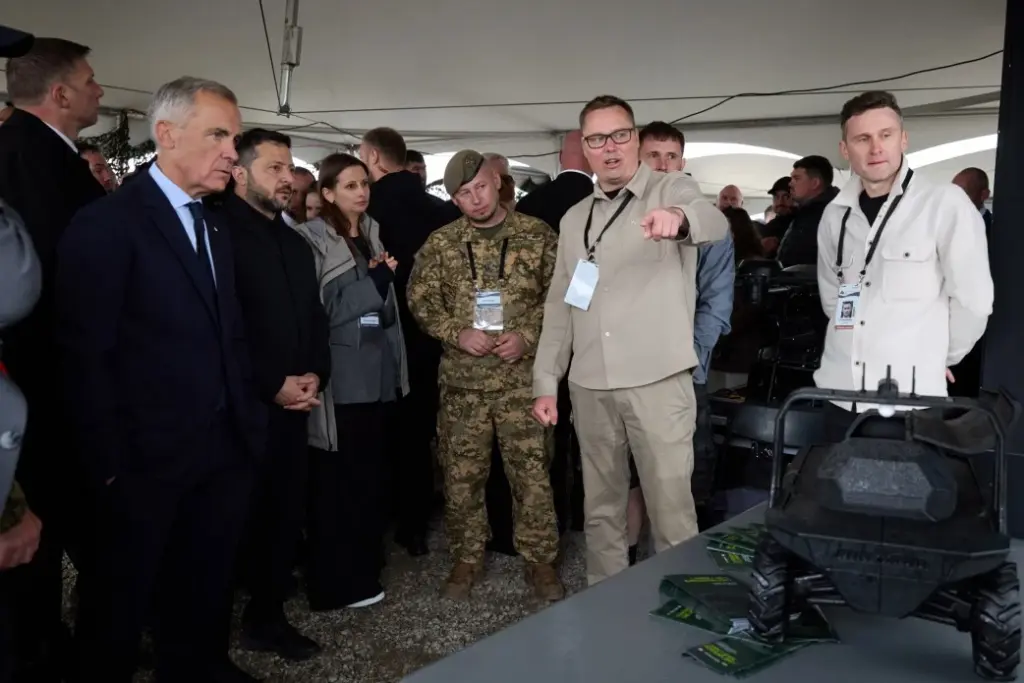
Volodymyr Zelenskyy and Mark Carney at the presentation of Ukrainian drones and joint Ukrainian-Canadian developments during Zelenskyy's visit to Canada, 10 September 2026. Photo: Office of the President of Ukraine
A Ukrainian developer shows a ground robotic system to Mark Carney and Volodymyr Zelenskyy at the presentation of Ukrainian drones and joint Ukrainian-Canadian developments in Calgary, Canada, 10 September 2026. Photo: Office of the President of Ukraine

Airlogix plans to produce the Hor reconnaissance UAV with Canada's Sentinel. Ai Drones UA and Bombardier Recreational Products (BRP) showed a prototype ground robotic complex, while Himera and Quantropi presented secure communications solutions. The announcements at the event covered future cooperation between GTH and General Dynamics Mission Systems–Canada, JK Land Vehicles and General Dynamics Land Systems, and a training program between SkyFall and Calian.

The readout said that 21 Canadian companies took part and that they already integrate their components into Ukrainian systems.

Volodymyr Zelenskyy and Mark Carney talk with Ukrainian developers and Canadian servicemen beside displayed equipment at the presentation in Calgary, Canada, 10 September 2026. Photo: Office of the President of Ukraine

Canada's drone problem

Canada's armed forces hold 2,000 drones today and will need millions, Carney said in Calgary. A new national drone marketplace is meant to build the capacity for those millions inside two years, with Ukrainian firms teaching Canadian ones while Canadian manufacturing and AI expertise flows back the other way.

A third of all the drones Canada builds will go to Ukraine's defense, Carney pledged. The presidential readout puts the share at 30% of the drones the joint program is to produce.

  •  

“Sometimes I forget I don’t have a leg”: how two Ukrainian infantry soldiers returned to war behind screens

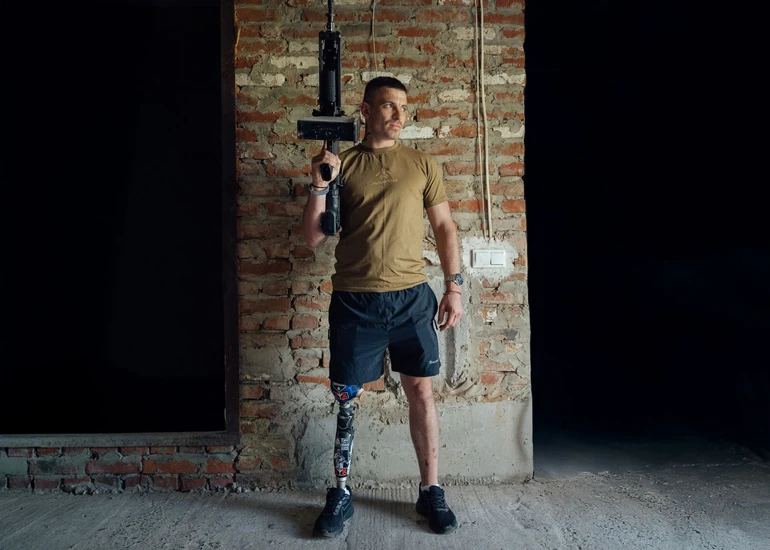
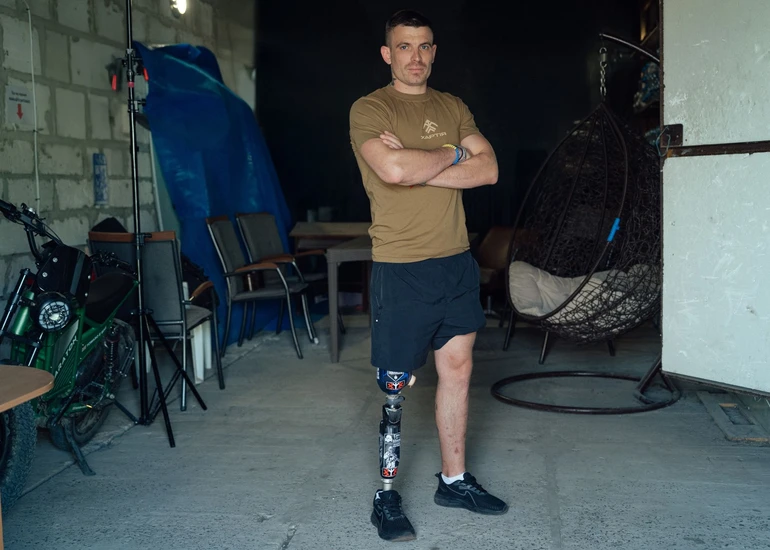
Bilyi.

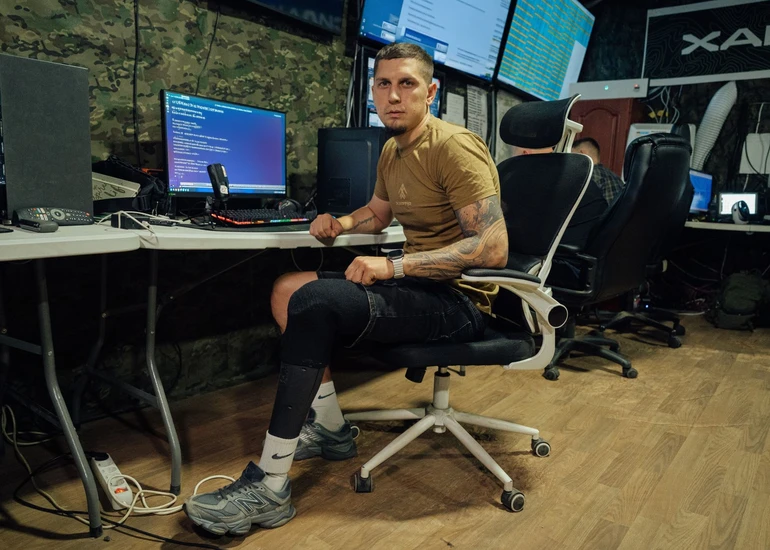
Callsign Bilyi, a former air-assault soldier, stepped on a PMN-2 anti-personnel mine in July 2025 during a combat mission in Kharkiv Oblast. Callsign Terri, a former industrial worker from Kharkiv Oblast, lost part of his lower leg after stepping on a petal mine near a position in the same oblast shortly before. Both underwent amputations, rehabilitation, and prosthetic fitting, then chose to return to Khartiia, the National Guard formation they had served with, according to Ukrainska Pravda.

Over 100,000 amputations have been performed in Ukraine over four years of war, and the fighting has added as many as 390,000 disabilities, according to the World Health Organization. While the figure does not distinguish soldiers from civilians, these two men show one route back into the war for soldiers who cannot return to the ground: the screens of a drone-saturated battlefield, where what they learned on foot still counts.

Both men could have been discharged, they told Ukrainska Pravda, and chose instead to keep serving in ISTAR (intelligence, surveillance, target acquisition, and reconnaissance). The operator watches drone feeds, tracks friendly and enemy positions, and passes targets to strike teams. 

Bilyi's path back to service

Bilyi says the job needs what he already had: "An ISTAR operator should have combat experience, to understand where things are, to know what a position looks like. If you come in without it, they show you a picture. But if you have never felt what that is, it is not the same."

He moved to Khartiia at the end of 2024 and was wounded on his first mission with the unit. His tourniquet remained on his leg for two days before scouts carried him out. Bilyi returned to Khartiia on 12 May 2026, less than a year later, fitted with an electronic Allux prosthesis.

Bilyi
Bilyi. Photo: Vladyslav Klymenko / Khartiia

"I've gotten used to it. Sometimes I forget I don't have a leg," Bilyi said.

Part of why he returned was to set an example for the men in his unit: "He serves on a prosthetic, so why should I be down? You can keep moving forward."

From the trenches to the monitors: Terri's shift in perspective

Terri was wounded on his third frontline mission at the end of June 2025. His tourniquet was on for 25 hours before his amputation, and the next day, he refused when a doctor suggested removing his knee as well. He returned this summer, choosing ISTAR over a posting with ground robots.

Terri
Terri. Photo: Vladyslav Klymenko / Khartiia

Sitting at the screens changed how he understood the war. As a foot soldier, he had felt frustrated with drone crews when resupply failed.

"Back then I thought, why aren't they dropping us water," he said. "But when I sat down at the monitors and saw how it all works, I realized we'd blamed the guys for nothing."

  •  
❌