Connexion

Democrats took Congress overnight, but Ukraine isn’t their top-three priority: What midterm win really means for Kyiv

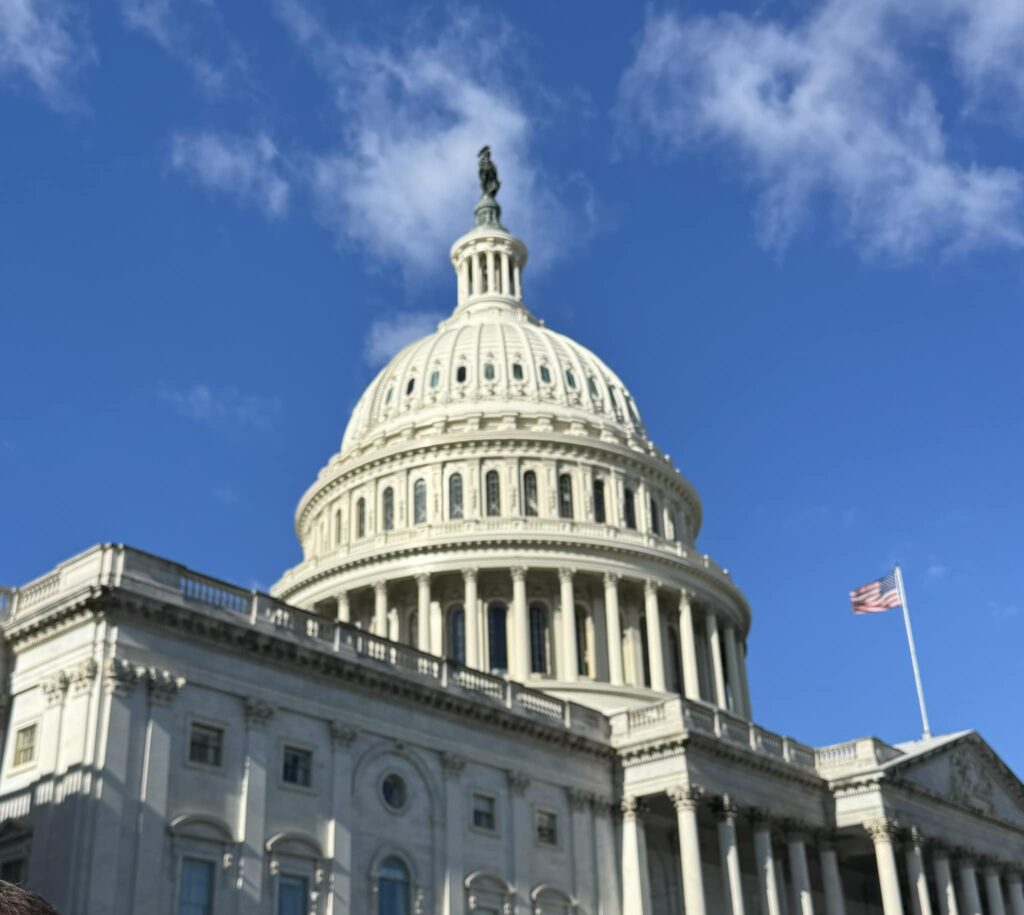
Democrats won control of both the House and the Senate in the 3 November midterms, taking 54 Senate seats to the Republicans' 44, with races in Alaska and Mississippi still uncalled, NBC News projected on 4 November.
The result gives Ukraine's backers in Congress a chance to revive legislation that the Republican-led Senate left stalled, including a Ukraine aid and sanctions bill with $8 billion in military loans, and to challenge the administration's approach to Russia. But the change in congressional control does not automatically translate into new assistance.
The main misreading in Ukrainian media and among Ukrainians, Oleksandr Kraiev, North America Program Director at Ukrainian Prism, told Euromaidan Press, is that "we still believe that the Democrats are the quote-unquote pro-Ukrainian party."
"We should only speak about some particular pro-Ukrainian politicians, pro-Ukrainian members of the Congress," Kraiev said.
Congress gets the floor and something to trade
Under Republican leaders, Ukraine bills had to be forced to a vote. On 4 June, the House passed the Ukraine Support Act 226–195 only after a discharge petition, and the Senate has left it on its calendar since 20 July, according to the congressional record. From January, Democrats will set the agenda in both chambers, so bills like this will no longer need a workaround to reach the floor, though most Senate bills will still need 60 votes.
Democrats already have candidates. On 16 October, Gregory Meeks, the top Democrat on the House Foreign Affairs Committee, introduced a bipartisan bill to block Trump's Russian diesel deal and require sanctions on Russian energy, his office said.
Much of that leverage is bargaining, said Vladyslav Faraponov, President at the Institute of American Studies. Congress can propose a larger defense budget or aid packages and trade with the administration—for example, a sum for Ukraine in exchange for leaving Trump's diesel sanctions relief alone, he told Euromaidan Press.
On Ukraine, Congress is likely to reach for two levers first, Ivo Daalder, former US ambassador to NATO, told Euromaidan Press: military support and "a new Russia sanctions bill that mandates sanctions rather than allows the president to waive them (revising the Graham bill)."
The main levers stay with the White House
Trump keeps his veto. He also showed how much room the law left him. The Graham Act, which he signed on 18 September, required him within 30 days to impose 100% tariffs on all goods from the five biggest buyers of Russian oil, sanction a range of Russian entities, and impose 500% tariffs on Russian energy imports. But Section 115 let him waive those measures by certifying to Congress that doing so served US interests, and on 16 October he waived many of them.
Overriding a veto will still "require support from Republicans: 30+ in the House; 11 or so in the Senate," Daalder said. "Won't be easy," he added.
"The main levers are still with the administration," Faraponov said, because in foreign policy the US acts as the central mediator.
A lame duck until 3 January, then a speaker, committees and a budget
Until 3 January, the outgoing Republican Congress sits. It must fund the government by 11 December, when the current stopgap expires, according to the Congressional Research Service, and any bill it leaves unpassed, including the Ukraine Support Act, dies with it. Faraponov expects no surprises before then, since Republicans will not want to look unconstructive over the budget.
"Nothing will change in the lame-duck session. [Democrats] will wait till they're in control," Daalder said.
After that, Kraiev said, the new majority will have to elect a speaker, set up committees and work on a budget that was due on 1 October. Ukraine is "not even in the first three issues of the agenda," which Kraiev said will be led by Iran, migration and the economy. Daalder put the affordability crisis at the top of Democrats' agenda, with tariffs and Iran next. Kraiev does not expect movement on Ukraine "before the start of March, or at least before the middle of February."
Trump set out his own timeline before the vote. If Democrats send him bills, he said on the New York Post's Pod Force One podcast, he will veto them until, "after a month or two of getting all vetoed," lawmakers "come over, and you make a deal," Newsweek reported.
For Ukraine, "a working result" whose effects show in 2028
Faraponov's horizon is longer. Kyiv should not overestimate the result, he said, because it is "only a catalyst for changes that will become visible in 2028, or during the 2028 campaign."
"This result can benefit only Americans, one party or the other. For Ukraine, this is a working result, and nothing out of the ordinary happened. It is the expected result when the party in power loses a midterm," Faraponov added.
Read also
-
US Congress turns blue, Trump keeps the veto—and Ukraine’s balance sheet in Washington gets both wins and losses
-
US midterms could restore Ukraine’s American aid and curb Trump’s Russia deals, if Democrats win Congress
-
Ukrainian Congress Committee of America urge Governor Hochul to help block 140,000-ton Russian diesel shipment bound for Port of New York on 6-7 November