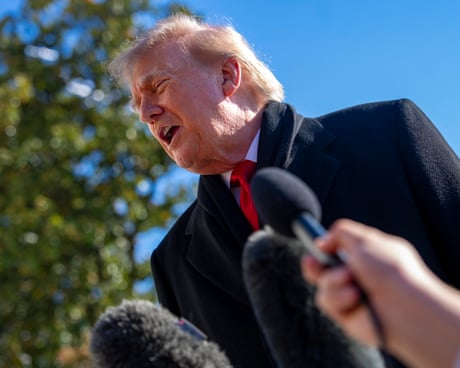
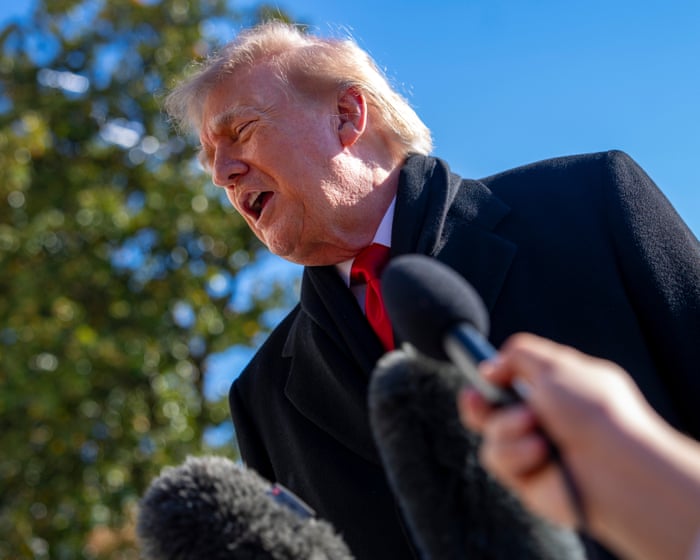
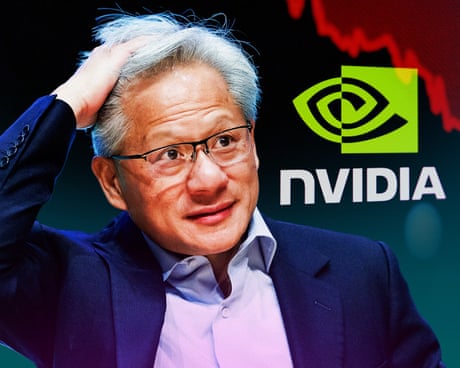
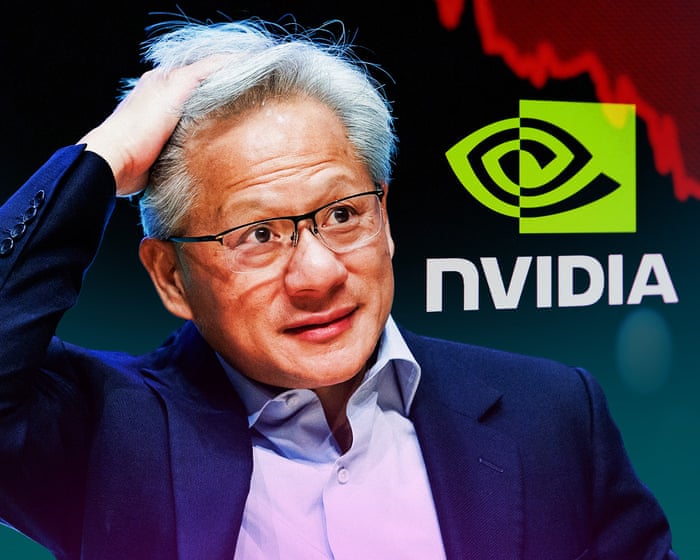
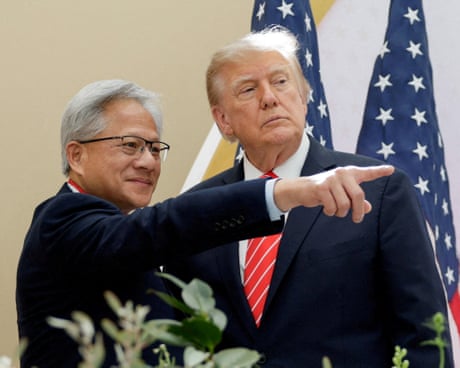
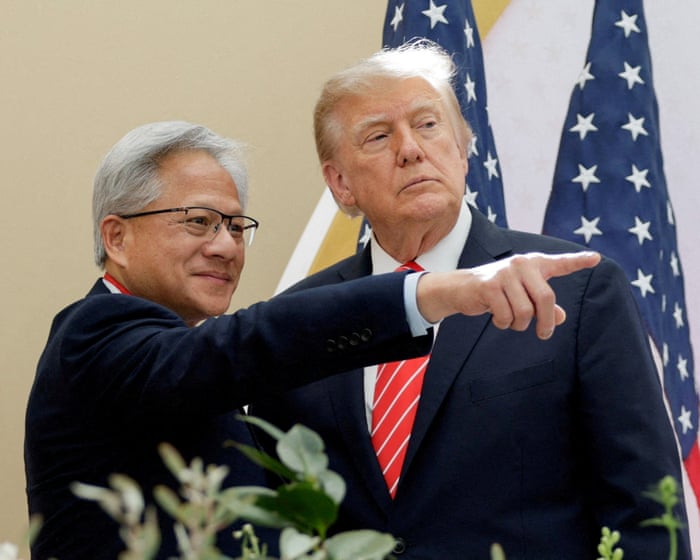
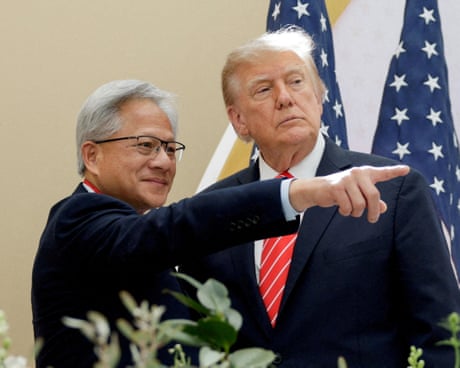
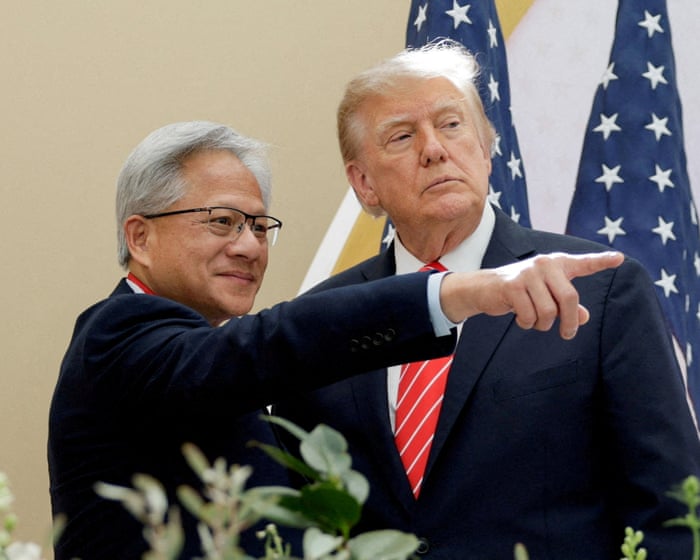
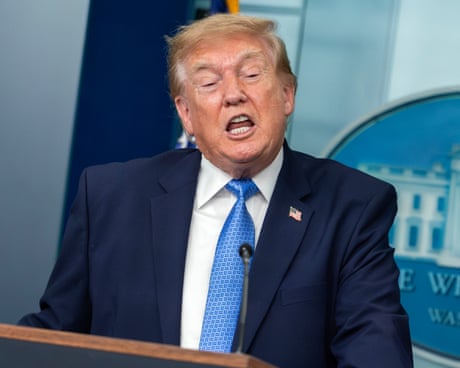
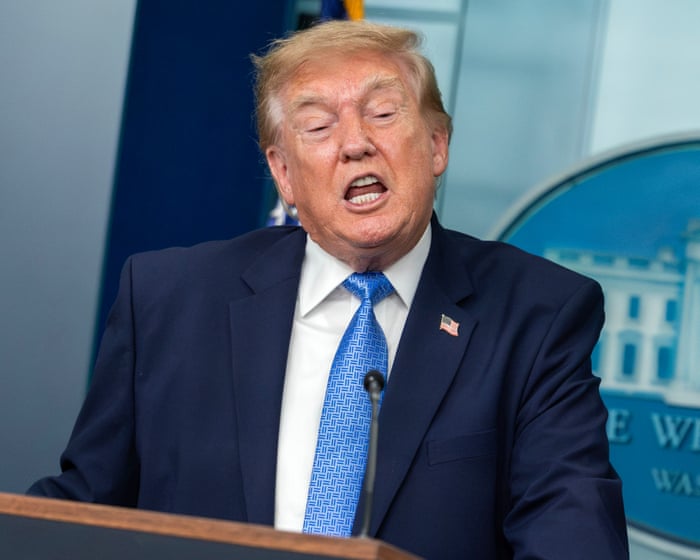
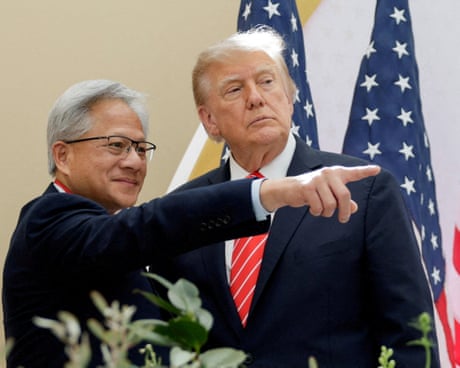
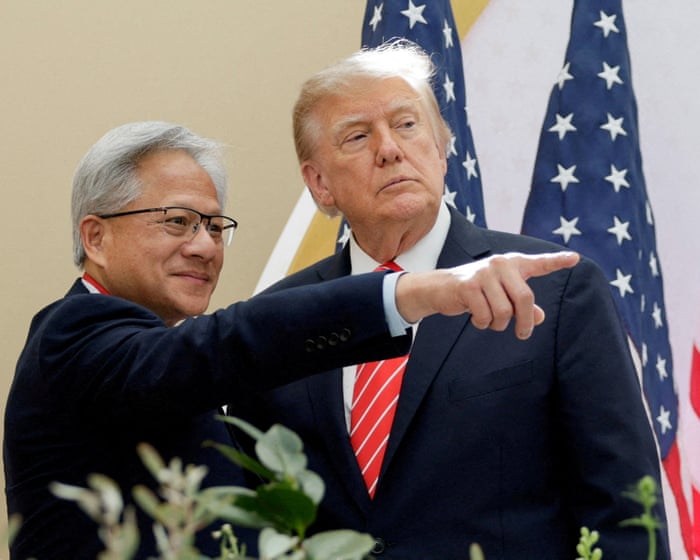
Donald Trump has expressed support for the return of Jensen Huang and has said he 'would not mind' Huang being reinstated as Nvidia's CEO. Huang resigned last week after admitting to an affair with a woman believed to be a Chinese intelligence asset
Jensen Huang’s resignation from the AI chipmaker Nvidia has sent shockwaves through the global economy. Huang resigned after reported affairs with an Nvidia executive and a woman alleged to be a Chinese spy. The fallout is not over yet, with criticism mounting over the apparent lack of action from the US commerce secretary, Howard Lutnick. Lucy Hough speaks to the Guardian’s global technology reporter, Aisha Down
President purchased up to $5m of stock before revoking Biden-era rule that limited Nvidia’s ability to sell to China
Donald Trump bought Nvidia stock worth millions of dollars as he made decisions on America’s China policy that would benefit the chipmaker, an analysis has found.
In May 2025, Trump’s administration rescinded a Biden-era rule designed to prevent the most advanced US-made AI chips from being exported to China.
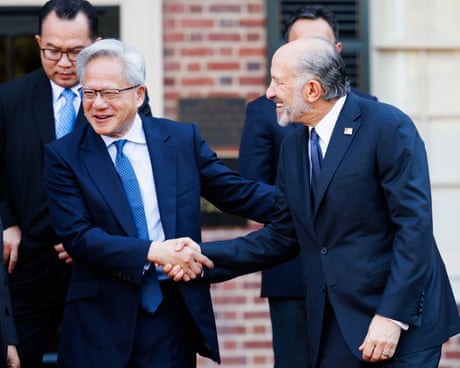
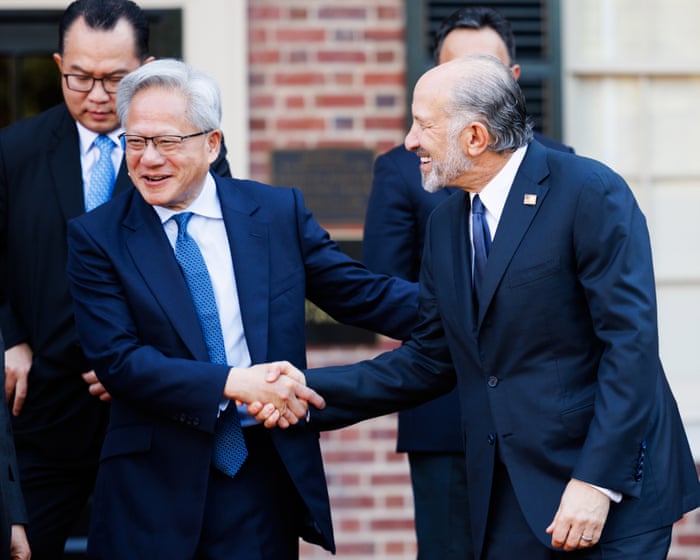
The US commerce secretary, Howard Lutnick, is facing growing pressure over his apparent lack of action over the Nvidia spying scandal as other Trump administration officials publicly raise questions over his decisions.
Scott Bessent, the US treasury secretary, blamed Lutnick’s commerce department for the fact the US had not imposed export restrictions on certain Nvidia chips to China.
At a time when individual men wield massive power, the ramifications of the Nvidia CEO’s affair could be enormous
One of the reasons you want to distribute power and responsibility in powerful organizations and high-stakes enterprises is so that the narcissism or myopia of one man do not come to carry outsized consequences.
When power is spread out across multiple people, it matters less if one of those people is prone to flattery, or in the midst of a midlife crisis, or perhaps just a bit stupid; the limits on his power become limits on the fallout of his character flaws.
Nvidia CEO Jensen Huang’s affair must be the costliest fling in human history – and a preview of what awaits when the tech bubble bursts
One thing we all know about the tech billionaires is they are super-smart. We know this largely because they never stop telling us. The “cognitive elite”, to use their favoured phrase, are entitled to shape our future without our say-so. When Elon Musk goes hiring, he wants “super-high-IQ small-government revolutionaries”. Long before they got private jets, what fuelled these boys was faith in their own brainpower. As a teenager, Jensen Huang wooed his future wife, Lori, thus: “If you do homework with me every Sunday, I promise you you’ll get straight As.”
Donald Trump defended defense secretary Pete Hegseth, who is facing an impeachment resolution from Republican senator Thomas Massie, saying Hegseth 'won two wars'. The president, who said he had spoken to Nvidia CEO Jensen Huang, said he was 'amazed' by claims Huang conducted an affair with an alleged Chinese spy, and that the FBI was now looking into the issue
The AI chip boss’s actions raise urgent questions about corporate influence, national security and the US president’s willingness to listen to intelligence warnings
It could be the plot of a spy thriller. One of the most powerful figures in the AI revolution admitted to having an affair with a Chinese businesswomen said to have passed intelligence to Beijing. When Donald Trump was briefed about the Nvidia co-founder Jensen Huang’s liaisons with Alice Huang, he took no action. Perhaps he thought only marriage vows had been broken. Or perhaps Mr Trump was willing to overlook the conduct of a friend who championed his unpopular datacentre expansion, whose company donated to his White House ballroom and who echoed his opposition to AI safeguards against expert advice.
Nvidia became the cornerstone of AI by supplying brute computing power. As tech giants scrambled for the firm’s graphics processing units (GPUs), Mr Huang sold the picks and shovels for the AI gold rush – and amassed a $160bn fortune. When China joined the race for tech supremacy, Nvidia’s microchips became a national security issue. In October 2022, the US slapped export controls on GPU sales to China. Thirty months later, Nvidia was effectively banned from selling to Beijing. Mr Huang lobbied for looser controls. Such was his sway with Mr Trump that the White House scrapped Biden-era global AI chip restrictions and then permitted sales of Nvidia’s prized H200 processors to Chinese customers.
Do you have an opinion on the issues raised in this article? If you would like to submit a response of up to 300 words by email to be considered for publication in our letters section, please click here.
The same technical limits that prevent superintelligence make these systems dangerous. But we know how to regulate them
Many Silicon Valley leaders believe superintelligence is an imminent threat to society. The White House even published an accord about it. This isn’t enough.
Geoffrey Hinton, the godfather of AI, estimates the risk of human extinction is at least 10% within the next few decades. The Anthropic CEO, Dario Amodei, argued that unchecked AI “could outrun our ability to understand and control these systems”. In response, 1,300 leaders and employees from many leading AI companies signed a letter calling to “deliberately pace” development.
CEO reportedly had close relationship with a Chinese businesswoman who passed information to Beijing
Nvidia said on Sunday it “is initiating an independent investigation in light of recent reporting that founder and CEO Jensen Huang has been the target of a foreign intelligence effort”.
The New York Times reported in October that Donald Trump had been briefed last year on intelligence that Huang had a close relationship with a Chinese businesswoman who passed information to Beijing.

 Connexion