American talks life on the professional circuit and those making sacrifices for a pay cheque, often compromising physical and mental welfare
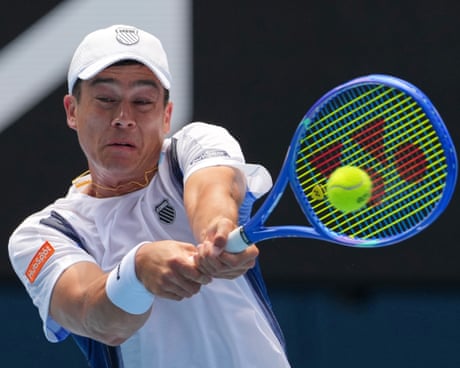
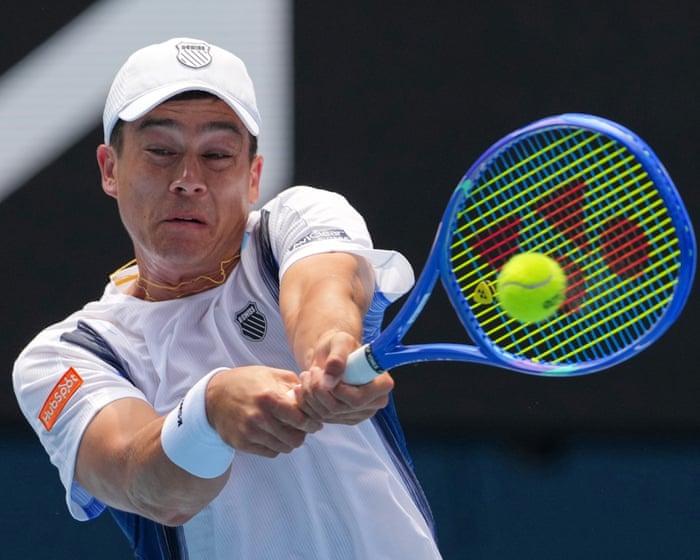
For Mackenzie McDonald the players’ push for greater prize money and welfare contributions from the grand slam tournaments could result in the difference between putting food on the table and making a decent living.
After 10 years on the ATP Tour the 31-year-old American is not pleading poverty, but knows that life on the professional circuit can be a hand-to-mouth existence, with players’ physical and mental welfare often compromised due to their desperation to get back on court.
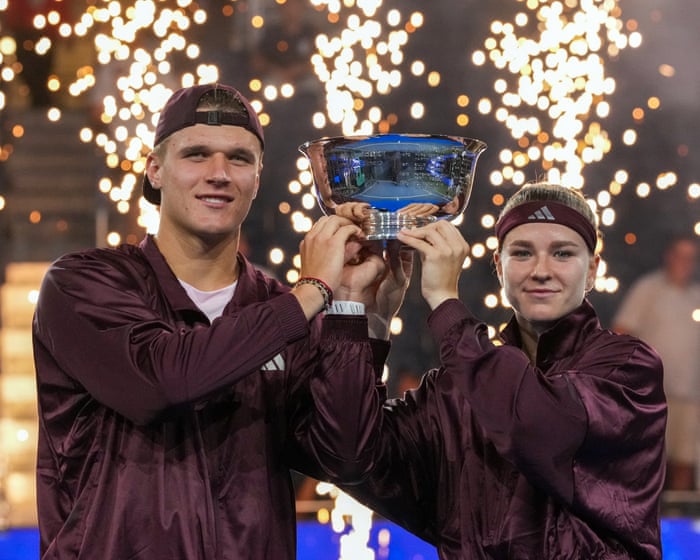
Czech pair beat Bencic and Cobolli in deciding tiebreak
Revamped event draws strong crowds at Arthur Ashe
Singles stars dominate after doubles specialists exit
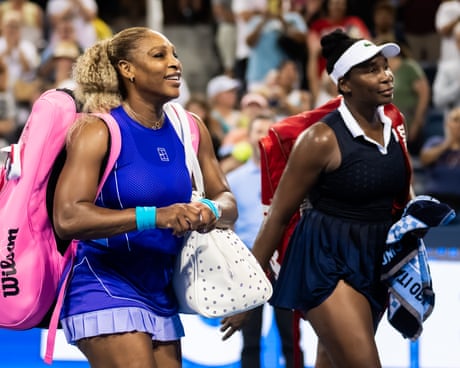
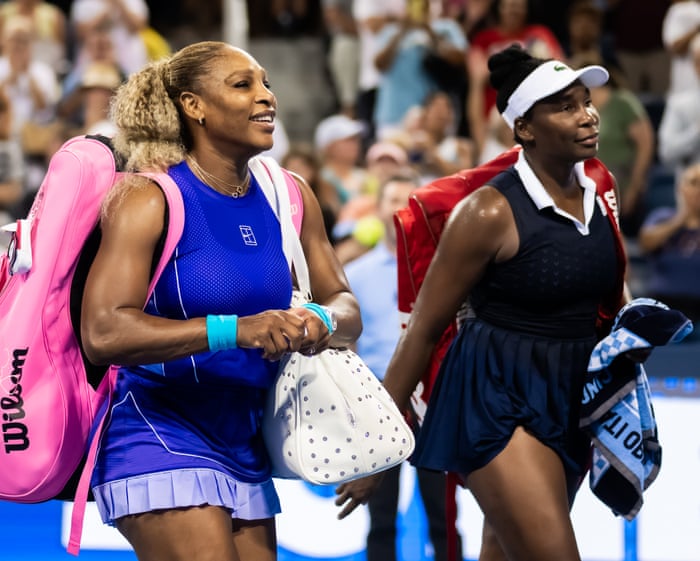
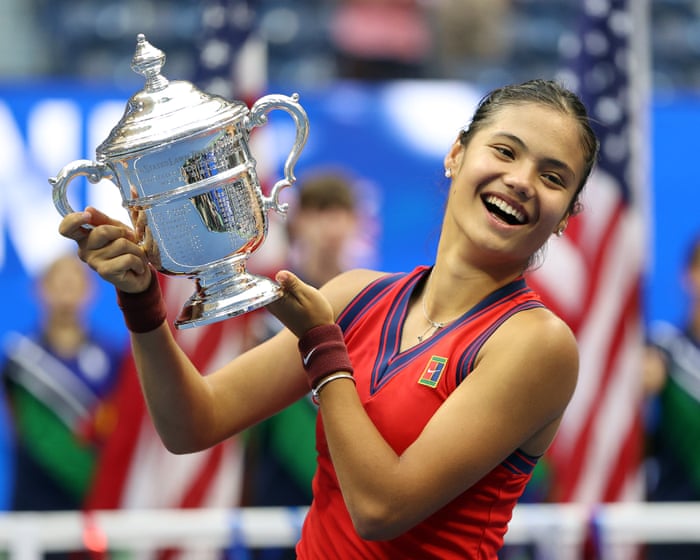
To many who came to the US Open grounds this week, the showpiece of the mixed doubles championship came Tuesday afternoon, with the returns of Serena Williams (after four years away from tennis) and Carlos Alcaraz (after four months out with a wrist injury).
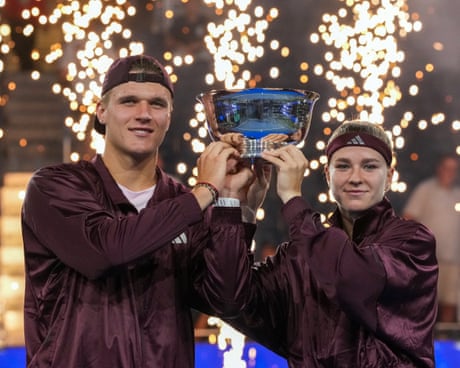
To the players who remained in the field after Williams and Alcaraz exited in the quarter-finals, the real highlight was Wednesday night’s final at Arthur Ashe Stadium, with its $1m in prize money on the line. Karolína Muchová and Jakub Menšík made the most of the spotlight, beating Belinda Bencic and Flavio Cobolli 6-3, 1-6 (10-6) for the title.
World No 10 is one of the best players yet to win a major and heads to Flushing Meadows in fine form after learning to embrace being uncomfortable
Amanda Anisimova can see the signs now. It is just over three years since the American announced she would be taking an indefinite break for mental health reasons. A brilliant junior, she was a semi-finalist at the French Open in 2019 and seemingly destined for the top, only for her world to be rocked by the sudden death of her father, Konstantin, a few months later. Struggling for motivation and burned out, in May 2023, she revealed she would be stepping away from the sport.
It turned out to be the best decision she ever made. “I learned how important it is to have a great balance on and off the court,” Anisimova says in an interview from New York, ahead of the US Open, where she will try to go one better than last year and win her first grand slam title.
Sky Sports is close to agreeing a new deal to extend its live coverage of the US Open. The three-year contract extension, which is expected to be announced when the singles draw from Flushing Meadows begins next week, will keep the tournament live on Sky until 2030.
Under the terms of the new deal, Sky will broadcast more than 12 hours of live tennis each day across the extended three-week tournament, including the new mixed-doubles event which is taking place this week.
Gauff claims first title of season, her second in Cincinnati
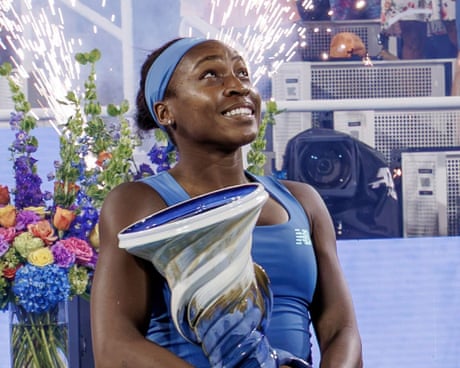
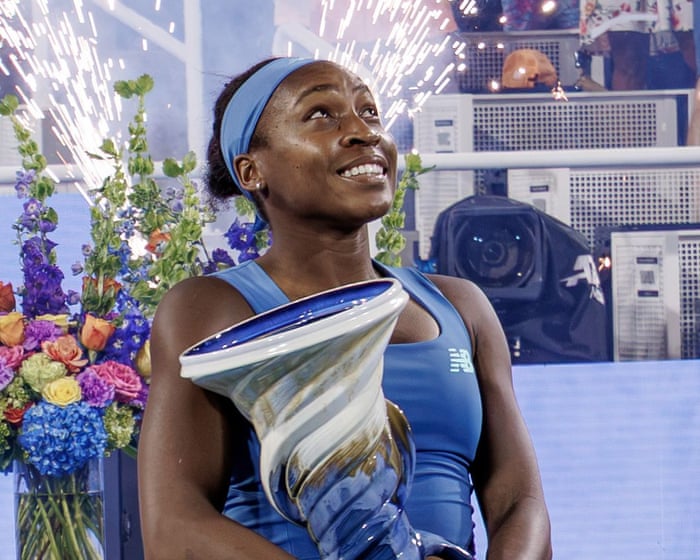
One year ago, Coco Gauff departed the Cincinnati Open with her career at a crossroads. On serve, she had capitulated, offering up countless double faults in most matches, and she had lost confidence in her progress and game. She believed she had to make drastic changes to her team before it was too late.
It has taken an enormous amount of resilience, patience and toil, but this week Gauff began to feel the consequences of those efforts as she closed out one of the smoothest tournaments of her career with her best performance of the season, thoroughly outplaying the third seed Jessica Pegula to win 6-2, 6-4 and clinch the Cincinnati Open title for the second time.
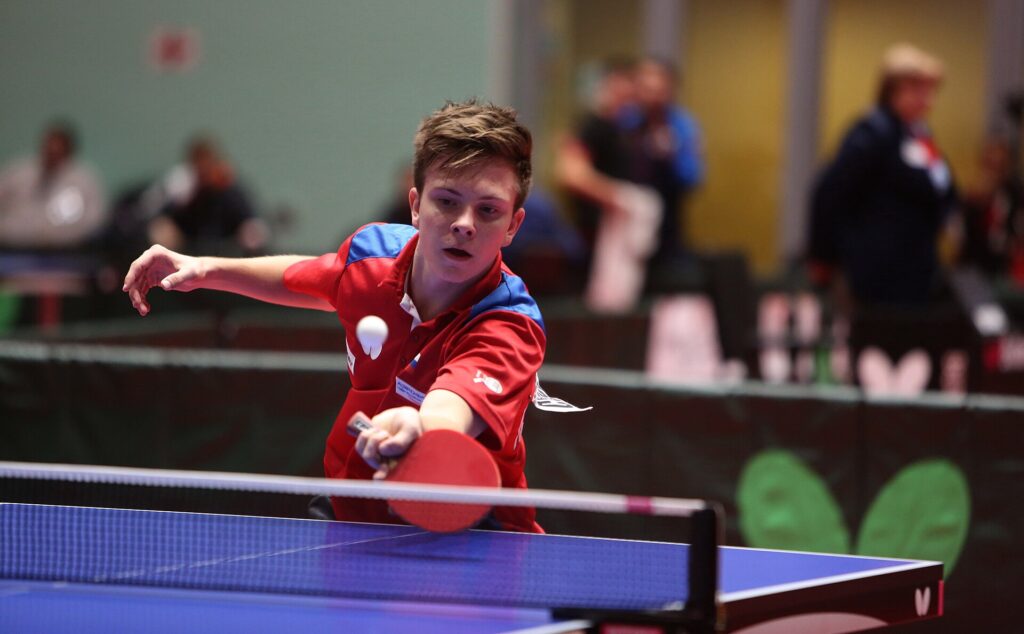
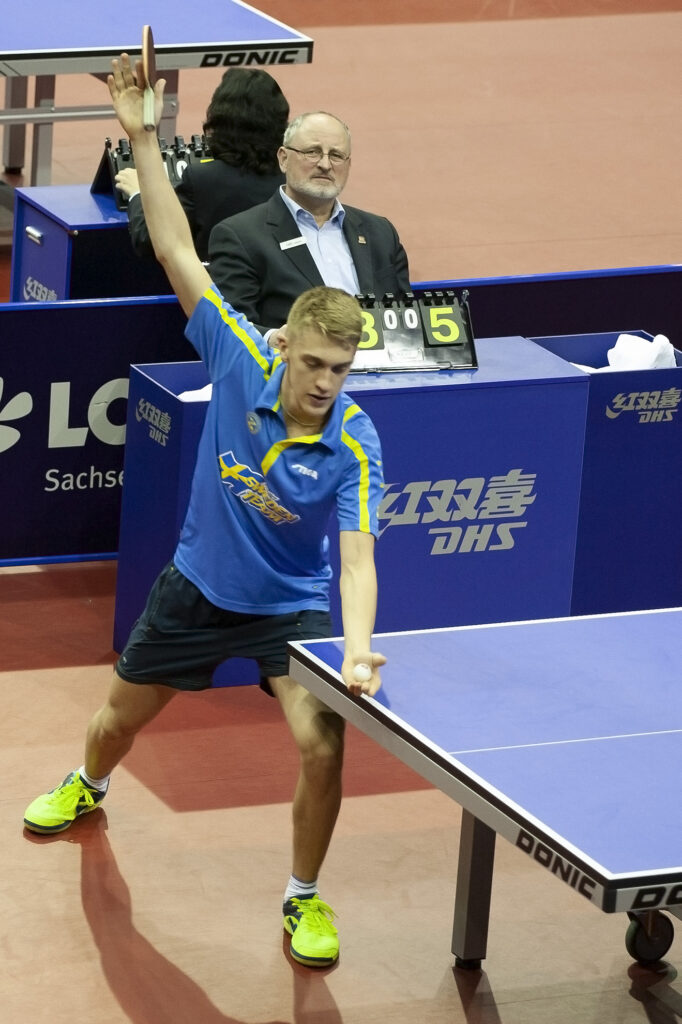
When Sweden’s Anton Källberg walks into the arena on Tuesday to face Vladimir Sidorenko at Europe Smash, the match carries a weight that reaches beyond the table.
Sidorenko is Russian, and unlike the Russian players who spent recent years competing as neutrals, he now takes the table representing Russia, under its flag and anthem.
Flags and anthems are written into international sport precisely because they carry national and political meaning.
The change follows a July decision by the International Table Tennis Federation (ITTF) to lift the restrictions on athletes holding Russian passports. It took effect on 28 July, and Russian players can now enter under the same ordinary rules as everyone else.
For critics, the question is hard to avoid: what has changed in Ukraine to justify the change in sport?
What changed in Ukraine? Nothing
Russia’s full-scale invasion has not ended. Yet the penalty imposed in its wake—that Russian athletes compete without representing the Russian state—has now been lifted in international table tennis.
The Swedish Table Tennis Association has openly opposed the move. Its chairman, Tomas Eriksson, said in July that he saw no change in Ukraine that would justify shifting Swedish sport’s position toward Russian participation. The association has said it will not boycott the tournaments.
That tension now lands on Swedish soil.
Källberg and Sidorenko were drawn against each other at Europe Smash, held in Malmö from 8 to 16 August.
For Swedish supporters of Ukraine, the evening presents a real dilemma. Nobody needs to aim hostility at Sidorenko himself, and no one is claiming individual Russian athletes bear responsibility for their government’s actions. The question is what an athlete is asked to represent.
Sweden’s Anton Källberg, who faces Russia’s Vladimir Sidorenko at Europe Smash in Malmö. Photo: Peter Porai-Koshits / Wikimedia Commons, CC BY-SA 4.0
A flag is never neutral
A neutral athlete competes as an individual. Someone introduced beneath a national flag stands in, however indirectly, for a state. Flags and anthems are written into international sport precisely because they carry national and political meaning.
So restoring the Russian flag is more than an administrative tweak. It is a statement—and a pointed one while Russia’s war on Ukraine continues.
The dispute has an unmistakable Swedish dimension. ITTF is headed by Petra Sörling, the Swedish official who was re-elected president of world table tennis in 2025 for another four-year term. She is a former president of the Swedish Table Tennis Association.
Explore further
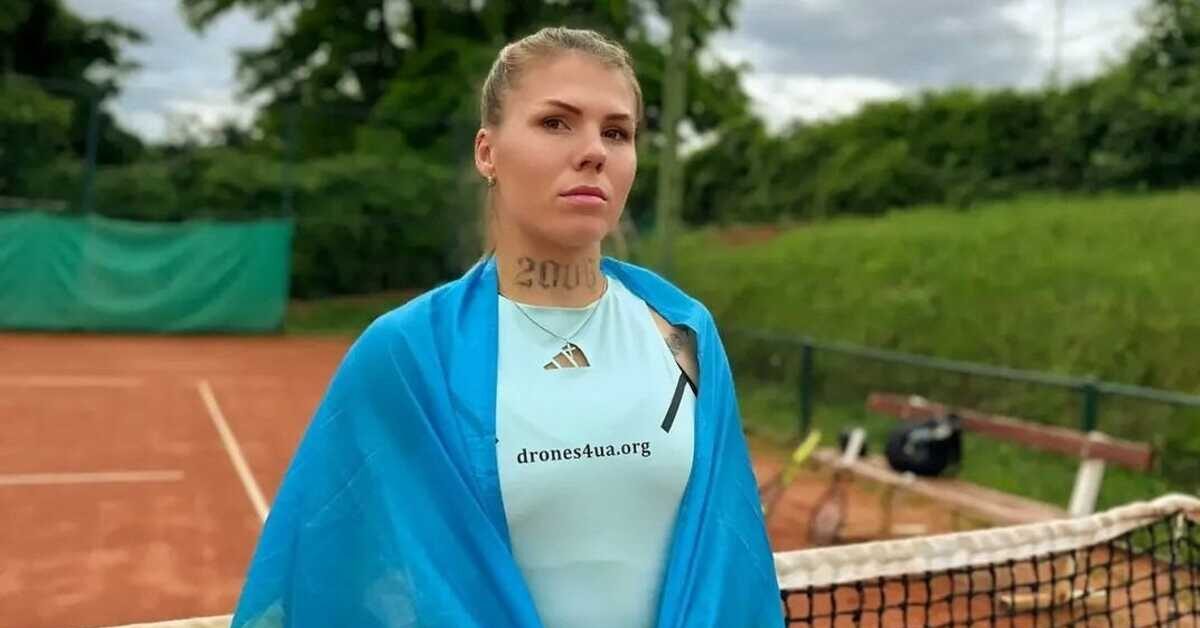
Sport is letting Russia back in. This Ukrainian tennis player says no.
That does not make the reinstatement hers alone to decide; the ITTF Executive Board considered the issue on 10 July. But leadership carries responsibility. ITTF has justified the change by citing equal treatment and proportionality—yet proportionate to what change in circumstances? With Russia’s war on Ukraine still ongoing, the federation has yet to explain what has materially shifted to make the earlier restrictions disproportionate now.
On the evening of 11 August 2026, all of it narrows to something plainer: two players and a table, in front of a Swedish crowd.
Källberg deserves what any Swedish athlete would want at a major home tournament: loud, passionate backing from the crowd. And those who object to the return of the Russian flag have every right to voice it, peacefully, from the same seats.
Symbols cut both ways
Sport does not stand outside the world around it. International federations prove as much every time they raise a flag or set a country’s name beside an athlete.
If those symbols matter when a nation celebrates victory, they matter when a governing body decides who may use them.
And until the reasons for restricting Russia’s national representation have gone, the question facing table tennis stays simple: Why should the restriction disappear first?

 Connexion