Vue lecture

Russia’s most-used map app is erasing a Baltic missile site that Western maps still show
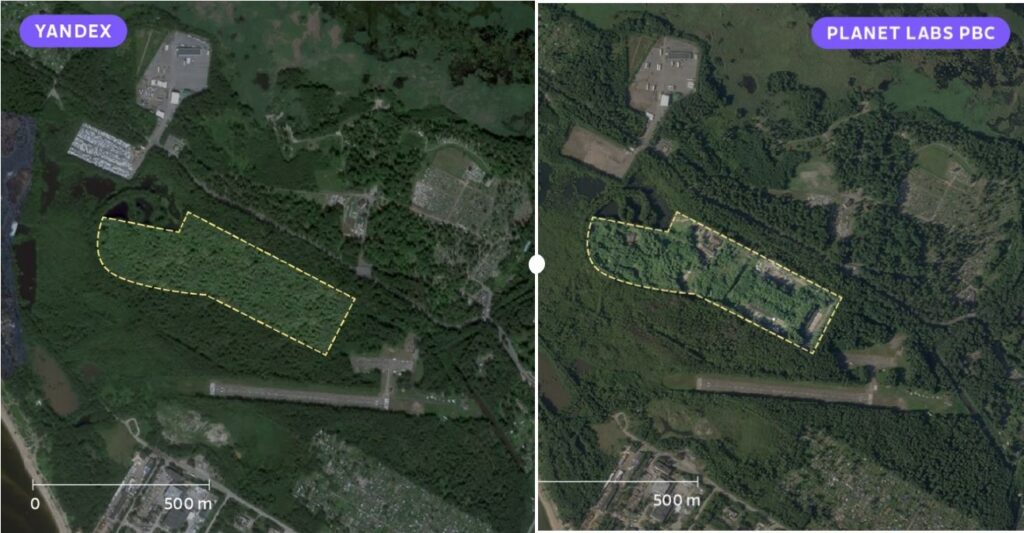
berlin weighs closing russian house spying yet federal ministry just moved beside · post left yandex maps right planet labs pbc imagery 4 2026 undated yle uses because societal significance

Russia's most-used mapping service has digitally hidden a military missile site near Finland by copying a fake forest over it on satellite imagery, Finnish public broadcaster Yle reported. Western map services still show the same position, and a Finnish military analyst called the concealment careless and self-defeating. The clumsy edit points to Moscow's growing fear of Ukrainian drones.

Ukraine's drones now reach thousands of kilometers into Russia, striking refineries, defense plants, and naval yards once thought safe. That expanding reach has upended Moscow's sense of a protected rear across the war.

What Yandex tried to erase

The concealed site sits beside the Kronstadt naval base, on Kotlin Island off St. Petersburg in the Gulf of Finland. Editing software copied trees from another image and laid them over the missile position. Until now, Russia mostly blurred sensitive locations rather than deleting them, but this edit tries to hide the target's existence outright. The same battery still appears on Google, Apple, and Microsoft satellite maps. In the covered zone, Russia has previously kept Bastion anti-ship missiles and their radar and reconnaissance systems.
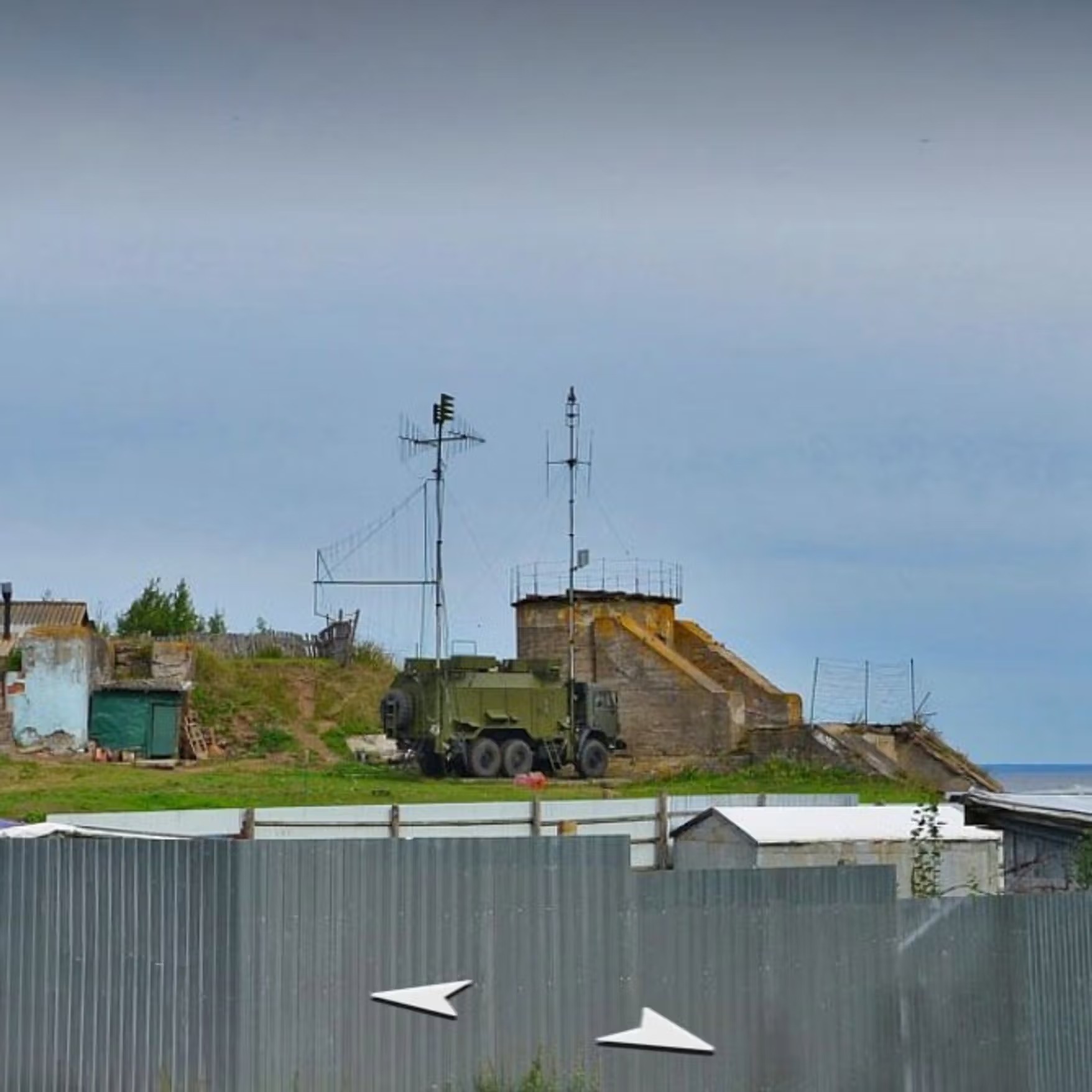
berlin weighs closing russian house spying yet federal ministry just moved beside · post yandex's service electronic warfare base near kronstadt kuvakaappaus yandexin karttapalvelusta kronstadtin lähellä sijaitsevasta elektronisen sodankäynnin tukikohdasta
A screenshot from Yandex's map service showing an electronic warfare base near Kronstadt. Photo: Yandex

A cover-up that gives itself away

Marko Eklund, a military expert and former Finnish intelligence officer, called the secrecy pointless. Western and Ukrainian analysts read their own satellite images, not Yandex, so the edit protects nothing in practice. He believes an administrative order drove it, and that the work was done sloppily. Anyone who knows what to look for can spot the seams and repeating patterns. 
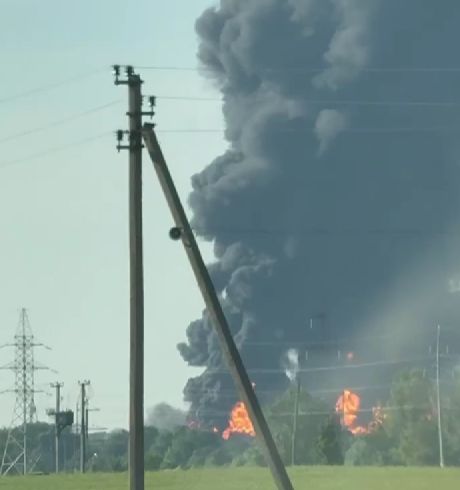
Ukrainian drones struck Russia's Baltic Fleet base at Kronstadt near St. Petersburg overnight, flying nearly 1,000 km. Source: Zelenskiy
Explore further

Kronstadt, Russia’s major naval Base after Black Sea Fleet losses, gets hit by Ukrainian drones (VIDEO)

A pattern set by Ukraine's drones

Russia's map cover-ups have tracked Ukraine's deep strikes. A Moscow court ordered Yandex to mask an oil refinery in Ryazan in 2024 after repeated Ukrainian strikes, and a Nordic-Baltic investigation later counted 119 blurred sites near Russia's northwestern border. Blurring shows up at once, while cloned forest hides the tampering itself.

Kronstadt gives Russia one of its main Baltic Fleet bases, and Ukraine's drones have already reached it. In early June, they set a Russian missile corvette ablaze in dry dock there.

  •  

“One of the most massive” Ukrainian drone attacks hits Moscow Oblast: two major warehouses ablaze

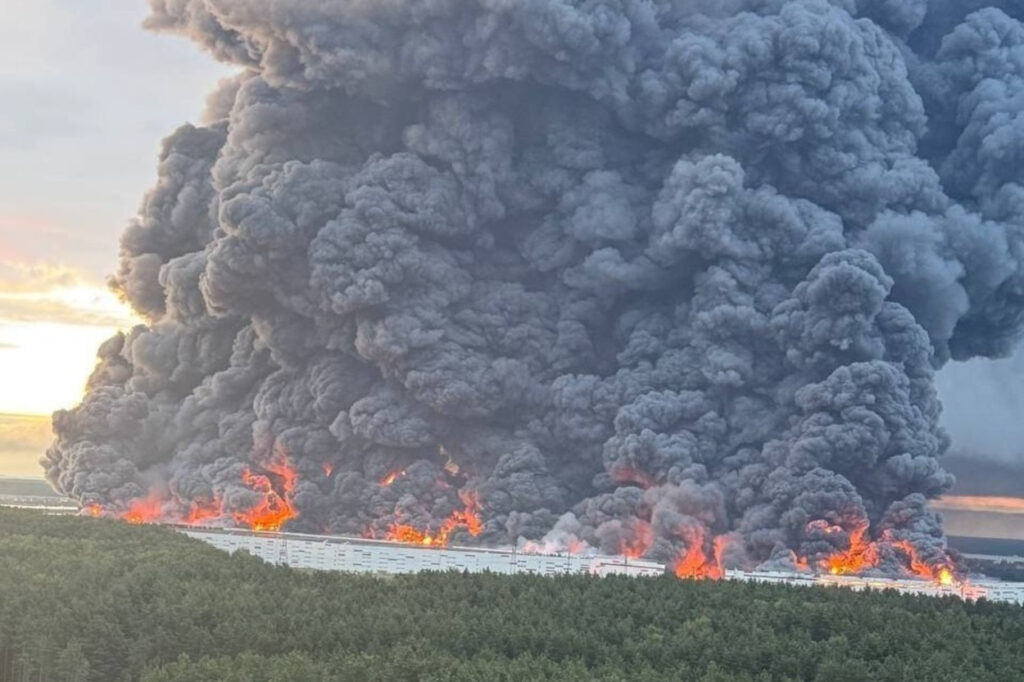
Wildberries warehouse burning in Russia's Koledino following a Ukrainian drone strike, 16 August 2026. Photo: Exilenova+

A drone hit a major Wildberries warehouse at Koledino near Moscow overnight on 16 August 2026 and set it ablaze, Moscow Oblast Governor Andrey Vorobyov said. Vorobyov described the overnight swarm as “one of the most massive drone attacks in recent times.”

It comes amid an expanding Ukrainian campaign against Wildberries, Russia's largest online retailer with a vast network of warehouses and logistics centers, that has reached warehouses from Moscow Oblast to the Urals. Ukrainian authorities say Wildberries facilities are used to supply components for Russian drone production and navigation equipment, making them part of Russia’s wartime logistics network.

The Koledino fire puts a major part of Wildberries’ storage and sorting capacity at risk. At about 250,000 square meters, the complex is one of the retailer’s largest logistics hubs. Ukrainian sources say the marketplace has moved drone parts and other military-linked goods. Wildberries denies supporting Russia’s military. 

Wildberries’ parent company, RWB, confirmed the fire, saying workers had been evacuated and deliveries rerouted. 

Unlike the 28 July fire at Koledino industrial park, the latest blaze was confirmed at Wildberries’ own Koledino warehouse. Initial reports in July had also pointed to Wildberries, but open-source investigators later identified the burning building as a neighboring warehouse run by a third-party logistics company.

The entire Wildberries logistics hub in Koledino, Moscow Oblast, is engulfed in flames following today’s attack.

The complex covers around 250,000 m² and has long been one of Wildberries’ largest and most important logistics centers. https://t.co/qqrrsLFB3Y pic.twitter.com/YivkijfyeT

— Special Kherson Cat 🐈🇺🇦 (@bayraktar_1love) August 16, 2026

A second fire broke out at Warehouse No. 15 in MLP Severnoye Domodedovo, a multimodal logistics complex near one of Moscow’s main airports. Vorobyov said the warehouse stores medications.

Vorobyov claimed an 83-year-old man was killed after a drone fell on a private home in the Ramenskoye district, while at least six other people were injured across the region.

Moscow Mayor Sergei Sobyanin claimed that Russian air defenses destroyed 201 drones approaching the region.

Ukraine confirms Wildberries warehouse was targeted

Ukraine’s Defense Ministry confirmed that the Wildberries logistics hub in the Koledino industrial park was put out of operation during the overnight drone attack.

The ministry said the facility, which covered 250,000 square meters, was Wildberries’ largest warehouse by area. It also said Ukraine has now disabled seven of the company’s 10 largest logistics centers.

Ukraine’s campaign against Wildberries keeps growing

Ukraine’s campaign against Wildberries began on 18 July 2026, when drones struck warehouses in Elektrostal and Kotovsk. Reported attacks have since reached the retailer’s sites across Russia, including a newly opened hub near Voronezh and a warehouse in Tver targeted three times in two weeks.

By 14 August, Agentstvo had counted fires at more than 20 Wildberries sites. The sustained attacks had already prompted Wildberries to prohibit warehouse workers from bringing smartphones to work, citing concerns that photos and videos taken during drone alerts could pose a security risk. 

The effects on Russia’s economy

The number and geographic spread of Ukraine’s strikes have put sustained pressure on the retailer’s nationwide warehouse network and Russia’s economy at large. 

Earlier fires destroyed goods belonging to independent sellers, The Moscow Times reported. Wildberries said it was considering compensation, although its contracts do not require the company to cover losses caused by drone attacks. 

In response to Ukraine’s strikes, the company has also reportedly sought additional storage in Kazakhstan, giving local warehouse operators greater leverage as it tries to replace capacity lost in Russia.

The physical disruption was followed on 15 August by a Ukrainian cyberattack targeting Wildberries’ payment and customer service systems. The hackers said customers could not make payments or reach the company through its main online support channel. 

  •  
❌