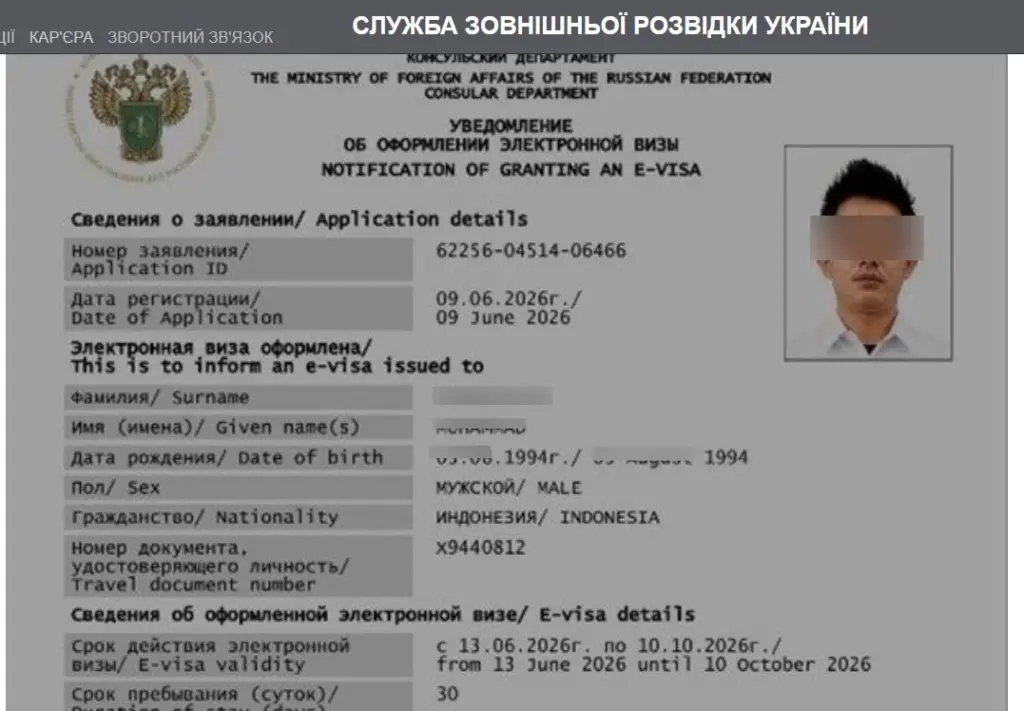
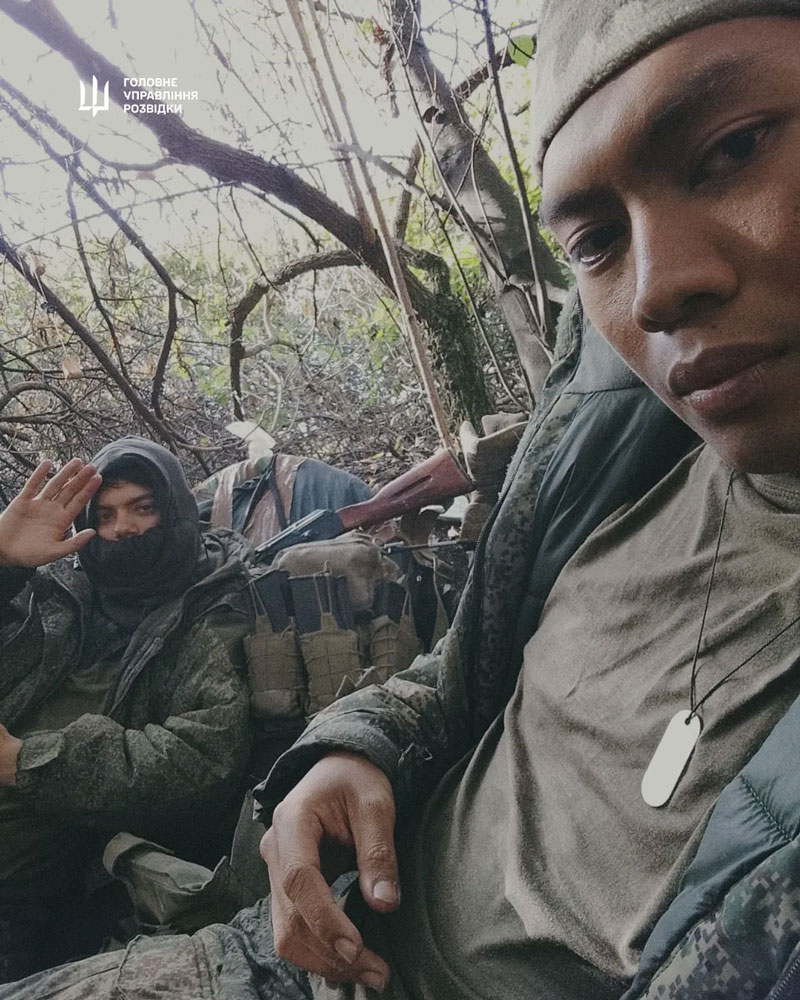
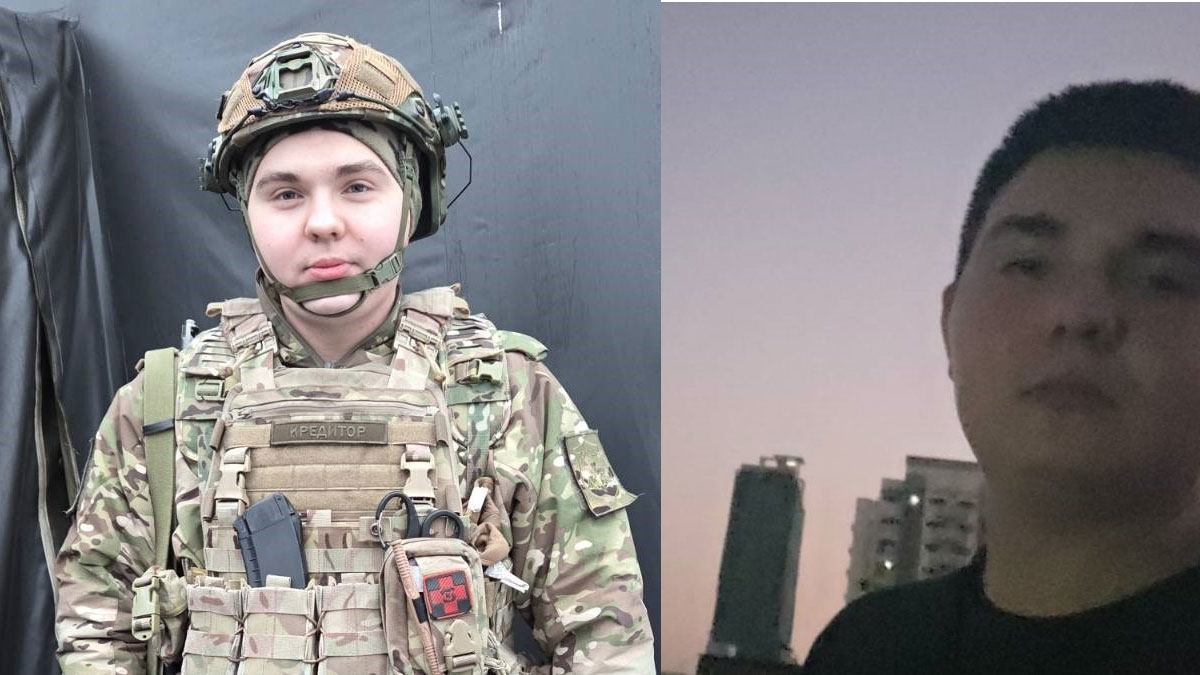
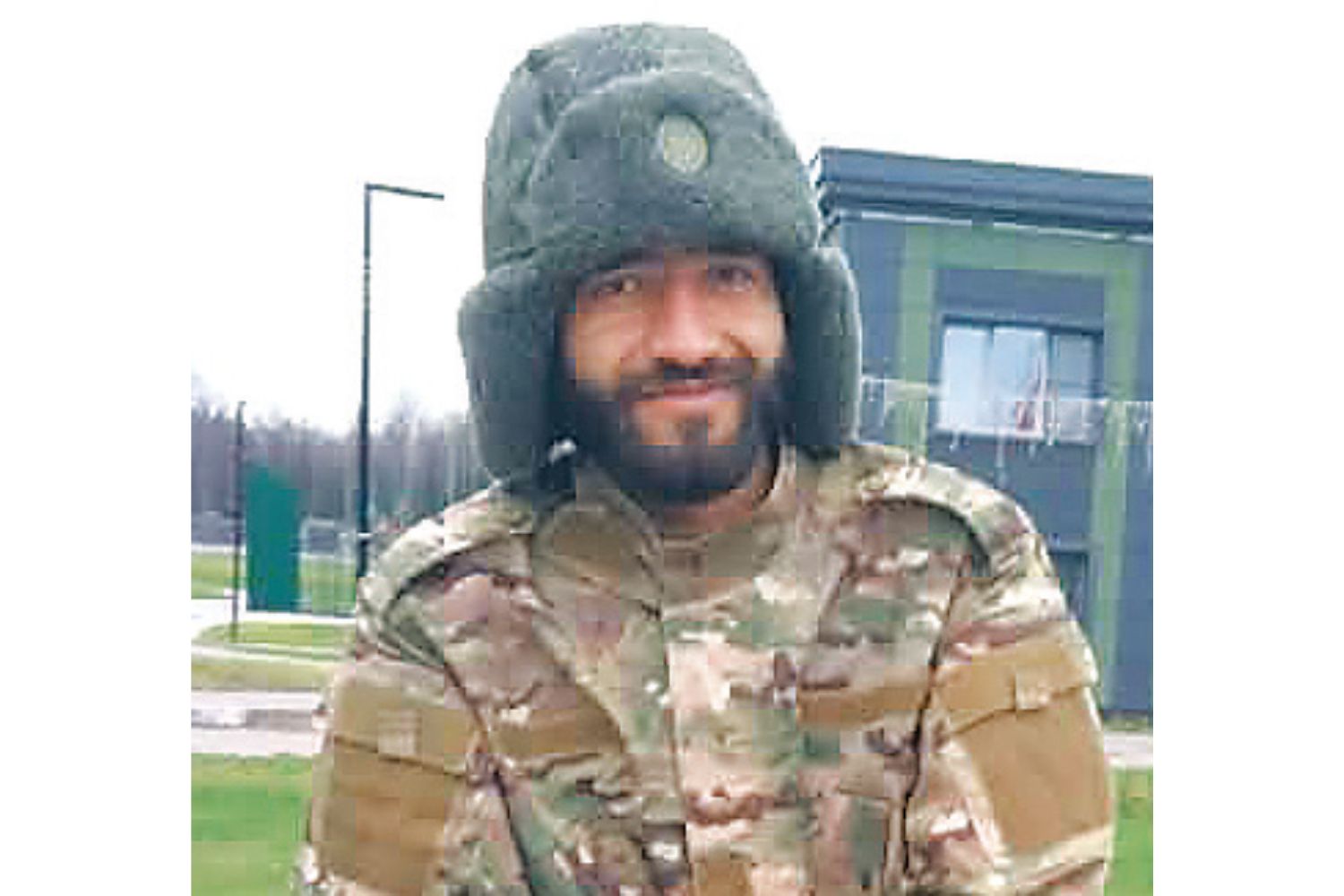
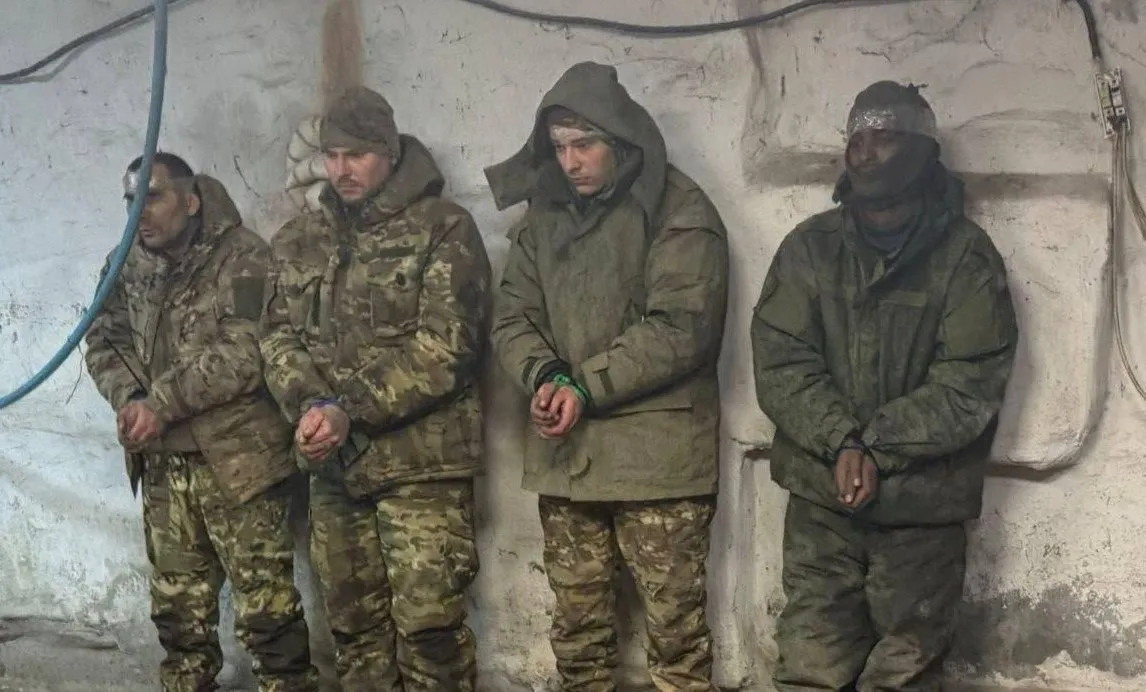
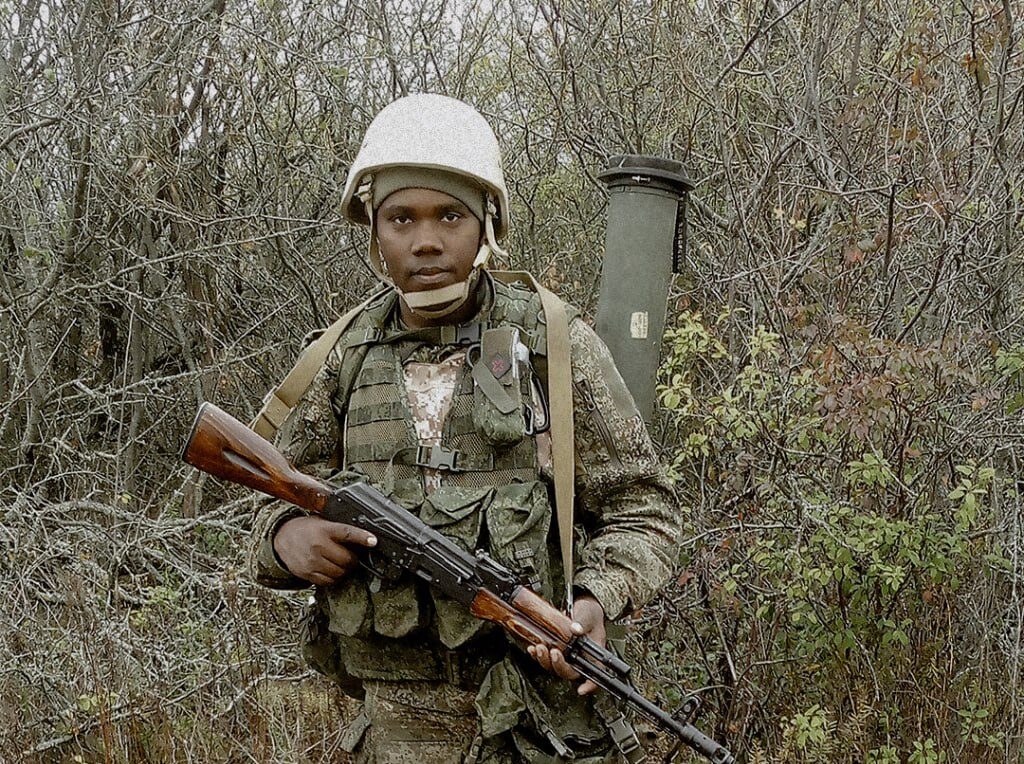
Two men from Cameroon signed Russian army contracts and died within about a month. Ukraine's Defense Intelligence (HUR) published the identities of both, saying their bodies were found on the Lyman and Zaporizhzhia sectors of the front.
The two are recent entries in a recruitment pipeline that has pulled at least 27,000 foreign nationals from more than 130 countries into Russia's army, a pipeline the European Parliament voted 479 to 17 in March 2026 to classify as human trafficking.
By the count of HUR's "I Want to Live" project, Russia has cost the lives of at least 106 Cameroonian citizens since the full-scale war began.
One was student. One had been in Russia twomonths
Both men were from Douala, Cameroon's largest city. Both signed as infantry soldiers. Both were sent to a training center briefly and then to the front. Both were killed in what HUR calls "meat assaults", the frontal infantry attacks Russia uses to find Ukrainian firing positions with human bodies.
Ngouloure Ibrahim Nkite, born 10 March 2003, arrived in Russia on 9 February 2026. He signed a one-year rifleman's contract in the city of Oryol on 4 April. After a few weeks at a training center, he was sent to occupied Luhansk Oblast. He was killed around 12 May near Lyman in Donetsk Oblast. He was 23, and he had been in Russia for three months.
Tapindjeu Namekong Loique, born 15 April 2001, was a student at Michurinsk State Agrarian University in Tambov Oblast when he was recruited. He signed his rifleman's contract in Vologda on 25 March 2026. Like Nkite, he spent little time in training. He was killed around 23 April near Huliaipole in Zaporizhzhia Oblast. He was 25.
From contract to death, each man lived roughly a month.
Pattern HUR is documenting
Meanwhile, Ukraine says Russia plans to open eight new cultural centers in Africa to funnel young people toward the war, part of what it calls "a war for the minds of Africans." Ukraine counts more than 1,780 Africans from 36 countries fighting for Moscow.
HUR published the two men's names alongside its standard message: that the only way for a foreign national in the Russian army to survive is voluntary surrender, through the "I Want to Live" project.
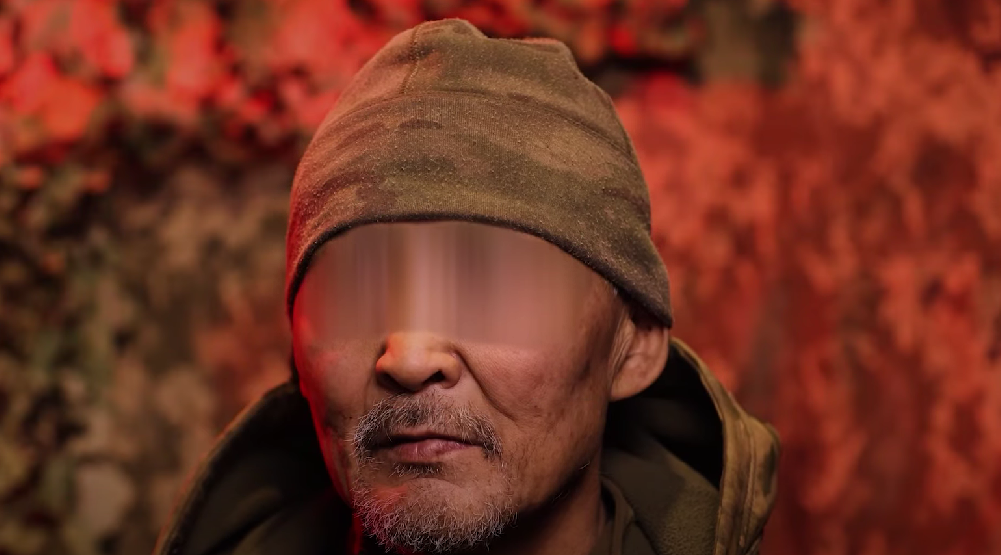
Francis realized he had joined the Russian army when they handed him a uniform. The 35-year-old Kenyan, an electrical engineer by training, had signed what he believed was a contract for security guard work in Russia, he told Ukrainian journalist Dmytro Karpenko in an interview after his capture.
He is one data point in a recruitment system that has pulled at least 27,000 foreign nationals from more than 130 countries into Russia's army since February 2022, according to a joint report by the International Federation for Human Rights and Truth Hounds.
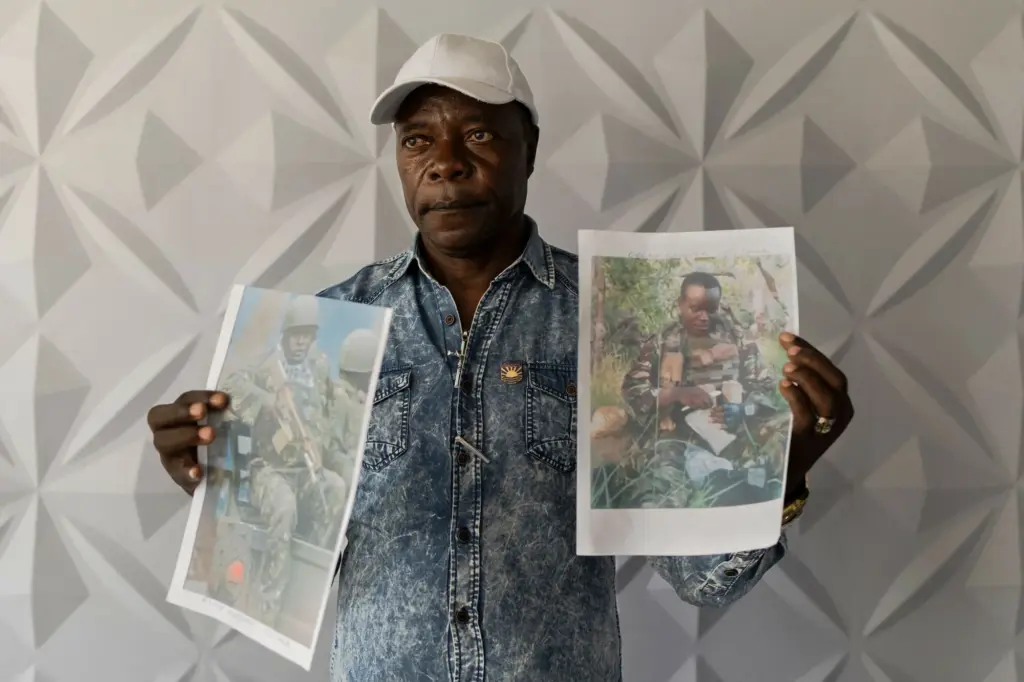
The European Parliament voted479 to 17 in March 2026 to condemn the practice and classify it as human trafficking. Ukrainian intelligence estimates more than 1,700 fighters from 36 African countries have joined Russian forces. Kenya has shut down over 600 recruitment agencies. Ghana has confirmed more than 50 of its citizens killed.
The recruitment method is consistent across cases: a promise of civilian work, a contract in Russian that the recruit cannot read, and a uniform on arrival.
Job offer came from university friend
Francis finished a contract with a large company and was picking up odd jobs in his city. It was not enough to support his wife and daughter. In July 2025, he met a friend from university who told him about a security guard vacancy in Russia. Francis was out of steady work. He agreed.
The paperwork was minimal: a passport copy, a certificate of no criminal record, and a medical certificate. Even when he signed the contract, Francis says, he believed he was going to work as a guard.
He learned otherwise at the military base when they issued him a uniform.
Two weeks of training, then the front
Francis says he received roughly $9,000 during his service. He planned to build a house with it.
"The money would have been enough to build my own home," he said.
He also described the bride price tradition in his community, which can run to 99 goats but is negotiated between the groom and the bride's parents.
"It is a matter of negotiation. You do not need to pay everything at once. You can pay gradually, even over many years. If your father-in-law and mother-in-law see that you are a good husband, they can say: enough, we forgive the rest," he revealed.
In the war he was sent to fight in, Francis says he understood little.
"I only knew there was some kind of conflict between Russia and Ukraine, but I did not understand it was a full-scale war," he suggested.
He was sent to the front after two weeks of training. He was captured on 22 November 2025 while his unit was changing positions. His commander had stepped on a mine, and the unit was ordered to withdraw to another position.
"We were approaching the Ukrainian side, and during the crossing, we met two Ukrainian soldiers who fired shots into the air," Francis said.
He says he did not immediately understand what had happened, but when he saw his commander throw down his weapon and lie on the ground, he did the same.
Russia recruits where the jobs are not
Russia has built parallel manpower pipelines to avoid a full mobilization that would carry domestic political risk. Contract soldiers inside Russia, North Korean troops, and recruitment networks across Africa, Asia, and Latin America feed the front.
The African networks operate through what the New York Times called"fly-by-night companies", presenting themselves as travel agencies or job placement firms and advertising on WhatsApp and Telegram.
Kenya's foreign minister says Russia agreed in March 2026 to stop recruiting Kenyan citizens. Families of the missing are still waiting.
When a crowd in Lviv overturned a draft-office car this week, the footage spread as such clips always do—as proof that Ukraine is growing war-weary. Yet, the reading is wrong—and it is the one Moscow works hardest to sell.
What the crowd was actually pushing against is not the war as such. It is a bargain that the Ukrainian state has, for more than four years, refused to make honestly.
“Not only motivated volunteers and those who could not buy a place in the reserve should have to fight.”
Explore further
Lviv mobilization riot exposes the draft system Ukraine’s government has refused to fix
Who is actually carrying the war
Let me explain. Many of the men who volunteered in the first days of 2022—when there were long queues outside recruitment offices—are still at the front, with no legal way home.
“Not only motivated volunteers and those who could not buy a place in the reserve should have to fight,” Lieutenant Colonel Maksym Zhorin, deputy commander of the 3rd Assault Brigade, wrote back in January 2025; “representatives of all categories of society should fight—the children of politicians, officials, bloggers, and activists.”
But they do not. At least, many of them don’t, and the burden has narrowed either onto the people who shouldered it first or onto those who lack money or connections to avoid mobilization. By now, the war has lasted long enough for that to harden into something dangerous.
While the exact figures are hard to come by, Ukraine seems to mobilize around 30,000 a month.
Why? Because there is no system to rotate those people out. There is no demobilization law, and the service is tied to martial law that will not be lifted while the fighting continues—the army cannot release them without replacements, and those replacements arrive too slowly.
So the ranks are topped up, the only way left: draft officers stopping men on the street. While the exact figures are hard to come by, Ukraine seems to mobilize around 30,000 a month, roughly half of what the military says it needs, the secretary of parliament’s national-security committee, Roman Kostenko, told NV in December 2025.
The evasion deepens the shortage that makes the street stops unavoidable.
The street stops breed distrust. The distrust feeds evasion. The evasion deepens the shortage that makes the street stops unavoidable. And this, in turn, leads to situations like that in Lviv this week.
Although it is clear that Russia uses such incidents, the distrust is not solely Russian-made. Ukrainian media have documented units that chewed through mobilized men—the 155th “Anne of Kyiv” Brigade, French-trained, that hemorrhaged soldiers to desertion before it ever fought well.
Explore further
Ukraine’s draft evasion problem is a symptom of a deeper crisis
Soldiers talk; the families of the dead talk; and the reputation of the worst formations travels faster than the reality that most service is ordinary. To a man weighing whether to wait out the draft, who has heard mostly about the units that break, avoidance can look rational.
The objection that proves the point
Here, the government has a case, and it isn’t a foolish one: releasing a hundred thousand of your most experienced soldiers in the middle of a war, with nothing trained to fill the hole, would hand Russia the front. That is why the military command asked parliament, on the eve of the 2024 vote, to strike the demobilization clauses from the mobilization law. Keep the veterans in, and the line holds.
An exhausted soldier is not a preserved asset.
Except it does not hold, not across years. An exhausted soldier is not a preserved asset. Past a point, he is a man who cannot do it anymore, and the army loses him regardless—not on a schedule it manages, but chaotically, to death, injury, or desertion.
In 2024, some 51,000 Ukrainian soldiers left their units without leave, more than double the year before, with fatigue named among the primary causes. “The number of soldiers going AWOL will break every record,” a combat officer who joined on 24 February 2022 told Ukrainska Pravda. The men the state insists it cannot afford to release are leaving anyway.
That is what turns the military logic against itself.
The hard political decision—telling the country that the cost has to be shared and building the machinery to do so—was never avoidable.
Precisely because the country cannot simply free the 2022 cohort, it needs a system that moves people predictably—so veterans can be relieved before they break, and civilians can plan for service instead of fearing the street, which, in Lviv and elsewhere, young men now avoid. They are not afraid of the war but of how they’ll be taken to it.
Such a system is not a concession that weakens the army. In a long war, it is a condition for keeping the army whole. Which means the hard political decision beneath it—telling the country that the cost has to be shared and building the machinery to do so—was never avoidable. It was only delayed. And delay, dressed as military levelheadedness, is merely avoidance.
The reform that isn’t the repair
The delay is now, belatedly, ending—or half-ending. In 2026, President Zelenskyy ordered the overhaul he had promised once before, in late 2023, and dropped: new contracts, higher frontline pay, a phased path out for the longest-serving. Yes, there is a certain déjà vu to it. Yet, the plan is real and aimed at the right wound—service terms.
But soldiers have read it less as a way home than as a reset: sign a new contract and the clock restarts; serve months more before even a short deferment, an illusory reprieve rather than a discharge.
The plan rewards the wrong thing—dangling combat bonuses while base pay is near $700.
The combat medic and writer Yaryna Chornohuz has argued that the plan rewards the wrong thing—dangling combat bonuses while base pay is near $700, and offering a soldier of four years the same short deferment as a raw recruit, instead of being scaled by time served. Certainty, she and others say, would keep and attract more soldiers than any bonus.
And the reform barely touches the other half of the problem: the recruitment side—the street stops, and the exemption rules the military ombudsman Olha Reshetylova says any reform must start with. It fixes things for the soldiers already inside. It does nothing for the collision on the pavement between the state and the men it is trying to pull in. That collision is exactly what happened in Lviv.
A Russian TV broadcast shows footage from Lviv’s Sykhiv district during the mobilization-related standoff on 8 July 2026, with the on-screen caption reading “Unrest in Lviv on Chervonoi Kalyny Street.” Source: Rossiya 24 footage via Львівич | Новини / Telegram
The enemy in the vacuum
Into every space the state leaves, Russia pours. Its information war now targets not politicians but the country’s ability to raise an army at all, Olesia Horiainova of the Ukrainian Security and Cooperation Centre finds—turning the recruiter into the enemy in Moscow’s place.
It works because the vacuum is real: a state that says nothing leaves the field to an adversary happy to speak for it. The anger isn’t manufactured. That is exactly what makes it useful.
The bill for a fifth year
What would break the loop is not another contract scheme. It is the thing Ukrainian officials, from the human-rights commissioner to the military ombudsman, have only now begun to say aloud: the rules have to become fair and finite, and someone at the very top has to make the public case for why.
It asks the comfortable to share a burden they have so far been able to sidestep, and it asks a president who reads the public mood closely to get out in front of it.
That case is politically expensive. It asks the comfortable to share a burden they have so far been able to sidestep, and it asks a president who reads the public mood closely to get out in front of it rather than trail behind. It has gone unmade for four years because it is hard. The car on its roof in Lviv is a preview of what a fifth year of not making it will cost.
Peeter Helme is a business journalist based in Lviv, Ukraine. Living in Ukraine since 2023, he first worked from Odesa and now reports from Lviv.
Before joining Euromaidan Press, Peeter worked in Ukraine for an international logistics company in 2023–2024. Earlier, he worked across print, radio, and television journalism in Estonia, in both public and private media. His background also includes commercial and editorial copywriting.
Peeter studied in Estonia and Germany, earning a BA in History from the University of Tartu in 2003.
For Euromaidan Press, he covers Ukraine’s economy and wartime resilience, as well as energy issues, fiscal policy, and other major economic developments..
Editor's note. The opinions expressed in our Opinion section belong to their authors. Euromaidan Press' editorial team may or may not share them.